
Electrical Fuses Blog
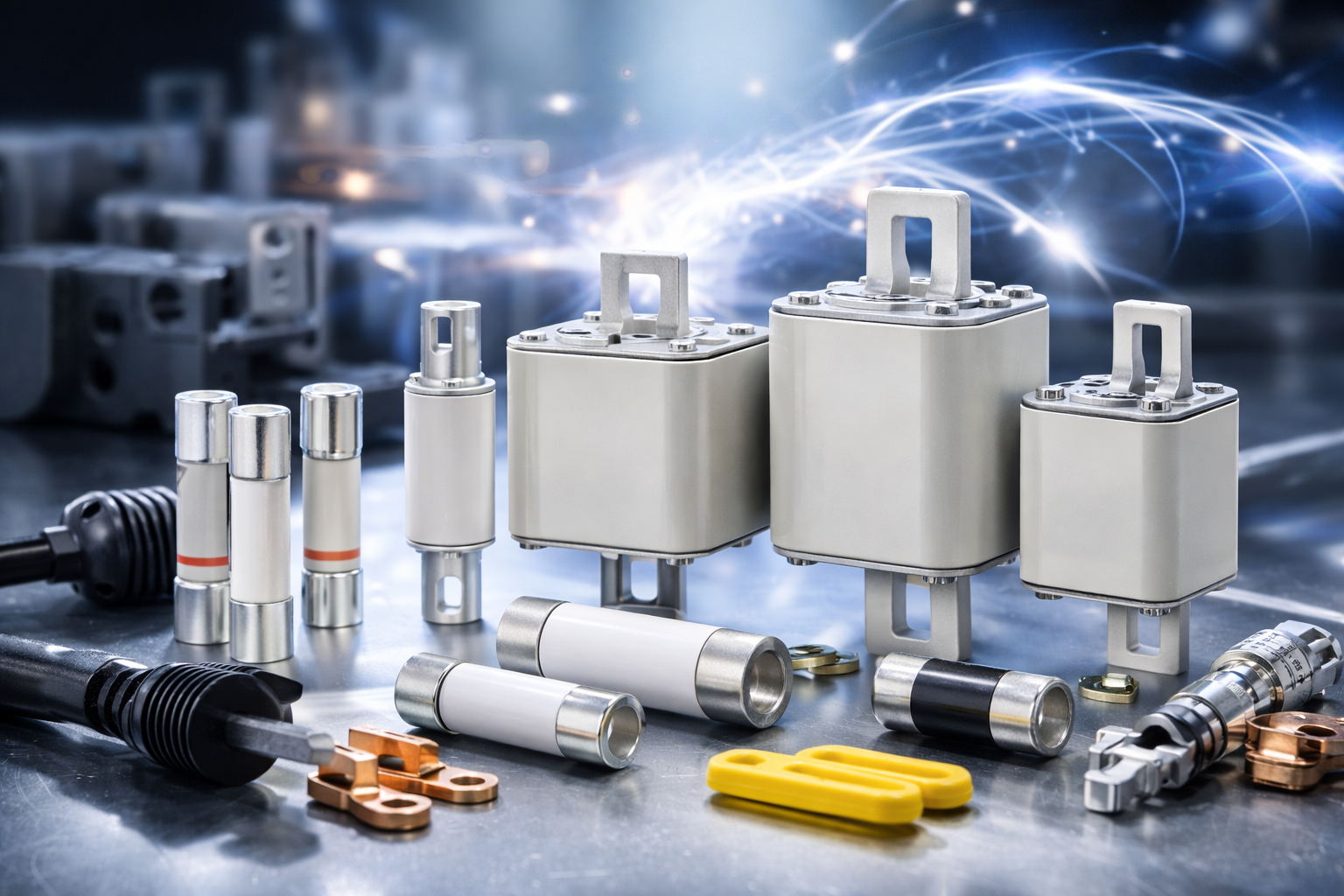
Eaton Bussmann Series Electrical Fuses – Blog & Fachwissen
Im Eaton Bussmann Series Electrical Fuses Blog finden Sie fundiertes Fachwissen rund um elektrische Sicherungen, Überstromschutz und moderne Schutzkonzepte für industrielle und gewerbliche Anwendungen. Diese Kategorie bündelt alle Blogartikel, technischen Beiträge und Praxisguides zu den Sicherungssystemen und Serien von Eaton Bussmann.
Eaton Bussmann zählt weltweit zu den führenden Herstellern von elektrischen Sicherungen, und ihre Serien stehen für Sicherheit, Normkonformität und höchste Zuverlässigkeit in anspruchsvollen elektrischen Systemen.
Was Sie im Eaton Bussmann Sicherungen Blog erwartet
Unsere Blogbeiträge helfen Ingenieuren, Einkäufern, Technikern und Planern dabei, die richtige Sicherungslösung zu finden und technische Zusammenhänge besser zu verstehen.
Themenschwerpunkte dieser Kategorie:
-
🔌 Überblick über Eaton Bussmann Sicherungsserien
-
⚙️ Unterschiede zwischen UL-, IEC- und Spezial-Sicherungen
-
📘 Technische Erklärungen zu Kennlinien, Auslöseverhalten & Bemessungswerten
-
🏭 Anwendungstipps für Industrie, Maschinenbau & Energieverteilung
-
🚗 Beiträge zu EV-, DC- und Hochvolt-Sicherungen
-
🛠 Best Practices für Auswahl, Installation und Wartung
Alle Inhalte sind praxisnah, verständlich aufbereitet und technisch fundiert.
Eaton Bussmann Sicherungsserien im Fokus
Der Blog behandelt regelmäßig verschiedene Eaton Bussmann Series Electrical Fuses, darunter:
-
Industrial Fuses
-
North American (UL) Fuse Series
-
IEC Sicherungsserien
-
High Speed & Semiconductor Fuses
-
EV & DC Sicherungen
-
Supplementary & Specialty Fuses
So erhalten Sie einen umfassenden Überblick über das Eaton Bussmann Portfolio und dessen Einsatzmöglichkeiten.
Fachwissen für sichere elektrische Systeme
Elektrische Sicherungen sind ein zentraler Bestandteil jeder sicheren Stromversorgung. Der Eaton Bussmann Series Electrical Fuses Blog unterstützt Sie dabei, Risiken zu minimieren, Normen einzuhalten und die Lebensdauer Ihrer Anlagen zu verlängern.
Ganz gleich, ob Sie Grundlagenwissen suchen oder tief in spezielle Sicherungsserien eintauchen möchten – hier finden Sie relevante, aktuelle und suchmaschinenoptimierte Inhalte rund um Eaton Bussmann Electrical Fuses.
👉 Jetzt Blogartikel entdecken und Ihr Wissen über Eaton Bussmann Sicherungsserien gezielt erweitern.
- Details
- Category: Electrical Fuses Blog
 bus-ele-ct-1005-edison-flc.pdf | [Eaton Bussmann Edison 2019 product catalog] | 9518 kB |
Eaton Bussmann Edison 2019 Product Catalog: Fuse Specifications, Part Numbers and European Alternatives
The Eaton Bussmann Edison 2019 Product Catalog is a valuable technical reference for electrical engineers, industrial maintenance teams, OEMs, panel builders and electrical component distributors looking for fuse products and circuit protection solutions. Published in February 2019 as publication number 1005, the catalog covers a broad range of Edison-branded fuses and related electrical protection products.
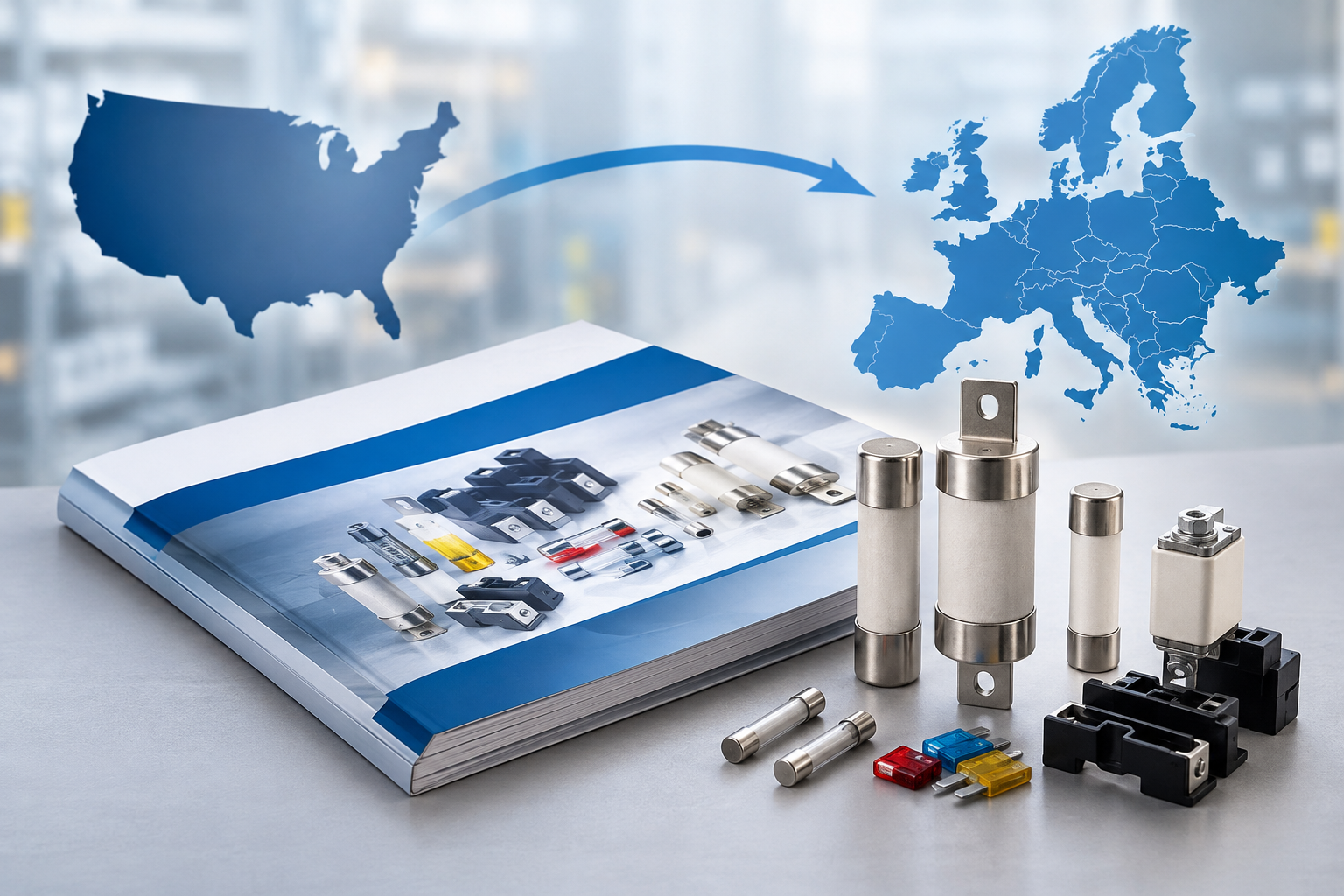
Edison is primarily a US-market brand within Eaton's circuit protection portfolio. For customers in Europe, similar products may be available under the Eaton Bussmann brand, often with different part numbers and product designations. Understanding these regional differences is essential when identifying replacement fuses, comparing specifications and sourcing electrical components internationally.
This guide explains the contents of the Edison 2019 catalog, the main fuse categories covered, and the key considerations when looking for corresponding Eaton Bussmann products in Europe.
Overview of the Eaton Bussmann Edison 2019 Product Catalog
The Edison 2019 catalog presents circuit protection products designed for a variety of electrical applications. It is intended to help users identify products, review technical specifications and select components appropriate for their electrical systems.
The catalog includes multiple fuse classes and product families, covering applications ranging from industrial power distribution to supplemental circuit protection and smaller electrical devices.
Key product categories include:
-
UL Class CC fuses
-
Class G fuses
-
Class J fuses
-
Class H and K5 fuses
-
Class L fuses
-
Class RK1 and RK5 fuses
-
Class T fuses
-
Plug fuses and fuse holders
-
Supplemental and midget fuses
-
Automotive glass-tube and blade fuses
-
Glass and ceramic tube fuses
-
Fuse blocks, holders and related accessories
The catalog also references additional circuit protection products available from Eaton, including high-speed fuses, photovoltaic protection products, medium-voltage fuses, disconnect switches, power distribution blocks and surge protective devices.
This broad selection makes the catalog useful for product identification, maintenance planning, component selection and industrial procurement.
Main Features of the Edison Fuse Product Range
Selecting the correct fuse requires an understanding of its electrical characteristics, physical design and intended application. The Edison catalog provides technical information to help users evaluate suitable products.
Current and voltage ratings
The current rating indicates the nominal current for which a fuse is designed under specified conditions. The voltage rating defines the maximum rated voltage at which it is suitable for use.
Both parameters must be compatible with the electrical system. A fuse with the correct current rating may still be unsuitable if its voltage rating or other operating characteristics do not meet the application's requirements.
Interrupting rating and fault protection
The interrupting rating specifies the maximum fault current a fuse is designed to interrupt safely under its rated conditions.
This characteristic is particularly important in industrial installations, distribution panels and equipment connected to systems with high prospective short-circuit currents.
When selecting a replacement, engineers should verify that the fuse's interrupting rating is appropriate for the available fault current and the applicable installation requirements.
Fuse classes and operating characteristics
Fuse classes help distinguish products by their construction, performance and application requirements. Different fuse types can have different time-current characteristics, current-limiting capabilities and protection functions.
The Edison catalog covers several North American fuse classes, allowing users to identify products according to the requirements of their equipment and electrical systems.
A replacement should be selected based on the required protection characteristics rather than simply matching the physical size or nominal current rating.
Dimensions and mounting requirements
Physical compatibility is another important factor when replacing an existing fuse. Relevant considerations include overall dimensions, terminal configuration, mounting arrangement and compatibility with the installed fuse holder or fuse block.
Even where two products have similar electrical ratings, differences in construction can prevent them from being suitable direct replacements.
Edison and Eaton Bussmann: Differences Between the US and European Markets
One of the most important considerations when using the Edison 2019 product catalog is the regional distinction between product brands and ordering numbers.
Edison is primarily used in the US market, while similar products in Europe may be available under the Eaton Bussmann brand with a different part number.
This is particularly relevant for companies that operate internationally, maintain equipment imported from North America or purchase replacement components through European distributors.
The Edison catalog focuses on Edison-branded products and includes fuse types associated with North American electrical standards. Eaton Bussmann also offers products for international markets, including ranges designed around IEC and British Standards.
Although products from these portfolios may serve similar purposes, their specifications and ordering designations are not necessarily identical.
For example, a maintenance engineer working in Germany may need to replace an Edison fuse originally installed in equipment manufactured for the US market. A similar product may be available through the European Eaton Bussmann range, but the correct part number must be established by comparing the technical documentation.
The distinction between brands and regional product ranges should therefore be considered during purchasing, maintenance and engineering design.
How to Find a European Eaton Bussmann Equivalent for an Edison Fuse
Finding a suitable alternative to an Edison fuse involves more than searching for a similar product name. A structured comparison helps ensure that the replacement meets the technical requirements of the application.
1. Identify the complete Edison part number
Start by identifying the exact part number printed on the original fuse or listed in the Edison 2019 catalog.
Record the complete designation, including any suffixes or additional characters. These details may distinguish between products with different ratings or operating characteristics.
Where possible, also record the fuse class, rated current, rated voltage and physical dimensions.
2. Determine the original fuse's technical requirements
Review the electrical characteristics required by the application, including:
-
Rated current and operating voltage
-
Interrupting rating
-
Time-current characteristics
-
Current-limiting performance, where applicable
-
Physical dimensions and mounting configuration
-
Required approvals and applicable standards
These characteristics provide the basis for comparing the original Edison fuse with potential alternatives.
3. Check the European Eaton Bussmann product portfolio
Search the Eaton Bussmann product range for a product with the required electrical and mechanical characteristics.
Depending on the application, a suitable product may belong to an IEC-oriented fuse family rather than a North American fuse class. The appropriate product depends on the original equipment design and the protection requirements.
The fact that a product is sold under the Eaton Bussmann brand does not, by itself, establish that it is an equivalent replacement for a specific Edison fuse.
4. Compare part numbers and datasheets
Once a potential alternative has been identified, compare the manufacturer's technical documentation for both products.
Check the electrical ratings, operating characteristics, dimensions, mounting requirements and certifications. Differences in these specifications may affect whether the products can be used interchangeably.
Where an official cross-reference is available, use it as a starting point and confirm that it applies to the exact product and application.
5. Confirm the replacement before ordering
If the documentation does not establish a direct equivalent, contact Eaton or an authorized distributor for technical assistance.
This is especially important for industrial machinery, control panels, safety-related equipment and installations subject to specific electrical standards.
Important: A similar product or a different regional part number should not be assumed to be interchangeable without technical verification.
Why the Correct Fuse Replacement Matters
Fuses are essential components of electrical circuit protection. They help protect conductors and equipment against excessive current by interrupting the circuit when specified operating conditions are reached.
An incorrectly selected replacement can compromise protection, create compatibility problems or fail to meet the requirements of the electrical installation.
For this reason, matching the original fuse's current rating alone is not sufficient. Voltage rating, interrupting capacity, time-current characteristics, dimensions and applicable approvals must also be considered.
When replacing an Edison fuse in European equipment, engineers should pay particular attention to the differences between North American and IEC-based product specifications.
Using the Edison catalog to identify the original component and the relevant Eaton Bussmann documentation to evaluate alternatives provides a more reliable basis for product selection.
Who Should Use the Edison 2019 Catalog?
The catalog is relevant to several professional groups.
Electrical engineers can use it to research fuse types, identify original components and review product specifications during design or maintenance work.
Industrial maintenance teams can use the catalog to identify installed fuses and support replacement-part planning.
OEMs and panel builders can consult the product information when working with equipment designed for the North American market.
Purchasing departments and distributors can use the catalog to identify ordering numbers and investigate potential product alternatives.
International sourcing teams can use it as a starting point when comparing Edison-branded products with the Eaton Bussmann ranges available in Europe.
For companies operating across multiple regions, an understanding of product naming conventions and regional standards can help reduce procurement errors and improve replacement-part identification.
Is the Edison 2019 Catalog Still Relevant?
Although the Edison 2019 catalog is a historical publication, it remains useful as a reference for identifying products and understanding the specifications associated with the original catalog edition.
However, product portfolios, ordering numbers, availability and technical documentation can change over time.
Before purchasing or installing a replacement, verify the current product status and consult the latest applicable manufacturer documentation. This is particularly important when sourcing discontinued products or identifying a European alternative for an older US-market component.
The 2019 catalog should therefore be treated as a starting point for product research rather than as the sole source for confirming current availability or interchangeability.
Frequently Asked Questions About the Eaton Bussmann Edison 2019 Catalog
What is the Eaton Bussmann Edison 2019 Product Catalog?
The catalog is a technical reference for Edison-branded circuit protection products from Eaton. Published as catalog number 1005 in February 2019, it includes a range of fuse types and related product information to support identification and selection.
Is Edison primarily a US-market brand?
Yes. Edison is primarily used in the US market. In Europe, similar products may be offered under the Eaton Bussmann brand, depending on the product family and application.
Do Edison and Eaton Bussmann fuses have the same part numbers?
Not necessarily. Similar products may have different part numbers or ordering designations in different regional portfolios. The correct product should be identified by comparing technical documentation rather than relying on the brand name alone.
Can I replace an Edison fuse with a European Eaton Bussmann fuse?
A suitable alternative may be available, but compatibility must be confirmed. The rated current, voltage, interrupting capacity, time-current characteristics, dimensions and required approvals should be checked before replacement.
Which fuse types are covered in the Edison 2019 catalog?
The catalog includes several fuse classes, including CC, G, J, H/K5, L, RK1, RK5 and T, along with plug fuses, supplemental fuses, automotive fuses and related accessories.
Should I use the 2019 catalog to order a replacement fuse today?
The catalog can help identify the original product, but current availability and specifications should be verified against the latest manufacturer documentation before ordering or installation.
Conclusion: Finding the Right Edison or Eaton Bussmann Fuse
The Eaton Bussmann Edison 2019 Product Catalog is a useful reference for engineers, maintenance professionals, OEMs, distributors and purchasing teams researching fuse specifications and circuit protection products.
Its coverage of multiple fuse classes and product families makes it a helpful starting point for identifying original components and understanding their technical requirements.
For international buyers, the key consideration is that Edison is primarily a US-market brand, while similar products in Europe may be available under the Eaton Bussmann brand with different part numbers. Regional alternatives should be evaluated using technical specifications, applicable standards and manufacturer documentation.
By confirming the original part number, comparing electrical and mechanical characteristics, and verifying current product information, businesses can make more informed decisions when sourcing replacement fuses for industrial and commercial applications.
- Details
- Category: Electrical Fuses Blog
| bus-ele-cat-1007-flc-2018-sec-16-cross-ref-index.pdf | [Eaton Bussmann series Full line catalog: Cross reference and catalog index] | 2628 kB |
Eaton Bussmann Series Full Line Catalog: Fuse Cross Reference and Catalog Index Guide
Introduction
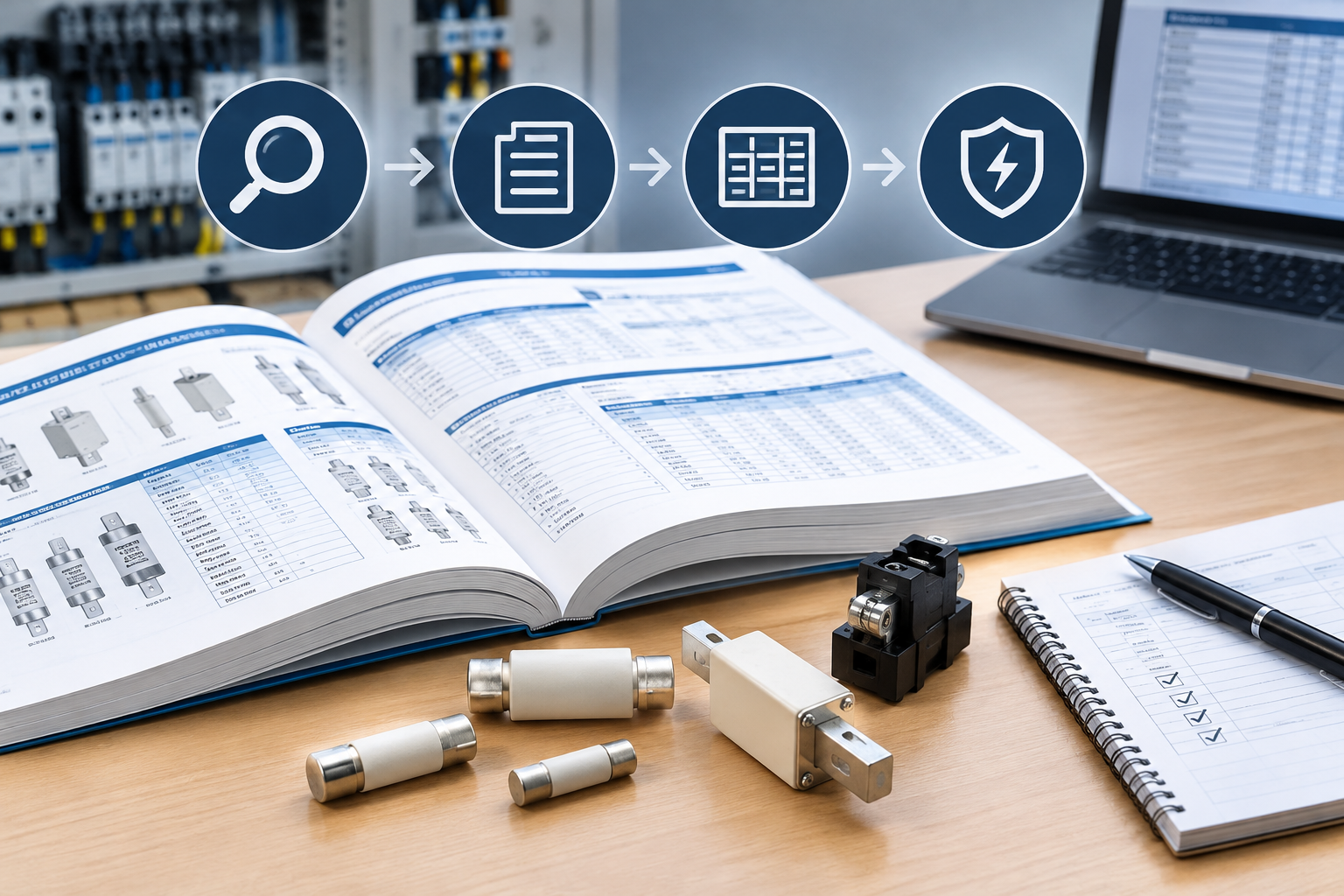
Selecting the correct electrical fuse is essential for reliable circuit protection, equipment safety, and efficient maintenance. The Eaton Bussmann Series Full Line Catalog 1007 – Fuse Cross Reference and Catalog Index is a useful technical resource for electricians, electrical engineers, maintenance professionals, panel builders, and industrial purchasing teams who need to identify and compare fuse products.
Section 16 of the catalog, published in October 2018, brings together fuse cross-reference information, catalog number listings, fuse selection guidance, selective coordination data, and technical reference material. It helps users navigate the Bussmann series product range and locate relevant information when specifying replacement fuses or planning electrical protection systems.
What Is the Eaton Bussmann Series Full Line Catalog?
The Eaton Bussmann Series Full Line Catalog is a technical reference for electrical circuit protection products. Its cross-reference and index section is designed to simplify product identification and help users navigate catalog information efficiently.
Whether you are maintaining industrial machinery, servicing electrical distribution equipment, or sourcing replacement fuses, the catalog provides a structured starting point for identifying catalog numbers and reviewing important fuse selection considerations.
The document is particularly useful when a technician has an existing fuse part number, needs to locate a product within the catalog, or wants to review information about fuse classes and protective device coordination.
Key Features of the Bussmann Fuse Cross Reference and Catalog Index
1. Fuse Cross-Reference Information
The fuse cross-reference section helps users identify relevant Bussmann series products when comparing existing fuse references or searching for potential replacements.
This is especially valuable during maintenance and repair operations, when the original fuse must be identified before a replacement can be specified.
When using cross-reference information, always verify the replacement fuse's electrical ratings, physical dimensions, fuse class, interrupting rating, time-current characteristics, and applicable approvals. A similar catalog number or ampere rating alone does not establish interchangeability.
2. Catalog Number Index
The catalog number index provides a convenient way to locate product references throughout the catalog. It is useful for procurement teams, distributors, electrical contractors, and engineers who need to find specific Bussmann series products without searching through every catalog section.
An organized catalog index can help streamline purchasing workflows, reduce product identification errors, and make technical documentation easier to navigate.
3. Fuse Sizing Guidance
The document includes guidance on fuse sizing for 600 V building electrical systems. It discusses different circuit applications, including feeder circuits, branch circuits, motor circuits, and transformer protection.
Fuse sizing depends on several factors, including load current, continuous and non-continuous loads, motor starting characteristics, conductor ampacity, and applicable electrical code requirements.
The catalog's sizing information should be treated as technical guidance rather than a substitute for an application-specific engineering assessment. Always confirm the current requirements of the applicable electrical code and the equipment manufacturer's instructions before selecting a fuse.
4. Selective Coordination Reference Tables
Selective coordination is an important consideration in electrical distribution systems where continuity of service matters.
The catalog includes Bussmann series fuse selectivity ratio tables that help engineers assess coordination between upstream and downstream fuses. Proper coordination can help isolate a fault to the affected portion of a system rather than unnecessarily interrupting power to other circuits.
These tables are useful during electrical system design, troubleshooting, and the evaluation of protective device arrangements. The specified fuse types, ratings, and system conditions must be checked before applying any coordination ratio.
5. Fuse Types, Classes, and Electrical Terminology
The catalog also contains reference information on low-voltage branch-circuit fuse types and classes, along with a glossary of common electrical terms and electrical formulas.
This information supports technicians and engineers who need to understand fuse classifications, interpret technical documentation, and compare protective device characteristics.
Understanding fuse classes and operating characteristics is important because different fuses may serve different protection requirements, even when their current ratings appear similar.
How to Use the Bussmann Fuse Cross Reference
Following a consistent identification process can make fuse replacement and product sourcing more efficient.
Step 1: Identify the existing fuse.
Record the manufacturer, catalog number, current rating, voltage rating, fuse class, and any other markings on the existing component. Check the equipment documentation where available.
Step 2: Locate the catalog reference.
Use the catalog's cross-reference information or catalog number index to find the relevant product information.
Step 3: Verify the electrical specifications.
Compare the required current rating, voltage rating, interrupting capacity, operating characteristics, physical dimensions, and applicable standards.
Step 4: Confirm application suitability.
Consider the equipment being protected, available fault current, load characteristics, conductor requirements, and coordination with upstream and downstream protective devices.
Step 5: Validate before installation.
Confirm the proposed replacement against current manufacturer documentation, equipment requirements, and applicable regulations. Do not assume that a fuse is interchangeable solely because it fits the holder or has the same ampere rating.
This approach can help reduce incorrect orders, avoid unnecessary downtime, and support more reliable electrical maintenance.
Benefits for Electrical Engineers, Maintenance Teams, and Buyers
The Eaton Bussmann fuse catalog cross reference offers several practical benefits for professionals working with electrical protection systems.
-
Faster product identification: Locate catalog numbers and relevant fuse references more efficiently.
-
Simplified replacement research: Establish a starting point for identifying possible replacement fuses.
-
Improved purchasing accuracy: Use detailed product identification to reduce the risk of ordering an incorrect component.
-
Better technical planning: Review fuse classes, sizing considerations, and selective coordination information during system design and maintenance.
-
More efficient troubleshooting: Support maintenance investigations with structured product and technical reference information.
For facilities that maintain a large number of electrical panels, motor control centers, and distribution systems, a consistent catalog lookup process can also improve inventory management and maintenance documentation.
Who Should Use the Eaton Bussmann Full Line Catalog?
This catalog section is relevant to a broad range of electrical professionals:
Electrical engineers: For researching fuse characteristics, protection requirements, and coordination considerations.
Industrial maintenance technicians: For identifying installed fuses and investigating replacement options during maintenance activities.
Panel builders and electrical contractors: For checking product references and supporting component selection during assembly and installation.
Distributors and purchasing teams: For locating catalog numbers and improving the accuracy of parts sourcing.
Facility managers: For supporting electrical maintenance planning and organizing replacement component information.
Important Considerations When Selecting a Replacement Fuse
Although cross-reference tools can simplify product identification, electrical fuse selection requires more than matching a part number.
Before purchasing or installing a replacement, confirm the following:
-
Rated voltage and current.
-
Fuse class and physical configuration.
-
Interrupting rating relative to the available fault current.
-
Time-delay or fast-acting characteristics.
-
Compatibility with the fuse holder and protected equipment.
-
Applicable certification, listing, and electrical code requirements.
-
Coordination with other overcurrent protective devices where required.
A fuse that physically fits an existing holder may still be unsuitable for the application. For this reason, replacement decisions should be based on verified technical specifications and the requirements of the electrical system.
Is the 2018 Bussmann Catalog Still Useful?
The October 2018 edition remains a potentially useful reference for understanding historical catalog numbers, researching older installations, and navigating the fuse cross-reference and index section.
However, it should not automatically be treated as the definitive source for current product availability, revised specifications, discontinued products, or current regulatory requirements. Product lines and technical documentation can change over time.
For new installations and critical replacement decisions, confirm the selected product against the latest applicable Eaton Bussmann technical documentation and the requirements of the equipment manufacturer.
Frequently Asked Questions
What is the Eaton Bussmann Series Full Line Catalog 1007?
It is a technical catalog covering Bussmann series electrical circuit protection products. Section 16 focuses on fuse and fuse block cross references, catalog number indexing, fuse sizing guidance, selective coordination, and supporting technical reference material.
What is a fuse cross-reference catalog used for?
A fuse cross-reference catalog helps users identify relevant product references when researching existing fuses or possible replacements. It supports product identification, purchasing, and maintenance, but any proposed replacement must be checked for electrical and mechanical compatibility.
Where can I find Bussmann fuse catalog numbers?
The catalog's catalog number index is organized to help users locate product references. Section 16 of the 2018 Full Line Catalog 1007 includes the index in pages 10–14 of the section, alongside the cross-reference material.
Does the Bussmann cross-reference guarantee that two fuses are interchangeable?
No. A cross-reference is a research aid, not a guarantee of interchangeability in every application. Voltage rating, current rating, interrupting capacity, fuse class, dimensions, operating characteristics, approvals, and equipment requirements must all be considered.
Can I use the 2018 catalog to select a fuse for a new installation?
The catalog can provide useful background and preliminary selection guidance. However, current manufacturer specifications, applicable codes, and the specific characteristics of the installation must be verified before a fuse is selected.
Conclusion
The Eaton Bussmann Series Full Line Catalog 1007: Fuse Cross Reference and Catalog Index is a valuable reference for professionals who need to identify fuse products, research catalog numbers, and understand key electrical protection considerations.
Its combination of cross-reference information, catalog indexing, fuse sizing guidance, selective coordination tables, and technical terminology makes it useful for maintenance, engineering, purchasing, and electrical system planning.
For the best results, use the catalog as a starting point for product research and verify all final selections against current manufacturer specifications and application requirements. This helps support accurate sourcing, dependable circuit protection, and safer electrical installations.
- Details
- Category: Electrical Fuses Blog
| bus-ele-cat-1007-flc-2018-sec-15-accesories.pdf | [Eaton Bussmann series Full line catalog: Accessories] | 2354 kB |
Eaton Bussmann Series Full Line Catalog: Accessories – A Complete Guide to Fuse Accessories
Introduction to Eaton Bussmann Series Fuse Accessories
Reliable electrical circuit protection involves more than selecting the right fuse. Choosing compatible accessories is equally important for supporting safe installation, efficient maintenance, and dependable electrical system operation. The Eaton Bussmann Series Full Line Catalog 1007 – Accessories, Section 15 provides an overview of accessories designed to complement Bussmann series fuses and related electrical protection equipment.
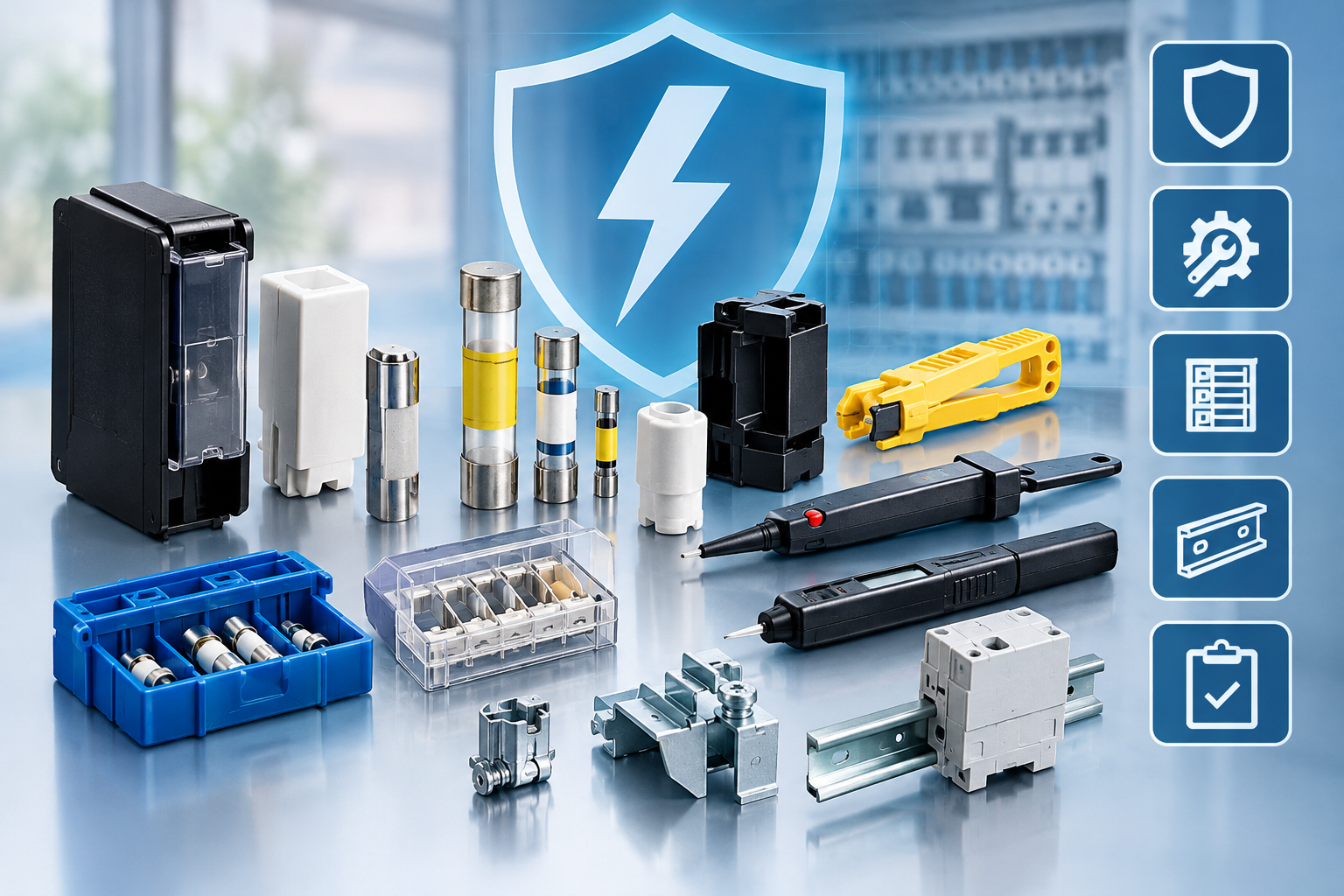
Published as part of the October 2018 full line catalog, this section covers a range of practical products, including fuse covers, fuse reducers, dummy fuse neutrals, fuse pullers, fuse testers, spare fuse holders, spare fuse cabinets, Tron clip clamps, and DIN-Rail adapters.
For electrical engineers, maintenance technicians, panel builders, industrial buyers, and electrical distributors, understanding these accessories can help simplify product selection and support effective circuit protection system maintenance.
What Does the Eaton Bussmann Accessories Catalog Cover?
The Eaton Bussmann Series accessories catalog focuses on products that support fuse handling, installation, storage, and compatibility with specific fuse classes and applications.
The main product categories include:
-
SAMI fuse covers for selected fuse classes
-
Fuse reducers for Class J, H(K), and R applications
-
Dummy fuse neutrals for specified fuse configurations
-
Fuse pullers for handling fuses
-
Fuse testers for checking fuse condition
-
Spare fuse holders for replacement fuse storage
-
Spare fuse cabinets for organized inventory management
-
Tron clip clamps for compatible electrical applications
-
DIN-Rail adapters for suitable mounting arrangements
These accessories address different practical requirements in electrical installations. Selecting the appropriate component depends on the fuse type, installation arrangement, applicable electrical ratings, and manufacturer specifications.
1. SAMI Fuse Covers: Supporting Electrical Installation Safety
SAMI fuse covers are listed for selected fuse classes, including Class CC, G, H(K), J, R, T, and UL supplemental midget fuses.
Fuse covers can help provide a suitable protective covering around compatible fuse installations. Depending on the product design and application, covers may help reduce exposure to accessible electrical components and support a more organized installation.
When selecting a fuse cover, it is important to verify the fuse class, physical dimensions, mounting arrangement, and compatibility with the intended fuse holder or equipment.
Key selection considerations:
-
Confirm the exact fuse class and compatible accessory.
-
Check the manufacturer's dimensional and installation requirements.
-
Verify that the selected component is suitable for the electrical enclosure and application.
-
Follow applicable electrical safety standards and installation instructions.
2. Fuse Reducers: Matching Compatible Fuse Configurations
Fuse reducers are another category featured in the Eaton Bussmann accessories section. The catalog identifies reducers for Class J, H(K), and R applications.
Fuse reducers are used in specific compatible configurations to accommodate differences in fuse and holder arrangements. Their suitability depends on the exact fuse system and the equipment in which they are installed.
Choosing the wrong reducer can create compatibility problems and may compromise the intended circuit protection arrangement. A reducer should never be selected based only on physical fit.
Before specifying a fuse reducer, verify the applicable fuse class, permitted electrical ratings, holder compatibility, and any restrictions identified by the manufacturer.
3. Dummy Fuse Neutrals: Accessories for Specific Fuse Systems
The catalog also includes dummy fuse neutrals for specified configurations, covering 1/4-inch × 1-1/4-inch fuses, UL supplemental midget fuses, and selected Class CC, H(K), and R applications.
These products are intended for particular compatible fuse-system arrangements. Their purpose and permitted use depend on the design of the electrical equipment and the manufacturer's instructions.
Dummy fuse neutrals should not be treated as universal substitutes for protective fuses. They must only be used where the equipment design and applicable instructions specifically permit them.
When identifying the correct component, check the exact catalog designation, fuse class, equipment requirements, and electrical safety provisions.
4. Fuse Pullers: Practical Tools for Fuse Maintenance
Fuse pullers are designed to assist with removing and handling compatible fuses. They can be useful in maintenance environments where technicians regularly inspect or replace protective devices.
Using an appropriate fuse-handling tool can help improve control during removal and reduce the likelihood of accidental contact with surrounding components. However, a fuse puller does not make an energized circuit safe to work on.
Before replacing a fuse, qualified personnel should follow the applicable isolation, lockout/tagout, and verification procedures. Equipment must be placed in a safe condition according to the relevant electrical safety requirements.
When choosing a fuse puller, consider:
-
Compatibility with the fuse's size and construction.
-
Accessibility within the fuse holder or enclosure.
-
The manufacturer's handling instructions.
-
The safety procedures required for the installation.
5. Fuse Testers: Supporting Fuse Inspection and Troubleshooting
Fuse testers are included in the Bussmann accessories catalog as tools for checking fuse condition.
A suitable tester can help maintenance personnel investigate a suspected open fuse and identify components that may require replacement. The correct testing method depends on the tester design and the electrical characteristics of the fuse.
Testing should be carried out using equipment suitable for the task and in accordance with the tester's instructions. Where necessary, the circuit must be isolated and the fuse removed before testing.
A fuse tester can assist with troubleshooting, but it does not replace a complete assessment of the electrical circuit. Repeated fuse failures may indicate an underlying problem, such as an overload, short circuit, incorrect fuse selection, or equipment fault.
6. Spare Fuse Holders: Keeping Replacement Fuses Organized
Spare fuse holders provide a practical way to keep replacement fuses available for maintenance and service work.
Having the correct replacement fuse readily accessible can reduce unnecessary downtime when a protective device needs to be changed. Organized spare storage also helps personnel distinguish between different fuse types and ratings.
When selecting spare fuse holders, consider the fuse dimensions, mounting requirements, storage environment, and the identification system used by the maintenance team.
Replacement fuses should always match the required specifications. Current rating alone is not sufficient: voltage rating, interrupting rating, time-current characteristics, fuse class, and application requirements may also be important.
7. Spare Fuse Cabinets: Improving Maintenance Readiness
The Eaton Bussmann accessories catalog includes spare fuse cabinets for organized fuse storage.
A dedicated cabinet can help centralize replacement stock and make it easier for maintenance teams to locate the appropriate fuse when required. This is particularly useful in industrial facilities, control panels, electrical workshops, and service departments that maintain multiple fuse types.
An effective spare fuse management process should include:
-
Clear identification of fuse types and ratings.
-
Separate storage for different fuse classes and applications.
-
Stock checks and replenishment procedures.
-
Protection against damage, contamination, and unsuitable storage conditions.
-
Verification of replacement fuse specifications before installation.
A well-organized spare fuse cabinet can support maintenance planning and help reduce delays caused by missing or incorrectly identified replacement parts.
8. Tron Clip Clamps: Accessories for Compatible Electrical Applications
Tron clip clamps are another product category listed in Section 15 of the Bussmann series catalog.
As with other electrical accessories, correct selection depends on the intended equipment, component dimensions, and the manufacturer's compatibility requirements. A product's appearance or physical fit should not be considered sufficient evidence that it is suitable for a particular installation.
Before specifying a clip clamp, consult the relevant catalog details and product documentation to confirm the correct application and installation method.
9. DIN-Rail Adapters: Supporting Suitable Mounting Arrangements
DIN-Rail adapters are included among the accessories covered in the Eaton Bussmann catalog.
DIN-Rail mounting is widely used in industrial control cabinets and electrical enclosures because it can simplify equipment arrangement and support modular installation practices. A compatible adapter can provide a mounting solution for equipment designed to use that accessory.
However, not every fuse holder or electrical component can be mounted using every DIN-Rail adapter. Mechanical compatibility, enclosure space, clearances, electrical ratings, and manufacturer instructions must all be considered.
For panel builders and control-system designers, confirming mounting compatibility early in the design process can help avoid installation difficulties and unnecessary component changes.
Benefits of Selecting the Right Bussmann Series Accessories
Choosing suitable accessories can improve several aspects of electrical system management.
Improved maintenance efficiency
Fuse pullers, testers, holders, and storage cabinets can help technicians organize inspection and replacement tasks. Easy access to correctly identified spare fuses can also support faster maintenance.
Better component compatibility
Accessories selected for the appropriate fuse class and equipment configuration help maintain the intended installation arrangement. Checking manufacturer specifications reduces the risk of selecting an unsuitable component.
More organized electrical installations
Compatible covers and mounting accessories can contribute to a structured installation when used according to the product instructions and applicable requirements.
More effective inventory management
Dedicated spare fuse storage and clear identification procedures can help reduce confusion between fuse types and ratings.
Support for reliable circuit protection
Accessories complement the fuse and its associated equipment. The overall protection system still depends on correct fuse selection, suitable installation, proper coordination, and compliance with applicable electrical requirements.
How to Choose the Correct Eaton Bussmann Fuse Accessory
Selecting an accessory should begin with the requirements of the actual electrical installation rather than the accessory category alone.
Follow these steps to support accurate product selection:
Step 1: Identify the installed fuse. Record the fuse class, catalog number, dimensions, current rating, voltage rating, and other relevant specifications.
Step 2: Define the accessory's purpose. Determine whether the requirement involves fuse handling, testing, storage, mounting, covering, or a specific compatible fuse configuration.
Step 3: Check compatibility. Consult the Eaton Bussmann catalog and applicable product documentation to confirm that the accessory is intended for the fuse and equipment involved.
Step 4: Review electrical and mechanical requirements. Verify relevant ratings, mounting arrangements, clearances, environmental conditions, and any installation limitations.
Step 5: Follow the manufacturer's instructions. Use the accessory only for its specified purpose and ensure installation and maintenance are carried out by appropriately qualified personnel.
Step 6: Verify current product information. Because the referenced full line catalog dates from October 2018, confirm current product availability, specifications, and any updated documentation before ordering or designing new equipment.
Who Can Benefit from the Eaton Bussmann Accessories Catalog?
The accessories section is a useful reference for several professional groups.
-
Electrical engineers: To investigate compatible accessory options during circuit protection design.
-
Panel builders: To check accessory requirements and mounting arrangements for electrical enclosures.
-
Maintenance technicians: To plan fuse testing, handling, replacement, and spare storage.
-
Industrial purchasing teams: To identify accessory categories and prepare more accurate procurement specifications.
-
Electrical distributors: To understand common accessory requirements and assist customers with product identification.
-
Facility managers: To support spare fuse organization and maintenance planning across electrical installations.
For each group, the main benefit is having a structured reference to the accessory categories associated with Bussmann series circuit protection products.
Frequently Asked Questions
What is the Eaton Bussmann Series Full Line Catalog Section 15?
Section 15 is the accessories section of Eaton's Bussmann Series Full Line Catalog 1007. The October 2018 edition covers accessories such as SAMI fuse covers, fuse reducers, dummy fuse neutrals, fuse pullers, fuse testers, spare fuse holders, spare fuse cabinets, Tron clip clamps, and DIN-Rail adapters.
Which fuse accessories are covered in the catalog?
The section lists accessories for selected fuse classes and configurations, including Class CC, G, H(K), J, R, and T, as well as certain UL supplemental midget fuses. It also includes handling tools, storage products, and mounting accessories.
How do I select the correct fuse accessory?
Start with the fuse's exact catalog number, class, dimensions, and electrical specifications. Then verify accessory compatibility using the manufacturer's documentation. Never assume that accessories are interchangeable simply because they appear to fit.
Why are fuse pullers and fuse testers useful?
Fuse pullers help with handling compatible fuses, while fuse testers assist with checking fuse condition. Both can support maintenance activities when used correctly and in accordance with electrical safety procedures.
Does the 2018 catalog guarantee that every listed accessory is still available?
No. The catalog is a historical product reference. Current availability, specifications, and replacement options should be confirmed with Eaton or an authorized distributor before purchasing.
Conclusion
The Eaton Bussmann Series Full Line Catalog 1007 – Accessories section provides a practical overview of accessories that support fuse handling, installation, testing, storage, and compatible mounting arrangements.
From SAMI fuse covers and fuse reducers to fuse pullers, testers, spare fuse cabinets, Tron clip clamps, and DIN-Rail adapters, these product categories address a variety of needs in industrial electrical systems and circuit protection applications.
For the best results, identify the installed fuse correctly, verify accessory compatibility, follow manufacturer instructions, and confirm current product information before ordering. Selecting the right accessories helps support organized maintenance, appropriate component installation, and reliable electrical protection practices.
- Details
- Category: Electrical Fuses Blog
| bus-ele-cat-1007-flc-2018-sec-14-telpower.pdf | [Eaton Bussmann series Full line catalog: Telecom protection products] | 5647 kB |
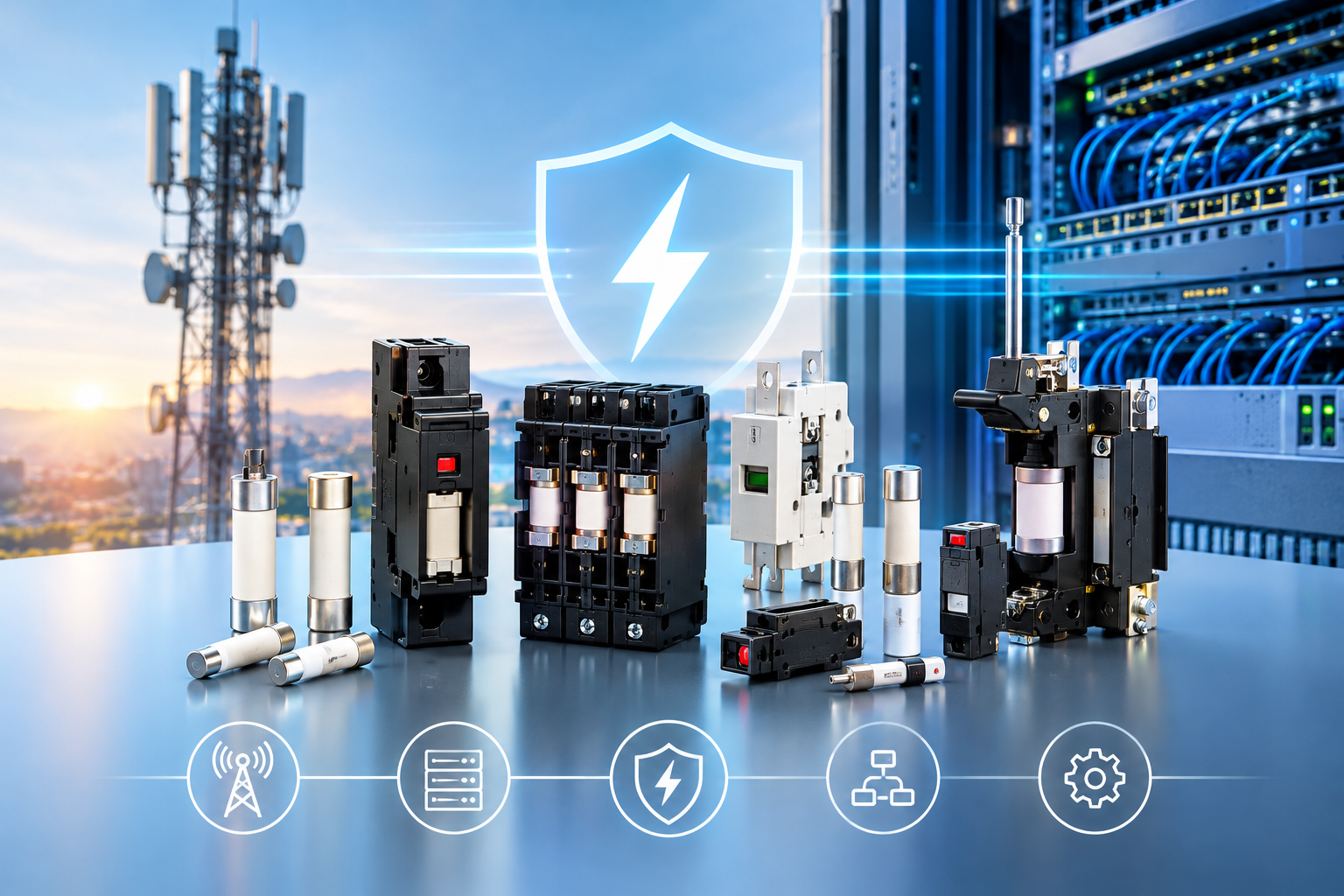
Eaton Bussmann Series Full Line Catalog: Telecom Protection Products
Introduction
Reliable power distribution is essential for telecommunications infrastructure, where network equipment, communication systems, and supporting electronics depend on stable and protected DC power. Selecting the right circuit protection components helps protect equipment against electrical faults, supports maintenance activities, and improves the overall reliability of telecom power distribution systems.
The Eaton Bussmann series Full Line Catalog 1007 – Telecom Protection Products presents a range of Telpower fuses, fused pullout disconnects, fuse holders, and associated accessories designed for telecommunications DC power applications. The product portfolio includes solutions for compact installations, branch circuit protection, and high-current DC power distribution.
This guide explores the key product families, their applications, and the factors engineers and purchasing professionals should consider when selecting telecom circuit protection products.
What Are Eaton Bussmann Telecom Protection Products?
Eaton Bussmann series telecom protection products are designed to address the electrical protection requirements of telecommunications power systems. These components combine fuse-based overcurrent protection with disconnecting functionality and, on selected products, local or remote open-fuse indication.
The catalog covers several product categories, including:
-
Telpower TPC and TPM fuses with compatible fused pullout disconnects.
-
TPA and TPA-B indicating fuses and multi-pole disconnect systems.
-
TPS power fuses and compatible disconnects.
-
TPL and TPL-B high-current fuse solutions.
-
TPN current-limiting DC fuses.
-
GMT fast-acting fuses, fuse holders, and related accessories.
-
Type 70 indicating fuses and their associated holders.
Together, these product families offer options for different current ratings, voltage requirements, mounting arrangements, and telecom power distribution configurations.
Key Product Families in the Telecom Protection Catalog
1. TPC Fuses and TPCDS Compact Fused Pullout Disconnects
The Telpower TPC series is intended for compact DC telecom power distribution applications. TPC current-limiting fuses fit compatible TPCDS fused pullout disconnects, providing a combined protection and isolation arrangement.
Key characteristics include:
-
Rated voltage of 80 V DC.
-
Fuse current ratings from 3 A to 125 A.
-
A published interrupting rating of 100 kA.
-
Local LED indication of an open fuse and remote alarm capabilities.
-
Multiple terminal configurations to accommodate different installation requirements.
The compact design makes this family relevant to telecom installations where panel space is limited and straightforward fuse replacement is important.
2. TPM Fuses and TPMDS Miniature Disconnects
The TPM series is designed for installations requiring a smaller protection footprint. TPM miniature current-limiting fuses are used with compatible TPMDS pullout disconnects.
Notable specifications and features include:
-
Rated voltage of 80 V DC.
-
Fuse current ratings from 3 A to 30 A.
-
A published interrupting rating of 20 kA.
-
Local open-fuse indication.
-
Compatibility with remote indication systems.
-
A compact form factor suitable for installations such as 1U panels.
These products can be useful for compact telecom power assemblies, particularly where equipment density and service accessibility are important design considerations.
3. TPA and TPA-B Indicating Fuses
The TPA and TPA-B product families provide indicating fuse options for compatible telecom DC power distribution systems.
The catalog identifies the following ratings:
-
TPA fuses: 170 V DC, with current ratings from 3 A to 50 A.
-
TPA-B fuses: 65 V DC, with current ratings from 20 A to 30 A.
The published interrupting ratings are 100 kA for TPA and 20 kA for TPA-B. Compatible TP15900-4 and TP15914 disconnect systems support fuse indication and other installation-specific features.
Indicating functionality can simplify fault identification by helping maintenance personnel locate an operated fuse. Correct fuse orientation and compatibility with the selected disconnect are also important considerations.
4. TPS Power Fuses and 15800 Fused Pullout Disconnects
The TPS family supports DC power distribution applications and is designed for use with compatible 15800 fused pullout disconnects.
The catalog lists TPS fuse options with ratings up to 170 V DC and current ratings that vary by product configuration. It also describes versions with horizontal or vertical printed circuit board (PCB) tabs for applications requiring direct circuit-board mounting.
Important features include:
-
Current-limiting protection.
-
Options for ferrule and PCB-tab mounting.
-
Compatibility with specified fused pullout disconnects.
-
Solutions for telecom power distribution and selected circuit-board applications.
The 15800 disconnect is listed for use with specified TPS main fuses and a compatible GMT-A indicating fuse. Engineers should verify the exact fuse and disconnect combination before specifying or ordering components.
5. TPL and TPL-B High-Current Protection
For applications requiring higher current ratings, the catalog includes TPL-family fuses and compatible fused pullout disconnects.
The 15100 disconnect family is intended for TPL Telpower fuses and is listed for 60 V DC applications, with supported fuse ranges extending from 70 A to 800 A depending on the disconnect model.
The TP158HC is another option described in the catalog, designed for TPL-B main fuses rated from 70 A to 250 A in an 80 V DC application.
These product families are relevant to primary DC power distribution and other high-current telecom applications. Selection should account for the operating voltage, expected load current, fault conditions, available installation space, and the specific fuse-disconnect combination.
6. TPN Current-Limiting DC Fuses
The catalog also includes TPN current-limiting DC fuses for applications requiring higher-current circuit protection. The product overview lists a voltage rating of 170 V DC and a range of current ratings extending from 1 A to 600 A.
When evaluating TPN fuses, engineers should review the complete electrical ratings, time-current characteristics, interrupting capacity, and installation requirements for the particular part number. These details help establish whether a fuse is appropriate for the intended circuit and fault conditions.
7. GMT Fuses, Type 70 Fuses, and Fuse Holders
The catalog includes additional protection components for lower-current circuits and supporting telecom equipment.
GMT fast-acting fuses and compatible HLS, HLT, and PCT holders provide options for applications requiring compact fuse mounting. Type 70 indicating fuses and their associated holders form another part of the portfolio.
These components may be appropriate for auxiliary circuits and equipment-level protection, provided that their ratings and characteristics match the circuit being protected.
Benefits of Using the Appropriate Telecom Circuit Protection
Improved electrical fault protection
Selecting a fuse with suitable current, voltage, and interrupting ratings helps protect conductors and equipment from specified overcurrent and short-circuit conditions. Current-limiting fuse designs can also help limit the energy let through during qualifying fault events.
Easier maintenance and fault identification
Selected Bussmann series products incorporate local or remote open-fuse indication. These features can help technicians identify an operated fuse more efficiently and reduce unnecessary troubleshooting.
Flexible installation options
The catalog includes compact disconnects, multi-pole assemblies, panel-mounted products, and PCB-tab fuse configurations. This variety helps designers select components that fit their electrical and mechanical requirements.
Support for different current levels
From miniature telecom protection to high-current DC power distribution, the product families cover a broad range of application requirements. Correct coordination between upstream and downstream protection devices remains essential.
Application-specific configurations
Different terminal styles, mounting arrangements, hardware options, and alarm connections allow selected products to be integrated into different power distribution architectures.
How to Select the Right Eaton Bussmann Telecom Protection Product
Choosing the correct protection device requires more than matching the fuse's nominal ampere rating to the load.
Step 1: Determine the system voltage
Confirm the nominal and maximum operating DC voltage, including any relevant transient or charging conditions. The selected fuse and disconnect must be suitable for the actual circuit voltage and polarity requirements.
Step 2: Establish the required current rating
Assess normal operating current, expected load variation, startup or inrush current, and conductor ampacity. Fuse sizing must follow the applicable electrical design requirements and manufacturer guidance.
Step 3: Evaluate available fault current
Review the prospective short-circuit current and verify the fuse's interrupting rating at the intended operating voltage. Do not assume that an interrupting rating published for one voltage or product family applies to another.
Step 4: Verify fuse and disconnect compatibility
Confirm that the chosen fuse is approved for use with the intended disconnect or holder. Physical fit alone does not establish electrical compatibility.
Step 5: Consider monitoring requirements
Determine whether local indication, remote alarms, or other status-monitoring features are needed. Check the required alarm wiring and interface conditions before integrating these functions into the power distribution system.
Step 6: Check mechanical and environmental requirements
Review terminal types, mounting dimensions, available panel space, accessibility, conductor connections, and the installation environment. Verify the latest product documentation for the selected part number.
Step 7: Confirm applicable standards and approvals
Check the relevant manufacturer documentation for product-specific agency recognitions, certifications, and installation conditions. Approval details may differ between models and configurations.
Common Applications of Telecom Protection Products
Eaton Bussmann series telecom protection products may be considered for a range of DC power applications, including:
-
Telecommunications power distribution panels.
-
Network equipment power feeds.
-
DC branch circuit protection.
-
High-current telecom power distribution.
-
Compact equipment racks and 1U panel assemblies.
-
Auxiliary circuits requiring appropriately rated fuse protection.
-
Power distribution assemblies using local or remote fuse-status indication.
The appropriate product depends on the circuit's electrical characteristics, equipment requirements, and the manufacturer's specified application limits.
Why Engineers and Buyers Should Consult the Full Line Catalog
The full line catalog brings multiple telecom protection product families together in one technical reference. Its product tables, ratings, catalog numbers, and dimensional information can help engineers, system integrators, maintenance teams, and purchasing professionals narrow down suitable components.
However, the catalog is dated October 2018. It should be treated as a historical selection reference rather than confirmation that every listed product, rating, certification, or catalog number remains current. Before final design approval or procurement, confirm availability and specifications against the latest manufacturer documentation.
Conclusion
The Eaton Bussmann series Full Line Catalog 1007 for telecom protection products describes a broad portfolio of Telpower fuses, fused pullout disconnects, current-limiting DC fuses, fuse holders, and indicating devices. The product families address different voltage and current ranges, from compact telecom circuits to high-current DC power distribution.
For a successful selection, engineers should evaluate operating voltage, load current, prospective fault current, interrupting capacity, fuse-disconnect compatibility, mounting requirements, and monitoring needs. Verifying the latest manufacturer specifications is equally important to ensure that the selected product is appropriate for the intended installation.
Choosing the right telecom circuit protection components supports sound electrical design, practical maintenance, and reliable DC power distribution across telecommunications infrastructure.
Frequently Asked Questions
What are Eaton Bussmann telecom protection products used for?
They are used to provide fuse-based overcurrent protection and, where applicable, fused disconnection and open-fuse indication in telecommunications DC power distribution systems.
What is the difference between TPC and TPM fuses?
TPC fuses support compatible compact fused disconnects and are listed with current ratings from 3 A to 125 A. TPM fuses are designed for miniature disconnect applications and are listed from 3 A to 30 A. Their published interrupting ratings also differ, so the correct family depends on the circuit requirements.
Do the products support remote fuse monitoring?
Selected product families provide remote open-fuse indication or alarm connections. The exact functionality depends on the fuse and compatible disconnect model.
Are these products suitable for high-current DC applications?
Selected products, including the TPL family and compatible disconnects, are designed for high-current DC power distribution. The specific voltage, current, interrupting capacity, and compatibility requirements must be verified for each configuration.
Should the 2018 catalog be used as the final procurement reference?
No. It can help identify product families and historical specifications, but buyers should confirm current availability, ratings, approvals, and ordering information against the latest manufacturer documentation before placing an order.

- Details
- Category: Electrical Fuses Blog
| bus-ele-cat-1007-flc-2018-sec-13-surge.pdf | [Eaton Bussmann series Full line catalog: Surge protective devices] | 5762 kB |
Eaton Bussmann Series Surge Protective Devices: Product Features, Applications and Selection Guide
Introduction to Eaton Bussmann Series Surge Protective Devices
Electrical systems rely on dependable protection against voltage surges to maintain operational reliability, protect sensitive equipment and reduce the risk of costly downtime. Eaton Bussmann series surge protective devices (SPDs) are designed to help protect electrical installations against transient overvoltages caused by events such as lightning activity and switching operations.
As part of Eaton's electrical circuit protection portfolio, Bussmann series surge protection solutions support a range of applications across commercial, industrial and electrical distribution environments. Selecting the appropriate surge protective device is an important step in developing an effective electrical protection strategy.
The Eaton Bussmann series Full Line Catalog, Surge Protective Devices section, provides a product reference for professionals who need to evaluate surge protection options and identify suitable devices for their electrical systems.
What Are Surge Protective Devices?
Surge protective devices are electrical protection components designed to limit transient overvoltages and divert surge currents, helping reduce the exposure of connected equipment to damaging electrical disturbances.
Voltage surges can occur for several reasons, including lightning-induced transients, utility switching, and the operation of large electrical loads. Even brief overvoltage events can affect electronic controls, automation systems, communication equipment and other sensitive electrical components.
Installing suitable surge protection can help improve system resilience, reduce equipment damage and support continuity of operations. The effectiveness of protection depends on the device specification, installation location, grounding arrangements and coordination with the wider electrical protection system.
Key Benefits of Eaton Bussmann Series Surge Protection
Protection Against Transient Overvoltages
Surge protective devices help limit transient voltage disturbances that may otherwise affect connected electrical equipment. Choosing a device with appropriate electrical ratings is essential to achieving the intended level of protection.
Support for Electrical System Reliability
Unexpected electrical disturbances can interrupt production, disrupt building services and contribute to equipment failures. Properly selected surge protection can form an important part of a broader strategy to improve electrical system reliability.
Solutions for Different Electrical Applications
Electrical installations vary considerably in their voltage ratings, distribution arrangements, operating environments and protection requirements. The Bussmann series catalog is a useful starting point for identifying available product options and reviewing their technical characteristics.
Integration Into a Wider Protection Strategy
Surge protection works best when considered alongside overcurrent protection, grounding, bonding and the overall electrical distribution design. A coordinated approach helps ensure that protective devices perform their intended functions without treating surge protection as a substitute for other essential safeguards.
Applications of Surge Protective Devices
Eaton Bussmann series surge protective devices may be relevant to a variety of electrical applications, depending on the specific product ratings and installation requirements.
Industrial Facilities
Manufacturing plants and industrial facilities often use programmable logic controllers, variable frequency drives, sensors, instrumentation and automated production equipment. Surge protection can help reduce exposure to transient disturbances that may affect these systems.
Commercial Buildings
Offices, retail premises, educational facilities and other commercial buildings depend on reliable electrical distribution to support lighting, HVAC systems, security equipment and electronic infrastructure. Suitable surge protection can contribute to protecting these electrical assets.
Electrical Distribution Systems
Distribution panels and other electrical infrastructure can be exposed to switching transients and externally induced surges. Selecting surge protective devices appropriate to the system configuration helps address these risks at suitable points in the installation.
Sensitive Electronic Equipment
Electronic controls and digital equipment may be vulnerable to transient overvoltages. An appropriate protection design considers the equipment's sensitivity, the characteristics of the electrical supply and the location of potential surge entry points.
Important Technical Factors When Selecting an SPD
Choosing the correct surge protective device requires more than comparing product names. Electrical professionals should review the manufacturer's technical documentation and evaluate the following parameters.
1. System Voltage and Configuration
Confirm the nominal system voltage, frequency and grounding arrangement. The device must be compatible with the electrical system in which it will be installed.
2. Surge Protection Type and Installation Location
Surge protective devices are commonly classified by their intended installation location and the surge exposure they are designed to address. Depending on the applicable standards, Type 1, Type 2 and Type 3 devices serve different protection roles. The correct selection depends on the installation design, service entrance arrangement and equipment being protected.
3. Maximum Continuous Operating Voltage
The maximum continuous operating voltage, commonly identified as MCOV or Uc depending on the product documentation and applicable standard, indicates the voltage that the SPD is designed to withstand continuously under specified conditions. This value must be suitable for the electrical system.
4. Surge Current and Discharge Ratings
Review the surge current ratings relevant to the intended application. Depending on the product and applicable standard, specifications may include nominal discharge current, maximum discharge current or impulse current ratings. These values describe different test conditions and should not be treated as interchangeable.
5. Voltage Protection Level
The voltage protection level, often identified as Up under IEC-based specifications, indicates the declared level of voltage protection under defined test conditions. The protection level should be appropriate for the withstand capability of the equipment being protected.
6. Short-Circuit and Overcurrent Coordination
Check the device's short-circuit rating, required backup protection and installation instructions. Correct coordination with upstream protective devices is essential to support safe operation under fault conditions.
7. Environmental and Maintenance Requirements
Consider operating temperature, enclosure requirements, exposure to environmental conditions, status indication and replacement requirements. These factors can influence the suitability of an SPD for a particular installation.
How to Use the Eaton Bussmann Series Full Line Catalog
The surge protective devices section of the Eaton Bussmann series Full Line Catalog can support the product selection process by helping electrical engineers, contractors, distributors and maintenance professionals identify relevant product information.
When reviewing the catalog, focus on the following steps:
-
Define the application: Identify the equipment or electrical system that requires protection.
-
Confirm system requirements: Establish the supply voltage, phase configuration, grounding arrangement and installation location.
-
Compare technical specifications: Review available product ratings and identify devices that meet the required electrical parameters.
-
Check installation requirements: Verify wiring, grounding, overcurrent protection and other manufacturer-specified conditions.
-
Validate the final selection: Consult the current product documentation and applicable electrical standards before specifying or installing a device.
Because product ranges and technical specifications can change over time, verify that the catalog information matches the current product version and regional requirements before making a purchasing or engineering decision.
Why Correct Surge Protection Matters
Inadequate surge protection can expose electrical equipment to avoidable stress and may contribute to premature component failure, service interruptions and maintenance costs. However, installing an SPD without considering the complete electrical system may not deliver the expected protection.
A well-designed surge protection strategy takes into account the likely sources of transient overvoltages, the sensitivity of connected equipment, the electrical installation layout and the coordination of protective devices. Depending on the application, protection at more than one point in the installation may be appropriate.
Professional assessment is particularly important for industrial automation, critical building services and installations where equipment downtime has significant operational consequences.
Who Can Benefit From the Bussmann Series Surge Protection Catalog?
The catalog is a useful reference for professionals involved in electrical design, procurement, installation and maintenance, including:
-
Electrical engineers specifying protection for new installations.
-
Electrical contractors installing or upgrading distribution systems.
-
Industrial maintenance teams assessing electrical reliability.
-
Panel builders integrating protection into electrical assemblies.
-
Electrical distributors assisting customers with product selection.
-
Facility managers seeking to improve protection for electrical and electronic equipment.
By reviewing the relevant product data and installation requirements, these professionals can make more informed decisions about surge protection for their applications.
Frequently Asked Questions
What is an Eaton Bussmann series surge protective device?
It is a surge protection product within Eaton's Bussmann series portfolio, intended to help limit transient overvoltages and reduce the risk of damage to compatible electrical equipment when correctly selected and installed.
What causes electrical surges?
Electrical surges may result from lightning-related activity, utility switching, switching of inductive loads and other transient events in an electrical network.
How do I select the correct surge protective device?
Start by confirming the electrical system voltage and configuration, installation location, surge exposure, required protection ratings and applicable standards. Then compare these requirements with the manufacturer's product specifications and installation instructions.
Can an SPD replace a fuse or circuit breaker?
No. Surge protective devices and overcurrent protective devices have different functions. An SPD addresses transient overvoltages, while fuses and circuit breakers provide overcurrent protection within their specified ratings and operating conditions. The installation must follow the manufacturer's coordination and protection requirements.
Are all surge protective devices suitable for every electrical system?
No. SPDs differ in voltage ratings, surge current capabilities, protection levels, installation types and other technical characteristics. A device must be selected for the specific electrical system and application.
Why should I consult the manufacturer's catalog?
The manufacturer's catalog provides product-specific information that supports accurate identification, technical comparison and application planning. Always verify critical specifications against current documentation before ordering or installing equipment.
Conclusion
Eaton Bussmann series surge protective devices are an important consideration for electrical professionals seeking to manage transient overvoltage risks and improve the resilience of electrical installations. Effective selection involves evaluating system voltage, surge protection ratings, installation requirements, grounding and coordination with other protective devices.
The Eaton Bussmann series Full Line Catalog section on surge protective devices serves as a starting point for reviewing product options and technical information. By combining manufacturer documentation with sound electrical design practices, engineers, contractors and maintenance professionals can select surge protection solutions that better meet the requirements of their applications.



