
Electrical Fuses Blog
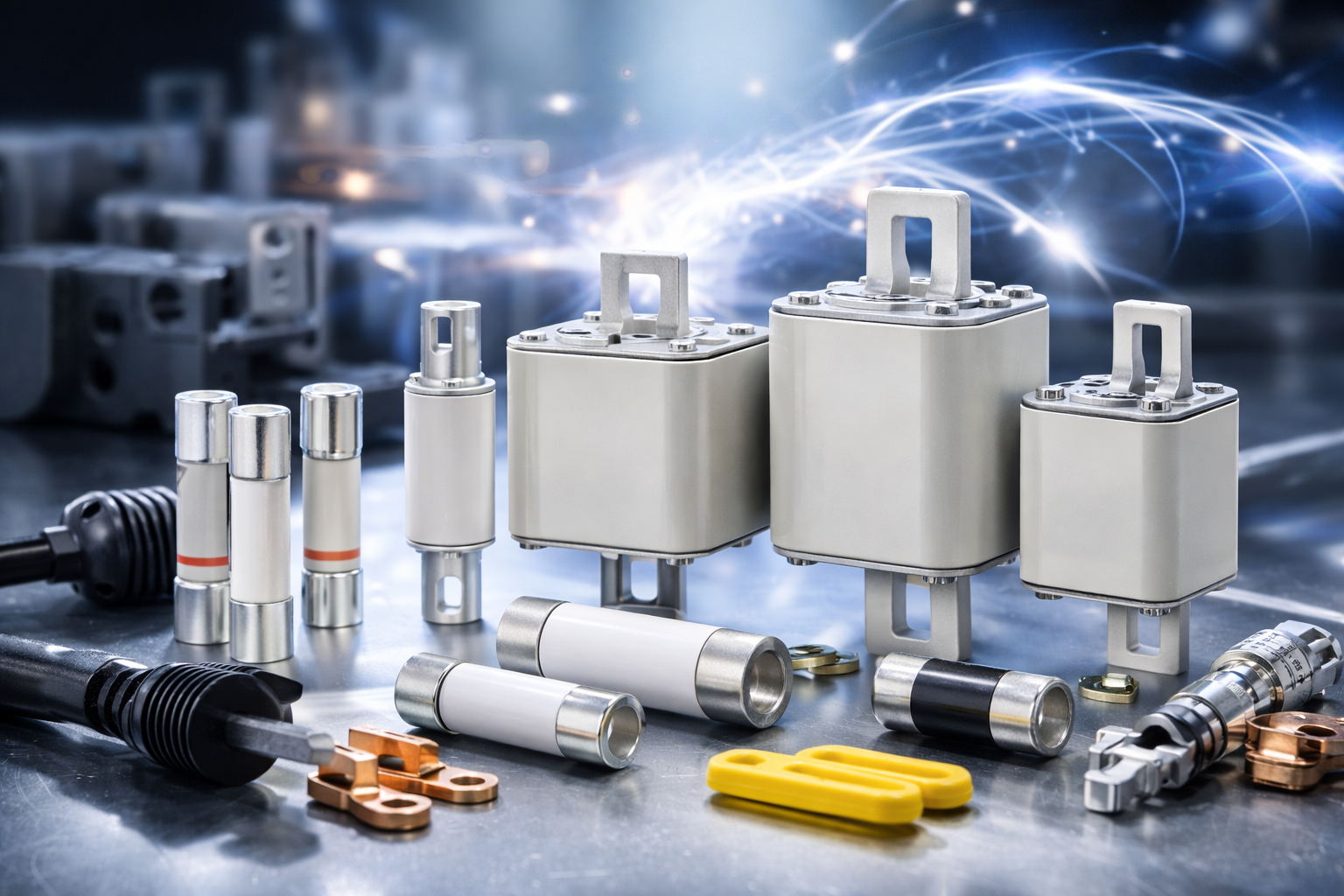
Eaton Bussmann Series Electrical Fuses – Blog & Fachwissen
Im Eaton Bussmann Series Electrical Fuses Blog finden Sie fundiertes Fachwissen rund um elektrische Sicherungen, Überstromschutz und moderne Schutzkonzepte für industrielle und gewerbliche Anwendungen. Diese Kategorie bündelt alle Blogartikel, technischen Beiträge und Praxisguides zu den Sicherungssystemen und Serien von Eaton Bussmann.
Eaton Bussmann zählt weltweit zu den führenden Herstellern von elektrischen Sicherungen, und ihre Serien stehen für Sicherheit, Normkonformität und höchste Zuverlässigkeit in anspruchsvollen elektrischen Systemen.
Was Sie im Eaton Bussmann Sicherungen Blog erwartet
Unsere Blogbeiträge helfen Ingenieuren, Einkäufern, Technikern und Planern dabei, die richtige Sicherungslösung zu finden und technische Zusammenhänge besser zu verstehen.
Themenschwerpunkte dieser Kategorie:
-
🔌 Überblick über Eaton Bussmann Sicherungsserien
-
⚙️ Unterschiede zwischen UL-, IEC- und Spezial-Sicherungen
-
📘 Technische Erklärungen zu Kennlinien, Auslöseverhalten & Bemessungswerten
-
🏭 Anwendungstipps für Industrie, Maschinenbau & Energieverteilung
-
🚗 Beiträge zu EV-, DC- und Hochvolt-Sicherungen
-
🛠 Best Practices für Auswahl, Installation und Wartung
Alle Inhalte sind praxisnah, verständlich aufbereitet und technisch fundiert.
Eaton Bussmann Sicherungsserien im Fokus
Der Blog behandelt regelmäßig verschiedene Eaton Bussmann Series Electrical Fuses, darunter:
-
Industrial Fuses
-
North American (UL) Fuse Series
-
IEC Sicherungsserien
-
High Speed & Semiconductor Fuses
-
EV & DC Sicherungen
-
Supplementary & Specialty Fuses
So erhalten Sie einen umfassenden Überblick über das Eaton Bussmann Portfolio und dessen Einsatzmöglichkeiten.
Fachwissen für sichere elektrische Systeme
Elektrische Sicherungen sind ein zentraler Bestandteil jeder sicheren Stromversorgung. Der Eaton Bussmann Series Electrical Fuses Blog unterstützt Sie dabei, Risiken zu minimieren, Normen einzuhalten und die Lebensdauer Ihrer Anlagen zu verlängern.
Ganz gleich, ob Sie Grundlagenwissen suchen oder tief in spezielle Sicherungsserien eintauchen möchten – hier finden Sie relevante, aktuelle und suchmaschinenoptimierte Inhalte rund um Eaton Bussmann Electrical Fuses.
👉 Jetzt Blogartikel entdecken und Ihr Wissen über Eaton Bussmann Sicherungsserien gezielt erweitern.

- Details
- Category: Electrical Fuses Blog
 bus-ele-cat-1007-flc-2018-sec-12-gear.pdf | [Eaton Bussmann series Full line catalog: Quik-Spec electrical gear] | 1231 kB |
Eaton Bussmann Series Full Line Catalog: A Guide to Quik-Spec Electrical Gear
Introduction
Reliable electrical protection is essential for commercial buildings, industrial facilities, and modern electrical distribution systems. The Eaton Bussmann series Quik-Spec electrical gear product range is designed to support electrical circuit protection and help simplify the specification of equipment for demanding applications.
The Eaton Bussmann series Full Line Catalog provides product information for engineers, electrical contractors, panel builders, facility managers, and distributors who need to identify suitable electrical protection solutions. Its Quik-Spec electrical gear section is a useful reference when evaluating equipment for electrical distribution, system design, and installation planning.
In this guide, we explore the key features, applications, and selection considerations associated with Eaton Bussmann series Quik-Spec electrical gear and explain how the catalog can support electrical professionals in choosing appropriate equipment.
What Is Eaton Bussmann Series Quik-Spec Electrical Gear?
Eaton Bussmann series is a recognised name in electrical circuit protection, offering solutions designed to help protect electrical systems against overcurrent and other electrical faults.
Quik-Spec electrical gear is part of Eaton's broader approach to electrical protection and distribution. It is intended to support the specification and implementation of suitable electrical equipment in applications where dependable protection, equipment coordination, and efficient installation planning are important.
For electrical professionals, using manufacturer documentation during the selection process helps establish the relevant product requirements, ratings, and installation considerations before equipment is specified or purchased.
Key Benefits of Quik-Spec Electrical Gear
1. Support for Electrical Circuit Protection
Electrical protection equipment plays an important role in reducing the risks associated with overloads and short circuits. Selecting equipment with appropriate ratings and protection characteristics helps support the safe and reliable operation of electrical distribution systems.
Eaton Bussmann series Quik-Spec electrical gear can be evaluated as part of a broader circuit protection strategy, taking into account the characteristics of the electrical installation and the requirements of the application.
2. Simplified Equipment Selection
Choosing electrical distribution and protection equipment requires careful consideration of system voltage, current requirements, available fault current, and installation conditions.
The Eaton Bussmann series Full Line Catalog serves as a technical reference for professionals researching products and identifying suitable solutions. Consulting manufacturer specifications can help streamline the equipment selection process and reduce uncertainty during project planning.
3. Support for System Coordination
Proper coordination between protective devices is important for electrical system reliability. A well-designed protection scheme aims to ensure that faults are interrupted appropriately while minimising unnecessary disruption to other parts of the installation.
When evaluating Quik-Spec electrical gear, engineers should review the applicable manufacturer documentation and verify coordination requirements against the characteristics of the complete electrical system.
4. Practical Reference for Electrical Professionals
Electrical contractors, engineers, consultants, and purchasing teams often need accurate product information throughout the project lifecycle.
A manufacturer catalog helps these professionals review available equipment, confirm technical requirements, and communicate product specifications during design, procurement, installation, and maintenance planning.
Applications of Eaton Bussmann Series Quik-Spec Electrical Gear
Electrical protection and distribution equipment must be selected according to the demands of the installation. Depending on the specific product and its published ratings, relevant application environments may include:
-
Commercial buildings: Electrical distribution systems serving offices, retail premises, and other commercial facilities.
-
Industrial facilities: Power distribution installations that require appropriately rated circuit protection.
-
Electrical panels and assemblies: Projects in which designers and panel builders must evaluate compatible protective equipment.
-
Facility management: Maintenance, equipment replacement, and electrical system upgrade projects.
-
Electrical engineering projects: Applications requiring documented product ratings and verification of protection requirements.
The suitability of any individual Quik-Spec product depends on its specific design, ratings, listing or certification, and installation requirements. Always consult the applicable product documentation before making a selection.
How to Select the Right Quik-Spec Electrical Gear
Selecting electrical protection equipment requires more than comparing product names or nominal current ratings. The following considerations can help guide the process.
Determine the System Voltage
Confirm the nominal system voltage and the equipment's permitted operating voltage. The selected device must be suitable for the electrical system in which it will be installed.
Establish the Current Requirements
Evaluate the expected load current, conductor ratings, and applicable overcurrent protection requirements. The equipment's continuous current rating must be appropriate for the application.
Verify Short-Circuit Ratings
Available fault current is a critical factor in equipment selection. Check the applicable interrupting rating or short-circuit current rating, as relevant to the equipment, and verify that it is adequate for the installation.
Review Protection Coordination
Consider how the selected equipment will interact with upstream and downstream protective devices. Manufacturer coordination information and engineering analysis may be necessary to establish an appropriate protection scheme.
Confirm Installation Requirements
Review the manufacturer's instructions for mounting, wiring, conductor sizing, environmental conditions, clearances, and any other installation requirements. Also verify compliance with applicable electrical codes and standards.
Check Product Availability and Documentation
Before purchasing, confirm the exact product designation, applicable ratings, current technical documentation, and availability with an authorised supplier or distributor.
Why the Eaton Bussmann Series Full Line Catalog Matters
Manufacturer catalogs are important technical resources for electrical design and procurement. The Eaton Bussmann series Full Line Catalog helps professionals investigate the manufacturer's product offering and identify documentation relevant to their projects.
For Quik-Spec electrical gear, the catalog section can be used as a starting point for researching equipment and understanding the information that needs to be verified before specification.
Electrical professionals should pay particular attention to product tables, technical notes, ordering information, ratings, and installation guidance. Because product documentation may be revised over time, it is also important to confirm that the information being used applies to the exact product and current project requirements.
The referenced catalog section is dated 2018. For new installations, replacements, or projects subject to current regulatory requirements, verify specifications against the latest applicable Eaton documentation before finalising a design or purchase.
Who Should Use This Catalog?
The Eaton Bussmann series Quik-Spec electrical gear catalog section may be useful to several professional audiences.
-
Electrical engineers researching equipment for electrical distribution and circuit protection designs.
-
Electrical contractors reviewing product requirements before installation.
-
Panel builders assessing equipment suitability for electrical assemblies.
-
Maintenance teams identifying replacement equipment and checking existing specifications.
-
Procurement specialists confirming product identifiers and technical requirements before ordering.
-
Electrical distributors supporting customers with product selection and technical information.
Using manufacturer documentation early in the project helps improve communication between design, installation, maintenance, and purchasing teams.
Best Practices for Electrical Equipment Selection
To support a reliable electrical installation, follow these best practices when evaluating Eaton Bussmann series Quik-Spec electrical gear:
-
Define the electrical system requirements before comparing products.
-
Use manufacturer documentation to verify product ratings and technical characteristics.
-
Confirm fault-current capability and protection coordination.
-
Check compatibility with the surrounding electrical equipment.
-
Follow the manufacturer's installation and maintenance instructions.
-
Verify compliance with applicable electrical codes and standards.
-
Confirm that the documentation reflects the current product version and project requirements.
Electrical equipment selection, installation, and maintenance should be performed by appropriately qualified professionals.
Conclusion
Eaton Bussmann series Quik-Spec electrical gear is a product range worth evaluating when researching electrical distribution and circuit protection solutions. The Eaton Bussmann series Full Line Catalog provides a technical starting point for engineers, contractors, panel builders, facility managers, and purchasing professionals who need to assess equipment requirements.
By reviewing product ratings, checking system compatibility, considering protection coordination, and verifying current manufacturer documentation, electrical professionals can make more informed equipment selection decisions.
For the best results, treat the catalog as a technical reference rather than a substitute for project-specific engineering review. Confirm the latest applicable product specifications and installation instructions before selecting, purchasing, or installing electrical protection equipment.
Frequently Asked Questions
What is Eaton Bussmann series Quik-Spec electrical gear?
It is part of Eaton Bussmann series electrical protection and distribution equipment. Specific product capabilities and applications should be verified in the relevant manufacturer documentation.
Who can benefit from the Eaton Bussmann series Full Line Catalog?
Electrical engineers, contractors, panel builders, maintenance professionals, distributors, and procurement teams can use the catalog to research equipment and verify product requirements.
What should I check before selecting Quik-Spec electrical gear?
Review system voltage, current requirements, fault-current ratings, protection coordination, installation conditions, and applicable codes and standards.
Is the 2018 Eaton Bussmann catalog suitable for new projects?
The 2018 catalog can be a useful historical product reference, but current projects should be checked against the latest applicable manufacturer documentation and regulatory requirements.
Why is electrical protection equipment selection important?
Appropriate equipment selection helps support safe electrical operation, suitable fault protection, system coordination, and compliance with relevant installation requirements.
- Details
- Category: Electrical Fuses Blog
bus-ele-cat-1007-flc-2018-sec-11-disconnects.pdf | 0 kB |
Eaton Bussmann Series Disconnect Switches: A Complete Guide to Selection, Applications and Electrical Protection
Introduction to Eaton Bussmann Series Disconnect Switches
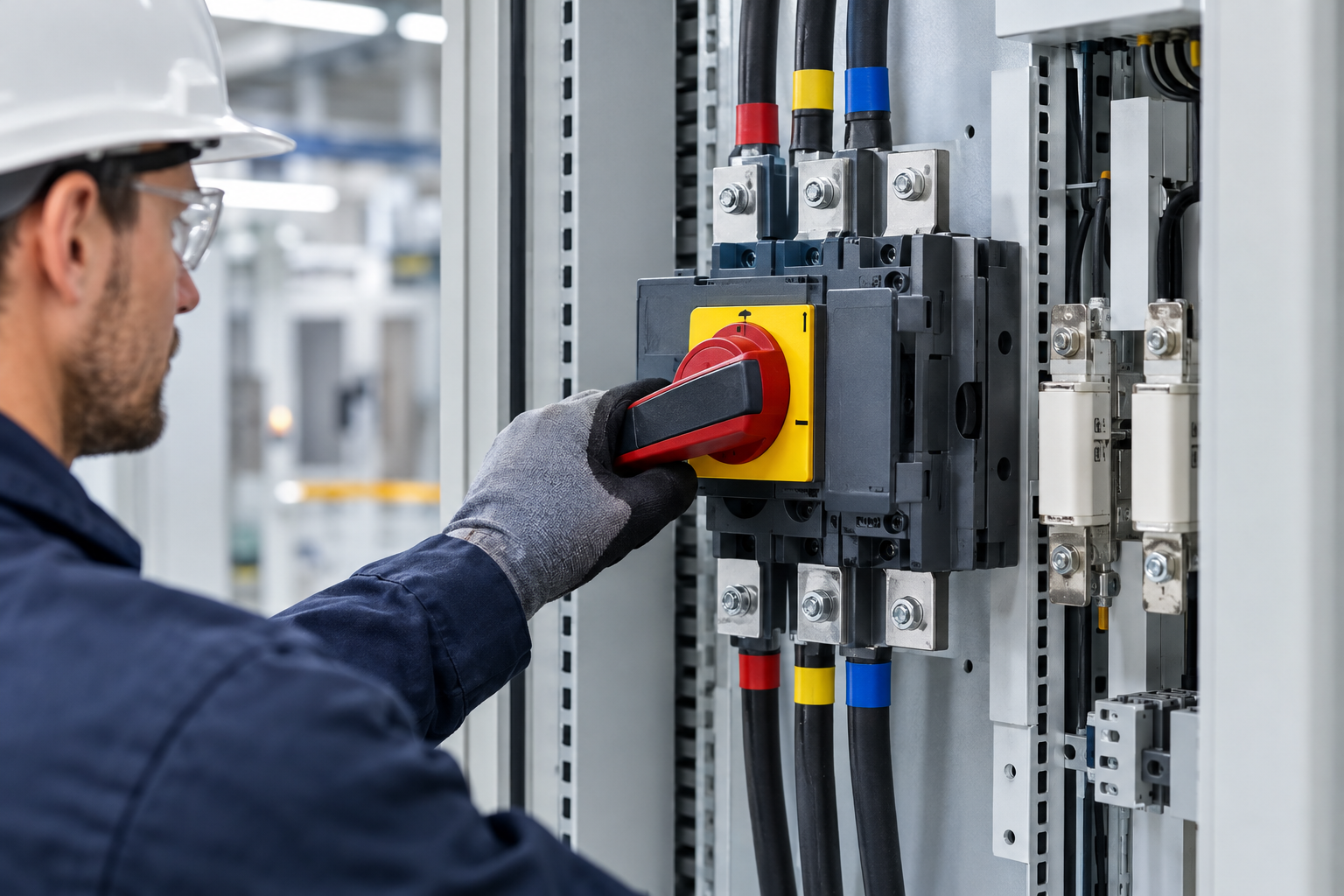
Reliable electrical isolation is essential for safe operation, maintenance and servicing of industrial and commercial electrical systems. Eaton Bussmann series disconnect switches are designed to support the isolation of electrical circuits and help engineers, panel builders and maintenance professionals develop dependable power distribution and protection solutions.
The Eaton Bussmann series Full Line Catalog, Section 11 – Disconnect Switches, provides a product reference for exploring disconnect switch solutions within the Bussmann portfolio. It is a useful starting point for electrical professionals who need to identify suitable switching equipment for control panels, industrial machinery and power distribution applications.
Choosing the right disconnect switch requires careful consideration of the electrical system, operating conditions, current rating, voltage rating and installation requirements. Understanding these factors helps ensure that the selected equipment is appropriate for the intended application.
What Is a Disconnect Switch?
A disconnect switch is an electrical switching device used to isolate a circuit or electrical installation from its power source. Disconnect switches are commonly installed in electrical distribution systems, industrial control panels and machinery where controlled isolation is necessary for servicing, inspection or maintenance.
Depending on the design and application, disconnect switches may provide isolation as standalone devices or form part of a larger electrical protection arrangement.
It is important to distinguish between electrical isolation and overcurrent protection. A disconnect switch does not necessarily protect a circuit against overloads or short circuits. Where required, it must be coordinated with suitable protective devices, such as fuses or circuit breakers, according to the equipment specifications and applicable electrical standards.
Key Benefits of Eaton Bussmann Series Disconnect Switches
1. Reliable electrical isolation
Disconnect switches help provide a defined means of separating electrical equipment from its power supply. This is particularly important when machinery, distribution panels or other electrical installations require maintenance.
2. Integration into electrical systems
Disconnect switches can be incorporated into appropriately designed electrical panels and industrial installations. Selecting equipment that matches the system configuration helps simplify installation planning and supports consistent electrical system design.
3. Support for electrical safety procedures
Suitable disconnecting equipment is an important component of electrical safety planning. When correctly selected, installed and operated, it supports established isolation procedures and maintenance practices.
However, a switch position alone does not establish that equipment is safe to work on. Safe isolation requires following applicable procedures, including lockout/tagout where required, and verifying the absence of voltage using an appropriate method.
4. Compatibility with coordinated protection
In applications where fused disconnecting arrangements are required, disconnect switches and correctly specified fuses can form part of a coordinated circuit protection solution. The selected combination must meet the installation's electrical ratings, fault-current requirements and manufacturer instructions.
5. Flexible application planning
Different electrical installations have different isolation requirements. Consulting the Eaton Bussmann series catalog helps electrical professionals investigate available product configurations and determine which options warrant further technical evaluation.
Applications of Disconnect Switches
Eaton Bussmann series disconnect switch solutions may be relevant to a range of industrial and commercial electrical applications, subject to the ratings and capabilities of the individual products.
Industrial control panels
Control panels frequently require a means of isolating incoming power for maintenance, troubleshooting and equipment servicing. A suitably rated disconnect switch can be incorporated into the panel design to support these requirements.
Manufacturing machinery
Production lines and industrial machines often contain electrical components that require isolation during maintenance or repair. The appropriate disconnecting arrangement depends on the machine design, power supply, motor loads and applicable machinery safety requirements.
Commercial electrical installations
Electrical distribution equipment in commercial buildings may require disconnecting devices for designated circuits or equipment. Product selection should account for the installation type, electrical load and relevant local codes.
Power distribution systems
Disconnect switches may be used within distribution assemblies where circuit isolation is required. Engineers should assess the system voltage, rated current, available fault current and coordination with upstream and downstream protective devices.
Maintenance and service operations
Electrical maintenance procedures often depend on clearly defined isolation points. A properly selected disconnect switch can support an installation's isolation strategy when used in conjunction with approved safety procedures.
How to Select the Right Disconnect Switch
Selecting an appropriate disconnect switch involves more than matching a nominal current rating. The following factors should be evaluated before a product is specified.
1. Rated operating voltage
Confirm that the disconnect switch is suitable for the system's operating voltage and the intended electrical configuration. AC and DC applications can have different switching requirements, so the applicable voltage rating must be verified for the specific use.
2. Rated current
Determine the normal operating current of the circuit and assess the load characteristics. The switch's rated current and any applicable utilization category must be suitable for the intended duty.
Motor circuits, transformer loads and other inductive applications may impose different switching demands from resistive loads.
3. Number of poles
The required number of poles depends on the circuit configuration and isolation requirements. Verify whether the application requires switching of single-phase, three-phase or other conductor arrangements, and ensure the selected device is suitable for the intended installation.
4. Fuse compatibility
If the design requires a fused disconnect switch, confirm the specified fuse type, size, voltage rating and current rating. Fuse selection must also consider the available short-circuit current, required interrupting rating and coordination with other protective devices.
Do not assume that every fuse is compatible with every disconnect switch. Always check the manufacturer's product documentation.
5. Short-circuit and fault-current requirements
Assess the available fault current at the installation point. Verify the applicable short-circuit ratings of the switch assembly and any associated protective devices. A suitable combination must be selected in accordance with manufacturer instructions and relevant standards.
6. Installation and mounting
Consider the available panel space, mounting arrangement, enclosure design, terminal access and conductor requirements. Environmental conditions, ingress protection and temperature limitations should also be evaluated where applicable.
7. Applicable standards and compliance
Confirm that the selected equipment meets the electrical codes, standards and certification requirements applicable to the installation's location and intended use.
The final selection should always be based on the current technical documentation for the specific product rather than on the general product family name alone.
Understanding the Eaton Bussmann Series Full Line Catalog
The Eaton Bussmann series Full Line Catalog, Section 11 – Disconnect Switches, is a reference for professionals researching disconnecting equipment within the Bussmann product range.
When reviewing the catalog, focus on the information needed to narrow the selection to a suitable product. Depending on the individual product entry, relevant details may include:
-
Product identification and ordering information.
-
Electrical ratings and supported configurations.
-
Mounting and installation characteristics.
-
Compatibility with specified accessories or protective devices.
-
Technical limitations and applicable product documentation.
Catalog information should be interpreted in the context of the intended application. If a particular rating, accessory combination or certification is not clearly stated, consult the manufacturer's detailed technical documentation before specifying or purchasing the device.
Because catalog editions can become outdated, confirm product availability, technical specifications and ordering details with current Eaton documentation before finalizing a design.
Disconnect Switches vs. Circuit Breakers
Disconnect switches and circuit breakers serve different primary purposes, although some equipment may combine switching and protective functions.
A disconnect switch provides a means of isolating a circuit when the device is suitable for the intended isolation duty. A circuit breaker is designed to interrupt current under specified conditions and generally provides overcurrent protection when correctly selected and applied.
The principal differences are:
-
Isolation: Disconnect switches are selected for the required circuit-isolation function.
-
Overcurrent protection: Circuit breakers provide overcurrent protection within their specified operating characteristics.
-
Fused arrangements: A fused disconnect switch combines a disconnecting function with compatible fuses that provide overcurrent protection.
-
System coordination: Both devices must be evaluated in the context of the complete electrical system and its fault-current requirements.
The correct choice depends on the installation's protection strategy, operating requirements and applicable regulations.
Best Practices for Installation and Maintenance
Correct installation and maintenance are essential for the safe and reliable operation of disconnecting equipment.
Follow manufacturer instructions. Use the installation, wiring, torque and operating guidance provided for the exact product.
Isolate before servicing. Follow the established electrical safety procedure, including lockout/tagout where applicable, and verify the absence of voltage before work begins.
Inspect equipment regularly. Follow the manufacturer's recommended inspection and maintenance intervals. Check for visible damage, overheating, contamination or other signs of deterioration.
Verify connections. Electrical connections must be made and tightened according to the specified conductor requirements and manufacturer torque values.
Check protective coordination. Where fuses or other protective devices are used, confirm that their ratings and characteristics remain appropriate for the installation.
Use qualified personnel. Installation, inspection and maintenance should be carried out by personnel with the appropriate training and authorization under applicable electrical safety requirements.
Why Consult the Catalog Before Purchasing?
Consulting the Eaton Bussmann series Full Line Catalog before purchasing helps create a more structured product selection process. Rather than choosing a disconnect switch based on appearance or a single electrical rating, engineers can use the catalog as a starting point for identifying candidate products and verifying their suitability.
A systematic review can help reduce specification errors, identify important accessory or mounting requirements and clarify which additional technical documents are needed.
For panel builders, electrical contractors, maintenance teams and purchasing professionals, accurate product identification also supports clearer communication between design, procurement and installation teams.
Conclusion
Eaton Bussmann series disconnect switches are relevant to electrical isolation and distribution design across a variety of industrial and commercial applications. Selecting the right device requires a clear understanding of the system voltage, current, pole configuration, switching duty, fault-current conditions, installation requirements and any associated fuse specifications.
The Eaton Bussmann series Full Line Catalog, Section 11 – Disconnect Switches, provides a useful starting point for researching the product range and identifying options for further evaluation.
For the best results, use catalog information alongside current manufacturer specifications, installation instructions and applicable electrical standards. Careful product selection and proper installation help support safe maintenance practices and reliable electrical system operation.
Frequently Asked Questions
What is an Eaton Bussmann series disconnect switch?
It is a disconnecting device within the Eaton Bussmann product portfolio, intended for electrical isolation applications where the specific product's ratings and design are suitable.
Are disconnect switches the same as circuit breakers?
No. A disconnect switch primarily provides isolation, whereas a circuit breaker is designed to interrupt current under specified conditions and generally provides overcurrent protection. A fused disconnect arrangement can combine isolation with fuse-based overcurrent protection.
How do I choose the correct disconnect switch?
Evaluate the operating voltage, rated current, pole configuration, switching duty, fault-current requirements, mounting arrangement, environmental conditions and compatibility with associated protective devices.
Can a disconnect switch be used with fuses?
Some disconnect switch arrangements are designed for use with specified fuses. Verify the permitted fuse type, size, ratings and coordination requirements in the manufacturer's documentation.
Why should I consult the Eaton Bussmann series catalog?
The catalog helps identify relevant product options and technical information for further evaluation. Always confirm critical specifications and availability using current manufacturer documentation before purchasing or installation.
What should be checked before installing a disconnect switch?
Verify the electrical ratings, conductor and terminal requirements, mounting conditions, protective-device coordination and applicable standards. Installation and servicing must follow the manufacturer's instructions and appropriate electrical safety procedures.
- Details
- Category: Electrical Fuses Blog
| bus-ele-cat-1007-flc-2018-sec-10-connectors.pdf | [Eaton Bussmann series Full line catalog: Connector products] | 10493 kB |
Eaton Bussmann Series Full Line Catalog: A Guide to Connector Products
Introduction to Eaton Bussmann Series Connector Products
Reliable electrical connections are essential for the safe and efficient operation of industrial equipment, power distribution systems, and electrical installations. Choosing suitable connector products helps support dependable circuit connections, simplify installation, and maintain consistent electrical performance.
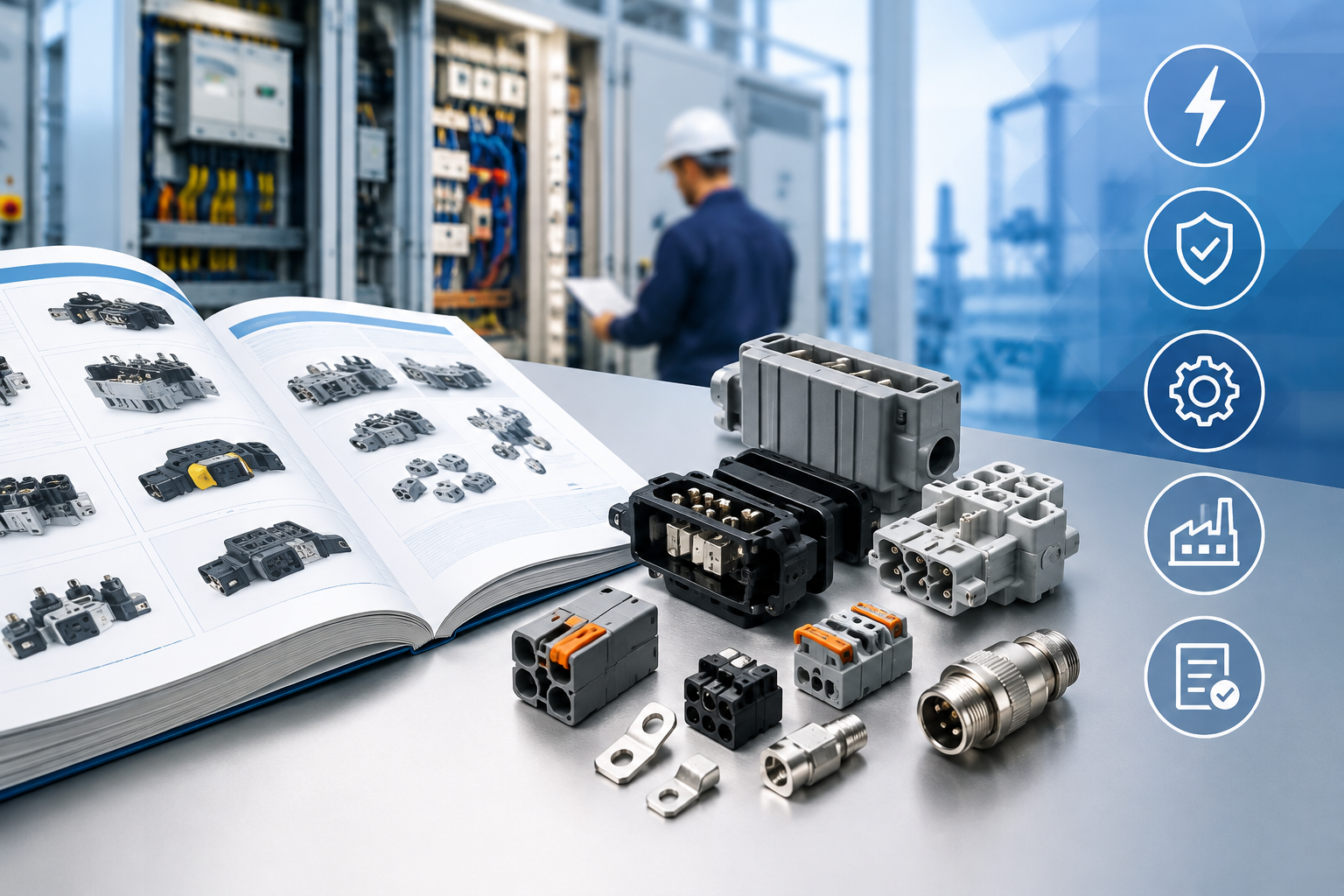
The Eaton Bussmann series Full Line Catalog, Section 10: Connector Products, provides a product reference for professionals looking to identify connector solutions within the Bussmann product portfolio. As part of Eaton's established electrical product range, Bussmann connector products are relevant to applications where secure electrical connections and compatibility with the surrounding system are important considerations.
For electrical engineers, panel builders, maintenance technicians, distributors, and procurement specialists, understanding the available connector options can help streamline product selection and support more efficient project planning.
What Are Eaton Bussmann Series Connector Products?
Eaton Bussmann series connector products are components intended for electrical connection applications. Depending on the specific product, connectors can help establish secure connections between conductors, electrical components, and compatible equipment.
Selecting the right connector requires more than simply identifying a product category. Factors such as conductor size, current requirements, voltage rating, connection method, installation environment, and compatibility with associated components all play an important role.
The Eaton Bussmann Series Full Line Catalog serves as a reference for reviewing connector product information and identifying options that may suit a particular electrical application.
Key Considerations When Selecting Electrical Connectors
Choosing an appropriate connector is essential for achieving a reliable and maintainable electrical installation. Several technical factors should be considered before selecting a product.
1. Electrical Ratings
Current-carrying capacity and voltage ratings are fundamental selection criteria. The connector must be suitable for the intended circuit and must meet the requirements of the complete electrical assembly.
Always verify the ratings and operating conditions specified for the individual product rather than assuming that all connectors within a product family have the same capabilities.
2. Conductor Compatibility
Connector selection should account for the conductor material, cross-sectional area or gauge, and type of conductor being used. Compatibility between the connector and the conductor helps support a secure electrical connection.
Installation instructions should also be reviewed to confirm the required preparation, termination method, and tightening procedure, where applicable.
3. Mechanical Security
A dependable electrical connection must also provide suitable mechanical stability. Vibration, movement, installation conditions, and expected operating stresses can affect connector performance.
Choosing a connector designed for the intended application and following the manufacturer's installation requirements can help reduce the risk of loose or unsuitable connections.
4. Installation Requirements
Space constraints, mounting arrangements, accessibility, and ease of maintenance can influence connector selection. For control panels, industrial equipment, and power distribution assemblies, considering these practical requirements early in the design process can help prevent installation difficulties.
5. Standards and Compliance
Electrical connectors must be appropriate for the relevant application, installation regulations, and equipment requirements. Check the applicable product certifications, technical documentation, and standards before specifying a connector for a safety-critical or regulated installation.
Applications of Electrical Connector Products
Electrical connector products are used across a wide range of commercial and industrial environments. The suitability of any individual Eaton Bussmann connector depends on its documented specifications and intended use.
Typical areas where electrical connectors may be required include:
-
Industrial control panels: Establishing electrical connections within control and automation assemblies.
-
Power distribution systems: Supporting connections between compatible electrical components and distribution equipment.
-
Electrical equipment manufacturing: Integrating connection components into equipment during assembly.
-
Maintenance and repair: Replacing or servicing connectors where the original equipment specifications permit.
-
Commercial and industrial installations: Supporting electrical connections in systems designed around the relevant product ratings.
For each application, engineers and installers should confirm that the selected connector meets the electrical, mechanical, and environmental requirements of the installation.
Why Use the Eaton Bussmann Series Full Line Catalog?
A structured product catalog can make electrical component selection more efficient by bringing relevant product information together in one reference document.
Simplified Product Identification
The connector section helps readers focus on the relevant product category when researching options for a project. This can be particularly useful for distributors, purchasing teams, and engineers working with a broad range of electrical components.
Support for Technical Evaluation
Catalog documentation can assist with the initial evaluation of product suitability. By reviewing the specifications provided for individual products, users can narrow their selection before confirming compatibility with the wider electrical system.
Improved Procurement Planning
Clear product identification helps purchasing teams communicate requirements more accurately and reduces the risk of ordering a component that does not match the intended application.
More Efficient Maintenance
For maintenance professionals, manufacturer documentation can provide a starting point for identifying suitable replacement components. Any replacement should be verified against the original equipment requirements and the current manufacturer's specifications.
Best Practices for Connector Selection and Installation
To support reliable electrical connections, follow a consistent product selection and installation process.
-
Define the application. Establish the system voltage, expected current, conductor type, installation environment, and mechanical requirements.
-
Review the product documentation. Use the Eaton Bussmann Series Full Line Catalog to investigate relevant connector products and their documented characteristics.
-
Verify compatibility. Confirm that the connector is suitable for the conductor, equipment, and intended connection method.
-
Check installation instructions. Follow the specified preparation, tooling, torque, and assembly requirements, as applicable.
-
Confirm compliance. Review the relevant electrical standards, certifications, and project specifications.
-
Document the selection. Record the selected product identification and technical requirements to support procurement, installation, and future maintenance.
These steps help establish a more consistent approach to connector selection and reduce avoidable specification errors.
Who Can Benefit from the Connector Products Catalog?
The Eaton Bussmann Series Full Line Catalog: Connector Products can be a useful reference for several professional groups.
-
Electrical engineers researching components for new designs and electrical assemblies.
-
Panel builders identifying connector options for control panels and distribution equipment.
-
Maintenance technicians investigating compatible components for servicing and repair.
-
Electrical wholesalers and distributors supporting customer enquiries and product identification.
-
Procurement specialists checking product requirements before placing orders.
-
Equipment manufacturers evaluating connection components during product development and production planning.
Each group can use manufacturer documentation to support a more informed selection process and improve communication between design, purchasing, installation, and maintenance teams.
Frequently Asked Questions
What is the Eaton Bussmann Series Full Line Catalog?
The Eaton Bussmann Series Full Line Catalog is a product reference for the Bussmann range. Its connector products section focuses on the connector category and supports users researching relevant electrical connection components.
How do I select the correct Eaton Bussmann connector?
Start by defining the electrical and mechanical requirements of the application. Check conductor compatibility, current and voltage ratings, installation conditions, connection method, and any applicable standards. Confirm the final choice against the individual product's technical documentation.
Are all connector products suitable for every electrical application?
No. Connector products can differ in ratings, construction, conductor compatibility, installation requirements, and intended use. A product should only be selected when its documented specifications meet the needs of the particular application.
Can the catalog help with replacement connector selection?
Yes, it can serve as a reference when identifying potential replacement components. However, compatibility should be confirmed against the original equipment documentation, the existing connector specifications, and the manufacturer's current product information before installation.
What should installers check before fitting a connector?
Installers should verify product suitability, conductor compatibility, required tools, termination procedures, tightening requirements where applicable, and compliance with relevant electrical regulations. Electrical work should be performed by appropriately qualified personnel using the prescribed safety procedures.
Conclusion
The Eaton Bussmann Series Full Line Catalog: Connector Products is a useful starting point for professionals researching electrical connector components for industrial, commercial, and equipment-related applications.
By reviewing product documentation and carefully evaluating electrical ratings, conductor compatibility, mechanical requirements, installation conditions, and compliance obligations, engineers and installers can make better-informed connector selections.
Whether the objective is designing a new electrical assembly, sourcing components for production, or identifying a suitable replacement during maintenance, a systematic approach to connector selection helps support safe, reliable, and maintainable electrical systems.
Always confirm the specifications and suitability of the individual product using the manufacturer's applicable technical documentation before ordering or installation.
- Details
- Category: Electrical Fuses Blog
| bus-ele-cat-1007-flc-2018-sec-09-pdbs.pdf | [Eaton Bussmann series Full line catalog: Power distribution and terminal blocks] | 6399 kB |
Eaton Bussmann Series Power Distribution and Terminal Blocks: A Complete Product Guide
Introduction to Eaton Bussmann Series Power Distribution and Terminal Blocks
Reliable power distribution is essential for industrial control panels, electrical enclosures, machinery, and commercial power systems. Eaton Bussmann series power distribution and terminal blocks help electrical engineers, panel builders, and maintenance professionals distribute electrical power efficiently while supporting safe, organized, and reliable electrical connections.
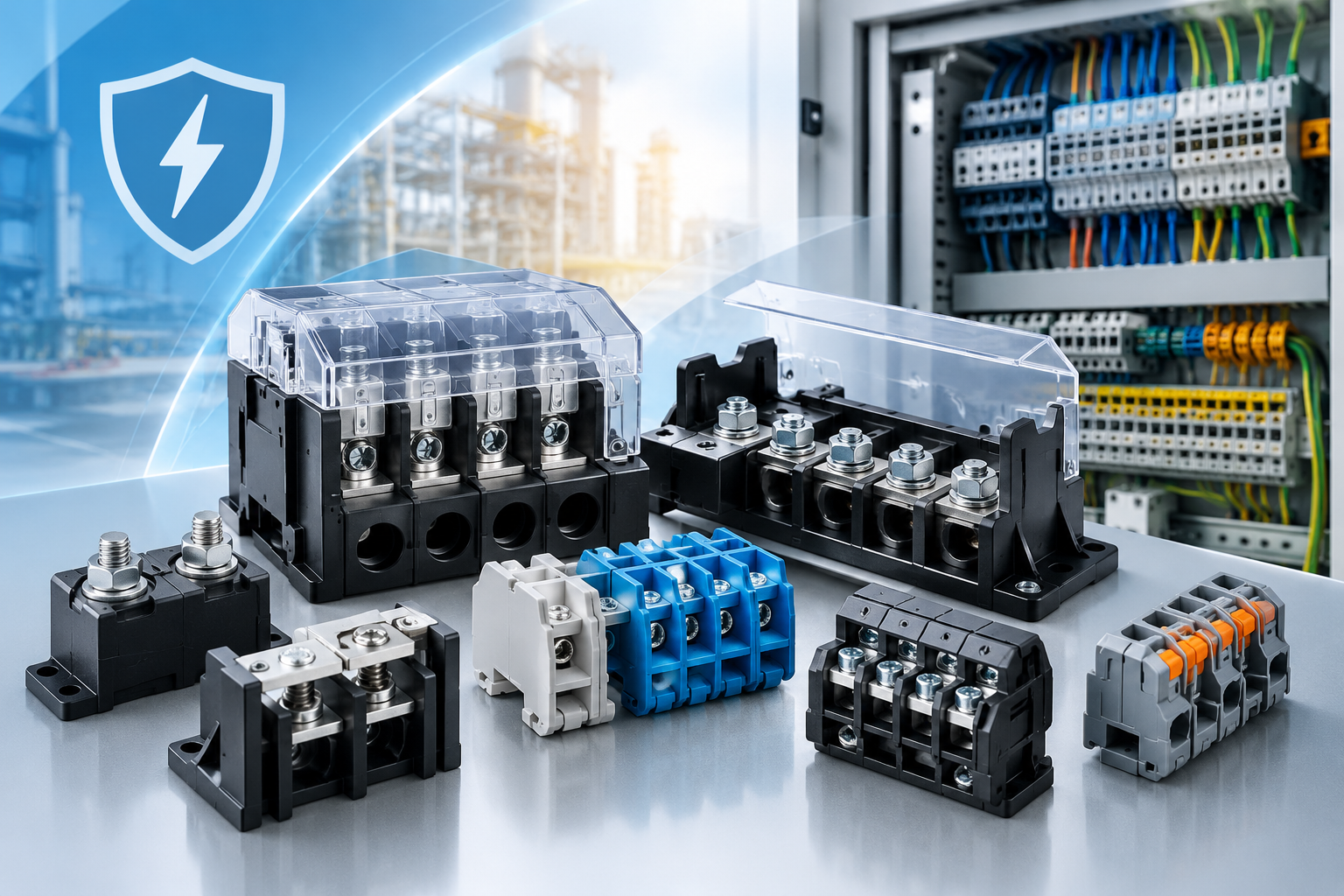
The Eaton Bussmann Series Full Line Catalog, Section 9, focuses on power distribution and terminal blocks, covering product families designed for different current ratings, installation requirements, conductor configurations, and short-circuit current rating (SCCR) needs.
From finger-safe power distribution blocks to open distribution blocks, power stud terminal blocks, splicer blocks, and traditional terminal blocks, the catalog provides technical information to help users identify suitable components for their applications.
What Are Power Distribution and Terminal Blocks?
Power distribution blocks are electrical components that allow a single incoming power conductor or supply connection to be distributed to multiple outgoing conductors. They simplify wiring layouts and help create organized electrical distribution systems.
Terminal blocks provide secure connection points for electrical conductors, making them useful in control panels, industrial machinery, automation systems, and other electrical installations.
Choosing the correct power distribution block or terminal block can help improve panel organization, simplify installation, and support compliance with applicable electrical standards.
Key Product Categories in the Eaton Bussmann Series Catalog
1. PDBFS Finger-Safe Power Distribution Blocks
The Eaton Bussmann series PDBFS power distribution blocks are designed for applications where compact installation, conductor flexibility, and finger-safe protection are important.
According to the catalog, these blocks offer a modular design that allows individual single-pole units to be combined into multipole configurations. Selected models support DIN-rail or panel mounting, helping engineers adapt their designs to different enclosure layouts.
Key features include:
-
Finger-safe protection under specified installation conditions.
-
High short-circuit current ratings when used with the specified upstream overcurrent protective devices.
-
Support for copper and aluminum conductors, depending on the model.
-
Multiple line-side and load-side conductor configurations.
-
Modular construction for multipole arrangements.
-
Installation flexibility for industrial control panels and wireways.
The catalog lists current ratings from 175 A to 760 A for the PDBFS family and short-circuit current ratings of up to 200 kA under specified conditions.
These power distribution blocks are particularly relevant to industrial applications that require compact power distribution and carefully evaluated electrical protection.
2. PDB Open Power Distribution Blocks
The Bussmann series PDB family consists of UL Listed power distribution blocks designed for applications where an open block configuration is appropriate.
These products provide a practical way to distribute incoming electrical power to multiple outgoing conductors. Depending on the selected model and installation, optional covers may be available to provide an additional level of protection.
When selecting a PDB block, engineers should consider conductor size, current rating, mounting arrangement, available enclosure space, terminal spacing, and the required short-circuit current rating.
The catalog also explains how power distribution block selection relates to electrical panel requirements and applicable installation standards.
3. 160, 162, 163, 164 and 165 Series Open Blocks
The catalog includes several UL Recognized open-block product families, including power distribution, power stud terminal, and power splicer configurations.
These products serve different connection and distribution requirements in electrical equipment.
Power distribution blocks help divide incoming power between multiple outgoing conductors.
Power stud terminal blocks provide stud-based electrical connection points for compatible conductors and installation arrangements.
Power splicer blocks support conductor joining and splicing applications where the selected product's ratings and connection specifications are suitable.
Because these product families have different electrical ratings and intended uses, engineers should consult the relevant catalog tables before choosing a particular catalog number.
4. Power Terminal Blocks
Power terminal blocks provide connection points for electrical conductors in panels, machines, and other electrical equipment.
The Eaton Bussmann series catalog includes UL Recognized terminal block families and provides product information for different connection styles and applications.
When evaluating power terminal blocks, consider:
-
Rated operating voltage and current.
-
Conductor material and wire size.
-
Number of connection points.
-
Mounting requirements.
-
Required electrical clearances and creepage distances.
-
Applicable UL recognition and equipment requirements.
These considerations help ensure that a terminal block is appropriate for the intended electrical installation.
5. Screw and Quick-Connect Terminal Blocks
The catalog also covers the 11675 and 11725 terminal block families, which feature screw and quick-connect termination options.
These products offer connection arrangements for applications requiring the relevant voltage and conductor specifications. The catalog identifies the 11675 family as a 250 V block and the 11725 family as a 600 V block.
Before specifying either product, verify its detailed ratings, conductor compatibility, connection requirements, and suitability for the equipment in which it will be installed.
6. Barrier and Deadfront Terminal Blocks
For applications requiring specific terminal protection and connection arrangements, the catalog includes:
-
14002 barrier terminal block: A 600 V barrier-style terminal block.
-
14004 deadfront terminal block: A 600 V deadfront-style terminal block.
Barrier and deadfront designs can help address terminal accessibility and electrical separation requirements, depending on the product and installation.
The appropriate selection depends on the equipment design, conductor arrangement, operating conditions, and applicable safety requirements.
Understanding Short-Circuit Current Rating (SCCR)
Short-circuit current rating is one of the most important considerations when selecting power distribution blocks for industrial control panels.
SCCR indicates the maximum short-circuit current that equipment or a component is rated to withstand under specified conditions. It must be evaluated alongside the available fault current at the installation point and the ratings of the other equipment components.
The Eaton Bussmann catalog highlights that power distribution and terminal blocks without an appropriately established component SCCR can limit the overall short-circuit current rating of an electrical panel.
The PDBFS and PDB product families are designed to address high-SCCR applications, but their published ratings depend on the specified upstream overcurrent protection and installation conditions.
To select a suitable power distribution block:
-
Determine the available fault current at the installation location.
-
Establish the required SCCR for the complete electrical assembly.
-
Identify the block's tested SCCR under the proposed application conditions.
-
Verify the specified fuse or circuit breaker, including its type and maximum rating.
-
Confirm conductor sizes, terminal requirements, and enclosure dimensions.
-
Verify that the complete installation meets applicable electrical codes and standards.
A component's maximum advertised SCCR should never be assumed to apply to every fuse, circuit breaker, conductor arrangement, or enclosure configuration.
How to Choose the Right Eaton Bussmann Power Distribution Block
Selecting the correct power distribution block requires more than matching the nominal current rating. Engineers should evaluate the complete electrical and mechanical installation.
Current and Voltage Ratings
Choose a product with suitable current and voltage ratings for the intended application. Account for conductor characteristics, operating conditions, and any required derating.
Conductor Compatibility
Check the permitted wire sizes, conductor materials, stranding, number of wires per port, and terminal tightening torque. Copper and aluminum conductors are not interchangeable unless the selected product is specifically rated for the intended conductor type.
Short-Circuit Protection
Verify the product's SCCR under the exact conditions of use. This includes the upstream fuse or circuit breaker, conductor configuration, and other conditions stated in the manufacturer's documentation.
Mounting and Panel Space
Determine whether DIN-rail mounting, panel mounting, or a particular enclosure arrangement is required. Consider the available space, wire routing, access for installation, and maintenance needs.
Finger-Safe Protection
Where protection against accidental contact is a design priority, consider finger-safe products such as the PDBFS series. Confirm the conditions required to achieve the specified protection rating.
Certifications and Standards
Review the product's applicable UL listing or recognition, CSA certification, and other declared approvals. Ensure the selected product is suitable for the relevant equipment category and jurisdiction.
Installation and Maintenance
Review conductor preparation, tightening torque, spacing, enclosure requirements, and installation instructions before assembly. Correct installation is essential to achieving the product's specified performance.
Applications of Power Distribution and Terminal Blocks
Eaton Bussmann series power distribution and terminal blocks can be considered for a variety of electrical applications, provided the selected model meets the required ratings and installation conditions.
Common application areas include:
-
Industrial control panels: Distributing incoming power to multiple circuits and electrical components.
-
Manufacturing equipment: Organizing power connections in machinery and production systems.
-
Electrical enclosures: Creating structured conductor distribution within suitably designed enclosures.
-
Building electrical systems: Supporting power distribution where the selected product is permitted by applicable codes.
-
HVAC equipment: Providing electrical connection and distribution points in compatible equipment designs.
-
Automation systems: Helping organize electrical connections for industrial control and machine automation.
-
Power connection assemblies: Supporting suitable conductor joining, splicing, and stud-based connection requirements.
The correct product depends on the specific application, electrical ratings, protection requirements, and applicable installation standards.
Benefits of Using Eaton Bussmann Series Products
Improved Wiring Organization
Power distribution blocks provide a structured way to distribute electrical power and organize conductors, which can simplify panel layouts and maintenance.
Flexible Installation Options
Selected product families offer DIN-rail mounting, panel mounting, modular configurations, and different line-side and load-side connection arrangements.
Support for High-SCCR Designs
Specified Bussmann series power distribution blocks can achieve high SCCR values when installed with the tested protective devices and under the required conditions.
Multiple Connection Configurations
The catalog includes products designed for different conductor sizes, numbers of connection points, and connection styles, helping engineers match components to their designs.
More Efficient Panel Design
Selecting an appropriately configured distribution block can help reduce wiring complexity and make better use of available enclosure space.
Frequently Asked Questions
What is the Eaton Bussmann Series Full Line Catalog Section 9?
Section 9 of the Eaton Bussmann Series Full Line Catalog 1007 covers power distribution and terminal blocks. It includes product information for finger-safe and open power distribution blocks, power stud terminal blocks, splicer blocks, screw and quick-connect terminal blocks, and barrier and deadfront terminal blocks.
What is the difference between a power distribution block and a terminal block?
A power distribution block is generally used to distribute incoming electrical power to multiple outgoing conductors. A terminal block provides electrical connection points for conductors. The exact functions and permitted applications depend on the specific product's design and ratings.
What does SCCR mean in electrical panel design?
SCCR stands for short-circuit current rating. It is used to evaluate the short-circuit withstand capability of electrical equipment under specified conditions. The available fault current must not exceed the applicable rating of the equipment, and the complete assembly must be evaluated appropriately.
Are Eaton Bussmann PDBFS blocks finger-safe?
The PDBFS family is designed to provide IP20 finger-safe protection under specified conditions. Correct conductor installation, wire preparation, and adherence to the manufacturer's requirements are necessary to achieve the stated protection.
Can Bussmann power distribution blocks accept aluminum conductors?
Certain models are rated for copper and aluminum conductors. Compatibility depends on the particular catalog number, wire size, conductor construction, and terminal specifications. Always verify the manufacturer's product data before installation.
How do I select the correct Bussmann series catalog number?
Identify the required current and voltage ratings, conductor sizes, line-side and load-side connection configurations, mounting method, SCCR, and upstream protective device. Then use the manufacturer's catalog tables to identify a model that meets all applicable requirements.
Why are electrical spacing requirements important?
Electrical spacing requirements help maintain the required separation between energized parts of opposite polarity and between energized parts and grounded components. The required clearances depend on the applicable standard, equipment type, voltage, and installation conditions.
Conclusion
The Eaton Bussmann Series Full Line Catalog for power distribution and terminal blocks provides a useful technical reference for electrical engineers, panel builders, industrial maintenance teams, and equipment designers.
Its product range includes PDBFS finger-safe power distribution blocks, PDB open power distribution blocks, UL Recognized open-block families, power stud terminal blocks, splicer blocks, screw and quick-connect terminal blocks, and barrier and deadfront terminal blocks.
By evaluating current and voltage ratings, conductor compatibility, mounting requirements, SCCR, upstream protection, and applicable standards, professionals can select components that support organized wiring and reliable electrical distribution.
For the best results, always verify the latest manufacturer documentation and product-specific installation requirements before specifying or installing any electrical component.
- Details
- Category: Electrical Fuses Blog
| bus-ele-cat-1007-flc-2018-sec-08-blocks-holders.pdf | [Eaton Bussmann series Full line catalog: Fuse blocks and holders] | 11744 kB |
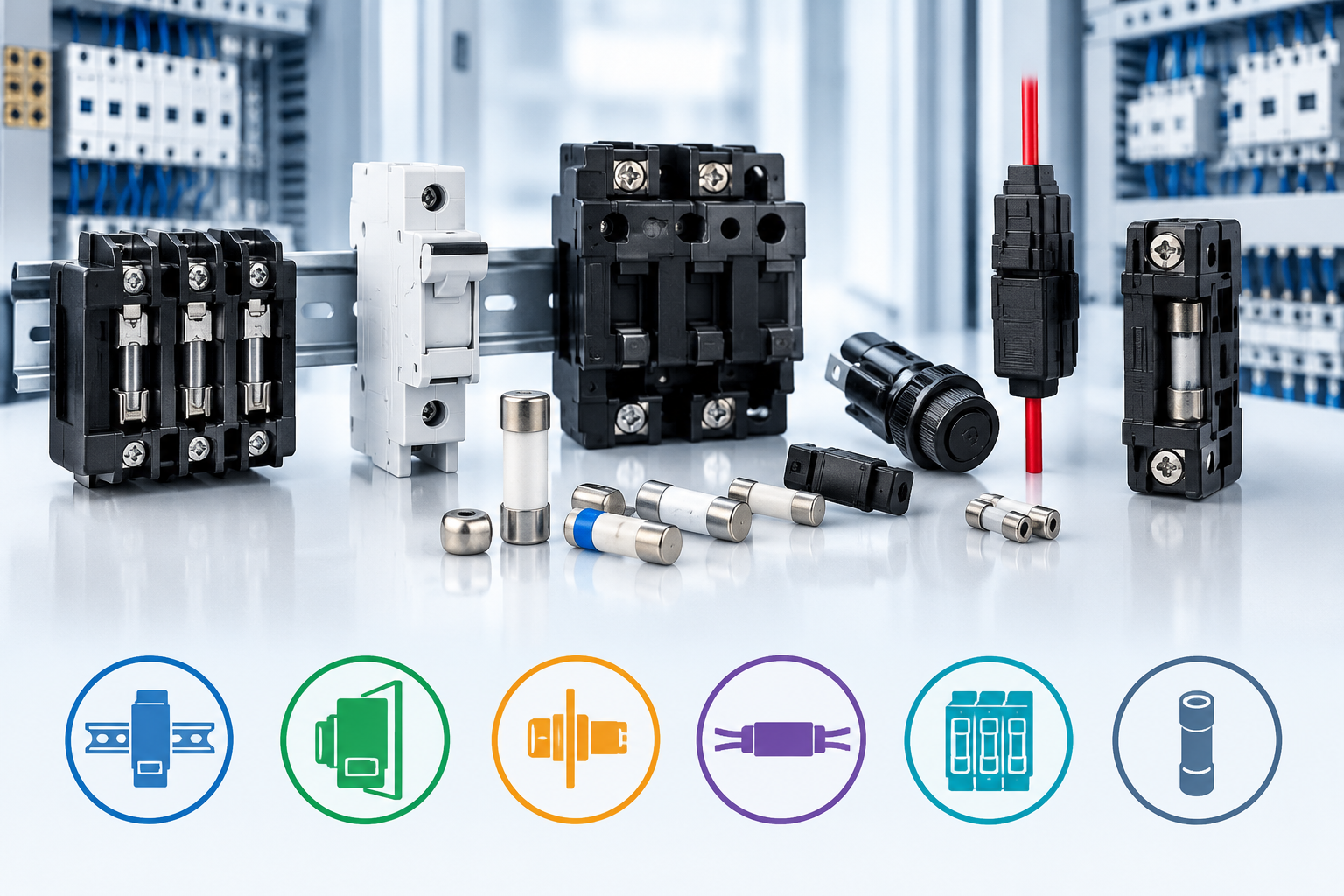
Eaton Bussmann Series Fuse Blocks and Holders: Product Range, Selection Guide and Applications
Introduction to Eaton Bussmann Series Fuse Blocks and Holders
Reliable electrical circuit protection starts with selecting the right fuse and the correct mounting solution. Eaton Bussmann Series fuse blocks and fuse holders are designed to accommodate a wide range of fuse types and electrical applications, helping engineers, panel builders, maintenance professionals and electrical equipment manufacturers integrate fuses into their systems.
The Eaton Bussmann Series Full Line Catalog 1007, Section 8, covers fuse blocks and holders for industrial control panels, electrical distribution systems and other circuit protection applications. It includes product families for different fuse classes, mounting arrangements, current ratings and installation requirements.
From DIN-rail-mounted fuse holders to panel-mount fuse blocks and in-line fuse holders, this catalog provides a technical reference for identifying suitable components for specific electrical designs.
What Are Fuse Blocks and Fuse Holders?
Fuse blocks and fuse holders provide a secure mounting point for electrical fuses within a circuit. They help establish the required electrical connections while allowing fuses to be installed, inspected and replaced as part of a maintenance or service procedure.
Although the terms are sometimes used interchangeably, their designs and intended applications can differ.
-
Fuse blocks: Provide a mounting base and electrical terminals for compatible fuses, commonly used in control panels and electrical distribution assemblies.
-
Fuse holders: Retain a compatible fuse in a defined mounting arrangement, such as a DIN rail, panel opening or in-line connection.
-
Power distribution fuse blocks: Combine fuse protection and power distribution functions in a single assembly, depending on the product design.
Choosing the appropriate component requires more than matching physical dimensions. Fuse compatibility, voltage and current ratings, terminal requirements, available space and applicable electrical standards must also be considered.
Overview of the Eaton Bussmann Series Full Line Catalog 1007, Section 8
Section 8 of the Eaton Bussmann Series Full Line Catalog 1007 is dedicated to fuse blocks and holders. The October 2018 catalog edition organizes products by fuse type, size, application and mounting configuration.
The section includes the following major product categories:
1. Class CC and Midget Fuse Blocks
Class CC and midget fuse blocks are used in compact circuit protection applications, including industrial control panels and control circuits.
The catalog includes modular fuse block families such as BCM and BMM, alongside additional panel-mount and DIN-rail mounting options. These products support the integration of compatible fuse types into control panel designs where space, accessibility and correct fuse selection are important.
2. DIN-Rail Fuse Holders
DIN-rail fuse holders are designed for installations that use standardized mounting rails inside electrical enclosures and control cabinets.
The catalog covers families including CHCC, CHM, NDNF1 and OPM. Depending on the specific model, these holders accommodate different fuse types and sizes.
DIN-rail mounting can simplify panel assembly and maintenance by providing a consistent mounting arrangement and helping organize circuit protection components within an enclosure.
3. Panel-Mount Fuse Blocks
Panel-mount fuse blocks are suitable for applications requiring direct mounting to a panel or equipment structure.
The catalog includes product families such as 3743, 4421, 4515, BG and G. The correct selection depends on the compatible fuse, electrical ratings, terminal configuration and mounting requirements.
These components are relevant to machinery, industrial equipment and control assemblies in which fuses need a defined mounting location.
4. Through-Panel Fuse Holders
Through-panel fuse holders are designed to provide access to a fuse through a panel or enclosure wall. They can be useful when service personnel need to replace a fuse without accessing the internal mounting area directly.
Section 8 includes several holder families for different fuse dimensions, including HTB, HJL, HK, HKP, HLD, HPC, HPD, HPF, HPG, HPM and HPS.
Product suitability varies by series, so the exact fuse dimensions, ratings, mounting cut-out and terminal specifications should be verified before installation.
5. In-Line Fuse Holders
In-line fuse holders are installed within a conductor or wiring assembly and provide a location for a compatible fuse in the electrical path.
The catalog includes holder families for several fuse sizes and classes, including HFA, HFB, HEB, HHB, HR, HM, HRK, HEX and HEY.
Depending on the model, in-line holders may be appropriate for equipment wiring, auxiliary circuits and other applications where the fuse needs to be positioned within a cable or conductor arrangement.
6. Fuse Blocks for Other Fuse Classes
The catalog also covers fuse block and holder options for Class G, Class J, Class T and other fuse formats, as well as NH fuse applications.
These product groups serve different circuit protection requirements. Their current and voltage capabilities, physical dimensions, interruption characteristics and mounting arrangements are not interchangeable by default.
Always select the fuse and its associated holder or block as a compatible combination.
Key Benefits of Selecting the Right Fuse Block or Holder
The correct fuse mounting solution can improve the practicality and maintainability of an electrical installation.
Organized Electrical Panel Design
A suitable fuse block or DIN-rail holder helps keep circuit protection components properly arranged within an enclosure. This supports a more structured panel layout and can make identification and servicing easier.
Compatibility With Specific Fuse Types
Fuse blocks and holders are designed for defined fuse classes, dimensions and configurations. Selecting the appropriate product helps ensure that the fuse fits correctly and that the electrical connections meet the application requirements.
Simplified Maintenance
Accessible fuse mounting arrangements can make inspection and fuse replacement more straightforward. The best configuration depends on the installation environment, enclosure design and maintenance procedures.
Flexible Mounting Options
DIN-rail, panel-mount, through-panel and in-line configurations allow engineers to choose a solution suited to the equipment's physical layout and wiring arrangement.
Space-Conscious Design
Modular products and integrated power distribution solutions can help make effective use of available enclosure space. The actual space savings depend on the selected product, its terminal layout and the overall panel design.
How to Choose the Correct Eaton Bussmann Fuse Block or Holder
Selecting the correct component is essential for electrical compatibility and reliable circuit protection. The following factors should be reviewed during product selection.
1. Identify the Fuse Class and Type
Start by identifying the fuse that the application requires. This may include Class CC, Class G, Class J, Class T, a midget fuse or another supported format.
The holder or block must be specifically suitable for the intended fuse. Similar-looking fuses are not necessarily interchangeable.
2. Verify Voltage and Current Ratings
Check the required system voltage and the fuse's rated current, then confirm that the selected mounting component is suitable for the application.
Do not assume that every product within a particular family has the same ratings. Always consult the individual product specifications and applicable limitations.
3. Select the Appropriate Mounting Style
Consider the available space and how the fuse will be accessed during installation and maintenance.
-
Choose DIN-rail mounting when the panel design uses compatible mounting rails.
-
Consider panel-mount blocks for direct installation on a panel or equipment structure.
-
Evaluate through-panel holders when external access to the fuse is needed.
-
Consider in-line holders for suitable wiring and conductor applications.
4. Check Terminal and Conductor Compatibility
Review terminal type, conductor size, wiring configuration and installation requirements. The terminals must be suitable for the conductors used in the assembly and installed according to the manufacturer's instructions.
5. Review Safety and Compliance Requirements
Check applicable product approvals, environmental requirements, short-circuit current rating where relevant, and any requirements imposed by the electrical system or governing standards.
A fuse holder's rating does not automatically establish the short-circuit performance of the complete assembly. System-level coordination and verification may be necessary.
6. Confirm the Exact Catalog Number
Use the catalog's product tables, dimensional drawings and ordering information to identify the correct catalog number and configuration. Where multiple terminal or mounting options are available, verify the complete ordering code rather than relying on the product family name alone.
Typical Applications for Fuse Blocks and Holders
Eaton Bussmann Series fuse blocks and holders can support a variety of electrical equipment designs when correctly selected for the application.
Industrial control panels: Fuse blocks and DIN-rail holders can be used to integrate suitable fuses into control circuits and other protected electrical branches.
Machinery and automation equipment: Panel-mount and modular fuse solutions can support circuit protection in machinery control assemblies and equipment enclosures.
Electrical distribution assemblies: Compatible fuse blocks can be incorporated into suitable distribution arrangements to protect individual circuits.
Equipment wiring: Appropriate in-line fuse holders can provide a defined fuse location within wiring assemblies.
Maintenance and replacement projects: Catalog-based selection can help technicians identify mounting components compatible with the intended replacement fuse and installation requirements.
The appropriate solution depends on the actual circuit design, environmental conditions, electrical ratings and applicable regulations.
Why Use the Full Line Catalog for Product Selection?
The Eaton Bussmann Series Full Line Catalog 1007, Section 8, brings multiple fuse block and holder families together in one technical reference.
Its selection guide helps users compare available mounting categories and identify product families associated with specific fuse classes and sizes. The individual product pages provide further information needed to assess the suitability of a component.
For engineers, procurement teams and maintenance professionals, this can support a more structured selection process by helping narrow down the available options before checking detailed specifications.
Because the referenced edition is dated October 2018, users should verify current product availability, ratings, approvals and ordering information before specifying or purchasing a component.
Frequently Asked Questions
What products are covered in the Eaton Bussmann Series fuse blocks and holders catalog?
Section 8 covers a broad range of fuse mounting products, including Class CC and midget fuse blocks, DIN-rail holders, panel-mount blocks, through-panel holders, in-line holders and options for other fuse classes.
What is the difference between a DIN-rail fuse holder and a panel-mount fuse block?
A DIN-rail fuse holder is designed to mount on a compatible DIN rail, while a panel-mount fuse block is designed for direct mounting to a panel or equipment structure. The appropriate choice depends on the enclosure design, fuse type and installation requirements.
How do I find the correct catalog number?
Identify the required fuse class and dimensions, then review the relevant product tables and individual product specifications. Confirm the mounting style, terminal configuration, electrical ratings and complete ordering code before placing an order.
Can any Bussmann fuse holder be used with any Bussmann fuse?
No. Fuse holders and blocks are designed for specific fuse dimensions, types and ratings. Compatibility must be confirmed using the manufacturer's documentation.
Is the 2018 catalog suitable for current purchasing decisions?
The 2018 edition remains a useful technical reference for identifying product families and understanding their configurations. However, current availability, specifications, approvals and ordering details should be verified before finalizing a design or purchase.
Conclusion
Eaton Bussmann Series fuse blocks and holders provide a range of mounting solutions for compatible fuses in industrial control panels, electrical equipment and wiring assemblies. The Full Line Catalog 1007, Section 8, helps users navigate options for DIN-rail mounting, panel mounting, through-panel installation, in-line applications and different fuse classes.
By checking fuse compatibility, electrical ratings, terminal specifications, mounting requirements and current product documentation, engineers and purchasing professionals can identify a suitable fuse mounting solution for their application.
For dependable circuit protection, the key is to select the fuse and its associated block or holder as a compatible system, based on verified manufacturer specifications and the requirements of the installation.



