
Electrical Fuses Blog
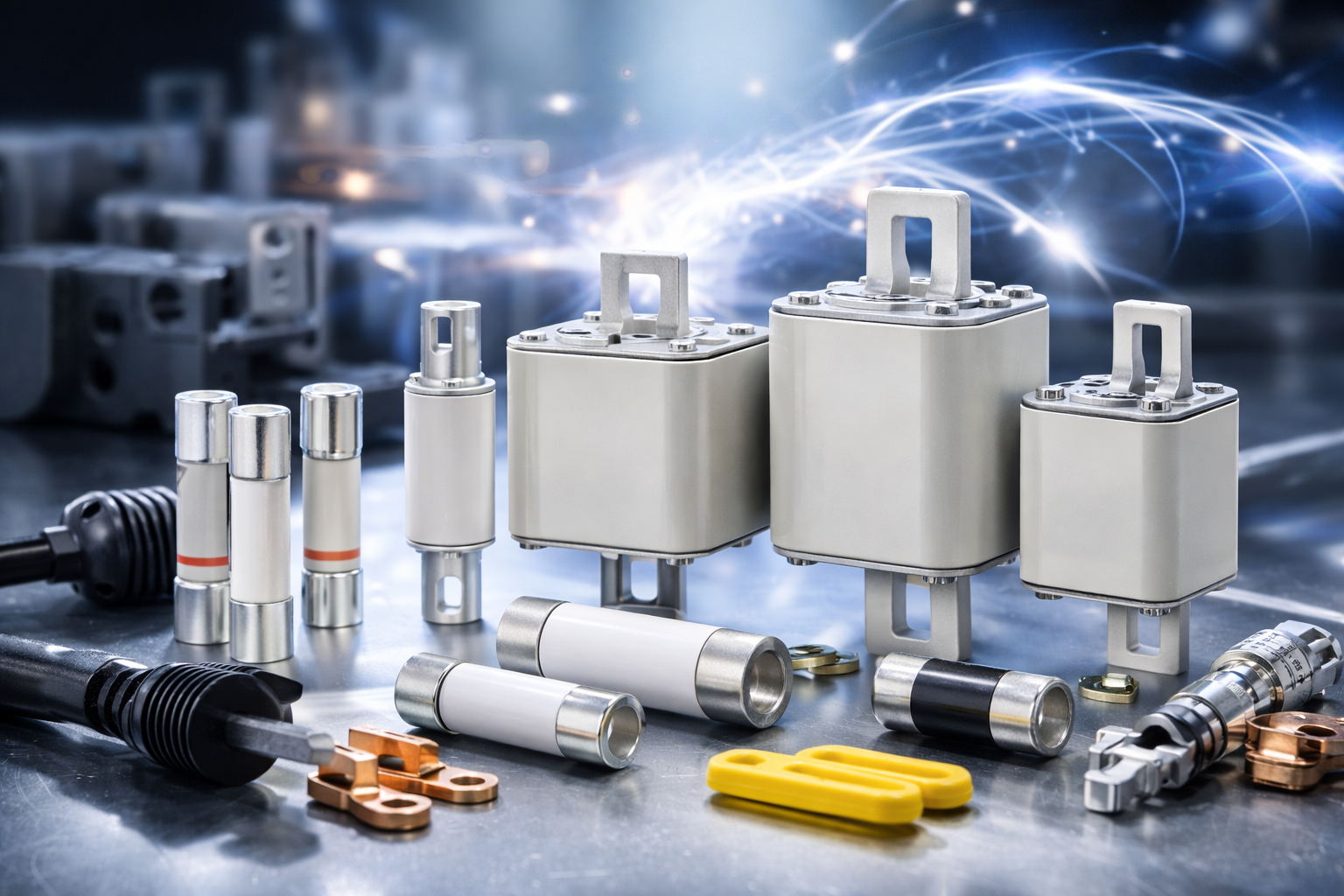
Eaton Bussmann Series Electrical Fuses – Blog & Fachwissen
Im Eaton Bussmann Series Electrical Fuses Blog finden Sie fundiertes Fachwissen rund um elektrische Sicherungen, Überstromschutz und moderne Schutzkonzepte für industrielle und gewerbliche Anwendungen. Diese Kategorie bündelt alle Blogartikel, technischen Beiträge und Praxisguides zu den Sicherungssystemen und Serien von Eaton Bussmann.
Eaton Bussmann zählt weltweit zu den führenden Herstellern von elektrischen Sicherungen, und ihre Serien stehen für Sicherheit, Normkonformität und höchste Zuverlässigkeit in anspruchsvollen elektrischen Systemen.
Was Sie im Eaton Bussmann Sicherungen Blog erwartet
Unsere Blogbeiträge helfen Ingenieuren, Einkäufern, Technikern und Planern dabei, die richtige Sicherungslösung zu finden und technische Zusammenhänge besser zu verstehen.
Themenschwerpunkte dieser Kategorie:
-
🔌 Überblick über Eaton Bussmann Sicherungsserien
-
⚙️ Unterschiede zwischen UL-, IEC- und Spezial-Sicherungen
-
📘 Technische Erklärungen zu Kennlinien, Auslöseverhalten & Bemessungswerten
-
🏭 Anwendungstipps für Industrie, Maschinenbau & Energieverteilung
-
🚗 Beiträge zu EV-, DC- und Hochvolt-Sicherungen
-
🛠 Best Practices für Auswahl, Installation und Wartung
Alle Inhalte sind praxisnah, verständlich aufbereitet und technisch fundiert.
Eaton Bussmann Sicherungsserien im Fokus
Der Blog behandelt regelmäßig verschiedene Eaton Bussmann Series Electrical Fuses, darunter:
-
Industrial Fuses
-
North American (UL) Fuse Series
-
IEC Sicherungsserien
-
High Speed & Semiconductor Fuses
-
EV & DC Sicherungen
-
Supplementary & Specialty Fuses
So erhalten Sie einen umfassenden Überblick über das Eaton Bussmann Portfolio und dessen Einsatzmöglichkeiten.
Fachwissen für sichere elektrische Systeme
Elektrische Sicherungen sind ein zentraler Bestandteil jeder sicheren Stromversorgung. Der Eaton Bussmann Series Electrical Fuses Blog unterstützt Sie dabei, Risiken zu minimieren, Normen einzuhalten und die Lebensdauer Ihrer Anlagen zu verlängern.
Ganz gleich, ob Sie Grundlagenwissen suchen oder tief in spezielle Sicherungsserien eintauchen möchten – hier finden Sie relevante, aktuelle und suchmaschinenoptimierte Inhalte rund um Eaton Bussmann Electrical Fuses.
👉 Jetzt Blogartikel entdecken und Ihr Wissen über Eaton Bussmann Sicherungsserien gezielt erweitern.

- Details
- Category: Electrical Fuses Blog
White Monkey Companies in the Fuse Industry: How to Identify a Fake Western Fuse Manufacturer
Introduction: Is Your Western Fuse Supplier Really Western?
In the international electrical protection industry, a company's identity matters. Industrial buyers, distributors, OEMs, and electrical engineers need to know who manufactures their fuses, where production takes place, and whether the supplier has the engineering expertise and quality systems it claims to possess.
However, a professional English-language website, a Western-sounding company name, a European business address, and photographs of foreign executives do not necessarily mean that a company is a Western fuse manufacturer.
Some businesses may use foreign employees, impressive management titles, local company registrations, and international branding to create the appearance of a Western-led industrial company. In certain cases, the actual manufacturing operation, ownership, or commercial control may be based elsewhere.
This phenomenon deserves particular attention in the fuse industry, where product reliability, technical documentation, certification, and traceability are essential.
The question for industrial buyers is straightforward: Are you dealing with an established Western fuse manufacturer, a legitimate international subsidiary, an independent distributor, or a business using Western branding to create a misleading impression?
Understanding the difference is an important part of responsible supplier selection.
1. What Is the White Monkey Phenomenon?
The term white monkey describes a practice reported in China and other parts of Asia in which foreign individuals are hired primarily for their appearance, nationality, or perceived association with Western expertise and prestige.
According to the Wikipedia article on the white monkey phenomenon, such individuals may appear in advertising, promotional activities, business events, and company presentations. In some reported cases, foreigners have been presented as executives or founders even when their practical responsibilities do not match their public image.
The underlying marketing principle is simple: a foreign face can make a business appear more international, sophisticated, or credible to prospective customers.
In industrial markets, this raises an important question. Could a similar strategy be used to make a company appear to be an established Western manufacturer of electrical fuses?
The possibility should not be confused with proof that any particular company engages in this practice. International businesses legitimately employ foreign executives, maintain overseas subsidiaries, and recruit specialists from different countries.
The concern arises when the public image of a business materially misrepresents its actual ownership, management, engineering capabilities, or manufacturing operations.
2. How a Company Can Create the Appearance of a Western Fuse Manufacturer
A company seeking international customers may develop a brand that appears European or American while conducting its main manufacturing activities in another country.
There is nothing inherently wrong with this arrangement. Many legitimate international manufacturers operate through subsidiaries, regional offices, distributors, and local sales companies.
The problem begins when the presentation obscures important facts.
Hiring foreign employees for credibility
One potential warning sign is a foreign employee whose public-facing role appears designed primarily to reassure Western customers.
For example, a person might be introduced on a website as a senior European executive, technical director, or international business leader. Yet the employee's actual duties, decision-making authority, technical background, and relationship with the manufacturing operation may be unclear.
A foreign employee is not evidence of deception. The relevant questions are whether the person holds the stated position, has the advertised responsibilities, and can substantiate the expertise attributed to them.
For a fuse supplier, a claimed technical director should be able to discuss relevant engineering matters, such as fuse time-current characteristics, breaking capacity, temperature rise, applicable standards, testing procedures, and product qualification.
Creating an impressive corporate image
Another potential warning sign is a polished corporate presentation that cannot be matched to verifiable operations.
A company may use:
-
Professional photographs of foreign personnel.
-
A sophisticated English-language website.
-
Western-style branding and marketing materials.
-
Claims of international engineering expertise.
-
References to European quality, standards, or manufacturing traditions.
-
An address in a Western country that is not clearly connected to production or engineering.
None of these elements is suspicious on its own. Legitimate companies use them too.
The important step is to determine whether the marketing claims correspond to independently verifiable business activities.
Using a local company name
A business may establish a company in Germany, the United Kingdom, the United States, or another Western market under a local-sounding name.
That company might operate as a sales office, importer, distributor, subsidiary, or regional representative of an overseas manufacturer. Such structures are common and can be entirely legitimate.
However, registration in a Western country does not, by itself, prove that a company manufactures products there, is independently Western-owned, or operates its own engineering facilities.
Buyers should establish the legal entity's role, its ownership and control where verifiable, and the actual location of the manufacturing process.
A local registered business and a local manufacturing operation are two different things.
3. Warning Sign: Overqualified Candidates Hired for Unclear Roles
One potential indicator of a company prioritising appearance over substance is a mismatch between an employee's advertised qualifications, job title, and actual responsibilities.
Consider a hypothetical example.
A company recruits an experienced engineer with a strong technical background and advertises the position as an international director. The employee's actual work, however, consists primarily of answering emails, attending trade fairs, appearing in promotional photographs, or forwarding customer enquiries to an overseas office.
This arrangement does not automatically establish misconduct. Small businesses frequently use broad job titles, and employees can legitimately have mixed responsibilities.
Nevertheless, repeated inconsistencies between job descriptions, seniority, expertise, and real decision-making authority warrant further investigation.
For industrial buyers, the useful questions include:
-
Does the technical director have genuine responsibility for product engineering?
-
Can the advertised engineering team answer detailed technical questions?
-
Who approves product designs and changes?
-
Who manages manufacturing quality and corrective actions?
-
Who signs off on testing and product compliance?
-
Does the company employ personnel with the skills required for its stated activities?
The problem with inflated management titles
Job titles such as Director of Engineering, Chief Technical Officer, European Managing Director, or Head of Global Manufacturing can sound impressive.
Their meaning depends on the organisation behind them.
At a small business, a director may have substantial responsibilities. At another business, a similarly titled employee may have limited authority or no involvement in manufacturing decisions.
The title alone is not the issue. The concern is an inability to substantiate the responsibilities and authority that the title implies.
For a genuine fuse manufacturer, technical credibility should be demonstrated through engineering competence, documented processes, and accountable decision-makers—not simply through impressive titles.
4. Warning Sign: A Western Brand Without Verifiable Western Manufacturing
One of the most important distinctions in industrial sourcing is the difference between a manufacturer's location, a company's registered office, and the origin of its products.
A business might have:
-
A registered company in Europe.
-
A sales office serving European customers.
-
A foreign executive responsible for international sales.
-
A website that emphasises Western identity.
-
Products manufactured by a separate company overseas.
This can describe a perfectly legitimate business model. A European importer or distributor does not need to manufacture its own products to serve customers responsibly.
The issue is whether the company clearly communicates its role.
If a business presents itself as a Western fuse manufacturer but cannot demonstrate that it carries out the manufacturing activities it claims, customers should seek clarification.
Questions to ask a purported Western fuse manufacturer
Before placing a significant order, request clear answers to the following questions:
-
Where are the fuses physically manufactured? Ask for the manufacturing site's legal name and location.
-
Who owns the manufacturing facility? Establish whether the factory belongs to the supplier, a parent company, or an independent contract manufacturer.
-
Who designs the products? Determine which organisation is responsible for engineering, product specifications, and design changes.
-
Who performs the testing? Ask for the identity of the laboratory and relevant test reports.
-
Who is responsible for product compliance? Confirm which legal entity makes the applicable declarations and assumes the relevant responsibilities.
-
Can the manufacturing operation be independently verified? Request a factory audit, a live technical meeting, or other proportionate evidence.
-
Can the supplier trace products to a specific production site and batch? Check whether records connect the delivered fuses to their actual manufacturer and production history.
A transparent supplier should be able to explain its business model without relying solely on marketing language.
5. Warning Sign: International Branding That Conceals Ownership or Control
Corporate structures can be complicated. A company might be owned by an overseas parent, controlled through multiple subsidiaries, or operated under a brand different from its registered legal name.
Such structures are not inherently problematic.
The risk arises when a supplier uses a local identity to imply a different ownership, management, or operational reality than the evidence supports.
For example, a hypothetical company called Western European Fuse Technologies GmbH might be registered in Germany but function primarily as a sales entity for a manufacturer based abroad.
That arrangement is not inherently deceptive. If the company accurately identifies itself as a sales subsidiary or distributor, customers can assess it accordingly.
However, if its marketing implies that its products are designed and manufactured in Germany, buyers should ask for evidence supporting those specific claims.
How to investigate a company's legal identity
Useful checks include:
-
Search the relevant national company register.
-
Confirm the exact registered legal name and registration number.
-
Review available information about directors and shareholders.
-
Check published annual accounts and business filings where available.
-
Investigate the relationship between the local entity and the claimed parent company.
-
Verify the registered office, operational address, and manufacturing address separately.
-
Compare the company's legal identity with the entity named on quotations, invoices, contracts, and product documentation.
The European Commission provides information about company law and the interconnection of European business registers.
Depending on the jurisdiction, beneficial ownership information may also be available through appropriate official channels, subject to applicable access and privacy rules.
These checks help buyers distinguish between a genuine manufacturer, an overseas-owned local subsidiary, a distributor, and a business whose public claims do not match its documented structure.
6. How to Distinguish a Genuine Western Fuse Manufacturer From a Western-Looking Brand
A supplier's nationality or the appearance of its website is not a reliable measure of manufacturing capability.
A better approach is to assess evidence across several independent areas.
| Verification area | What to check |
|---|---|
| Legal identity | Registered entity, directors, ownership information where available, and contractual counterparty |
| Manufacturing | Actual production site, equipment, processes, personnel, and factory audit evidence |
| Engineering | Design responsibility, engineering staff, technical answers, and change-control procedures |
| Product testing | Relevant test reports, laboratory identity, and traceability to the supplied product |
| Certification | Authenticity, scope, model numbers, applicable standards, and issuing organisation |
| Supply chain | Actual manufacturer, subcontractors, component sources, and batch traceability |
| Corporate claims | Whether statements about Western origin, local production, or engineering are supported by evidence |
Check the technical documentation
For fuse products, request the relevant datasheets, product specifications, test reports, and declarations of conformity where applicable.
Verify that the documentation refers to the exact product family, model, rating, and manufacturing source being offered.
Depending on the fuse type and intended application, relevant standards may include IEC 60269 for low-voltage fuses or IEC 60282-1 for high-voltage current-limiting fuses.
A document displaying a familiar standard or certification logo is not sufficient on its own. The scope and authenticity of the evidence must be checked, and any claimed certification should be verified with the issuing body or relevant database where possible.
Look beyond the website
A genuine manufacturing operation should be capable of providing evidence appropriate to its activities.
This may include factory audit records, quality management documentation, calibration records, production inspection procedures, testing facilities, and traceability systems.
Not every legitimate manufacturer performs every activity in-house. Outsourced testing, contract manufacturing, and specialist laboratories can all be legitimate arrangements.
What matters is that the supplier explains these relationships clearly and can demonstrate effective control over the products it supplies.
7. Why This Matters in the Fuse Industry
Electrical fuses are safety-related components used to protect equipment and electrical installations against excessive current and fault conditions.
Choosing a supplier based on branding rather than verified product capability can create several risks.
Product quality and consistency
Customers need confidence that products meet their specified electrical and mechanical requirements and remain consistent between production batches.
Without adequate traceability and quality controls, investigating a defective batch or implementing corrective action can become more difficult.
Certification and compliance
A company's marketing claims cannot replace valid product-specific evidence.
Purchasers should confirm that relevant documentation applies to the actual fuse being supplied and that the responsible legal entity is clearly identified.
Engineering support
Industrial customers may require assistance with ratings, coordination, application suitability, replacement selection, or failure analysis.
A company that presents itself as a manufacturer should clearly explain where technical responsibility resides and how customers can obtain competent support.
Accountability and after-sales service
If a product fails or a technical dispute arises, buyers need to know which legal entity is responsible for contractual obligations, warranty claims, and applicable product responsibilities.
A transparent supplier structure makes accountability easier to establish.
Long-term supply security
Understanding the real manufacturing source is also important for continuity of supply, change management, product lifecycle planning, and supply-chain risk assessment.
These concerns apply to suppliers of every nationality. They are not unique to Chinese businesses or Western companies.
8. A Practical Due Diligence Checklist for Fuse Buyers
Before approving a new supplier, procurement teams can use the following checklist.
-
Verify the company's registered legal identity.
-
Identify the actual manufacturer of the proposed fuse.
-
Establish the manufacturing country and production site.
-
Clarify the ownership relationship between the supplier and factory.
-
Confirm who is responsible for design and engineering changes.
-
Request product-specific technical documentation and relevant test reports.
-
Verify claimed certifications with the appropriate issuing organisation.
-
Confirm batch identification and traceability procedures.
-
Assess the technical competence of the people providing engineering support.
-
Compare the company's public claims with its official records and contractual documents.
-
Request an independent factory audit when justified by the risk and commercial importance.
-
Ensure the purchase contract identifies the responsible legal entity and applicable warranty obligations.
This process is more reliable than attempting to judge a company from its name, website, or employees' appearance.
The European Commission's due diligence guidance and its explanation of due diligence provide further context for assessing business partners, ownership, operations, and supply-chain relationships.
9. Why Transparency Is More Important Than Nationality
The purpose of supplier verification should not be to exclude businesses because they are Chinese-owned, employ foreign executives, or manufacture products outside Europe.
International manufacturing is a normal feature of modern industry. Chinese manufacturers can be technically sophisticated, and Western brands can outsource production internationally. A Western-registered company can be a distributor rather than a factory, while an overseas-owned company can operate a genuine manufacturing facility in Europe.
The distinction is between transparent and misleading business practices.
A company should not need to imply that its products are Western-made if they are manufactured elsewhere. Nor should it need to exaggerate its engineering resources or management structure to demonstrate that it can serve international customers.
Buyers should evaluate the evidence, not the ethnicity of the employees or the country associated with a brand.
The same standards should apply to every prospective supplier.
Conclusion: Verify the Manufacturer Behind the Brand
The white monkey phenomenon highlights how a foreign face or executive title can sometimes be used to create an impression of international credibility. In industrial markets, this provides a useful starting point for thinking critically about corporate presentation—but it is not proof that a particular company is misleading its customers.
When evaluating a Western-looking fuse business, buyers should look beyond the brand and establish the facts: who owns and controls the business, where its products are manufactured, who is responsible for engineering, what evidence supports its technical claims, and which legal entity stands behind the products.
A local company name, an impressive director title, or a foreign employee cannot independently establish that a business is a Western fuse manufacturer.
The most reliable supplier is the one whose identity, manufacturing origin, engineering capability, product documentation, and responsibilities can all be independently verified.
For procurement teams, distributors, OEMs, and electrical engineers, this is the foundation of informed sourcing and long-term supplier confidence.
Frequently Asked Questions
What is a white monkey company?
The phrase refers to a business associated with the practice of using foreign individuals primarily to create a perception of international status or credibility. The term does not establish that any particular company is fraudulent.
How can I identify a fake Western fuse manufacturer?
Verify the legal entity, ownership information where available, manufacturing location, product documentation, engineering responsibility, and traceability. Investigate material inconsistencies between marketing claims and independently verifiable evidence.
Does a Western company name mean the fuses are manufactured in Europe?
No. A company can be registered in Europe while importing products manufactured elsewhere. Check the actual manufacturing location and the accuracy of any claims about product origin.
Is hiring a foreign director a warning sign?
Not by itself. International companies routinely employ foreign directors and engineers. The relevant question is whether the person's role, expertise, and decision-making authority match the company's claims.
Can a Chinese-owned company be a genuine Western manufacturer?
Yes. Ownership nationality does not determine manufacturing capability or business legitimacy. A Chinese-owned company can operate a genuine Western manufacturing facility, just as a Western-owned company can manufacture products in China.
What should I verify before buying industrial fuses?
Confirm the manufacturer's identity, production location, applicable standards, product-specific test evidence, traceability, engineering support, and contractual accountability. Use independent verification proportionate to the technical and commercial risks.
- Details
- Category: Electrical Fuses Blog
 eaton-bussmann-series-low-voltage-fuses-catalog-ca134002en-en-us.pdf  | [Eaton Bussmann fuses] | 0 kB |
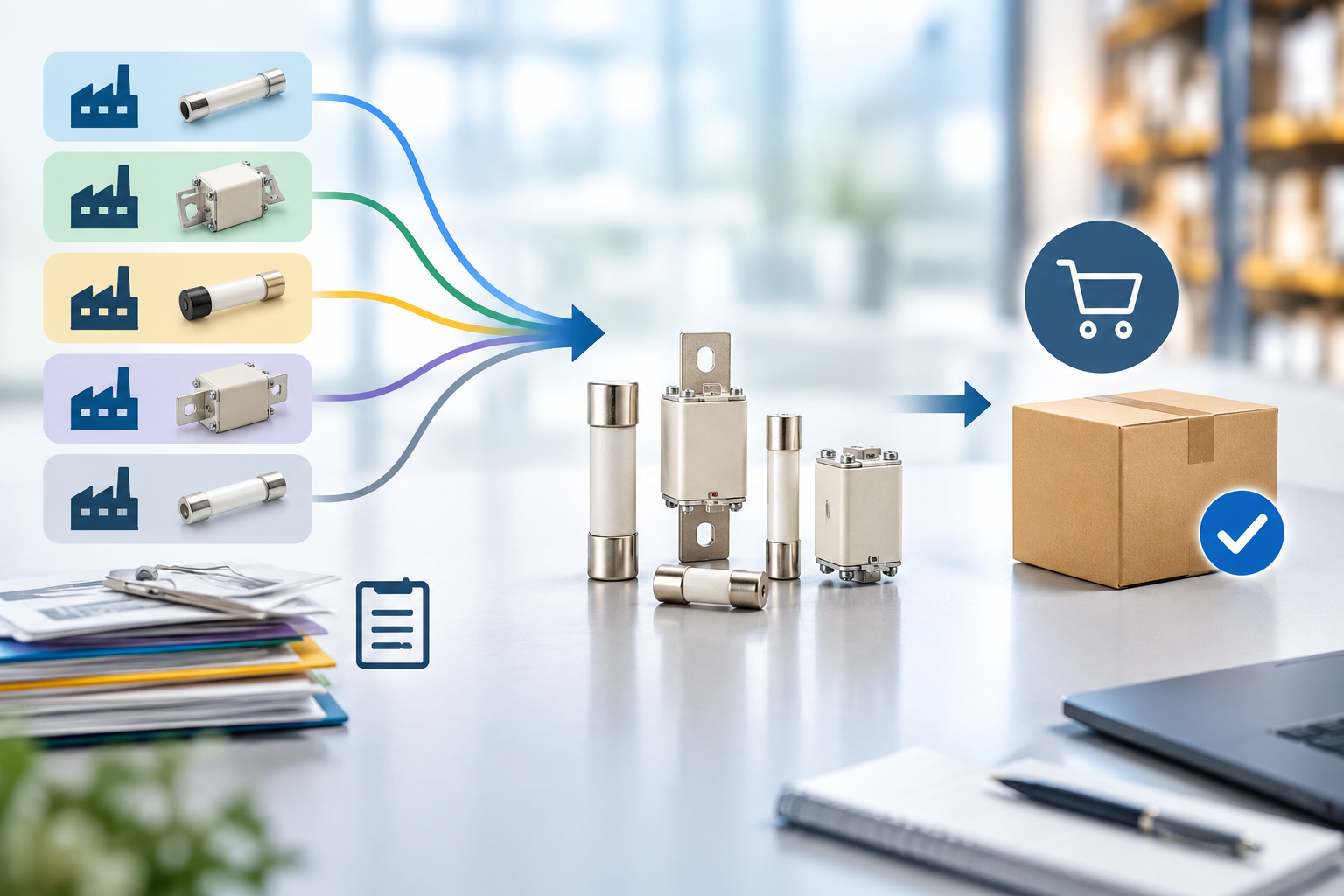
Switching from Multiple Fuse Suppliers to One: How Eaton Bussmann Fuses Simplify Sourcing
Switching from Multiple Fuse Suppliers to One: A Smarter Approach to Fuse Sourcing
Managing multiple fuse suppliers can make procurement more complicated than it needs to be. Different manufacturers, product ranges, ordering processes, delivery schedules and technical specifications can create unnecessary work for purchasing teams, electrical engineers and maintenance departments.
For businesses that rely on fuses to protect electrical equipment, industrial machinery and control systems, simplifying the sourcing process can make a meaningful difference.
One way to achieve this is by consolidating suitable fuse requirements around a single supplier and a comprehensive product portfolio, such as Eaton Bussmann fuses. Instead of sourcing different fuse types from several manufacturers, businesses can explore whether a broader range of applications can be covered by one established brand.
With Casadaa Distribution as your one-stop shop for Eaton Bussmann fuses, businesses can take a more streamlined approach to fuse procurement, product selection and supply chain management.
In this article, we explore the challenges of managing multiple fuse suppliers, the benefits of consolidating fuse sourcing and how Casadaa Distribution can support your transition.
Why Do Businesses Source Fuses from Multiple Manufacturers?
Many businesses accumulate different fuse suppliers over time. An original equipment manufacturer may specify one brand, a maintenance team may use another, and a purchasing department may choose alternatives based on availability or historical buying decisions.
Although this approach may develop naturally, it can lead to several procurement challenges.
1. More suppliers mean more administrative work
Each supplier may have different ordering procedures, quotation formats, minimum order quantities, payment terms and delivery arrangements.
Managing several suppliers requires additional communication, purchase order processing, invoice handling and coordination. These activities can consume valuable time that procurement teams could otherwise spend on strategic purchasing and supplier management.
2. Managing a fragmented inventory
When different fuse manufacturers are used across a facility, stock management can become more complicated. Similar applications may require different product references, making it harder to identify which fuses are needed and how many should be kept in stock.
A fragmented inventory can increase the risk of overstocking slow-moving products while essential replacement fuses are unavailable when needed.
3. More complicated product selection
Fuses are not universally interchangeable. Differences in rated current, voltage, breaking capacity, physical dimensions, time-current characteristics and application requirements can affect whether a particular fuse is suitable.
When sourcing from multiple manufacturers, engineers and purchasing teams may need to compare several product catalogues and datasheets to identify suitable options.
4. Inconsistent availability and lead times
Different suppliers may have different stock levels and delivery schedules. Coordinating several orders can make it more difficult to plan maintenance activities, manage replenishment and respond to urgent requirements.
5. Limited visibility into purchasing costs
When fuse expenditure is distributed across multiple suppliers, it can be harder to consolidate purchasing data, compare costs and identify opportunities for standardisation.
These challenges create a strong business case for reviewing the existing fuse supply strategy.
How Can Eaton Bussmann Fuses Simplify Fuse Sourcing?
Eaton Bussmann offers a broad portfolio of circuit protection products designed for a variety of electrical and industrial applications. Depending on the application and product requirements, its range may provide suitable alternatives to fuses currently sourced from multiple manufacturers.
By assessing existing fuse requirements and identifying opportunities to consolidate around Eaton Bussmann products, businesses can simplify their sourcing processes without compromising on electrical protection.
1. Consolidate multiple fuse brands into one product portfolio
One of the main advantages of reviewing your fuse supply strategy is the opportunity to reduce the number of manufacturers you need to manage.
If suitable Eaton Bussmann alternatives are available for the different fuse types used across your operations, you may be able to consolidate a significant portion of your purchasing within one product portfolio.
This can help simplify product selection, purchasing decisions and stock management.
Rather than navigating several manufacturers' catalogues, your team can focus on identifying the appropriate Eaton Bussmann product for each application.
The goal is simple: fewer product sources to manage and a more consistent approach to fuse procurement.
2. Simplify product identification and ordering
A structured Eaton Bussmann sourcing strategy can make it easier to organise fuse requirements by application, part number, electrical rating and product family.
Once the existing fuse inventory has been reviewed and suitable alternatives confirmed, businesses can create a more standardised purchasing list.
This can help procurement teams:
-
Reduce the time spent searching across multiple manufacturer catalogues.
-
Improve the accuracy of product identification and ordering.
-
Establish a clearer list of approved fuse references.
-
Simplify repeat orders and routine replenishment.
-
Improve communication between purchasing, engineering and maintenance teams.
The result is a more organised process for sourcing the fuses your business needs.
3. Improve inventory management
Consolidating suitable fuse requirements can also support better inventory control.
A more structured product portfolio makes it easier to review which fuse types are used most frequently, identify overlapping stock requirements and establish appropriate minimum and maximum stock levels.
Potential benefits include:
-
Better visibility of fuse consumption.
-
More consistent stock replenishment.
-
Reduced duplication across purchasing records.
-
Improved planning for maintenance and replacement requirements.
-
Fewer administrative complications associated with managing multiple manufacturers.
Actual inventory savings depend on the existing stock profile, the degree of standardisation possible and the specific products required.
4. Reduce supplier management complexity
Every additional supplier introduces another relationship to coordinate. Consolidating suitable fuse requirements can reduce the number of supplier interactions involved in routine procurement.
With one established sourcing partner for Eaton Bussmann fuses, your purchasing team can have a clearer point of contact for product enquiries, quotations and ordering.
This can free up time for more valuable activities, including supplier performance reviews, cost analysis and long-term purchasing planning.
5. Support more consistent procurement processes
A standardised approach to fuse sourcing helps establish a repeatable process for identifying, approving and ordering products.
This is particularly valuable for businesses operating multiple production lines, facilities or maintenance teams.
When everyone works from an agreed list of suitable fuse references, it becomes easier to align purchasing practices and maintain consistency across locations.
However, standardisation should always be based on verified application requirements. A single product range does not mean that every fuse can replace every other fuse.
Can One Fuse Manufacturer Replace Multiple Brands?
In many cases, businesses can consolidate a substantial proportion of their fuse requirements around one manufacturer. However, the extent of consolidation depends on the products currently used and the technical demands of each application.
Before replacing existing brands with Eaton Bussmann fuses, each product should be assessed individually.
Important factors include:
-
Rated current: The fuse must be suitable for the circuit's current requirements.
-
Rated voltage: The fuse must be appropriate for the operating voltage and circuit conditions.
-
Breaking capacity: The fuse must safely interrupt the prospective fault current for the application.
-
Time-current characteristics: Its response under overload conditions must meet the circuit's protection requirements.
-
Physical dimensions and mounting: The fuse must fit the relevant holder or equipment.
-
Applicable standards and approvals: The selected product must meet the requirements of the equipment and installation.
-
Application-specific requirements: Environmental conditions, coordination requirements and manufacturer specifications must also be considered.
A fuse with similar dimensions or the same current rating is not necessarily a suitable replacement.
The recommended approach is to review your existing fuse list, cross-reference the current manufacturer part numbers and confirm the suitability of proposed Eaton Bussmann alternatives with the relevant technical documentation and qualified personnel.
Where no suitable replacement exists, the original product may need to remain in use.
This application-led approach helps businesses pursue supplier consolidation while maintaining the required level of electrical protection.
How Casadaa Distribution Can Be Your One-Stop Shop for Eaton Bussmann Fuses
Consolidating your fuse requirements is most effective when you have a reliable sourcing partner that understands the products you need and can help organise the purchasing process.
Casadaa Distribution can serve as a central sourcing point for Eaton Bussmann fuses, helping businesses streamline their approach to finding and purchasing the products required for their applications.
Instead of coordinating routine Eaton Bussmann fuse enquiries through multiple suppliers, customers can work with one distribution partner for their Eaton Bussmann sourcing requirements.
1. One central point of contact
Working with Casadaa Distribution gives your business a central point of contact for Eaton Bussmann fuse enquiries and purchasing requirements.
This can simplify communication, make it easier to manage repeat orders and reduce the effort involved in coordinating several separate supplier relationships.
2. Support with product sourcing
Identifying the correct fuse is an important part of the procurement process.
By providing your existing manufacturer names, part numbers, product specifications or application details, you can establish which Eaton Bussmann products may be suitable alternatives.
Casadaa Distribution can be approached as a sourcing partner to help identify relevant Eaton Bussmann product options and clarify availability for your requirements.
Any proposed replacement should be verified against the original specifications before use.
3. A streamlined quotation and ordering process
When your business sources multiple Eaton Bussmann fuse types through one distribution partner, the purchasing process can become more straightforward.
Rather than requesting separate quotations from different manufacturers' distributors, your team can consolidate its requirements into a more organised enquiry.
Depending on product availability and the requirements involved, this can help simplify quotation management, purchase order administration and order coordination.
4. Easier repeat purchasing
Once the required fuse references have been identified and documented, repeat orders can be managed using a consistent list of approved products.
This helps purchasing teams avoid repeatedly researching the same items and makes it easier to plan routine maintenance stock and replenishment.
For businesses with recurring fuse requirements, an organised purchasing relationship can support a more efficient long-term procurement process.
5. A more scalable sourcing strategy
As businesses expand their equipment, product ranges or maintenance operations, their fuse requirements may change.
A central sourcing partner can help businesses maintain an organised overview of their Eaton Bussmann requirements and review additional product needs as they arise.
The aim is to make fuse procurement easier to manage as your operations grow.
For specific product availability, lead times and delivery arrangements, contact Casadaa Distribution with your required part numbers and quantities.
How to Switch from Multiple Fuse Suppliers to One: A Step-by-Step Guide
Moving to a consolidated fuse sourcing strategy does not need to be complicated. A structured approach can help your business identify opportunities, verify replacements and transition purchasing activities with minimal disruption.
Step 1: Create a list of your current fuse requirements
Start by compiling all the fuses currently purchased across your business.
Include the manufacturer, part number, rated current, rated voltage, fuse type, dimensions, application and typical annual consumption where available.
Gathering this information creates a clear picture of your current purchasing needs.
Step 2: Identify overlapping products and suppliers
Review the list to identify similar fuse types, recurring applications and products purchased from different manufacturers.
Some products may offer opportunities for consolidation, while others may have specialised requirements that limit replacement options.
Prioritise frequently purchased products and those that generate the most administrative work.
Step 3: Request an Eaton Bussmann cross-reference review
Share your existing fuse references with Casadaa Distribution and ask for help identifying potential Eaton Bussmann alternatives.
A cross-reference review can provide a starting point for consolidation, but proposed alternatives must be checked against the original fuse specifications and the equipment manufacturer's requirements.
Do not assume that a cross-reference alone establishes technical equivalence.
Step 4: Verify technical suitability
Have the proposed alternatives reviewed by the responsible electrical engineer, equipment manufacturer or other qualified technical personnel.
Confirm all relevant ratings, characteristics, dimensions, standards and application requirements before approving any replacement.
This step is essential to ensure that procurement improvements do not compromise circuit protection or equipment safety.
Step 5: Review costs and purchasing benefits
Compare your current sourcing arrangement with the proposed consolidated approach.
Consider more than the unit price. Include administrative time, order processing, delivery costs, inventory carrying costs, minimum order quantities and the impact of stock availability on maintenance operations.
This provides a more complete view of the potential business benefits.
Step 6: Establish an approved Eaton Bussmann product list
Document the verified product references and their approved applications.
Share the list with procurement, engineering, maintenance and inventory teams so that everyone works from the same information.
Where appropriate, update internal purchasing systems and stock records to reflect the approved product references.
Step 7: Consolidate purchasing through Casadaa Distribution
Once the relevant products have been approved, begin moving suitable Eaton Bussmann fuse orders to Casadaa Distribution.
You can phase the transition based on stock levels, maintenance schedules, contractual obligations and product availability.
Keeping the process structured helps avoid unnecessary disruption while reducing reliance on multiple fuse suppliers over time.
What Are the Business Benefits of Consolidating Fuse Suppliers?
Moving from several fuse suppliers to one central Eaton Bussmann sourcing partner can deliver benefits across procurement, inventory management and maintenance planning.
| Area | Potential benefit |
|---|---|
| Procurement | Fewer supplier relationships to coordinate |
| Product sourcing | More structured product identification and cross-referencing |
| Administration | Less duplicated quotation and order processing |
| Inventory | Improved visibility of approved fuse references |
| Maintenance | Easier planning for recurring replacement requirements |
| Cost management | Better visibility into total purchasing and inventory costs |
| Standardisation | More consistent product selection and ordering processes |
The actual benefits will depend on your current supplier setup, the number of products that can be consolidated, purchasing volumes and the commercial terms available.
For many businesses, the first improvement is not necessarily a lower unit price. It is a simpler, more transparent and more manageable sourcing process.
Is Consolidating Fuse Suppliers Right for Your Business?
Supplier consolidation is worth considering if your organisation currently purchases fuses from several manufacturers or distributors.
It may be particularly relevant if your business:
-
Manages a large number of fuse part numbers.
-
Operates industrial machinery or electrical control systems.
-
Has multiple sites or maintenance teams.
-
Spends significant time identifying alternative fuse products.
-
Experiences unnecessary complexity when managing stock and repeat orders.
-
Wants to review opportunities for product standardisation.
-
Is looking for a central sourcing partner for Eaton Bussmann fuses.
Even if not every existing fuse can be replaced, consolidating suitable products can still simplify a significant part of your procurement process.
The best approach is to start with an assessment of your existing fuse requirements and identify where standardisation is technically and commercially viable.
Simplify Your Fuse Sourcing with Casadaa Distribution
Managing multiple fuse suppliers can create unnecessary complexity in purchasing, inventory management and product identification.
By reviewing your existing requirements and consolidating suitable products around Eaton Bussmann fuses, your business can work towards a more streamlined and consistent sourcing strategy.
With Casadaa Distribution as a central sourcing partner for Eaton Bussmann fuses, you can simplify product enquiries, organise repeat purchasing and explore opportunities to reduce the administrative burden associated with managing multiple fuse suppliers.
The process starts with a clear overview of your current fuse requirements and a technical review of potential alternatives.
Ready to simplify your fuse sourcing?
Contact Casadaa Distribution with your existing fuse manufacturer names, part numbers or product list to discuss your Eaton Bussmann fuse requirements and explore opportunities to consolidate your sourcing through one distribution partner.
Frequently Asked Questions About Eaton Bussmann Fuse Sourcing
Can Eaton Bussmann fuses replace fuses from other manufacturers?
Potentially, yes. Eaton Bussmann offers a broad range of fuse products, and suitable alternatives may be available for products currently sourced from other manufacturers. However, compatibility must be verified for each application using the relevant electrical ratings, fuse characteristics, dimensions and applicable standards.
What are the advantages of using one fuse supplier?
Using one supplier for suitable fuse requirements can simplify quotation management, purchasing administration, supplier communication and repeat ordering. It can also improve visibility of purchasing data and support more consistent inventory management.
Can Casadaa Distribution supply all types of Eaton Bussmann fuses?
Casadaa Distribution can be approached as a central sourcing partner for Eaton Bussmann fuse requirements. Specific product availability, supported product categories, lead times and quantities should be confirmed directly with the distributor.
How do I find the correct Eaton Bussmann replacement for an existing fuse?
Start with the original manufacturer's part number, datasheet and application specifications. These details can be used to identify potential Eaton Bussmann alternatives, which should then be technically verified before installation.
Will switching to one fuse supplier reduce procurement costs?
It may. Consolidation can reduce administrative effort and create opportunities to review purchasing volumes, order coordination and inventory levels. Actual savings depend on your existing procurement arrangements, product requirements, quantities and supplier terms.
Do I need to replace every existing fuse brand?
No. The objective is to consolidate products wherever technically appropriate, not to force every application into a single product range. Specialised or application-specific fuses may still need to be sourced separately.
How can I start consolidating my fuse purchases?
Compile your existing fuse part numbers and specifications, identify products suitable for review, and contact Casadaa Distribution to discuss potential Eaton Bussmann alternatives. Confirm technical suitability before changing approved products or placing replacement fuses into service.
- Details
- Category: Electrical Fuses Blog
| eaton-bussmann-series-low-voltage-fuses-catalog-ca134002en-en-us.pdf | [Fuses for China] | 0 kB |
Fuse China: High-Quality Eaton Bussmann Fuses for Industrial Applications
Finding the Right Fuse in China for Reliable Electrical Protection
Choosing the right fuse in China is an important consideration for manufacturers, electrical engineers, panel builders, OEMs and industrial distributors seeking reliable electrical protection. As industrial automation, renewable energy, electric mobility and power distribution continue to develop, the demand for dependable fuse solutions is growing across a wide range of applications.
Eaton Bussmann fuses are recognised for their comprehensive range of electrical protection solutions, designed to help protect equipment and electrical systems against overcurrent and short-circuit conditions. For businesses sourcing high-quality fuses for industrial applications, selecting the right product and a reliable point of sale is essential.
Casadaa Distribution provides a point of sale for customers looking for Eaton Bussmann fuse solutions, helping businesses identify suitable products for their electrical protection requirements.
Why Choose Eaton Bussmann Fuses?
When searching for a fuse in China, buyers should consider more than price and availability. Product quality, electrical ratings, application suitability and compliance with relevant standards are all important factors.
Eaton Bussmann offers several advantages for industrial and commercial applications.
1. Reliable Electrical Protection
Eaton Bussmann fuses are designed to protect electrical circuits and equipment against excessive current. When a fault occurs, a correctly selected fuse interrupts the circuit under its specified operating conditions, helping reduce the risk of damage to connected components and electrical installations.
This makes suitable fuse selection particularly important in industrial control panels, power distribution systems, machinery and other applications where electrical reliability is essential.
2. A Comprehensive Range of Fuse Solutions
Different electrical systems require different types of protection. Eaton Bussmann offers a broad portfolio of fuse solutions for applications ranging from general industrial power distribution to specialised electrical and electronic systems.
Depending on the application, available product families may include:
-
Industrial power fuses
-
Cylindrical and cartridge fuses
-
Semiconductor protection fuses
-
High-speed fuses
-
Photovoltaic (PV) fuse solutions
-
Automotive and battery-related fuse solutions
-
Supplementary circuit protection products
The appropriate product depends on the circuit design, rated voltage, operating current, prospective fault current and required protection characteristics. Not every fuse type is suitable for every application, so checking the manufacturer's specifications is essential.
3. Protection for Demanding Industrial Applications
Modern industrial environments place significant demands on electrical protection components. Machinery, automation equipment, power converters and distribution systems can be exposed to overloads and short-circuit faults.
Eaton Bussmann fuses offer application-specific protection options that help engineers design systems around defined electrical requirements. Selecting a fuse with the correct current rating, voltage rating, breaking capacity and time-current characteristics is critical to achieving the intended level of protection.
For industrial buyers sourcing fuses in China, this range of application-specific options can help support different project requirements.
4. Support for Renewable Energy and Power Electronics
Renewable energy installations and power electronic equipment often require specialised protection solutions. Solar photovoltaic systems, inverters, battery systems and semiconductor devices can have particular electrical protection requirements.
Eaton Bussmann provides fuse solutions for selected applications in these sectors. The correct choice depends on the system architecture, DC or AC operating conditions, fault-current characteristics and the relevant installation standards.
For companies working on renewable energy or power conversion projects, choosing an appropriately rated fuse is an important step towards dependable system design.
5. Established Product Standards and Technical Specifications
Electrical protection components must meet the requirements of their intended application. Eaton Bussmann fuse products are available with different ratings, characteristics and approvals, depending on the product family and market.
Before purchasing a fuse, buyers should verify the exact part number, applicable IEC or UL requirements, voltage rating, breaking capacity and any required industry-specific approvals. These details help ensure that the selected component is appropriate for the intended installation.
Buying Eaton Bussmann Fuses in China
China is an important market for electrical components, industrial equipment and manufacturing. Companies sourcing a fuse in China may need products for domestic installations, international projects, machinery manufacturing or export-oriented production.
When purchasing industrial fuses, it is worth considering the following factors:
Product authenticity: Confirm the manufacturer's identity, part number and product documentation.
Technical suitability: Match the fuse to the application's current, voltage, fault-current and protection requirements.
Availability: Check stock and lead times before committing to project schedules.
Documentation: Confirm that the necessary technical datasheets, certifications and traceability information are available.
Purchasing support: Work with a sales channel that can help identify the correct product for the intended application.
These considerations can help businesses make informed purchasing decisions and reduce the risk of selecting an unsuitable electrical protection component.
Casadaa Distribution: Your Point of Sale for Eaton Bussmann Fuses
For businesses looking to source Eaton Bussmann fuses, Casadaa Distribution serves as a point of sale for electrical protection products.
Whether you are sourcing fuses for industrial machinery, control cabinets, power distribution, renewable energy equipment or other electrical applications, identifying the correct product is an essential part of the purchasing process.
When evaluating your requirements, prepare the existing fuse part number, equipment specifications or relevant electrical ratings. This information can help streamline product identification and determine which fuse solution is suitable for your application.
Availability, lead times and product suitability should be confirmed for the specific part number before an order is placed.
How to Select the Right Fuse for Your Application
Choosing a fuse involves several technical considerations. A fuse that is suitable for one installation may not provide adequate protection in another.
Use the following checklist when specifying an Eaton Bussmann fuse:
-
Rated current: Determine the required current rating based on the circuit and applicable design rules.
-
Rated voltage: Ensure the fuse is suitable for the system's AC or DC voltage.
-
Breaking capacity: Verify that the fuse can safely interrupt the prospective fault current.
-
Operating characteristics: Check the time-current curve and any inrush-current requirements.
-
Fuse dimensions and mounting: Confirm compatibility with the fuse holder or equipment.
-
Standards and approvals: Verify the requirements for the target market and application.
-
Environmental conditions: Consider temperature, installation conditions and any relevant derating requirements.
For semiconductor, photovoltaic and other specialised applications, additional selection criteria may apply. Always consult the manufacturer's technical documentation and qualified electrical engineering personnel when necessary.
Conclusion: Find the Right Fuse Solution in China
Finding the right fuse in China requires careful consideration of product quality, technical specifications, availability and application requirements. Eaton Bussmann offers a broad portfolio of fuse solutions designed for electrical protection across numerous industrial and specialised applications.
For companies seeking Eaton Bussmann fuse products, Casadaa Distribution provides a point of sale to support the purchasing process. By confirming the correct part number and technical requirements, buyers can make more informed decisions and select a fuse that meets their system's protection needs.
When reliability and correct electrical protection matter, choosing the right fuse is an important investment in the safety and performance of your equipment.
- Details
- Category: Electrical Fuses Blog
| eaton-bussmann-series-low-voltage-fuses-catalog-ca134002en-en-us.pdf | [Eaton Bussmann Fuses] | 0 kB |
Buy Fuses at Competitive Prices – Eaton Bussmann Fuses at Casadaa Distribution
If you are looking to buy high-quality fuses at competitive prices, it is important to consider product quality, reliability, and value for money. Eaton Bussmann fuses are available at competitive prices from Casadaa Distribution. This makes Casadaa Distribution a valuable source for businesses, distributors, purchasing departments, and technical professionals looking for suitable fuse solutions for their applications.
Buy Eaton Bussmann Fuses Online at Competitive Prices
Fuses are essential components for protecting electrical systems and equipment. They help protect electrical circuits against overcurrents and short circuits, contributing to the safety and reliability of electrical installations. When selecting fuses, it is important to consider the correct technical specifications and product requirements.
The Eaton Bussmann brand offers a wide range of fuse solutions for various industrial and electrical applications. If you want to buy Eaton Bussmann fuses at competitive prices, Casadaa Distribution is a great place to start.
Why Buy Eaton Bussmann Fuses from Casadaa Distribution?
When purchasing fuses, price, product quality, availability, and selection are all important factors. Casadaa Distribution provides a source for customers looking for Eaton Bussmann fuses at attractive prices.
Key benefits include:
-
Competitive prices: Source Eaton Bussmann fuses at attractive prices.
-
Established brand: Explore fuse solutions from Eaton Bussmann for a variety of requirements.
-
Application-specific selection: Find suitable fuses based on your technical specifications.
-
Business and industrial applications: A useful purchasing source for companies, technical distributors, and industrial users.
For businesses that regularly purchase electrical components, balancing price, product quality, and technical suitability is essential.
Find the Right Fuse for Your Application
Not every fuse is suitable for every electrical application. Before purchasing, check key specifications such as rated current, rated voltage, breaking capacity, physical dimensions, and fuse type. You should also review the manufacturer's technical documentation and the requirements of your electrical system.
Eaton Bussmann offers fuse solutions for a range of applications, including industrial equipment, electrical control systems, and circuit protection. The suitability of each fuse depends on its specific product characteristics and technical ratings.
At Casadaa Distribution, customers can explore Eaton Bussmann fuse products to identify options that meet their individual requirements.
Buy Fuses at Competitive Prices and Optimise Procurement Costs
Cost-effective purchasing of electrical components is particularly important for businesses and industrial buyers. When looking to buy fuses at competitive prices, it is worth considering more than the unit price alone. Technical requirements, order quantities, and product availability should also be taken into account.
Purchasing suitable Eaton Bussmann fuses from Casadaa Distribution can help businesses identify a source for their electrical component requirements. Always ensure that the selected fuse is correctly rated and approved for its intended application.
Conclusion: Buy Eaton Bussmann Fuses from Casadaa Distribution
Are you looking to buy fuses at competitive prices? If you need Eaton Bussmann products, Casadaa Distribution is a source worth exploring. Find fuse solutions that match your technical and industrial requirements.
Eaton Bussmann fuses are available at competitive prices from Casadaa Distribution. Compare available products and technical specifications to find the right fuse for your application.
Frequently Asked Questions (FAQ)
Where can I buy fuses at competitive prices?
If you are looking for competitively priced fuses, you can explore the available products at Casadaa Distribution.
Where can I buy Eaton Bussmann fuses?
You can buy Eaton Bussmann fuses at competitive prices from Casadaa Distribution.
What should I consider when buying fuses?
Important factors include fuse type, rated current, rated voltage, breaking capacity, physical dimensions, and suitability for the intended application.
What are Eaton Bussmann fuses used for?
Depending on the product type, Eaton Bussmann fuses are designed for various electrical and industrial applications. Always consult the relevant technical specifications and manufacturer documentation before selecting a fuse.
- Details
- Category: Electrical Fuses Blog
| eaton-bussmann-series-high-speed-fuses-application-guide-br132015en-en-us.pdf | [Eaton Bussmann Fuses Technical Guide] | 2677 kB |
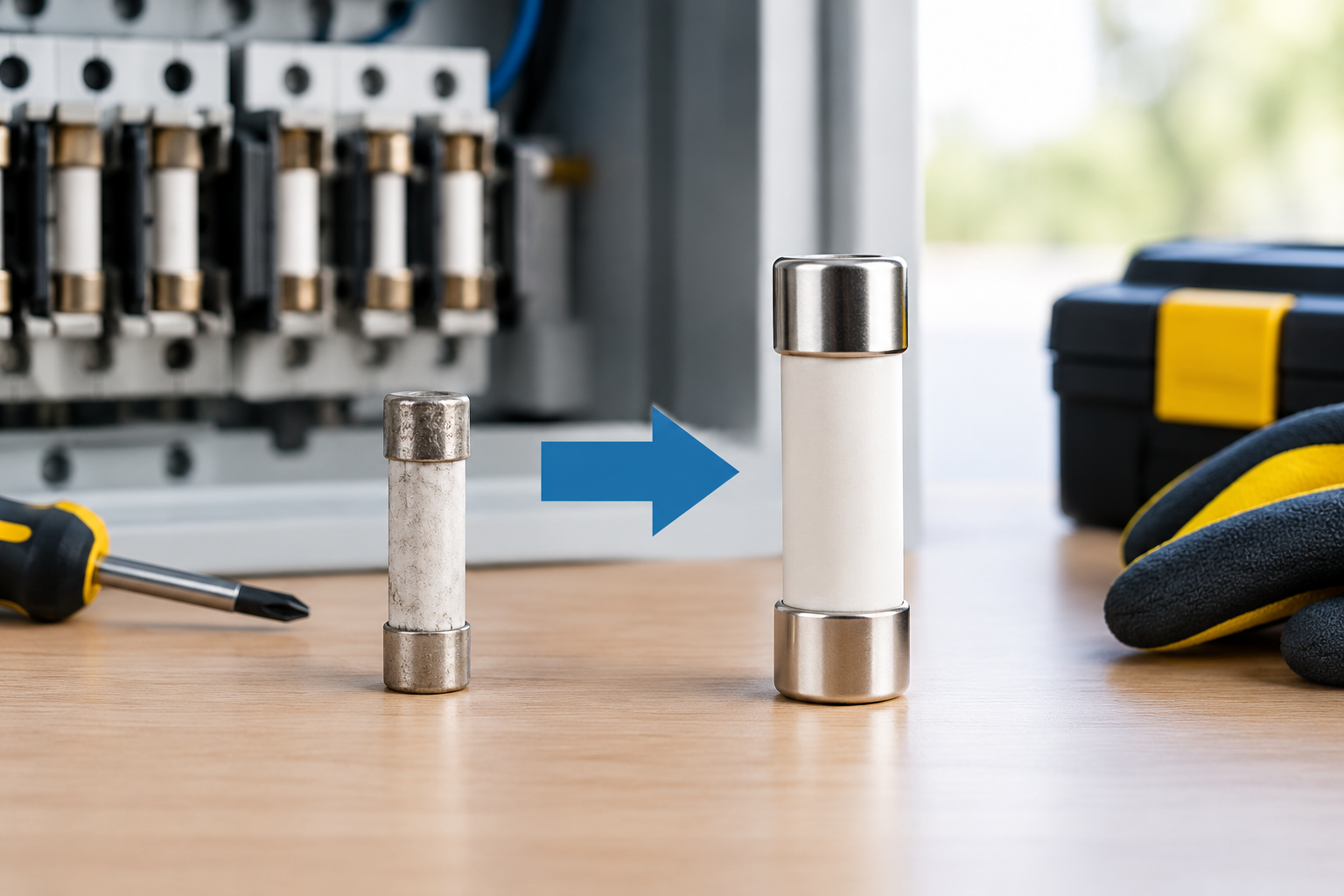
How to Replace a No-Name Fuse with an Eaton Bussmann Quality Fuse: A Step-by-Step Guide
Introduction
When a fuse needs replacing, choosing the right replacement is essential for electrical safety, reliable performance, and long-term equipment protection. While cheap, no-name fuses may seem like an affordable option, their quality, consistency, and suitability for a particular application can be difficult to verify.
Eaton Bussmann quality fuses are a trusted choice for many electrical protection applications, offering a broad range of fuse types designed to meet specific electrical requirements and applicable industry standards.
But how do you replace a no-name fuse with an Eaton Bussmann fuse, and what should you consider before making the switch?
In this step-by-step guide, we explain how to identify the correct replacement, compare the advantages of Eaton Bussmann fuses with cheap alternatives, and make a safer, more informed choice.
Why Replace a Cheap No-Name Fuse with an Eaton Bussmann Fuse?
Not all fuses offer the same level of documented performance, manufacturing consistency, or application suitability. Although two fuses may look identical, they may differ in their electrical characteristics and ability to interrupt a fault safely.
Here are the key advantages of choosing an Eaton Bussmann fuse over an unverified, low-cost alternative.
1. Reliable and Consistent Quality
Eaton Bussmann fuses are part of an established electrical protection product range. Selecting a fuse with documented specifications helps you verify that its performance characteristics are suitable for the intended application.
With an unknown fuse, important details may be missing, unclear, or difficult to validate.
2. Verified Electrical Specifications
A fuse must do more than fit into a fuse holder. Its rated current, rated voltage, breaking capacity, time-current characteristics, and other relevant specifications must match the application.
Eaton Bussmann offers product documentation that can help electrical professionals identify the appropriate fuse for a particular circuit.
3. Appropriate Fault-Current Protection
During an electrical fault, a fuse must interrupt current within its designed operating limits. The ability to safely interrupt the prospective fault current is particularly important in industrial equipment, power distribution systems, and other demanding applications.
Choosing a suitably rated Eaton Bussmann fuse helps ensure that the specified breaking capacity and operating characteristics are appropriate for the circuit.
4. A Broad Range of Fuse Types
Different electrical applications require different types of protection. Eaton Bussmann offers fuse solutions for various applications, including industrial control systems, motor circuits, power distribution, and electronic equipment.
This range makes it easier to select a product designed for the specific protection requirements rather than relying on a generic replacement.
5. Better Traceability and Technical Documentation
Product identification, datasheets, and technical specifications are important when maintaining electrical systems. Established manufacturers generally provide more comprehensive product information than an unidentified supplier.
This documentation supports correct product selection, maintenance records, and compliance with applicable equipment requirements.
6. Lower Risk of Incorrect Fuse Selection
A fuse that fits physically is not necessarily electrically compatible. Replacing an unknown fuse with a properly selected Eaton Bussmann product can help reduce the risk of using a fuse with unsuitable ratings or characteristics.
Important: A reputable brand alone does not guarantee that a particular fuse is suitable. The exact Eaton Bussmann replacement must be verified against the original fuse specifications and the equipment manufacturer's requirements.
Step-by-Step Guide: How to Replace a No-Name Fuse with an Eaton Bussmann Fuse
Follow these steps to identify and select a suitable replacement. Fuse replacement should only be carried out by a person competent to work on the relevant electrical equipment.
Step 1: Switch Off and Isolate the Equipment
Before inspecting or replacing a fuse, switch off the equipment and isolate it from every relevant power source.
For electrical installations and industrial equipment, the correct isolation procedure may include locking out the supply and verifying that the circuit is de-energised using suitable test equipment.
Never assume that switching off a machine or removing a plug has made every part of the equipment safe. Capacitors, auxiliary supplies, batteries, and other energy sources may remain hazardous.
If the fuse is part of a live electrical installation, high-energy circuit, or equipment you are not qualified to service, contact a qualified electrician or authorised technician.
Step 2: Remove and Inspect the Existing No-Name Fuse
Once the equipment has been safely isolated and verified as de-energised, inspect the existing fuse.
Look for markings such as:
-
Rated current, usually expressed in amperes (A).
-
Rated voltage, expressed in volts (V).
-
Fuse type or product series.
-
Time-current characteristic, such as fast-acting or time-delay.
-
Breaking capacity, sometimes called interrupting rating.
-
Size, dimensions, and mounting style.
-
Relevant standard or approval markings.
-
Manufacturer name, part number, or other identification codes.
Take note of the markings and, where appropriate, record the fuse dimensions.
If the fuse has no identifiable markings, do not guess its ratings based on its physical appearance. Consult the equipment documentation, circuit diagram, original bill of materials, or a qualified electrical professional to establish the correct specification.
Step 3: Identify the Correct Electrical Ratings
This is the most important step when replacing a no-name fuse with an Eaton Bussmann fuse.
Compare the original fuse's documented characteristics with the requirements of the circuit. Check the following:
Rated current: The replacement must have the correct current rating specified for the application. Installing a higher-rated fuse to stop repeated blowing can expose wiring and equipment to dangerous overheating.
Rated voltage: The fuse must be suitable for the circuit's operating voltage and the relevant AC or DC application.
Breaking capacity: The fuse must be capable of safely interrupting the prospective fault current at the point where it is installed.
Operating characteristic: A fast-acting fuse and a time-delay fuse do not behave identically. The correct characteristic depends on the circuit and its normal operating current, including any permitted inrush current.
Fuse category and application: Some fuses are designed for general circuit protection, while others are intended for specific applications such as motor protection or semiconductor protection.
Physical dimensions and connections: The fuse must fit the intended holder or mounting arrangement without modification.
Also verify any required coordination with upstream and downstream protective devices, as well as the equipment manufacturer's specifications.
Never select a replacement solely because its dimensions and current rating appear to match.
Step 4: Find a Suitable Eaton Bussmann Replacement
Once the required specifications have been established, identify an Eaton Bussmann fuse that meets them.
Use the original manufacturer's documentation, equipment documentation, or the technical specifications for the relevant Eaton Bussmann product family to compare the available options.
Check that the proposed replacement matches the required:
-
Current and voltage ratings.
-
Breaking capacity.
-
Time-current characteristics.
-
Fuse class or application category, where applicable.
-
Physical size and terminal configuration.
-
Applicable standards and approvals.
-
Environmental and operating requirements.
If the original no-name fuse cannot be identified, a qualified professional should determine the circuit's protection requirements before a replacement is chosen.
Do not assume that every Eaton Bussmann fuse is interchangeable with every generic fuse. The correct product depends on the application and its technical requirements.
Step 5: Verify Compatibility with the Fuse Holder and Equipment
Before installation, confirm that the selected Eaton Bussmann fuse is compatible with the fuse holder, equipment, and intended circuit.
The replacement must fit the designated mounting arrangement correctly. Avoid forcing a fuse into a holder, modifying terminals, or using improvised adapters.
Check the equipment manufacturer's instructions for any restrictions on replacement fuse types. In some installations, a change in fuse type may affect protective coordination, certification, or the equipment's specified safety performance.
If the equipment documentation specifies an exact fuse type or approved part number, follow that requirement or obtain the necessary technical approval before substituting another product.
Step 6: Install the Replacement Fuse Safely
Only install the fuse after the equipment has been properly isolated and the correct replacement has been confirmed.
A competent person should follow the equipment manufacturer's installation instructions and applicable electrical safety procedures. The fuse and its holder must be installed correctly, with no damaged contacts, loose connections, or unsuitable components.
Never bridge a fuse, bypass the protective device, or replace it with a fuse that has a higher current rating simply because the original fuse repeatedly opens.
If the holder is damaged, overheated, corroded, or shows signs of arcing, address the underlying problem before returning the equipment to service.
Step 7: Investigate Why the Original Fuse Failed
A blown fuse is often a symptom of another problem rather than the root cause of a failure.
Before returning equipment to operation, investigate why the original fuse opened. Possible causes include:
-
A short circuit.
-
An overloaded circuit.
-
A faulty motor or electrical component.
-
Excessive inrush current.
-
Damaged wiring or insulation.
-
A loose or deteriorated connection.
-
An incorrectly specified or defective fuse.
Replacing the fuse without investigating the cause can lead to another failure or create a safety hazard.
If the cause cannot be identified confidently, have the equipment assessed by a qualified electrician or technician.
Step 8: Complete the Final Safety Checks
Before the equipment is returned to service, verify that the replacement fuse is correctly installed and that all protective covers and barriers are restored.
The responsible person should confirm that the equipment is ready for operation in accordance with the manufacturer's procedures and applicable safety requirements.
Where required, perform appropriate electrical tests and functional checks. Monitor the equipment according to the applicable commissioning or maintenance procedure.
If the replacement fuse blows again, stop and investigate the underlying fault rather than repeatedly installing new fuses.
Eaton Bussmann vs. Cheap No-Name Fuses: What Is the Difference?
The key difference is not simply the brand name or purchase price. It is whether the fuse's technical characteristics, quality controls, and suitability for the intended application can be established.
| Feature | Eaton Bussmann quality fuses | Cheap no-name fuses |
|---|---|---|
| Product documentation | Manufacturer datasheets and technical information are available for many products | Documentation may be limited or difficult to verify |
| Specification verification | Established product identification supports selection and traceability | Markings and specifications may be unclear or incomplete |
| Range of applications | Broad range of products for different protection requirements | Range and application suitability vary by supplier |
| Standards and approvals | Relevant ratings and approvals can be checked for the specific product | Claims and markings may require additional verification |
| Product traceability | Established manufacturer and product identification | Manufacturer or product origin may be uncertain |
| Selection support | Manufacturer technical documentation can assist product selection | Technical support may be limited |
| Purchase price | May cost more initially | Often cheaper upfront |
The comparison above is general. Not every inexpensive fuse is poor quality, and not every branded fuse is appropriate for every application. Evaluate the exact product, its documentation, and its suitability rather than relying on price or appearance alone.
Are Eaton Bussmann Fuses Worth the Extra Cost?
For many applications, selecting a properly specified fuse from an established manufacturer is a sensible investment in electrical protection.
The initial purchase price is only one part of the overall cost. Incorrect fuse selection can contribute to equipment downtime, repeat failures, damage to components, troubleshooting expenses, and potentially serious safety incidents.
Eaton Bussmann fuses can offer practical advantages through documented specifications, identifiable product ranges, and application-specific options. These features help maintenance teams and electrical professionals make informed replacement decisions.
However, no fuse can eliminate every electrical risk. Correct sizing, installation, circuit design, maintenance, and fault investigation remain essential.
Common Mistakes to Avoid When Replacing a No-Name Fuse
Avoid these common mistakes when choosing an Eaton Bussmann replacement:
-
Choosing by size alone. A physically compatible fuse may have unsuitable electrical characteristics.
-
Increasing the current rating. A higher-rated fuse may no longer provide the intended protection.
-
Ignoring breaking capacity. The fuse must safely interrupt the prospective fault current.
-
Replacing a time-delay fuse with a fast-acting fuse without verification. Different operating characteristics can affect circuit performance.
-
Assuming all branded fuses are interchangeable. Each replacement must meet the equipment's technical requirements.
-
Installing a new fuse without investigating the cause of failure. A recurring fault may indicate a more serious electrical problem.
-
Working on energised equipment without the required competence and precautions. Electrical isolation and verification are essential.
Frequently Asked Questions
Can I replace any no-name fuse with an Eaton Bussmann fuse?
No. You must select an Eaton Bussmann fuse that meets the electrical, mechanical, and application requirements of the original fuse and the equipment. If the original specifications are unknown, establish the correct requirements before choosing a replacement.
Are Eaton Bussmann fuses better than cheap generic fuses?
Eaton Bussmann provides an established range of electrical protection products with manufacturer documentation and identifiable specifications. These features can make product selection and verification more reliable. However, the quality and suitability of any generic fuse must be assessed individually.
Can I use a fuse with a higher amp rating?
Not unless the equipment manufacturer or a qualified design professional has explicitly established that the change is appropriate. Increasing the current rating can compromise protection and create overheating or fire risks.
What if my original fuse has no markings?
Do not estimate its rating from its size or appearance. Check the equipment manual, circuit diagram, original parts list, or manufacturer's technical information. If necessary, ask a qualified electrician or technician to determine the correct specification.
Why does my replacement fuse keep blowing?
Repeated fuse failures may indicate an overload, short circuit, faulty component, excessive inrush current, or another electrical problem. Stop replacing the fuse repeatedly and have the underlying cause investigated.
Do Eaton Bussmann fuses last longer than no-name fuses?
Service life depends on the fuse design, operating conditions, fault history, and application. It would be inaccurate to claim that every Eaton Bussmann fuse lasts longer than every generic alternative. The key priorities are correct selection, documented performance, and suitability for the intended circuit.
Conclusion: Choose the Right Eaton Bussmann Fuse for Reliable Protection
Replacing a no-name fuse with an Eaton Bussmann quality fuse is an opportunity to improve product traceability and make a more informed electrical protection choice.
The process starts with safe isolation, identification of the original fuse, verification of the required electrical ratings, and selection of a compatible Eaton Bussmann replacement. It also involves checking the fuse holder, investigating the cause of the original failure, and following the correct installation and safety procedures.
While cheap no-name fuses may offer a lower initial purchase price, a properly specified fuse with verifiable technical information can help reduce uncertainty during maintenance and replacement.
The most important rule is simple: choose the fuse that meets the circuit's actual protection requirements, not merely the one that fits. With careful selection and correct installation, Eaton Bussmann fuses can be a valuable part of a well-designed and properly maintained electrical protection system.



