
Electrical Fuses Blog
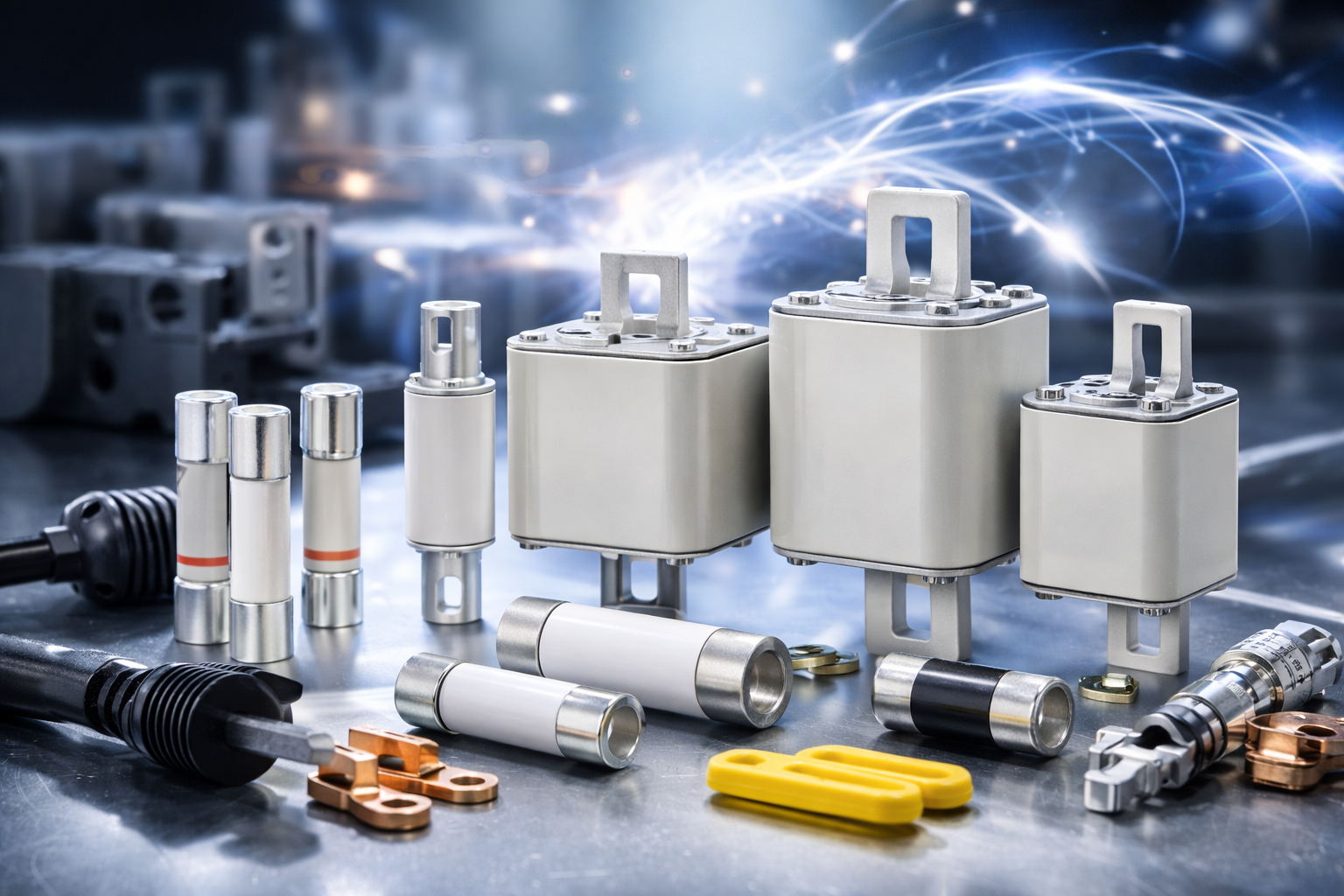
Eaton Bussmann Series Electrical Fuses – Blog & Fachwissen
Im Eaton Bussmann Series Electrical Fuses Blog finden Sie fundiertes Fachwissen rund um elektrische Sicherungen, Überstromschutz und moderne Schutzkonzepte für industrielle und gewerbliche Anwendungen. Diese Kategorie bündelt alle Blogartikel, technischen Beiträge und Praxisguides zu den Sicherungssystemen und Serien von Eaton Bussmann.
Eaton Bussmann zählt weltweit zu den führenden Herstellern von elektrischen Sicherungen, und ihre Serien stehen für Sicherheit, Normkonformität und höchste Zuverlässigkeit in anspruchsvollen elektrischen Systemen.
Was Sie im Eaton Bussmann Sicherungen Blog erwartet
Unsere Blogbeiträge helfen Ingenieuren, Einkäufern, Technikern und Planern dabei, die richtige Sicherungslösung zu finden und technische Zusammenhänge besser zu verstehen.
Themenschwerpunkte dieser Kategorie:
-
🔌 Überblick über Eaton Bussmann Sicherungsserien
-
⚙️ Unterschiede zwischen UL-, IEC- und Spezial-Sicherungen
-
📘 Technische Erklärungen zu Kennlinien, Auslöseverhalten & Bemessungswerten
-
🏭 Anwendungstipps für Industrie, Maschinenbau & Energieverteilung
-
🚗 Beiträge zu EV-, DC- und Hochvolt-Sicherungen
-
🛠 Best Practices für Auswahl, Installation und Wartung
Alle Inhalte sind praxisnah, verständlich aufbereitet und technisch fundiert.
Eaton Bussmann Sicherungsserien im Fokus
Der Blog behandelt regelmäßig verschiedene Eaton Bussmann Series Electrical Fuses, darunter:
-
Industrial Fuses
-
North American (UL) Fuse Series
-
IEC Sicherungsserien
-
High Speed & Semiconductor Fuses
-
EV & DC Sicherungen
-
Supplementary & Specialty Fuses
So erhalten Sie einen umfassenden Überblick über das Eaton Bussmann Portfolio und dessen Einsatzmöglichkeiten.
Fachwissen für sichere elektrische Systeme
Elektrische Sicherungen sind ein zentraler Bestandteil jeder sicheren Stromversorgung. Der Eaton Bussmann Series Electrical Fuses Blog unterstützt Sie dabei, Risiken zu minimieren, Normen einzuhalten und die Lebensdauer Ihrer Anlagen zu verlängern.
Ganz gleich, ob Sie Grundlagenwissen suchen oder tief in spezielle Sicherungsserien eintauchen möchten – hier finden Sie relevante, aktuelle und suchmaschinenoptimierte Inhalte rund um Eaton Bussmann Electrical Fuses.
👉 Jetzt Blogartikel entdecken und Ihr Wissen über Eaton Bussmann Sicherungsserien gezielt erweitern.
- Details
- Category: Electrical Fuses Blog
 eaton-bussmann-series-iec-high-speed-fuses-catalogue-ca135001en-en-gb.pdf  | [Eaton Bussmann better high speed fuses] | 0 kB |
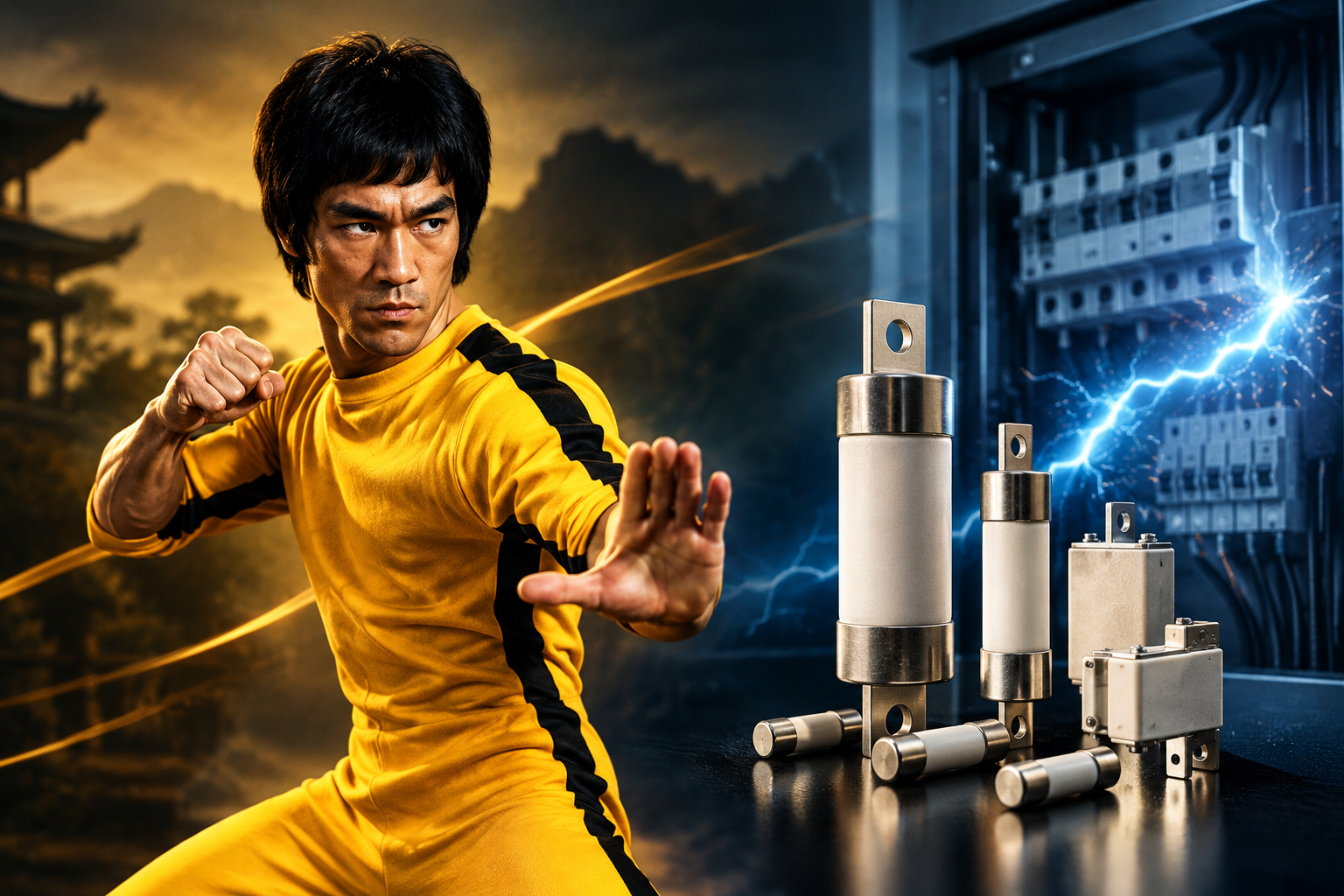
Bruce Lee vs. Eaton Bussmann Fuses: The Masters of Precision, Power and Protection
Bruce Lee and Eaton Bussmann Fuses: Two Legends, One Philosophy
What do martial arts legend Bruce Lee and electrical fuses have in common? At first glance, absolutely nothing. One was famous for lightning-fast kicks, powerful punches and philosophical wisdom. The other is designed to interrupt dangerous electrical currents before they turn into a serious problem.
But look a little closer, and an ironic comparison emerges: Bruce Lee mastered the art of controlled force, while Eaton Bussmann fuses master the art of controlled interruption.
Both are associated with precision, speed and performance under pressure. And in their respective fields, getting the timing wrong can have serious consequences.
So, grab your nunchucks (please keep them away from the switchboard), and let’s explore why Bruce Lee and Eaton Bussmann electrical fuses might have more in common than you think.
1. Speed Is Everything: Bruce Lee vs. Electrical Fuses
Bruce Lee was renowned for his explosive speed. His movements were so fast that opponents often struggled to react before the action was already over.
Electrical fuses operate on a similarly unforgiving principle: when an excessive current flows through a circuit, the fuse must respond according to its design and interrupt the current under the specified conditions.
Bruce Lee didn't need a second round to make his point. And an appropriately selected Eaton Bussmann fuse doesn't need a second chance to perform its protective function.
Of course, there is one important difference. Bruce Lee trained to deliver the decisive strike. An electrical fuse is designed to break the circuit when necessary, helping protect equipment and electrical installations from the effects of overcurrent.
In martial arts, speed wins the moment. In electrical protection, the right fuse helps prevent a bad moment from becoming a disaster.
2. Precision Beats Brute Force
Bruce Lee famously championed efficiency and directness. Why waste energy on unnecessary movements when a precise action can achieve the objective?
The same philosophy applies to electrical protection.
Eaton Bussmann fuses are available in a wide range of types, ratings and performance characteristics to suit different applications. Selecting the right electrical fuse requires careful consideration of factors such as operating voltage, current rating, breaking capacity, circuit conditions and the equipment being protected.
In other words, choosing a fuse isn't a guessing game. It takes technical knowledge and an understanding of the application.
You wouldn't ask Bruce Lee to defeat an opponent by randomly swinging his arms. So why choose an electrical fuse by randomly picking one off a shelf?
The correct fuse specification matters. A properly selected fuse can help protect valuable equipment and support the safe, reliable operation of an electrical system.
Bruce Lee believed in precision. Eaton Bussmann fuses put precision to work in electrical protection.
3. Controlled Destruction: The Ultimate Irony
Here is where the comparison gets particularly interesting.
Bruce Lee's opponents generally hoped to avoid his strikes. Electrical systems, on the other hand, depend on protective devices being ready to act when abnormal current conditions occur.
A fuse is designed to interrupt a circuit when current exceeds its specified operating characteristics. Depending on the fuse type and the magnitude of the overcurrent, its fusible element heats up and melts, interrupting the current.
Yes, the fuse is designed to sacrifice itself to help protect the circuit.
Bruce Lee might have called that discipline. An electrical engineer would call it a fundamental protective function.
And while Bruce Lee's opponents might have needed an ice pack after a particularly challenging encounter, an operated fuse needs to be investigated and replaced with the correct type once the cause of the fault has been addressed.
One protects his reputation through martial arts mastery. The other helps protect electrical installations through carefully engineered interruption.
Different arenas. Same commitment to doing the job when it matters.
4. Reliability Under Pressure
Bruce Lee didn't become a martial arts icon by performing only when conditions were perfect. His reputation was built on training, adaptability and the ability to respond under pressure.
Electrical protection also has to account for demanding conditions.
In industrial installations, commercial buildings, machinery and electrical distribution systems, fuses may be required to operate in circuits where excessive current can damage components, disrupt production or create hazardous conditions.
Eaton Bussmann electrical fuses are designed for specific electrical applications and performance requirements. Choosing the appropriate product is essential because not every fuse is suitable for every circuit.
The lesson is simple: reliability doesn't come from looking powerful. It comes from being engineered for the job.
Bruce Lee trained relentlessly to refine his skills. Eaton Bussmann fuses are developed to meet defined electrical performance requirements.
And neither should be judged by appearance alone.
5. Bruce Lee Had His Fighting Style. Eaton Bussmann Has Its Fuse Types.
Bruce Lee developed Jeet Kune Do, a martial arts philosophy built around adaptability, efficiency and using what works.
Eaton Bussmann offers a broad range of fuse solutions designed for different applications, including industrial equipment, electrical distribution and other specialised circuits.
Different situations demand different solutions. A fuse suitable for one application may be entirely unsuitable for another, just as a martial arts technique must be adapted to the circumstances.
When selecting Eaton Bussmann fuses, electrical professionals should consider the manufacturer's specifications, applicable standards and the requirements of the circuit.
Because in both martial arts and electrical engineering, the right technique—or the right fuse—makes all the difference.
And unlike an action movie, an electrical installation isn't the place to improvise.
6. The Knockout Punch: Why Quality Electrical Fuses Matter
Bruce Lee's legendary reputation was built on performance, discipline and technical mastery. In electrical engineering, performance and reliability are equally important, although the consequences of failure look somewhat different.
An unsuitable or incorrectly rated fuse may fail to provide the intended protection. That's why quality, correct product selection and compliance with the relevant electrical requirements are so important.
Eaton Bussmann fuses offer electrical professionals a range of established fuse solutions for applications where dependable overcurrent protection is essential.
For distributors, installers, maintenance teams and engineers, sourcing the right electrical protection products is an important part of getting the job done properly.
This is where Casadaa Distribution enters the ring.
For professionals looking for Eaton Bussmann fuses, Casadaa Distribution brings the focus back to what matters: the right products for the right electrical applications.
Because when it comes to protecting electrical systems, you don't want a product that merely looks the part. You want a fuse selected for its intended purpose, with the appropriate specifications for the job.
Bruce Lee wouldn't have accepted sloppy technique. Your electrical installation shouldn't accept sloppy fuse selection either.
Conclusion: Be Like Bruce Lee. Choose Precision.
Bruce Lee and Eaton Bussmann fuses may belong to completely different worlds, but the parallels are surprisingly entertaining.
Both represent precision in their own way. Both are associated with performance under pressure. Both demonstrate that success depends on doing the right thing at the right moment.
Bruce Lee brought speed, discipline and technical excellence to martial arts. Eaton Bussmann fuses bring engineered performance and controlled interruption to electrical protection.
One could stop an opponent in his tracks. The other is designed to interrupt excessive current under specified conditions.
One became a legend on the big screen. The other helps electrical professionals protect the systems that keep the real world running.
And if Bruce Lee were working in electrical distribution, he would undoubtedly appreciate the value of precision, reliability and choosing the right tool for the job.
Bruce Lee would buy Eaton Bussmann fuses from Casadaa Distribution.
- Details
- Category: Electrical Fuses Blog
| bus-ele-cat-1007-flc-2018-sec-08-blocks-holders.pdf | [Eaton Bussmann Fuse Holders] | 11744 kB |
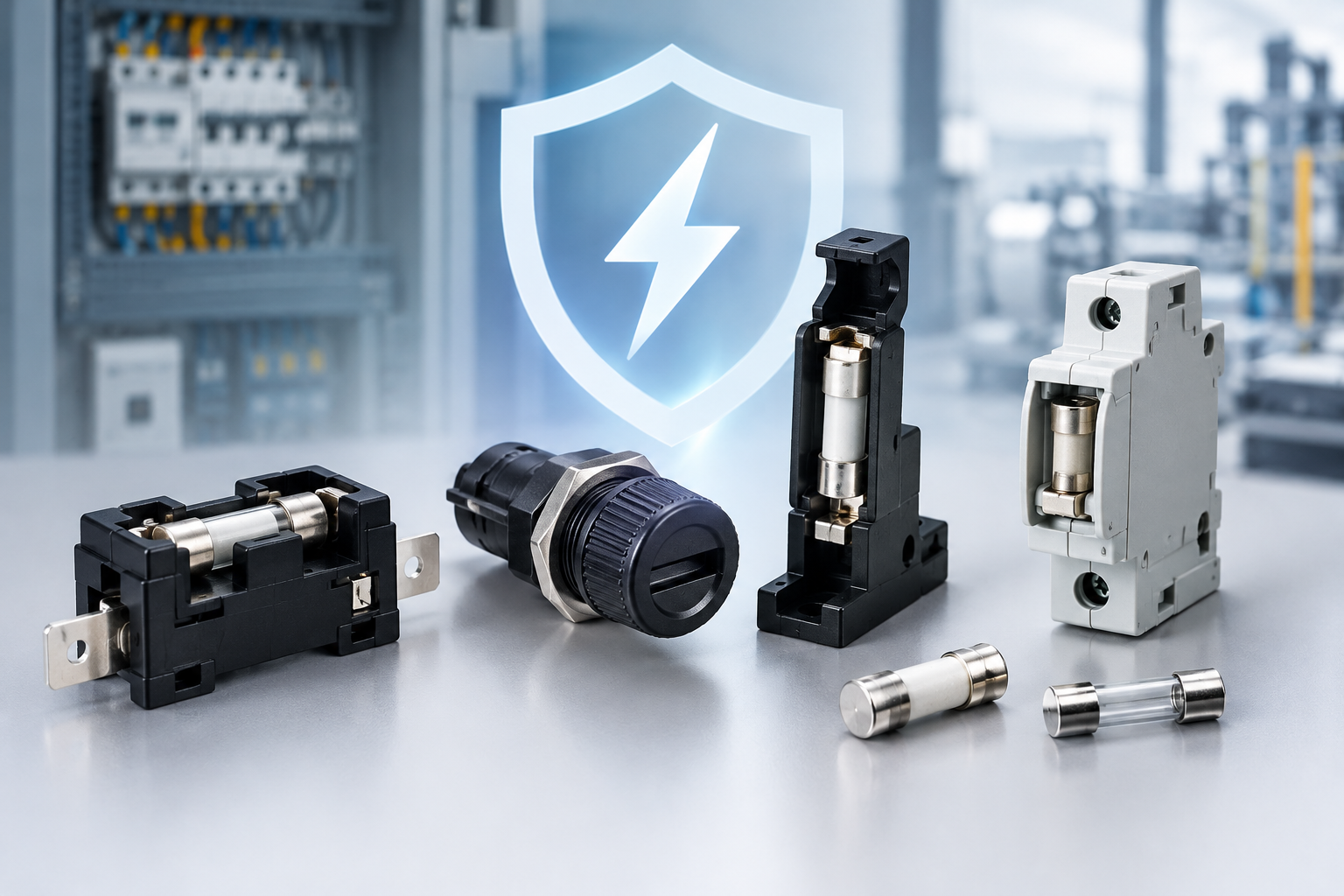
Fuse Holders: The Right Solution for Reliable Electrical Protection
A high-quality fuse holder is an essential component of electrical systems and equipment. It securely accommodates a fuse and helps protect electrical circuits against overcurrent and short circuits. Choosing the right fuse holder is important for ensuring reliable electrical connections, operational safety, and long-term performance.
Whether used in industrial machinery, automotive systems, control panels, or electronic devices, the right fuse holder supports the safe and efficient operation of electrical applications.
What Is a Fuse Holder?
A fuse holder is designed to accommodate a fuse and establish an electrical connection between the fuse and the circuit. It keeps the fuse securely in place and allows it to be replaced when necessary.
Fuse holders are available in different designs, materials, current ratings, and mounting configurations. Common options include PCB fuse holders, panel-mount fuse holders, and holders designed for mounting on DIN rails or inside electrical distribution systems.
When selecting a suitable fuse holder, it is important to consider the technical requirements of the application, including electrical ratings, dimensions, mounting requirements, and environmental conditions.
What Types of Fuse Holders Are Available?
Different fuse holder designs offer flexibility for a wide range of electrical systems and installation environments.
1. PCB Fuse Holders
PCB fuse holders are mounted directly onto printed circuit boards. They are commonly used in power supplies, control units, and compact electronic assemblies where space-saving integration is important.
2. Panel-Mount Fuse Holders
Panel-mount fuse holders are installed in equipment housings, control panels, and operator interfaces. They provide convenient access for fuse replacement and are suitable for many industrial and commercial applications.
3. Industrial Fuse Holders
Industrial applications require components that can withstand specific electrical loads and operating conditions. Industrial fuse holders should be selected according to the required current rating, environmental conditions, and installation specifications.
4. Automotive Fuse Holders
Automotive fuse holders protect electrical circuits, wiring, and connected components in vehicles. Important considerations include vibration resistance, contact reliability, and compatibility with the vehicle's electrical system.
What Should You Consider When Choosing a Fuse Holder?
Selecting the right fuse holder involves evaluating several technical factors.
-
Rated current and voltage: The fuse holder must be suitable for the electrical operating conditions of the application.
-
Fuse compatibility: The holder must match the dimensions and type of fuse being used.
-
Mounting configuration: Depending on the installation, a PCB, panel-mount, or DIN-rail solution may be required.
-
Contact quality: Reliable contacts help maintain a stable electrical connection and reduce the risk of excessive contact resistance.
-
Environmental conditions: Applications exposed to dust, moisture, vibration, or elevated temperatures may require specially designed fuse holders.
-
Ease of maintenance: Accessible designs simplify fuse replacement and routine inspections.
Considering these factors helps ensure that the selected fuse holder meets the requirements of the intended application.
Why Is Fuse Holder Quality Important?
A fuse holder must provide a dependable electrical connection throughout its service life. Poor-quality, damaged, or unsuitable components can lead to increased contact resistance, overheating, or intermittent electrical connections.
Choosing a suitable fuse holder helps support the operational reliability of electrical systems and can reduce the risk of unexpected equipment downtime. Quality depends not only on construction and materials but also on correct electrical ratings and compatibility with the application.
Proper installation is equally important. The fuse holder and fuse must be suitable for the circuit's operating conditions and installed according to the manufacturer's instructions.
Applications of Fuse Holders in Industry and Electronics
Fuse holders are used across numerous industries and applications. In industrial automation, they help protect control systems and electrical equipment. In electronics, they provide a practical way to incorporate circuit protection into compact assemblies.
Other applications include power supplies, measuring instruments, energy systems, automotive equipment, and electrical distribution panels.
Before selecting a fuse holder, professional users should identify the required specifications, including fuse dimensions, rated current, rated voltage, mounting method, and any applicable approvals or certifications.
Frequently Asked Questions About Fuse Holders
What is the purpose of a fuse holder?
A fuse holder secures a fuse and provides the electrical connection between the fuse and the circuit. It also allows the fuse to be accessed and replaced when necessary.
How do I choose the right fuse holder?
Consider the fuse dimensions, rated current, rated voltage, mounting configuration, and operating environment. Always check the manufacturer's specifications before purchasing or installing a fuse holder.
Can one fuse holder accommodate different types of fuses?
That depends on the holder's design. A fuse holder can only be used with fuses that meet its specified dimensions and electrical requirements.
When should a fuse holder be replaced?
A fuse holder should be inspected and replaced if it shows signs of corrosion, damaged contacts, deformation, discoloration, or thermal stress. Always isolate the electrical circuit safely before carrying out maintenance.
Why is correct installation important?
Proper installation helps maintain reliable electrical contact and reduces the risk of overheating or electrical faults. Installation should follow the manufacturer's instructions and applicable electrical safety regulations.
Conclusion: Choosing the Right Fuse Holder
A suitable fuse holder is an important component in reliable electrical circuit protection. The correct design, appropriate electrical ratings, and high-quality contacts all contribute to safe and dependable operation.
Whether used in industrial machinery, electronic devices, control panels, or vehicles, selecting a fuse holder that meets the specific application requirements is essential. Careful specification, correct installation, and regular inspection help support long-term reliability and electrical safety.
- Details
- Category: Electrical Fuses Blog
| eaton-bussmann-series-medium-voltage-fuses-ca132062en-us.pdf | [Eaton Bussmann MV Fuses] | 5878 kB |
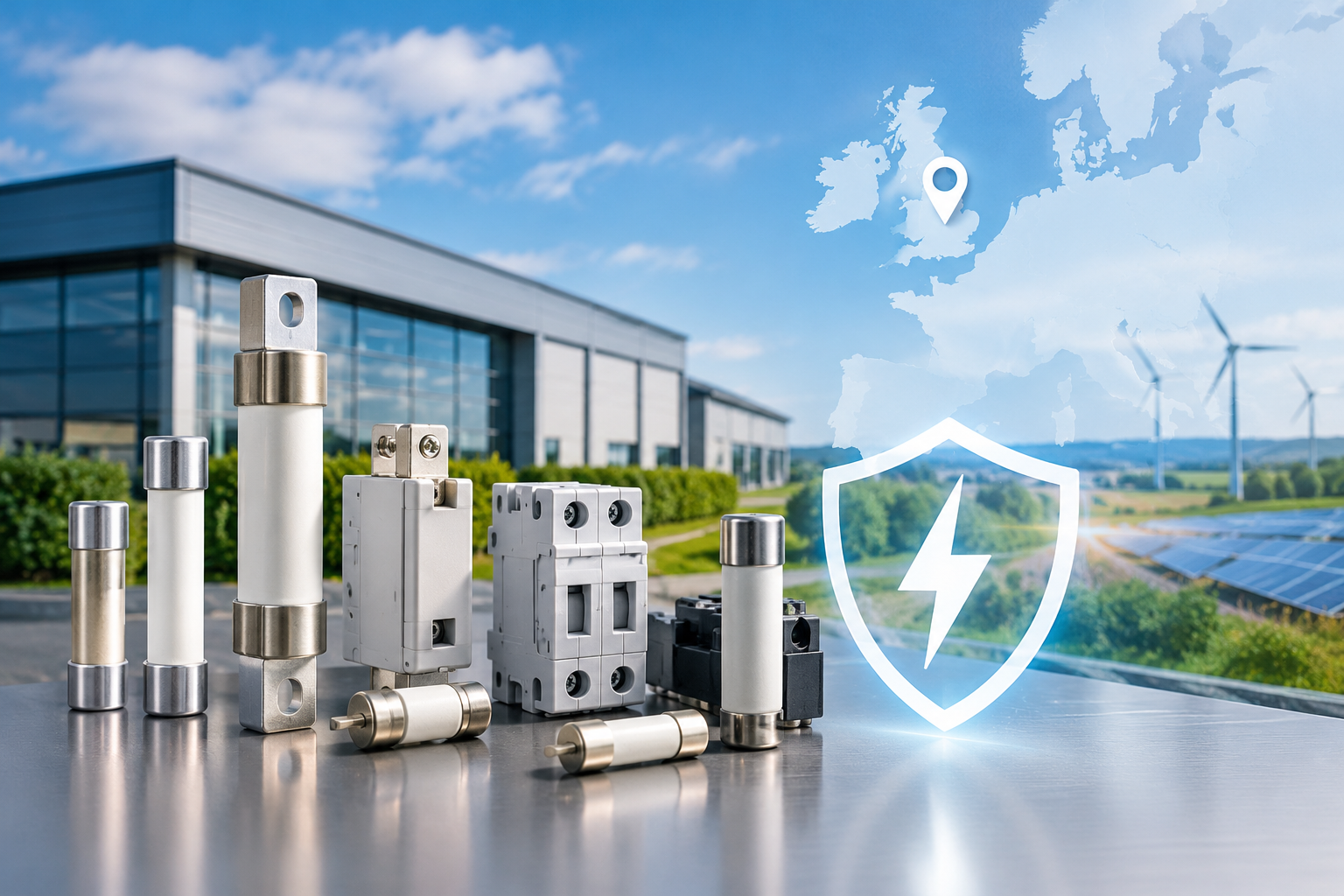
Eaton Bussmann in Burton-on-the-Wolds: European Headquarters and Electrical Fuse Solutions
Eaton Bussmann: A European Centre of Excellence in Burton-on-the-Wolds
Eaton Bussmann is a recognised name in electrical circuit protection, providing fuse solutions designed to help protect electrical systems, industrial equipment and power distribution networks. In Europe, Burton-on-the-Wolds, Leicestershire, is an important location associated with Eaton’s electrical fuse business.
Eaton Electrical Products Limited, Unit 1, Hawker Business Park, Melton Road, Burton-on-the-Wolds, LE12 5TH, United Kingdom, is identified as the European headquarters for the Eaton Bussmann electrical fuse division.
Located in Leicestershire, Burton-on-the-Wolds provides a UK base for Eaton’s electrical products operations, connecting the Eaton Bussmann name with the wider European market for industrial fuses, circuit protection and electrical power management solutions.
What Is Eaton Bussmann?
Eaton Bussmann is associated with a broad range of electrical fuses and circuit protection products used across industrial, commercial, infrastructure and energy applications. These products are designed to help protect equipment and electrical installations against excessive current and short-circuit faults.
Electrical fuses play an essential role in maintaining the safety and reliability of electrical systems. By interrupting a fault current under specified conditions, an appropriately selected fuse can help reduce the risk of equipment damage, system downtime and electrical hazards.
Eaton Bussmann products serve a variety of applications, from low-voltage control circuits and industrial machinery to renewable energy systems, power distribution equipment and demanding industrial installations.
Eaton Bussmann Product Lines
Eaton Bussmann offers multiple fuse and circuit protection product families for different electrical requirements. Example product lines include:
1. Low-Voltage Industrial Fuses
Low-voltage industrial fuses are used to protect electrical equipment, distribution systems, control panels and industrial machinery. Selection depends on factors such as rated voltage, current, breaking capacity, operating characteristics and the application’s protection requirements.
2. British Standard (BS) Fuses
British Standard fuse ranges support applications designed around relevant UK electrical standards. These products are used in suitable industrial installations and power distribution systems where the applicable fuse specification and dimensions are required.
3. North American Standard Fuses
Eaton Bussmann provides fuse solutions for equipment and installations designed to applicable North American standards. These products are relevant to industrial control panels, machinery, electrical distribution and original equipment manufacturers serving international markets.
4. High-Speed Semiconductor Fuses
High-speed fuses are designed for applications requiring protection of sensitive power electronic components, including semiconductor devices used in converters, drives, inverters and industrial power systems. Correct coordination between the fuse and the protected component is essential.
5. Solar PV Fuses
Photovoltaic fuse solutions are used in suitable solar power installations to protect photovoltaic strings and associated electrical equipment. Fuse selection must account for system voltage, current, environmental conditions and the requirements of the particular solar installation.
6. Battery and Energy Storage Fuse Solutions
Battery and energy storage applications can require specialised overcurrent protection. Appropriate fuse solutions help protect battery systems, power conversion equipment and associated electrical circuits, subject to the system’s design and fault-current characteristics.
7. Cylindrical Fuses
Cylindrical fuse ranges are commonly used in control circuits, industrial equipment and electrical distribution applications. Available specifications vary by product family and may include different dimensions, current ratings and voltage ratings.
8. Fuse Holders and Fuse Accessories
Compatible fuse holders and accessories support the installation, replacement and integration of suitable fuse products into electrical equipment. Compatibility with the specific fuse series, electrical ratings and installation requirements should always be checked.
Note: These are examples of Eaton Bussmann product categories, not a complete catalogue. Availability, specifications and product designations vary by range and market.
Why Is Burton-on-the-Wolds Important to Eaton Bussmann?
Burton-on-the-Wolds is located in Leicestershire, within the East Midlands of England. Its connection with Eaton Electrical Products Limited makes it a relevant location for businesses researching Eaton Bussmann’s European electrical fuse operations.
The address at Unit 1, Hawker Business Park, Melton Road, Burton-on-the-Wolds, LE12 5TH, United Kingdom, is particularly relevant to organisations looking for information about Eaton Bussmann’s European presence.
For electrical wholesalers, distributors, panel builders, industrial engineers and equipment manufacturers, understanding the relationship between Eaton Bussmann and Burton-on-the-Wolds can help when researching the company, its product portfolio and its European operations.
Applications of Eaton Bussmann Electrical Fuses
Eaton Bussmann fuse solutions are associated with a wide range of applications, including:
-
Industrial automation: Protection for suitable control circuits, machinery and electrical panels.
-
Power distribution: Overcurrent protection for electrical distribution equipment and installations.
-
Renewable energy: Fuse solutions for applicable solar photovoltaic and other power conversion systems.
-
Power electronics: High-speed fuse applications involving semiconductor protection.
-
Commercial and industrial buildings: Protection for appropriately designed electrical systems.
-
Battery systems and energy storage: Fuse solutions selected for the specific electrical and fault-current characteristics of the installation.
-
Original equipment manufacturing: Components integrated into electrical equipment and machinery according to the manufacturer’s design requirements.
Choosing the correct fuse involves more than matching the current rating. Engineers should consider rated voltage, breaking capacity, time-current characteristics, prospective fault current, installation conditions and applicable standards.
Choosing the Right Eaton Bussmann Fuse
Selecting an appropriate Eaton Bussmann fuse starts with understanding the electrical system and the type of protection required.
Important considerations include:
-
Rated current and voltage: The fuse must be suitable for the operating conditions of the circuit.
-
Breaking capacity: The fuse must be capable of safely interrupting the prospective fault current.
-
Fuse characteristics: Fast-acting, time-delay and high-speed fuses serve different protection requirements.
-
Standards and dimensions: Confirm that the fuse meets the relevant standard and fits the intended equipment.
-
Application requirements: Industrial machinery, photovoltaic installations, semiconductor equipment and battery systems may require different fuse technologies.
-
Coordination with other components: Protection should be coordinated with cables, switches, contactors, semiconductor devices and upstream protection.
Consult the applicable Eaton Bussmann technical documentation and qualified electrical engineering guidance before specifying or replacing a fuse.
Eaton Bussmann and the European Electrical Protection Market
Reliable electrical protection is important across Europe as industrial facilities, infrastructure projects, renewable energy installations and advanced electrical equipment continue to require dependable circuit protection.
Eaton Bussmann’s product families address a variety of these requirements, from conventional industrial fuse applications to specialised protection for power electronics and energy systems.
For organisations researching Eaton Bussmann in Burton-on-the-Wolds, the connection with Eaton Electrical Products Limited provides a useful starting point for understanding the brand’s UK presence and its role in the European electrical fuse sector.
Frequently Asked Questions
Where is the Eaton Bussmann European electrical fuse headquarters located?
The stated address is Eaton Electrical Products Limited, Unit 1, Hawker Business Park, Melton Road, Burton-on-the-Wolds, LE12 5TH, United Kingdom. The description of this site as the European headquarters should be confirmed against current official company information before being used as a formal corporate designation.
What products does Eaton Bussmann manufacture?
Eaton Bussmann product families include industrial fuses, low-voltage fuse solutions, high-speed semiconductor fuses, photovoltaic fuse solutions, cylindrical fuses and compatible fuse holders and accessories. Specific offerings depend on the product range and market.
What are Eaton Bussmann fuses used for?
They are used in suitable electrical applications to provide overcurrent and short-circuit protection for equipment, circuits and installations. The correct fuse depends on the electrical system, required protection characteristics and applicable standards.
Why is Eaton Bussmann associated with Burton-on-the-Wolds?
Burton-on-the-Wolds is associated with Eaton Electrical Products Limited at Hawker Business Park in Leicestershire. This address is relevant to enquiries about Eaton’s electrical fuse operations in Europe.
Which industries use Eaton Bussmann products?
Potential application sectors include industrial manufacturing, automation, power distribution, renewable energy, power electronics, commercial electrical systems and energy storage.
Conclusion
Eaton Bussmann and Burton-on-the-Wolds are closely associated through Eaton Electrical Products Limited, located at Unit 1, Hawker Business Park, Melton Road, Burton-on-the-Wolds, LE12 5TH, United Kingdom.
With product categories spanning industrial fuses, semiconductor protection, solar PV applications and other circuit protection requirements, Eaton Bussmann serves a broad range of electrical engineering needs.
For businesses researching Eaton Bussmann’s European presence, Burton-on-the-Wolds is a relevant location, while careful product selection and reference to current technical specifications remain essential for safe and reliable electrical protection.
- Details
- Category: Electrical Fuses Blog
| bus-ele-cat-1007-flc-2018-sec-03-elx.pdf | [Eaton Bussmann Electronics Fuses] | 4609 kB |
| eaton-overcurrent-catalog-cn.pdf | [Eaton Bussmann Overcurrent Catalogue Chinese] | 2626 kB |
| eaton-overcurrent-catalog.pdf | [Eaton Bussmann Overcurrent Catalogue] | 3016 kB |
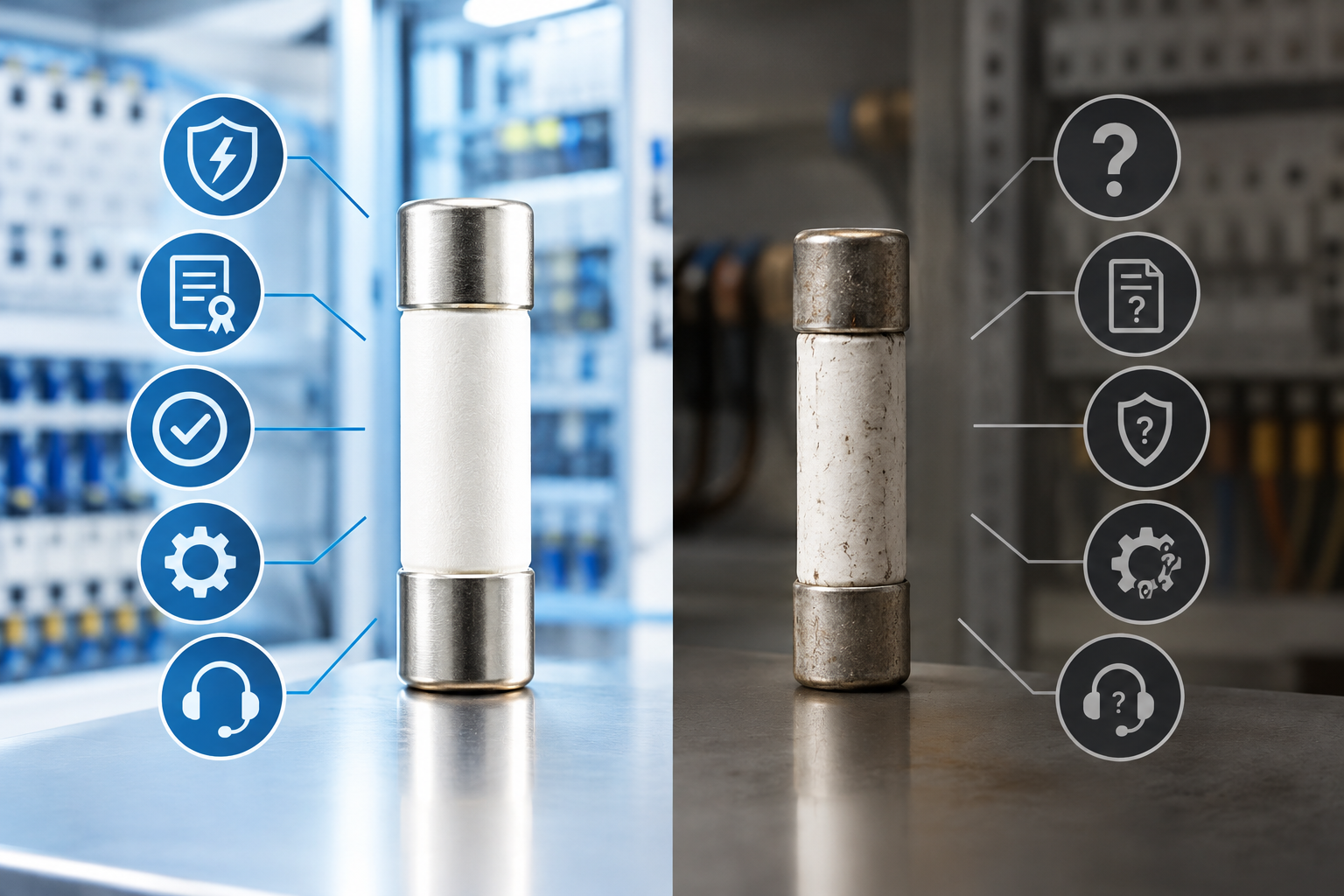
Better Fuse: Why Eaton Bussmann Fuses Are a Better Choice Than No-Name Fuses
Introduction: Choosing a Better Fuse for Reliable Circuit Protection
When it comes to electrical safety, reliability, and long-term performance, choosing a better fuse is an important decision. Fuses are essential components in electrical and electronic systems, helping protect equipment against overcurrent conditions, short circuits, and potentially damaging electrical faults. However, not all fuses offer the same level of quality, consistency, or documented performance.
Although no-name fuses from various manufacturers in China and other Asian markets may appear attractive because of their low purchase prices, the initial cost does not tell the whole story. Product consistency, verified electrical ratings, compliance with applicable standards, and dependable circuit protection are all important factors when selecting the right fuse.
Eaton Bussmann fuses are a strong choice for applications where quality, engineering, and dependable protection matter. By choosing a reputable fuse manufacturer instead of relying solely on the lowest-priced alternative, businesses can make more informed purchasing decisions and reduce the risks associated with unverified components.
But what makes a better fuse, and why should buyers consider Eaton Bussmann fuses over generic alternatives?
What Makes a BetterFuse?
A better fuse is not simply the cheapest component available. It is a fuse that meets the electrical requirements of the application and provides predictable, documented protection under specified operating conditions.
When evaluating fuse quality, consider these essential factors:
-
Reliable circuit protection: The fuse must respond appropriately to overcurrent conditions within its specified operating characteristics.
-
Verified electrical ratings: Rated current, rated voltage, breaking capacity, and time-current characteristics must be suitable for the intended application.
-
Consistent manufacturing quality: Production consistency helps ensure that components perform according to their specifications.
-
Compliance with relevant standards: Applicable certifications and test documentation help demonstrate that a product meets defined requirements.
-
Traceability and technical documentation: Clear product identification, datasheets, and manufacturer support make component selection and verification easier.
-
Long-term value: A reliable component can help reduce the risks and costs associated with equipment failures, troubleshooting, and unplanned maintenance.
These factors are especially important in industrial equipment, power supplies, automotive electronics, renewable energy systems, and other applications where electrical protection is critical.
Why Eaton Bussmann Fuses Stand Out
Eaton Bussmann is an established name in circuit protection. Its fuse portfolio serves a wide range of electrical and electronic applications, with products designed for different operating conditions, current ratings, voltage levels, and protection requirements.
For engineers, purchasing managers, maintenance professionals, and equipment manufacturers, selecting Eaton Bussmann fuses offers several potential advantages.
1. Established Engineering and Product Development
Fuse performance depends on more than the physical appearance of a component. Internal construction, fuse-element design, materials, manufacturing tolerances, and thermal behavior all influence how a fuse responds to an electrical fault.
Eaton Bussmann products are developed for defined applications and electrical characteristics. This makes it easier for engineers to select a fuse using documented specifications rather than relying on appearance or a supplier's general assurances.
For demanding applications, a properly specified fuse can help provide predictable protection and support the overall reliability of the electrical system.
2. Clearly Defined Electrical Performance
A fuse must be suitable for the circuit it protects. Choosing the wrong rated voltage, current, or breaking capacity can compromise protection, even when the component appears to be well made.
Eaton Bussmann datasheets provide technical information for selecting products according to their intended use. Depending on the product series, relevant parameters may include:
-
Rated current and voltage
-
Breaking capacity
-
Time-current characteristics
-
Voltage drop and power dissipation
-
Temperature-related operating considerations
-
Applicable approvals and standards
This information helps engineers compare products on measurable performance criteria instead of making decisions based on price alone.
3. Quality and Manufacturing Consistency
Consistency matters when a fuse is installed in a product that will be manufactured, distributed, or maintained over many years. Unexpected differences between production batches can create challenges for quality assurance and product reliability.
No-name fuses may offer limited publicly available information about manufacturing controls, batch traceability, or independent testing. However, this is not true of every lesser-known manufacturer, and country of origin alone does not establish product quality.
The important distinction is whether the manufacturer can demonstrate consistent production, suitable quality controls, and performance that matches the published specifications.
When evaluating Eaton Bussmann fuses against generic alternatives, buyers should compare documented quality requirements, technical evidence, and product traceability. This provides a more meaningful basis for selecting a better fuse than simply comparing unit prices.
4. Documentation, Standards, and Approvals
Electrical protection components must be selected according to the requirements of the final equipment and its operating environment.
Depending on the application, a suitable fuse may need to meet particular IEC, UL, or other applicable standards. Buyers should verify the precise approvals, ratings, and conditions stated for the individual product rather than assuming that every fuse from a particular manufacturer carries the same certifications.
Eaton Bussmann product documentation can help engineers identify the specifications and approvals relevant to a given product series.
With generic fuses, the same checks are essential. A printed certification mark or a similar-looking label should not replace verification of the applicable certificate, manufacturer, product model, and rating.
5. Technical Support and Product Selection
Selecting the correct fuse can involve more than matching the amperage printed on an existing component. Engineers may need to consider fault current, inrush current, ambient temperature, voltage, required interrupting capacity, coordination with other protective devices, and the applicable safety standards.
Access to detailed technical information and manufacturer support can help simplify this process.
Eaton Bussmann's broad circuit protection portfolio allows buyers to investigate different fuse types for different applications. This is particularly useful for engineering teams that need to standardize components, review replacement options, or develop new equipment.
6. Total Cost of Ownership, Not Just Purchase Price
A low-cost fuse may reduce the initial bill of materials, but the purchase price is only one part of the total cost of using an electrical component.
If a fuse does not meet its specified performance, potential consequences can include additional testing, production delays, troubleshooting, equipment downtime, warranty claims, or damage to other components.
These outcomes are not inevitable with generic fuses, just as a well-known brand does not eliminate every possibility of failure. The key is to assess the quality evidence and the consequences of failure in the actual application.
For critical equipment, a slightly higher component price may be justified when it delivers demonstrable advantages in verified performance, documentation, traceability, or engineering support.
The better purchasing decision is the one that balances component cost with the cost and risk of the complete system.
Eaton Bussmann Fuses vs. No-Name Fuses from China and Asia
Generic fuses sourced from China and other Asian markets vary considerably in quality. Some manufacturers produce well-engineered, properly tested components, while others may provide insufficient documentation or limited evidence that their products meet the claimed specifications.
For this reason, it is more accurate to distinguish between verified, specification-compliant products and unverified alternatives than to judge a fuse solely by its geographical origin.
The following comparison highlights the areas buyers should investigate.
| Evaluation criterion | Eaton Bussmann fuses | No-name or generic fuses |
|---|---|---|
| Product specifications | Established product documentation is available for the relevant series | Documentation quality varies by manufacturer and supplier |
| Electrical performance | Defined ratings and characteristics should be checked against the datasheet | Claimed ratings should be independently verified where necessary |
| Manufacturing consistency | Assess through manufacturer quality information and product traceability | Assess individually; evidence may be more limited for some suppliers |
| Certifications and approvals | Verify the approvals applicable to the exact part number | Verify certificates, scope, validity, and product identity |
| Technical support | Manufacturer documentation and support resources are available | Support capabilities vary by supplier |
| Purchase price | May be higher than some low-cost alternatives | Often marketed at a lower initial price |
| Long-term value | Depends on application suitability, performance, and total system cost | Depends on verified quality, reliability, and the actual purchase savings |
The main advantage of choosing an established manufacturer is not that every competing product is inferior. It is that buyers can make a more informed decision when product specifications, technical documentation, and support resources are available and verifiable.
The Risks of Choosing a Fuse Based on Price Alone
A fuse is a safety-related component, so selecting one exclusively on its purchase price can create unnecessary uncertainty.
Incorrect or Unverified Ratings
A fuse's current rating alone does not establish whether it can safely interrupt the prospective fault current in a particular circuit. Rated voltage, breaking capacity, time-current behavior, and the application's specific requirements must also be considered.
Using a component with unsuitable characteristics can result in inadequate protection.
Inconsistent Performance
If a product does not consistently meet its stated specifications, equipment manufacturers may face additional inspection, qualification, and production-control costs.
This is why supplier qualification and, where appropriate, independent testing are important when purchasing from an unfamiliar source.
Inadequate Documentation
Missing or unclear datasheets, certificates, and traceability information can make it harder to establish whether a fuse is appropriate for a regulated or safety-critical application.
Documentation should be treated as part of the product evaluation, not as an administrative detail.
Unexpected Costs
A lower unit price may be offset by extra qualification work, increased inspection requirements, replacement costs, or operational disruption.
Buyers should evaluate the complete cost of sourcing and using a fuse, including the effort needed to verify that it is suitable for the intended application.
How to Choose the Right Eaton Bussmann Fuse
Even the best-known fuse manufacturer cannot offer a single fuse that is ideal for every circuit. Selecting the correct part number is essential.
Follow these steps when choosing an Eaton Bussmann fuse or evaluating an alternative.
Step 1: Identify the electrical requirements.
Determine the circuit's normal operating current, maximum operating voltage, prospective fault current, and expected inrush current.
Step 2: Define the required protection characteristics.
Establish the required time-current behavior, breaking capacity, and any coordination requirements with other protective devices.
Step 3: Consider the operating environment.
Account for ambient temperature, thermal conditions, installation constraints, and any relevant environmental requirements.
Step 4: Verify the applicable standards.
Check which approvals and standards are required for the end product, industry, and market.
Step 5: Review the manufacturer's documentation.
Use the datasheet for the exact fuse model to verify ratings, operating characteristics, dimensions, and approval information.
Step 6: Compare alternatives objectively.
If a generic fuse is being considered as a replacement, confirm that its electrical and mechanical characteristics are genuinely equivalent. Similar dimensions or the same printed current rating do not establish interchangeability.
Step 7: Evaluate total cost and supplier reliability.
Consider purchase price alongside testing requirements, documentation, traceability, support, and the consequences of an unsuitable component.
These steps help ensure that the selected fuse is appropriate for the application, regardless of the manufacturer's location.
Which Applications Benefit from Careful Fuse Selection?
Choosing a suitable fuse is important across a wide range of industries and applications, including:
-
Industrial automation: Protecting control circuits, power supplies, and electrical equipment.
-
Power electronics: Selecting suitable protection for converters, inverters, and electronic power systems.
-
Automotive electronics: Matching protective devices to the electrical requirements of vehicle systems.
-
Renewable energy: Evaluating fuse suitability for solar power systems, energy storage, and associated equipment.
-
Consumer electronics: Supporting product reliability through correctly specified circuit protection.
-
Electrical distribution: Selecting fuses with appropriate voltage ratings and fault-interruption capabilities.
In every case, the correct choice depends on the circuit design, applicable standards, and verified product characteristics. A fuse should never be selected on brand reputation or price alone.
Better Fuse: Make Quality and Reliability Part of Your Purchasing Decision
Searching for a better fuse should mean looking beyond the lowest price. It should mean finding a component with the right electrical characteristics, reliable documentation, suitable approvals, and a clear fit for the intended application.
Eaton Bussmann fuses are worth considering when these factors are important because their established product portfolio and technical documentation support specification-based selection. For buyers comparing them with no-name fuses from China or other Asian markets, the strongest approach is to evaluate actual evidence of performance, manufacturing quality, traceability, and compliance.
Generic alternatives are not automatically poor quality, and premium brands are not automatically suitable for every circuit. What matters is whether the exact product meets the required specifications and can be supported by credible technical evidence.
For engineers, OEMs, distributors, and purchasing professionals, the objective is simple: select a fuse that protects the circuit as intended, meets the relevant requirements, and offers the right balance between purchase price and long-term value.
A better fuse is not just a component with a higher price or a familiar brand name. It is a correctly specified, verifiable, and dependable solution for circuit protection. When reliability, documentation, and engineering confidence matter, Eaton Bussmann fuses deserve a place on your shortlist.
Frequently Asked Questions
What is a better fuse?
A better fuse is one that meets the application's electrical requirements and provides documented, predictable protection. Important considerations include rated current and voltage, breaking capacity, time-current characteristics, product quality, and applicable approvals.
Are Eaton Bussmann fuses better than cheap generic fuses?
Eaton Bussmann fuses are a strong option for buyers who value established product documentation and specification-based selection. Whether one fuse is better than another depends on the exact models being compared and the evidence that each meets the application's requirements.
Are all no-name fuses from China and Asia unreliable?
No. China and other Asian countries have manufacturers with a wide range of capabilities and quality standards. Buyers should evaluate the individual manufacturer, product documentation, test evidence, certifications, and traceability rather than assuming that geographical origin determines quality.
Why should I check a fuse's breaking capacity?
Breaking capacity indicates the maximum prospective fault current that a fuse can safely interrupt under its specified conditions. The selected fuse must be suitable for the fault current that may occur in the application.
Can I replace a generic fuse with an Eaton Bussmann fuse?
Potentially, but the replacement must be checked carefully. The rated current, voltage, breaking capacity, time-current characteristics, dimensions, approvals, and application requirements must be compatible. Consult the relevant datasheets and a qualified electrical engineer when necessary.
Is the cheapest fuse always the most economical option?
No. Purchase price is only one part of total cost. Qualification, testing, documentation, maintenance, downtime, and the consequences of component failure can all affect the final cost of using a fuse.
What should I check before buying a better fuse?
Review the exact part number, manufacturer datasheet, electrical ratings, breaking capacity, relevant approvals, traceability information, and suitability for the intended circuit. Compare products using these measurable criteria rather than price alone.

- Details
- Category: Electrical Fuses Blog
| eaton-bussmann-series-battery-storage-fuses-application-guide-ca135002en.pdf | [Battery Storage Fuses] | 5072 kB |
| eaton-bussmann-series-electric-vehicle-application-guide-br132016en-en-gb.pdf | [EV Fuses Application Guide] | 526 kB |
| eaton-bussmann-series-photovoltaic-fuses-catalogue-ca135004en.pdf | [PV Fuses] | 6298 kB |
| eaton-bussmann-series-square-body-electric-vehicles-fuses-ca135003en-en-gb.pdf | [EV Fuses] | 701 kB |
| HSF_Battery-Storage-Application-Guide_June-2020.pdf | [Eaton Bussmann BESS Fuses Technical Guide] | 0 kB |
Eagle and Electric Infrastructure: How Quality Fuses Protect EV, PV and Battery Systems
When Eagle Meets Electric: Protecting Modern Electrical Infrastructure
The growing demand for reliable electric infrastructure is transforming the way we generate, store and use energy. Electric vehicles (EVs), photovoltaic (PV) systems and battery energy storage systems are becoming essential components of modern energy networks. However, these installations face a range of environmental risks, including one that is often overlooked: the potential impact of birds of prey, particularly the eagle.
Although the eagle plays an important role in the ecosystem, its size, wingspan and nesting behavior can create challenges for electrical infrastructure. Contact with energized components, damage to electrical equipment and bird-related short circuits can lead to equipment failures, power interruptions and costly repairs.
How can electrical infrastructure be protected against these risks? High-quality electrical fuses are an important part of a comprehensive protection strategy, helping safeguard electrical circuits against overcurrents and reducing the consequences of electrical faults.
Why Eagles Can Pose a Risk to Electric Infrastructure
Eagles are large birds with impressive wingspans. When they land on, perch near or build nests around electrical installations, they may unintentionally create hazardous situations.
The greatest risk occurs when a bird bridges electrical conductors or energized components at different electrical potentials. This can create an unintended current path, potentially resulting in a short circuit, an arc flash or damage to electrical equipment.
Depending on the installation, bird-related incidents can affect:
-
Electrical connections and switchgear: Contact with exposed conductors can cause short circuits and equipment damage.
-
Power distribution systems: Nesting materials, droppings and physical interference can contribute to faults or operational problems.
-
Renewable energy installations: Solar power systems and associated electrical equipment may be exposed to bird activity.
-
Energy storage infrastructure: Electrical faults can affect the converters, distribution equipment and protection systems connected to battery installations.
The actual level of risk depends on the installation design, voltage, conductor spacing, accessibility and environmental conditions. Eagles are not inherently a threat to every electrical installation, but bird-related electrical faults deserve consideration when designing and maintaining infrastructure.
Eagle Risks for Electric Vehicles (EVs)
Electric vehicles rely on sophisticated electrical systems, including high-voltage batteries, power electronics, charging equipment and protective devices. While an eagle is unlikely to interact directly with a properly enclosed EV battery, bird activity can affect the surrounding charging infrastructure.
For example, birds nesting near outdoor charging stations, distribution cabinets or exposed electrical equipment may contribute to contamination, physical interference or faults. In poorly protected installations, animal contact with electrical connections can also cause dangerous short circuits.
A well-designed EV charging installation therefore requires suitable enclosures, correctly selected circuit protection and compliance with applicable electrical safety standards.
Quality fuses can help protect EV charging circuits and associated electrical equipment by interrupting excessive current when a qualifying overcurrent occurs. This helps limit thermal stress, reduce equipment damage and improve the reliability of charging infrastructure.
However, a fuse cannot prevent an eagle from contacting an energized component. Physical barriers, suitable equipment enclosures and appropriate installation design remain essential.
Protecting PV Systems Against Eagle-Related Electrical Faults
Photovoltaic (PV) installations are frequently deployed outdoors, sometimes in open landscapes where large birds are common. Solar panels, mounting structures, DC cabling, inverters and combiner boxes can all be exposed to environmental influences.
Although PV modules are generally designed to withstand outdoor conditions, the electrical connections and associated equipment still require appropriate protection. Bird activity can contribute to damaged cables, contaminated equipment or faults in vulnerable installations.
A particularly important consideration is that solar PV systems can continue generating electricity whenever sufficient light is available. Consequently, electrical hazards may remain present even when the system is disconnected from the AC grid.
How fuses improve PV system protection
Properly selected PV fuses help protect solar strings and other DC circuits against overcurrents. In certain fault conditions, such as reverse currents from parallel strings, a fuse can interrupt current before excessive heating damages cables or other components.
When selecting fuses for a PV installation, engineers should consider:
-
The maximum PV system voltage and the fuse's DC voltage rating.
-
The expected operating current and applicable design margins.
-
The prospective fault current and required interrupting capacity.
-
The specific requirements of PV string protection.
-
Relevant standards, including IEC 60269-6 for gPV fuse-links.
Quality PV fuses provide dependable electrical protection when they are correctly rated and installed in compatible fuse holders. They are particularly valuable in installations where long cable runs, multiple parallel strings and demanding outdoor conditions increase the importance of reliable fault interruption.
Nevertheless, a fuse cannot eliminate every bird-related risk. Physical protection of conductors, robust enclosures and routine inspections are also necessary.
Eagle Risks and Battery Energy Storage Systems
Battery energy storage systems (BESS) are increasingly important for renewable energy integration, grid stability and energy management. These systems contain battery modules, battery management systems, power conversion equipment and electrical distribution components.
An eagle is unlikely to damage a properly enclosed battery module directly. However, bird-related incidents affecting external electrical connections, cabinets, cables or power conversion equipment can create faults that influence the operation of the wider installation.
Battery systems also present specific protection challenges because their electrical characteristics differ from those of conventional AC installations. Batteries can deliver substantial fault currents, while certain DC faults can be difficult to interrupt because DC current does not naturally pass through zero as AC current does.
The role of quality fuses in battery protection
High-quality fuses designed for battery and energy storage applications can help interrupt dangerous overcurrents and protect conductors, power electronics and other equipment.
Depending on the system architecture, appropriate fuses may be installed at battery strings, module connections, DC distribution points or power conversion interfaces. Selection must account for the battery's maximum voltage, potential short-circuit current, circuit time constants and the fuse's DC interrupting capability.
For battery applications, engineers should also evaluate coordination between fuses, contactors, battery management systems and other protective devices.
A fuse is an important safety component, but it is not a complete battery safety solution. It cannot replace thermal management, battery monitoring, appropriate isolation, fire protection or the other safeguards required by the system design.
Why Quality Fuses Matter for Electrical Infrastructure
When a bird-related incident causes an electrical fault, the consequences depend on how quickly and reliably the protection system responds. A properly selected fuse can help interrupt an overcurrent before it causes excessive heating, cable damage or further equipment failure.
Not all fuses are suitable for every application. The performance of a protective device depends on its design, ratings, operating characteristics and compatibility with the electrical system.
When evaluating fuses for EV, PV and battery infrastructure, several factors deserve attention.
1. Reliable overcurrent protection
Quality fuses are designed to operate within specified current and time characteristics. Correct selection helps protect cables and electrical components against the effects of qualifying overloads and short circuits.
2. High interrupting capacity
A fuse must be capable of safely interrupting the maximum prospective fault current at the applicable circuit voltage. This is especially important in battery systems and other high-energy DC applications.
3. Application-specific design
EV charging, photovoltaic generation and battery storage have different electrical requirements. Dedicated fuse solutions may be necessary to address their respective voltage levels, fault currents and operating conditions.
4. Dependable performance in demanding environments
Outdoor electrical infrastructure can experience temperature variations, humidity, dust and other environmental stresses. Suitable fuse holders, enclosures and installation practices help maintain reliable protection under the intended operating conditions.
5. Compliance with relevant standards
Selecting fuses that comply with the applicable standards helps ensure that their performance is assessed for the intended application. Depending on the installation, relevant standards may include IEC 60269, IEC 60269-6 for PV fuse-links and applicable EV charging or energy storage requirements.
Ultimately, fuse quality should be assessed through verified ratings, technical documentation, relevant certifications and suitability for the intended application—not price alone.
Beyond Fuses: A Complete Protection Strategy
Protecting electrical infrastructure against eagle-related incidents requires a layered approach. Fuses address specific electrical faults, but prevention and system design are equally important.
A comprehensive strategy should include:
-
Bird-safe equipment design: Avoid unnecessary exposed conductors and provide suitable spacing, barriers and enclosures.
-
Cable and connection protection: Use appropriately rated cables, secure connections and robust protective routing.
-
Correct fuse selection: Match the fuse to the voltage, current, fault level and characteristics of the circuit.
-
System coordination: Ensure that fuses operate appropriately alongside other protective devices.
-
Regular inspections: Check for damaged cables, nesting materials, contamination and deteriorating enclosures.
-
Responsible wildlife management: Use lawful, wildlife-safe prevention measures where bird activity creates a documented risk.
These measures help reduce the likelihood of bird-related faults while supporting the safety and reliability of modern electrical installations.
Conclusion: Quality Fuses Help Keep Electric Infrastructure Reliable
Eagles are a valuable part of the natural environment, but their interaction with electrical installations can sometimes create risks for power distribution, EV charging infrastructure, photovoltaic systems and battery energy storage.
The solution is not to treat every bird as a threat, but to design electrical systems that account for their operating environment. Appropriate enclosures, bird-safe engineering, regular maintenance and reliable electrical protection all contribute to a safer installation.
Quality fuses play a critical role in this protection strategy. When correctly specified for the application, they help interrupt dangerous overcurrents, protect electrical components and limit the consequences of certain short circuits.
For EV, PV and battery infrastructure, choosing the right fuse is therefore an important step toward improving operational reliability, protecting valuable equipment and supporting a resilient electric energy future.



