
Electrical Fuses Blog
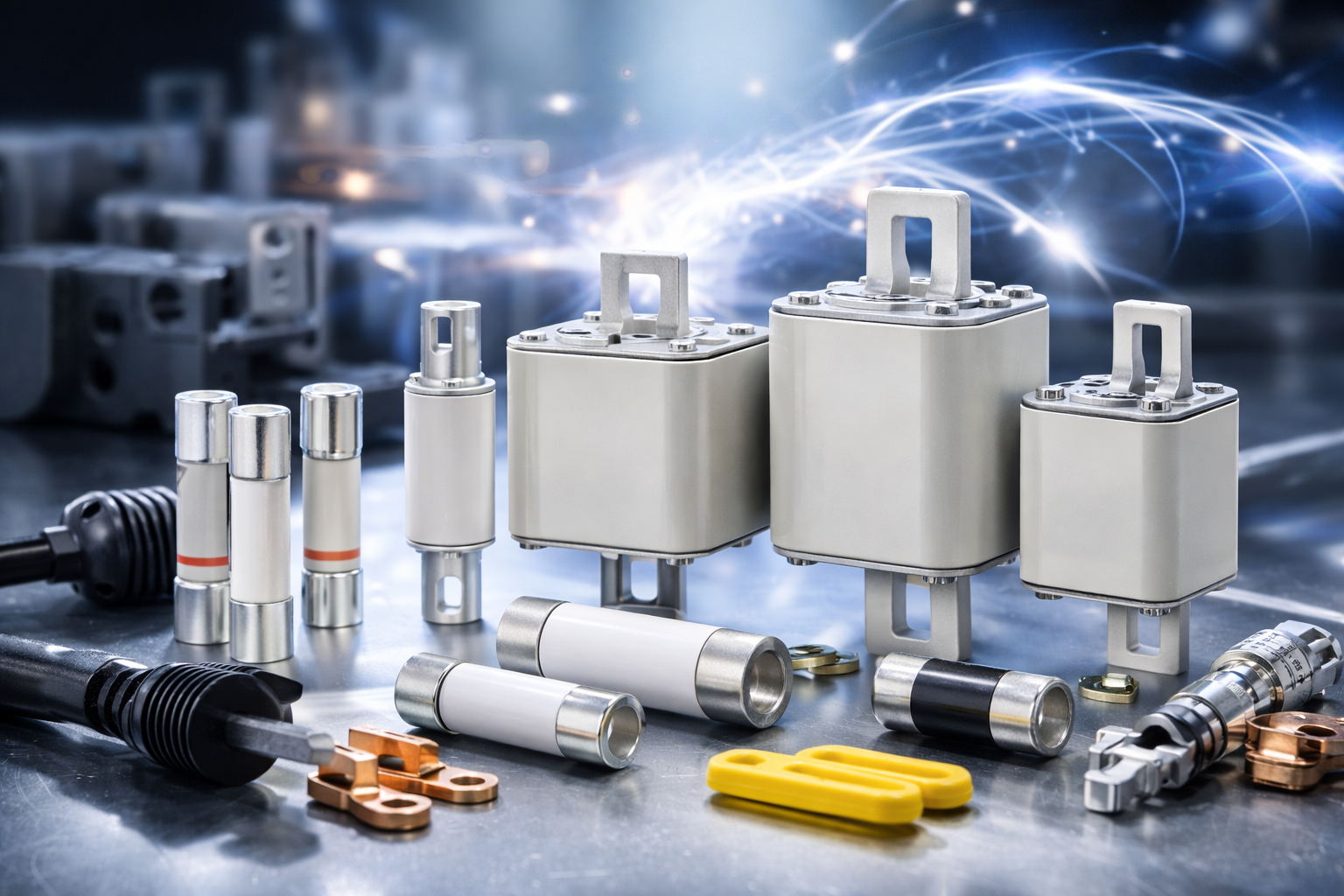
Eaton Bussmann Series Electrical Fuses – Blog & Fachwissen
Im Eaton Bussmann Series Electrical Fuses Blog finden Sie fundiertes Fachwissen rund um elektrische Sicherungen, Überstromschutz und moderne Schutzkonzepte für industrielle und gewerbliche Anwendungen. Diese Kategorie bündelt alle Blogartikel, technischen Beiträge und Praxisguides zu den Sicherungssystemen und Serien von Eaton Bussmann.
Eaton Bussmann zählt weltweit zu den führenden Herstellern von elektrischen Sicherungen, und ihre Serien stehen für Sicherheit, Normkonformität und höchste Zuverlässigkeit in anspruchsvollen elektrischen Systemen.
Was Sie im Eaton Bussmann Sicherungen Blog erwartet
Unsere Blogbeiträge helfen Ingenieuren, Einkäufern, Technikern und Planern dabei, die richtige Sicherungslösung zu finden und technische Zusammenhänge besser zu verstehen.
Themenschwerpunkte dieser Kategorie:
-
🔌 Überblick über Eaton Bussmann Sicherungsserien
-
⚙️ Unterschiede zwischen UL-, IEC- und Spezial-Sicherungen
-
📘 Technische Erklärungen zu Kennlinien, Auslöseverhalten & Bemessungswerten
-
🏭 Anwendungstipps für Industrie, Maschinenbau & Energieverteilung
-
🚗 Beiträge zu EV-, DC- und Hochvolt-Sicherungen
-
🛠 Best Practices für Auswahl, Installation und Wartung
Alle Inhalte sind praxisnah, verständlich aufbereitet und technisch fundiert.
Eaton Bussmann Sicherungsserien im Fokus
Der Blog behandelt regelmäßig verschiedene Eaton Bussmann Series Electrical Fuses, darunter:
-
Industrial Fuses
-
North American (UL) Fuse Series
-
IEC Sicherungsserien
-
High Speed & Semiconductor Fuses
-
EV & DC Sicherungen
-
Supplementary & Specialty Fuses
So erhalten Sie einen umfassenden Überblick über das Eaton Bussmann Portfolio und dessen Einsatzmöglichkeiten.
Fachwissen für sichere elektrische Systeme
Elektrische Sicherungen sind ein zentraler Bestandteil jeder sicheren Stromversorgung. Der Eaton Bussmann Series Electrical Fuses Blog unterstützt Sie dabei, Risiken zu minimieren, Normen einzuhalten und die Lebensdauer Ihrer Anlagen zu verlängern.
Ganz gleich, ob Sie Grundlagenwissen suchen oder tief in spezielle Sicherungsserien eintauchen möchten – hier finden Sie relevante, aktuelle und suchmaschinenoptimierte Inhalte rund um Eaton Bussmann Electrical Fuses.
👉 Jetzt Blogartikel entdecken und Ihr Wissen über Eaton Bussmann Sicherungsserien gezielt erweitern.
- Details
- Category: Electrical Fuses Blog
 bus-ele-cat-1007-flc-2018-sec-07-mv.pdf | [Eaton Bussmann series Full line catalog: Medium voltage fuses] | 3236 kB |
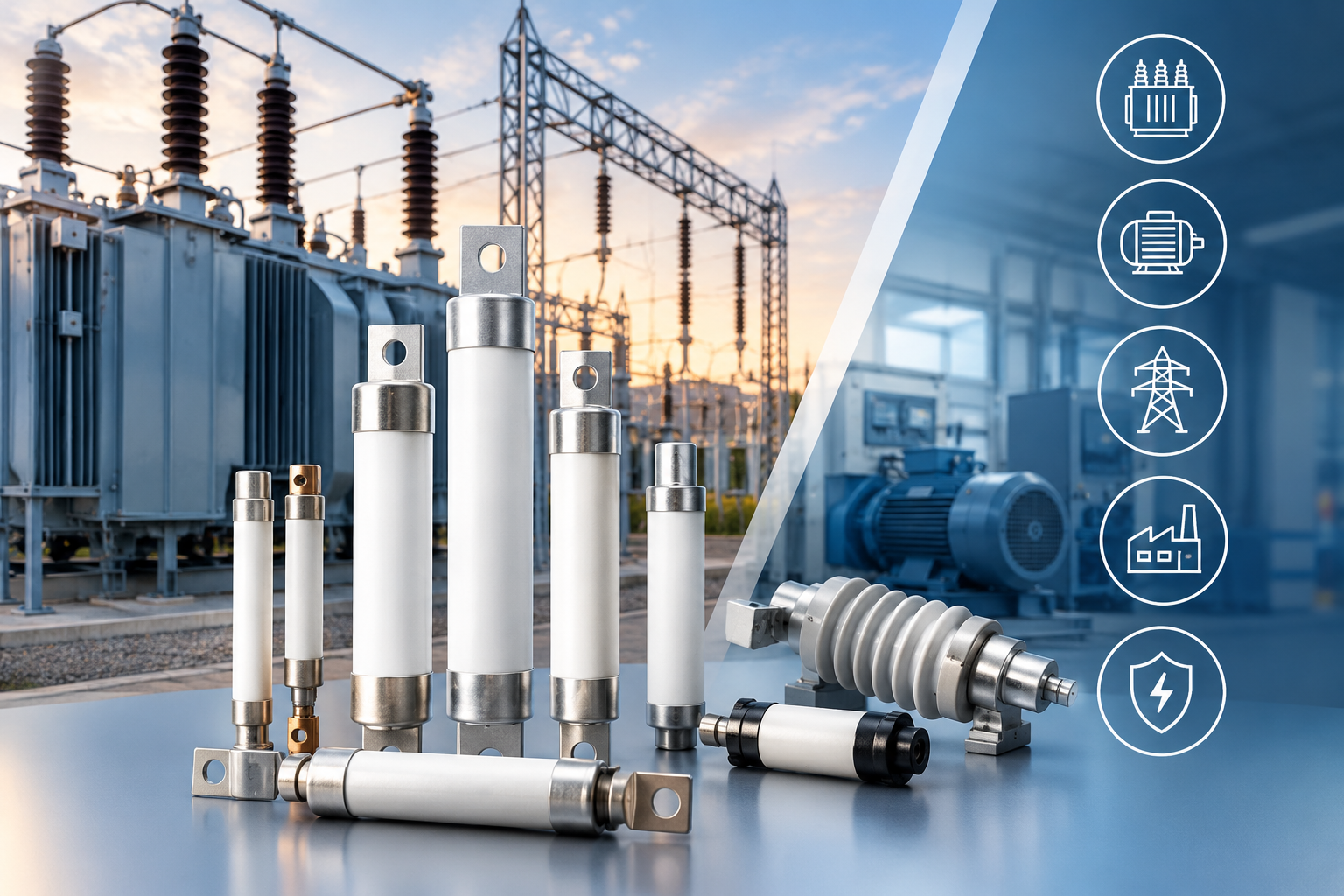
Eaton Bussmann Series Medium Voltage Fuses: Full Line Catalog Guide
Introduction to Eaton Bussmann Series Medium Voltage Fuses
Reliable electrical protection is essential for industrial power distribution, transformer installations, motor circuits, and utility applications. Eaton Bussmann Series medium voltage fuses are designed to help protect electrical systems against overcurrent and short-circuit conditions, supporting dependable operation across a wide range of medium voltage applications.
The Eaton Bussmann Series Full Line Catalog 1007, Section 7 – Medium Voltage Fuses, provides detailed technical information to help electrical engineers, maintenance professionals, panel builders, and procurement specialists identify suitable fuse solutions. The catalog covers multiple fuse technologies, voltage ratings, current ratings, mounting arrangements, dimensions, and applicable standards.
This guide explores the key features, types, applications, and selection considerations for Eaton Bussmann medium voltage fuses.
What Are Medium Voltage Fuses?
Medium voltage fuses are protective devices designed to interrupt excessive electrical currents under specified operating conditions. They play an important role in protecting transformers, motors, feeders, and other electrical equipment from damaging fault currents.
When a fault occurs, the fuse interrupts the circuit according to its designed operating characteristics. Selecting the correct fuse helps improve electrical protection, reduce equipment damage, and support the overall reliability of a power distribution system.
Eaton Bussmann Series offers a broad range of medium voltage fuse solutions, including current-limiting fuses, expulsion fuse links, and products designed for different international standards and equipment configurations.
Key Features of Eaton Bussmann Series Medium Voltage Fuses
The Eaton Bussmann medium voltage fuse portfolio includes solutions for a variety of electrical protection requirements.
1. Wide Range of Voltage Ratings
The catalog covers multiple voltage classes, including 2.4 kV, 2.75 kV, 4.8 kV, 5.5 kV, 7.2 kV, 8.3 kV, 15.5 kV, and higher-voltage options extending to 38 kV in specified product families.
This range helps engineers identify fuse solutions for different system voltages and equipment configurations.
2. Different Fuse Operating Characteristics
Eaton Bussmann Series includes E-Rated, R-Rated, and PT medium voltage fuses, along with IEC fuse types and expulsion fuse links. Each category serves different protection requirements.
Choosing the correct operating characteristic is essential to achieving suitable coordination between the fuse and the equipment being protected.
3. Current-Limiting Protection
Current-limiting fuses can reduce both the magnitude and duration of fault current when operating within their specified current-limiting range. This can help limit the electrical and thermal stresses imposed on protected equipment.
The catalog includes current-limiting solutions for transformer, feeder, motor, and potential transformer protection.
4. Multiple Mounting and Installation Options
Depending on the product family, the catalog provides information about ferrule-style fuses, specialty mounting configurations, DIN-style products, fuse clips, fuse holders, and PT fuse mountings.
These details are important when replacing existing fuses or designing new electrical installations.
5. Technical Documentation and Standards
The catalog includes product ratings, catalog numbers, dimensional drawings, interrupting ratings, and relevant standards information. Specified products are designed or evaluated against applicable standards, including ANSI, BS, DIN, IEC, and UL requirements.
Always verify the approvals and ratings for the specific fuse model before specifying it for an application.
Types of Eaton Bussmann Medium Voltage Fuses
E-Rated Medium Voltage Fuses
E-Rated fuses are commonly used to protect feeder circuits, power transformers, and potential transformers in North American medium voltage systems.
The catalog includes E-Rated fuse families in several voltage classes, with different current ratings and physical configurations.
E-Rated fuses have defined time-current response requirements under ANSI C37.46. Engineers should select the fuse using the applicable rating tables and coordinate its time-current characteristics with the protected equipment.
R-Rated Medium Voltage Fuses
R-Rated fuses are primarily used for short-circuit protection in medium voltage motor circuits. They are typically applied with compatible motor starters that provide the necessary overload protection.
These fuses are designed around specific operating characteristics and must be coordinated with the motor, starter, and associated protection devices.
The catalog includes R-Rated fuse options for selected voltage classes, including 2.4 kV, 4.8 kV, and 7.2 kV product families.
PT E-Rated Medium Voltage Fuses
Potential transformer (PT) fuses are used to protect potential transformers and associated voltage measurement circuits against specified fault conditions.
Eaton Bussmann's PT fuse range includes multiple voltage classes and configurations. The catalog also provides information about compatible fuse mountings and recommended fuse clips.
When selecting a PT fuse, it is important to verify the transformer specifications, system voltage, required protection characteristics, and mounting compatibility.
DIN E-Rated Current-Limiting Fuses
DIN-style medium voltage fuses are designed for applications using compatible DIN-based equipment and installation arrangements.
The catalog covers DIN E-Rated current-limiting fuse options from 5.5 kV to 38 kV. Selection should account for the equipment's dimensional requirements, electrical ratings, and applicable standards.
IEC Medium Voltage Fuses
The catalog also includes British IEC and DIN IEC fuse categories, providing options for installations designed around relevant international fuse standards.
These products can be considered for compatible industrial and distribution applications. Engineers should verify the precise IEC classification, voltage rating, current rating, and equipment interface before choosing a replacement.
Expulsion Fuse Links
Expulsion fuse links interrupt current through an internal arcing and gas-expulsion process. Unlike current-limiting fuses, they do not limit the magnitude of fault current.
They are used in suitable applications where the equipment and protection scheme are designed for expulsion-type fuse operation.
The catalog includes expulsion fuse links and EEI-NEMA Type K, T, H, and N product categories.
Applications of Eaton Bussmann Medium Voltage Fuses
Eaton Bussmann Series medium voltage fuses support various power system protection requirements.
Transformer protection: Suitable fuse selection can help protect compatible power transformers against specified overcurrent and short-circuit conditions.
Motor circuit protection: R-Rated fuses can provide short-circuit protection when coordinated with appropriate medium voltage motor starters and overload protection.
Feeder protection: E-Rated and other suitable current-limiting fuse types can be used in compatible distribution feeder applications.
Potential transformer protection: Dedicated PT fuse families offer options for protecting voltage transformers and associated circuits.
Industrial power distribution: Medium voltage fuses can form part of protection schemes in manufacturing facilities, commercial installations, and other industrial electrical systems.
Utility and distribution equipment: Depending on the product rating and installation design, selected fuse families can be applied in compatible utility and electrical distribution equipment.
The suitability of any fuse depends on the actual system conditions, equipment specifications, and protection coordination requirements.
How to Select the Right Eaton Bussmann Medium Voltage Fuse
Selecting a medium voltage fuse involves more than matching the voltage and current ratings. The following considerations can help engineers and purchasing teams narrow down the correct product.
1. Confirm the System Voltage
Determine the nominal system voltage and the maximum voltage the fuse must withstand. Select a fuse with an appropriate voltage rating for the intended application.
2. Establish the Required Current Rating
Consider the protected equipment's rated current, operating conditions, starting characteristics, and applicable manufacturer recommendations.
For transformer and motor applications, the correct fuse rating depends on the complete protection design rather than load current alone.
3. Determine the Required Fuse Type
Identify whether the application requires an E-Rated, R-Rated, PT, DIN, IEC, or expulsion-type fuse.
The choice depends on the protected equipment, required operating characteristics, and the type of protection provided by other devices in the circuit.
4. Check the Interrupting Rating
The fuse's interrupting rating must be adequate for the prospective fault current at the installation point and the applicable system voltage.
An incorrect interrupting rating can compromise electrical safety and system protection.
5. Verify Physical Dimensions and Mounting
Check the fuse length, diameter, mounting arrangement, clip spacing, and any other relevant dimensional requirements. This is particularly important when replacing an existing fuse or retrofitting switchgear.
A fuse with suitable electrical ratings may still be incompatible with the existing fuse holder or mounting assembly.
6. Review Applicable Standards
Confirm that the selected product meets the applicable requirements for the installation, including relevant ANSI, IEC, DIN, BS, or UL specifications where appropriate.
7. Coordinate With Other Protection Devices
Evaluate the fuse's time-current characteristics alongside relays, circuit breakers, motor starters, overload protection, and other protective devices.
Proper coordination helps ensure that faults are cleared appropriately while reducing unnecessary interruptions to the wider electrical system.
8. Verify the Exact Catalog Number
Use the manufacturer's catalog tables to confirm the complete part number and associated ratings. Similar-looking catalog numbers can refer to different voltage classes, mounting configurations, or electrical characteristics.
For critical installations, selection should be reviewed by a qualified electrical engineer or the manufacturer's technical support team.
Why Use the Eaton Bussmann Full Line Catalog?
The Eaton Bussmann Series Full Line Catalog 1007, Section 7, is a useful technical reference for professionals working with medium voltage fuse selection, specification, and replacement.
It organizes products by fuse family and voltage class, helping users locate relevant information without treating the entire portfolio as a single product range.
The catalog includes:
-
Product family descriptions and catalog symbols.
-
Voltage and current ratings for specified product families.
-
Interrupting ratings and relevant standards information.
-
Fuse dimensions and dimensional drawings.
-
Recommended fuse clips, fuse holders, and mounting accessories.
-
Information covering current-limiting fuses, PT fuses, IEC fuse types, and expulsion fuse links.
Because the document is the October 2018 edition, users should verify current product availability, specifications, approvals, and replacement recommendations before placing an order or approving a design.
Frequently Asked Questions About Eaton Bussmann Medium Voltage Fuses
What is the Eaton Bussmann medium voltage fuse catalog?
It is a technical catalog section covering Eaton Bussmann Series medium voltage fuses, including product families, ratings, dimensions, mounting information, and relevant standards.
What is the difference between E-Rated and R-Rated fuses?
E-Rated fuses are commonly used for feeder, power transformer, and potential transformer protection. R-Rated fuses are primarily intended for motor circuit short-circuit protection and are generally used with motor starters that provide overload protection.
What voltage ratings are covered in the catalog?
The catalog covers multiple product families with ratings ranging from selected low-medium-voltage classes, such as 2.4 kV and 2.75 kV, to specified products rated as high as 38 kV. The exact available ratings depend on the fuse family.
Are Eaton Bussmann medium voltage fuses suitable for transformer protection?
Selected E-Rated and PT fuse families are intended for compatible transformer-related applications. The correct product depends on the transformer type, system voltage, current requirements, prospective fault current, and protection coordination.
Can I replace an existing medium voltage fuse with another fuse of the same current rating?
Not necessarily. Replacement requires verification of voltage rating, fuse classification, interrupting rating, time-current characteristics, dimensions, mounting compatibility, and equipment manufacturer requirements. Matching the current rating alone is insufficient.
Does the catalog include mounting accessories?
Yes. The catalog includes information about recommended fuse clips, selected fuse holders, PT fuse mountings, and other mounting-related components for specified product families.
Is the 2018 catalog sufficient for a new electrical installation?
It can serve as a technical reference, but it should not be the sole basis for a new design or purchase. Current manufacturer documentation should be checked to confirm product availability, updated specifications, certifications, and application suitability.
Conclusion
Eaton Bussmann Series medium voltage fuses provide a broad selection of protective devices for compatible transformer, motor, feeder, potential transformer, and distribution applications. The Full Line Catalog 1007, Section 7, brings together technical information on E-Rated, R-Rated, PT, DIN, IEC, and expulsion fuse families.
By reviewing system voltage, current requirements, interrupting capacity, fuse operating characteristics, mounting dimensions, and protection coordination, electrical professionals can make more informed fuse selection decisions.
For engineers, maintenance teams, electrical contractors, and procurement specialists, understanding the technical details in the Eaton Bussmann medium voltage fuse catalog is an important step toward specifying compatible products and maintaining reliable electrical protection.

- Details
- Category: Electrical Fuses Blog
| bus-ele-cat-1007-flc-2018-sec-06-pv.pdf | [Eaton Bussmann series Full line catalog: Photovoltaic fuses, holders and blocks] | 3804 kB |
Eaton Bussmann Series Photovoltaic Fuses, Holders and Blocks: A Complete Guide to Solar Circuit Protection
Introduction
As solar energy systems continue to expand across residential, commercial and utility-scale applications, reliable electrical protection is essential for ensuring system safety, performance and long-term reliability. Eaton Bussmann series photovoltaic (PV) fuses, fuse holders and fuse blocks are designed to help protect solar installations against overcurrent conditions, reverse currents and faults that can occur within photovoltaic arrays.
The Eaton Bussmann Series Full Line Catalog, Section 6 – Photovoltaic Fuses, Holders and Blocks, provides an overview of a wide range of solar circuit protection solutions. The product portfolio includes PV fuses for different voltage and current ratings, in-line fuse assemblies, modular fuse holders and fuse blocks for a variety of photovoltaic applications.
This guide explores the key product families, their features, typical applications and important considerations when selecting photovoltaic circuit protection components.
What Are Photovoltaic Fuses?
Photovoltaic fuses are specialised electrical protection devices designed for use in solar power systems. Unlike conventional overcurrent protection devices, PV fuses must be suitable for the operating characteristics of solar installations, including high DC voltages, changing environmental conditions and fault currents caused by reverse current or faults involving multiple connected PV strings.
In a solar array, several strings of photovoltaic modules may be connected in parallel. If a fault occurs in one string, current from other strings can potentially flow into the affected circuit. Correctly selected PV fuses help interrupt excessive current and reduce the risk of damage to modules, conductors and other electrical equipment.
Eaton Bussmann series PV fuses are available in a range of sizes, current ratings and voltage classes, supporting different system architectures and installation requirements.
Overview of Eaton Bussmann Series PV Fuse Products
The Eaton Bussmann series photovoltaic portfolio described in the catalog includes several fuse families designed for different applications.
1. PVM 600 V DC Photovoltaic Fuses
PVM fuses are compact, fast-acting photovoltaic fuses designed for systems requiring 600 V DC protection. The catalog describes these fuses as being suitable for demanding ambient temperatures, frequent electrical cycling and low-level fault current conditions associated with PV systems.
Key specifications include:
-
Voltage rating: 600 V DC
-
Current ratings: 4–30 A
-
Interrupting rating: 50 kA DC
-
Fuse size: 13/32 × 1½ inches, equivalent to approximately 10 × 38 mm
-
Typical applications: solar combiner boxes and string protection
The PVM family is designed to help protect photovoltaic circuits where reverse current and multi-array faults are potential concerns.
2. PVS-R Class RK5 Photovoltaic Fuses
The PVS-R series offers Class RK5 current-limiting fuse protection for photovoltaic applications. These fuses are intended for systems requiring protection against ground faults and short circuits, with ratings for both AC and DC applications as specified in the catalog.
Key specifications include:
-
Voltage rating: 600 V AC and 600 V DC, subject to the applicable rating
-
Current ratings: 20–400 A
-
Interrupting rating: up to 200 kA RMS symmetrical AC
-
DC interrupting rating: dependent on the fuse current rating
-
Typical applications: photovoltaic systems, inverters, safety switches and recombiner boxes
The PVS-R family provides an option for higher-current protection where its fuse class and ratings match the electrical design requirements.
3. PV 1000 V DC, 10 × 38 mm Fuses
Eaton Bussmann series PV 10 × 38 mm fuses are designed to protect and isolate photovoltaic strings in systems rated up to 1000 V DC.
The catalog identifies several termination options, including cylindrical fuse links, bolt-on versions, printed circuit board (PCB) terminals and crimp-terminal versions. This flexibility supports different equipment layouts and connection methods.
Key specifications include:
-
Voltage rating: 1000 V DC
-
Current ratings: 1–20 A
-
Interrupting rating: 50 kA
-
Fuse format: 10 × 38 mm
-
Typical applications: combiner boxes, inverters and PV wire harnesses
The range is intended for photovoltaic circuits exposed to demanding temperatures, repeated electrical cycling and low fault current conditions.
4. HPV In-Line Photovoltaic Fuse Assemblies
The HPV series provides an in-line fuse and holder assembly designed for photovoltaic wire harnesses. Its construction incorporates an insulating boot and a non-serviceable assembly format.
According to the catalog, the HPV range includes 1000 V DC assemblies, with a specific 1500 V DC model identified in the product section.
Key features include:
-
In-line protection for photovoltaic wire harnesses
-
Crimp connections for compatible PV conductors
-
IP67 dust-tight and submersible construction
-
UV-resistant insulating materials
-
Specified operating temperature range of −40°C to +90°C
In-line fuse assemblies can be useful where protection needs to be integrated directly into a cable harness rather than installed in a conventional panel-mounted fuse block.
5. PV 14 × 51 mm Fuses
The PV 14 × 51 mm family is designed for protecting and isolating photovoltaic strings. These fuses are intended to interrupt low overcurrents that may occur during faults in PV systems.
The catalog lists 15–32 A models, with voltage ratings depending on the current rating of the individual fuse.
Typical specifications include:
-
Voltage ratings: 1000 V DC or 1100 V DC, depending on the model
-
Current ratings: 15–32 A
-
Interrupting rating: 10 kA
-
Typical applications: combiner boxes and inverters
Selecting the correct model requires checking its individual voltage rating, current rating, interrupting capacity and compatibility with the associated fuse holder.
6. PV 1500 V DC, 10 × 85 mm Fuses
Higher-voltage photovoltaic systems can benefit from fuse products specifically designed for 1500 V DC applications. The catalog includes the Eaton Bussmann series PV 10 × 85 mm fuse family for protecting and isolating photovoltaic strings.
Key characteristics include:
-
Voltage rating: 1500 V DC
-
Catalog-listed current range: 2.25–30 A
-
Interrupting rating: 30 kA at the specified test conditions
-
Operating class: gPV
-
Compatible holder: CHPV15L85 DIN-rail fuse holder
These fuses are intended for PV circuits where high DC voltage and low fault current conditions must be considered in the protection design.
7. NH Photovoltaic Fuses
The Eaton Bussmann series NH photovoltaic fuse range includes blade and bolt-on versions designed for larger PV circuits.
These products are intended for applications such as array combiners, recombiners, disconnects and inverters.
Key specifications include:
-
Voltage rating: 1000 V DC
-
Current ratings: 32–400 A
-
Interrupting rating: 50 kA
-
Available configurations: blade and bolt-on
Blade-style versions are installed in compatible fuse blocks, while bolt-on versions attach directly to suitable busbar and conductor terminals. The choice depends on the equipment design, installation requirements and electrical ratings.
8. XL Photovoltaic Fuses
The catalog also includes XL-size photovoltaic fuses for 1000 V DC and 1500 V DC applications. These products are designed for protecting and isolating photovoltaic array combiners and disconnects.
The family includes higher-current options for systems where smaller cylindrical fuse formats may not be appropriate. Certain models also offer optional microswitches for integration into monitoring arrangements.
When evaluating XL fuses, engineers should confirm the precise catalog number, voltage rating, current rating, interrupting capacity and compatible mounting arrangement before specifying a product.
Eaton Bussmann Series PV Fuse Holders
PV fuse holders provide a secure mounting and electrical connection for compatible fuse links. Choosing a holder with the correct voltage, current and fuse-size ratings is important for ensuring that the assembled protection system performs as intended.
CHPV Modular Fuse Holders
The CHPV family includes modular holders for compatible 10 × 38 mm photovoltaic fuses.
The catalog lists a 1000 V DC rating and a 30 A rating for the CHPV range. One- and two-pole configurations are identified, with optional open-fuse indication available for applicable versions.
Potential benefits include:
-
Modular installation
-
Compatibility with specified 10 × 38 mm PV fuses
-
Options for indicating an open fuse
-
Integration into suitable PV electrical assemblies
The exact holder configuration must match the fuse, system voltage, current requirements and installation arrangement.
CHPV15L85 DIN-Rail Fuse Holder
The CHPV15L85 is designed for compatible 10 × 85 mm and 14 × 85 mm photovoltaic fuse formats, as identified in the catalog.
Its listed ratings include:
-
Voltage rating: 1500 V DC
-
Current rating: 32 A
This holder supports installations using compatible high-voltage PV fuse links. Before selection, verify the specific fuse dimensions, electrical ratings, terminal requirements and manufacturer installation instructions.
Eaton Bussmann Series Photovoltaic Fuse Blocks
Fuse blocks provide mounting and electrical connection points for compatible fuse links, particularly in panel assemblies, combiner boxes and larger solar power systems.
BPVM Modular Fuse Blocks
The BPVM series is designed for compatible 10 × 38 mm photovoltaic fuses. The catalog lists a 1000 V DC rating and a 30 A rating.
The product family includes a modular fuse-block format with an optional cover, making it suitable for equipment designs that require an organised and accessible fuse mounting arrangement.
When specifying BPVM blocks, confirm fuse compatibility, required pole configuration, terminal arrangement and installation conditions.
SD and TD Photovoltaic Fuse Blocks
For larger PV fuse formats, the catalog includes SD and TD fuse-block families compatible with specified XL and NH fuse sizes.
The catalog identifies ratings up to 1500 V DC and current ratings up to 630 A for applicable configurations.
These fuse blocks are intended for higher-current photovoltaic applications, where appropriate fuse mounting, electrical clearances, conductor sizing and fault protection are critical design considerations.
The exact ratings depend on the selected block and its compatible fuse configuration. Product-level documentation should always be consulted before installation.
Key Benefits of Eaton Bussmann Series PV Circuit Protection
Selecting suitable photovoltaic fuses, holders and blocks helps engineers design solar electrical systems around the particular demands of DC power generation.
Protection Against PV Fault Currents
Photovoltaic fuse families described in the catalog are designed for specified fault conditions, including reverse current and faults involving multiple PV arrays. Correct selection helps protect compatible circuit components against damaging overcurrent conditions.
Support for Different System Voltages
The product range includes solutions for 600 V, 1000 V and 1500 V DC applications, depending on the specific fuse family and model. This range allows designers to evaluate protection components for different photovoltaic system architectures.
Flexible Mounting and Connection Options
Cylindrical fuse links, bolt-on designs, PCB terminals, crimp-terminal assemblies and modular fuse holders provide different options for integrating protection into solar equipment.
Integration into Combiner Boxes and Inverters
Several product families are intended for photovoltaic combiner boxes, recombiner boxes, inverters, disconnects and wire harnesses. Choosing components designed for the intended application helps simplify equipment design and component selection.
Consideration of Energy Efficiency
Some catalog-listed fuse families feature low power-loss characteristics. Evaluating fuse power loss and temperature rise can be useful when designing equipment for continuous operation and demanding ambient conditions.
How to Select the Right Photovoltaic Fuse
Choosing a PV fuse involves more than matching its current rating to the expected operating current. The complete protection design should account for the electrical characteristics of the PV array, the installation environment and the relevant standards.
1. Determine the Maximum System Voltage
Select a fuse with a DC voltage rating suitable for the maximum possible circuit voltage, including the effects of low-temperature increases in PV module open-circuit voltage where applicable.
The fuse and its holder or block must both be suitable for the intended system voltage.
2. Calculate the Required Current Rating
Consider the PV module specifications, string design, potential reverse current, conductor ampacity and applicable electrical codes. Fuse sizing should follow the manufacturer's application guidance and the relevant local requirements.
3. Check the Interrupting Rating
The fuse must be capable of safely interrupting the prospective fault current under the applicable DC circuit conditions. Do not assume that interrupting ratings are identical across different fuse models or voltage classes.
4. Confirm Fuse Dimensions and Mounting Compatibility
Match the fuse size and termination format to the intended holder, block or electrical assembly. A fuse with the correct electrical rating may still be unsuitable if its physical format or terminal arrangement is incompatible.
5. Evaluate Environmental Conditions
Solar installations can experience high temperatures, UV exposure, moisture and repeated thermal cycling. Select components with suitable environmental ratings and install them in accordance with the manufacturer's instructions.
6. Verify Applicable Standards and Certifications
Review the current product documentation for the relevant UL, IEC, CSA or other required approvals. Certification details can differ between models and may change as product ranges are updated.
Common Applications of PV Fuses, Holders and Blocks
Eaton Bussmann series photovoltaic protection products are described for use across a range of solar power equipment.
-
PV string protection: Helps protect individual string circuits against specified overcurrent faults.
-
Solar combiner boxes: Supports protection arrangements for circuits combining multiple PV strings.
-
Recombiner boxes: Provides options for larger photovoltaic installations with multiple combined circuits.
-
Solar inverters: Supports appropriately rated protection within compatible inverter-related circuits.
-
PV wire harnesses: In-line fuse assemblies provide an option for integrating protection into cable assemblies.
-
DC disconnect equipment: Compatible fuse products can be used in specified photovoltaic disconnect arrangements.
The suitability of any particular product depends on the circuit design, equipment configuration and manufacturer's application requirements.
Why Consult the Eaton Bussmann Series Full Line Catalog?
The Eaton Bussmann Series Full Line Catalog, Section 6, brings together information on photovoltaic fuses, fuse holders and fuse blocks, helping electrical engineers, solar equipment manufacturers, installers and procurement teams compare product families.
The catalog includes product descriptions, current and voltage ratings, fuse dimensions, selected interrupting ratings, application examples and compatible accessories. It also identifies individual catalog numbers that can help narrow down component options during design and purchasing.
However, this section is dated October 2018. It should be treated as a historical product-selection reference rather than confirmation of current availability, present-day certification status or the latest technical specifications. Always verify the chosen model against current manufacturer documentation before ordering or installing equipment.
Frequently Asked Questions
What are Eaton Bussmann series PV fuses used for?
They are designed for specified overcurrent protection applications in photovoltaic systems, including string circuits, combiner boxes, inverters and other compatible solar electrical equipment.
What voltage ratings are available in the catalog?
The catalog describes several product families for 600 V, 1000 V and 1500 V DC applications, as well as particular models with other stated ratings. The correct voltage rating depends on the specific fuse model and its intended application.
What is the difference between a PV fuse holder and a fuse block?
A fuse holder provides a mounting and electrical connection arrangement for a compatible fuse. A fuse block provides a mounting and connection structure for one or more compatible fuse links within an electrical assembly. The terminology and exact configuration depend on the product family.
Are all PV fuses compatible with all holders and blocks?
No. Compatibility depends on fuse dimensions, terminal style, voltage rating, current rating and the manufacturer's specified combinations. Always check the applicable product documentation.
How do I choose between 1000 V DC and 1500 V DC PV fuses?
The choice depends on the maximum circuit voltage and the design of the photovoltaic system. The fuse, holder or block, conductors and associated equipment must all be suitable for the intended operating conditions.
Can this 2018 catalog be used to confirm current product availability?
No. It provides historical technical and selection information. Current availability, product revisions, certifications and replacement recommendations should be verified using up-to-date manufacturer documentation.
Conclusion
Eaton Bussmann series photovoltaic fuses, fuse holders and fuse blocks cover a broad range of solar circuit protection applications, from compact PV string circuits to higher-current combiner and recombiner equipment. The product families described in the Full Line Catalog include PVM, PVS-R, PV 10 × 38 mm, HPV in-line assemblies, PV 14 × 51 mm, PV 10 × 85 mm, NH and XL fuses, alongside compatible CHPV, CHPV15L85, BPVM, SD and TD mounting solutions.
By evaluating voltage ratings, current requirements, interrupting capacity, fuse dimensions, environmental conditions and applicable standards, designers can make more informed decisions when specifying photovoltaic circuit protection.
For the best results, use the catalog as a starting point for product comparison and verify all final selections against current Eaton documentation and the requirements of the specific solar installation.
- Details
- Category: Electrical Fuses Blog
| bus-ele-cat-1007-flc-2018-sec-05-iec.pdf | [Eaton Bussmann series Full line catalog: IEC and British Standard fuses] | 4548 kB |
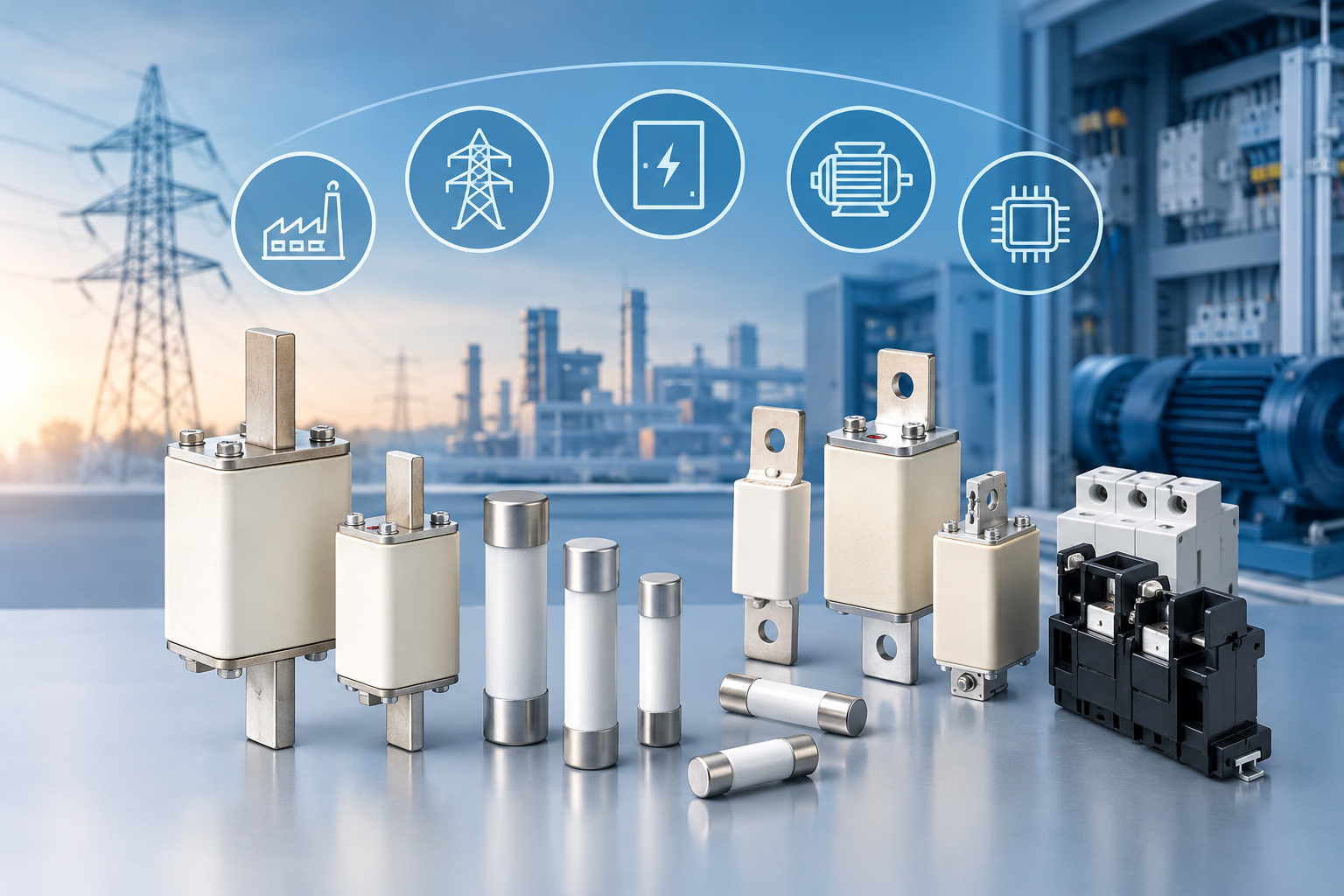
Eaton Bussmann Series Full Line Catalog: IEC and British Standard Fuses
Introduction to Eaton Bussmann IEC and British Standard Fuses
Reliable electrical circuit protection is essential for industrial installations, power distribution systems, machinery, and commercial electrical equipment. The Eaton Bussmann Series Full Line Catalog 1007 – IEC and British Standard Fuses provides technical information to help electrical engineers, panel builders, maintenance professionals, and purchasing specialists identify suitable fuse solutions for their applications.
This catalog section, published in October 2018, covers a range of fuse products designed around International Electrotechnical Commission (IEC) and British Standard requirements. It includes product specifications, electrical ratings, dimensions, fuse classifications, catalog numbers, and relevant standards information to support product selection.
Understanding these specifications helps professionals choose the appropriate fuse for circuit protection, equipment reliability, and maintenance requirements.
What Is Included in the Eaton Bussmann IEC and British Standard Fuse Catalog?
The Eaton Bussmann IEC and British Standard fuse catalog covers multiple fuse technologies for low-voltage electrical protection. It is a useful technical reference for professionals who need to compare products according to rated current, voltage, breaking capacity, operating class, mounting configuration, and compliance requirements.
Key product categories featured in the catalog include:
-
NH HRC industrial fuses: Square-bodied, high-rupturing-capacity fuses for industrial power distribution.
-
British Standard BS88 fuse links: Fuse solutions for a variety of industrial applications, including equipment and power circuit protection.
-
IEC cylindrical fuses: Compact fuse options available in different dimensions and operating classes.
-
High-speed fuses: Specialized products for protecting power electronics, converters, rectifiers, and DC drive systems.
-
Fuse holders and related accessories: Supporting components for appropriate fuse installation and replacement.
The catalog provides detailed technical tables and product-specific information to help users narrow down suitable options for their electrical systems.
NH HRC Fuses for Industrial Circuit Protection
NH high-rupturing-capacity (HRC) fuses are commonly used in industrial electrical distribution and protection systems. The Eaton Bussmann catalog includes NH fuse designs in multiple sizes, with technical specifications for rated voltage, current, breaking capacity, and physical dimensions.
For example, the NHG range includes DIN square-bodied industrial fuses in sizes from 000 to 4, with general-purpose gG/gL classifications. The catalog specifies voltage ratings of 500 V AC and 690 V AC, depending on the product, and current ratings extending from 2 A to 1,250 A.
These fuses are intended for applications where dependable short-circuit protection and compatibility with industrial fuse systems are important.
When selecting an NH fuse, engineers should verify:
-
Rated operating voltage and current.
-
Required breaking capacity.
-
Fuse size and physical dimensions.
-
Fuse operating class and intended application.
-
Compatibility with the corresponding fuse base or holder.
-
Applicable standards and approval requirements.
Choosing a fuse based on all these factors helps ensure that the selected component is appropriate for the installation.
British Standard BS88 Fuses
British Standard BS88 fuses are widely used in industrial electrical equipment and low-voltage power distribution. Eaton Bussmann offers fuse solutions designed for applications requiring specific current ratings, voltage ratings, physical configurations, and operating characteristics.
The catalog includes different BS88 fuse families, including offset-blade and bolted-tag designs. Depending on the product, these fuse links can support general-purpose circuit protection or specialized applications.
BS88 fuse selection is particularly important when maintaining existing installations, replacing discontinued components, or specifying protective devices for new electrical panels.
Before choosing a replacement, check the original fuse's complete catalog number, rated current, rated voltage, operating class, mounting arrangement, and dimensions. A fuse that fits physically is not necessarily electrically equivalent to the original component.
Understanding IEC Fuse Operating Classes
Fuse operating classes help identify the intended protection function of a fuse. Two important classifications referenced in industrial fuse applications are gG and aM.
gG Fuses for General-Purpose Protection
The gG operating class is commonly used for general-purpose protection of electrical circuits, including protection against overloads and short circuits when correctly selected and coordinated with the installation.
These fuses are suitable for a range of industrial and distribution applications. The required current rating and time-current characteristics must be considered in relation to the protected cable, equipment, and expected operating conditions.
aM Fuses for Motor Circuit Protection
The aM operating class is intended primarily for short-circuit protection in motor circuits. These fuses are designed to accommodate the higher starting currents associated with motors and are generally used alongside suitable overload protection.
An aM fuse should not be treated as a direct substitute for a gG fuse without reviewing the complete protection arrangement. Motor overload protection and short-circuit protection perform different functions and must be coordinated appropriately.
IEC Cylindrical Fuses for Compact Electrical Installations
The Eaton Bussmann catalog also covers IEC cylindrical fuses for industrial applications. These compact fuse links are available in several body dimensions and operating classes, including gG and aM variants.
The catalog identifies cylindrical fuse families such as C10G, C14G, and C22G for general-purpose protection, alongside corresponding aM variants.
Cylindrical fuses can be useful in control equipment, industrial machinery, and compact electrical assemblies where the specified fuse size and holder configuration are appropriate.
When comparing cylindrical fuses, check the following technical details:
-
Body diameter and overall length.
-
Rated current and operating voltage.
-
Fuse operating class.
-
Breaking capacity.
-
Holder compatibility.
-
Required approvals and applicable standards.
Confirming these characteristics before ordering helps reduce installation errors and replacement delays.
High-Speed Fuses for Power Electronics
High-speed fuses provide specialized protection for sensitive semiconductor devices and power conversion equipment. Applications can include rectifiers, DC drives, power converters, and common DC bus systems.
Unlike general-purpose fuses, high-speed fuse selection often requires particular attention to the fuse's pre-arcing and total-clearing I²t characteristics. These values help engineers assess the energy let through during a fault and determine whether the fuse can adequately protect the semiconductor device.
Other important parameters include rated AC or DC voltage, current rating, breaking capacity, power dissipation, and mounting configuration.
The Eaton Bussmann catalog includes high-speed fuse families with technical information intended to support this type of engineering assessment.
Because semiconductor protection is application-specific, engineers should compare the fuse characteristics with the manufacturer's requirements for the protected equipment rather than selecting a fuse based on rated current alone.
How to Choose the Correct Eaton Bussmann Fuse
Selecting the correct fuse requires more than matching the ampere rating. The electrical characteristics, installation conditions, and intended protection function must all be considered.
1. Determine the Rated Voltage
The fuse's rated voltage must be suitable for the circuit. AC and DC ratings are not automatically interchangeable, and DC circuit interruption can present different technical challenges from AC interruption.
2. Confirm the Rated Current
Select a current rating appropriate for the protected circuit, conductor capacity, load characteristics, and applicable electrical regulations. Motor starting currents and other temporary surges may also affect selection.
3. Identify the Required Operating Class
Determine whether the application requires general-purpose gG protection, motor-circuit aM protection, or a specialized high-speed fuse.
4. Check the Breaking Capacity
The fuse must be capable of safely interrupting the prospective short-circuit current at the installation point. Verify the published breaking-capacity rating at the relevant operating voltage.
5. Verify Physical Dimensions and Mounting
Check the fuse size, blade arrangement, bolted connections, cylindrical dimensions, and compatible holder or fuse base. Physical compatibility alone does not establish electrical suitability.
6. Review Standards and Approvals
Confirm that the selected fuse meets the applicable IEC, BS88, or other relevant requirements for the installation. Approval details can vary between individual products and voltage ratings.
7. Verify the Exact Catalog Number
Use the catalog tables to identify the required product and confirm its full catalog number against the manufacturer's current product information before purchasing or installing it.
Why Use the Eaton Bussmann Full Line Catalog?
A comprehensive fuse catalog supports both technical decision-making and day-to-day electrical maintenance.
For electrical engineers, it provides ratings, dimensions, operating classes, and standards information for evaluating protective components.
For panel builders and system integrators, it helps identify fuse links that match specified electrical and mechanical requirements.
For maintenance teams, it supports the identification of replacement components in existing installations and helps reduce the risk of choosing an unsuitable alternative.
For purchasing professionals, catalog numbers and product specifications provide a more reliable basis for sourcing the correct fuse than appearance or current rating alone.
Using the manufacturer's technical documentation also helps improve communication between engineering, maintenance, and procurement teams.
Frequently Asked Questions About Eaton Bussmann IEC and British Standard Fuses
What is the Eaton Bussmann Full Line Catalog 1007?
The Eaton Bussmann Full Line Catalog 1007 is a technical product catalog covering multiple fuse and electrical circuit protection product families. Section 5 focuses on IEC and British Standard fuses and includes product information, electrical ratings, dimensions, and catalog numbers.
What is the difference between IEC and BS88 fuses?
IEC refers to standards developed by the International Electrotechnical Commission, while BS88 refers to British Standards for fuse systems. Their requirements and product configurations can overlap, but compatibility must be verified against the specific fuse standard, ratings, and physical design.
What is the difference between gG and aM fuses?
A gG fuse is designed for general-purpose protection, including overload and short-circuit protection under suitable conditions. An aM fuse is intended primarily for short-circuit protection in motor circuits and typically requires separate overload protection.
How do I find the correct replacement fuse?
Identify the original fuse's catalog number, current and voltage ratings, operating class, dimensions, and breaking capacity. Compare these details with the manufacturer's product documentation and verify compatibility with the existing holder and protected equipment.
Can a fuse with the same ampere rating always be used as a replacement?
No. Fuses with the same current rating may have different voltage ratings, breaking capacities, time-current characteristics, operating classes, or physical dimensions. A replacement must satisfy all relevant electrical and mechanical requirements.
Is the 2018 catalog sufficient for a new installation?
The 2018 catalog is a useful technical reference, but product ranges, approvals, and specifications may change. For new installations and replacement projects, confirm the selected product's current specifications and suitability with the manufacturer before finalizing the design.
Conclusion
The Eaton Bussmann Series Full Line Catalog 1007, Section 5, is a valuable technical reference for professionals working with IEC and British Standard fuses. It covers industrial NH HRC fuses, BS88 fuse links, IEC cylindrical fuses, high-speed fuses, and associated components.
By reviewing rated voltage, rated current, breaking capacity, operating class, physical dimensions, and applicable standards, engineers and maintenance professionals can make better-informed fuse selection decisions.
For reliable electrical circuit protection, always verify the exact product specifications and ensure that the selected fuse is appropriate for the protected equipment and installation.
- Details
- Category: Electrical Fuses Blog
| bus-ele-cat-1007-flc-2018-sec-04-hsf.pdf | [Eaton Bussmann series Full line catalog: High speed fuses] | 12413 kB |
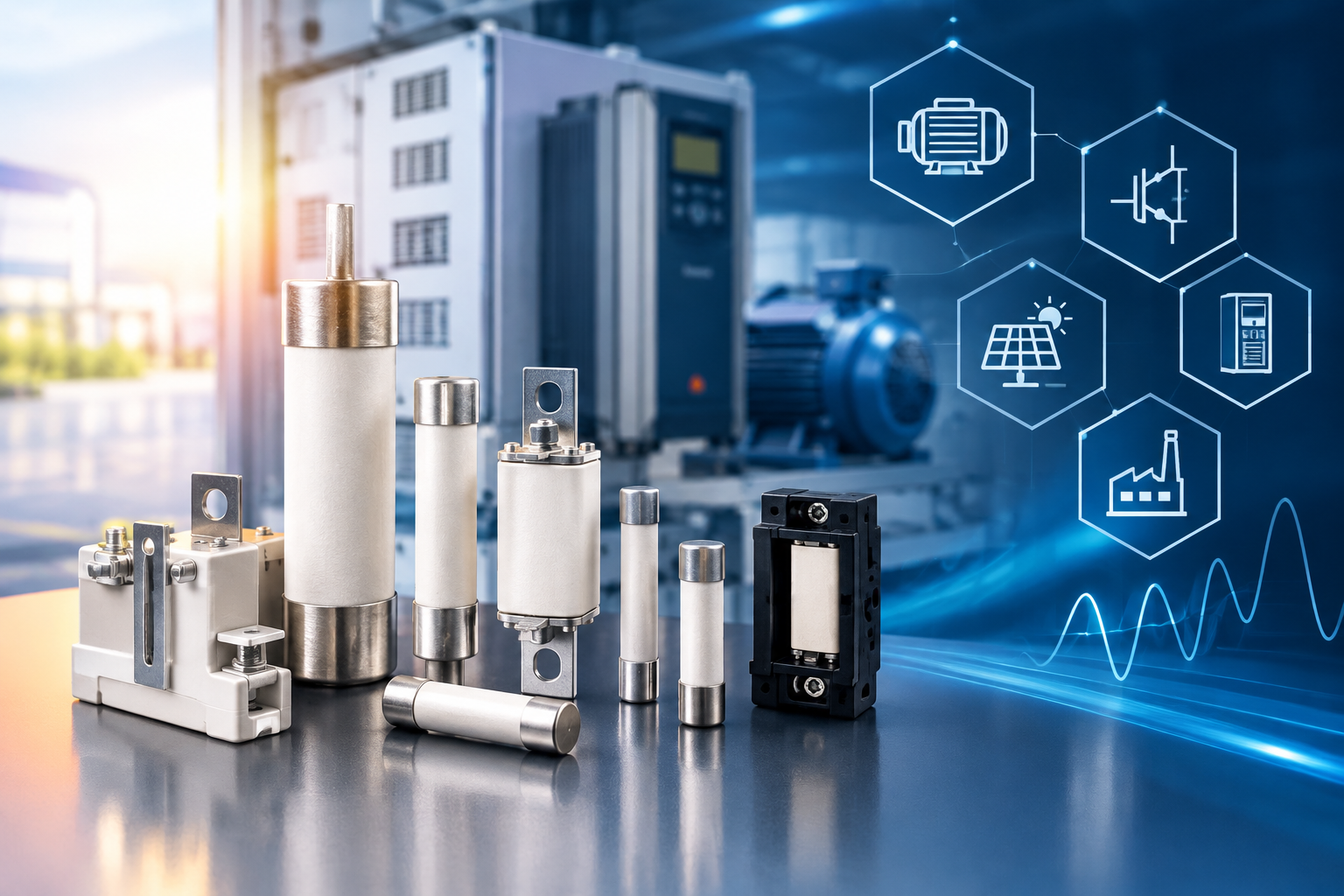
Eaton Bussmann Series High Speed Fuses: Complete Product Range, Features and Selection Guide
Introduction to Eaton Bussmann Series High Speed Fuses
High speed fuses play a critical role in protecting sensitive power electronics from short circuits and excessive fault currents. In industrial environments where power converters, motor drives, rectifiers and semiconductor devices operate under demanding conditions, selecting the right fuse is essential for equipment protection, system reliability and operational safety.
The Eaton Bussmann Series Full Line Catalog – High Speed Fuses provides a comprehensive overview of fuse solutions designed for a wide range of electrical protection applications. The catalog covers multiple fuse families, voltage ratings, current ratings, mounting configurations and accessories, helping engineers, electrical designers, maintenance professionals and procurement specialists identify suitable products for their systems.
Eaton Bussmann Series high speed fuses are designed for applications that require rapid fault-current interruption and protection of sensitive components, including power semiconductors and industrial power conversion equipment.
What Are High Speed Fuses?
High speed fuses, also known as semiconductor fuses, are specialized electrical protection devices designed to interrupt fault currents rapidly. Compared with general-purpose fuses, they are engineered to limit the energy that passes through a circuit during a fault, helping reduce the risk of damage to sensitive semiconductor components.
These fuses are commonly used to protect:
-
Insulated-gate bipolar transistors (IGBTs)
-
Power diodes and thyristors
-
AC and DC motor drives
-
Industrial rectifiers and inverters
-
Power converters and DC common bus systems
-
Semiconductor-based switching equipment
-
Industrial automation and power control systems
A properly selected high speed fuse helps minimize fault energy and supports effective coordination between the fuse and the equipment it protects.
Overview of the Eaton Bussmann Series High Speed Fuse Catalog
The Eaton Bussmann Series Full Line Catalog, Section 4, focuses on high speed fuse products and related accessories. It includes solutions for North American applications, British Standard BS88 applications, ferrule-style installations and specialized semiconductor protection requirements.
The catalog organizes products by fuse family, voltage rating, current range and physical configuration. This makes it easier to compare available options and identify candidate products for a particular application.
1. Compact High Speed Fuses
Compact high speed fuses are designed for installations where panel space and enclosure dimensions are important considerations. Their compact form factor can help engineers optimize electrical cabinet layouts while maintaining appropriate circuit protection.
These products are particularly relevant to modern industrial equipment, where designers need to balance power density, thermal management and serviceability.
2. North American High Speed Fuses
The catalog includes several North American fuse families for different electrical ratings and installation requirements.
Examples include:
-
FWA series: High speed fuse solutions available in multiple current ratings and configurations for DC bus systems, drives and power conversion equipment.
-
FWX series: High speed fuses for selected AC and DC applications, including DC drives and rectifier protection.
-
FWH series: Solutions for higher-voltage applications, with product options varying by current rating.
-
FWP series: High speed fuses for selected 700 V AC/DC applications.
-
FWJ series: Fuse options designed for applications with voltage ratings up to 1000 V AC and 800 V DC for specified models.
-
KAC and KBC series: Additional fuse families listed for particular voltage and current requirements.
The precise ratings, dimensions, interrupting capacities and approvals depend on the individual product. Engineers should verify the applicable catalog data before specifying or ordering a fuse.
3. British Standard BS88 High Speed Fuses
The catalog also covers BS88-style high speed fuses for applications that use the relevant British Standard fuse formats.
Product families include CT, ET, FE, EET, FEE, FM, FMM, MT and MMT. These options support a variety of current ratings and electrical configurations for industrial power systems.
Typical applications include DC common bus protection, motor drives, power converters, rectifiers and reduced-rated-voltage starters.
The correct product must be selected according to the system voltage, current, available fault current, installation requirements and applicable standards.
4. Ferrule-Style High Speed Fuses
Ferrule-style high speed fuses provide a cylindrical form factor for compatible fuse holders and electrical assemblies. They are useful in installations where compact mounting and straightforward replacement are priorities.
The catalog includes ferrule fuse families such as FWA, FWH, FWC, FWL and FWS, each offering specific combinations of voltage ratings, current ratings and operating characteristics.
Depending on the family, these products may be suitable for applications involving DC common bus systems, power converters, rectifiers and semiconductor protection.
When selecting a ferrule fuse, it is important to verify the required fuse dimensions, holder compatibility, voltage rating, current rating and operating class.
5. High Speed Fuse Accessories
A complete fuse installation requires more than the fuse itself. The catalog includes accessories that support mounting, installation and fault indication.
Depending on the product family, available accessories may include:
-
Fuse blocks and holders
-
Mounting clips
-
Visual indicators
-
Microswitches and adapters
-
Accessories for compatible square body fuses
Using compatible accessories helps support correct installation and can simplify maintenance. Accessory selection should be based on the exact fuse type and its physical and electrical requirements.
Key Technical Characteristics of High Speed Fuses
Understanding the principal electrical specifications is essential when choosing an Eaton Bussmann Series high speed fuse.
Voltage Rating
The fuse voltage rating must be suitable for the circuit in which it is installed. The catalog includes products for various AC and DC applications, with ratings that differ between individual fuse families and current ranges.
For DC applications, special attention is required because DC fault interruption differs from AC interruption. The specified DC voltage rating and interrupting capability must be suitable for the actual circuit.
Current Rating
The rated current indicates the nominal current for which a fuse is specified under defined conditions. The correct rating depends on the normal operating current, load characteristics, ambient conditions, cooling, installation arrangement and applicable derating requirements.
Choosing a fuse solely by matching the circuit's nominal current can result in inadequate protection or unwanted interruptions.
Breaking Capacity
Breaking capacity, also known as interrupting rating, describes the maximum fault current a fuse can safely interrupt under specified conditions.
The selected fuse must have an appropriate interrupting rating for the prospective short-circuit current at the installation point. Both the applicable voltage and the AC or DC characteristics must be considered.
Pre-Arcing and Clearing I²t
The I²t value represents the integral of current squared over time and is commonly used to characterize the thermal energy associated with fuse operation.
Two important values are:
-
Pre-arcing I²t: The energy associated with the period before the fuse element begins to melt.
-
Clearing I²t: The total energy let through until the fault current has been interrupted.
These values are particularly important for semiconductor protection because sensitive components can be damaged by excessive fault energy.
Engineers should compare the fuse characteristics with the withstand limits of the semiconductor device and the overall protection coordination requirements.
Power Loss
A fuse dissipates heat during normal operation. The catalog provides power-loss data for specified rated currents and products.
Power loss matters when designing compact enclosures, high-density electrical panels and systems with limited cooling capacity. The actual thermal performance depends on the installation conditions and operating current.
Operating Class
High speed fuse families may use different operating classifications, including aR and gR.
An aR fuse is generally intended for partial-range semiconductor protection, particularly against short-circuit currents. A gR fuse is a full-range fuse class intended to provide protection across a broader range of overcurrents, subject to its specified characteristics.
The appropriate class depends on the equipment design, overload protection strategy and coordination requirements.
How to Select the Right Eaton Bussmann High Speed Fuse
Selecting the correct high speed fuse requires a systematic evaluation of the electrical system and the equipment being protected.
Step 1: Identify the Application
Determine whether the fuse is intended for an inverter, rectifier, motor drive, IGBT module, DC bus or another power electronic application.
The application determines which fuse families and operating classes are appropriate candidates.
Step 2: Confirm the System Voltage
Establish the maximum operating voltage and whether the circuit is AC or DC. Confirm that the chosen fuse has a suitable voltage rating for the actual operating conditions.
For DC systems, do not assume that an AC voltage rating is equivalent to a DC rating.
Step 3: Determine the Required Current Rating
Calculate the expected operating current and consider load variation, startup conditions, ambient temperature and installation-related derating.
The fuse must carry normal operating current appropriately while meeting the required fault-protection characteristics.
Step 4: Evaluate Semiconductor Protection Requirements
For semiconductor applications, compare the fuse's pre-arcing and clearing I²t characteristics with the withstand characteristics of the device being protected.
Also evaluate the prospective fault current, clearing time and the manufacturer's coordination recommendations.
Step 5: Check Interrupting Capacity
Determine the prospective short-circuit current at the installation point. Verify that the selected fuse can interrupt the expected fault current at the relevant AC or DC voltage.
This is a critical part of ensuring that the protective device is suitable for the electrical system.
Step 6: Verify Mechanical Compatibility
Check fuse dimensions, mounting style, terminal configuration, holder compatibility and available enclosure space.
A fuse with suitable electrical characteristics may still be unsuitable if it cannot be installed correctly in the intended assembly.
Step 7: Review Standards and Approvals
Confirm that the selected product meets the applicable regulatory, installation and equipment requirements. Verify the exact approvals and ratings for the specific catalog number rather than assuming that every product in a family shares the same certifications.
Applications of Eaton Bussmann Series High Speed Fuses
High speed fuses are used across a broad range of industrial and electrical systems.
Industrial motor drives: Help protect power electronic components in drive circuits against damaging short-circuit currents.
Inverters and converters: Provide fast-acting protection for semiconductor devices used in power conversion.
Rectifier systems: Help protect power semiconductor components in AC-to-DC conversion equipment.
IGBT modules: Specialized fuse families are available for compatible IGBT inverter circuits, where low inductance and appropriate DC protection characteristics may be important.
DC common bus systems: Suitable fuse families can help protect shared DC power distribution circuits in industrial equipment.
Renewable energy and energy conversion equipment: High speed fuses may be used in suitable power conversion and control assemblies, provided the selected model meets the system's specific electrical and environmental requirements.
In every application, correct coordination between the fuse, semiconductor device and wider electrical protection system is essential.
Why Use the Eaton Bussmann Series Product Range?
The Eaton Bussmann Series high speed fuse portfolio offers engineers a range of product formats and electrical characteristics for different industrial protection needs.
Key considerations when evaluating the range include:
-
Broad product selection: Multiple fuse families cover different current and voltage requirements.
-
Application-specific designs: Product options are available for selected semiconductor, drive and power conversion applications.
-
Technical selection data: Catalog tables provide important details such as current ratings, voltage ratings, I²t values, power loss and dimensions where specified.
-
Installation flexibility: Different mounting formats and accessory options support a variety of equipment designs.
-
Protection coordination: Detailed electrical characteristics help engineers assess the suitability of a fuse for a particular semiconductor or circuit protection task.
These advantages depend on choosing the appropriate product and following the manufacturer's technical requirements.
Frequently Asked Questions About High Speed Fuses
What is the purpose of a high speed fuse?
A high speed fuse is designed to interrupt excessive fault currents rapidly and limit the energy that passes through a circuit. It is commonly used to protect sensitive power semiconductor devices and industrial power conversion equipment.
Are high speed fuses the same as standard industrial fuses?
No. High speed fuses are specifically engineered for applications with particular fault-current and energy-limiting requirements, especially semiconductor protection. Standard industrial fuses may have different operating characteristics and may not provide the protection required by sensitive electronic components.
What does aR mean on a high speed fuse?
The aR classification generally identifies a partial-range semiconductor fuse intended primarily for short-circuit protection. Additional protection may be needed for overload conditions, depending on the equipment design.
How do I choose the correct fuse current rating?
Consider the normal operating current, load profile, ambient temperature, installation conditions, manufacturer's derating guidance and the protection requirements of the equipment. The current rating should not be selected in isolation from the fuse's time-current and I²t characteristics.
Why is I²t important for semiconductor protection?
I²t helps characterize the energy let through by a fuse during operation. Comparing the fuse's clearing I²t with the semiconductor's withstand characteristics helps determine whether the fuse can provide suitable protection under the specified fault conditions.
Can the same high speed fuse be used in AC and DC circuits?
Not necessarily. AC and DC interruption characteristics can differ significantly. The fuse must have an explicit rating appropriate to the circuit voltage, current type and expected fault conditions.
What should I check before ordering an Eaton Bussmann fuse?
Confirm the catalog number, voltage rating, current rating, interrupting capacity, operating class, I²t characteristics, dimensions, mounting arrangement and required approvals. Also verify that the selected fuse remains suitable under the actual operating and installation conditions.
Conclusion
The Eaton Bussmann Series Full Line Catalog for high speed fuses is a useful technical reference for engineers, electrical designers, maintenance teams and procurement professionals working with industrial power electronics.
Its coverage of compact high speed fuses, North American fuse families, BS88 products, ferrule-style fuses and accessories supports the evaluation of different protection requirements across industrial applications.
By carefully assessing voltage, current, interrupting capacity, I²t characteristics, operating class and mechanical compatibility, engineers can identify suitable fuse candidates for their equipment and develop a more effective protection strategy.
For reliable results, always verify the exact product specifications and applicable technical documentation before making a final selection. The referenced catalog is dated October 2018, so current product availability, ratings, approvals and replacement recommendations should be confirmed before purchase or design approval.
- Details
- Category: Electrical Fuses Blog
| bus-ele-cat-1007-flc-2018-sec-03-elx.pdf | [Eaton Bussmann series Full line catalog: Electronic, PCB and small dimension fuses] | 4609 kB |
Eaton Bussmann Series Full Line Catalog: Electronic, PCB and Small Dimension Fuses
Introduction
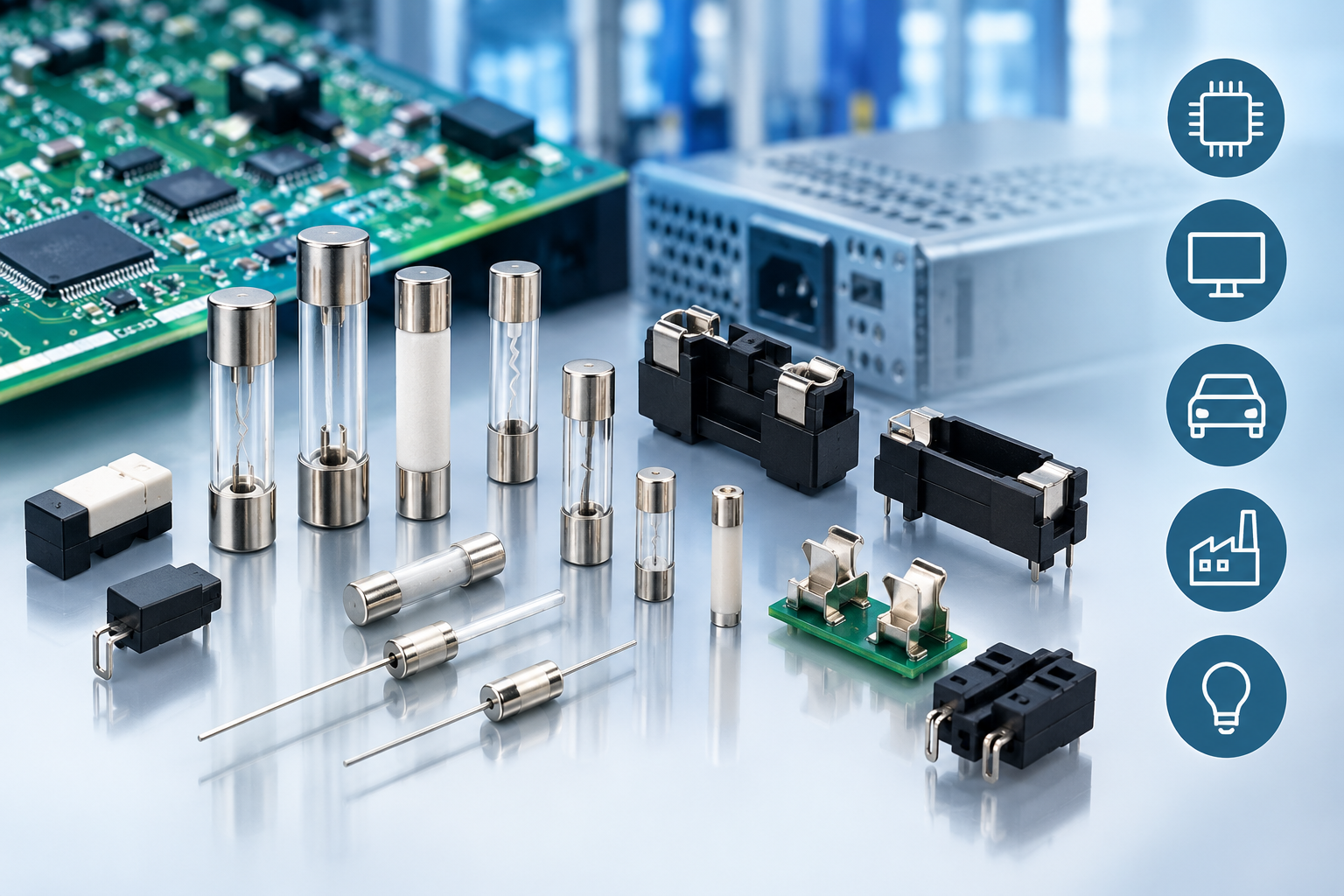
Reliable circuit protection is essential for modern electronic equipment, printed circuit boards (PCBs), control systems, and electrical devices. Selecting the right fuse helps protect sensitive components against overcurrent conditions while supporting equipment reliability and safe operation. The Eaton Bussmann Series Full Line Catalog for electronic, PCB, and small dimension fuses provides a comprehensive overview of compact fuse solutions designed for a wide range of electronic applications.
Published in October 2018, Section 3 of the Bussmann Series Full Line Catalog 1007 covers small-dimension fuses, including fast-acting and time-delay designs, as well as PCB fuse holders and fuse clips. It includes several metric and inch-based fuse formats to support different installation requirements and equipment designs.
For engineers, electronics manufacturers, maintenance professionals, and component purchasers, this catalog is a useful technical reference for identifying potential fuse solutions based on dimensions, electrical ratings, mounting arrangements, and application requirements.
What Are Eaton Bussmann Electronic and PCB Fuses?
Eaton Bussmann electronic fuses are compact overcurrent protection components designed to interrupt an electrical circuit when current exceeds the fuse's operating characteristics. They help limit the risk of damage to electronic components, wiring, and circuit assemblies caused by excessive current.
PCB fuses are particularly useful in applications where available installation space is limited. Depending on the design, they may be installed using axial leads, fuse clips, or dedicated fuse holders.
The Eaton Bussmann catalog includes glass-tube and ceramic-tube fuse options in a range of dimensions and performance categories. This variety helps designers compare possible solutions for electronic circuits, printed circuit boards, and other equipment requiring compact circuit protection.
Choosing the correct fuse requires more than matching its physical size. Rated current, operating voltage, breaking capacity, response characteristics, environmental conditions, and applicable approval requirements must all be considered.
Overview of the Eaton Bussmann Small Dimension Fuse Range
Section 3 of the Eaton Bussmann Series Full Line Catalog 1007 organizes its products into several principal categories.
1. 5 × 15 mm Fuses
The 5 × 15 mm range is intended for compact electronic applications where space is an important design consideration.
Featured product families include:
-
C518 and C520: Fast-acting glass-tube fuses available in axial-lead and ferrule configurations, respectively.
-
C515 and C519: Time-delay glass-tube fuses available in axial-lead and ferrule configurations.
-
C517: An axial-lead, fast-acting glass-tube fuse designed for specific electronic circuit protection requirements.
These product families offer different response characteristics and mounting options. Fast-acting versions may be suitable for circuits requiring rapid interruption during overcurrent events, while time-delay versions can accommodate certain temporary current surges when properly selected.
2. IEC 5 × 20 mm Fuses
The 5 × 20 mm format is widely used in electronic equipment and compact electrical assemblies. The catalog includes multiple IEC-format fuse families with different operating characteristics and breaking capacities.
Key product families include:
-
S500 and S500-V: Fast-acting glass-tube fuses.
-
GDB: A fast-acting fuse family in the 5 × 20 mm category.
-
S501 and S501-V: Fast-acting ceramic-tube fuses designed for higher breaking capacity than the corresponding low-breaking-capacity range.
-
GDA: A fast-acting fuse family in this category.
-
S505, S506, S505H and related variants: Time-delay fuse options, with specifications varying by product family.
-
GDC: A time-delay fuse family listed in the catalog.
The choice between glass and ceramic construction, fast-acting and time-delay performance, and different breaking capacities depends on the electrical characteristics of the protected circuit.
3. UL 5 × 20 mm Fuses
The catalog also covers 5 × 20 mm fuses associated with UL-oriented product families.
These include:
-
GMA and GMA-V: Fast-acting fuses.
-
GMC and GMC-V: Time-delay fuses.
-
GMD and GMD-V: Time-delay fuse options.
These families give equipment designers additional choices when selecting small-dimension fuses for electronic devices and assemblies. The relevant product datasheet should be checked to confirm the exact current rating, voltage rating, approvals, and mounting configuration required for a particular design.
4. Inch-Based Small Dimension Fuses
For applications designed around inch-based fuse dimensions, the catalog includes several established fuse formats.
| Fuse dimensions | Product families | General characteristic |
|---|---|---|
| 1/4 × 5/8 inch | AGA | Fast-acting |
| 1/4 × 7/8 inch | AGW | Fast-acting |
| 1/4 × 1 inch | AGX | Fast-acting |
| 1/4 × 1-1/4 inch | AGC, ABC, GBB | Fast-acting |
| 1/4 × 1-1/4 inch | MDL, MDQ, MDA and related variants | Time-delay |
The catalog includes additional variants within these families. Their electrical ratings and approvals are not necessarily interchangeable, even when their physical dimensions are similar.
When replacing an existing fuse, always verify the original part number and the manufacturer's technical specifications rather than selecting a replacement based on size alone.
Fast-Acting vs. Time-Delay Fuses: Which Should You Choose?
One of the most important decisions in fuse selection is choosing the appropriate response characteristic.
Fast-Acting Fuses
Fast-acting fuses are designed to interrupt overcurrent conditions quickly according to their specified time-current characteristics. They may be appropriate for circuits containing components that are sensitive to excessive current or where substantial startup surges are not expected.
Potential applications include:
-
Electronic circuit protection
-
Printed circuit board assemblies
-
Sensitive electronic components
-
Power supply circuits requiring rapid overcurrent interruption
The required operating speed depends on the protected components, expected fault current, and overall circuit design.
Time-Delay Fuses
Time-delay fuses are designed to tolerate certain temporary current surges before opening, according to their specified time-current characteristics. They can be useful in circuits with startup currents or short-duration current peaks.
Potential applications include:
-
Circuits with capacitive charging currents
-
Equipment with temporary startup surges
-
Electronic systems with fluctuating operating loads
-
Circuits where nuisance fuse operation must be avoided without compromising protection
A time-delay fuse should not be selected simply to prevent repeated fuse failures. Frequent operation may indicate an underlying fault, incorrect fuse sizing, or an unsuitable circuit design.
Why Fuse Coordination Matters
Both fast-acting and time-delay fuses must be selected to suit the circuit's normal operating current, inrush current, fault conditions, and component withstand limits. The fuse's rated current alone does not determine whether it will provide adequate protection.
Engineers should consult time-current curves, temperature derating guidance, breaking-capacity specifications, and the relevant manufacturer datasheets before finalizing a design.
PCB Fuse Holders and Fuse Clips
In addition to standalone fuses, the Eaton Bussmann catalog covers fuse holders and clips used to integrate replaceable fuses into electronic equipment.
These accessories can simplify installation and maintenance by providing a defined mounting arrangement and electrical contact points.
5 × 20 mm Fuse Holders
The catalog lists the following 5 × 20 mm holder families:
-
H15-V
-
H15-H
-
HTC-60M
These products are intended for compatible 5 × 20 mm fuse installations. Selection should account for mounting orientation, electrical ratings, available space, and the intended service environment.
1/4 × 1-1/4 Inch Fuse Holders
The catalog also includes the following holder families for compatible 1/4 × 1-1/4 inch fuses:
-
HBH-I and HBH-M
-
HBV-I and HBV-M
-
HBW-I and HBW-M
Different holder configurations can support different mounting arrangements. The exact dimensions, installation requirements, and electrical specifications should be verified against the relevant product datasheet.
PCB Fuse Clips
For designs using directly mounted fuse clips, the catalog includes several options for 5 mm and inch-based fuse formats.
Examples include:
-
HTC-15M and HTC-140M
-
HTC-200M and HTC-210M
-
1A3399, 1A5018, 1A5601 and 1A5602
-
1A1119, 1A1120, 1A1907 and 1A3398
-
1A4533 and 1A4534
-
5681, 5682, 5674, 5960, 1A3400 and 5592
These catalog numbers cover different clip sizes and configurations. Compatibility with the intended fuse diameter, terminal arrangement, PCB footprint, current rating, and thermal conditions must be confirmed before use.
Common Applications of Electronic and Small Dimension Fuses
Compact fuses are used in many types of electrical and electronic equipment. The appropriate product depends on the system's operating conditions and protection requirements.
Consumer Electronics
Electronic devices may use small-dimension fuses to protect internal circuits against excessive current. Compact formats can help designers integrate protection without consuming unnecessary board space.
Power Supplies and Electronic Control Units
Power conversion and control circuits may experience startup surges or fault currents. Selecting a fuse with suitable time-current characteristics and breaking capacity is important for protecting these systems.
Printed Circuit Board Assemblies
PCB-mounted fuse clips and compatible fuse holders can make it easier to incorporate replaceable protection components into an assembly. The mounting method should be matched to the mechanical design and expected operating temperature.
Industrial Electronics
Control panels, instrumentation, and industrial electronic equipment can require compact overcurrent protection for specific branches or subsystems. Fuse selection must account for the applicable voltage, prospective fault current, environmental conditions, and equipment standards.
Lighting and Ballast Circuits
Certain fuse models in the catalog have ratings and application information relevant to lighting or ballast protection. These applications require careful verification of the fuse's voltage rating, interruption capability, and suitability for the circuit involved.
These examples are general application categories, not a guarantee that every fuse family is suitable for every device. The manufacturer's specifications should always determine final selection.
How to Select the Correct Eaton Bussmann Fuse
Choosing a suitable fuse requires a systematic review of the electrical, mechanical, and regulatory requirements.
Step 1: Determine the Required Fuse Dimensions
Identify the physical format required by the equipment, such as 5 × 15 mm, 5 × 20 mm, or one of the inch-based sizes. Check the available mounting space and the dimensions of the existing fuse or holder.
Step 2: Confirm the Rated Current
Determine the circuit's normal operating current and assess expected current variations. The fuse rating must be selected according to the circuit design, conductor protection requirements, component limits, and manufacturer guidance.
Step 3: Verify the Voltage Rating
The fuse must be suitable for the circuit's operating voltage and current type. AC and DC applications can impose different interruption requirements, so a rating for one type of circuit must not automatically be assumed valid for the other.
Step 4: Select the Correct Response Characteristic
Decide whether a fast-acting or time-delay fuse is appropriate based on the circuit's inrush current, fault conditions, and protection objectives. Use the product's time-current data to confirm the selection.
Step 5: Check Breaking Capacity
Breaking capacity, also called interrupting rating, indicates the fault current a fuse can safely interrupt under specified conditions. The selected fuse must have an adequate breaking capacity for the prospective short-circuit current of the application.
Step 6: Review Approvals and Compliance
Confirm the approvals and regulatory requirements applicable to the finished equipment and the target market. Approval status may vary by model, current rating, voltage rating, and product variant.
Step 7: Match the Mounting Configuration
Determine whether the application requires a ferrule fuse, an axial-lead fuse, a PCB fuse clip, or a dedicated fuse holder. Verify the mechanical footprint and electrical compatibility of all associated components.
Step 8: Check Temperature and Operating Conditions
Ambient temperature, PCB heating, enclosure design, and sustained operating current can affect fuse performance. Review applicable derating information and ensure that the selected fuse operates within its specified limits.
Why Use the Eaton Bussmann Series Full Line Catalog?
The Eaton Bussmann Series Full Line Catalog brings together information about multiple compact fuse families and associated mounting accessories in one technical reference.
Its main benefits for product selection include:
-
Broad product coverage: Multiple metric and inch-based fuse dimensions are included.
-
Different response characteristics: Fast-acting and time-delay options support different circuit requirements.
-
Multiple mounting arrangements: Ferrule and axial-lead configurations, fuse clips, and holders are covered.
-
Technical comparison: Product descriptions, catalog numbers, ratings, and approval information help narrow the range of potential solutions.
-
Support for maintenance and procurement: Identifying a specific product family can make it easier to establish the requirements for replacement parts and sourcing.
The catalog is dated October 2018. Although it remains a useful reference for understanding the listed product families, engineers and buyers should verify current availability, ordering information, approvals, and specifications before purchasing or using a component in a new design.
Frequently Asked Questions
What does the Eaton Bussmann electronic fuse catalog cover?
Section 3 of the Bussmann Series Full Line Catalog 1007 covers electronic, PCB, and small-dimension fuses. It includes 5 × 15 mm fuses, IEC and UL 5 × 20 mm families, several inch-based fuse formats, PCB fuse holders, and fuse clips.
What is the difference between a 5 × 15 mm and a 5 × 20 mm fuse?
The main physical difference is the nominal fuse-body size. However, the two formats may also differ in their available current ratings, voltage ratings, response characteristics, construction, and approvals. They should not be treated as interchangeable without confirming the relevant specifications and mounting compatibility.
Are fast-acting and time-delay fuses interchangeable?
No. They have different time-current characteristics and may respond differently to startup surges and fault currents. A replacement must match the requirements of the protected circuit, not merely the physical size and rated current.
What is the purpose of a PCB fuse holder?
A PCB fuse holder provides a mounting and electrical connection arrangement for a compatible fuse. Depending on its design, it can support easier fuse replacement and simplify integration into a printed circuit board assembly.
How do I identify the correct Bussmann replacement fuse?
Start with the existing fuse's catalog number, physical dimensions, current and voltage ratings, response characteristic, and breaking capacity. Then verify the replacement's specifications and approvals against the original application requirements. If any key specification is unknown, consult the equipment manufacturer or a qualified electrical engineer before substitution.
Is the 2018 catalog sufficient for current purchasing decisions?
The catalog is a valuable technical reference, but it was published in October 2018. Product availability, ordering codes, approvals, and specifications may change. Confirm current product documentation and purchasing details before placing an order.
Conclusion
The Eaton Bussmann Series Full Line Catalog for electronic, PCB, and small dimension fuses provides a detailed overview of compact circuit protection solutions for electronics manufacturers, design engineers, maintenance teams, and procurement specialists.
With fast-acting and time-delay fuses, multiple metric and inch-based formats, and compatible PCB mounting accessories, the catalog helps users identify product families for further technical evaluation.
The key to successful fuse selection is to balance physical dimensions with rated current, operating voltage, time-current characteristics, breaking capacity, temperature conditions, mounting requirements, and applicable approvals. By checking these parameters against current manufacturer documentation, users can make more informed decisions when specifying or replacing Eaton Bussmann electronic and PCB fuses.



