
Electrical Fuses Blog
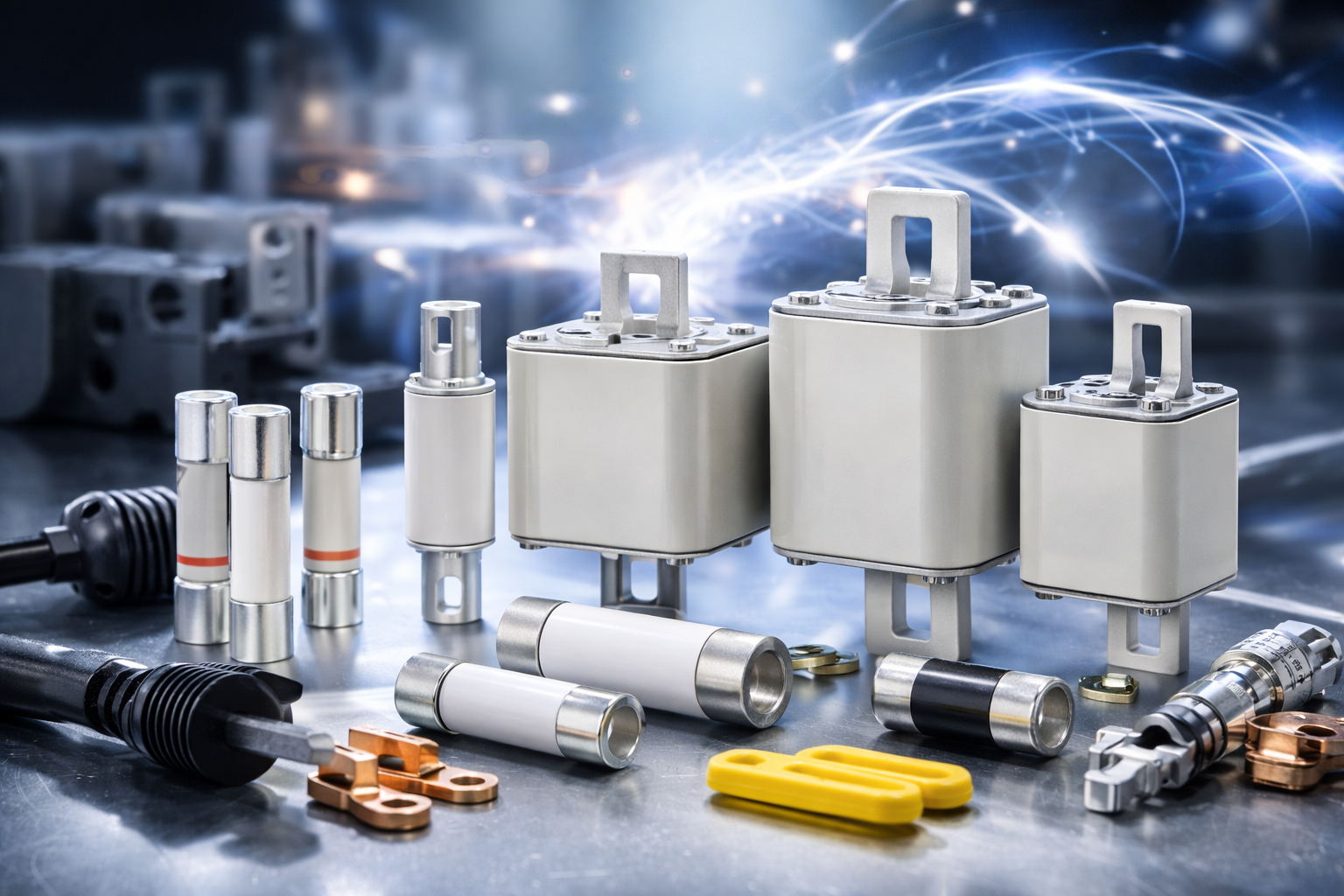
Eaton Bussmann Series Electrical Fuses – Blog & Fachwissen
Im Eaton Bussmann Series Electrical Fuses Blog finden Sie fundiertes Fachwissen rund um elektrische Sicherungen, Überstromschutz und moderne Schutzkonzepte für industrielle und gewerbliche Anwendungen. Diese Kategorie bündelt alle Blogartikel, technischen Beiträge und Praxisguides zu den Sicherungssystemen und Serien von Eaton Bussmann.
Eaton Bussmann zählt weltweit zu den führenden Herstellern von elektrischen Sicherungen, und ihre Serien stehen für Sicherheit, Normkonformität und höchste Zuverlässigkeit in anspruchsvollen elektrischen Systemen.
Was Sie im Eaton Bussmann Sicherungen Blog erwartet
Unsere Blogbeiträge helfen Ingenieuren, Einkäufern, Technikern und Planern dabei, die richtige Sicherungslösung zu finden und technische Zusammenhänge besser zu verstehen.
Themenschwerpunkte dieser Kategorie:
-
🔌 Überblick über Eaton Bussmann Sicherungsserien
-
⚙️ Unterschiede zwischen UL-, IEC- und Spezial-Sicherungen
-
📘 Technische Erklärungen zu Kennlinien, Auslöseverhalten & Bemessungswerten
-
🏭 Anwendungstipps für Industrie, Maschinenbau & Energieverteilung
-
🚗 Beiträge zu EV-, DC- und Hochvolt-Sicherungen
-
🛠 Best Practices für Auswahl, Installation und Wartung
Alle Inhalte sind praxisnah, verständlich aufbereitet und technisch fundiert.
Eaton Bussmann Sicherungsserien im Fokus
Der Blog behandelt regelmäßig verschiedene Eaton Bussmann Series Electrical Fuses, darunter:
-
Industrial Fuses
-
North American (UL) Fuse Series
-
IEC Sicherungsserien
-
High Speed & Semiconductor Fuses
-
EV & DC Sicherungen
-
Supplementary & Specialty Fuses
So erhalten Sie einen umfassenden Überblick über das Eaton Bussmann Portfolio und dessen Einsatzmöglichkeiten.
Fachwissen für sichere elektrische Systeme
Elektrische Sicherungen sind ein zentraler Bestandteil jeder sicheren Stromversorgung. Der Eaton Bussmann Series Electrical Fuses Blog unterstützt Sie dabei, Risiken zu minimieren, Normen einzuhalten und die Lebensdauer Ihrer Anlagen zu verlängern.
Ganz gleich, ob Sie Grundlagenwissen suchen oder tief in spezielle Sicherungsserien eintauchen möchten – hier finden Sie relevante, aktuelle und suchmaschinenoptimierte Inhalte rund um Eaton Bussmann Electrical Fuses.
👉 Jetzt Blogartikel entdecken und Ihr Wissen über Eaton Bussmann Sicherungsserien gezielt erweitern.

- Details
- Category: Electrical Fuses Blog
 eaton-bussmann-series-electric-vehicle-application-guide-br132016en-en-gb.pdf | [Eaton Bussmann EV Fuses Application Guide] | 526 kB |
| eaton-bussmann-series-square-body-electric-vehicles-fuses-ca135003en-en-gb.pdf | [Eaton Bussmann EV Fuses] | 701 kB |
Fuses for EV Applications: Reliable Protection for Electric Mobility
Electric mobility is evolving rapidly. As electric vehicles, charging infrastructure, and electric drive systems become more widespread, the requirements for electrical safety continue to increase. Fuses for EV applications play an important role in protecting electrical systems against overcurrent and short circuits, helping ensure reliable operation and long-term system performance.
Whether used in electric vehicles, charging infrastructure, or other components of electric mobility, properly designed electrical protection is essential for safety, efficiency, and reliability.
Why Are Fuses Important for Electric Vehicles?
Electric vehicles and their charging infrastructure rely on powerful electrical systems. These systems must accommodate different operating conditions, high power demands, and changing environmental factors.
Electrical fuses are designed to interrupt current when specified overcurrent conditions occur. This helps limit potential damage to sensitive components, wiring, and other electrical equipment.
The main functions of fuses in EV applications include:
-
Overcurrent protection: Helps prevent damage caused by excessive current.
-
Short-circuit protection: Interrupts current flow when a short circuit occurs and the specified operating conditions are met.
-
Protection of electrical components: Helps protect wiring, power electronics, and other system components.
-
Improved operational safety: Proper protection contributes to the reliable operation of electrical systems.
-
Reduced risk of consequential damage: Limiting the effects of electrical faults can help minimize damage to surrounding components.
The actual level of protection depends on correct fuse selection, proper system design, and coordination with other protective measures.
Where Are Fuses Used in EV Applications?
Fuses for electric mobility are used across a variety of applications. Requirements vary depending on the intended use, electrical power levels, and operating conditions.
1. Electric Vehicles and Electric Drive Systems
Electric vehicles depend on the reliable interaction of multiple electrical components. Power supply systems, power transmission, and electric drive control all place significant demands on electrical safety.
Appropriate fuse protection helps manage fault currents and limit the effects of electrical disturbances. Key design considerations include operating voltage, expected current levels, potential short-circuit currents, and environmental conditions.
2. Electric Vehicle Charging Infrastructure
Charging stations and charging equipment must transfer electrical energy safely and reliably. Circuit protection and coordination between protective devices are essential elements of this process.
The required protection depends on factors such as charging power, electrical architecture, and applicable safety requirements. Proper design supports safe operation and can help reduce unplanned downtime.
3. Power Electronics and Auxiliary Electrical Systems
In addition to their drive systems, electric vehicles contain numerous other electrical and electronic components. These include systems responsible for energy conversion, control, and the supply of power to various vehicle functions.
Suitable electrical protection helps safeguard individual circuits according to their specific requirements. It is essential to coordinate fuse characteristics with the electrical properties and protection needs of the connected components.
What Should You Consider When Selecting Fuses for EV Applications?
Selecting the right fuses is an important part of designing and planning electrical systems for electric mobility. A universal solution is rarely appropriate because requirements can differ significantly between applications.
Consider the Electrical Specifications
Important selection criteria include the operating voltage range, normal operating current, and expected fault current. The fuse's behavior under different load conditions and temperatures must also be considered.
Fuse selection should always be based on the technical requirements of the complete electrical circuit.
Account for Environmental Conditions
Electric vehicles and charging systems may expose electrical components to temperature variations, vibration, moisture, and limited installation space.
In addition to electrical specifications, designers should therefore assess the mechanical and thermal conditions at the intended installation location.
Ensure Proper Protection Coordination
A fuse is part of a broader electrical protection strategy. It must work effectively with connected components and other protective measures within the system.
Important factors include breaking capacity, required disconnection conditions, and the thermal withstand capabilities of the components being protected. Proper coordination helps limit the consequences of electrical faults and reduce unnecessary interruptions.
Evaluate Reliability and Service Life
EV applications are often expected to operate reliably over extended periods and under changing operating conditions. The suitability of electrical protection components must therefore be carefully evaluated for each specific application.
Application-specific selection supports operational reliability and helps with maintenance, replacement, and lifecycle planning.
What Are the Benefits of a Well-Designed Electrical Protection Strategy?
A properly engineered fuse protection strategy offers several advantages for vehicle manufacturers, electrical system developers, and charging infrastructure providers.
Enhanced safety: Appropriate protection measures help limit the effects of overcurrent conditions and short circuits.
Greater reliability: Coordinated protection supports the stable operation of electrical components.
Reduced consequential damage: Proper design can help minimize the impact of electrical faults on other parts of a system.
Improved system planning: Clearly defined technical requirements make it easier to integrate protection components into existing and new electrical architectures.
Application-specific solutions: Considering individual operating conditions allows protection to be tailored to the requirements of each EV system.
These benefits depend on protection measures being properly designed, evaluated, and integrated into the overall system.
Fuses for EV Applications and the Future of Electric Mobility
As electric mobility advances, the demands placed on electrical systems continue to evolve. New vehicle concepts, higher-power charging infrastructure, and the increasing integration of electronic components make reliable protection strategies more important than ever.
The challenge is not simply choosing individual components. The key is achieving the right balance between electrical safety, system efficiency, reliability, and application-specific integration.
Companies developing EV systems or planning charging infrastructure should therefore consider electrical protection early in the design process. This allows protection requirements to be assessed systematically and suitable solutions to be incorporated into the overall electrical architecture.
Conclusion: Proper Protection Is Essential for Reliable EV Systems
Fuses for EV applications are an essential part of electrical safety in electric mobility. They help protect circuits against overcurrent conditions and short circuits while limiting the potential consequences of electrical faults.
Key selection factors include electrical specifications, environmental conditions, protection coordination, and the requirements of the intended application. Careful planning provides the foundation for reliable electric vehicles, safe charging infrastructure, and durable electrical systems.
By integrating electrical protection into the development process from the outset, manufacturers and system designers can establish the conditions needed for the safe and reliable operation of modern EV applications.
- Details
- Category: Electrical Fuses Blog
| eaton-bussmann-series-photovoltaic-fuses-catalogue-ca135004en.pdf | [Eaton Bussmann PV Fuses] | 6298 kB |
Fuses for PV Applications: Reliable Protection for Photovoltaic Systems
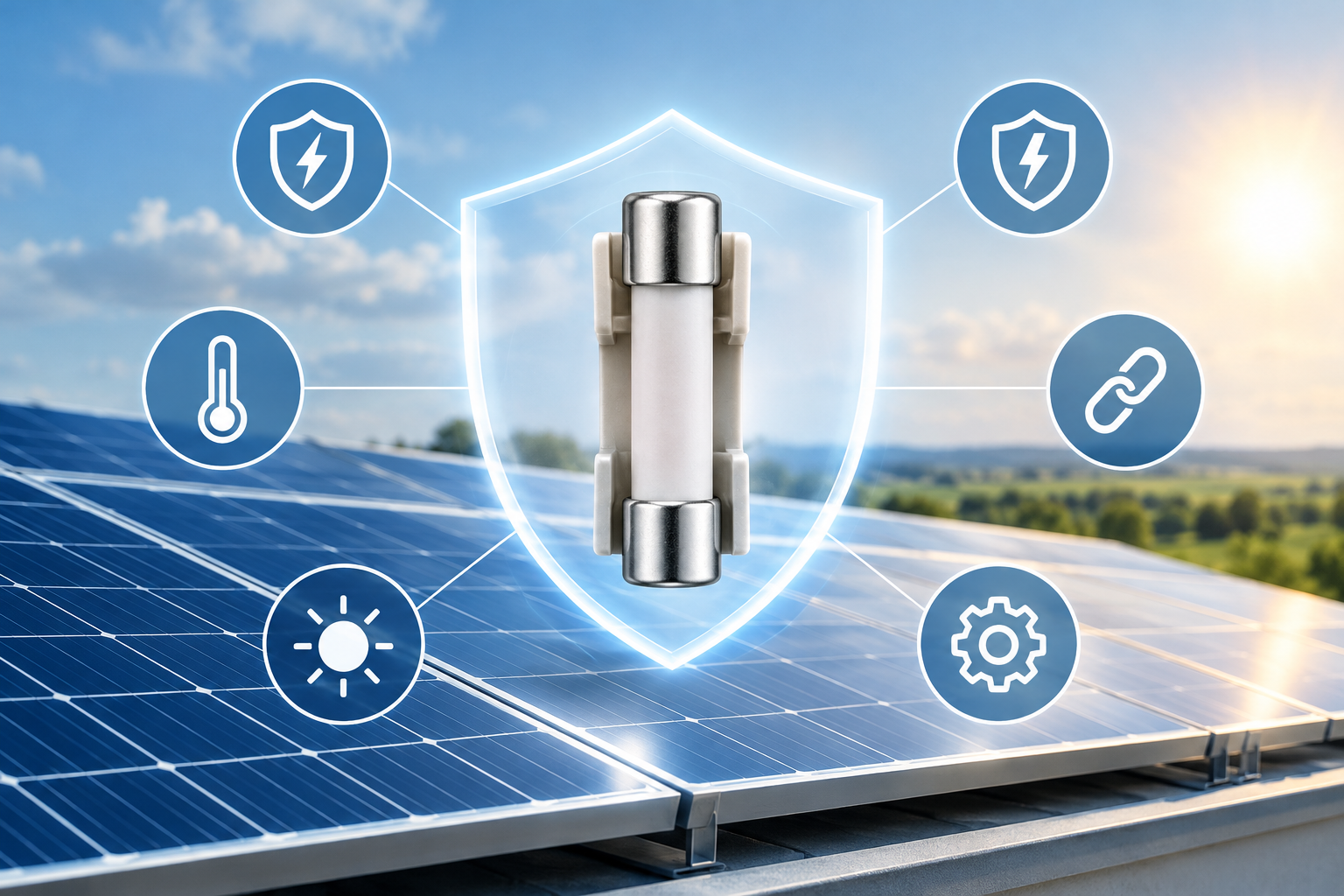
Photovoltaic (PV) systems play an increasingly important role in the transition to sustainable energy. To ensure that solar energy can be generated and used safely and reliably, a well-designed electrical protection concept is essential. Fuses for PV applications play a key role in this context by helping to limit the effects of overcurrents, prevent electrical damage, and improve the operational safety of the entire system.
But what requirements must fuses for photovoltaic systems meet? Which factors are important when selecting the right solution, and why is application-specific protection essential?
In this article, we explore the key considerations for protecting PV systems and explain how suitable fuse protection contributes to reliable, long-term energy generation.
Why Are Fuses Important for Photovoltaic Systems?
Photovoltaic systems differ from conventional electrical installations in several important ways. They generate direct current (DC), are exposed to varying environmental conditions, and can operate at high electrical voltages depending on the system configuration. These characteristics must be taken into account when designing an appropriate electrical protection concept.
Fuses are designed to interrupt electrical circuits when current exceeds specified limits. This helps protect conductors and connected components against thermal overload and the effects of short circuits.
A suitable protection concept supports several important objectives:
-
Overcurrent protection: Helps limit the effects of excessive current.
-
Improved operational safety: Reduces the risk of electrical damage.
-
Protection of electrical components: Supports reliable system operation.
-
Reduced downtime: Helps limit damage that could result in operational interruptions.
-
Long-term system reliability: Helps prevent certain types of damage caused by thermal overload.
The effectiveness of this protection depends on selecting and correctly rating fuses for the specific electrical operating conditions.
Key Requirements for Fuses in PV Applications
Several technical factors must be considered when selecting fuses for photovoltaic systems. Choosing a fuse based solely on its rated current is not sufficient.
1. Safe Switching of DC Voltage
Photovoltaic modules generate direct current. Unlike alternating current (AC), DC does not have a natural periodic zero crossing that helps extinguish an electrical arc. Consequently, interrupting DC current presents specific technical challenges.
Fuses used in PV systems must be suitable for the relevant DC voltage and intended operating conditions. A component rated for AC applications is not automatically suitable for use in DC circuits.
2. Consider Rated Current and Operating Current
The fuse rating must match the electrical requirements of the circuit. Relevant factors include the expected operating current, potential overcurrents, and the current-carrying capacity of the conductors.
An undersized fuse may cause unnecessary interruptions during normal operation. An oversized fuse, on the other hand, may fail to provide adequate protection for conductors or components when a fault occurs.
For this reason, all relevant electrical ratings must be considered together when designing the protection system.
3. Evaluate Short-Circuit Conditions and Breaking Capacity
High short-circuit currents may occur under fault conditions. Effective protection therefore requires a fuse capable of safely interrupting the prospective fault current.
The required breaking capacity must be appropriate for the expected short-circuit conditions. System voltage and the specific configuration of the PV installation also influence fuse selection.
4. Account for Temperature and Environmental Conditions
Photovoltaic systems are frequently installed on rooftops, in technical rooms, or in other locations with specific environmental conditions. High temperatures, temperature fluctuations, humidity, and restricted heat dissipation can affect the operating conditions of electrical protection components.
When planning a PV installation, it is therefore important to consider expected ambient temperatures, installation conditions, and the permissible operating limits of the selected components.
Where Are Fuses Used in Photovoltaic Systems?
The specific protection requirements depend on the size and configuration of the PV system. During the design process, individual circuits and potential fault conditions must be assessed systematically.
Protection on the DC Side
On the DC side, the electrical energy generated by photovoltaic modules is transferred to the next stage of the system. Depending on the installation and circuit configuration, individual current paths may require protection.
Particular attention should be paid to possible reverse currents from parallel-connected strings or other current paths. Under certain fault conditions, these currents can place a load on components that would not normally be exposed to such levels of current.
Whether additional fuse protection is required must be determined by evaluating the electrical design, module specifications, and applicable technical requirements.
Protection of Electrical Cables and Connections
Cables and electrical connections must be designed to withstand the expected operating currents. The protection concept must ensure that fuse ratings are compatible with conductor current-carrying capacity and the permissible loads of connected components.
Cable length, conductor cross-section, installation method, and ambient conditions may all influence the design.
Integration into the Overall Protection Concept
Fuses are only one part of the electrical safety concept for a photovoltaic installation. Depending on the application, additional protective measures may be necessary, including protection against electric shock, suitable isolation facilities, and measures against lightning and transient overvoltages.
These functions serve different purposes and should not be confused. A comprehensive protection concept considers both the DC and AC sides of the installation and coordinates the individual protective measures accordingly.
How to Select the Right Fuse for a PV Application
Selecting suitable fuses should always be based on a technical assessment of the specific application. The following criteria provide a useful starting point for system planning.
Electrical ratings: Check the maximum system voltage, operating current, and required breaking capacity.
System configuration: The number of parallel-connected current paths and the possibility of reverse currents affect the required protection.
Cable sizing: Fuse ratings must be coordinated with the current-carrying capacity of the conductors and the permissible loads of connected components.
Environmental conditions: Temperature, installation location, and heat dissipation must be taken into account.
Applicable standards: The design and installation must comply with the relevant standards, technical rules, and manufacturers' specifications.
Maintenance and accessibility: Protection components should be incorporated into a system design that allows safe inspection and appropriate maintenance when required.
Careful consideration of these factors helps avoid unnecessary interruptions while maintaining effective protection under fault conditions.
The Role of Standards and Technical Requirements
The electrical safety of photovoltaic installations is supported by applicable standards and technical regulations. These establish requirements for the design, installation, and protection of electrical systems.
For PV applications, particular attention should be paid to the relevant requirements for photovoltaic power supply systems and the applicable rules governing electrical protective measures.
The technical specifications of the individual system components must also be taken into account. These include permissible voltage and current ratings, operating conditions, and installation requirements.
It is important to verify the standards and regulatory requirements applicable to the specific project. Requirements may vary depending on the type of installation, system voltage, and intended application. Qualified electrical professionals should be responsible for the appropriate design and implementation.
Common Mistakes When Protecting PV Systems
Insufficient coordination of protective measures can compromise the safety and reliability of a photovoltaic installation. Common design mistakes include:
-
Incorrect fuse ratings: Current and voltage requirements are not fully matched to the application.
-
Overlooking potential reverse currents: The effects of the circuit configuration are not adequately considered when assessing protection requirements.
-
Insufficient coordination with cables: The selected fuse does not adequately match the current-carrying capacity of the conductors.
-
Underestimating ambient temperature: Actual thermal conditions at the installation location are overlooked.
-
Confusing different protection functions: Overcurrent protection, overvoltage protection, and other protective measures are treated as interchangeable.
-
Failing to check technical requirements: Relevant standards and manufacturers' specifications are not fully considered.
These risks can be reduced through systematic planning, careful assessment of operating conditions, and professional installation.
Conclusion: Fuses Are Essential to Reliable PV Applications
Fuses for photovoltaic applications play an important role in protecting electrical circuits. They help limit the effects of overcurrents and support the safe, reliable operation of PV systems.
However, selecting a suitable fuse is only one part of the process. Effective protection requires the correct coordination of voltage ratings, current ratings, breaking capacity, conductor sizing, and environmental conditions.
By prioritizing proper electrical design and compliance with applicable technical requirements from the outset, system designers and installers can establish an important foundation for the safety, reliability, and long-term performance of photovoltaic installations.
FAQ: Frequently Asked Questions About Fuses for PV Applications
Why Do Photovoltaic Systems Need Suitable Overcurrent Protection?
Suitable overcurrent protection helps limit the effects of excessive current and can protect conductors and connected components against certain types of electrical damage. The required protective measures depend on the system configuration and applicable technical requirements.
What Matters When Selecting Fuses for DC Applications?
Key considerations include the permissible DC voltage, rated current, breaking capacity, and specific operating conditions. Because DC current behaves differently from AC current during interruption, the selected fuse must be suitable for the intended application.
Does Every Photovoltaic System Require Additional Fuse Protection?
Not every system configuration requires the same protective measures. The need for additional fuses must be assessed based on the electrical design, potential fault currents, conductor sizing, and applicable technical requirements.
What Other Protective Measures Are Important for PV Systems?
Depending on the system design, additional measures may be required alongside overcurrent protection. These can include protection against electric shock, suitable isolation facilities, and lightning and surge protection. Each measure serves a different purpose, and the overall protection concept must coordinate them appropriately.
Who Should Design the Fuse Protection for a Photovoltaic System?
The design and installation should be carried out by qualified electrical professionals. They can assess the technical requirements, determine the appropriate protective measures, and ensure that the protection concept is properly integrated into the overall installation.

- Details
- Category: Electrical Fuses Blog
| eaton-bussmann-series-battery-energy-storage-1500vdc-fuses-flyer-fl135003en-us.pdf | [Eaton Bussmann PU Fuses] | 812 kB |
| eaton-bussmann-series-battery-storage-fuses-application-guide-ca135002en.pdf | [Eaton Bussmann PU Fuses Application Guide] | 5072 kB |
Fuses for PU Applications: Reliable Protection for Modern Energy Systems
The energy transition is placing increasing demands on the safety, efficiency, and availability of electrical systems. Whether used in renewable energy generation, industrial power supply networks, or energy storage systems, reliable electrical protection is essential for safe and continuous operation. Fuses for PU applications play an important role in protecting electrical systems against overcurrents and short circuits.
Selecting and sizing the right fuse helps improve operational safety, system availability, and the service life of electrical components. High-quality fuse solutions also support reliable operation under demanding electrical and thermal conditions.
Why Are Fuses for PU Applications Important?
Electrical power systems must operate reliably, even when load conditions change or high currents occur. Faults in electrical circuits can damage sensitive components, cause unplanned downtime, and compromise the operational safety of an entire installation.
Fuses provide an essential protective function by interrupting a circuit when the current reaches an impermissible level under defined conditions. This helps limit the effects of overloads and short circuits and can reduce the risk of consequential damage.
The following aspects are particularly important in industrial energy applications:
-
Electrical safety: Limiting the effects of dangerous overcurrents and short circuits.
-
High system availability: Reducing potential downtime through appropriate protection concepts.
-
Protection of electrical components: Supporting the safe operation of cables, switchgear, and other system components.
-
Reliable continuous operation: Ensuring suitability for the relevant operating and environmental conditions.
-
Cost efficiency: Avoiding unnecessary interruptions and reducing potential consequential costs.
Choosing the right fuse should therefore always be based on the electrical requirements and protection concept of the specific application.
Applications of Fuses for PU Systems
Fuses are used in a wide range of industrial power supply applications. They are particularly relevant in systems where electrical energy is generated, distributed, converted, or stored.
1. Energy Storage Systems
Energy storage systems play a key role in integrating renewable energy into existing power grids. They store excess energy and make it available when needed. Electrical components must be able to handle both normal charging and discharging cycles and potential fault conditions.
A properly selected fuse helps limit the effects of overcurrents and short circuits. Important selection criteria include system voltage, prospective fault currents, and the requirements of the overall protection concept.
2. Renewable Energy Generation
Systems that use solar power and other renewable energy sources must operate reliably over long periods. Electrical protection components are essential for supporting the operational safety of the associated power supply infrastructure.
Protection requirements vary depending on the system architecture, voltage level, and operating conditions. The selected fuses must be suitable for the relevant electrical characteristics and the specific application.
3. Industrial Power Supply and Distribution
In industrial facilities, electrical distribution systems supply energy to machinery, control systems, and other equipment. Faults in individual circuits can affect connected components and lead to production interruptions.
A coordinated protection strategy helps manage fault currents safely and limit the impact of electrical disturbances. Fuses must be appropriately matched to connected equipment, conductors, and upstream and downstream protective devices.
4. Power Electronics and Electrical Conversion Systems
Power electronics perform essential functions in the conversion and control of electrical energy. Applications include systems that convert electrical energy between different voltage levels or current forms.
Because certain components are sensitive to overcurrents, an appropriate protection concept is particularly important. Fuse selection must account for both the electrical operating conditions and the behaviour of connected components during a fault.
Key Criteria for Selecting the Right Fuse
Selecting suitable fuses for PU applications requires careful technical assessment. Rated current alone does not determine whether a fuse is appropriate for a particular application. Several electrical parameters must be considered together.
Rated Voltage
The fuse voltage rating must be suitable for the application. In particular, the distinction between direct current (DC) and alternating current (AC) systems is important. Breaking capacity and switching behaviour must be appropriate for the actual operating conditions.
Rated Current
The rated current must be matched to the expected operating current and the permissible loading of the protected components. Load variations, ambient temperature, and the thermal conditions inside the installation must also be considered.
An undersized fuse may operate unnecessarily during normal conditions, while an oversized fuse may compromise the required level of protection.
Breaking Capacity
Breaking capacity indicates the maximum fault current that a fuse can safely interrupt under specified conditions. In energy storage and high-power supply systems, it is particularly important to determine the potential short-circuit current accurately.
The fuse breaking capacity must be sufficiently high to safely interrupt the maximum prospective fault current.
Time-Current Characteristics
Time-current characteristics describe how quickly a fuse operates at different current levels. They must be selected to avoid unnecessary interruptions caused by normal start-up currents or permissible load peaks while ensuring that fault currents are interrupted in time.
Environmental Conditions and Installation
Temperature, available installation space, heat dissipation, electrical connections, and mechanical stresses all influence fuse suitability. Selection should therefore take account of both electrical ratings and actual installation conditions.
Standards and Technical Requirements
Different standards, testing requirements, and approvals may apply depending on the application and target market. Reviewing the relevant technical documentation helps ensure that the selected protection solution is suitable and compliant with applicable requirements.
How Do High-Quality Fuses Improve System Availability?
Unplanned system downtime can lead to significant costs. In addition to direct repair expenses, businesses may face production losses, additional maintenance work, and delays in energy supply.
A protection solution tailored to the application helps reduce these risks. Reliable operation depends on the combination of suitable electrical ratings, dependable operating characteristics, and proper integration into the overall system.
Key factors include:
-
Correct sizing based on actual operating conditions.
-
Coordination with other protective devices.
-
Consideration of potential fault currents and load peaks.
-
Compliance with installation and operating requirements.
-
Regular inspections as part of the planned maintenance programme.
A suitable fuse cannot prevent every system failure. However, it is an essential component of a comprehensive electrical protection strategy.
Future-Ready Protection for the Energy Transition
As renewable energy capacity expands and the use of electrical energy storage increases, modern power supply systems face growing demands. Installations must accommodate changing energy flows while meeting high standards for safety and availability.
Reliable fuse protection supports this development by protecting electrical components against dangerous overcurrents and helping maintain safe system operation. Careful system planning, coordination between protective components, and application-specific sizing are becoming increasingly important.
System operators and electrical engineers should therefore consider protection requirements at an early stage of project planning. This allows technical requirements, operational safety, and economic considerations to be addressed together from the outset.
Conclusion: Choosing the Right Fuse Matters
Fuses for PU applications are an important part of modern industrial energy systems. They help protect against overcurrents and short circuits while supporting the reliability of energy storage systems, renewable energy installations, and industrial power distribution networks.
Key selection criteria include rated voltage, rated current, breaking capacity, time-current characteristics, and environmental conditions. Considering these factors together helps ensure that the selected fuse is technically suitable and provides reliable protection for the intended application.
By integrating protection requirements into system planning at an early stage, businesses can establish a strong foundation for the safe, cost-effective, and long-term operation of electrical energy systems.
- Details
- Category: Electrical Fuses Blog
eaton-product-overview-machine-building-catalog-ca08103003z-de-de.pdf | [Eaton Produktübersicht Maschinenbau CA08103003Z] | 0 kB |
Eaton Product Overview for Machine Building: A Complete Guide to Catalog CA08103003Z
Introduction
Modern machine building requires reliable electrical components, intelligent automation, efficient motor control, and dependable safety systems. For engineers, machine manufacturers, panel builders, and industrial procurement professionals, selecting compatible components is essential to achieving efficient, safe, and cost-effective machine designs.
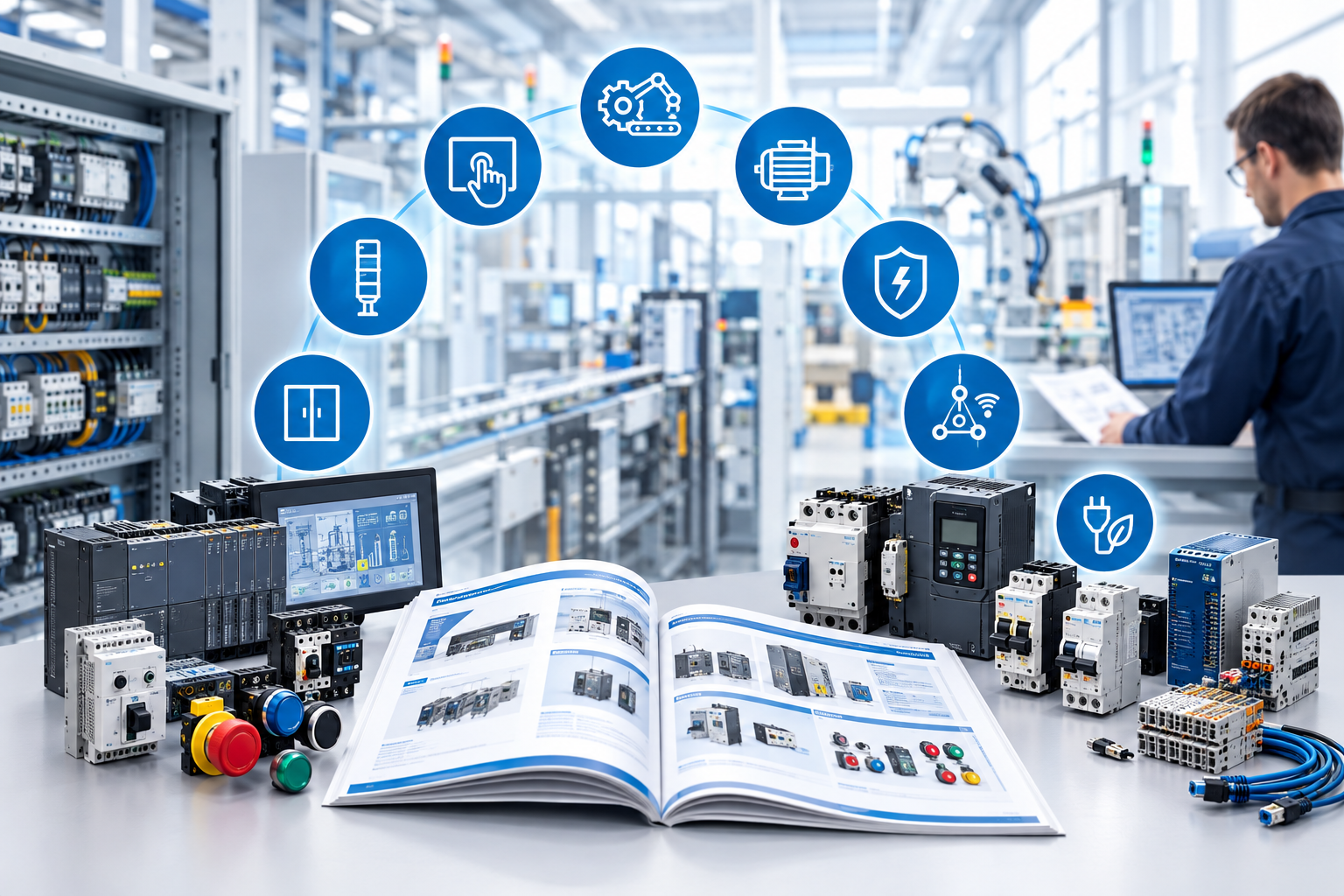
The Eaton Product Overview for Machine Building, catalog CA08103003Z, is a comprehensive product selection guide designed to simplify the process of identifying Eaton's core industrial automation and electrical products. It brings together product information for machine building applications, helping professionals navigate solutions for control, protection, motor operation, energy management, and industrial connectivity.
Whether you are designing a new machine, upgrading an existing production line, or sourcing electrical components for a control cabinet, this catalog provides a useful starting point for your engineering and purchasing decisions.
What Is the Eaton Machine Building Catalog CA08103003Z?
The Eaton CA08103003Z product overview is a technical catalog developed to support professionals involved in machine design and industrial automation. It presents Eaton's core product portfolio in an organized format, making it easier to identify suitable components for different applications.
The catalog covers several important areas of machine building, including automation controllers, operator interfaces, industrial signaling devices, motor starters, contactors, circuit protection, variable frequency drives, and energy management equipment.
Its purpose is to streamline product selection and provide a practical overview of the components used to build modern industrial machines and electrical control systems.
For engineers and purchasing teams, the catalog can help with:
-
Identifying relevant Eaton product families.
-
Comparing component options during the design stage.
-
Planning electrical control panels and machine systems.
-
Selecting products for motor control and circuit protection.
-
Supporting component sourcing and replacement planning.
-
Improving coordination between engineering, manufacturing, and procurement.
The catalog should be used as a product selection aid alongside the latest technical datasheets, installation instructions, and applicable standards.
Key Product Categories in the Eaton Machine Building Catalog
1. Industrial Automation and Control Systems
Automation is at the heart of modern machine building. Controllers and communication systems enable machines to execute programmed operations, coordinate equipment, and respond to changing production conditions.
Eaton's machine building portfolio includes programmable logic controllers (PLCs), compact controllers, control relays, remote I/O systems, and intelligent communication solutions.
These components can support applications such as packaging machinery, assembly systems, material handling equipment, and automated production lines.
When choosing automation components, engineers should consider the number of inputs and outputs, processing requirements, communication protocols, expansion capabilities, and integration with the wider control architecture.
2. Human-Machine Interfaces and Operator Panels
Human-machine interfaces (HMIs) allow operators to interact with industrial equipment, monitor operating conditions, and manage machine functions.
Eaton's operator interface solutions include touch panels and visualization products designed to support machine operation and process monitoring.
Depending on the application, an HMI may display operating parameters, alarms, production information, and diagnostic messages. A well-designed interface can help operators identify faults more quickly and simplify routine machine operation.
When selecting an operator panel, consider display size, environmental requirements, connectivity, software compatibility, and the information operators need during normal operation and troubleshooting.
3. Industrial Pushbuttons, Switches, and Signaling Devices
Industrial machines require dependable ways to start and stop operations, select operating modes, acknowledge alarms, and communicate machine status.
The Eaton product portfolio includes operator devices such as pushbuttons, selector switches, indicator lights, position switches, and signaling equipment.
These components are commonly used on machine control panels, local operator stations, and industrial enclosures.
Selecting the right devices involves evaluating mounting requirements, contact configurations, operating conditions, visibility, and the machine's control and safety architecture.
For safety-related functions, ordinary operator devices must not be treated as substitutes for appropriately designed and validated safety systems.
4. Contactors and Motor Switching Equipment
Electric motors are essential to industrial machinery, powering conveyors, pumps, fans, compressors, and numerous other mechanical systems.
Eaton contactors are used to switch electrical loads as part of appropriately designed control circuits. The machine building portfolio includes contactor families for different motor control and switching requirements.
Contactors can be combined with suitable overload protection and other components to create motor starter assemblies.
When selecting a contactor, engineers should verify the motor's rated power and current, utilization category, operating frequency, coil voltage, auxiliary contact requirements, and the applicable short-circuit protection arrangements.
Correct component coordination is particularly important in applications involving frequent starts, reversing operations, or demanding operating conditions.
5. Motor Protection and Circuit Protection
Electrical protection is a fundamental consideration in industrial machine design. Overloads, short circuits, and other electrical faults can damage equipment, interrupt production, and create hazards.
Eaton's machine building portfolio includes motor-protective circuit breakers, overload relays, circuit breakers, and related protection components.
Motor protection devices help protect motors against specified fault conditions when correctly selected and installed. General circuit protection products serve different functions and must be matched to the circuit and equipment being protected.
Engineers should consider motor full-load current, starting characteristics, prospective short-circuit current, trip settings, conductor ratings, and coordination requirements.
Protection settings and device selection should always follow the manufacturer's documentation and applicable electrical regulations.
6. Variable Frequency Drives and Motor Control
Variable frequency drives (VFDs) regulate motor speed by controlling the frequency and voltage supplied to an AC motor. They can be useful in applications where process conditions require adjustable speed or controlled acceleration and deceleration.
Eaton's drive portfolio includes solutions for a range of industrial motor applications.
Potential benefits of correctly applied variable speed control include improved process regulation, reduced mechanical stress during starting, and opportunities to optimize energy consumption in suitable applications.
Common use cases include pumps, fans, conveyors, and other machinery with variable operating demands.
Before choosing a drive, evaluate motor ratings, load characteristics, required speed range, overload capacity, braking requirements, environmental conditions, electromagnetic compatibility, and communication needs.
Actual energy savings depend on the application, system design, and operating profile.
7. Industrial Communication and SmartWire-DT
Modern machines increasingly rely on communication between controllers, motor starters, sensors, and other electrical devices.
Eaton's SmartWire-DT technology is designed to simplify the connection and communication of compatible control and switching devices. By reducing conventional point-to-point control wiring in supported applications, it can help streamline panel construction and machine commissioning.
Industrial communication solutions can also make device information more accessible to control systems, supporting diagnostics and operational monitoring.
When evaluating an intelligent wiring system, check device compatibility, network architecture, communication requirements, installation guidelines, and the amount of diagnostic information needed by the application.
8. Push-In Connection Technology
Wiring efficiency is an important consideration for control cabinet manufacturers and machine builders. Eaton's product overview highlights push-in connection technology across parts of its portfolio.
Push-in terminals can simplify conductor installation and reduce the need for tools when connecting compatible conductors. Depending on the device and application, this can help reduce wiring effort and support consistent assembly practices.
The technology is particularly relevant when designing control panels with numerous control and switching connections.
Before installation, confirm the permitted conductor types and cross-sections, preparation requirements, terminal ratings, and manufacturer instructions for the specific component.
9. Power Supplies and Electrical Distribution
Reliable power distribution is essential to the operation of industrial control systems. Controllers, sensors, operator panels, communication devices, and other electronic equipment often require stable low-voltage DC supplies.
Eaton's machine building product range includes power supply solutions and electrical distribution components for industrial applications.
Selecting suitable equipment requires attention to input voltage, output voltage, rated current, overload behavior, protection requirements, redundancy needs, and installation conditions.
The overall power supply design should account for the simultaneous demand of connected devices, startup currents, future expansion, and the operating environment.
10. Energy Management and Electrical Infrastructure
Machine builders must consider not only machine functionality but also electrical efficiency, operational reliability, and the safe distribution of power.
Eaton's broader machine building portfolio includes products for switching, isolation, circuit protection, and electrical energy management.
Depending on the application, these components can support the design of machine control cabinets, distribution assemblies, and industrial power systems.
A well-planned electrical architecture helps ensure that components are appropriately rated, protection is coordinated, and maintenance requirements are considered from the beginning of the project.
How the Eaton Catalog Supports Machine Design
The CA08103003Z catalog is intended to make product selection more straightforward by organizing core product families in one reference document.
Faster Component Identification
Instead of researching every product category independently, engineers can use the catalog to identify relevant Eaton product families and narrow down their options.
This can be especially helpful during preliminary design, when the required functionality is known but individual part numbers have not yet been finalized.
Better Electrical Panel Planning
Panel builders need to consider component dimensions, mounting methods, wiring arrangements, power requirements, and compatibility.
The catalog provides an initial overview of the product range, helping designers identify devices that may be suitable for a particular control cabinet or machine architecture.
Detailed dimensional drawings and installation documents should still be consulted before finalizing the panel layout.
More Efficient Procurement
Purchasing teams often need to coordinate component requirements with electrical engineers and production planners.
A structured product overview can help establish which product families need to be investigated and which technical characteristics must be confirmed before ordering.
For repeat builds and maintenance projects, accurate identification of the complete part number is essential to avoid ordering incompatible variants.
Support for Engineering Documentation
Machine design frequently involves electrical schematics, bills of materials, CAD layouts, and technical documentation.
Eaton provides engineering resources for supported products, including electrical design data and mechanical CAD information. The availability and format of these resources depend on the individual product.
Using verified manufacturer documentation during the design process helps reduce errors and improves coordination between electrical and mechanical engineering teams.
Digital Catalog and Technical Product Information
The Eaton machine building product overview is designed to complement more detailed product information available through Eaton's digital catalog resources.
A printed or PDF catalog is useful for browsing product families and understanding the overall portfolio. Digital product resources can provide additional information needed to complete a technical selection.
Depending on the product, engineers may need to consult:
-
Technical specifications and electrical ratings.
-
Product dimensions and mounting information.
-
Wiring diagrams and connection details.
-
Installation and operating instructions.
-
Electrical CAD data and mechanical CAD models.
-
Declarations of conformity and relevant approvals.
-
Accessories, compatible components, and product variants.
For accurate engineering decisions, always verify that the selected product's technical documentation matches the intended application and current product version.
Who Should Use the Eaton CA08103003Z Catalog?
The Eaton Product Overview for Machine Building is relevant to several professional groups.
Machine manufacturers and OEMs: Use the catalog to explore components for new machine designs, standardize product selections, and plan electrical architectures.
Electrical engineers: Identify automation, motor control, protection, and operator interface components for control systems and electrical schematics.
Control panel builders: Investigate suitable switching devices, circuit protection, power supplies, and wiring technologies for industrial control cabinets.
Maintenance engineers: Identify product families and potential replacement components when servicing existing machinery. Always verify the original part number and compatibility before replacing a device.
Industrial distributors and procurement specialists: Use the product overview as an initial reference when discussing component requirements and preparing purchasing specifications.
System integrators: Explore compatible areas of Eaton's portfolio when developing automation and machine control solutions.
Practical Tips for Selecting Eaton Machine Building Components
A systematic selection process can help avoid unnecessary engineering changes and purchasing errors.
-
Define the application. Identify the machine function, electrical architecture, load characteristics, and operating environment.
-
Identify the product category. Determine whether the application requires a controller, contactor, motor protection device, drive, operator interface, or another component.
-
Check the ratings. Confirm voltage, current, power, switching capacity, and other application-specific parameters.
-
Verify compatibility. Review accessories, mounting arrangements, communication interfaces, and coordination with other electrical devices.
-
Review safety requirements. Check applicable regulations, required safety functions, protective measures, and product approvals.
-
Confirm the exact part number. Similar product variants may have different ratings, terminals, coil voltages, or features.
-
Consult current documentation. Use the latest manufacturer datasheets, installation instructions, and engineering files before purchasing or commissioning.
Following these steps makes the catalog more useful as part of a structured engineering workflow rather than treating it as a substitute for detailed technical documentation.
Why Eaton Products Are Relevant to Modern Machine Building
Industrial machinery is becoming more connected, flexible, and data-driven. Machine builders must balance productivity, energy consumption, safety, maintainability, and increasingly demanding customer requirements.
Eaton's machine building portfolio addresses several of these priorities through industrial automation products, motor control equipment, electrical protection, intelligent communication, and operator interfaces.
For example, combining suitable motor control equipment with variable frequency drives can support process control in applications requiring adjustable motor speed. Intelligent communication solutions can help make device information available to automation systems. Appropriate circuit protection and well-designed control panels contribute to dependable electrical operation.
The best results come from selecting components according to the actual machine requirements and integrating them into a properly engineered system.
Frequently Asked Questions
What is Eaton product overview catalog CA08103003Z?
It is an Eaton product overview for machine building that provides a structured introduction to the company's core industrial automation and electrical product portfolio. It serves as a selection aid for engineers, machine manufacturers, panel builders, and procurement professionals.
Which products are covered in the Eaton machine building catalog?
The catalog covers multiple product categories, including automation controllers, operator interfaces, pushbuttons and signaling devices, contactors, motor protection, variable frequency drives, power supplies, and industrial communication solutions.
Is the Eaton CA08103003Z catalog suitable for electrical engineers?
Yes. It can help electrical engineers identify relevant product families during machine design, control panel planning, and component selection. Detailed engineering decisions should be based on the technical documentation for the individual products.
Can the catalog help with control cabinet design?
Yes. It provides an overview of components that may be used in industrial control cabinets, including switching devices, protection equipment, controllers, and power supplies. Engineers should consult dimensional drawings, wiring information, and installation requirements before completing the design.
Does the catalog include CAD information?
The catalog discusses engineering data and CAD resources available for Eaton products. The availability of specific electrical CAD files, mechanical CAD models, and supported formats depends on the product and the associated manufacturer resources.
Is the catalog enough to select a replacement component?
Not by itself. Before ordering a replacement, verify the original part number, electrical ratings, terminal configuration, dimensions, approvals, and compatibility with the existing system. Consult the latest manufacturer documentation where necessary.
What is the difference between the PDF catalog and the digital catalog?
The PDF provides a convenient overview of the product portfolio. Eaton's digital catalog resources offer additional navigation and access to detailed product information, which can help users investigate specific models and variants.
Conclusion
The Eaton Product Overview for Machine Building, CA08103003Z, is a valuable starting point for professionals who need to identify electrical and automation components for industrial machinery.
By bringing together product categories for automation, motor switching, circuit protection, operator interfaces, industrial communication, and energy management, the catalog supports a more organized approach to machine design and component sourcing.
For machine builders, electrical engineers, control panel manufacturers, and procurement teams, it can simplify the initial selection process and help establish a foundation for reliable, efficient machine systems.
For the best results, combine the catalog's product overview with current technical datasheets, installation instructions, engineering files, and application-specific requirements. This ensures that every selected component is suitable for its intended purpose.
- Details
- Category: Electrical Fuses Blog
| eaton-bussmann-series-high-speed-fuses-application-guide-br132015en-en-us.pdf | [Eaton Bussmann Fuses Technical Guide] | 2677 kB |
Eaton Bussmann Series Fuses: Technical FAQs and Expert Guide to Fuse Selection
Choosing the right fuse is essential for reliable electrical circuit protection, equipment safety and efficient system performance. Eaton Bussmann series fuses are designed for a wide range of electrical protection applications, but selecting the correct fuse requires an understanding of key technical factors, including breaking capacity, I²t ratings, voltage requirements, operating temperature and time-current characteristics.
Eaton’s Bussmann series Fuses Technical FAQs provide valuable guidance on these topics, helping engineers, electrical installers and maintenance professionals make informed decisions when specifying and applying fuses.
In this guide, we explore the most important technical questions about Eaton Bussmann series fuses, explain the terminology behind fuse selection and highlight the factors to consider when choosing the right circuit protection solution.
What Are Eaton Bussmann Series Fuses?
Eaton Bussmann series fuses are electrical protection devices used to interrupt excessive current caused by overloads or short circuits. By disconnecting a faulty circuit, a correctly selected fuse helps protect electrical equipment, wiring and other system components from potentially damaging fault conditions.
Fuses are used across industrial installations, electrical distribution systems, control panels, motor circuits and power electronics. Depending on the application, different fuse types offer different operating speeds, current ratings, voltage ratings and levels of fault-current protection.
Selecting the appropriate fuse involves more than matching the current rating. Engineers must also consider the available short-circuit current, the equipment being protected, the operating environment and the relevant electrical standards.
1. What Is Fuse Breaking Capacity?
Breaking capacity, also known as interrupting capacity, is the maximum fault current a fuse can safely interrupt at its specified voltage and under the applicable test conditions.
For example, if a fuse has a breaking capacity of 100 kA, its rating indicates that it can safely interrupt a fault current up to that level under the specified conditions.
When selecting an Eaton Bussmann series fuse, the breaking capacity must be equal to or greater than the prospective short-circuit current at the installation point. Using a fuse with insufficient breaking capacity can compromise the safety and reliability of the electrical system.
Key consideration: Always assess the available fault current and verify the fuse's breaking capacity at the intended operating voltage.
2. What Does I²t Mean in Fuse Technology?
I²t is an important parameter in electrical fuse selection. It represents the integral of current squared over time and is commonly used to describe the thermal energy associated with a fuse's operation.
The I²t value helps engineers assess how a fuse responds to fault currents and how much thermal stress may be imposed on protected components during a fault.
When selecting a fuse, it is important to compare the relevant fuse I²t data with the withstand characteristics of the equipment being protected. For current-limiting applications, the total clearing I²t can be particularly important because it accounts for the energy let through while the fuse interrupts the fault.
The correct comparison depends on the application, the type of I²t value specified and the equipment manufacturer's limits.
Why it matters: Appropriate I²t coordination can help reduce thermal damage to cables, semiconductor devices and other sensitive electrical components.
3. Why Is Fuse Watts Loss Important?
Fuse watts loss refers to the electrical power dissipated as heat when current flows through a fuse during normal operation.
Although some heat generation is unavoidable, excessive watts loss can increase temperatures inside electrical enclosures and distribution panels. It can also contribute to energy losses in continuously operating installations.
When comparing Eaton Bussmann series fuse options, engineers should review the published watts loss data alongside the current rating and application requirements.
This is particularly important in installations with multiple fuses, limited ventilation or high continuous operating currents.
Practical tip: Consider watts loss during the design stage to help manage panel temperatures, energy efficiency and the thermal performance of the overall installation.
4. What Is the M-Effect in Fuses?
The M-Effect refers to the use of a lower-melting-point alloy at a specific location on a fuse element. This feature can influence how the element responds to sustained overload currents.
By modifying the melting behaviour of the element, the M-Effect can help a fuse operate under particular overload conditions without relying solely on an extremely thin conductor.
Its application depends on the fuse design and intended operating characteristics. The M-Effect is therefore one of several factors that distinguish different fuse technologies and operating classes.
Understanding the fuse element design can help engineers identify products suitable for their required overload and short-circuit protection characteristics.
5. How Does Ambient Temperature Affect Fuse Performance?
Ambient temperature can influence fuse operating behaviour because the fuse element generates heat during normal current flow.
In environments with elevated temperatures, the fuse may operate differently from how it performs under standard reference conditions. High temperatures can also affect service life and the thermal conditions inside electrical enclosures.
Applications involving industrial machinery, enclosed control panels or demanding environmental conditions should therefore include an assessment of ambient temperature and heat dissipation.
Depending on the specific fuse, operating conditions and manufacturer's data, a derating factor may be necessary.
Before installation, check:
-
The expected ambient temperature range.
-
The manufacturer's current derating guidance.
-
The enclosure's ventilation and heat dissipation.
-
The fuse holder's ratings and thermal limitations.
-
Any relevant environmental or application-specific requirements.
Always use the product-specific technical documentation when determining the appropriate fuse rating.
6. Which Standards Apply to Eaton Bussmann Series Fuses?
Electrical fuse standards help establish requirements for construction, performance, testing and safe application.
IEC 60269 is a key international standard series for low-voltage fuses. Depending on the market and application, other national or regional standards may also apply. North American installations may require appropriately UL Listed or UL Recognised products, depending on the equipment design and applicable requirements.
When specifying a fuse, verify that its certification and standard compliance match the intended installation.
This is particularly important for original equipment manufacturers, panel builders and businesses exporting electrical equipment internationally.
7. What Is Arc Flash, and How Can Fuse Selection Help?
An arc flash is a hazardous release of energy caused by an electrical arc. It can generate intense heat, light, pressure and molten material, potentially causing severe injuries and equipment damage.
Correctly selected current-limiting fuses can help reduce fault energy under suitable conditions by limiting the current and interrupting the fault rapidly. However, the actual reduction in arc-flash risk depends on the system design, fault conditions, protective-device characteristics and clearing time.
Fuse selection should form part of a broader electrical safety strategy that includes appropriate system design, maintenance procedures, risk assessment and suitable protective equipment.
Important: Never assume that installing a fuse makes live electrical work safe. Follow applicable electrical safety procedures and use qualified personnel.
8. What Is the Difference Between gFF, gG, gR, aM and aR Fuses?
Fuse operating categories describe the intended protection function and operating characteristics of different fuse types.
The correct category depends on the equipment being protected and the nature of the expected overloads and short circuits.
-
gFF: A fast-acting full-range fuse category, where specified by the applicable product standard and manufacturer.
-
gG: A general-purpose full-range fuse commonly used for cable and general circuit protection.
-
gR: A full-range semiconductor protection category intended for applications requiring suitable protection of power semiconductor devices.
-
aM: A partial-range motor-circuit fuse category primarily intended for short-circuit protection and normally used with separate overload protection.
-
aR: A partial-range semiconductor protection category designed for rapid interruption of high fault currents in suitable applications.
These categories are not interchangeable. In particular, partial-range aM and aR fuses generally require additional protection to address overload conditions outside their intended operating range.
When choosing an Eaton Bussmann series fuse, consult the product datasheet and the relevant application guidance rather than relying on the category designation alone.
9. What Is the Difference Between 415 V AC and 690 V AC Fuses?
The voltage rating indicates the maximum voltage under which a fuse is designed to interrupt current in accordance with its specifications.
A 415 V AC fuse must not be used in an application where the required operating voltage exceeds its rated voltage. A suitably rated 690 V AC fuse may be suitable for a lower-voltage application, provided all other electrical and installation requirements are met.
However, a higher voltage rating does not automatically make a fuse the best choice. Engineers must also check current rating, breaking capacity, operating characteristics, physical dimensions and compatibility with the fuse holder or switch-fuse assembly.
Selection rule: Confirm the system voltage and ensure that the fuse's voltage rating and interrupting capability are appropriate for the actual installation.
10. What Is the Difference Between AC and DC Fuses?
Alternating current (AC) periodically changes direction, while direct current (DC) flows in one direction under normal operating conditions.
This difference affects how a fuse interrupts a fault. In an AC circuit, the current naturally passes through zero during each cycle, which can help the fuse extinguish the arc. DC circuits do not have the same regular current-zero crossings, making arc interruption more challenging in many applications.
For this reason, DC fuse selection requires particular attention to the rated DC voltage, prospective fault current, circuit characteristics and the manufacturer's specified interruption capability.
Never assume that an AC fuse is suitable for DC operation simply because its current rating appears appropriate.
For photovoltaic systems, battery storage, electric vehicles and other DC applications, select a fuse specifically rated for the intended DC conditions.
11. What Does a Fuse Time-Current Curve Show?
A time-current characteristic curve illustrates the relationship between the current flowing through a fuse and the time it takes to operate.
In general, higher fault currents cause a fuse element to operate more quickly, while lower overload currents may take longer to interrupt.
Engineers use these curves to evaluate whether a fuse is appropriate for the expected load profile and fault conditions. They can also help assess coordination between protective devices and reduce the risk of unnecessary interruptions during normal operation or equipment starting.
When reviewing a time-current curve, consider:
-
Normal operating current and expected load variations.
-
Motor starting currents or other temporary inrush conditions.
-
The required overload and short-circuit response.
-
Coordination with upstream and downstream protective devices.
-
The distinction between minimum melting time and total clearing time.
Always refer to the specific fuse's published curves and technical data when designing a protection scheme.
12. What Is the Difference Between Offset and Centre Bolted Tags?
Bolted tags are connection terminals used to mount a fuse securely within an electrical assembly.
Offset bolted tags are positioned away from the centre line of the fuse. They may be used in distribution boards, electrical panels, fuse holders and switch-fuse assemblies designed for this configuration.
Centre bolted tags are aligned with the fuse's centre line and may be suitable for assemblies such as connections between copper busbars, where the physical arrangement requires this design.
The correct terminal configuration depends on the equipment layout, available mounting space and the compatibility of the fuse with the associated holder or assembly.
Before ordering a replacement fuse, check the overall dimensions, fixing-hole arrangement, tag position and product reference to ensure a correct fit.
How to Choose the Right Eaton Bussmann Series Fuse
Selecting the right fuse starts with a clear understanding of the circuit, the load and the level of protection required.
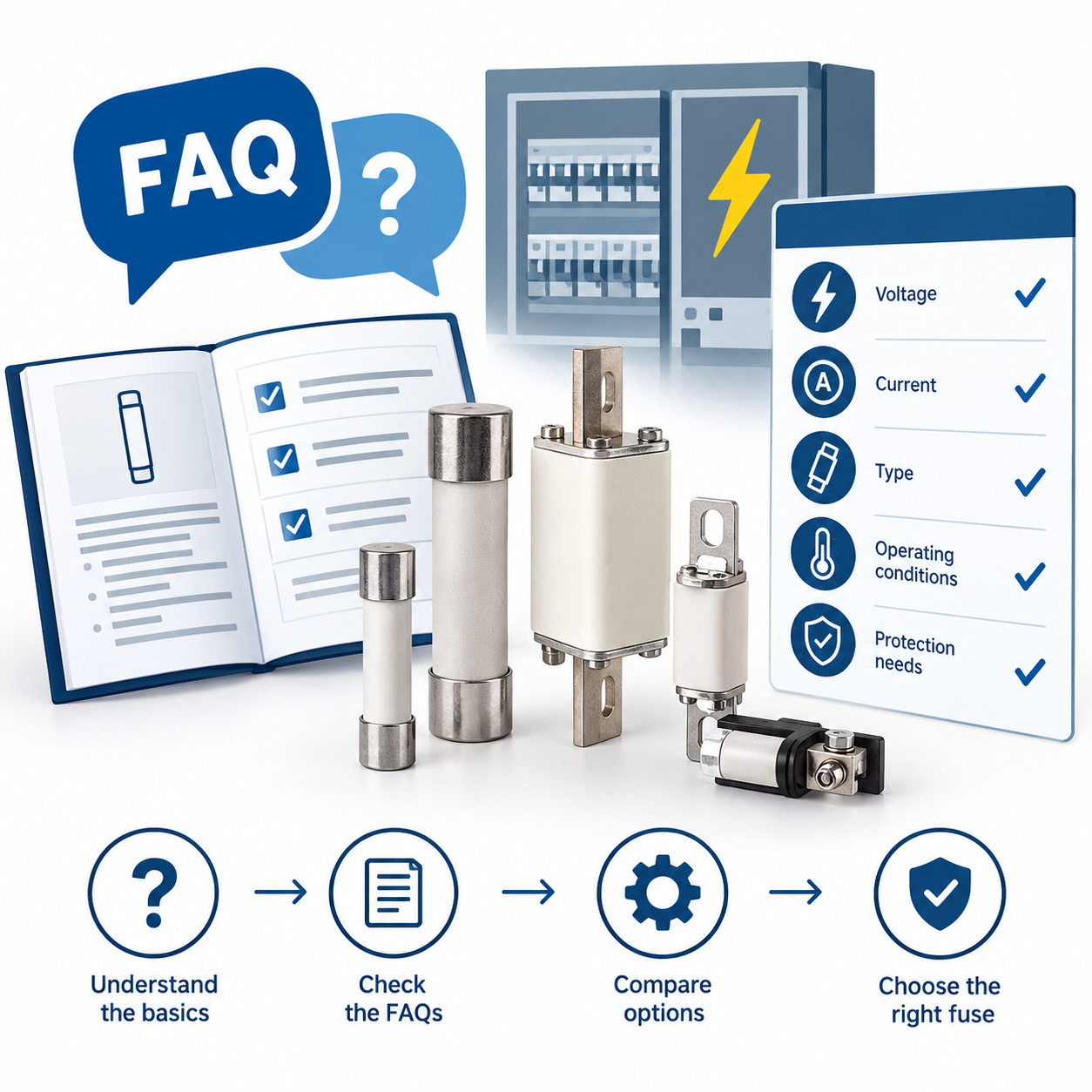
Use the following checklist when evaluating fuse options:
-
Determine the operating voltage. Confirm the required AC or DC rating.
-
Establish the normal operating current. Account for continuous load, inrush current and relevant operating conditions.
-
Calculate the prospective short-circuit current. Confirm that the fuse's breaking capacity is adequate.
-
Identify the required protection category. Match the fuse type to the application, such as general circuit, motor or semiconductor protection.
-
Review I²t and time-current characteristics. Check coordination and the withstand limits of protected equipment.
-
Assess the thermal environment. Consider ambient temperature, watts loss, ventilation and derating requirements.
-
Verify physical compatibility. Check dimensions, bolted tags, fuse holders and mounting arrangements.
-
Confirm standards and certification. Ensure compliance with the requirements of the intended market and installation.
Where the application is complex or the consequences of incorrect selection are significant, consult the manufacturer's technical documentation or seek advice from a qualified fuse application specialist.
Frequently Asked Questions About Eaton Bussmann Series Fuses
How do I know which Eaton Bussmann fuse I need?
Identify the system voltage, normal load current, prospective short-circuit current, required protection function and installation conditions. Then compare these requirements with the manufacturer's fuse ratings, datasheets and time-current characteristics.
Can I use a higher-rated voltage fuse in a lower-voltage system?
A fuse with a higher voltage rating may be suitable for a lower-voltage system if its other ratings, operating characteristics, physical configuration and application requirements are also appropriate. Always verify the manufacturer's specifications.
Why is breaking capacity important?
Breaking capacity determines the maximum fault current a fuse can safely interrupt under specified conditions. The rating must be adequate for the prospective short-circuit current at the point of installation.
What is the difference between gG and aM fuses?
A gG fuse provides full-range general-purpose protection against overloads and short circuits within its rated application. An aM fuse is intended primarily for short-circuit protection in motor circuits and generally requires separate overload protection.
Do DC applications require special fuses?
Yes. A fuse must have a suitable DC voltage rating and interrupting capability for the circuit in which it is used. DC fault interruption can be more demanding than AC interruption, so product-specific ratings are essential.
Where can I find official Eaton Bussmann series fuse technical information?
Eaton provides technical FAQs, product datasheets and application resources to support fuse selection.
Conclusion: Make Informed Decisions About Fuse Selection
Understanding fuse breaking capacity, I²t, watts loss, ambient temperature, operating categories and time-current curves is essential for selecting effective electrical circuit protection.
Eaton Bussmann series fuses offer different protection characteristics for different applications, making it important to evaluate each installation individually. By checking the electrical ratings, environmental conditions, equipment requirements and applicable standards, engineers and installers can make better-informed decisions about fuse selection.
For more detailed technical explanations, consult Eaton's official Fuses Technical FAQs and the datasheet for the specific fuse being considered.
Need help selecting the right fuse? Visit Eaton's technical resources or contact its fuse technical support team for application-specific guidance.



