
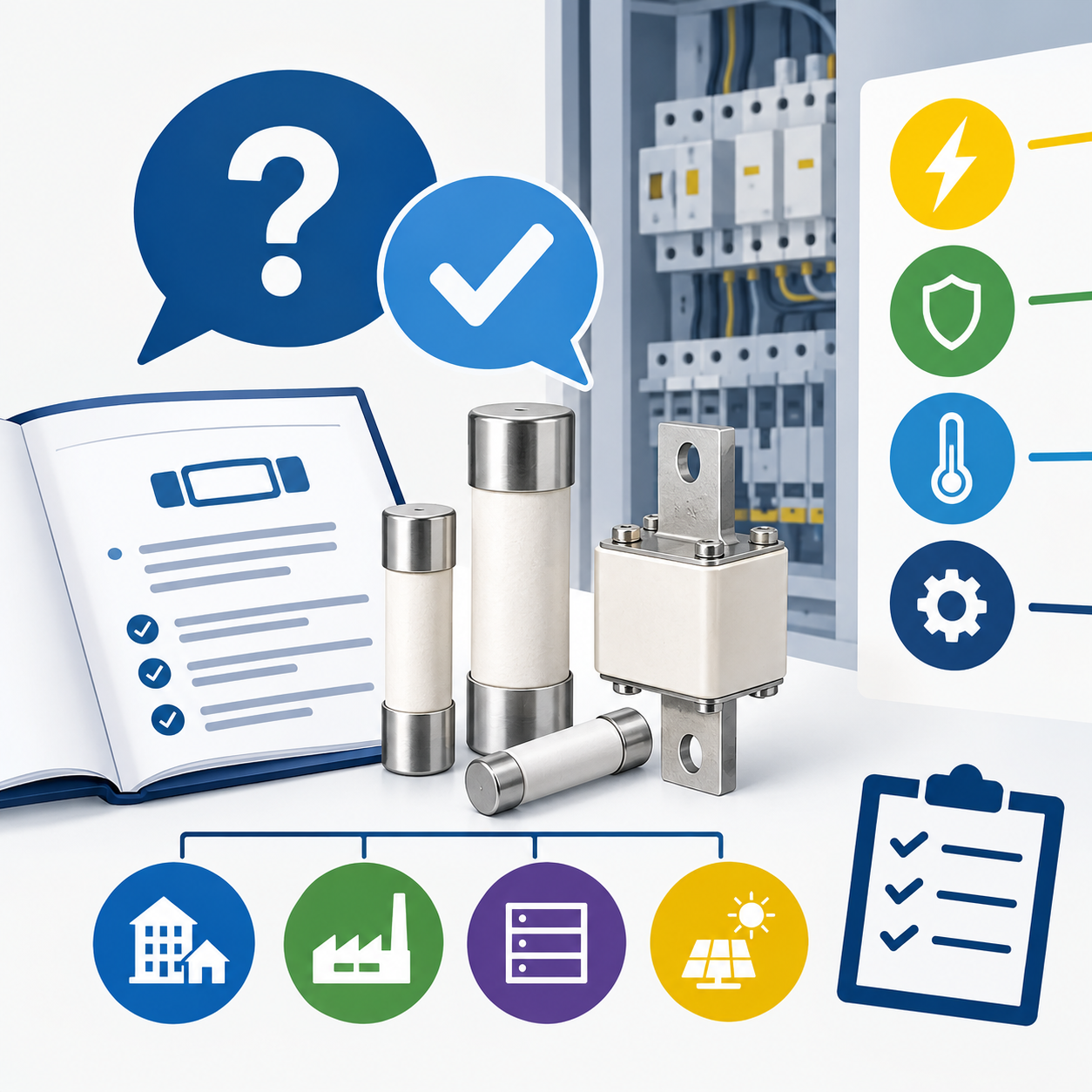
Eaton Bussmann Series Fuses: Frequently Asked Questions About Electrical Fuse Protection
Electrical fuses play a vital role in protecting electrical circuits, equipment and installations against overcurrent faults. Whether you are designing an industrial power distribution system, maintaining electrical equipment or selecting components for a new application, choosing the right fuse is essential for reliable and safe operation.
The Eaton Bussmann series offers a broad range of electrical circuit protection solutions for different applications. But how do fuses work, how do you select the correct fuse rating, and when should you use a fuse instead of a circuit breaker?
In this FAQ guide, we answer common questions about electrical fuses, fuse holders, fuse ratings and circuit protection, drawing on technical guidance from Eaton.
1. What Does an Electrical Fuse Do?
An electrical fuse protects a circuit or piece of equipment against excessive current caused by overloads or short circuits. When the current exceeds the fuse's operating limits for a sufficient period, the fuse element melts or vaporises, interrupting the electrical circuit.
This interruption helps prevent damage to cables, electrical components and connected equipment. Depending on the application and fault conditions, the correct fuse can also help reduce the risks associated with overheating and electrical faults.
Key benefit: An appropriately selected Eaton Bussmann series fuse provides a designed, controlled means of interrupting fault current and protecting electrical systems.
2. What Is an Electrical Fuse Made Of?
The construction of an electrical fuse depends on its type, rating and intended application. Many cartridge fuses include several key components:
-
Ceramic body: Provides insulation and mechanical strength.
-
Fuse element: Often made from materials such as copper, silver or other suitable conductive materials. It melts or vaporises under specified fault conditions.
-
End caps or terminals: Provide the electrical connection to the circuit.
-
Sand or other arc-quenching filler: Used in many cartridge fuses to help extinguish the arc and manage the energy released when the fuse operates.
These components work together to interrupt excessive current safely. The materials, dimensions and construction are engineered to meet the performance requirements of the specific fuse design.
3. What Happens Inside a Fuse When It Operates?
When a fuse experiences an overcurrent condition, its fuse element heats up. If the current and its duration are sufficient, the element melts and an electrical arc may form as the circuit begins to open.
In many high-performance cartridge fuses, the arc-quenching filler helps absorb energy and extinguish the arc. The sealed construction is designed to contain the effects of the interruption within the fuse body.
The exact operating process depends on the fuse's design, construction and fault conditions. This is why selecting a fuse with the correct voltage rating, current rating and breaking capacity is essential for effective circuit protection.
4. What Happens If a Fuse Fails to Operate Correctly?
A fuse that does not interrupt a fault as intended can expose equipment and people to serious hazards. Excessive fault energy may damage electrical components, cause overheating or lead to an arc-related incident.
Incorrect fuse selection is one potential reason a fuse may fail to provide the required protection. Common selection considerations include:
-
System operating voltage.
-
Normal operating current and expected overload conditions.
-
Prospective short-circuit current.
-
Required breaking capacity.
-
Ambient temperature and installation conditions.
-
Applicable product standards and coordination with other protective devices.
Always use a fuse designed for the application and sourced through a reputable, authorised supplier. If the correct specification is uncertain, consult the fuse manufacturer or a qualified electrical professional before installation.
5. Can You Use Fuse Wire Instead of a Proper Fuse?
Fuse wire may melt and interrupt current, but it is not a safe substitute for a properly engineered and rated electrical fuse in applications that require certified circuit protection.
A purpose-designed fuse has defined operating characteristics and an appropriate construction for handling specified fault conditions. Improvised fuse wire may not interrupt high fault currents safely or provide the required level of protection for surrounding equipment and people.
For electrical installations and industrial applications, always use a suitable, correctly rated fuse rather than improvised alternatives.
6. Should You Use a Fuse or a Circuit Breaker?
Both fuses and circuit breakers protect electrical circuits against overcurrent conditions, but they operate differently and offer different advantages.
Electrical fuses interrupt a circuit by melting or vaporising their fuse element. Once a fuse has operated, it must be replaced with a compatible fuse of the correct specification.
Circuit breakers use a switching mechanism to interrupt current and can generally be reset after the cause of the fault has been identified and addressed, provided the device remains serviceable.
Fuses can offer compact construction, cost-effective protection and high breaking capacities in suitable designs. Circuit breakers can offer convenient resetting and switching functionality. In some installations, fuses and circuit breakers work together as part of a coordinated protection strategy.
| Feature | Electrical fuse | Circuit breaker |
|---|---|---|
| Operating principle | Fuse element melts or vaporises | Switching mechanism opens the circuit |
| After operation | Replace the fuse | May be reset after inspection and fault clearance |
| Size | Often compact | Depends on device type and rating |
| Fault interruption | Can provide high breaking capacity when correctly selected | Depends on the device's rated breaking capacity |
| Best choice | Depends on the application and protection requirements | Depends on the application and protection requirements |
There is no universal answer to which device is best. The correct choice depends on the electrical system, fault level, operating conditions, required selectivity and applicable standards.
7. How Long Does an Electrical Fuse Last?
An electrical fuse can have a long service life if it remains within its specified operating conditions and does not experience an event that causes it to operate.
Eaton notes that a fuse that has not operated may typically last around 20–30 years under suitable conditions. However, this is not a guaranteed lifespan for every fuse or installation.
Factors that can influence fuse life include:
-
Ambient and operating temperatures.
-
Repeated heating and cooling cycles.
-
Current fluctuations and startup surges.
-
The fuse's operating duty and application.
-
Installation conditions and the selected fuse rating.
For demanding industrial environments, temperature and operating-cycle considerations should form part of the fuse selection process. Always follow the manufacturer's guidance on inspection, replacement and service conditions.
8. How Do You Select the Correct Eaton Bussmann Series Fuse?
Selecting the right fuse is essential to achieving reliable overcurrent protection. A fuse that is unsuitable for the circuit may operate unnecessarily or fail to provide the required protection.
Before choosing an Eaton Bussmann series fuse, consider the following factors.
Rated voltage
The fuse's rated voltage must be suitable for the system voltage and the conditions under which it will interrupt a fault. Never use a fuse outside its specified voltage rating.
Rated current
Determine the normal continuous current and select a fuse that can carry the required load under the actual operating conditions. Also account for startup surges, such as the inrush current associated with starting electric motors.
Breaking capacity
The fuse must be capable of safely interrupting the prospective short-circuit current at the installation point. Check the available fault current and confirm that the fuse's breaking capacity is adequate.
Operating temperature
Ambient temperature and heat generated by nearby equipment can affect fuse performance. Consider the installation environment when assessing the appropriate fuse rating and operating characteristics.
Application and coordination
Different applications have different protection requirements. Consider the equipment being protected, fault conditions, coordination with other protective devices and any relevant industry or regional standards.
Product authenticity and compliance
Purchase genuine products from the manufacturer or an authorised distributor. Verify the product's specifications and applicable approvals before installation.
Practical tip: Never select a fuse based on current rating alone. Voltage, breaking capacity, operating characteristics, temperature and the application must all be considered together.
9. What Is a Fuse Holder, and Why Is It Important?
A fuse holder is a component designed to secure a compatible fuse and connect it to an electrical circuit. Depending on the design, it can simplify installation, replacement and electrical isolation during maintenance.
When choosing a fuse holder, check that it is compatible with the fuse type and dimensions, and that its electrical ratings suit the application. Installation requirements, environmental conditions and access for maintenance should also be considered.
Using a suitable fuse and compatible holder helps ensure that the complete protection assembly meets the requirements of the electrical system.
10. Where Can You Find Technical Support for Eaton Bussmann Series Fuses?
Fuse selection can be complex, particularly in industrial power distribution, renewable energy systems and other applications involving high prospective fault currents or demanding operating conditions.
If you are unsure which fuse is suitable, consult the manufacturer's technical documentation or seek advice from a qualified electrical professional.
Conclusion: Choose the Right Fuse for Reliable Circuit Protection
Choosing the right electrical fuse is an important part of protecting equipment, supporting system reliability and managing electrical fault risks. Understanding how fuses operate, comparing fuses with circuit breakers, considering environmental conditions and checking all relevant ratings can help you make an informed selection.
The Eaton Bussmann series provides electrical circuit protection solutions for a variety of applications. By consulting product specifications and seeking technical guidance when needed, engineers, installers and maintenance professionals can identify a fuse that meets their system's requirements.
For detailed technical information, refer to Eaton's official Fuse Frequently Asked Questions page and the documentation for the specific product you are considering.