
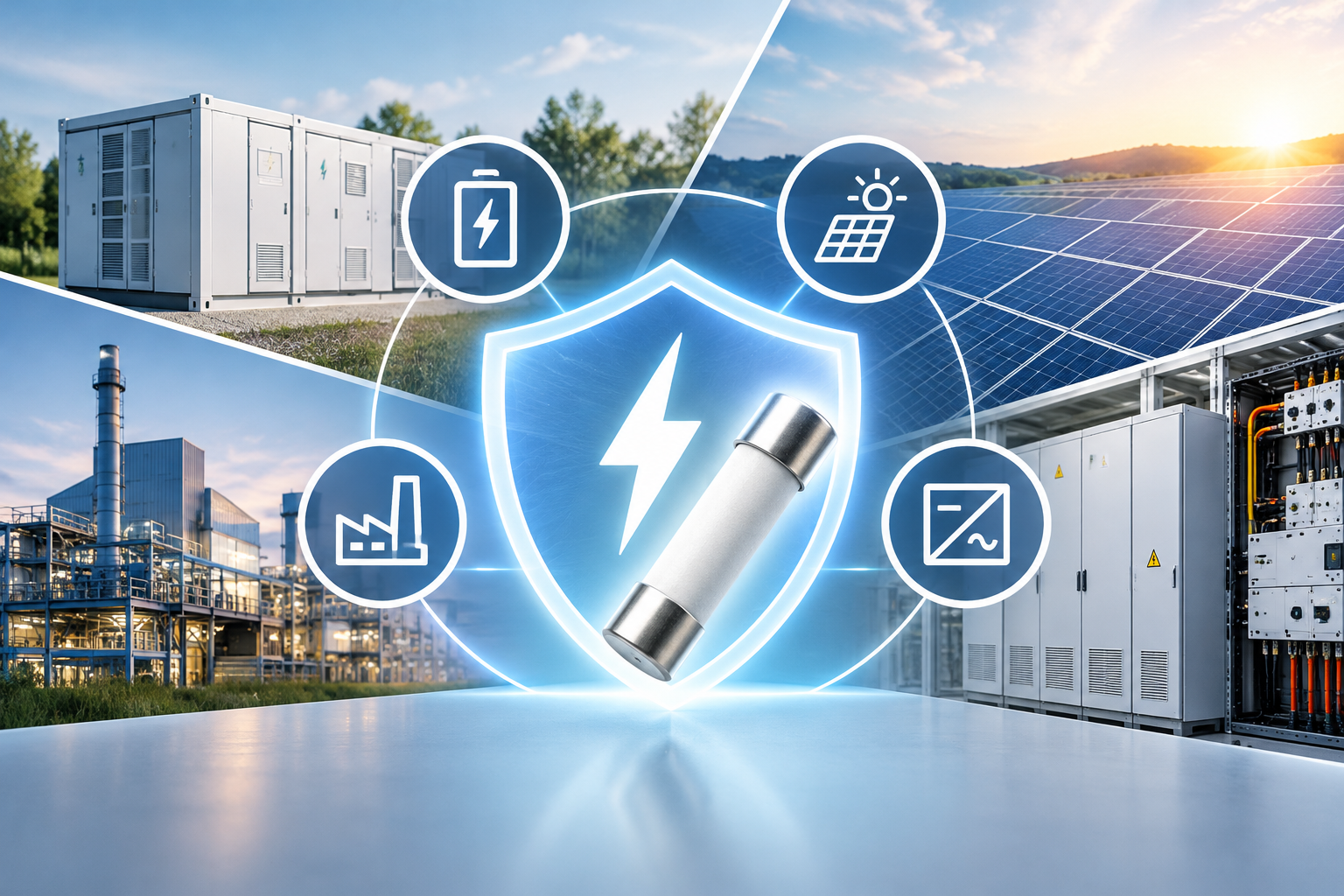
Fuses for PU Applications: Reliable Protection for Modern Energy Systems
The energy transition is placing increasing demands on the safety, efficiency, and availability of electrical systems. Whether used in renewable energy generation, industrial power supply networks, or energy storage systems, reliable electrical protection is essential for safe and continuous operation. Fuses for PU applications play an important role in protecting electrical systems against overcurrents and short circuits.
Selecting and sizing the right fuse helps improve operational safety, system availability, and the service life of electrical components. High-quality fuse solutions also support reliable operation under demanding electrical and thermal conditions.
Why Are Fuses for PU Applications Important?
Electrical power systems must operate reliably, even when load conditions change or high currents occur. Faults in electrical circuits can damage sensitive components, cause unplanned downtime, and compromise the operational safety of an entire installation.
Fuses provide an essential protective function by interrupting a circuit when the current reaches an impermissible level under defined conditions. This helps limit the effects of overloads and short circuits and can reduce the risk of consequential damage.
The following aspects are particularly important in industrial energy applications:
-
Electrical safety: Limiting the effects of dangerous overcurrents and short circuits.
-
High system availability: Reducing potential downtime through appropriate protection concepts.
-
Protection of electrical components: Supporting the safe operation of cables, switchgear, and other system components.
-
Reliable continuous operation: Ensuring suitability for the relevant operating and environmental conditions.
-
Cost efficiency: Avoiding unnecessary interruptions and reducing potential consequential costs.
Choosing the right fuse should therefore always be based on the electrical requirements and protection concept of the specific application.
Applications of Fuses for PU Systems
Fuses are used in a wide range of industrial power supply applications. They are particularly relevant in systems where electrical energy is generated, distributed, converted, or stored.
1. Energy Storage Systems
Energy storage systems play a key role in integrating renewable energy into existing power grids. They store excess energy and make it available when needed. Electrical components must be able to handle both normal charging and discharging cycles and potential fault conditions.
A properly selected fuse helps limit the effects of overcurrents and short circuits. Important selection criteria include system voltage, prospective fault currents, and the requirements of the overall protection concept.
2. Renewable Energy Generation
Systems that use solar power and other renewable energy sources must operate reliably over long periods. Electrical protection components are essential for supporting the operational safety of the associated power supply infrastructure.
Protection requirements vary depending on the system architecture, voltage level, and operating conditions. The selected fuses must be suitable for the relevant electrical characteristics and the specific application.
3. Industrial Power Supply and Distribution
In industrial facilities, electrical distribution systems supply energy to machinery, control systems, and other equipment. Faults in individual circuits can affect connected components and lead to production interruptions.
A coordinated protection strategy helps manage fault currents safely and limit the impact of electrical disturbances. Fuses must be appropriately matched to connected equipment, conductors, and upstream and downstream protective devices.
4. Power Electronics and Electrical Conversion Systems
Power electronics perform essential functions in the conversion and control of electrical energy. Applications include systems that convert electrical energy between different voltage levels or current forms.
Because certain components are sensitive to overcurrents, an appropriate protection concept is particularly important. Fuse selection must account for both the electrical operating conditions and the behaviour of connected components during a fault.
Key Criteria for Selecting the Right Fuse
Selecting suitable fuses for PU applications requires careful technical assessment. Rated current alone does not determine whether a fuse is appropriate for a particular application. Several electrical parameters must be considered together.
Rated Voltage
The fuse voltage rating must be suitable for the application. In particular, the distinction between direct current (DC) and alternating current (AC) systems is important. Breaking capacity and switching behaviour must be appropriate for the actual operating conditions.
Rated Current
The rated current must be matched to the expected operating current and the permissible loading of the protected components. Load variations, ambient temperature, and the thermal conditions inside the installation must also be considered.
An undersized fuse may operate unnecessarily during normal conditions, while an oversized fuse may compromise the required level of protection.
Breaking Capacity
Breaking capacity indicates the maximum fault current that a fuse can safely interrupt under specified conditions. In energy storage and high-power supply systems, it is particularly important to determine the potential short-circuit current accurately.
The fuse breaking capacity must be sufficiently high to safely interrupt the maximum prospective fault current.
Time-Current Characteristics
Time-current characteristics describe how quickly a fuse operates at different current levels. They must be selected to avoid unnecessary interruptions caused by normal start-up currents or permissible load peaks while ensuring that fault currents are interrupted in time.
Environmental Conditions and Installation
Temperature, available installation space, heat dissipation, electrical connections, and mechanical stresses all influence fuse suitability. Selection should therefore take account of both electrical ratings and actual installation conditions.
Standards and Technical Requirements
Different standards, testing requirements, and approvals may apply depending on the application and target market. Reviewing the relevant technical documentation helps ensure that the selected protection solution is suitable and compliant with applicable requirements.
How Do High-Quality Fuses Improve System Availability?
Unplanned system downtime can lead to significant costs. In addition to direct repair expenses, businesses may face production losses, additional maintenance work, and delays in energy supply.
A protection solution tailored to the application helps reduce these risks. Reliable operation depends on the combination of suitable electrical ratings, dependable operating characteristics, and proper integration into the overall system.
Key factors include:
-
Correct sizing based on actual operating conditions.
-
Coordination with other protective devices.
-
Consideration of potential fault currents and load peaks.
-
Compliance with installation and operating requirements.
-
Regular inspections as part of the planned maintenance programme.
A suitable fuse cannot prevent every system failure. However, it is an essential component of a comprehensive electrical protection strategy.
Future-Ready Protection for the Energy Transition
As renewable energy capacity expands and the use of electrical energy storage increases, modern power supply systems face growing demands. Installations must accommodate changing energy flows while meeting high standards for safety and availability.
Reliable fuse protection supports this development by protecting electrical components against dangerous overcurrents and helping maintain safe system operation. Careful system planning, coordination between protective components, and application-specific sizing are becoming increasingly important.
System operators and electrical engineers should therefore consider protection requirements at an early stage of project planning. This allows technical requirements, operational safety, and economic considerations to be addressed together from the outset.
Conclusion: Choosing the Right Fuse Matters
Fuses for PU applications are an important part of modern industrial energy systems. They help protect against overcurrents and short circuits while supporting the reliability of energy storage systems, renewable energy installations, and industrial power distribution networks.
Key selection criteria include rated voltage, rated current, breaking capacity, time-current characteristics, and environmental conditions. Considering these factors together helps ensure that the selected fuse is technically suitable and provides reliable protection for the intended application.
By integrating protection requirements into system planning at an early stage, businesses can establish a strong foundation for the safe, cost-effective, and long-term operation of electrical energy systems.



