
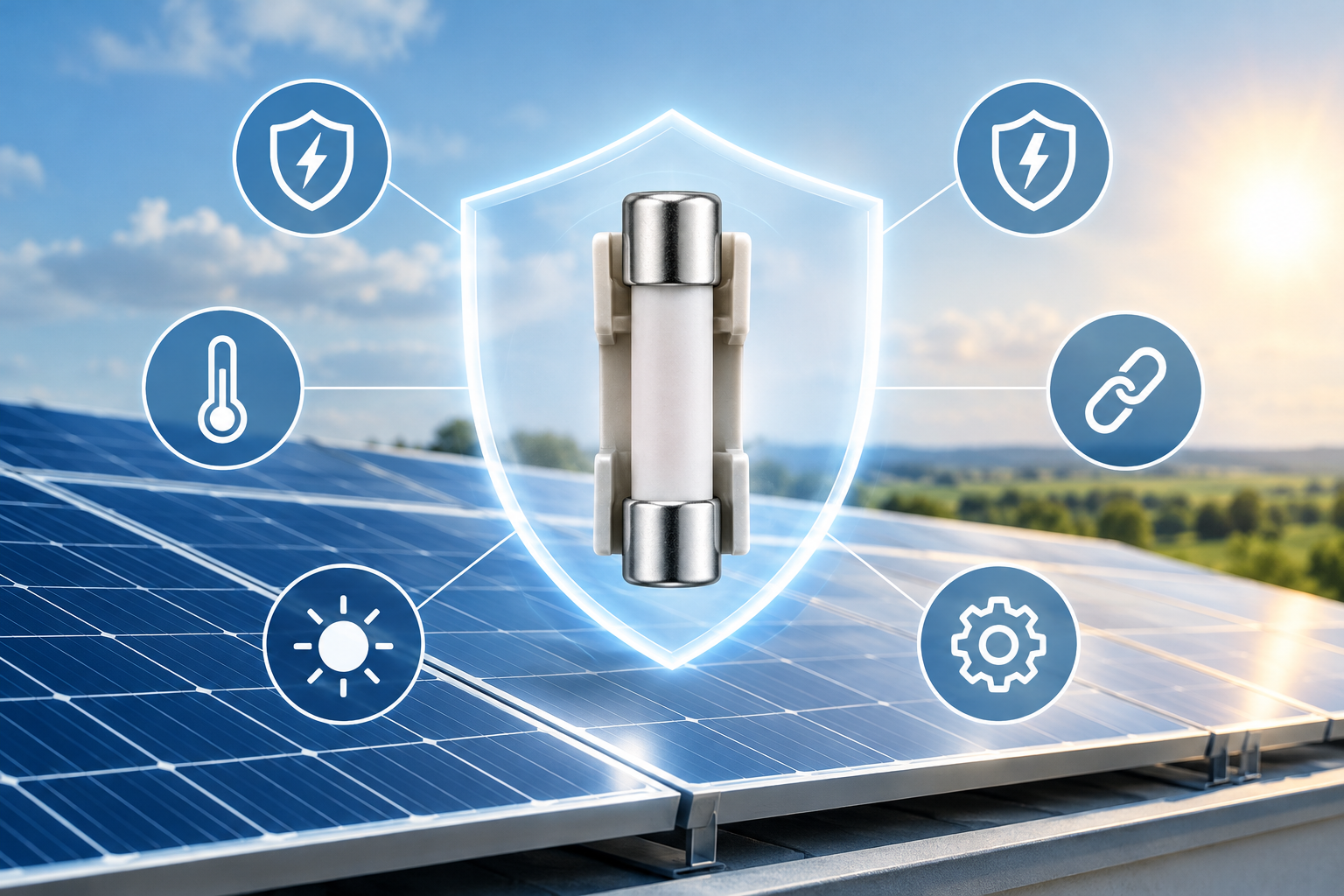
Fuses for PV Applications: Reliable Protection for Photovoltaic Systems
Photovoltaic (PV) systems play an increasingly important role in the transition to sustainable energy. To ensure that solar energy can be generated and used safely and reliably, a well-designed electrical protection concept is essential. Fuses for PV applications play a key role in this context by helping to limit the effects of overcurrents, prevent electrical damage, and improve the operational safety of the entire system.
But what requirements must fuses for photovoltaic systems meet? Which factors are important when selecting the right solution, and why is application-specific protection essential?
In this article, we explore the key considerations for protecting PV systems and explain how suitable fuse protection contributes to reliable, long-term energy generation.
Why Are Fuses Important for Photovoltaic Systems?
Photovoltaic systems differ from conventional electrical installations in several important ways. They generate direct current (DC), are exposed to varying environmental conditions, and can operate at high electrical voltages depending on the system configuration. These characteristics must be taken into account when designing an appropriate electrical protection concept.
Fuses are designed to interrupt electrical circuits when current exceeds specified limits. This helps protect conductors and connected components against thermal overload and the effects of short circuits.
A suitable protection concept supports several important objectives:
-
Overcurrent protection: Helps limit the effects of excessive current.
-
Improved operational safety: Reduces the risk of electrical damage.
-
Protection of electrical components: Supports reliable system operation.
-
Reduced downtime: Helps limit damage that could result in operational interruptions.
-
Long-term system reliability: Helps prevent certain types of damage caused by thermal overload.
The effectiveness of this protection depends on selecting and correctly rating fuses for the specific electrical operating conditions.
Key Requirements for Fuses in PV Applications
Several technical factors must be considered when selecting fuses for photovoltaic systems. Choosing a fuse based solely on its rated current is not sufficient.
1. Safe Switching of DC Voltage
Photovoltaic modules generate direct current. Unlike alternating current (AC), DC does not have a natural periodic zero crossing that helps extinguish an electrical arc. Consequently, interrupting DC current presents specific technical challenges.
Fuses used in PV systems must be suitable for the relevant DC voltage and intended operating conditions. A component rated for AC applications is not automatically suitable for use in DC circuits.
2. Consider Rated Current and Operating Current
The fuse rating must match the electrical requirements of the circuit. Relevant factors include the expected operating current, potential overcurrents, and the current-carrying capacity of the conductors.
An undersized fuse may cause unnecessary interruptions during normal operation. An oversized fuse, on the other hand, may fail to provide adequate protection for conductors or components when a fault occurs.
For this reason, all relevant electrical ratings must be considered together when designing the protection system.
3. Evaluate Short-Circuit Conditions and Breaking Capacity
High short-circuit currents may occur under fault conditions. Effective protection therefore requires a fuse capable of safely interrupting the prospective fault current.
The required breaking capacity must be appropriate for the expected short-circuit conditions. System voltage and the specific configuration of the PV installation also influence fuse selection.
4. Account for Temperature and Environmental Conditions
Photovoltaic systems are frequently installed on rooftops, in technical rooms, or in other locations with specific environmental conditions. High temperatures, temperature fluctuations, humidity, and restricted heat dissipation can affect the operating conditions of electrical protection components.
When planning a PV installation, it is therefore important to consider expected ambient temperatures, installation conditions, and the permissible operating limits of the selected components.
Where Are Fuses Used in Photovoltaic Systems?
The specific protection requirements depend on the size and configuration of the PV system. During the design process, individual circuits and potential fault conditions must be assessed systematically.
Protection on the DC Side
On the DC side, the electrical energy generated by photovoltaic modules is transferred to the next stage of the system. Depending on the installation and circuit configuration, individual current paths may require protection.
Particular attention should be paid to possible reverse currents from parallel-connected strings or other current paths. Under certain fault conditions, these currents can place a load on components that would not normally be exposed to such levels of current.
Whether additional fuse protection is required must be determined by evaluating the electrical design, module specifications, and applicable technical requirements.
Protection of Electrical Cables and Connections
Cables and electrical connections must be designed to withstand the expected operating currents. The protection concept must ensure that fuse ratings are compatible with conductor current-carrying capacity and the permissible loads of connected components.
Cable length, conductor cross-section, installation method, and ambient conditions may all influence the design.
Integration into the Overall Protection Concept
Fuses are only one part of the electrical safety concept for a photovoltaic installation. Depending on the application, additional protective measures may be necessary, including protection against electric shock, suitable isolation facilities, and measures against lightning and transient overvoltages.
These functions serve different purposes and should not be confused. A comprehensive protection concept considers both the DC and AC sides of the installation and coordinates the individual protective measures accordingly.
How to Select the Right Fuse for a PV Application
Selecting suitable fuses should always be based on a technical assessment of the specific application. The following criteria provide a useful starting point for system planning.
Electrical ratings: Check the maximum system voltage, operating current, and required breaking capacity.
System configuration: The number of parallel-connected current paths and the possibility of reverse currents affect the required protection.
Cable sizing: Fuse ratings must be coordinated with the current-carrying capacity of the conductors and the permissible loads of connected components.
Environmental conditions: Temperature, installation location, and heat dissipation must be taken into account.
Applicable standards: The design and installation must comply with the relevant standards, technical rules, and manufacturers' specifications.
Maintenance and accessibility: Protection components should be incorporated into a system design that allows safe inspection and appropriate maintenance when required.
Careful consideration of these factors helps avoid unnecessary interruptions while maintaining effective protection under fault conditions.
The Role of Standards and Technical Requirements
The electrical safety of photovoltaic installations is supported by applicable standards and technical regulations. These establish requirements for the design, installation, and protection of electrical systems.
For PV applications, particular attention should be paid to the relevant requirements for photovoltaic power supply systems and the applicable rules governing electrical protective measures.
The technical specifications of the individual system components must also be taken into account. These include permissible voltage and current ratings, operating conditions, and installation requirements.
It is important to verify the standards and regulatory requirements applicable to the specific project. Requirements may vary depending on the type of installation, system voltage, and intended application. Qualified electrical professionals should be responsible for the appropriate design and implementation.
Common Mistakes When Protecting PV Systems
Insufficient coordination of protective measures can compromise the safety and reliability of a photovoltaic installation. Common design mistakes include:
-
Incorrect fuse ratings: Current and voltage requirements are not fully matched to the application.
-
Overlooking potential reverse currents: The effects of the circuit configuration are not adequately considered when assessing protection requirements.
-
Insufficient coordination with cables: The selected fuse does not adequately match the current-carrying capacity of the conductors.
-
Underestimating ambient temperature: Actual thermal conditions at the installation location are overlooked.
-
Confusing different protection functions: Overcurrent protection, overvoltage protection, and other protective measures are treated as interchangeable.
-
Failing to check technical requirements: Relevant standards and manufacturers' specifications are not fully considered.
These risks can be reduced through systematic planning, careful assessment of operating conditions, and professional installation.
Conclusion: Fuses Are Essential to Reliable PV Applications
Fuses for photovoltaic applications play an important role in protecting electrical circuits. They help limit the effects of overcurrents and support the safe, reliable operation of PV systems.
However, selecting a suitable fuse is only one part of the process. Effective protection requires the correct coordination of voltage ratings, current ratings, breaking capacity, conductor sizing, and environmental conditions.
By prioritizing proper electrical design and compliance with applicable technical requirements from the outset, system designers and installers can establish an important foundation for the safety, reliability, and long-term performance of photovoltaic installations.
FAQ: Frequently Asked Questions About Fuses for PV Applications
Why Do Photovoltaic Systems Need Suitable Overcurrent Protection?
Suitable overcurrent protection helps limit the effects of excessive current and can protect conductors and connected components against certain types of electrical damage. The required protective measures depend on the system configuration and applicable technical requirements.
What Matters When Selecting Fuses for DC Applications?
Key considerations include the permissible DC voltage, rated current, breaking capacity, and specific operating conditions. Because DC current behaves differently from AC current during interruption, the selected fuse must be suitable for the intended application.
Does Every Photovoltaic System Require Additional Fuse Protection?
Not every system configuration requires the same protective measures. The need for additional fuses must be assessed based on the electrical design, potential fault currents, conductor sizing, and applicable technical requirements.
What Other Protective Measures Are Important for PV Systems?
Depending on the system design, additional measures may be required alongside overcurrent protection. These can include protection against electric shock, suitable isolation facilities, and lightning and surge protection. Each measure serves a different purpose, and the overall protection concept must coordinate them appropriately.
Who Should Design the Fuse Protection for a Photovoltaic System?
The design and installation should be carried out by qualified electrical professionals. They can assess the technical requirements, determine the appropriate protective measures, and ensure that the protection concept is properly integrated into the overall installation.



