
Electrical Fuses Blog
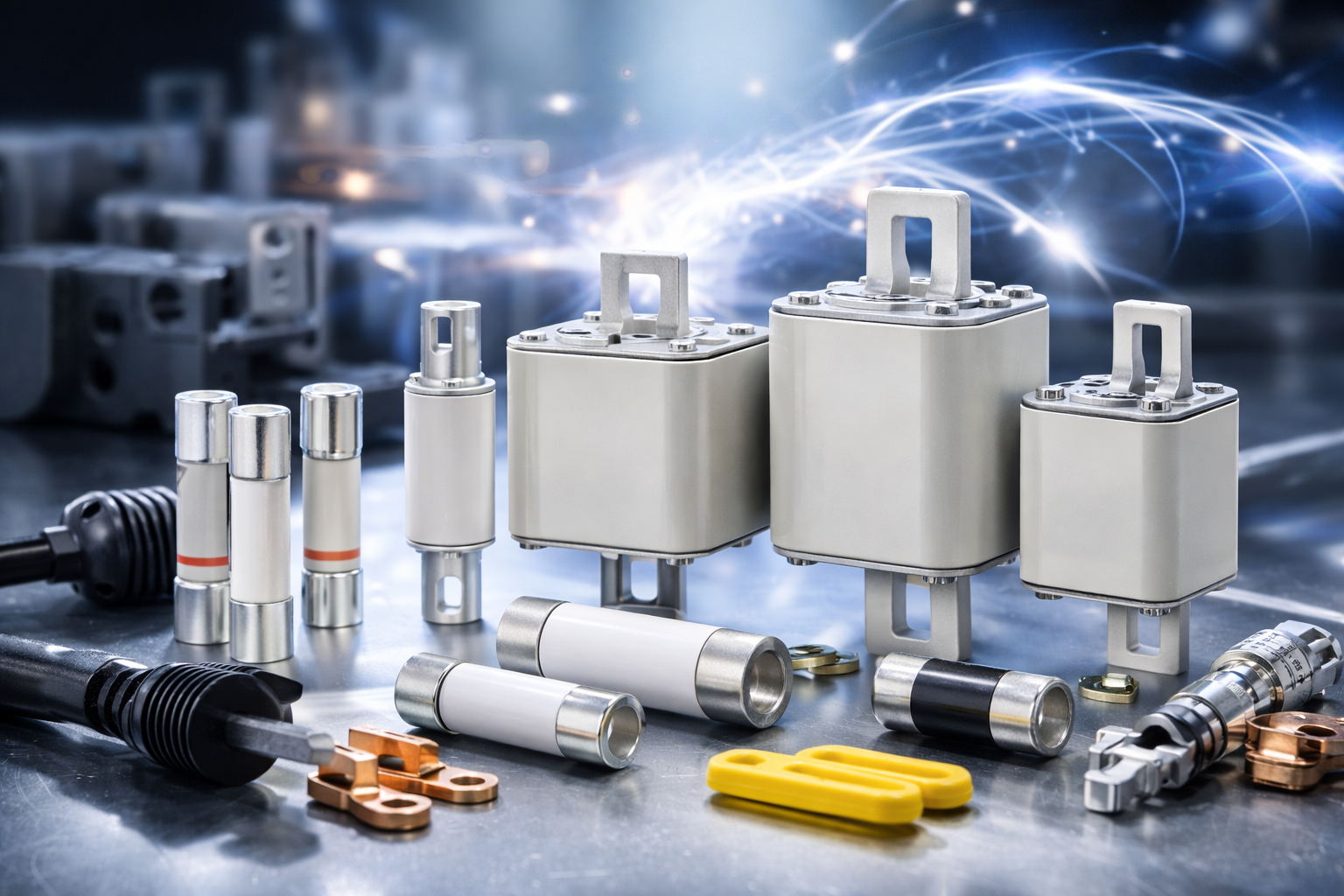
Eaton Bussmann Series Electrical Fuses – Blog & Fachwissen
Im Eaton Bussmann Series Electrical Fuses Blog finden Sie fundiertes Fachwissen rund um elektrische Sicherungen, Überstromschutz und moderne Schutzkonzepte für industrielle und gewerbliche Anwendungen. Diese Kategorie bündelt alle Blogartikel, technischen Beiträge und Praxisguides zu den Sicherungssystemen und Serien von Eaton Bussmann.
Eaton Bussmann zählt weltweit zu den führenden Herstellern von elektrischen Sicherungen, und ihre Serien stehen für Sicherheit, Normkonformität und höchste Zuverlässigkeit in anspruchsvollen elektrischen Systemen.
Was Sie im Eaton Bussmann Sicherungen Blog erwartet
Unsere Blogbeiträge helfen Ingenieuren, Einkäufern, Technikern und Planern dabei, die richtige Sicherungslösung zu finden und technische Zusammenhänge besser zu verstehen.
Themenschwerpunkte dieser Kategorie:
-
🔌 Überblick über Eaton Bussmann Sicherungsserien
-
⚙️ Unterschiede zwischen UL-, IEC- und Spezial-Sicherungen
-
📘 Technische Erklärungen zu Kennlinien, Auslöseverhalten & Bemessungswerten
-
🏭 Anwendungstipps für Industrie, Maschinenbau & Energieverteilung
-
🚗 Beiträge zu EV-, DC- und Hochvolt-Sicherungen
-
🛠 Best Practices für Auswahl, Installation und Wartung
Alle Inhalte sind praxisnah, verständlich aufbereitet und technisch fundiert.
Eaton Bussmann Sicherungsserien im Fokus
Der Blog behandelt regelmäßig verschiedene Eaton Bussmann Series Electrical Fuses, darunter:
-
Industrial Fuses
-
North American (UL) Fuse Series
-
IEC Sicherungsserien
-
High Speed & Semiconductor Fuses
-
EV & DC Sicherungen
-
Supplementary & Specialty Fuses
So erhalten Sie einen umfassenden Überblick über das Eaton Bussmann Portfolio und dessen Einsatzmöglichkeiten.
Fachwissen für sichere elektrische Systeme
Elektrische Sicherungen sind ein zentraler Bestandteil jeder sicheren Stromversorgung. Der Eaton Bussmann Series Electrical Fuses Blog unterstützt Sie dabei, Risiken zu minimieren, Normen einzuhalten und die Lebensdauer Ihrer Anlagen zu verlängern.
Ganz gleich, ob Sie Grundlagenwissen suchen oder tief in spezielle Sicherungsserien eintauchen möchten – hier finden Sie relevante, aktuelle und suchmaschinenoptimierte Inhalte rund um Eaton Bussmann Electrical Fuses.
👉 Jetzt Blogartikel entdecken und Ihr Wissen über Eaton Bussmann Sicherungsserien gezielt erweitern.
- Details
- Category: Electrical Fuses Blog
 eaton-bussmann-series-photovoltaic-fuses-catalogue-ca135004en.pdf  | [Eaton Bussmann PV Fuses] | 0 kB |
How to Properly Fuse a Solar PV System: A Complete Guide
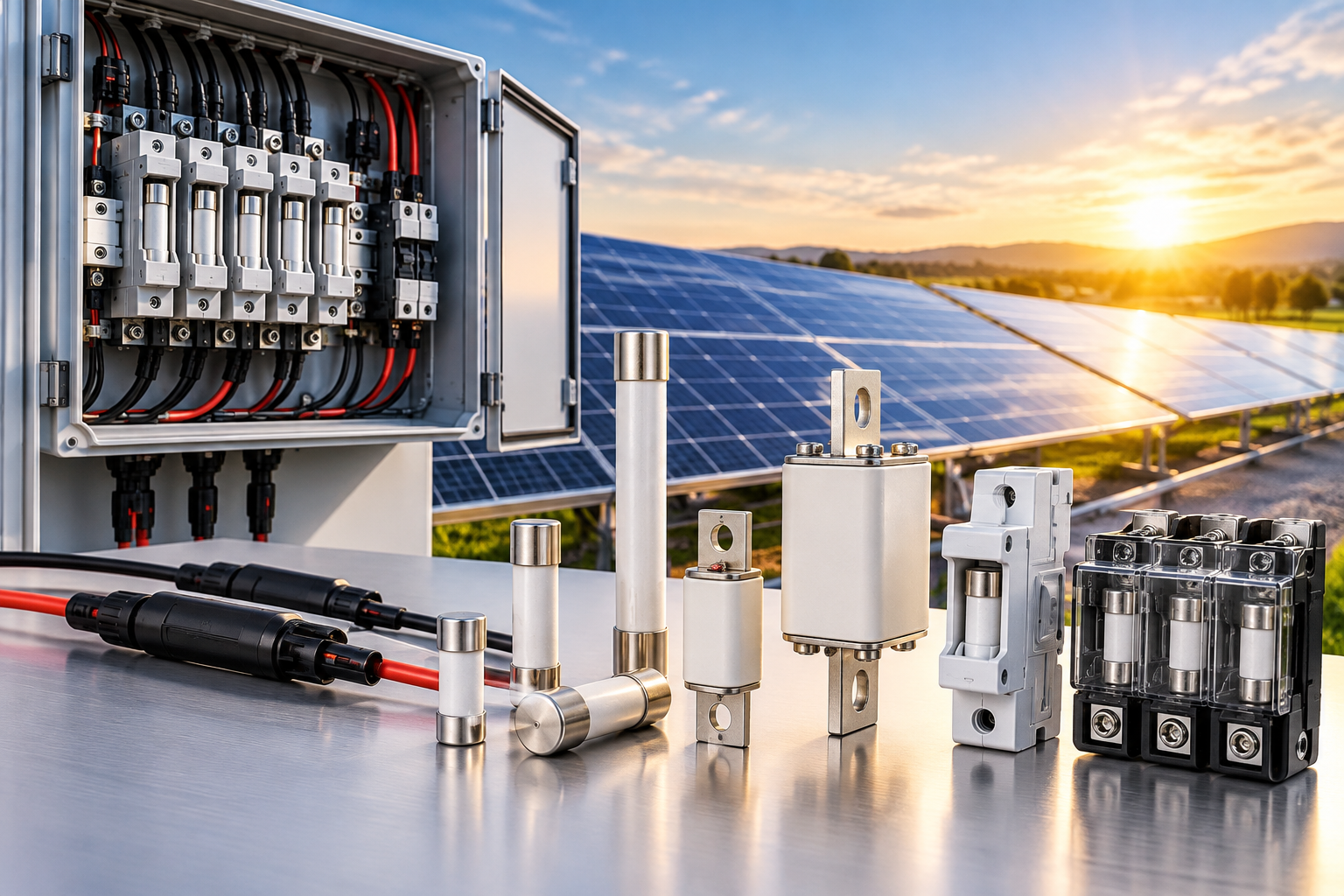
Solar photovoltaic (PV) systems are designed to generate clean, renewable electricity, but their safe and reliable operation depends on proper electrical protection. One of the most important components of a solar installation is the fuse. Correctly selecting and installing solar PV fuses helps protect solar panels, electrical cables, inverters, and other equipment from overcurrent conditions, short circuits, and potential fire hazards.
Understanding how to properly fuse a solar PV system is essential for installers, electrical engineers, system designers, and solar professionals. Choosing the wrong fuse rating or installing a fuse incorrectly can compromise system performance, increase maintenance costs, and create serious safety risks.
This guide explains how solar PV fuses work, how to select the correct fuse size, where to install fuses, and how to maintain them for long-term system reliability.
What Is a Solar PV Fuse?
A solar PV fuse is an electrical protection device specifically designed to protect photovoltaic circuits against excessive current. It interrupts the electrical circuit when the current exceeds a predetermined level, helping prevent damage to cables, solar modules, and connected electrical equipment.
Unlike conventional electrical installations, solar PV systems operate with direct current (DC). DC circuits present particular challenges because there is no natural current zero-crossing to help extinguish an electrical arc. Therefore, solar installations require fuses specifically rated for photovoltaic DC applications.
Photovoltaic fuses are commonly used in solar combiner boxes, string circuits, and other DC distribution points. They provide protection against reverse currents and certain short-circuit and overcurrent conditions.
Why Is Proper Fusing Important in Solar PV Systems?
Proper fuse selection and installation are essential for maintaining the safety, efficiency, and reliability of a photovoltaic installation.
Here are the main reasons why solar PV systems require appropriate fuse protection.
1. Protection Against Overcurrent
Overcurrent can occur because of electrical faults, damaged cables, incorrect wiring, or abnormal operating conditions. A correctly rated fuse interrupts excessive current before it causes significant damage to electrical components.
2. Prevention of Electrical Fires
Excessive current can cause cables, connectors, and other components to overheat. If the fault remains undetected, the excessive temperature can damage insulation and potentially cause an electrical fire.
Properly selected fuses help minimise these risks by disconnecting faulty circuits.
3. Protection of Solar Modules
When multiple solar strings are connected in parallel, a fault in one string can allow current from the other strings to flow backwards into the faulty circuit.
This reverse current can damage solar modules and their internal components. Proper string fuse protection helps prevent excessive reverse current.
4. Improved System Reliability
Correctly installed fuses help isolate faulty circuits, making troubleshooting and maintenance easier. They also reduce the risk of damage spreading throughout the PV installation.
How to Properly Fuse a Solar PV System
Properly fusing a solar PV system involves several important steps, from calculating the correct fuse rating to testing and maintaining the installation.
Step 1: Determine the Correct Fuse Size
Selecting the correct fuse rating is one of the most important parts of solar PV system protection.
The fuse rating must be suitable for the solar module's electrical characteristics and the current-carrying capacity of the connected cables.
Start by checking the solar panel manufacturer's datasheet for the following specifications:
-
Short-circuit current (Isc).
-
Open-circuit voltage (Voc).
-
Maximum series fuse rating.
-
Maximum system voltage.
The short-circuit current is particularly important when calculating the required fuse current rating.
A commonly used sizing approach in installations following the applicable NEC requirements is:
Fuse Rating = Isc × 1.56
Where:
-
Isc = Solar module short-circuit current.
-
1.56 = Combined sizing factor accounting for continuous current and irradiance-related considerations.
For example, suppose a solar module has a short-circuit current of 11A.
Fuse rating = 11A × 1.56
Fuse rating = 17.16A.
The next suitable standard fuse rating may be 20A, provided it satisfies all other protection requirements.
Important: The selected fuse rating must never exceed the maximum series fuse rating specified by the solar module manufacturer. Cable ampacity, operating temperature, applicable electrical standards, and system design must also be considered.
The 1.56 multiplier is not a universal rule for every installation. Fuse sizing requirements differ depending on the applicable electrical code and installation conditions.
Step 2: Choose the Correct Type of Solar PV Fuse
Not all electrical fuses are suitable for photovoltaic applications.
Solar PV systems require fuses designed and tested for DC operation at the system's maximum operating voltage.
A commonly used category is the gPV fuse, which is specifically designed for photovoltaic protection.
When selecting a solar PV fuse, consider the following factors:
DC Voltage Rating
The fuse voltage rating must be equal to or greater than the maximum possible system voltage.
The maximum PV voltage should be calculated using the module open-circuit voltage and the expected minimum operating temperature.
For example, a photovoltaic installation operating at a maximum voltage of 1,500V DC requires appropriately rated 1,500V DC fuse protection.
Using a fuse with an insufficient voltage rating can prevent safe interruption of the DC fault current.
Current Rating
The fuse current rating must be high enough to carry normal operating current without unnecessary interruptions but low enough to provide effective overcurrent protection.
Breaking Capacity
The breaking capacity must be sufficient to safely interrupt the maximum prospective fault current under the specified operating conditions.
Photovoltaic Compatibility
Choose fuses specifically designed for photovoltaic applications and compliant with the relevant standards, such as IEC 60269-6.
Step 3: Identify the Correct Fuse Installation Locations
Correct fuse placement is essential for effective solar PV system protection.
Fuses are commonly installed at specific points in the photovoltaic electrical circuit.
Solar String Circuits
String fuses protect individual photovoltaic strings against excessive reverse current caused by faults in parallel-connected strings.
They are generally installed in the positive and/or negative string conductors, depending on the system's grounding arrangement and applicable electrical requirements.
Solar Combiner Boxes
Combiner boxes bring together multiple solar strings before the combined DC output is transferred to the inverter.
Individual string fuses are commonly installed inside these boxes to protect each string independently.
Inverter DC Input
DC overcurrent protection and isolation arrangements should be designed according to the inverter manufacturer's requirements and the applicable electrical standards.
Some inverters include integrated protection devices, while others require external protective equipment.
Battery Connections
For solar installations incorporating battery storage, suitable overcurrent protection must also be installed in the battery circuits.
Battery protection requires separate consideration because batteries can supply substantial fault currents.
Fuse selection must account for battery voltage, maximum available fault current, cable capacity, and the manufacturer's specifications.
Step 4: Install the Fuse in a Suitable Fuse Holder
The fuse holder is just as important as the fuse itself.
An unsuitable or poorly installed fuse holder can create excessive contact resistance, overheating, and electrical connection problems.
When installing a solar PV fuse holder, consider the following:
-
Select a holder compatible with the fuse dimensions and electrical ratings.
-
Ensure the holder is rated for the required DC voltage and current.
-
Use components suitable for the environmental conditions inside the installation.
-
Ensure electrical contacts are clean and properly secured.
-
Install the holder in an appropriate enclosure.
-
Follow the manufacturer's specified installation torque.
-
Allow sufficient space for heat dissipation.
The fuse and holder should be electrically and mechanically compatible. Physical compatibility alone does not guarantee safe operation.
Step 5: Connect the Fuse Correctly
Incorrect wiring can compromise the protective function of a fuse.
During installation, ensure that all connections follow the approved electrical design and component instructions.
Important considerations include:
-
Confirm positive and negative conductor identification.
-
Follow the manufacturer's connection diagrams.
-
Use cables with the correct cross-sectional area.
-
Ensure terminals are properly tightened.
-
Avoid loose connections and damaged conductors.
-
Verify that the fuse holder is correctly installed.
Never assume that all PV fuse holders have identical connection arrangements. Always follow the specific component documentation.
Step 6: Test the Solar PV System After Installation
After installing the fuses, the complete photovoltaic protection arrangement should be inspected and tested by a qualified professional.
Testing helps identify installation problems before the system enters normal operation.
Important inspection and testing activities include:
Visual Inspection: Check fuse holders, terminals, cables, enclosures, and connections for visible damage or incorrect installation.
Electrical Testing: Perform the required insulation resistance, polarity, continuity, and other electrical tests in accordance with the applicable installation standards and equipment instructions.
Thermal Inspection: Use an infrared thermometer or thermal imaging camera to identify abnormal temperature increases around fuses and electrical contacts under suitable operating conditions.
Operational Verification: Confirm that the inverter and PV system operate within their specified electrical parameters.
Any abnormal readings, overheating, or unexpected fuse operation should be investigated before the installation is considered satisfactory.
Important Maintenance Points for Solar PV Fuses
Installing the correct fuse is only the beginning. Regular inspection and maintenance are necessary to maintain reliable protection throughout the operating life of a solar PV system.
The following maintenance practices can help prevent common fuse-related problems.
1. Monitor Ambient Temperature
High ambient temperatures can affect fuse performance and reduce the available current-carrying capacity.
Solar combiner boxes can experience elevated internal temperatures, particularly when installed in direct sunlight or poorly ventilated locations.
Always consider temperature derating when selecting fuses.
2. Inspect Fuse Holders and Electrical Contacts
Loose or deteriorated electrical contacts can increase contact resistance and generate excessive heat.
During scheduled inspections, check for:
-
Discolouration around terminals.
-
Signs of overheating.
-
Corrosion or oxidation.
-
Cracked or damaged fuse holders.
-
Loose electrical connections.
Damaged components should be replaced with suitable, correctly rated equipment.
3. Replace Damaged Fuses Correctly
When replacing a fuse, always use a replacement with the correct electrical specifications.
Never install a fuse with a higher current rating simply because the original fuse keeps operating.
Repeated fuse operation usually indicates an underlying problem that must be investigated.
Before replacing a fuse, the circuit must be safely isolated using the approved procedure. Appropriate protective equipment and safe working practices are essential.
4. Perform Regular Thermal Inspections
Infrared temperature measurements can help identify abnormal heating in fuse links, fuse holders, and connection terminals.
Thermal inspections are particularly useful in large commercial and industrial solar installations, where multiple strings and electrical connections operate continuously.
Unusual temperature differences between similar components may indicate poor contact, excessive current, or an incorrectly selected fuse.
5. Maintain Proper Ventilation
Adequate ventilation helps prevent excessive temperatures inside combiner boxes and electrical enclosures.
Ensure that enclosures are installed according to their environmental and thermal specifications.
Common Mistakes to Avoid When Fusing a Solar PV System
Even a well-designed solar installation can experience problems when fuse selection and installation are handled incorrectly.
Avoid these common mistakes:
Using AC Fuses in DC Applications
AC and DC fuse ratings are not interchangeable. Always select a fuse with an appropriate DC voltage rating and interruption capability.
Choosing the Wrong Current Rating
An undersized fuse may interrupt normal operation unnecessarily, while an oversized fuse may fail to provide adequate protection.
Ignoring Maximum System Voltage
The fuse voltage rating must account for the maximum PV open-circuit voltage under the coldest expected conditions.
Ignoring Temperature Derating
High temperatures can affect fuse performance. Failing to account for thermal conditions may lead to nuisance fuse operation.
Using Incompatible Fuse Holders
A fuse and its holder must be compatible in terms of dimensions, electrical ratings, contact characteristics, and thermal performance.
Neglecting Regular Maintenance
Overlooking damaged fuse holders, loose terminals, and overheating can increase the risk of electrical faults.
Frequently Asked Questions About Solar PV Fuses
1. Why Do Solar PV Systems Need Special Fuses?
Solar PV systems generate direct current, which requires protective devices capable of safely interrupting DC fault currents at the relevant system voltage.
Photovoltaic fuses are designed specifically for the electrical and operating conditions associated with solar installations.
2. What Type of Fuse Is Used in Solar PV Systems?
gPV fuses are commonly used in photovoltaic systems. They are specifically designed for PV circuit protection and are covered by the IEC 60269-6 standard.
The correct fuse must also have suitable voltage, current, and breaking-capacity ratings.
3. How Do I Calculate the Correct Solar PV Fuse Size?
A commonly used NEC-based sizing formula is:
Fuse Rating = Solar Module Isc × 1.56
The result must then be checked against the module's maximum series fuse rating, conductor ampacity, temperature derating requirements, and applicable local regulations.
4. Where Should Fuses Be Installed in a Solar PV System?
Fuses are commonly installed in PV string circuits and combiner boxes.
Additional overcurrent protection may be required at inverter and battery connections, depending on the system design and manufacturer's requirements.
5. Do All Solar Panels Need Individual Fuses?
Not necessarily.
The requirement for individual string fuses depends on the number of parallel strings, the possible reverse current, module specifications, conductor ampacity, and applicable electrical standards.
A single-string system may not require individual string overcurrent protection under certain conditions. However, the complete system design must always be evaluated.
6. What Happens If the Wrong Fuse Is Installed?
An incorrectly selected fuse can cause unnecessary interruptions, inadequate fault protection, overheating, equipment damage, or failure to safely interrupt a DC fault.
This is why fuse selection must always be based on verified electrical specifications.
7. How Often Should Solar PV Fuses Be Inspected?
Inspection frequency depends on the installation environment, operating conditions, maintenance programme, and applicable regulations.
Commercial and industrial installations should have a documented preventive maintenance schedule that includes fuse holders, electrical contacts, and thermal inspections.
Conclusion
Properly fusing a solar PV system is essential for electrical safety, equipment protection, and long-term operational reliability.
The process involves calculating the appropriate fuse rating, selecting a photovoltaic-rated DC fuse, identifying the correct installation locations, using compatible fuse holders, making secure electrical connections, and performing regular inspections.
Particular attention should be given to system voltage, short-circuit current, conductor ampacity, temperature derating, and the maximum series fuse rating specified by the solar module manufacturer.
By following appropriate engineering practices and applicable electrical standards, solar installers and system designers can reduce electrical risks, improve system reliability, and help ensure that photovoltaic installations operate safely and efficiently throughout their service life.
Remember: Solar PV fuse selection and installation should always be carried out or verified by qualified electrical professionals. Never work on live PV circuits or replace fuses without following the appropriate isolation and safety procedures.
- Details
- Category: Electrical Fuses Blog
| eaton-bcs-whitepaper-emob0052-en-us.pdf | [Maximizing efficiency in EV charging with Eaton’s battery configuration switch] | 1277 kB |
What Is an EV Fuse and What Is the Fuse Size for an Electric Car Charger?
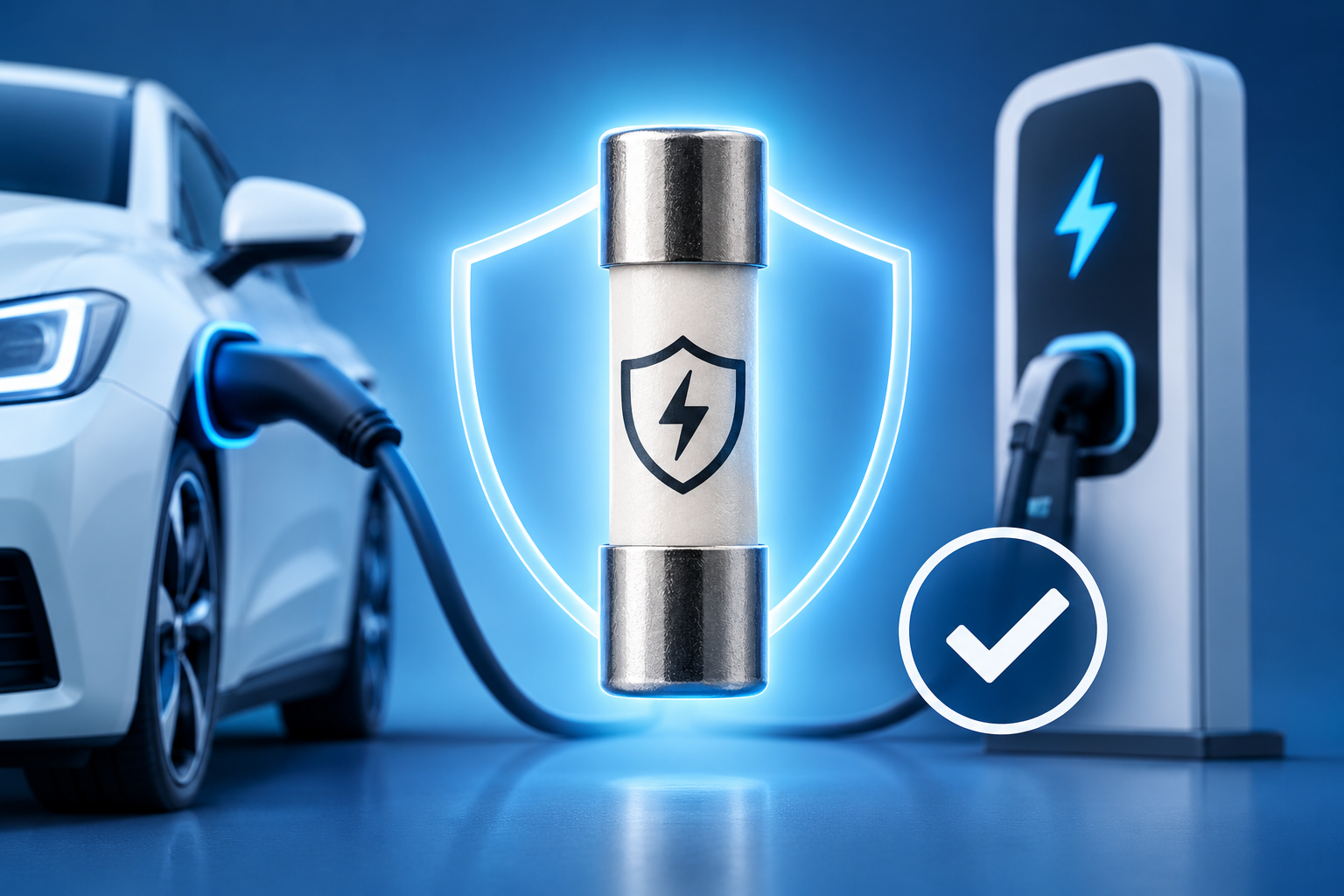
As electric vehicles (EVs) become increasingly popular, electrical safety and reliable power management are becoming more important than ever. One of the essential components responsible for protecting an electric vehicle's electrical system is the EV fuse. Whether installed in the vehicle's battery pack, electric drive system, or charging infrastructure, fuses play a critical role in preventing electrical damage caused by excessive current.
But what exactly is an EV fuse? How does it work, and what size fuse is required for an electric car charger?
In this article, we will explain everything you need to know about electric vehicle fuses, their functions, applications, and how to determine the appropriate fuse size for an EV charger.
1. What Is an EV Fuse?
An EV fuse, also known as an electric vehicle fuse, is an electrical safety component designed to protect an electric vehicle's electrical circuits against overcurrent conditions.
It works by interrupting the electrical circuit when the current exceeds a predetermined safe level. When excessive current flows through the fuse, its internal fusible element melts, disconnecting the circuit and stopping the flow of electricity.
This helps prevent damage to sensitive electrical components, overheating, and potentially dangerous electrical fires.
EV fuses are particularly important because electric vehicles operate with high-voltage battery systems and powerful electrical components that require reliable protection.
Unlike conventional automotive fuses, EV fuses are specifically designed to handle the electrical characteristics and demanding operating conditions of electric vehicle systems.
Main Functions of an EV Fuse
An electric vehicle fuse performs several important safety functions:
1. Overcurrent Protection
The primary function of an EV fuse is to interrupt excessive current before it damages electrical components or wiring.
2. Short-Circuit Protection
If a short circuit occurs, a fuse can quickly disconnect the affected electrical circuit, helping prevent serious damage.
3. Battery Protection
EV batteries store substantial amounts of electrical energy. Properly selected fuses help protect battery circuits against dangerous fault currents.
4. Electrical System Safety
EV fuses protect essential electrical components, including power distribution systems, inverters, electric motors, and charging circuits.
5. Fire Prevention
By interrupting dangerous overcurrent conditions, fuses help reduce the risk of overheating and electrical fires.
2. Where Are EV Fuses Used in Electric Vehicles?
Electric vehicles contain several electrical systems that require effective overcurrent protection. EV fuses are installed at different locations depending on the vehicle's electrical architecture.
Common applications include:
Battery Pack Protection
The high-voltage battery pack is one of the most important components of an electric vehicle. It stores and supplies the electrical energy required to operate the vehicle.
High-voltage fuses help protect battery circuits against excessive current and short circuits.
Electric Motor Protection
Electric motors require substantial electrical power to generate movement. Fuses help protect the associated electrical circuits against potentially damaging current conditions.
Power Distribution Systems
EV power distribution systems deliver electricity to different vehicle components. Proper fuse protection helps ensure that faults in one circuit do not cause extensive damage to the electrical system.
Inverter Protection
An inverter converts direct current (DC) from the battery into alternating current (AC) for the electric motor in many EV designs.
Specialised fuses help protect the inverter and associated power electronics against electrical faults.
EV Charging Systems
Charging systems also require appropriate overcurrent protection. Fuses or circuit breakers may be installed in the charging equipment or electrical installation, depending on the system design.
It is important to distinguish between the fuse protecting the vehicle's internal high-voltage battery system and the protective device protecting the external EV charging circuit. They perform different functions and must be selected independently.
3. What Size Fuse Is Required for an Electric Car Charger?
One of the most common questions about EV charging safety is: What size fuse do I need for an electric car charger?
The correct fuse or circuit protection rating depends on several factors, including:
-
The maximum current rating of the EV charger.
-
The charger's operating voltage.
-
The electrical wiring capacity.
-
The type of charging equipment.
-
The installation method.
-
Applicable electrical standards and regulations.
-
The manufacturer's installation requirements.
The protective device must be appropriately coordinated with the charger's maximum current, cable capacity, and electrical installation.
EV Charger Fuse Size Examples
The following table illustrates common charging current ratings and corresponding protective device ratings under the 125% continuous-load sizing approach used by the US National Electrical Code for applicable AC charging installations.
| EV Charger Maximum Current | Minimum Circuit Protection Rating |
|---|---|
| 12 Amps | 15 Amps |
| 16 Amps | 20 Amps |
| 24 Amps | 30 Amps |
| 32 Amps | 40 Amps |
| 40 Amps | 50 Amps |
| 48 Amps | 60 Amps |
These are illustrative US sizing examples, not universal fuse recommendations. Actual installations must comply with the electrical standards applicable in the installation location.
For example, a 32-amp EV charger commonly requires a 40-amp circuit under the 125% continuous-load sizing approach.
However, simply choosing a fuse with a higher current rating than the charger's operating current is not sufficient. The wiring, protective device characteristics, and installation conditions must all be considered.
What About 11 kW and 22 kW EV Chargers?
In many European installations, EV chargers use three-phase electrical supplies.
Typical charging configurations include:
-
11 kW EV charger: Approximately 16 amps per phase at 400 volts.
-
22 kW EV charger: Approximately 32 amps per phase at 400 volts.
The required protective device must be selected according to the charger's specifications, cable characteristics, installation design, and applicable national electrical regulations.
The fuse or circuit breaker rating should never be determined by charging power alone.
4. How to Choose the Correct Fuse Size for an EV Charger
Selecting the correct fuse size is essential for maintaining safe and reliable EV charging operations.
Here are the main factors to consider.
1. Check the Maximum Charging Current
Start by checking the charger's maximum rated input current.
For example, if an EV charger has a maximum operating current of 32 amps, its protective device must be selected according to the applicable electrical installation requirements.
The rated current provides the starting point for determining the appropriate protection.
2. Consider the Operating Voltage
EV chargers operate at different voltage levels depending on their design and electrical supply.
Common charging configurations include:
-
120V AC charging.
-
230V AC single-phase charging.
-
400V AC three-phase charging.
-
High-voltage DC fast charging systems.
The voltage rating of the protective device must be suitable for the electrical circuit.
For DC applications, the fuse must also have an appropriate DC voltage rating and sufficient DC breaking capacity.
3. Check the Cable Specifications
Electrical cables must have sufficient current-carrying capacity to safely support the charging load.
The cable size depends on several factors, including:
-
Maximum operating current.
-
Cable length.
-
Installation method.
-
Ambient temperature.
-
Cable insulation type.
-
Voltage drop requirements.
The protective device must be coordinated with the cable's permissible current capacity.
Installing an oversized fuse with undersized wiring can create a serious overheating and fire hazard.
4. Consider the Type of EV Charger
Different charging systems have different electrical protection requirements.
AC chargers generally supply alternating current to the vehicle's onboard charger, which converts AC electricity into DC for battery charging.
DC fast chargers convert electrical power outside the vehicle and deliver DC electricity directly to the battery system.
These different charging arrangements require appropriately designed electrical protection.
5. Follow Applicable Electrical Standards
EV charging installations must comply with the electrical standards and regulations applicable in the installation country.
For example, European installations must consider relevant IEC requirements and their national implementations.
The protective device selection should also follow the charging equipment manufacturer's installation instructions.
A qualified electrical professional should verify the final fuse or circuit breaker rating.
5. What Is the Difference Between an EV Fuse and an EV Charger Fuse?
Although these terms sound similar, they refer to different protection applications.
An EV fuse generally refers to a fuse installed within an electric vehicle to protect its internal electrical circuits.
An EV charger fuse refers to overcurrent protection associated with the charging equipment or its electrical supply circuit.
Here are the main differences:
| Feature | EV Fuse | EV Charger Fuse |
|---|---|---|
| Main application | Inside the electric vehicle | Charging equipment or supply circuit |
| Protection purpose | Protects vehicle electrical components | Protects charging circuits and wiring |
| Typical location | Battery pack and power distribution system | Electrical panel or charging equipment |
| Voltage requirements | Depends on vehicle electrical architecture | Depends on charging system |
| Main function | Protects against electrical faults | Protects against overloads and short circuits |
Both are essential for maintaining electrical safety, but they must be selected according to their individual applications.
6. What Types of Fuses Are Used in Electric Vehicles?
Electric vehicles require specialised fuses designed to operate safely under demanding electrical conditions.
Some common EV fuse types include:
High-Voltage DC Fuses
High-voltage DC fuses are designed to protect high-voltage circuits in electric vehicles.
They are commonly used in battery packs, power distribution units, and other high-voltage applications.
Because DC fault interruption can be challenging, these fuses must have suitable voltage ratings and breaking capacities.
Bolt-Down Fuses
Bolt-down fuses are designed for secure electrical connections in high-current applications.
They are commonly used in battery systems and power distribution equipment.
Their mechanical design provides reliable mounting and electrical contact.
High-Speed Fuses
High-speed fuses are designed to interrupt excessive fault currents rapidly.
They are particularly useful for protecting sensitive power electronics, including inverters and semiconductor components.
Semiconductor Protection Fuses
Semiconductor protection fuses are designed to protect sensitive electronic components against damaging overcurrent conditions.
They are used in applications where rapid fault interruption is essential to minimise damage to power electronic equipment.
Choosing the correct fuse type depends on the electrical characteristics, protection requirements, and operating conditions of the application.
7. What Happens If You Use the Wrong Fuse Size?
Using an incorrectly rated fuse in an electric vehicle or EV charging installation can create serious safety problems.
Undersized Fuse
If the fuse rating is too low, it may interrupt the circuit during normal charging operation.
This can result in:
-
Frequent fuse failures.
-
Interrupted charging sessions.
-
Unnecessary maintenance.
-
Reduced system reliability.
Oversized Fuse
An oversized fuse may fail to interrupt excessive current quickly enough to protect the connected wiring and electrical components.
This can lead to:
-
Cable overheating.
-
Damage to electrical components.
-
Increased risk of electrical fires.
-
Serious equipment failures.
For this reason, choosing a fuse with a higher rating simply to prevent repeated fuse failures is not a safe solution.
The cause of the problem should be investigated before replacing the fuse.
8. Why Is Proper Fuse Selection Important for EV Charging Safety?
Electric vehicle charging systems operate with substantial electrical loads, often for several hours at a time.
Without suitable electrical protection, faults can damage charging equipment, electrical wiring, and connected components.
Correct fuse selection provides several important benefits:
Improved Electrical Safety: Properly selected fuses help protect against dangerous overload and short-circuit conditions.
Equipment Protection: Fuses help prevent electrical faults from damaging expensive charging equipment and vehicle components.
Reliable Charging Performance: Appropriate protection reduces unnecessary interruptions caused by incorrect fuse selection.
Reduced Fire Risk: Correctly coordinated overcurrent protection helps prevent excessive heating in electrical circuits.
Longer Equipment Service Life: Protecting sensitive electrical components against fault currents can improve overall system reliability.
9. Frequently Asked Questions About EV Fuses
Q1. What size fuse do I need for a 32A EV charger?
Under the US 125% continuous-load sizing approach, a 32A EV charger typically requires a 40A circuit breaker or appropriately rated overcurrent protection.
The actual requirement depends on local electrical regulations, wiring specifications, and charger installation instructions.
Q2. Can I use a 40A fuse for an electric car charger?
A 40A protective device may be suitable for certain EV charging installations, including some 32A AC chargers.
However, suitability depends on the charger's rated current, cable capacity, voltage, and applicable electrical standards.
Q3. Do electric vehicles have internal fuses?
Yes. Electric vehicles use various fuses to protect their internal electrical systems, including battery circuits, power distribution systems, inverters, and auxiliary electrical components.
Q4. Are EV fuses different from regular automotive fuses?
Yes. EV fuses may need to handle substantially higher voltages and fault currents than conventional automotive fuses.
They are specifically designed for the electrical requirements of electric vehicle systems.
Q5. What is the difference between an AC fuse and a DC fuse?
AC and DC electrical systems have different fault interruption characteristics.
DC current does not naturally pass through zero in the same way as AC current, making DC fault interruption more challenging.
Therefore, a fuse must have suitable voltage and breaking capacity ratings for its intended application. An AC-rated fuse should not automatically be assumed suitable for a DC circuit.
Q6. How often should EV fuses be replaced?
EV fuses generally do not require routine replacement if they are operating correctly.
However, a fuse should be inspected and replaced if it has operated, become damaged, or failed.
Replacement must use the correct specifications and rating. The underlying cause of a fuse failure should also be investigated.
Q7. Can I replace an EV fuse with a higher-rated fuse?
No. Replacing a fuse with a higher-rated fuse without verifying the circuit design can compromise electrical protection.
Always use a fuse with the correct electrical and mechanical specifications.
10. Conclusion
EV fuses are essential safety components in modern electric vehicles and charging systems. They protect electrical circuits against excessive current, short circuits, and potentially dangerous electrical faults.
The correct fuse size for an electric car charger depends on its maximum current rating, operating voltage, wiring specifications, charging configuration, and applicable electrical regulations.
For example, a 32A AC charger commonly requires 40A circuit protection under the US 125% continuous-load sizing approach. However, this rating should not be treated as a universal recommendation for every EV charging installation.
Whether selecting a fuse for an electric vehicle battery pack, power distribution system, or charging circuit, always consider the electrical requirements and manufacturer specifications.
Proper fuse selection is essential for improving EV charging safety, protecting electrical equipment, and ensuring reliable electric vehicle operation.
- Details
- Category: Electrical Fuses Blog
| eaton-bussmann-series-high-speed-fuses-application-guide-br132015en-en-us.pdf | [Eaton Bussmann Fuses Technical Guide] | 0 kB |
How to Avoid Wrong Use of AC Fuses in DC Circuits
Choosing the correct fuse is essential for maintaining electrical safety and protecting equipment from overcurrent, short circuits, and potential fire hazards. However, one common mistake in electrical installations is using an AC fuse in a DC circuit without checking its suitability.
Although AC and DC fuses may look similar and perform the same basic function, their operating characteristics and interruption capabilities are different. Using an incorrectly rated AC fuse in a DC application can result in dangerous electrical arcing, equipment damage, and even electrical fires.
Understanding the differences between AC and DC fuses, their voltage ratings, and their application requirements can help prevent incorrect fuse selection and improve electrical system safety.
In this article, we explain why AC fuses should not be used in DC circuits without proper verification and how to select the right fuse for reliable DC circuit protection.
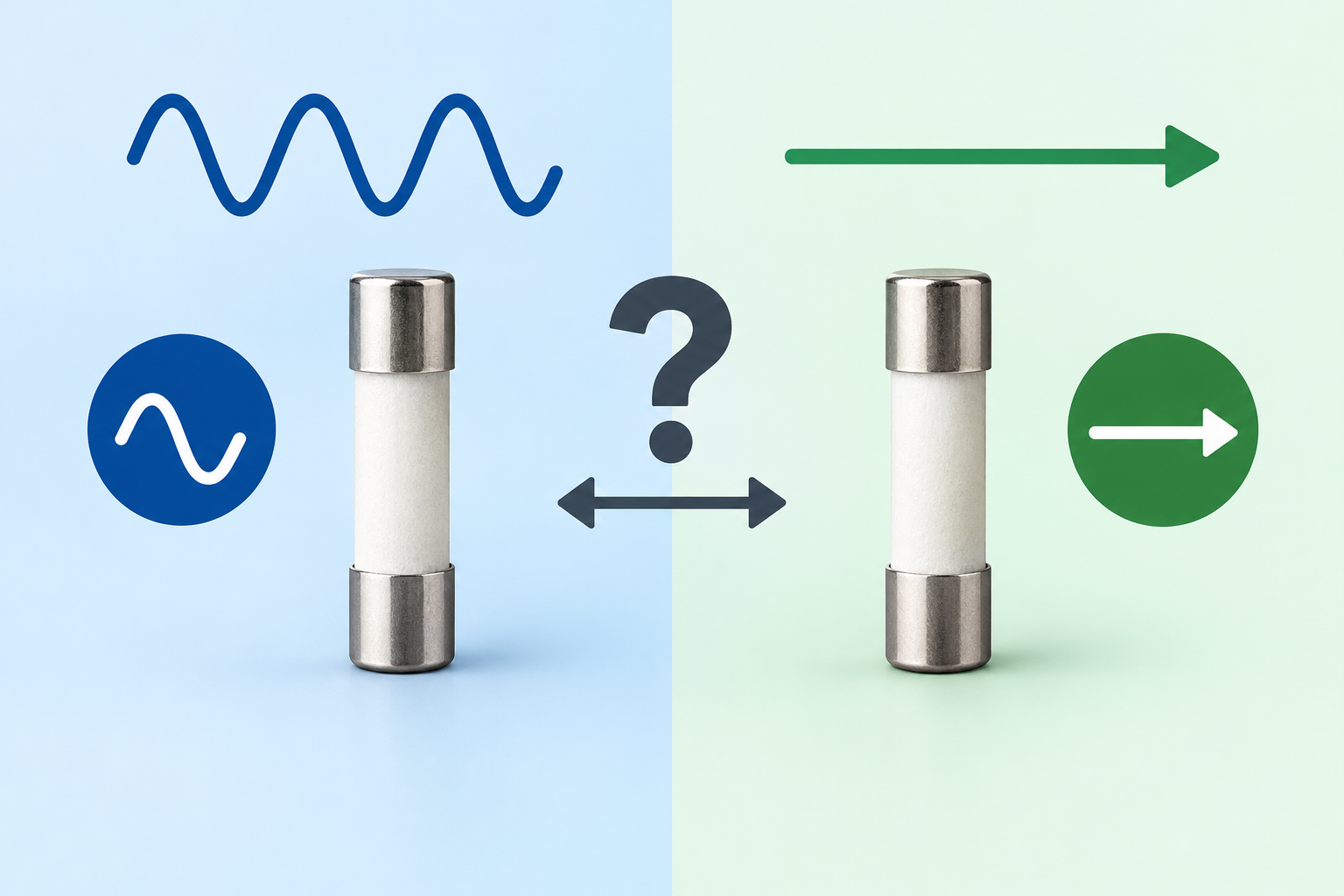
1. Understanding the Difference Between AC and DC Fuses
The primary difference between AC and DC fuses lies in how they interrupt electrical current.
AC (Alternating Current) periodically changes direction. In a 50 Hz AC system, the current passes through zero twice during each cycle, creating 100 natural current zero crossings per second. These zero-current points help extinguish the electrical arc when a fuse operates.
DC (Direct Current) flows continuously in one direction. Unlike AC, DC does not naturally pass through zero during normal operation. Consequently, interrupting DC current is more challenging because the electrical arc can continue even after the fuse element melts.
DC fuses are specifically designed with internal structures and arc-quenching mechanisms to extinguish this arc safely.
Therefore, an AC fuse should never automatically be considered suitable for DC applications simply because its current rating appears appropriate.
2. Why Using AC Fuses in DC Circuits Can Be Dangerous
Using an AC-rated fuse in a DC circuit without confirming its DC interruption capability can create several safety risks.
Continuous Electrical Arcing
When a fuse element melts, an electrical arc may form between the separated ends. In an AC circuit, the current naturally reaches zero, helping extinguish the arc.
In a DC circuit, current continues flowing in the same direction. This can sustain the arc for a longer period.
If the fuse is not designed to interrupt DC current, the arc may persist, potentially causing overheating, damage to the fuse holder, or electrical fire.
Incorrect Voltage Rating
Fuse voltage ratings are not necessarily interchangeable between AC and DC applications.
A fuse rated for a particular AC voltage may have a significantly lower DC voltage rating because DC interruption requires greater arc-extinguishing capability.
For example, a fuse rated at 1000V AC might have a DC rating of 500V or 750V, depending on its construction and testing.
It is important to check the manufacturer's specifications rather than assume that an AC voltage rating is suitable for DC operation.
Delayed Fault Interruption
Some AC fuses are designed around the electrical characteristics of alternating current. Their operating performance may not provide the required protection in DC applications.
In photovoltaic systems, for example, the available fault current can be relatively limited. A fuse that does not operate correctly under these conditions may fail to protect cables and electrical components effectively.
Increased Risk of Equipment Damage
An incorrectly selected fuse may fail to interrupt a DC fault safely. This can expose cables, connectors, circuit breakers, and other electrical components to excessive temperatures and electrical stress.
Selecting a fuse specifically rated for the application helps reduce these risks.
3. Can an AC Fuse Be Used in a DC Circuit?
An AC fuse can only be considered for DC applications if its manufacturer explicitly specifies an appropriate DC voltage rating and confirms its suitability for the intended operating conditions.
The following factors must be evaluated:
-
DC voltage rating of the fuse.
-
Rated current and operating characteristics.
-
Maximum prospective short-circuit current.
-
DC breaking or interrupting capacity.
-
Circuit configuration and polarity requirements.
-
Ambient operating temperature.
-
Fuse holder compatibility.
A common misconception is that an AC fuse can always be used in a DC circuit by reducing its voltage rating by 50%.
Although a 50% reduction is sometimes mentioned as a general guideline, it is not a universal engineering rule. The actual DC voltage rating depends on the fuse design, construction, and verified interruption performance.
Important: Never rely on an estimated AC-to-DC voltage conversion. Always use the manufacturer's published DC ratings and technical documentation.
4. How to Select the Correct Fuse for DC Circuits
Selecting the correct DC fuse requires more than matching the rated current. Engineers and installers should consider several electrical and environmental factors.
Step 1: Determine the DC Operating Voltage
First, identify the maximum operating voltage of the DC circuit.
The selected fuse must have a DC voltage rating equal to or greater than the maximum voltage that may occur under normal operating conditions.
For solar photovoltaic systems, this includes considering the maximum possible string voltage under low-temperature conditions.
Step 2: Calculate the Required Current Rating
Determine the maximum expected operating current and select a fuse with an appropriate rated current.
For photovoltaic applications, the short-circuit current (Isc) of the solar modules is an important parameter.
A commonly used sizing approach under applicable photovoltaic design rules is:
Required fuse current rating = Isc × Number of parallel strings × 1.56
For example, consider a solar installation with two parallel strings, each having a short-circuit current of 6.35A.
The calculation is:
6.35A × 2 × 1.56 = 19.81A
The appropriate standard fuse rating must then be selected according to applicable electrical codes, module specifications, conductor ampacity, and the maximum series fuse rating permitted by the module manufacturer.
The calculation is a starting point, not a substitute for complete system verification.
Step 3: Check the DC Breaking Capacity
Breaking capacity refers to the maximum fault current that a fuse can safely interrupt at its specified voltage.
DC circuits can produce significant fault currents, particularly in battery storage systems and high-power electrical installations.
Always ensure that the selected fuse has an adequate DC breaking capacity for the prospective short-circuit current at the installation point.
Step 4: Consider Ambient Temperature
Temperature has a direct impact on fuse performance.
Fuses installed in outdoor solar combiner boxes, electrical cabinets, or other high-temperature environments may experience increased operating temperatures.
High ambient temperatures can affect the fuse's current-carrying capability and operating characteristics.
Always consult the manufacturer's temperature derating curves and apply the appropriate correction factors when selecting a fuse.
Step 5: Verify Cable Compatibility
The selected fuse must also provide appropriate protection for the connected conductors.
Its current rating should not exceed the permissible current-carrying capacity of the protected cable, after considering installation conditions and applicable derating factors.
Proper coordination between the fuse and cable helps prevent conductor overheating during overload and fault conditions.
Step 6: Check the Fuse Holder Rating
Selecting a DC-rated fuse is not enough if the fuse holder is only suitable for AC applications.
The fuse holder must also have appropriate DC voltage and current ratings and sufficient short-circuit withstand or interrupting capability for the installation.
Always verify the ratings of the complete fuse assembly.
5. The Importance of DC Fuses in Solar Photovoltaic Systems
Solar photovoltaic systems are among the most common applications where incorrect AC fuse selection can create serious problems.
Solar panels generate DC electricity, which flows through PV strings, combiner boxes, and inverter input circuits.
When multiple PV strings are connected in parallel, reverse current from healthy strings can flow into a faulty string under certain fault conditions.
Without appropriate overcurrent protection, this reverse current may damage solar modules, cables, and connectors.
DC-rated photovoltaic fuses are designed to provide suitable protection under the specific electrical conditions found in solar installations.
Their main functions include:
-
Protecting PV modules against excessive reverse current.
-
Preventing cable overheating.
-
Reducing the risk of electrical fires.
-
Protecting combiner boxes and electrical connections.
-
Improving the reliability of photovoltaic installations.
For photovoltaic applications, fuse selection should also consider the relevant PV fuse standards, including IEC 60269-6 for gPV fuse links.
Using appropriately rated and tested photovoltaic fuses helps ensure that the protection system performs as intended.
6. Common Mistakes to Avoid When Selecting Fuses for DC Applications
Incorrect fuse selection often results from overlooking important technical specifications.
Here are some common mistakes to avoid:
1. Assuming AC and DC ratings are interchangeable
A fuse with an appropriate AC rating is not automatically suitable for DC applications. Always verify its DC rating.
2. Ignoring DC breaking capacity
The fuse must safely interrupt the maximum prospective DC fault current. An inadequate breaking capacity can result in dangerous arcing.
3. Selecting a fuse based only on current rating
Current rating is only one selection parameter. Voltage rating, breaking capacity, operating characteristics, and environmental conditions are equally important.
4. Ignoring temperature derating
High ambient temperatures can affect fuse performance. Always consider the installation environment and manufacturer's derating information.
5. Using incompatible fuse holders
The fuse holder must also be suitable for the DC circuit's voltage and current requirements.
6. Overlooking applicable electrical standards
Different applications have specific fuse requirements. Solar PV installations, battery energy storage systems, and industrial DC circuits may require different fuse characteristics.
7. Which Standards Should Be Considered When Selecting DC Fuses?
Compliance with relevant electrical standards is an important part of safe fuse selection.
Some important standards include:
-
IEC 60269: General requirements for low-voltage fuses.
-
IEC 60269-6: Supplementary requirements for fuse links used in solar photovoltaic energy systems.
-
UL 2579: Requirements covering photovoltaic fuse links.
The applicable standard depends on the intended application, installation location, and regulatory requirements.
Always verify that the fuse has the necessary certifications and technical approvals for the intended DC application.
8. AC Fuse vs. DC Fuse: Key Differences
Understanding the differences between AC and DC fuses makes it easier to select the right protection device.
| Parameter | AC Fuse | DC Fuse |
|---|---|---|
| Current flow | Alternating direction | One direction |
| Natural current zero | Yes | No |
| Arc interruption | Generally easier | More challenging |
| Arc extinguishing | Uses AC current zero crossings | Requires suitable arc-quenching design |
| Voltage rating | Specified for AC | Specified for DC |
| Breaking capacity | Depends on AC rating | Depends on DC rating |
| Typical applications | AC distribution systems | Solar PV, batteries, and DC power systems |
Although both types of fuses protect electrical circuits against excessive current, their interruption requirements are different.
The correct selection must always be based on the actual electrical specifications of the application.
9. Best Practices for Safe DC Fuse Installation
Following good installation practices helps ensure reliable circuit protection.
Consider these recommendations:
-
Always select a fuse with a clearly specified DC voltage rating.
-
Confirm that the rated current matches the circuit design.
-
Check the DC breaking capacity against the available fault current.
-
Use fuse links designed for the specific application.
-
Verify fuse holder compatibility.
-
Follow manufacturer installation instructions.
-
Consider temperature and environmental derating.
-
Inspect fuse connections regularly for signs of overheating or corrosion.
-
Replace damaged fuses with components having the same required electrical characteristics.
-
Ensure installation and maintenance are carried out by qualified electrical professionals.
These precautions can significantly reduce the risk of electrical failures and improve the long-term reliability of DC systems.
Conclusion
Avoiding the incorrect use of AC fuses in DC circuits is essential for electrical safety and reliable system operation.
Although AC and DC fuses may look similar, their ability to interrupt electrical current differs significantly. The absence of natural current zero crossings in DC systems makes arc interruption more challenging and requires appropriate fuse construction and ratings.
Before selecting a fuse for any DC application, always verify its DC voltage rating, current rating, breaking capacity, temperature characteristics, and compatibility with the fuse holder.
For solar photovoltaic systems, battery storage installations, and industrial DC applications, choosing appropriately rated and certified DC fuses is particularly important.
By following the correct selection procedures and installation practices, engineers and installers can improve electrical protection, prevent unnecessary equipment damage, and ensure safer DC circuit operation.
Frequently Asked Questions (FAQs)
1. Why should AC fuses not be used directly in DC circuits?
AC fuses are generally designed to interrupt current using the natural zero crossings of alternating current. DC current does not naturally reach zero, making arc interruption more difficult. An AC fuse without a suitable DC rating may fail to interrupt the fault safely.
2. What happens if an AC fuse is used in a DC circuit?
Using an unsuitable AC fuse in a DC circuit can cause sustained electrical arcing, overheating, fuse failure, equipment damage, and potentially fire hazards.
3. Can a 1000V AC fuse be used in a 1000V DC circuit?
Not automatically. The DC voltage rating may be significantly lower than the AC rating. The manufacturer's specifications must explicitly confirm that the fuse is suitable for the required DC voltage and fault conditions.
4. How do I identify whether a fuse is suitable for DC applications?
Check the product markings and technical datasheet for a specified DC voltage rating, rated current, DC breaking capacity, and applicable certifications. If the DC rating is not clearly specified, do not assume that the fuse is suitable for DC applications.
5. Why are DC fuses important in solar PV systems?
DC fuses protect photovoltaic modules, cables, and electrical components against excessive reverse current and overcurrent conditions. They help reduce the risk of overheating, equipment damage, and electrical fires.
6. What is the difference between a gPV fuse and a standard AC fuse?
A gPV fuse is specifically designed for photovoltaic DC applications. It is tested against the relevant requirements of IEC 60269-6 and is intended to provide overcurrent protection under the operating conditions of solar PV systems.
7. Does a DC fuse need a special fuse holder?
Yes. The fuse holder must have appropriate DC voltage and current ratings and be compatible with the selected fuse. Using an unsuitable holder can compromise the safety and performance of the protection system.
- Details
- Category: Electrical Fuses Blog
| eaton-bussmann-series-dc-fuses-catalog-ca135009en-us.pdf | [Eaton Bussmann DC Fuses] | 0 kB |
| eaton-bussmann-series-high-speed-fuses-application-guide-br132015en-en-us.pdf | [Eaton Bussmann Fuses Technical Guide] | 0 kB |
AC Fuse in DC Circuits: Can You Safely Use an AC Fuse in a DC Application?
Fuses play an essential role in electrical safety by protecting circuits and equipment against overcurrent and short-circuit conditions. However, selecting the correct fuse for an electrical application is just as important as installing one. One common question among electricians, electrical engineers, and technicians is whether an AC fuse can be used in DC circuits.
Although AC and DC fuses may look similar and perform the same basic protective function, their electrical characteristics and arc-extinguishing capabilities can differ significantly. Using an AC-rated fuse in a DC circuit without verifying its suitability can lead to serious safety risks, including sustained electrical arcing, equipment damage, and fire hazards.
In this article, we will explain how AC and DC fuses work, the differences between them, why AC fuses may not be suitable for DC applications, and how to select the correct fuse for your electrical system.
1. What Is an Electrical Fuse?
An electrical fuse is a protective device designed to interrupt the flow of current when an electrical circuit experiences an overload or short circuit.
A typical fuse contains a metal element that allows electrical current to pass through under normal operating conditions. When the current exceeds a predetermined level, the fuse element generates excessive heat and eventually melts, opening the circuit and stopping the current flow.
The primary functions of an electrical fuse include:
-
Protecting electrical equipment against excessive current.
-
Preventing damage caused by short circuits.
-
Reducing the risk of electrical fires.
-
Protecting cables, conductors, and sensitive components.
-
Disconnecting faulty electrical circuits from their power sources.
Fuses are commonly used in residential electrical systems, industrial equipment, automotive applications, solar photovoltaic installations, battery systems, and power distribution networks.
However, not all fuses are suitable for every electrical application. Voltage rating, current rating, breaking capacity, and the type of current must all be considered.
2. Understanding the Difference Between AC and DC Current
Before discussing the use of AC fuses in DC circuits, it is important to understand the fundamental difference between alternating current and direct current.
What Is AC (Alternating Current)?
Alternating current is an electrical current that periodically changes direction and magnitude.
In most electrical power systems, AC operates at a frequency of either 50 Hz or 60 Hz. This means the current completes 50 or 60 cycles per second, respectively.
One important characteristic of AC current is that it naturally passes through zero during every cycle.
This zero-crossing characteristic plays a significant role in electrical arc interruption and makes it easier for appropriately designed AC fuses to extinguish an arc when the fuse element melts.
What Is DC (Direct Current)?
Direct current flows continuously in one direction. Unlike alternating current, DC does not periodically reverse its direction or naturally pass through zero during normal operation.
Common DC applications include:
-
Solar photovoltaic systems.
-
Battery energy storage systems.
-
Electric vehicles.
-
Telecommunications equipment.
-
Industrial DC power supplies.
-
Electronic control systems.
Because DC current does not have natural zero crossings, interrupting a DC circuit can be more challenging than interrupting an AC circuit.
This difference is one of the main reasons why fuse selection is particularly important in DC applications.
3. Can You Use an AC Fuse in a DC Circuit?
An AC fuse should not automatically be considered suitable for a DC circuit.
Whether an AC-rated fuse can be used in a DC application depends on its specific DC voltage rating, interrupting capacity, construction, and manufacturer's specifications.
Some fuses are rated for both AC and DC applications, while others are designed and tested for AC operation only.
The most important consideration is the fuse's ability to safely interrupt the available fault current and extinguish the electrical arc.
An AC fuse may have a DC voltage rating lower than its AC voltage rating. Therefore, checking the manufacturer's datasheet is essential before using a fuse in a DC system.
For example, a fuse rated at 600 VAC may have a separate DC rating of 300 VDC. This is only an illustrative example; actual ratings vary by fuse design and manufacturer.
Never assume that an AC voltage rating automatically applies to DC circuits.
4. Why Is Using an AC Fuse in a DC Circuit Dangerous?
The main challenge when using an AC fuse in a DC circuit is electrical arc extinction.
To understand this problem, we first need to examine what happens when a fuse operates.
How Does a Fuse Interrupt an Electrical Circuit?
Under normal operating conditions, current flows through the fuse element without causing it to melt.
When an overload or short circuit occurs:
-
Excessive current flows through the fuse element.
-
The temperature of the metal element increases.
-
The fuse element reaches its melting point.
-
The metal element melts and creates a gap.
-
An electrical arc may form across the gap.
-
The fuse must extinguish the arc to interrupt the current safely.
The ability to extinguish this arc is critical to the safe operation of an electrical fuse.
Why Is Arc Extinction Easier in AC Circuits?
In an AC circuit, the current naturally reaches zero twice during each complete electrical cycle.
At 50 Hz, this happens 100 times per second. At 60 Hz, it happens 120 times per second.
When the fuse element melts, the electrical arc may be interrupted more easily around these natural current zero points.
The fuse is designed to withstand the electrical conditions and prevent the arc from being re-established.
Why Is Arc Extinction More Difficult in DC Circuits?
DC current does not naturally pass through zero during normal operation.
When a fuse element melts in a DC circuit, the electrical arc may continue because current continues flowing through the ionised gap between the separated fuse elements.
If the arc is not extinguished properly, it can cause:
-
Excessive heat generation.
-
Damage to the fuse housing.
-
Electrical equipment failure.
-
Sustained arcing.
-
Fire hazards.
-
Potential damage to surrounding components.
DC-rated fuses are specifically engineered to interrupt direct current safely. Their internal construction, arc-quenching materials, and dimensions are designed according to their intended voltage and interrupting requirements.
This is why an AC-only fuse should never be substituted for a DC-rated fuse without confirming its suitability.
5. AC Fuse vs DC Fuse: Key Differences
Although AC and DC fuses share the same fundamental purpose, there are important differences in their design and operating characteristics.
| Comparison | AC Fuse | DC Fuse |
|---|---|---|
| Current type | Alternating current | Direct current |
| Current direction | Periodically changes direction | Flows in one direction |
| Zero crossing | Naturally occurs every half-cycle | No natural zero crossing |
| Arc extinction | Generally easier | Generally more challenging |
| Arc suppression | Designed for AC interruption | Designed for DC arc interruption |
| Voltage rating | Specified AC voltage rating | Specified DC voltage rating |
| Applications | AC distribution and equipment | Batteries, solar systems, and DC equipment |
One important point is that the physical appearance of a fuse does not determine whether it is suitable for AC or DC operation.
Always verify the electrical ratings and application specifications.
6. Different Types of AC and DC Fuses
Fuses are available in several designs to accommodate different electrical systems, operating conditions, and protection requirements.
Common Types of AC Fuses
AC fuses are widely used in residential, commercial, and industrial electrical installations.
Common types include:
1. Cartridge Fuses
Cartridge fuses contain a fusible element enclosed in an insulating body. They are commonly used in electrical distribution systems, control panels, and industrial equipment.
2. HRC Fuses
High Rupturing Capacity (HRC) fuses are designed to interrupt high fault currents safely. They are frequently used in industrial power distribution and electrical protection systems.
3. Rewirable Fuses
Rewirable fuses use a replaceable fuse wire that melts when excessive current flows through the circuit.
4. Drop-Out Fuses
Drop-out fuses are commonly used in overhead electrical distribution systems. They provide protection against overcurrent conditions and can also provide a visible indication of fuse operation.
Common Types of DC Fuses
DC fuses are specifically selected for direct-current applications where reliable interruption and arc suppression are essential.
Common types include:
1. DC Cartridge Fuses
These fuses are designed to interrupt DC fault currents safely. They are used in battery systems, industrial DC equipment, and power distribution applications.
2. Automotive Fuses
Automotive fuses protect vehicle electrical circuits against overloads and short circuits. They are available in different current ratings and physical configurations.
3. Solar PV Fuses
Solar photovoltaic fuses protect PV modules, strings, and associated DC circuits against excessive fault currents.
They are designed to withstand the specific electrical conditions found in photovoltaic systems.
4. Battery Protection Fuses
Battery fuses protect energy storage systems against excessive current and short-circuit faults. Their DC voltage rating and interrupting capacity must match the battery system requirements.
5. Semiconductor Fuses
Semiconductor fuses are designed to provide fast protection for sensitive power electronic components, such as inverters, rectifiers, and converters.
7. How to Select the Right Fuse for a DC Circuit
Choosing the correct fuse is essential for maintaining electrical safety and protecting equipment.
When selecting a DC fuse, consider the following factors.
1. DC Voltage Rating
The fuse must have a DC voltage rating equal to or greater than the maximum operating voltage of the circuit.
Using a fuse with an insufficient voltage rating can prevent it from safely interrupting the circuit during a fault.
2. Current Rating
The current rating determines how much current a fuse can carry under specified operating conditions without opening.
Select a fuse based on the circuit's normal operating current, conductor capacity, applicable electrical standards, and load characteristics.
Avoid selecting a fuse based solely on the equipment's nominal current.
3. Breaking Capacity
Breaking capacity, also known as interrupting rating, refers to the maximum fault current a fuse can safely interrupt at its specified voltage.
This is particularly important in DC applications involving batteries and energy storage systems, where available short-circuit currents can be extremely high.
The fuse's breaking capacity must be sufficient for the prospective fault current at the installation point.
4. Time-Current Characteristics
Different applications require different fuse response times.
For example, some electrical equipment experiences temporary inrush currents during startup. A fast-acting fuse may open unnecessarily under these conditions.
Time-delay fuses may be appropriate for certain applications, while semiconductor protection often requires very fast-acting fuses.
Always consider the load characteristics when selecting a fuse.
5. Operating Temperature
Ambient temperature affects fuse performance and current-carrying capability.
High operating temperatures may reduce the current a fuse can safely carry, while other environmental conditions can affect its service life.
Always consider the manufacturer's temperature derating specifications.
6. Applicable Standards and Certifications
Choose fuses that comply with the relevant electrical standards and certification requirements for the intended application.
This helps ensure that the fuse has been evaluated for its specified operating conditions and protection characteristics.
8. Where Are DC Fuses Commonly Used?
DC fuses are essential components in many modern electrical and energy systems.
Their applications include:
Solar Photovoltaic Systems
Solar PV installations use DC fuses to protect photovoltaic strings and other DC-side components against excessive fault currents.
Battery Energy Storage Systems
Battery storage installations require appropriately rated DC fuses to protect battery modules, connections, and associated electrical equipment.
Electric Vehicles
Electric vehicles use DC-rated protection devices to protect high-voltage battery circuits and electrical power distribution systems.
Telecommunication Systems
Telecommunications infrastructure frequently uses DC power supplies and battery backup systems that require reliable overcurrent protection.
Industrial Equipment
Industrial applications may use DC motors, power converters, control systems, and other equipment that require dedicated DC circuit protection.
In all these applications, selecting a fuse with the correct DC voltage rating and interrupting capacity is essential.
9. Frequently Asked Questions About AC Fuses in DC Circuits
Q1. Can an AC fuse work on DC current?
An AC-rated fuse can only be used in a DC circuit if the manufacturer specifies a suitable DC voltage rating and interrupting capacity for the application. An AC-only rating does not guarantee safe DC operation.
Q2. Why are DC fuses different from AC fuses?
The main difference relates to arc interruption. AC current naturally reaches zero twice per cycle, helping extinguish electrical arcs. DC current does not have natural zero crossings, making arc interruption more difficult.
DC-rated fuses are designed to manage these conditions safely.
Q3. What happens if you use an AC fuse in a DC circuit?
If an AC-only fuse is used in a DC circuit beyond its specified DC capabilities, it may fail to interrupt the current safely.
A sustained electrical arc can cause excessive heating, equipment damage, and potentially a fire.
Q4. Does a fuse have positive and negative terminals?
Most conventional fuses are non-polarised and can be installed in either orientation.
However, some specialised protective devices may have specific installation requirements. Always follow the manufacturer's instructions.
Q5. Can a DC fuse be used in an AC circuit?
A DC-rated fuse may be suitable for certain AC applications if its specifications explicitly permit the intended AC voltage, current, and interrupting conditions.
However, suitability should never be assumed based on its DC rating alone.
Q6. Does the voltage rating of a fuse matter?
Yes. The voltage rating is critical because it determines the conditions under which the fuse can safely interrupt an electrical circuit.
The fuse voltage rating must meet or exceed the applicable circuit voltage for the relevant current type.
Q7. Why do DC circuits require special arc protection?
DC current does not naturally reach zero during normal operation. Therefore, when a fuse opens, the resulting electrical arc can continue for longer unless the fuse has suitable arc-extinguishing capabilities.
Specially designed DC fuses help interrupt this current safely.
10. Conclusion
Using an AC fuse in a DC circuit requires careful consideration of its electrical ratings and interruption capabilities. Although both AC and DC fuses protect electrical systems against overloads and short circuits, their ability to interrupt fault currents can differ significantly.
The absence of natural current zero crossings in DC circuits makes arc extinction more challenging. Therefore, selecting a fuse with an appropriate DC voltage rating, current rating, and breaking capacity is essential.
Whether protecting solar photovoltaic installations, battery energy storage systems, electric vehicles, or industrial DC equipment, always verify the manufacturer's specifications before installing a fuse.
The most important rule is simple: Never assume that an AC-rated fuse is suitable for DC applications. Always select a fuse that is specifically rated and tested for the intended electrical system.
- Details
- Category: Electrical Fuses Blog
| eaton-bussmann-series-high-speed-fuses-application-guide-br132015en-en-us.pdf | [Eaton Bussmann Fuses Technical Guide] | 0 kB |
Different Types of Fuses: A Complete Guide to Their Uses, Functions, and Applications
Introduction
Fuses are essential electrical safety components used to protect electrical circuits and equipment from excessive current. They play a crucial role in preventing damage caused by short circuits, overloads, and other electrical faults. From household appliances and automotive systems to industrial machinery and renewable energy installations, different types of fuses are designed to meet specific electrical protection requirements.
Understanding the different types of fuses, their working principles, and their applications is important when selecting the right protection device for an electrical system. Fuses are available in various designs, sizes, current ratings, and voltage ratings, making them suitable for a wide range of AC and DC applications.
In this guide, we will explore the major types of electrical fuses, how they work, their advantages, and where they are commonly used.
What Is an Electrical Fuse?
An electrical fuse is a protective device designed to interrupt the flow of current when it exceeds a predetermined safe limit. It contains a metal element that melts when excessive current generates enough heat. Once the fuse element melts, the electrical circuit is disconnected, preventing further current flow and reducing the risk of equipment damage, overheating, or fire.
A fuse is generally installed in series with the electrical circuit so that all current flowing through the protected circuit passes through it.
The primary functions of an electrical fuse include:
-
Protecting electrical equipment from overcurrent.
-
Preventing damage caused by short circuits.
-
Reducing the risk of electrical fires.
-
Protecting sensitive electronic components.
-
Improving the overall safety and reliability of electrical systems.
Main Categories of Electrical Fuses
Electrical fuses can broadly be classified into two major categories based on the type of electrical current they are designed to interrupt:
-
AC fuses (Alternating Current Fuses)
-
DC fuses (Direct Current Fuses)
Both categories serve the same fundamental purpose of protecting electrical circuits. However, their interruption requirements differ because AC and DC behave differently.
AC current periodically changes direction and passes through zero during each cycle. This natural current zero crossing helps extinguish the electrical arc formed when a fuse operates.
DC current flows continuously in one direction and does not naturally pass through zero. Consequently, interrupting DC current can be more challenging, particularly at higher voltages. DC fuse designs must therefore provide suitable arc-extinguishing capabilities.
Let's explore the different types of fuses in detail.
Different Types of DC Fuses
DC fuses are designed for direct current applications, including battery systems, solar photovoltaic installations, electric vehicles, and DC power distribution networks.
The following are some commonly used types of DC fuses.
1. Cartridge Fuses
Cartridge fuses are among the most widely used types of electrical fuses. They consist of a fusible metal element enclosed within a protective cylindrical body, usually made of glass or ceramic. Metal terminals are attached to both ends to allow electrical connection.
When excessive current flows through the circuit, the internal fuse element melts and interrupts the current.
Cartridge fuses are available in different sizes, voltage ratings, and current ratings.
There are two common operating variations:
Fast-Blow Fuses: These fuses respond quickly when current exceeds their rated limit. They are suitable for protecting sensitive electronic components that cannot tolerate prolonged overcurrent conditions.
Slow-Blow Fuses: Also known as time-delay fuses, these are designed to tolerate temporary current surges without unnecessarily interrupting the circuit. They are commonly used in applications where equipment experiences high starting currents, such as motors and transformers.
Ceramic cartridge fuses are particularly useful in applications requiring higher temperature resistance and improved electrical insulation. Some high-voltage designs also incorporate sand or other arc-quenching materials to help extinguish electrical arcs.
Applications of Cartridge Fuses:
-
Electronic equipment
-
Industrial electrical panels
-
Power supplies
-
Solar power systems
-
Battery protection circuits
-
Electrical appliances
2. Automotive Fuses
Automotive fuses are specially designed to protect the electrical systems found in vehicles. They prevent excessive current from damaging wiring, electronic components, and electrical accessories.
Blade fuses are among the most common automotive fuse designs. They feature a plastic body with two metal terminals that fit into a dedicated fuse holder.
Automotive fuses are generally colour-coded according to their current ratings, making identification and replacement easier.
Common automotive fuse designs include:
-
Mini blade fuses
-
Standard blade fuses
-
Maxi blade fuses
-
Low-profile blade fuses
-
Cartridge-style automotive fuses
These fuses are used in vehicle electrical systems operating at relatively low DC voltages.
Applications of Automotive Fuses:
-
Vehicle lighting systems
-
Power windows
-
Audio and entertainment systems
-
Electronic control units
-
Battery circuits
-
Vehicle charging systems
3. Resettable Fuses (PTC Fuses)
Resettable fuses, also called polymer positive temperature coefficient (PPTC) devices or polyfuses, provide overcurrent protection without requiring physical replacement after every fault.
Unlike conventional fuses, which permanently break the circuit when their elements melt, resettable fuses increase their electrical resistance when excessive current causes their temperature to rise.
These devices contain conductive carbon particles embedded in a polymer material. Under normal operating conditions, the particles create conductive pathways that allow current to flow.
When excessive current passes through the device, heat causes the polymer to expand. This separates the conductive particles and significantly increases electrical resistance, restricting current flow.
Once the fault is removed and the device cools down, its resistance decreases and normal operation can resume.
Advantages of Resettable Fuses:
-
Reusable after cooling.
-
Reduce maintenance requirements.
-
Provide automatic overcurrent protection.
-
Suitable for compact electronic circuits.
-
Eliminate frequent fuse replacement.
Applications of Resettable Fuses:
-
Computer power supplies
-
Mobile device chargers
-
Consumer electronics
-
Communication equipment
-
Battery-powered devices
-
Electronic control circuits
4. Semiconductor Fuses
Semiconductor fuses are specially designed to protect sensitive semiconductor components against excessive current and short-circuit conditions.
Semiconductor devices, including power transistors, thyristors, diodes, and insulated-gate bipolar transistors (IGBTs), can be highly sensitive to electrical faults.
Semiconductor fuses are designed with extremely fast operating characteristics to interrupt fault currents before they cause significant damage to these components.
Their low melting energy, often expressed through the I²t rating, helps minimise the energy allowed to pass through during a fault.
Applications of Semiconductor Fuses:
-
Industrial power converters
-
Variable-frequency drives
-
Inverters
-
Semiconductor switching circuits
-
Uninterruptible power supplies
-
Power electronic equipment
5. Overvoltage Protection Devices
Overvoltage protection devices help protect electrical circuits against sudden increases in voltage caused by switching operations, lightning-related surges, and other electrical disturbances.
Although these devices are sometimes discussed alongside fuse protection, they are not conventional overcurrent fuses. Instead, they provide complementary protection against abnormal voltage conditions.
Two common types include:
Negative Temperature Coefficient (NTC) Thermistors
NTC thermistors are temperature-sensitive resistive components. Their resistance decreases as their temperature increases. They are commonly used to limit inrush current during equipment startup.
Metal Oxide Varistors (MOVs)
Metal oxide varistors are voltage-dependent resistive devices used to suppress transient voltage surges. Under normal operating conditions, they have high resistance. When voltage rises above a certain level, their resistance decreases, allowing them to divert surge current and limit the voltage across protected equipment.
Overvoltage protection devices are often used alongside fuses to provide more comprehensive electrical protection.
Different Types of AC Fuses
AC fuses are designed for alternating current electrical systems. They are commonly used in residential, commercial, industrial, and electrical power distribution applications.
AC fuses can be classified into high-voltage and low-voltage fuse categories.
1. High-Voltage Fuses
High-voltage fuses are designed to protect electrical equipment and power distribution systems operating at elevated voltage levels.
These fuses must safely interrupt high fault currents while controlling the electrical arc generated during operation.
Two important types of high-voltage fuses are high-rupturing-capacity fuses and expulsion fuses.
High-Rupturing-Capacity (HRC) Fuses
High-rupturing-capacity (HRC) fuses are designed to interrupt very high fault currents safely.
They generally consist of a ceramic or other high-strength insulating body containing a fusible element. The internal space is commonly filled with quartz or silica sand, which helps absorb heat and extinguish the electrical arc when the fuse operates.
HRC fuses offer reliable short-circuit protection and are suitable for electrical systems where fault currents can reach high levels.
Key Advantages of HRC Fuses:
-
High breaking capacity.
-
Reliable short-circuit protection.
-
Effective arc extinction.
-
Compact construction.
-
Suitable for demanding electrical applications.
Applications of HRC Fuses:
-
Industrial distribution panels
-
Transformers
-
Motor protection circuits
-
Power distribution systems
-
Electrical switchgear
Expulsion Fuses
Expulsion fuses are commonly used in overhead electrical distribution networks.
They operate by generating gases that help extinguish the electrical arc when the fuse element melts. These gases are produced by the internal arc-quenching material and are expelled through the fuse structure.
Expulsion fuses are often designed as drop-out fuse assemblies, allowing the fuse holder to visibly disconnect after operation.
Applications of Expulsion Fuses:
-
Overhead distribution lines
-
Distribution transformers
-
Outdoor electrical substations
-
Medium-voltage distribution systems
2. Low-Voltage Fuses
Low-voltage fuses are designed to protect electrical systems operating at relatively low voltage levels.
They are commonly found in residential buildings, commercial facilities, industrial control panels, and low-voltage distribution networks.
Several types of low-voltage fuses are available.
Cartridge Fuses
Low-voltage cartridge fuses contain a fusible element enclosed within an insulating body with metal terminals at both ends.
They are available in different mounting configurations, including blade-type and bolt-type designs.
Cartridge fuses provide dependable overcurrent protection and are widely used in electrical distribution and control applications.
Drop-Out Fuses
Drop-out fuses are protective devices commonly used in outdoor electrical distribution systems.
They contain a fuse link mounted inside a hinged fuse carrier. When excessive current causes the fuse element to melt, the carrier drops open under gravity, providing a visible indication that the fuse has operated.
This design makes it easier for maintenance personnel to identify a fault and isolate the affected circuit.
Applications of Drop-Out Fuses:
-
Distribution transformers
-
Overhead power lines
-
Outdoor substations
-
Medium-voltage distribution networks
Rewireable Fuses
Rewireable fuses are traditional electrical protection devices commonly used in older residential and commercial installations.
They consist of a fuse carrier and a base. A replaceable fuse wire is installed inside the carrier.
When excessive current flows, the fuse wire melts and disconnects the circuit. After identifying and correcting the fault, the fuse wire can be replaced with an appropriately rated wire.
Although rewireable fuses are relatively simple and economical, they offer less consistent protection than many modern fuse designs.
Their performance depends heavily on using the correct fuse wire and installation practices.
Striker Fuses
Striker fuses are designed with a spring-loaded mechanical striker mechanism.
When the fuse element operates, the striker is released and moves outward. This movement can provide a visible indication of fuse operation or activate an associated switching mechanism.
Striker fuses are particularly useful in electrical systems where remote indication or coordinated switching is required.
Applications of Striker Fuses:
-
Industrial switchgear
-
Transformer protection
-
Electrical distribution systems
-
Protection and control assemblies
Switch Fuses
Switch fuses combine the functions of a switching device and a fuse in one assembly.
They allow operators to manually connect or disconnect an electrical circuit while providing overcurrent protection through an integrated fuse element.
Switch-fuse combinations are widely used in low-voltage electrical distribution systems.
Applications of Switch Fuses:
-
Industrial electrical panels
-
Commercial distribution boards
-
Motor control systems
-
Power distribution equipment
Difference Between AC Fuses and DC Fuses
Although AC and DC fuses perform the same basic function, their electrical characteristics and interruption requirements are different.
Understanding these differences is essential when selecting a suitable fuse.
| Feature | AC Fuse | DC Fuse |
|---|---|---|
| Current type | Alternating current | Direct current |
| Current direction | Changes periodically | Flows in one direction |
| Current zero crossing | Occurs naturally during each cycle | Does not occur naturally |
| Arc interruption | Generally easier | Generally more challenging |
| Design requirements | Suitable for AC fault interruption | Designed for DC arc interruption |
| Common applications | Residential, commercial, and industrial AC systems | Solar PV, batteries, EVs, and DC power systems |
Important: A fuse must always be selected according to its specified AC or DC voltage rating, breaking capacity, and application requirements. An AC-rated fuse should not automatically be considered suitable for DC applications.
How to Choose the Right Type of Fuse
Selecting the correct fuse is essential for ensuring electrical safety and reliable system operation.
The ideal fuse depends on the electrical characteristics of the circuit, the equipment being protected, and the operating environment.
Consider the following factors when choosing a fuse.
1. Current Rating
The current rating indicates the maximum current a fuse is designed to carry under specified conditions without operating.
The selected fuse must be compatible with the normal operating current of the protected circuit while providing appropriate protection against overloads.
2. Voltage Rating
The voltage rating represents the maximum voltage at which the fuse is designed to interrupt a fault safely.
Always ensure that the fuse voltage rating meets or exceeds the maximum operating voltage of the circuit.
3. Breaking Capacity
Breaking capacity, also known as interrupting rating, refers to the maximum prospective fault current that a fuse can safely interrupt at its specified voltage.
A fuse must have sufficient breaking capacity to handle the maximum available short-circuit current at its installation point.
4. Operating Speed
Fuse operating speed determines how quickly the fuse responds to excessive current.
-
Fast-acting fuses are suitable for sensitive electronic equipment.
-
Time-delay fuses are suitable for circuits with temporary startup current surges.
-
Ultra-fast semiconductor fuses are designed to protect sensitive power electronic components.
5. Application Requirements
Different applications require different fuse designs.
For example, solar photovoltaic systems require suitable DC-rated protection, automotive electrical systems typically use blade fuses, and industrial power distribution systems may require HRC fuses.
Understanding the specific operating conditions helps ensure the correct selection.
6. Environmental Conditions
Temperature, humidity, vibration, and installation conditions can influence fuse performance.
Always consider the manufacturer's operating specifications and applicable electrical standards when selecting a fuse.
Common Applications of Different Types of Fuses
Fuses are used across numerous industries because they provide a simple and effective method of electrical protection.
Some common applications include:
Residential Electrical Systems: Protecting household wiring, lighting circuits, and electrical appliances against excessive current.
Automotive Industry: Protecting vehicle batteries, lighting, electronic control units, and electrical accessories.
Industrial Equipment: Safeguarding motors, transformers, power supplies, control panels, and machinery.
Solar Power Systems: Protecting photovoltaic modules, DC combiner boxes, inverters, and associated electrical circuits.
Electric Vehicles: Protecting battery packs, power distribution systems, charging circuits, and high-voltage electrical components.
Energy Storage Systems: Providing overcurrent and short-circuit protection for battery-based energy storage installations.
Telecommunication Equipment: Protecting power distribution units, communication infrastructure, and sensitive electronic devices.
Frequently Asked Questions (FAQs)
1. What are the main types of electrical fuses?
The main types of electrical fuses include cartridge fuses, automotive fuses, resettable fuses, semiconductor fuses, HRC fuses, expulsion fuses, drop-out fuses, rewireable fuses, striker fuses, and switch fuses.
They are selected according to the voltage, current, and protection requirements of the electrical system.
2. What is the difference between a fast-blow fuse and a slow-blow fuse?
A fast-blow fuse responds quickly when excessive current flows through a circuit. It is suitable for sensitive electronic components.
A slow-blow fuse can withstand temporary current surges for a specified period without operating unnecessarily. It is commonly used in circuits with high startup currents.
3. What is an HRC fuse?
An HRC (High-Rupturing-Capacity) fuse is designed to safely interrupt high fault currents. It typically contains a fusible element inside a strong insulating body filled with an arc-quenching material such as silica sand.
HRC fuses are commonly used in industrial electrical distribution and protection systems.
4. What is a resettable fuse?
A resettable fuse is an overcurrent protection device that automatically returns to a low-resistance state after the fault is removed and the device cools down.
It does not require physical replacement after every overcurrent event.
5. Why are DC fuses different from AC fuses?
DC current does not naturally pass through zero, making it more difficult to extinguish the electrical arc when a fuse operates.
DC fuses are therefore designed with suitable arc-interruption capabilities for their specified voltage and fault-current conditions.
6. Which type of fuse is commonly used in solar power systems?
Solar photovoltaic systems commonly use DC-rated cartridge fuses and specialised photovoltaic fuse links.
These fuses protect PV strings and other DC circuit components against overcurrent and short-circuit conditions.
7. What happens when a fuse blows?
When excessive current generates enough heat, the fuse element melts and interrupts the electrical circuit.
This stops the flow of current and helps prevent damage to connected equipment and electrical wiring.
The cause of the fault should always be identified and corrected before replacing a conventional fuse.
8. Can a fuse be reused after it blows?
Most conventional fuses cannot be reused after operating because their internal fuse elements melt and permanently break the circuit.
However, resettable PTC fuses can return to their normal operating state after cooling and removal of the fault condition.
Conclusion
Understanding the different types of fuses is essential for selecting appropriate electrical protection for residential, commercial, industrial, automotive, and renewable energy applications.
From cartridge and automotive fuses to HRC, semiconductor, and resettable fuses, each design serves a specific purpose based on its operating characteristics and application requirements.
When selecting an electrical fuse, it is important to consider current rating, voltage rating, breaking capacity, operating speed, and environmental conditions. Choosing the correct fuse helps protect electrical equipment, improve system reliability, and reduce the risk of electrical hazards.
As electrical systems continue to evolve, the demand for reliable fuse protection remains important across modern power distribution, solar energy, electric vehicles, and energy storage applications.



