
 eaton-bussmann-series-dc-fuses-catalog-ca135009en-us.pdf  | [Eaton Bussmann PV Fuses] | 0 kB |
What Is a Solar Fuse? A Complete Guide to Solar Panel Fuses, Functions and Applications
Introduction
Solar energy systems are becoming increasingly popular as homeowners and businesses look for reliable, cost-effective and environmentally friendly sources of electricity. However, like any electrical installation, a solar power system requires proper protection to operate safely and efficiently. One of the essential components responsible for protecting a photovoltaic (PV) system is the solar fuse.
But what is a solar fuse, how does it work, and why is it important for solar panel installations?
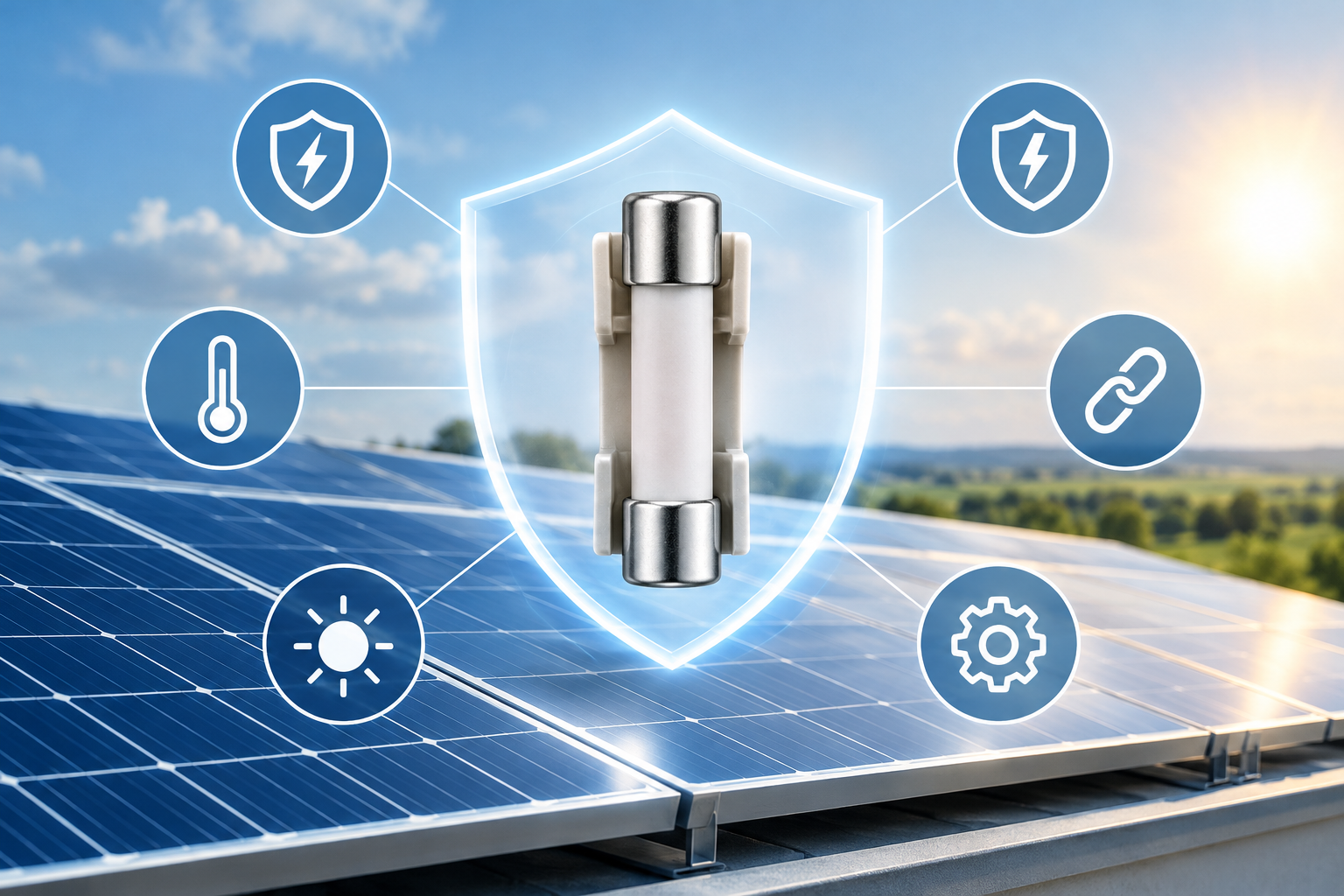
A solar fuse is a specially designed electrical protection device that safeguards solar panels, cables, inverters and other photovoltaic system components against overcurrent conditions. It helps prevent electrical damage, overheating and potential fire hazards by interrupting excessive current flow when a fault occurs.
In this guide, we will explore everything you need to know about solar fuses, including their working principles, types, applications, ratings and selection considerations.
What Is a Solar Fuse?
A solar fuse, also known as a photovoltaic fuse, PV fuse or solar panel fuse, is an overcurrent protection device specifically designed for use in solar photovoltaic systems.
Its primary purpose is to protect electrical circuits from excessive current caused by short circuits, equipment failures or other abnormal operating conditions.
Unlike conventional electrical fuses, solar fuses are designed to handle the specific electrical characteristics of photovoltaic systems, particularly direct current (DC) electricity.
Solar panels generate DC electricity, which behaves differently from alternating current (AC). DC current does not naturally pass through zero as AC does, making the interruption of electrical arcs more challenging. Therefore, solar fuses must have appropriate DC voltage and interrupting ratings to safely disconnect fault currents.
Solar fuses are commonly installed in:
-
Solar panel arrays.
-
Photovoltaic combiner boxes.
-
DC distribution systems.
-
Solar inverter input circuits.
-
Battery-connected solar installations.
-
Utility-scale solar power plants.
How Does a Solar Fuse Work?
A solar fuse operates by interrupting the electrical circuit when the current exceeds a predetermined safe level.
Inside the fuse is a specially designed metal element that melts when excessive current generates enough heat. Once the element melts, the electrical connection is broken, stopping the current flow through the protected circuit.
The working process can be explained in four steps:
1. Normal operation
Under normal conditions, electricity flows through the solar fuse without interruption. The fuse element remains intact and allows the photovoltaic system to operate normally.
2. Overcurrent occurs
An abnormal electrical condition, such as a short circuit or reverse current from parallel-connected solar strings, may cause current to exceed the permitted level.
3. Fuse element melts
Excessive current generates heat within the fuse element. When the operating conditions exceed its designed characteristics, the element melts and opens the circuit.
4. Electrical circuit is interrupted
The fuse disconnects the faulty circuit, helping prevent damage to cables, solar panels and other electrical equipment.
Once a fuse operates, it cannot normally be reset. It must be replaced with a suitable fuse of the correct specifications after the cause of the fault has been identified and corrected.
Why Are Solar Fuses Important in Photovoltaic Systems?
Solar fuses play an important role in maintaining the safety and reliability of photovoltaic installations.
Here are some of their main benefits:
1. Overcurrent Protection
The primary function of a solar fuse is to protect electrical circuits against excessive current. It interrupts dangerous current levels before they cause significant damage to system components.
2. Protection Against Reverse Current
In photovoltaic systems with multiple strings connected in parallel, a fault in one string can allow current from other strings to flow backwards into the faulty circuit.
This reverse current may damage solar modules, cables and connectors. Properly selected PV fuses help protect individual strings against these conditions.
3. Reduced Fire Risk
Excessive current can cause electrical cables and components to overheat. By interrupting fault currents, solar fuses help reduce the risk of overheating, insulation damage and electrical fires.
4. Protection of Electrical Equipment
Solar fuses help protect important system components, including photovoltaic modules, DC cables, combiner boxes and inverters, against potentially damaging overcurrent conditions.
5. Improved System Reliability
By isolating faulty circuits, solar fuses can help prevent electrical problems from affecting other parts of a photovoltaic installation.
What Are the Different Types of Solar Fuses?
Solar fuses are available in different designs, sizes and electrical ratings to accommodate various photovoltaic applications.
The most common types include:
1. Midget Solar Fuses
Midget fuses are compact photovoltaic protection devices commonly used in solar string circuits and combiner boxes.
They are available in different physical dimensions and current ratings. Some PV fuse designs operate at DC voltage ratings of 600V, 1000V or 1500V, depending on their construction and certification.
Their compact design makes them suitable for installations where space is limited.
2. Class R Fuses
Class R fuses are current-limiting fuses designed for high-performance electrical protection.
They are used in certain solar power applications where higher current protection is required. Their interrupting characteristics make them suitable for installations with substantial available fault current, provided their ratings are appropriate for the application.
3. Class J Fuses
Class J fuses are compact, current-limiting fuses designed for specific industrial electrical protection applications.
Depending on their DC ratings and approvals, suitable versions may be used in photovoltaic-related applications requiring higher current protection.
It is important to verify that the particular fuse is specifically rated for the intended DC application.
4. NH or Square Body Solar Fuses
NH-style photovoltaic fuses are commonly used in larger solar power installations, including commercial and utility-scale photovoltaic systems.
They are designed to provide protection in higher-current DC circuits and are available in different physical sizes and electrical ratings.
Their robust construction makes them suitable for demanding electrical environments.
5. Cylindrical PV Fuses
Cylindrical solar fuses are widely used in photovoltaic string protection and DC combiner boxes.
Common physical dimensions include:
-
10 × 38 mm
-
10 × 57 mm
-
10 × 85 mm
-
14 × 51 mm
-
14 × 65 mm
-
22 × 58 mm
The correct size depends on the electrical requirements, fuse holder compatibility and system design.
Understanding Solar Fuse Ratings
Choosing the correct solar fuse requires understanding several important electrical specifications.
1. Voltage Rating
The voltage rating indicates the maximum circuit voltage at which the fuse can safely interrupt current under its specified operating conditions.
Solar fuses are available for different DC voltage applications, including:
-
600V DC
-
1000V DC
-
1500V DC
-
2000V DC
The fuse voltage rating must be equal to or higher than the maximum possible DC voltage of the protected circuit.
2. Current Rating
The current rating, measured in amperes (A), indicates the current the fuse is designed to carry under specified conditions.
Solar fuse current ratings vary depending on their type, size and application.
The appropriate rating must account for the module's electrical characteristics, possible reverse current, conductor ampacity and applicable electrical standards.
3. Breaking Capacity
Breaking capacity, also known as interrupting rating, refers to the maximum prospective fault current a fuse can safely interrupt at its specified voltage.
This is particularly important in photovoltaic systems because multiple parallel strings can contribute to fault current.
A fuse must have sufficient DC breaking capacity for the installation.
4. Fuse Size
The physical dimensions of a solar fuse determine whether it fits the designated fuse holder or protective device.
Common cylindrical and square-body fuse designs are available for different installation requirements.
Always verify mechanical compatibility before installation.
How to Choose the Right Solar Fuse
Selecting the correct solar fuse is essential for ensuring effective protection and long-term system reliability.
Consider the following factors when choosing a PV fuse:
1. Determine the system voltage
Identify the maximum expected DC voltage of the photovoltaic circuit, including the temperature-related increase in open-circuit voltage.
Choose a fuse with an appropriate DC voltage rating.
2. Calculate the required current rating
Consider the solar module's short-circuit current (Isc), the number of parallel-connected strings and the applicable design requirements.
The fuse rating must provide adequate protection without causing unnecessary operation during normal conditions.
3. Check the breaking capacity
Make sure the fuse can safely interrupt the maximum prospective fault current that may occur in the circuit.
4. Select the correct fuse type
Choose a photovoltaic-rated fuse designed specifically for the intended DC application.
A conventional AC fuse should not automatically be assumed suitable for a solar DC circuit.
5. Verify operating temperature
Solar installations can experience significant temperature variations. Environmental conditions may affect fuse performance and current-carrying capacity.
Consider the manufacturer's temperature derating information when selecting a fuse.
6. Follow applicable electrical standards
Ensure the selected fuse complies with relevant photovoltaic and electrical safety requirements, including applicable IEC or UL standards.
Correct fuse selection should always be based on the complete system design rather than current rating alone.
Where Are Solar Fuses Installed?
Solar fuses are typically installed at locations where overcurrent protection is required within a photovoltaic system.
Common installation points include:
-
Solar string circuits: Protect individual strings against excessive reverse current from parallel-connected strings.
-
PV combiner boxes: Provide overcurrent protection for incoming photovoltaic circuits.
-
DC distribution systems: Protect DC electrical connections and distribution circuits.
-
Inverter input circuits: Provide protection where required by the inverter and system design.
-
Battery systems: Protect battery-connected circuits using appropriately rated DC fuses designed for the battery's available fault current.
The exact fuse location depends on the photovoltaic system architecture and applicable installation requirements.
What Is the Difference Between a Solar Fuse and a Circuit Breaker?
Solar fuses and DC circuit breakers both provide overcurrent protection, but they operate differently.
| Feature | Solar Fuse | DC Circuit Breaker |
|---|---|---|
| Operating principle | Melts a fuse element | Opens mechanical contacts |
| Reset capability | Usually requires replacement | Can generally be reset |
| Operation | Typically fast under high fault current | Depends on breaker characteristics |
| Maintenance | Requires replacement after operation | Can be reset after fault investigation |
| Application | PV string and DC circuit protection | DC circuit protection and switching where rated |
Both devices can be useful in photovoltaic installations. The choice depends on the system design, protection requirements, operating conditions and applicable electrical standards.
Importantly, a circuit breaker must have an appropriate DC voltage and interrupting rating for the intended application.
What Happens If a Solar Fuse Is Not Installed?
Operating a photovoltaic system without the required overcurrent protection can create serious safety and equipment risks.
Potential consequences include:
-
Damage to solar panels caused by excessive reverse current.
-
Overheating of electrical cables and connectors.
-
Damage to combiner boxes and other electrical equipment.
-
Increased risk of electrical fires.
-
Reduced system reliability.
-
Higher maintenance and replacement costs.
Not every photovoltaic circuit requires an individual fuse. However, where reverse-current protection is necessary, omitting the required protection can expose the system to significant electrical hazards.
How Often Should Solar Fuses Be Checked?
Solar fuses do not generally require routine replacement when they are operating correctly. However, periodic inspection is important to identify signs of electrical damage or deterioration.
Recommended inspection considerations include:
-
Check fuse holders for discoloration or signs of overheating.
-
Inspect electrical connections for looseness or corrosion.
-
Look for visible damage to fuse bodies and terminals.
-
Check for repeated fuse operation.
-
Verify that replacement fuses have the correct voltage, current and breaking capacity.
-
Follow the maintenance schedule recommended for the photovoltaic installation.
If a solar fuse blows, identify and correct the underlying electrical fault before replacing it. Never bypass a fuse or install one with a higher current rating simply to prevent repeated operation.
Electrical inspection and replacement should be performed by qualified personnel using appropriate DC isolation and safety procedures.
Frequently Asked Questions About Solar Fuses
1. What is the main purpose of a solar fuse?
The main purpose of a solar fuse is to protect photovoltaic electrical circuits against excessive current. It helps prevent damage caused by short circuits, reverse current and other overcurrent conditions.
2. Are solar fuses different from regular fuses?
Yes. Solar fuses are specifically designed and tested for photovoltaic applications. They must have suitable DC voltage ratings, breaking capacities and operating characteristics to safely protect solar circuits.
3. What voltage ratings are available for solar fuses?
Solar fuses are available in different voltage ratings, including 600V DC, 1000V DC, 1500V DC and 2000V DC. The appropriate rating depends on the maximum operating voltage of the photovoltaic system and the fuse's approved specifications.
4. What is the difference between a PV fuse and a solar panel fuse?
There is generally no significant difference in meaning. Both terms refer to fuses designed for photovoltaic systems. They are also commonly called solar fuses or photovoltaic fuses.
5. Can I use an AC fuse in a solar system?
An AC fuse should not be used in a DC photovoltaic circuit unless it is explicitly rated and approved for the specific DC application. DC electrical arcs are more difficult to interrupt, so the correct DC-rated protective device is essential.
6. Why does a solar fuse keep blowing?
A solar fuse may repeatedly operate because of short circuits, reverse current, damaged cables, faulty components, incorrect fuse sizing or other electrical faults.
The underlying problem should be investigated before replacing the fuse.
7. Can a solar fuse be reused after it blows?
No. Most photovoltaic fuses are single-use protection devices. Once the fuse element melts, the fuse must be replaced with a new fuse of the correct specifications after the fault has been resolved.
8. Do all solar panels need individual fuses?
Not necessarily. Individual string fuses are generally required when the potential reverse current from parallel-connected strings can exceed the permitted protection limits of the modules or conductors. The requirement depends on the system configuration and electrical design.
Conclusion
A solar fuse is an essential overcurrent protection component in many photovoltaic installations. It helps protect solar panels, cables, inverters and other electrical equipment against excessive current, short circuits and reverse-current conditions.
Understanding solar fuse types, voltage ratings, current ratings and breaking capacities is important when designing or maintaining a safe and reliable solar power system.
By selecting the correct photovoltaic fuse and following applicable electrical standards, installers can improve system protection, reduce equipment damage and support the long-term performance of solar energy installations.



