
 eaton-bcs-whitepaper-emob0052-en-us.pdf | [Maximizing efficiency in EV charging with Eaton’s battery configuration switch] | 1277 kB |
What Is an EV Fuse and What Is the Fuse Size for an Electric Car Charger?
As electric vehicles (EVs) become increasingly popular, electrical safety and reliable power management are becoming more important than ever. One of the essential components responsible for protecting an electric vehicle's electrical system is the EV fuse. Whether installed in the vehicle's battery pack, electric drive system, or charging infrastructure, fuses play a critical role in preventing electrical damage caused by excessive current.
But what exactly is an EV fuse? How does it work, and what size fuse is required for an electric car charger?
In this article, we will explain everything you need to know about electric vehicle fuses, their functions, applications, and how to determine the appropriate fuse size for an EV charger.
1. What Is an EV Fuse?
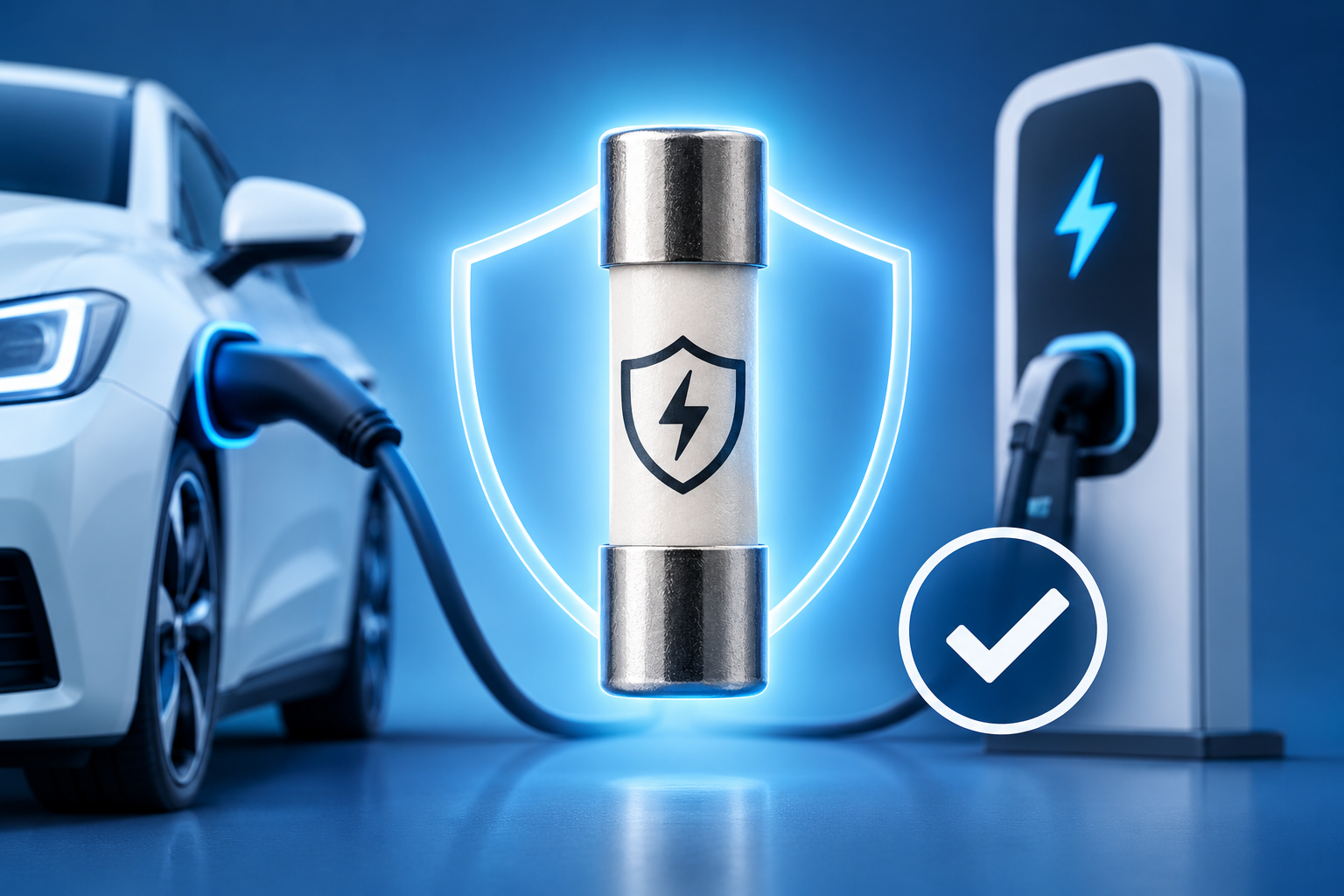
An EV fuse, also known as an electric vehicle fuse, is an electrical safety component designed to protect an electric vehicle's electrical circuits against overcurrent conditions.
It works by interrupting the electrical circuit when the current exceeds a predetermined safe level. When excessive current flows through the fuse, its internal fusible element melts, disconnecting the circuit and stopping the flow of electricity.
This helps prevent damage to sensitive electrical components, overheating, and potentially dangerous electrical fires.
EV fuses are particularly important because electric vehicles operate with high-voltage battery systems and powerful electrical components that require reliable protection.
Unlike conventional automotive fuses, EV fuses are specifically designed to handle the electrical characteristics and demanding operating conditions of electric vehicle systems.
Main Functions of an EV Fuse
An electric vehicle fuse performs several important safety functions:
1. Overcurrent Protection
The primary function of an EV fuse is to interrupt excessive current before it damages electrical components or wiring.
2. Short-Circuit Protection
If a short circuit occurs, a fuse can quickly disconnect the affected electrical circuit, helping prevent serious damage.
3. Battery Protection
EV batteries store substantial amounts of electrical energy. Properly selected fuses help protect battery circuits against dangerous fault currents.
4. Electrical System Safety
EV fuses protect essential electrical components, including power distribution systems, inverters, electric motors, and charging circuits.
5. Fire Prevention
By interrupting dangerous overcurrent conditions, fuses help reduce the risk of overheating and electrical fires.
2. Where Are EV Fuses Used in Electric Vehicles?
Electric vehicles contain several electrical systems that require effective overcurrent protection. EV fuses are installed at different locations depending on the vehicle's electrical architecture.
Common applications include:
Battery Pack Protection
The high-voltage battery pack is one of the most important components of an electric vehicle. It stores and supplies the electrical energy required to operate the vehicle.
High-voltage fuses help protect battery circuits against excessive current and short circuits.
Electric Motor Protection
Electric motors require substantial electrical power to generate movement. Fuses help protect the associated electrical circuits against potentially damaging current conditions.
Power Distribution Systems
EV power distribution systems deliver electricity to different vehicle components. Proper fuse protection helps ensure that faults in one circuit do not cause extensive damage to the electrical system.
Inverter Protection
An inverter converts direct current (DC) from the battery into alternating current (AC) for the electric motor in many EV designs.
Specialised fuses help protect the inverter and associated power electronics against electrical faults.
EV Charging Systems
Charging systems also require appropriate overcurrent protection. Fuses or circuit breakers may be installed in the charging equipment or electrical installation, depending on the system design.
It is important to distinguish between the fuse protecting the vehicle's internal high-voltage battery system and the protective device protecting the external EV charging circuit. They perform different functions and must be selected independently.
3. What Size Fuse Is Required for an Electric Car Charger?
One of the most common questions about EV charging safety is: What size fuse do I need for an electric car charger?
The correct fuse or circuit protection rating depends on several factors, including:
-
The maximum current rating of the EV charger.
-
The charger's operating voltage.
-
The electrical wiring capacity.
-
The type of charging equipment.
-
The installation method.
-
Applicable electrical standards and regulations.
-
The manufacturer's installation requirements.
The protective device must be appropriately coordinated with the charger's maximum current, cable capacity, and electrical installation.
EV Charger Fuse Size Examples
The following table illustrates common charging current ratings and corresponding protective device ratings under the 125% continuous-load sizing approach used by the US National Electrical Code for applicable AC charging installations.
| EV Charger Maximum Current | Minimum Circuit Protection Rating |
|---|---|
| 12 Amps | 15 Amps |
| 16 Amps | 20 Amps |
| 24 Amps | 30 Amps |
| 32 Amps | 40 Amps |
| 40 Amps | 50 Amps |
| 48 Amps | 60 Amps |
These are illustrative US sizing examples, not universal fuse recommendations. Actual installations must comply with the electrical standards applicable in the installation location.
For example, a 32-amp EV charger commonly requires a 40-amp circuit under the 125% continuous-load sizing approach.
However, simply choosing a fuse with a higher current rating than the charger's operating current is not sufficient. The wiring, protective device characteristics, and installation conditions must all be considered.
What About 11 kW and 22 kW EV Chargers?
In many European installations, EV chargers use three-phase electrical supplies.
Typical charging configurations include:
-
11 kW EV charger: Approximately 16 amps per phase at 400 volts.
-
22 kW EV charger: Approximately 32 amps per phase at 400 volts.
The required protective device must be selected according to the charger's specifications, cable characteristics, installation design, and applicable national electrical regulations.
The fuse or circuit breaker rating should never be determined by charging power alone.
4. How to Choose the Correct Fuse Size for an EV Charger
Selecting the correct fuse size is essential for maintaining safe and reliable EV charging operations.
Here are the main factors to consider.
1. Check the Maximum Charging Current
Start by checking the charger's maximum rated input current.
For example, if an EV charger has a maximum operating current of 32 amps, its protective device must be selected according to the applicable electrical installation requirements.
The rated current provides the starting point for determining the appropriate protection.
2. Consider the Operating Voltage
EV chargers operate at different voltage levels depending on their design and electrical supply.
Common charging configurations include:
-
120V AC charging.
-
230V AC single-phase charging.
-
400V AC three-phase charging.
-
High-voltage DC fast charging systems.
The voltage rating of the protective device must be suitable for the electrical circuit.
For DC applications, the fuse must also have an appropriate DC voltage rating and sufficient DC breaking capacity.
3. Check the Cable Specifications
Electrical cables must have sufficient current-carrying capacity to safely support the charging load.
The cable size depends on several factors, including:
-
Maximum operating current.
-
Cable length.
-
Installation method.
-
Ambient temperature.
-
Cable insulation type.
-
Voltage drop requirements.
The protective device must be coordinated with the cable's permissible current capacity.
Installing an oversized fuse with undersized wiring can create a serious overheating and fire hazard.
4. Consider the Type of EV Charger
Different charging systems have different electrical protection requirements.
AC chargers generally supply alternating current to the vehicle's onboard charger, which converts AC electricity into DC for battery charging.
DC fast chargers convert electrical power outside the vehicle and deliver DC electricity directly to the battery system.
These different charging arrangements require appropriately designed electrical protection.
5. Follow Applicable Electrical Standards
EV charging installations must comply with the electrical standards and regulations applicable in the installation country.
For example, European installations must consider relevant IEC requirements and their national implementations.
The protective device selection should also follow the charging equipment manufacturer's installation instructions.
A qualified electrical professional should verify the final fuse or circuit breaker rating.
5. What Is the Difference Between an EV Fuse and an EV Charger Fuse?
Although these terms sound similar, they refer to different protection applications.
An EV fuse generally refers to a fuse installed within an electric vehicle to protect its internal electrical circuits.
An EV charger fuse refers to overcurrent protection associated with the charging equipment or its electrical supply circuit.
Here are the main differences:
| Feature | EV Fuse | EV Charger Fuse |
|---|---|---|
| Main application | Inside the electric vehicle | Charging equipment or supply circuit |
| Protection purpose | Protects vehicle electrical components | Protects charging circuits and wiring |
| Typical location | Battery pack and power distribution system | Electrical panel or charging equipment |
| Voltage requirements | Depends on vehicle electrical architecture | Depends on charging system |
| Main function | Protects against electrical faults | Protects against overloads and short circuits |
Both are essential for maintaining electrical safety, but they must be selected according to their individual applications.
6. What Types of Fuses Are Used in Electric Vehicles?
Electric vehicles require specialised fuses designed to operate safely under demanding electrical conditions.
Some common EV fuse types include:
High-Voltage DC Fuses
High-voltage DC fuses are designed to protect high-voltage circuits in electric vehicles.
They are commonly used in battery packs, power distribution units, and other high-voltage applications.
Because DC fault interruption can be challenging, these fuses must have suitable voltage ratings and breaking capacities.
Bolt-Down Fuses
Bolt-down fuses are designed for secure electrical connections in high-current applications.
They are commonly used in battery systems and power distribution equipment.
Their mechanical design provides reliable mounting and electrical contact.
High-Speed Fuses
High-speed fuses are designed to interrupt excessive fault currents rapidly.
They are particularly useful for protecting sensitive power electronics, including inverters and semiconductor components.
Semiconductor Protection Fuses
Semiconductor protection fuses are designed to protect sensitive electronic components against damaging overcurrent conditions.
They are used in applications where rapid fault interruption is essential to minimise damage to power electronic equipment.
Choosing the correct fuse type depends on the electrical characteristics, protection requirements, and operating conditions of the application.
7. What Happens If You Use the Wrong Fuse Size?
Using an incorrectly rated fuse in an electric vehicle or EV charging installation can create serious safety problems.
Undersized Fuse
If the fuse rating is too low, it may interrupt the circuit during normal charging operation.
This can result in:
-
Frequent fuse failures.
-
Interrupted charging sessions.
-
Unnecessary maintenance.
-
Reduced system reliability.
Oversized Fuse
An oversized fuse may fail to interrupt excessive current quickly enough to protect the connected wiring and electrical components.
This can lead to:
-
Cable overheating.
-
Damage to electrical components.
-
Increased risk of electrical fires.
-
Serious equipment failures.
For this reason, choosing a fuse with a higher rating simply to prevent repeated fuse failures is not a safe solution.
The cause of the problem should be investigated before replacing the fuse.
8. Why Is Proper Fuse Selection Important for EV Charging Safety?
Electric vehicle charging systems operate with substantial electrical loads, often for several hours at a time.
Without suitable electrical protection, faults can damage charging equipment, electrical wiring, and connected components.
Correct fuse selection provides several important benefits:
Improved Electrical Safety: Properly selected fuses help protect against dangerous overload and short-circuit conditions.
Equipment Protection: Fuses help prevent electrical faults from damaging expensive charging equipment and vehicle components.
Reliable Charging Performance: Appropriate protection reduces unnecessary interruptions caused by incorrect fuse selection.
Reduced Fire Risk: Correctly coordinated overcurrent protection helps prevent excessive heating in electrical circuits.
Longer Equipment Service Life: Protecting sensitive electrical components against fault currents can improve overall system reliability.
9. Frequently Asked Questions About EV Fuses
Q1. What size fuse do I need for a 32A EV charger?
Under the US 125% continuous-load sizing approach, a 32A EV charger typically requires a 40A circuit breaker or appropriately rated overcurrent protection.
The actual requirement depends on local electrical regulations, wiring specifications, and charger installation instructions.
Q2. Can I use a 40A fuse for an electric car charger?
A 40A protective device may be suitable for certain EV charging installations, including some 32A AC chargers.
However, suitability depends on the charger's rated current, cable capacity, voltage, and applicable electrical standards.
Q3. Do electric vehicles have internal fuses?
Yes. Electric vehicles use various fuses to protect their internal electrical systems, including battery circuits, power distribution systems, inverters, and auxiliary electrical components.
Q4. Are EV fuses different from regular automotive fuses?
Yes. EV fuses may need to handle substantially higher voltages and fault currents than conventional automotive fuses.
They are specifically designed for the electrical requirements of electric vehicle systems.
Q5. What is the difference between an AC fuse and a DC fuse?
AC and DC electrical systems have different fault interruption characteristics.
DC current does not naturally pass through zero in the same way as AC current, making DC fault interruption more challenging.
Therefore, a fuse must have suitable voltage and breaking capacity ratings for its intended application. An AC-rated fuse should not automatically be assumed suitable for a DC circuit.
Q6. How often should EV fuses be replaced?
EV fuses generally do not require routine replacement if they are operating correctly.
However, a fuse should be inspected and replaced if it has operated, become damaged, or failed.
Replacement must use the correct specifications and rating. The underlying cause of a fuse failure should also be investigated.
Q7. Can I replace an EV fuse with a higher-rated fuse?
No. Replacing a fuse with a higher-rated fuse without verifying the circuit design can compromise electrical protection.
Always use a fuse with the correct electrical and mechanical specifications.
10. Conclusion
EV fuses are essential safety components in modern electric vehicles and charging systems. They protect electrical circuits against excessive current, short circuits, and potentially dangerous electrical faults.
The correct fuse size for an electric car charger depends on its maximum current rating, operating voltage, wiring specifications, charging configuration, and applicable electrical regulations.
For example, a 32A AC charger commonly requires 40A circuit protection under the US 125% continuous-load sizing approach. However, this rating should not be treated as a universal recommendation for every EV charging installation.
Whether selecting a fuse for an electric vehicle battery pack, power distribution system, or charging circuit, always consider the electrical requirements and manufacturer specifications.
Proper fuse selection is essential for improving EV charging safety, protecting electrical equipment, and ensuring reliable electric vehicle operation.



