
Electrical Fuses Blog
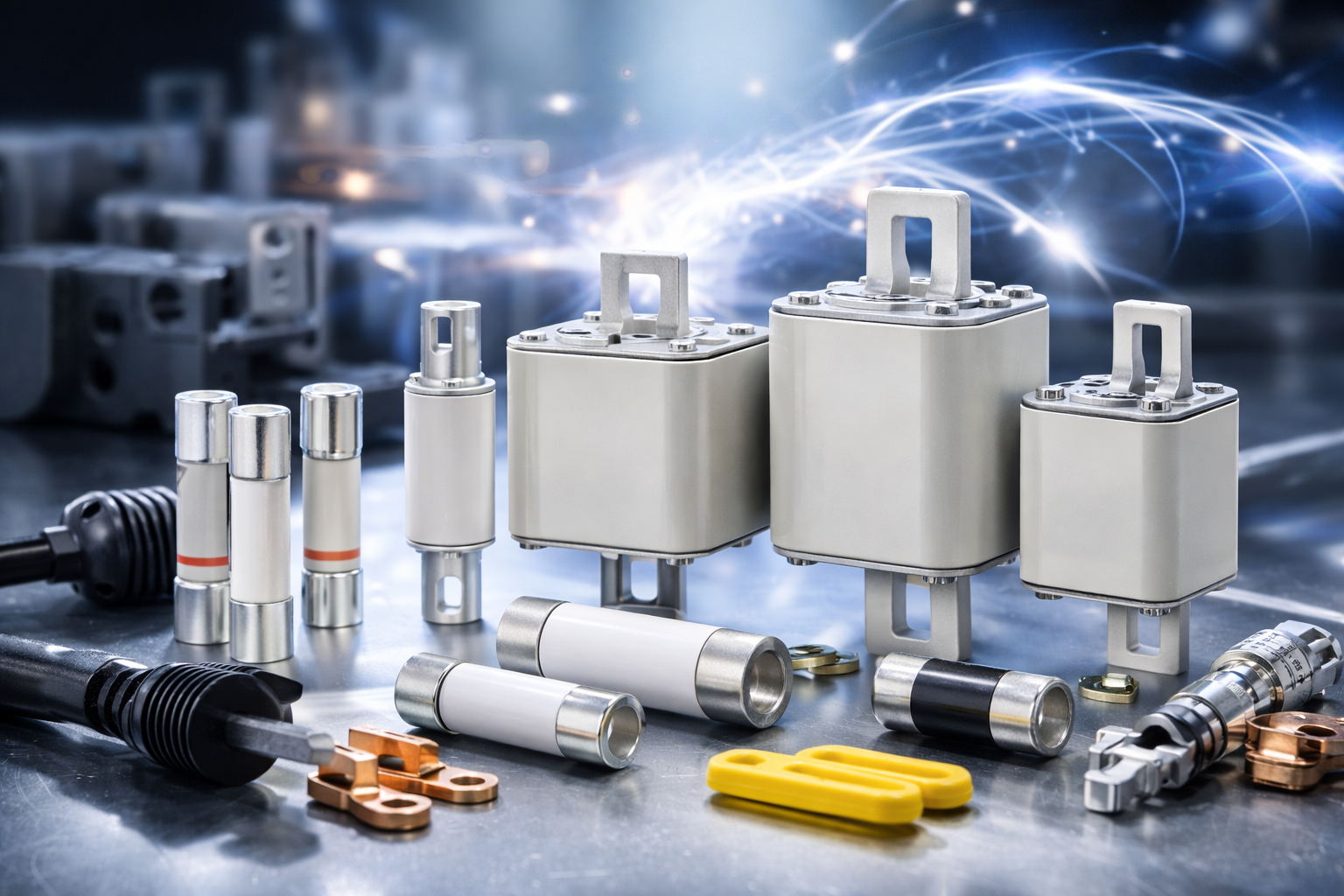
Eaton Bussmann Series Electrical Fuses – Blog & Fachwissen
Im Eaton Bussmann Series Electrical Fuses Blog finden Sie fundiertes Fachwissen rund um elektrische Sicherungen, Überstromschutz und moderne Schutzkonzepte für industrielle und gewerbliche Anwendungen. Diese Kategorie bündelt alle Blogartikel, technischen Beiträge und Praxisguides zu den Sicherungssystemen und Serien von Eaton Bussmann.
Eaton Bussmann zählt weltweit zu den führenden Herstellern von elektrischen Sicherungen, und ihre Serien stehen für Sicherheit, Normkonformität und höchste Zuverlässigkeit in anspruchsvollen elektrischen Systemen.
Was Sie im Eaton Bussmann Sicherungen Blog erwartet
Unsere Blogbeiträge helfen Ingenieuren, Einkäufern, Technikern und Planern dabei, die richtige Sicherungslösung zu finden und technische Zusammenhänge besser zu verstehen.
Themenschwerpunkte dieser Kategorie:
-
🔌 Überblick über Eaton Bussmann Sicherungsserien
-
⚙️ Unterschiede zwischen UL-, IEC- und Spezial-Sicherungen
-
📘 Technische Erklärungen zu Kennlinien, Auslöseverhalten & Bemessungswerten
-
🏭 Anwendungstipps für Industrie, Maschinenbau & Energieverteilung
-
🚗 Beiträge zu EV-, DC- und Hochvolt-Sicherungen
-
🛠 Best Practices für Auswahl, Installation und Wartung
Alle Inhalte sind praxisnah, verständlich aufbereitet und technisch fundiert.
Eaton Bussmann Sicherungsserien im Fokus
Der Blog behandelt regelmäßig verschiedene Eaton Bussmann Series Electrical Fuses, darunter:
-
Industrial Fuses
-
North American (UL) Fuse Series
-
IEC Sicherungsserien
-
High Speed & Semiconductor Fuses
-
EV & DC Sicherungen
-
Supplementary & Specialty Fuses
So erhalten Sie einen umfassenden Überblick über das Eaton Bussmann Portfolio und dessen Einsatzmöglichkeiten.
Fachwissen für sichere elektrische Systeme
Elektrische Sicherungen sind ein zentraler Bestandteil jeder sicheren Stromversorgung. Der Eaton Bussmann Series Electrical Fuses Blog unterstützt Sie dabei, Risiken zu minimieren, Normen einzuhalten und die Lebensdauer Ihrer Anlagen zu verlängern.
Ganz gleich, ob Sie Grundlagenwissen suchen oder tief in spezielle Sicherungsserien eintauchen möchten – hier finden Sie relevante, aktuelle und suchmaschinenoptimierte Inhalte rund um Eaton Bussmann Electrical Fuses.
👉 Jetzt Blogartikel entdecken und Ihr Wissen über Eaton Bussmann Sicherungsserien gezielt erweitern.
- Details
- Category: Electrical Fuses Blog
 eaton-bussmann-series-photovoltaic-fuses-catalogue-ca135004en.pdf  | [Eaton Bussmann PV Sicherungen] | 0 kB |
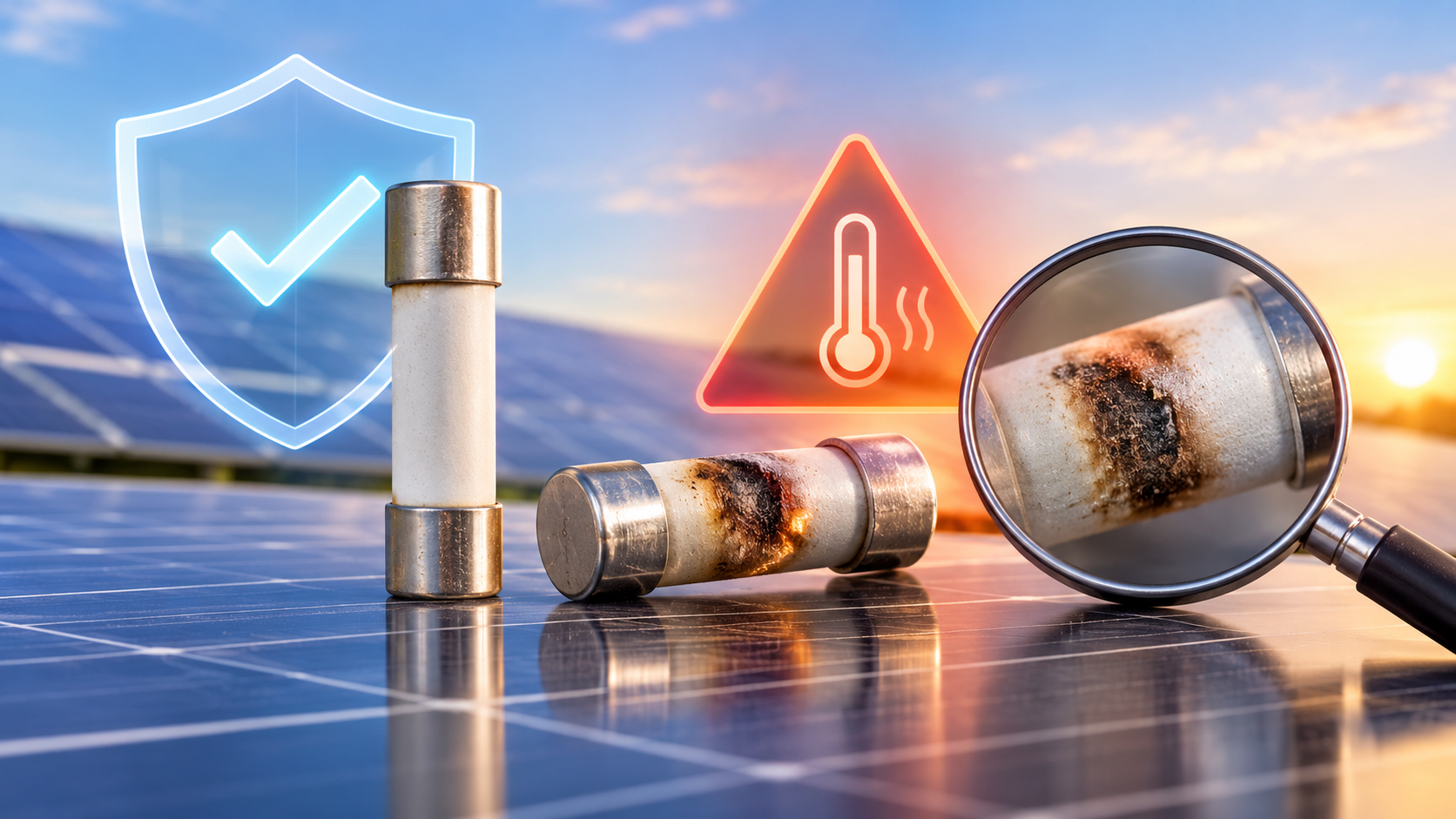
Photovoltaic Fuse Failures Explained: Common Causes, Early Warnings, and Proven Fixes for Solar Projects in Europe
Introduction: Why Photovoltaic Fuse Reliability Matters in Solar Projects
Solar energy has become an essential part of Europe's transition towards renewable energy. From residential rooftop installations to large-scale commercial solar farms, photovoltaic (PV) systems are expanding rapidly across Germany, France, Spain, Italy, the Netherlands, and other European markets.
As solar installations become larger and more technologically advanced, system reliability and electrical safety are becoming increasingly important. While solar panels, inverters, and energy storage systems often receive the most attention, one relatively small component plays a critical role in protecting the entire installation: the photovoltaic fuse.
A photovoltaic fuse is designed to interrupt excessive current and protect solar system components against electrical faults. When correctly selected and installed, it helps prevent equipment damage, reduces fire risks, and supports stable system operation.
However, photovoltaic fuse failures remain a recurring challenge for solar installers, engineering, procurement, and construction (EPC) contractors, and operation and maintenance (O&M) teams.
Overheating, incorrect fuse ratings, poor electrical connections, environmental exposure, and unsuitable components can all contribute to premature fuse failure.
Understanding these problems is essential for preventing unexpected downtime and maintaining the long-term performance of solar installations.
In this guide, we explore the most common causes of photovoltaic fuse failures, the early warning signs engineers should recognise, and practical solutions for improving PV system protection across Europe.
1. Understanding the Role of Photovoltaic Fuses in Solar Systems
Photovoltaic fuses are specialised protective devices used in the direct current (DC) circuits of solar installations.
They are commonly installed in PV combiner boxes, string protection systems, and other DC distribution equipment.
Their primary function is to interrupt excessive current when an electrical fault occurs.
In a typical solar installation, multiple photovoltaic modules are connected in series to create strings. Several strings may then be connected in parallel to increase the overall system output.
Although this configuration improves energy production, it also creates potential reverse-current risks.
For example, if one PV string develops a fault, current from other parallel-connected strings may flow into the affected string. Without suitable overcurrent protection, this reverse current can damage cables, connectors, modules, and other electrical components.
Photovoltaic fuses help reduce these risks by disconnecting the affected circuit when current exceeds the fuse's specified operating characteristics.
Why Are PV-Specific Fuses Important?
Solar installations operate under electrical conditions that differ from many conventional AC applications.
PV systems generate DC electricity, which presents particular challenges when interrupting fault currents because DC arcs do not naturally pass through zero as AC current does.
Consequently, selecting a fuse designed and rated for the intended photovoltaic application is essential.
PV-specific fuse links are generally designed according to the requirements of IEC 60269-6, which addresses fuse links for photovoltaic energy systems.
Using an appropriately rated photovoltaic fuse helps ensure:
- Reliable DC overcurrent protection.
- Improved electrical safety.
- Reduced risk of equipment damage.
- Better coordination with other protective devices.
- Greater operational reliability.
- Lower maintenance costs over the system's lifetime.
2. Common Photovoltaic Fuse Problems in Solar Installations
Photovoltaic fuse failures can occur for several reasons. Some problems develop gradually because of environmental stress, while others result from incorrect component selection or installation errors.
Understanding the most frequent issues helps maintenance teams identify potential weaknesses before they affect system performance.
2.1 Fuse Overheating and Burnout
Overheating is one of the most common problems associated with photovoltaic fuse failures.
Excessive operating temperatures can accelerate material degradation and eventually cause a fuse link to fail.
Common causes include:
- Continuous operation under excessive current.
- Incorrect fuse sizing.
- High ambient temperatures.
- Poor ventilation inside combiner boxes.
- Loose electrical connections.
- Increased contact resistance.
- Incorrect fuse holder installation.
In European solar installations, high summer temperatures can create additional thermal stress, particularly in outdoor combiner boxes installed in southern regions such as Spain, Italy, and Greece.
However, overheating is not necessarily caused by excessive circuit current.
A loose connection or deteriorated contact surface can generate localised heat even when the measured operating current remains within the expected range.
Recommended solution:
Inspect fuse holders, terminals, and contact surfaces during scheduled maintenance. Verify the fuse rating against the system design and investigate abnormal temperature increases.
Thermal imaging can also help identify overheating connections before visible damage develops.
2.2 Frequent or Unnecessary Fuse Tripping
Repeated photovoltaic fuse failures can indicate an underlying system problem.
When a fuse repeatedly operates under apparently normal conditions, replacing it without investigating the cause is not an effective long-term solution.
Potential causes include:
- Incorrect fuse current ratings.
- Inadequate voltage ratings.
- Reverse-current conditions.
- PV string faults.
- Damaged cables or connectors.
- Incorrect system protection coordination.
- High-temperature derating effects.
One particularly important consideration is that PV string current varies with environmental conditions.
Changes in solar irradiance and module temperature influence system operating conditions. Fuse selection must therefore account for the relevant design requirements rather than relying solely on normal operating current.
Recommended solution:
Check the electrical design, calculate the expected maximum circuit current, and verify the fuse's rated voltage, current, utilisation category, and time-current characteristics.
Do not simply install a higher-rated fuse to stop repeated operation. Doing so may compromise cable and equipment protection.
2.3 Premature Fuse Ageing
Photovoltaic installations are expected to operate for many years, often under demanding environmental conditions.
However, repeated thermal cycling, moisture exposure, dust accumulation, and mechanical stress can gradually affect fuse components.
Common contributing factors include:
- High operating temperatures.
- Frequent temperature fluctuations.
- Moisture entering electrical enclosures.
- Corrosion of conductive contacts.
- Mechanical vibration.
- Poor-quality fuse materials.
Premature ageing may affect both the fuse link and its associated holder.
Recommended solution:
Choose components suitable for the installation environment. Ensure that combiner boxes provide appropriate environmental protection and inspect electrical connections regularly.
2.4 Incorrect Fuse Ratings
Incorrect fuse selection is another significant cause of photovoltaic protection problems.
A fuse with an unsuitable current or voltage rating may fail to provide the required protection.
For example, an undersized fuse may operate unnecessarily during normal system conditions, while an oversized fuse may not adequately protect connected conductors and equipment.
Voltage selection is equally important.
The fuse's DC voltage rating must be suitable for the maximum possible system voltage, including the effects of low-temperature increases in PV module open-circuit voltage.
Recommended solution:
Calculate the maximum PV string voltage under the expected minimum operating temperature. Verify the required current rating using applicable design standards and manufacturer specifications.
Also confirm that the fuse's breaking capacity is adequate for the prospective fault current.
3. The Main Causes of Photovoltaic Fuse Failures
Although individual installations have different operating conditions, several underlying factors repeatedly contribute to PV fuse problems.
3.1 Incorrect Fuse Selection During System Design
Fuse selection should be an essential part of the electrical design process.
Unfortunately, some projects focus heavily on inverter capacity, module performance, and cable sizing while giving insufficient attention to overcurrent protection.
This can result in mismatched components and inadequate protection coordination.
Engineers should consider:
- Maximum system DC voltage.
- Maximum continuous operating current.
- PV module short-circuit current.
- Reverse-current characteristics.
- Ambient temperature.
- Cable current-carrying capacity.
- Fuse time-current characteristics.
- Required breaking capacity.
A properly designed protection system considers all these parameters together.
3.2 Using Conventional Industrial Fuses Instead of PV-Specific Fuse Links
Not every DC fuse is suitable for photovoltaic applications.
Solar installations have particular electrical characteristics, especially regarding DC voltage, fault-current behaviour, and reverse-current protection.
Using a conventional industrial fuse without verifying its suitability can create serious protection issues.
For this reason, project designers should select fuse links specifically designed for the intended PV application and verify compliance with the relevant technical standards.
3.3 Ignoring Temperature Derating
Temperature has a significant influence on fuse performance.
In hot environments, a fuse may operate differently from its expected characteristics under standard test conditions.
High ambient temperatures can reduce the available operating margin and increase the likelihood of unwanted fuse operation.
This is particularly relevant for European solar projects installed in regions experiencing high summer temperatures.
Temperature derating should therefore be considered during the fuse selection process.
Engineers should consult the manufacturer's derating curves and installation recommendations rather than applying a universal correction factor.
3.4 Poor Installation and Electrical Connections
Even a correctly selected photovoltaic fuse can experience problems if installed incorrectly.
Loose terminals, unsuitable holders, contaminated contact surfaces, and improper installation torque can increase electrical resistance.
This can result in localised heating, contact degradation, and eventual component failure.
Installation teams should follow the specified torque requirements and ensure that fuse links are compatible with their holders.
3.5 Environmental Exposure
European solar installations experience a wide range of environmental conditions.
For example:
- Southern Europe experiences high temperatures and intense solar radiation.
- Northern Europe often experiences high humidity and frequent rainfall.
- Coastal installations may be exposed to salt-laden air.
- Agricultural and industrial locations may experience increased dust and airborne contamination.
These conditions can affect electrical connections, enclosure integrity, and the long-term reliability of protective components.
Selecting components with appropriate environmental suitability is therefore essential.
4. Early Warning Signs of Photovoltaic Fuse Failure
Photovoltaic fuse failures do not always happen without warning.
In many cases, visual inspections, thermal monitoring, and system performance data can help maintenance teams identify potential problems.
Recognising these warning signs early can prevent more serious electrical faults and unnecessary production losses.
The following table summarises common indicators and recommended actions.
| Warning Sign | Possible Cause | Recommended Action |
|---|---|---|
| Discolouration or darkening | Excessive heat or contact deterioration | Arrange immediate inspection |
| Unusually high temperature | Overcurrent or increased contact resistance | Check current levels and connections |
| Cracked fuse body | Mechanical or thermal damage | Isolate and replace the damaged component |
| Repeated fuse operation | Incorrect rating or underlying electrical fault | Investigate the circuit before replacement |
| Loose terminals | Improper installation or mechanical stress | Check and correct connections |
| Burning smell | Overheating or insulation damage | Arrange urgent inspection |
| Corroded contacts | Moisture or environmental exposure | Inspect and replace damaged components |
| Reduced string output | Fuse operation or other string-level fault | Check string current and protection devices |
4.1 Discolouration and Visible Damage
Brown or black marks on a fuse body may indicate excessive heat exposure.
Cracks, chipped surfaces, or visible deformation should also be treated seriously.
Damaged components should not remain in service simply because the solar system continues generating electricity.
4.2 Abnormal Temperature Readings
Temperature monitoring is particularly useful for identifying developing electrical problems.
An unusually hot fuse holder or terminal may indicate poor contact quality or excessive current.
Thermal imaging inspections can help maintenance teams identify these issues without relying exclusively on visual inspection.
4.3 Unexpected Drops in PV String Performance
A failed string fuse can disconnect a PV string and reduce the energy output of the overall installation.
In large solar farms, the effect may be difficult to identify without proper monitoring.
Comparing string-level current measurements and inverter performance data can help identify abnormal operating conditions.
4.4 Repeated Maintenance Alerts
Repeated alarms or fuse replacements should never be treated as routine maintenance.
They may indicate a deeper problem involving system design, environmental conditions, wiring, or component compatibility.
The underlying cause should always be identified before the circuit is returned to normal operation.
Important safety note: PV circuits can remain energised whenever modules are exposed to light. Fuse inspection, testing, and replacement should only be performed by qualified personnel using appropriate isolation procedures and equipment.
5. Proven Solutions to Prevent Photovoltaic Fuse Failures
Preventing photovoltaic fuse failures requires a combination of correct component selection, professional installation, regular maintenance, and appropriate system monitoring.
The following practices can significantly improve solar system reliability.
5.1 Select Photovoltaic Fuses Compliant with IEC 60269-6
Standards compliance should be a fundamental requirement when selecting PV fuse links.
IEC 60269-6 specifies requirements for fuse links used in photovoltaic energy systems.
Selecting products designed and tested for the intended application helps ensure that their electrical characteristics are appropriate for PV protection.
Project engineers should verify:
- Rated DC voltage.
- Rated current.
- Breaking capacity.
- Utilisation category.
- Relevant certification and test documentation.
- Compatibility with the selected fuse holder.
Certification claims should always be checked against the applicable product documentation.
5.2 Calculate the Correct Current and Voltage Ratings
Fuse ratings must match the electrical requirements of the photovoltaic system.
Important design considerations include:
Current rating: The selected fuse must accommodate the expected operating current while providing appropriate protection against excessive current.
Voltage rating: The fuse must be suitable for the maximum possible DC system voltage.
Breaking capacity: The fuse must safely interrupt the prospective fault current under specified conditions.
Temperature derating: Ambient temperature and installation conditions must be considered.
Incorrectly selecting any of these parameters can compromise protection performance.
5.3 Choose Suitable Fuse Materials
Fuse construction materials can influence mechanical durability, handling characteristics, and suitability for different installation environments.
Ceramic and melamine fuse tubes are two commonly discussed options.
| Feature | Ceramic Fuse Links | Melamine Fuse Links |
|---|---|---|
| Weight | Generally heavier | Generally lighter |
| Mechanical properties | Rigid construction | Good impact resistance |
| Handling | Requires careful handling | Convenient handling |
| Thermal performance | Depends on product design | Depends on product design |
| Typical application considerations | Industrial and utility-scale installations | Applications where handling and mechanical properties are important |
It is important to understand that material selection alone does not determine electrical protection performance.
The fuse must still meet the required voltage, current, breaking capacity, and utilisation category specifications.
Engineers should evaluate the complete product rather than selecting components based solely on tube material.
5.4 Use Compatible Fuse Holders
Fuse links and fuse holders must be compatible in terms of dimensions, electrical ratings, and operating conditions.
An unsuitable holder can create poor electrical contact and increase the risk of overheating.
Before installation, verify:
- Correct fuse dimensions.
- Rated operating voltage.
- Rated current.
- Contact quality.
- Terminal compatibility.
- Manufacturer installation instructions.
Properly installed fuse holders help maintain stable electrical connections and simplify future maintenance.
5.5 Improve Environmental Protection
Environmental conditions should be considered throughout the system design process.
For outdoor photovoltaic installations, appropriate enclosure protection can reduce exposure to moisture, dust, and other contaminants.
Additional recommendations include:
- Use suitable electrical enclosures.
- Maintain adequate ventilation.
- Prevent moisture accumulation.
- Inspect seals and cable entries.
- Avoid unnecessary exposure to corrosive environments.
- Follow the manufacturer's operating temperature requirements.
These measures can help extend the service life of PV protection components.
6. Ceramic vs. Melamine Photovoltaic Fuses: Which Is Better?
Choosing between ceramic and melamine fuse links is a common consideration during solar system design and procurement.
Both materials can be used in photovoltaic fuse construction, but their characteristics differ.
Ceramic Photovoltaic Fuse Links
Ceramic fuse tubes are widely used in electrical protection applications.
Their rigid construction and thermal properties make them suitable for many industrial and photovoltaic applications.
Potential advantages include:
- Strong thermal resistance.
- Rigid mechanical construction.
- Established use in electrical protection.
- Availability across different fuse dimensions and ratings.
However, ceramic components can be more susceptible to mechanical damage if dropped or handled improperly.
Melamine Photovoltaic Fuse Links
Melamine fuse tubes offer different mechanical characteristics.
Depending on the product design, they can provide improved resistance to certain forms of mechanical impact and convenient handling.
Potential advantages include:
- Lower component weight.
- Good mechanical durability.
- Convenient installation and transportation.
- Flame-retardant material properties.
However, the actual performance of a melamine fuse link depends on its complete construction and testing.
How Should Engineers Choose?
There is no universal answer.
The most appropriate option depends on the installation environment, mechanical requirements, electrical specifications, and manufacturer test data.
For EPC contractors and solar system designers, the priority should always be selecting a properly tested and rated PV fuse rather than choosing a component based exclusively on material or purchase price.
7. The Financial Impact of Photovoltaic Fuse Failures
Photovoltaic fuse failures may appear to be relatively minor technical problems.
However, their financial consequences can extend beyond the cost of replacing individual components.
Consider a commercial solar installation where several PV strings become unavailable because of repeated fuse problems.
The resulting losses may include:
Reduced energy production: Disconnected strings generate less electricity, directly affecting project revenue.
Increased maintenance costs: Repeated inspections, troubleshooting, and component replacements increase O&M expenditure.
Unplanned downtime: Engineers may need to investigate the underlying problem before safely restoring normal operation.
Equipment damage: Poor overcurrent protection can expose cables, connectors, and other electrical components to damaging fault conditions.
Reduced project profitability: Unexpected maintenance expenses and lost generation can negatively affect the financial performance of the installation.
For large-scale solar farms, preventive maintenance and correct fuse selection can therefore provide substantial long-term economic benefits.
The purchase price of a protective component should always be evaluated against its contribution to system safety and operational reliability.
8. Best Practices for Photovoltaic Fuse Maintenance in European Solar Projects
A structured maintenance programme is one of the most effective ways to reduce unexpected PV fuse failures.
European solar installations operate under different climatic conditions, so maintenance strategies should reflect the specific installation environment.
The following practices can help improve reliability.
Regular Visual Inspections
Inspect fuse links, holders, terminals, and electrical enclosures for:
- Discolouration.
- Cracks.
- Corrosion.
- Signs of overheating.
- Loose connections.
- Moisture accumulation.
Thermal Inspections
Use suitable thermal imaging equipment to identify abnormal temperature differences across fuse holders and electrical connections.
Investigate unusual readings against expected operating conditions and manufacturer specifications.
Electrical Performance Monitoring
Monitor PV string currents, inverter alarms, and system performance data.
Unexpected differences between similar strings may indicate a developing electrical problem.
Correct Replacement Procedures
When replacing a failed fuse:
- Identify the underlying cause of the failure.
- Follow the approved electrical isolation procedure.
- Verify the replacement fuse's ratings.
- Confirm fuse holder compatibility.
- Follow specified installation torque requirements.
- Perform the required inspection and electrical checks before returning the circuit to service.
Never replace a failed fuse with a higher-rated component without reviewing the electrical protection design.
Maintain Accurate Records
Maintenance teams should document fuse replacements, abnormal temperature readings, recurring faults, and inspection findings.
These records help identify repeated problems and support better maintenance planning.
9. How to Select the Right Photovoltaic Fuse for European Solar Projects
Selecting the right photovoltaic fuse requires more than checking its current rating.
Engineers, EPC contractors, and procurement managers should evaluate the complete operating requirements of the solar installation.
Here are six important considerations.
1. System voltage
Identify the maximum DC voltage of the photovoltaic installation, including temperature-related increases in module open-circuit voltage.
2. Current requirements
Calculate the appropriate fuse rating based on module specifications, string configuration, applicable design requirements, and system protection coordination.
3. Standards compliance
Verify that the selected fuse is suitable for photovoltaic applications and complies with relevant standards, including IEC 60269-6 where applicable.
4. Environmental conditions
Consider ambient temperature, humidity, dust, mechanical exposure, and enclosure conditions.
5. Fuse holder compatibility
Ensure that the fuse link and holder have compatible dimensions and electrical ratings.
6. Technical documentation
Request datasheets, test reports, certification documents, and installation instructions before approving components for a project.
A structured selection process helps minimise installation errors and improves long-term protection reliability.
10. Conclusion: Reliable PV Fuse Protection Starts with the Right Selection
Photovoltaic fuse failures can have a significant impact on solar system safety, operational performance, and project profitability.
Although overheating, nuisance tripping, incorrect ratings, environmental exposure, and poor connections are common causes, many of these problems can be prevented through proper engineering and maintenance practices.
For European solar projects, the most effective approach combines:
- Correct photovoltaic fuse selection.
- Compliance with relevant electrical standards.
- Appropriate current and voltage ratings.
- Compatible fuse holders.
- Consideration of environmental conditions.
- Regular inspections and thermal monitoring.
- Professional installation and maintenance.
As Europe's solar capacity continues to expand, reliable DC protection will remain an essential part of successful photovoltaic system design.
Photovoltaic fuses may be small components, but their contribution to electrical safety and system reliability is substantial.
For solar developers, EPC contractors, installers, and O&M professionals, investing in appropriate PV fuse protection is not simply a technical decision. It is a practical investment in long-term system performance, reduced maintenance costs, and greater project reliability.
- Details
- Category: Electrical Fuses Blog
| eaton-bussmann-series-dc-fuses-catalog-ca135009en-us.pdf | [Eaton Bussmann DC Fuses] | 0 kB |
| eaton-bussmann-series-photovoltaic-fuses-catalogue-ca135004en.pdf | [Eaton Bussmann PV Fuses] | 0 kB |
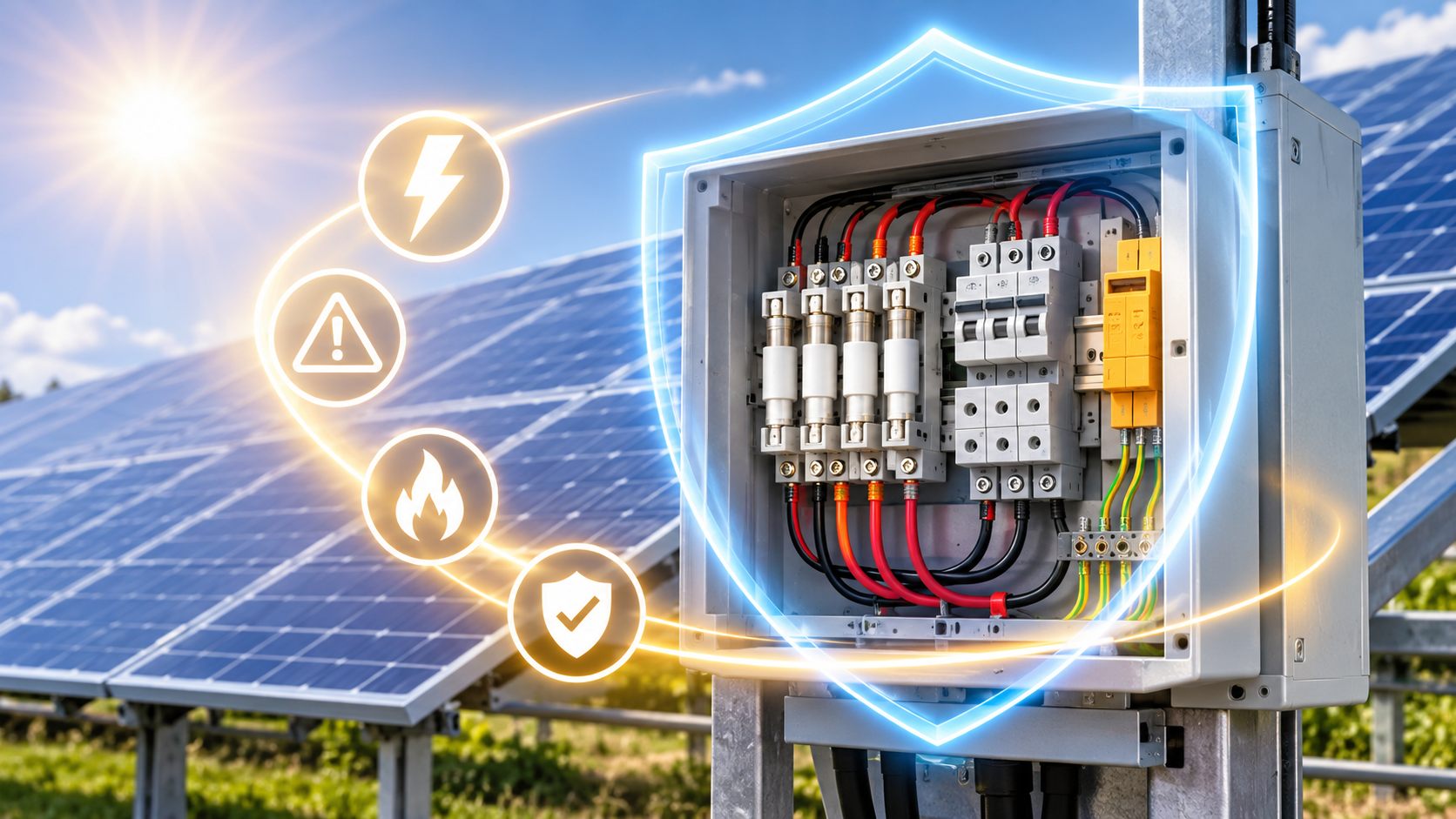
Why Eaton Bussmann Fuses Outperform Competitors in DC1000V and DC1500V Applications
Introduction
As renewable energy continues to expand worldwide, the demand for reliable electrical protection solutions has never been greater. Solar photovoltaic (PV) systems, battery energy storage systems (BESS), electric vehicle (EV) charging infrastructure, and industrial DC applications increasingly operate at higher voltage levels, including DC1000V and DC1500V.
In these demanding environments, selecting the right fuse is essential for protecting equipment, improving system reliability, and preventing costly electrical failures.
Eaton Bussmann fuses are widely recognised in the electrical protection industry for their engineering quality, dependable performance, and comprehensive range of circuit protection solutions. Designed for demanding electrical applications, Bussmann fuse technology provides important advantages in fault interruption, thermal management, operational reliability, and equipment protection.
But what makes high-quality DC fuses stand out from competing products? And why should engineers, solar installers, OEMs, and electrical distributors pay close attention to fuse construction and performance?
Let's explore the key factors that determine the performance of DC1000V and DC1500V fuses.
1. Advanced Materials for Superior Electrical Protection
The quality of the materials used in fuse construction directly influences electrical performance, mechanical strength, and operational lifespan.
High-voltage DC fuses must withstand demanding electrical conditions, including high fault currents, temperature fluctuations, and continuous operating loads.
Premium fuse manufacturers focus on several essential components.
High-Quality Ceramic Fuse Tubes
The ceramic tube is one of the most important structural components of a high-performance fuse.
High-purity alumina ceramic provides excellent mechanical strength, thermal stability, and resistance to electrical stress.
Its key advantages include:
-
Excellent resistance to mechanical impact.
-
High-temperature stability during operation.
-
Reliable insulation under demanding electrical conditions.
-
Improved resistance to thermal and electrical stress.
-
Consistent structural performance during fault interruption.
For DC1000V and DC1500V photovoltaic applications, a high-quality ceramic housing helps maintain fuse integrity during demanding operating conditions.
High-Conductivity Metal Components
Fuse end caps and contact components play an important role in maintaining stable electrical connections.
High-quality surface treatments can help improve conductivity, reduce contact resistance, and minimise unwanted heating.
Reliable electrical connections are particularly important in solar installations, where equipment may operate continuously for extended periods.
2. Reliable Short-Circuit Protection at High DC Voltages
One of the biggest challenges in DC electrical protection is interrupting fault currents safely.
Unlike AC circuits, DC circuits do not naturally pass through zero current. Consequently, extinguishing an electrical arc can be more challenging.
This makes the breaking capacity and DC voltage rating of a fuse critical selection factors.
Eaton Bussmann fuse solutions designed for appropriate DC applications provide protection against dangerous overcurrent and short-circuit conditions.
Important performance considerations include:
-
Rated DC voltage.
-
Rated current.
-
DC breaking capacity.
-
Time-current characteristics.
-
Pre-arcing and total clearing I²t values.
-
Arc-extinguishing performance.
A properly selected DC1000V or DC1500V fuse helps isolate electrical faults before they cause extensive damage to cables, inverters, battery systems, or other connected equipment.
For engineers and system integrators, choosing a fuse with the correct voltage rating and interrupting capacity is essential for maintaining electrical safety.
3. Pure Silver Fusible Elements for Consistent Performance
The fusible element is the heart of any electrical fuse.
Its composition, geometry, and manufacturing precision determine how accurately the fuse responds to overloads and short circuits.
Silver is widely used in high-performance fuse elements because of its excellent electrical conductivity and predictable melting characteristics.
The advantages of carefully engineered silver fusible elements include:
-
Low electrical resistance.
-
Consistent current-carrying performance.
-
Predictable response under fault conditions.
-
Controlled melting characteristics.
-
Reliable short-circuit interruption.
In DC1000V and DC1500V photovoltaic systems, these characteristics contribute to dependable protection and help reduce the risk of equipment damage.
Manufacturing precision is equally important. Even small variations in fusible element dimensions can affect a fuse's operating characteristics.
Therefore, engineers should consider not only the material composition but also the manufacturer's quality control and electrical testing procedures.
4. Advanced Arc Extinguishing Technology
Arc control is one of the most important factors separating high-quality DC fuses from lower-performance alternatives.
When a fuse element melts during a fault, an electrical arc can develop inside the fuse body.
If the arc is not extinguished effectively, it can create excessive heat, damage surrounding components, and compromise electrical safety.
High-performance photovoltaic fuses commonly use specially processed quartz sand as an arc-extinguishing filler.
This material provides several important functions:
-
Absorbs heat generated during fault interruption.
-
Helps extinguish the electrical arc.
-
Supports controlled energy dissipation.
-
Improves short-circuit interruption performance.
-
Helps maintain the structural integrity of the fuse.
For DC1500V applications, effective arc extinguishing is particularly important because higher DC system voltages create additional challenges during fault interruption.
A properly engineered fuse must be designed and tested to interrupt the specified fault current safely at its rated DC voltage.
5. Thermal Management and Long-Term Reliability
Heat management is another critical consideration when selecting DC1000V and DC1500V fuses.
Solar PV systems and energy storage installations often operate for extended periods under varying environmental conditions.
Excessive temperature can accelerate component ageing, increase electrical resistance at poor connections, and reduce equipment reliability.
High-quality fuse designs focus on controlling heat generation through:
-
Low-resistance electrical connections.
-
Appropriate conductor dimensions.
-
Efficient internal heat dissipation.
-
High-quality contact materials.
-
Properly designed fuse holders.
Fuse holders also play an important role in thermal performance.
Ventilation and cooling features can help dissipate heat, provided the holder is correctly installed and operated within its specified conditions.
For solar installers and system designers, thermal performance should always be evaluated alongside rated current and voltage.
6. Safety and Durability in Demanding Environments
Photovoltaic installations are frequently exposed to challenging environmental conditions.
These may include:
-
High ambient temperatures.
-
Temperature fluctuations.
-
Humidity.
-
Dust accumulation.
-
Continuous electrical loading.
-
Mechanical vibration.
A reliable fuse must maintain its electrical and mechanical properties throughout its intended service life.
High-quality ceramic materials, durable metal contacts, suitable insulation, and robust holder construction all contribute to dependable performance.
Flame-retardant materials in fuse holder assemblies can also support improved fire safety when used in appropriately designed electrical equipment.
However, overall system safety depends on more than the fuse itself. Correct installation, cable sizing, fuse coordination, enclosure selection, and compliance with applicable electrical standards are equally important.
7. DC1000V vs. DC1500V: Choosing the Right Fuse
Both DC1000V and DC1500V fuses are widely relevant to photovoltaic and renewable energy applications.
However, the correct choice depends on the electrical architecture and operating conditions of the installation.
DC1000V Photovoltaic Fuses
DC1000V fuses are commonly used in solar PV installations designed around 1000V DC system architectures.
Typical applications include:
-
Solar string protection.
-
PV combiner boxes.
-
DC distribution systems.
-
Solar inverter protection.
-
Industrial DC electrical equipment.
They help protect photovoltaic circuits against overcurrent and short-circuit faults.
DC1500V Photovoltaic Fuses
DC1500V systems are increasingly used in large-scale solar power installations.
Higher system voltage can allow longer PV strings and potentially reduce the number of parallel circuits required, depending on the system design.
Typical applications include:
-
Utility-scale solar farms.
-
Large commercial photovoltaic installations.
-
High-voltage DC combiner boxes.
-
Central inverter systems.
-
Large renewable energy projects.
DC1500V fuses must have suitable voltage ratings and verified DC interrupting capabilities for the intended application.
Important: A DC1000V fuse should never be substituted for a DC1500V fuse simply because both products have the same current rating. Voltage rating, breaking capacity, operating characteristics, and application compatibility must all be considered.
8. Why Eaton Bussmann Fuses Are a Strong Choice for Professional Applications
When comparing Eaton Bussmann fuses with competing products, engineers should evaluate the complete protection solution rather than focusing exclusively on purchase price.
Several factors deserve particular attention.
Engineering and Manufacturing Quality
Consistent manufacturing processes help ensure that fuse products deliver predictable electrical characteristics.
Dimensional accuracy, material quality, and production controls are essential for reliable protection.
Dependable Fault Interruption
High-quality fuse solutions must demonstrate suitable fault interruption performance at their specified DC voltage and breaking capacity.
This is particularly important in photovoltaic and energy storage applications.
Application-Specific Product Selection
Different installations require different fuse characteristics.
A suitable product range should provide options for different voltage ratings, current ratings, physical dimensions, and mounting configurations.
Long-Term Operational Reliability
A reliable fuse helps protect valuable electrical equipment and can reduce the likelihood of costly downtime caused by electrical faults.
Compliance and Certification
Certification and testing provide important evidence of product suitability.
Buyers should verify the applicable IEC or UL standards, certification documentation, and manufacturer datasheets before selecting a fuse for a specific installation.
These factors are essential when evaluating Eaton Bussmann products against alternative fuse manufacturers.
9. Applications of DC1000V and DC1500V Fuses
High-voltage DC fuses are essential components in several modern electrical systems.
Solar Photovoltaic Systems
PV fuses protect solar strings and DC distribution circuits against excessive current and short circuits.
They help prevent damage to photovoltaic modules, cables, combiner boxes, and inverters.
Battery Energy Storage Systems
Battery energy storage installations require reliable overcurrent protection to help protect battery connections, DC busbars, and power conversion equipment.
Fuse selection must consider battery fault-current characteristics and the system's maximum operating voltage.
Electric Vehicle Charging Infrastructure
DC charging equipment requires appropriately rated protective devices to protect power conversion and distribution circuits.
Fuse specifications must match the electrical design and applicable safety requirements.
Industrial DC Systems
Industrial power supplies, DC distribution networks, and specialised electrical equipment also depend on reliable overcurrent protection.
Selecting the correct fuse improves equipment protection and supports stable system operation.
10. How to Select the Best DC1000V or DC1500V Fuse
Choosing the right fuse involves more than matching the current rating.
Before purchasing, engineers and electrical distributors should evaluate the following factors:
1. Rated Voltage: Ensure the fuse has a DC voltage rating equal to or greater than the maximum system voltage.
2. Rated Current: Select the appropriate current rating based on operating current, conductor protection requirements, and applicable design rules.
3. Breaking Capacity: Verify that the fuse can safely interrupt the maximum prospective fault current.
4. Time-Current Characteristics: Check that the fuse provides appropriate protection without unnecessary operation during normal system conditions.
5. I²t Performance: Evaluate pre-arcing and total clearing I²t values to ensure suitable protection and coordination.
6. Operating Temperature: Consider ambient temperature, enclosure conditions, and manufacturer derating requirements.
7. Physical Compatibility: Confirm fuse dimensions, mounting arrangements, and holder compatibility.
8. Certification: Request relevant test reports, datasheets, and certification documents.
Following these steps helps ensure that the selected fuse provides suitable protection throughout the operating life of the electrical installation.
Conclusion
As solar energy, battery storage, and high-voltage DC infrastructure continue to develop, the importance of reliable fuse protection will only increase.
Eaton Bussmann fuses are an established option for professional electrical protection applications, with product selection depending on the specific voltage rating, current requirements, breaking capacity, and applicable certifications.
When comparing DC1000V and DC1500V fuse solutions, buyers should pay close attention to material quality, fusible element design, arc-extinguishing performance, thermal management, manufacturing consistency, and verified electrical specifications.
Ultimately, the best fuse is not necessarily the cheapest option. It is the product that delivers the required protection, meets the relevant standards, and provides dependable performance throughout the intended service life of the system.
For solar installers, OEM manufacturers, electrical engineers, and distributors, selecting the right high-voltage DC fuse is an important investment in electrical safety, system reliability, and long-term operational efficiency.
- Details
- Category: Electrical Fuses Blog
| eaton-bussmann-series-dc-fuses-catalog-ca135009en-us.pdf | [Eaton Bussmann DC Fuses] | 0 kB |
| eaton-bussmann-series-photovoltaic-fuses-catalogue-ca135004en.pdf | [Eaton Bussmann PV Fuses] | 0 kB |
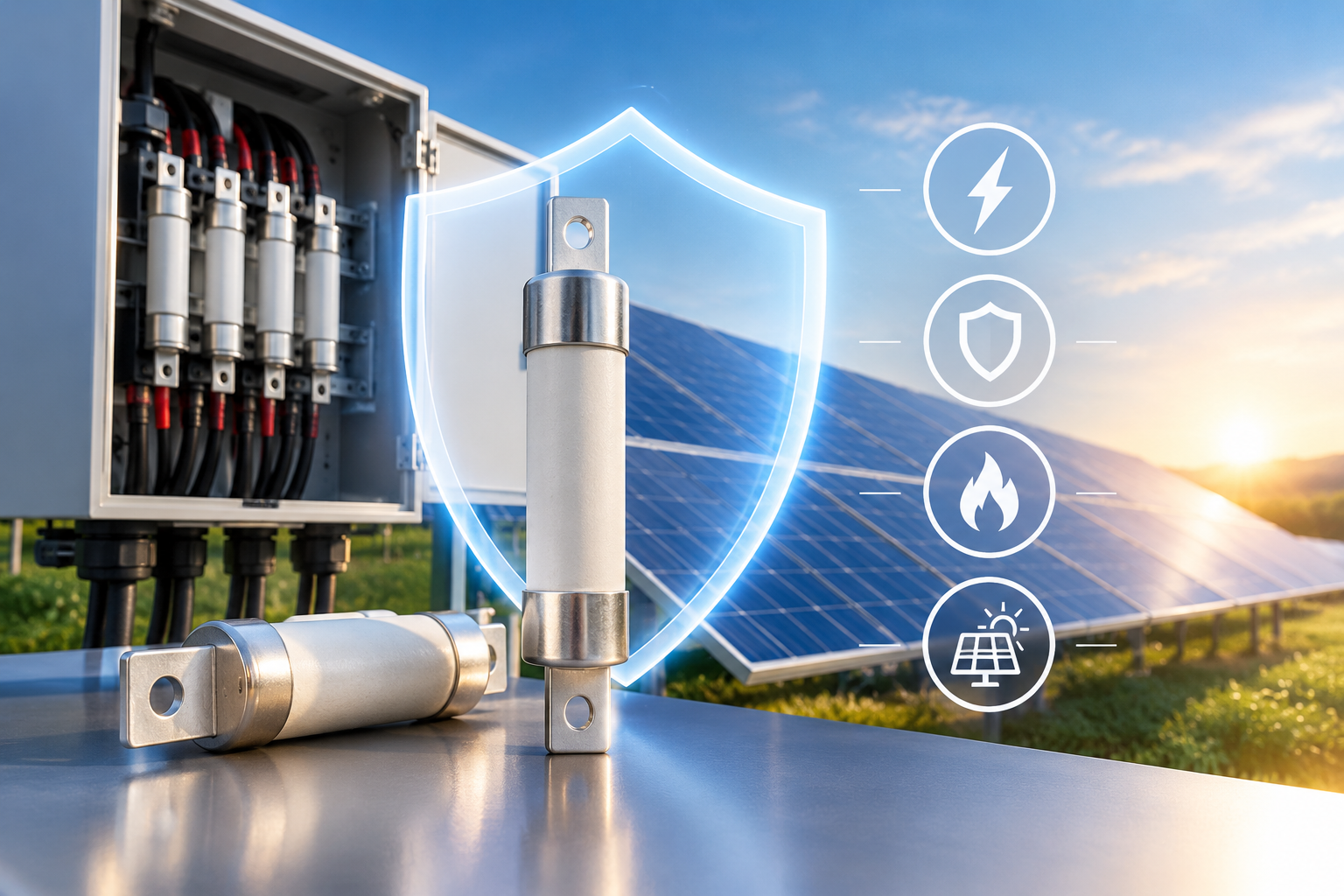
From Sunlight to Safe Power: How Solar PV Systems Run Smoothly with Eaton Bussmann DC Fuses in Europe
1. Introduction: Turning European Sunlight into Reliable Electricity
Across Europe, solar energy is becoming an increasingly important part of the transition towards cleaner and more sustainable electricity. From residential rooftop installations in Germany and the Netherlands to large-scale solar farms in Spain, Italy and France, photovoltaic (PV) technology is transforming how electricity is generated and consumed.
However, producing electricity from sunlight is only one part of a successful solar installation. Ensuring that electricity flows safely and reliably through the entire system is equally important.
This is where Eaton Bussmann DC fuses play a critical role.
Solar photovoltaic systems operate using direct current (DC), which introduces specific electrical protection requirements. Overcurrent conditions, reverse current and electrical faults can damage solar modules, cables, combiner boxes and inverter components if appropriate protection is not installed.
Eaton Bussmann photovoltaic fuses are specifically designed to address these challenges, helping protect solar PV installations against potentially damaging electrical faults.
From the first rays of morning sunlight to the electricity powering homes, commercial buildings and industrial facilities, reliable DC fuse protection helps keep solar energy systems operating safely and efficiently.
2. How Does a Solar PV System Generate Electricity?
To understand why DC fuses are essential, it is important to understand how a solar photovoltaic system works.
A typical solar PV installation consists of several interconnected components that work together to convert sunlight into usable electricity.
Step 1: Solar Panels Capture Sunlight
Solar panels contain photovoltaic cells that absorb sunlight and convert solar energy into direct current electricity.
Multiple solar panels are connected in series to create a PV string. Several strings may then be connected in parallel to increase the total electricity generated.
Step 2: DC Electricity Travels Through the System
The electricity generated by solar panels flows through DC cables towards the combiner box or inverter.
During this process, the electrical system must be protected against overcurrent conditions and potential faults.
Step 3: DC Fuses Provide Electrical Protection
DC photovoltaic fuses protect individual solar strings and other designated DC circuits.
When an electrical fault creates a current exceeding the fuse's specified operating characteristics, the fuse interrupts the circuit, helping prevent damage to connected equipment.
Step 4: The Inverter Converts DC into AC
Most residential, commercial and industrial electrical installations use alternating current (AC).
The solar inverter converts the DC electricity generated by the panels into AC electricity suitable for local consumption or grid export.
Step 5: Electricity Powers Buildings or Enters the Grid
Once converted, electricity can power household appliances, commercial equipment, industrial machinery or be exported to the electricity grid.
In solar installations equipped with battery storage, additional protection is required for the battery and associated DC connections.
Throughout this process, appropriately selected DC fuses contribute to the safe operation of the entire installation.
3. Why Are DC Fuses Essential for European Solar PV Systems?
Solar installations operate under challenging electrical and environmental conditions.
Unlike conventional AC applications, photovoltaic systems can experience relatively low fault currents while operating at high DC voltages. This makes selecting the correct photovoltaic overcurrent protection particularly important.
Several situations can create electrical risks.
Reverse Current Protection
When multiple PV strings are connected in parallel, a fault in one string can allow current from the healthy strings to flow backwards into the faulty string.
This reverse current can exceed the current-carrying capacity of solar modules and associated conductors.
Appropriately rated gPV fuses help isolate faulty strings and reduce the risk of equipment damage.
Cable and Connector Faults
Damaged insulation, loose connections, deteriorating connectors and incorrect wiring can create abnormal electrical conditions.
DC fuses provide an important layer of protection against overcurrent faults within properly designed circuits.
Equipment Protection
Solar inverters, combiner boxes and other electrical components represent significant investments.
An electrical fault can lead to equipment damage, expensive repairs and unexpected system downtime.
Correctly coordinated DC fuse protection helps reduce these risks.
Fire Risk Reduction
Electrical faults and excessive heating can contribute to fire hazards in photovoltaic installations.
Properly designed and installed overcurrent protection helps reduce these risks by interrupting qualifying fault currents.
For European solar projects, choosing reliable DC photovoltaic fuses is therefore an important part of electrical safety and long-term system performance.
4. How Eaton Bussmann DC Fuses Improve Solar PV System Protection
Eaton Bussmann photovoltaic fuses are developed specifically for the electrical characteristics of solar energy applications.
Unlike conventional fuses designed for general electrical circuits, gPV photovoltaic fuses are engineered to provide protection under the operating conditions commonly found in solar installations.
Here are some of their important characteristics.
Designed for Photovoltaic Applications
Eaton Bussmann gPV fuses are designed for protecting photovoltaic strings, combiner boxes, inverters, recombiner units and battery storage applications.
Their photovoltaic-specific design addresses the challenges associated with high DC voltage and relatively low fault currents.
High DC Voltage Ratings
Modern solar installations increasingly use higher DC system voltages to improve system architecture and reduce certain balance-of-system costs.
Eaton Bussmann offers photovoltaic fuse solutions rated for DC applications up to 1500V, depending on the product series and configuration.
This makes appropriate product selection important for both conventional and utility-scale solar projects.
High Breaking Capacity
A fuse must safely interrupt the prospective fault current available at its installation point.
Certain Eaton Bussmann photovoltaic fuse models offer interrupting ratings of up to 50 kA.
The actual breaking capacity depends on the specific fuse model and its rated operating conditions.
Fast-Acting Overcurrent Protection
PV systems have particular fault-current characteristics.
Eaton Bussmann gPV fuses are designed to respond to overcurrent conditions associated with photovoltaic applications, helping isolate faulty circuits and protect connected equipment.
Compliance with International Standards
Standards compliance is essential when selecting electrical protection equipment for European solar installations.
Eaton Bussmann photovoltaic fuse solutions are designed to meet relevant photovoltaic protection requirements, including IEC 60269-6 for gPV fuse links.
Depending on the product, additional certifications and approvals may include UL and CSA.
These characteristics make Eaton Bussmann DC fuses an important consideration for engineers, installers and system designers looking for photovoltaic circuit protection.
5. Where Are DC Fuses Installed in a Solar PV System?
Understanding the location and function of DC fuses helps engineers design effective photovoltaic protection systems.
Solar String Protection
Individual photovoltaic strings can be protected using appropriately rated gPV fuses.
String protection is particularly important in installations with multiple parallel-connected strings, where reverse current can become a concern.
Combiner Box Protection
A solar combiner box brings together the outputs of multiple PV strings.
Fuses installed within the combiner box help protect individual string circuits and support safer electrical distribution towards the inverter.
Inverter DC Input Protection
The inverter is one of the most important and valuable components in a solar PV installation.
Suitable DC overcurrent protection helps protect designated inverter input circuits against electrical faults.
Fuse selection and placement must follow the inverter manufacturer's requirements and the overall system protection design.
Battery Energy Storage Protection
Many modern European solar installations combine photovoltaic panels with battery energy storage systems.
These systems introduce additional DC protection requirements.
Appropriately selected fuses can help protect battery connections and associated circuits against excessive current.
However, battery protection requires consideration of battery chemistry, available fault current, system voltage and the specific manufacturer's recommendations.
6. Choosing the Right DC Fuse for Solar PV Applications
Selecting a photovoltaic fuse requires more than simply matching the fuse's current rating to the expected operating current.
Several electrical and environmental factors must be considered.
1. DC Voltage Rating
The fuse's rated DC voltage must be equal to or greater than the maximum system voltage under the expected operating conditions.
For European installations, this is particularly important in modern 1000V and 1500V DC solar systems.
2. Current Rating
The fuse current rating must be selected according to the PV module specifications, maximum reverse current, conductor capacity and applicable design requirements.
Incorrect sizing can result in inadequate protection or unnecessary fuse operation.
3. Breaking Capacity
The fuse must have sufficient DC breaking capacity to interrupt the maximum prospective fault current at its installation location.
4. Operating Class
For photovoltaic applications, gPV-class fuses are specifically designed to address the protection requirements of PV circuits.
IEC 60269-6 provides the relevant requirements for these fuse links.
5. Ambient Temperature
Solar installations are frequently exposed to high temperatures, particularly in outdoor combiner boxes and rooftop electrical enclosures.
Temperature-related derating and the manufacturer's operating recommendations must be considered during fuse selection.
6. Fuse Holder Compatibility
The fuse dimensions, mounting arrangement and electrical characteristics must be compatible with the selected fuse holder or fuse base.
7. Standards and Certifications
For European projects, engineers should verify the relevant IEC requirements, product certifications and installation regulations before selecting a fuse.
A correctly selected fuse improves protection coordination and supports long-term photovoltaic system reliability.
7. Why Reliable DC Fuse Protection Matters for Europe's Solar Energy Future
Europe's renewable energy sector continues to expand, creating demand for reliable electrical protection solutions across different photovoltaic applications.
Residential Solar Installations
Homeowners in Germany, Austria, the Netherlands and other European countries are increasingly adopting rooftop solar systems.
Reliable DC fuse protection helps safeguard residential installations and their associated electrical equipment.
Commercial and Industrial Solar Projects
Factories, warehouses, shopping centres and office buildings increasingly use rooftop photovoltaic systems to reduce electricity costs and improve energy independence.
These larger installations often involve multiple PV strings, combiner boxes and high-capacity inverters.
Appropriate DC fuse protection helps reduce the impact of electrical faults and unexpected downtime.
Utility-Scale Solar Farms
Large solar farms require carefully coordinated electrical protection across extensive PV arrays.
With thousands of solar modules operating together, reliable string and array protection becomes especially important.
High-voltage photovoltaic fuse solutions can support the protection requirements of modern solar installations.
Solar Energy Storage Systems
Battery storage is becoming an increasingly important part of Europe's renewable energy infrastructure.
Combining solar generation with energy storage allows electricity to be stored and used when required.
However, battery integration also introduces additional electrical protection considerations, making appropriate DC fuse selection essential.
Across all these applications, dependable photovoltaic protection contributes to safer and more reliable renewable energy infrastructure.
8. The Role of Eaton Bussmann DC Fuses in Improving Long-Term Solar Performance
A solar PV installation is a long-term investment.
Its performance depends not only on the efficiency of the solar modules but also on the reliability of its electrical infrastructure.
An incorrectly selected or poorly coordinated fuse can contribute to unnecessary interruptions, equipment damage and maintenance costs.
By contrast, appropriate Eaton Bussmann photovoltaic fuse solutions can support:
-
Improved electrical safety: Helps protect PV circuits against qualifying overcurrent faults.
-
Equipment protection: Helps reduce the risk of damage to solar modules, conductors and other connected components.
-
System reliability: Supports the isolation of faulty circuits without unnecessarily affecting healthy sections of an installation.
-
Reduced maintenance costs: Helps minimise the consequences of electrical faults and associated downtime.
-
Long-term investment protection: Supports the reliable operation of residential, commercial and utility-scale solar installations.
It is important to remember that DC fuses are one part of a complete electrical protection strategy. Proper system design, installation, inspection and maintenance remain equally important.
9. The Future of Solar PV Protection in Europe
As Europe's solar energy capacity continues to grow, photovoltaic installations are becoming larger, more sophisticated and increasingly integrated with energy storage and smart grid technologies.
Higher-voltage DC architectures, advanced inverter technologies and large-scale battery installations are creating new requirements for electrical protection.
In this evolving environment, photovoltaic-specific DC fuses will remain an essential component of solar system safety.
Eaton Bussmann continues to offer photovoltaic fuse solutions designed for different system configurations and voltage requirements, including applications up to 1500V DC.
For solar installers, EPC contractors, electrical engineers and renewable energy developers, choosing the right protection components is an important step towards building efficient, dependable and future-ready solar infrastructure.
10. Conclusion: Protecting Every Watt from Sunlight to Safe Power
Solar panels may capture the sunlight, and inverters may convert electricity into usable power, but reliable electrical protection is what helps keep the entire system operating safely.
Eaton Bussmann DC photovoltaic fuses provide dedicated overcurrent protection for solar PV applications, helping safeguard strings, combiner boxes, inverters and other critical DC circuits.
From residential rooftops in Germany to commercial solar installations in Spain and utility-scale solar farms across Europe, appropriate DC fuse selection plays an important role in maintaining electrical safety and system reliability.
As the European renewable energy market continues to develop, investing in reliable photovoltaic protection is not simply an engineering consideration. It is an essential part of protecting solar investments and supporting a more sustainable energy future.
From sunlight to safe power, every component matters. And reliable DC fuse protection makes every connection count.
- Details
- Category: Electrical Fuses Blog
| eaton-bussmann-series-dc-fuses-catalog-ca135009en-us.pdf | [Eaton Bussmann DC Fuses] | 0 kB |
| eaton-bussmann-series-photovoltaic-fuses-catalogue-ca135004en.pdf | [Eaton Bussmann PV Fuses] | 0 kB |
The Hidden Difference Inside DC Fuse Links: Copper vs. Silver Elements
When comparing DC fuse links, two products may look almost identical from the outside. They may have the same dimensions, cylindrical bodies, metal end caps, and current ratings. However, their internal construction can make a significant difference in electrical performance, operational safety, and long-term reliability.
One of the most important differences lies inside the fuse: the material used for the fuse element.
Copper and silver are two commonly discussed materials in DC fuse manufacturing. Although both can serve as conductive elements, their electrical properties, thermal behaviour, and performance characteristics differ.
For engineers, electrical contractors, system integrators, and procurement professionals, understanding these differences is essential when selecting DC fuses for solar photovoltaic systems, battery energy storage systems, electric vehicles, and other DC applications.
So, what makes copper and silver fuse elements different, and why does this small internal component matter so much?
Let's explore.
1. Understanding the Role of the Fuse Element in DC Fuse Links
The fuse element is the most critical internal component of a fuse link. Its primary function is to interrupt the electrical circuit when excessive current flows through the system.
Under normal operating conditions, the fuse element carries current without interrupting the circuit. However, when an overload or short circuit occurs, the element heats up and melts at a predetermined point, breaking the electrical connection.
In DC applications, this process presents additional challenges.
Unlike AC systems, DC circuits do not naturally experience periodic current zero crossings. As a result, extinguishing the electrical arc after the fuse element melts can be more difficult.
This makes the quality of the fuse element particularly important.
Its material, thickness, geometry, and manufacturing precision all influence:
-
Electrical resistance.
-
Heat generation and dissipation.
-
Melting characteristics.
-
Breaking capacity.
-
Arc interruption performance.
-
Long-term operational stability.
Therefore, choosing a DC fuse should involve more than checking its external dimensions and rated current.
2. Copper DC Fuse Elements: An Economical Solution
Copper has traditionally been widely used in electrical components because of its good electrical conductivity, mechanical strength, availability, and relatively low material cost.
These characteristics make copper an economical option for certain fuse applications.
Advantages of Copper Fuse Elements
Copper offers several practical benefits:
Cost-effectiveness: Copper is generally less expensive than silver, making it attractive for manufacturers and projects with strict procurement budgets.
Good electrical conductivity: Copper conducts electricity efficiently and can perform effectively when properly designed for its intended application.
Mechanical strength: Its mechanical properties make it suitable for various fuse element configurations.
Wide availability: Copper is readily available and supported by established manufacturing processes.
Limitations of Copper in DC Fuse Applications
Despite these advantages, copper has a higher electrical resistivity than silver.
For components with equivalent dimensions, this can result in greater electrical resistance and increased power dissipation.
The relationship can be expressed using Joule's law:
P = I²R
Where:
-
P represents power dissipation.
-
I represents electrical current.
-
R represents electrical resistance.
As resistance increases, more electrical energy is converted into heat at the same current level.
Excessive heat can influence the thermal conditions inside a fuse holder and surrounding electrical equipment. Depending on the design and operating environment, it may also affect component ageing and reliability.
However, copper is not inherently unsuitable for DC fuse applications. Its performance depends on the complete fuse design, including element geometry, rated voltage, current rating, and interruption capability.
3. Silver DC Fuse Elements: Improved Electrical Conductivity
Silver is known for having the highest electrical conductivity among metals under standard conditions.
Its excellent conductivity makes it an attractive material for high-performance fuse elements, particularly where low electrical resistance and controlled thermal behaviour are important.
Key Advantages of Silver Fuse Elements
Lower electrical resistance
Silver has lower electrical resistivity than copper. For comparable dimensions, this can reduce resistive losses and heat generation.
Improved thermal performance
Lower resistance can help reduce the amount of heat generated during normal operation, supporting better thermal management within the fuse assembly.
Consistent electrical performance
When manufactured with precise dimensions and carefully controlled geometry, silver fuse elements can provide predictable electrical characteristics.
Potentially improved operational stability
A properly engineered silver fuse element can contribute to stable performance under demanding operating conditions.
Suitable for demanding applications
Silver-based fuse elements can be particularly attractive in photovoltaic installations, energy storage systems, and other applications where electrical efficiency and dependable protection are important.
Is Silver Always Better Than Copper?
Not necessarily.
Although silver offers superior electrical conductivity, the overall performance of a DC fuse depends on much more than its material composition.
The fuse element's geometry, notching pattern, cross-sectional area, thermal characteristics, and arc-quenching design all influence its behaviour during fault conditions.
A poorly designed silver element may perform worse than a properly engineered copper element.
Therefore, material selection should always be evaluated alongside complete fuse performance and relevant certification requirements.
4. Why Fuse Element Geometry Matters as Much as Material
One of the most overlooked aspects of DC fuse manufacturing is the geometry of the internal fuse element.
Even when two manufacturers use the same material, their products may deliver different performance because of variations in manufacturing precision.
Important design factors include:
Precision Punching
The fuse element must be manufactured with consistent dimensions and accurately controlled openings or reduced cross-sectional sections.
Irregular punching can create unintended variations in current density and thermal behaviour.
Uniform Element Thickness
Variations in thickness can influence electrical resistance and the way heat develops across the fuse element.
Consistent thickness helps maintain predictable operating characteristics.
Optimised Element Structure
The geometry of the fuse element determines how it responds to excessive current.
Carefully engineered weak points help control where melting occurs and support predictable interruption behaviour.
Effective Heat Dissipation
The internal structure must be designed to manage heat under normal operating conditions while maintaining the required response during overload and short-circuit events.
These factors demonstrate why simply choosing a fuse labelled as having a silver element is not enough.
Manufacturing quality and internal construction deserve equal attention.
5. DC Fuse Performance: Comparing Copper and Silver
Understanding the differences between copper and silver can help engineers and purchasing teams make better technical decisions.
| Performance Factor | Copper Element | Silver Element |
|---|---|---|
| Electrical conductivity | High | Highest among metals |
| Electrical resistivity | Higher | Lower |
| Material cost | Generally lower | Generally higher |
| Power dissipation | Higher at equivalent dimensions | Lower at equivalent dimensions |
| Thermal behaviour | Depends on design | Potentially favourable due to lower resistance |
| Manufacturing requirements | Requires precise engineering | Requires precise engineering |
| Application suitability | Depends on fuse design | Depends on fuse design |
| Overall performance | Design-dependent | Design-dependent |
The key takeaway is that silver provides an electrical conductivity advantage, but the complete fuse construction determines actual performance.
A meaningful comparison should include electrical resistance, temperature-rise measurements, time-current characteristics, breaking capacity, and short-circuit testing.
6. Why DC Fuse Selection Is Critical in Solar PV Systems
Solar photovoltaic systems operate with DC electricity generated by solar panels.
These installations often contain multiple strings, combiner boxes, inverters, and DC distribution components. Appropriate fuse protection helps protect cables and electrical equipment against excessive current and fault conditions.
Selecting the right photovoltaic DC fuse requires careful consideration of several factors.
Rated Voltage
The fuse voltage rating must be suitable for the maximum possible DC voltage of the photovoltaic system.
Modern solar installations increasingly use higher DC voltages, making correct voltage selection essential.
Rated Current
The fuse current rating must be selected according to the system's operating conditions, conductor requirements, and applicable installation standards.
Breaking Capacity
The DC fuse must be capable of safely interrupting the prospective short-circuit current at its specified operating voltage.
Temperature Rise
High ambient temperatures and continuous loading can influence fuse operating conditions.
A suitable fuse should demonstrate acceptable temperature-rise performance under its specified operating conditions.
Material and Manufacturing Quality
The internal fuse element should have consistent dimensions, controlled electrical characteristics, and reliable manufacturing quality.
These considerations are especially important in large photovoltaic installations, where unexpected protection failures can result in maintenance costs and reduced system availability.
7. DC Fuse Standards and Certification: What Buyers Should Check
International standards provide important benchmarks for evaluating fuse safety and performance.
Two particularly relevant standards are:
IEC 60269-6
This standard addresses supplementary requirements for fuse-links used in solar photovoltaic energy systems.
It provides requirements relevant to photovoltaic fuse applications, helping manufacturers and users evaluate product suitability.
UL 248-19
This standard covers photovoltaic fuse requirements within the broader UL 248 low-voltage fuse standard series.
When purchasing DC fuse links, engineers should verify that the product has been tested and certified for its intended application.
Important documentation includes:
-
Rated DC voltage and current.
-
Breaking capacity.
-
Time-current characteristics.
-
Temperature-rise test results.
-
Applicable IEC or UL certification.
-
Manufacturer test reports.
-
Product traceability and quality documentation.
It is important to remember that the presence of a particular material does not automatically guarantee compliance.
Certification depends on the complete fuse design and its verified performance.
8. Initial Purchase Price vs. Total Cost of Ownership
For procurement managers, the cheapest DC fuse is not necessarily the most economical choice.
The initial purchase price represents only one part of the overall cost.
A more comprehensive evaluation should consider the total cost of ownership.
This includes:
Purchase Cost: The initial investment required to acquire the fuse links.
Energy Losses: Resistive losses during normal operation can contribute to energy dissipation over the product's service life.
Maintenance Expenses: Unreliable components can increase inspection, replacement, and troubleshooting requirements.
System Downtime: Unexpected fuse operations or protection failures may interrupt electricity generation or energy distribution.
Replacement Costs: Repeated component replacements increase labour and material expenses.
For large-scale solar and energy storage projects, even small differences in electrical performance can become significant when multiplied across hundreds or thousands of components.
Consequently, purchasing decisions should balance initial cost against verified performance, reliability, certification, and expected operating conditions.
9. How to Choose a High-Quality DC Fuse Link
Before purchasing DC fuse links, technical buyers should evaluate the following criteria:
-
Check the fuse element material: Understand whether the internal element is made from copper, silver, or another suitable conductive material.
-
Evaluate manufacturing precision: Look for consistent element dimensions, accurate punching, and controlled production quality.
-
Verify electrical ratings: Confirm that the rated voltage, current, and breaking capacity match the application.
-
Review certification: Check compliance with relevant IEC or UL requirements.
-
Examine thermal performance: Review temperature-rise and power-dissipation test results.
-
Consider application requirements: A fuse designed for photovoltaic applications may have different requirements from one intended for battery energy storage or industrial DC equipment.
-
Compare technical documentation: Request datasheets, test reports, and certification documents rather than relying exclusively on product descriptions.
-
Evaluate long-term value: Consider reliability, maintenance requirements, and expected operating conditions alongside the purchase price.
Following these steps helps reduce the risk of selecting an unsuitable fuse based solely on appearance or cost.
10. The Future of DC Fuse Technology
As renewable energy, electric mobility, and battery storage technologies continue to develop, DC electrical systems are becoming increasingly sophisticated.
Higher system voltages, greater power densities, and more demanding operating conditions place additional requirements on electrical protection components.
DC fuse manufacturers must therefore focus on several important areas:
-
Improved conductive materials.
-
More precise fuse element manufacturing.
-
Optimised thermal management.
-
Reliable arc interruption technology.
-
Consistent production quality.
-
Compliance with international safety standards.
Material selection will remain an important part of this development.
However, future improvements will depend on combining appropriate materials with advanced engineering, manufacturing precision, and comprehensive product testing.
Conclusion: The Real Difference Is Inside the Fuse
Two DC fuse links may look almost identical from the outside, but their internal construction can significantly influence their electrical characteristics and overall performance.
Copper offers an economical and established solution, while silver provides superior electrical conductivity and the potential for lower resistive losses.
Nevertheless, material alone does not determine fuse quality.
Element geometry, manufacturing precision, thermal behaviour, breaking capacity, and compliance with relevant standards are equally important.
For engineers, installers, and procurement professionals, the best approach is to look beyond the external appearance and purchase price.
A high-quality DC fuse link should be selected based on verified electrical performance, reliable construction, and suitability for its intended application.
Ultimately, the smallest component inside a DC protection system can make a substantial difference to the safety, efficiency, and long-term reliability of the entire installation.
Frequently Asked Questions (FAQs)
1. What is the difference between copper and silver DC fuse links?
The primary difference is electrical conductivity. Silver has higher electrical conductivity and lower electrical resistivity than copper. This can result in lower resistive losses and reduced heat generation when comparing elements with equivalent dimensions.
2. Why is silver used in DC fuse elements?
Silver is used because of its excellent electrical conductivity. It can help reduce electrical resistance and power dissipation while supporting stable electrical performance when combined with appropriate fuse element engineering.
3. Are copper DC fuse links reliable?
Yes. Copper DC fuse links can provide reliable protection when properly designed, manufactured, tested, and selected for the intended voltage and current requirements.
4. Does a silver fuse element guarantee better performance?
No. Although silver has superior electrical conductivity, overall fuse performance also depends on element geometry, thickness, manufacturing precision, thermal design, and arc interruption capability.
5. Why is fuse element geometry important?
Fuse element geometry influences current distribution, heat generation, melting characteristics, and interruption behaviour. Precision manufacturing helps ensure consistent and predictable fuse operation.
6. Which standards apply to photovoltaic DC fuse links?
IEC 60269-6 and UL 248-19 are important standards associated with photovoltaic fuse applications. Buyers should verify the applicable certification and performance documentation for the specific product.
7. How do I select the right DC fuse for a solar PV system?
Consider the maximum system voltage, operating current, prospective short-circuit current, breaking capacity, ambient temperature, and applicable standards. Always select a fuse specifically tested and rated for the intended photovoltaic application.
8. Is a more expensive DC fuse always better?
No. A higher price does not automatically indicate better quality. Evaluate the internal construction, material specifications, manufacturing precision, test results, certification, and overall suitability before making a purchasing decision.
- Details
- Category: Electrical Fuses Blog
| eaton-bussmann-series-photovoltaic-fuses-catalogue-ca135004en.pdf | [Eaton Bussmann PV Fuses] | 0 kB |
Photovoltaic Fuse (PV Fuse): A Comprehensive Guide to Solar PV Protection
Introduction
Solar energy has become one of the most important sources of renewable electricity worldwide. As photovoltaic (PV) installations continue to expand across residential, commercial, and industrial applications, ensuring the safety, reliability, and efficiency of solar power systems has become increasingly important.
One essential component of a safe solar installation is the photovoltaic fuse, commonly known as a PV fuse. Although relatively small, this protective device plays a critical role in preventing electrical damage caused by overcurrent conditions, short circuits, and other electrical faults.
Unlike conventional electrical fuses, PV fuses are specifically designed to handle the unique operating characteristics of direct current (DC) photovoltaic systems. They provide reliable protection for solar panels, PV strings, combiner boxes, inverters, and associated electrical equipment.
This comprehensive guide explains what a photovoltaic fuse is, how it works, why solar installations require specialised protection, the different types of PV fuses, their applications, and how to select the right fuse for your solar power system.
1. What Is a Photovoltaic Fuse (PV Fuse)?
A photovoltaic fuse (PV fuse) is a specialised electrical protection device designed to protect solar photovoltaic systems against excessive current and short-circuit faults.
Its primary function is to interrupt an electrical circuit when the current exceeds a predetermined safe level. By disconnecting the faulty circuit, the fuse helps prevent overheating, equipment damage, electrical fires, and other potential hazards.
PV fuses are commonly installed in:
-
Solar panel strings
-
Photovoltaic combiner boxes
-
DC distribution systems
-
Solar inverter DC inputs
-
Battery energy storage systems
-
Large-scale solar power plants
A PV fuse differs from a conventional fuse because it is engineered to operate under the specific electrical and environmental conditions of solar installations.
These conditions include:
-
High DC operating voltages.
-
Continuous current generation.
-
Variable solar irradiation.
-
Temperature fluctuations.
-
Low and fluctuating fault currents.
-
Difficult DC arc interruption conditions.
PV-specific fuses are therefore designed to provide dependable overcurrent protection throughout the operating life of a solar power installation.
2. How Does a Photovoltaic Fuse Work?
The working principle of a photovoltaic fuse is based on the thermal effect of electric current.
Under normal operating conditions, electrical current passes through the fuse element without causing it to melt. However, when an overcurrent or short-circuit fault occurs, the increased current generates excessive heat within the fuse element.
Once the temperature reaches the element's melting point, the fuse element melts and interrupts the electrical circuit.
The operating process involves four main stages:
Step 1: Normal Current Flow
During normal solar power generation, current flows through the fuse element within its specified operating limits.
Step 2: Overcurrent Detection
When an electrical fault causes the current to exceed the fuse's operating characteristics, heat begins accumulating in the fuse element.
Step 3: Fuse Element Melting
If the current and its duration reach the fuse's operating threshold, the internal element melts and separates.
Step 4: Electrical Circuit Interruption
The fuse interrupts the current and extinguishes the resulting electrical arc through its internal arc-quenching structure.
This process isolates the faulty section and helps protect other components within the photovoltaic system.
Because DC current does not naturally pass through zero as AC current does, interrupting DC fault currents can be particularly challenging. PV fuses are specifically engineered to address this challenge within their rated operating conditions.
3. Why Do Solar Power Systems Require Specialised PV Fuses?
Using the correct overcurrent protection device is essential for the safe operation of photovoltaic installations.
Solar power systems have several electrical characteristics that make specialised PV fuses necessary.
3.1 High DC Voltage
Modern photovoltaic installations can operate at high DC voltages, including 1,000 VDC and 1,500 VDC.
A fuse must have an appropriate DC voltage rating to safely interrupt fault currents without sustaining an electrical arc.
Using a fuse with an insufficient voltage rating can create serious safety risks.
3.2 Difficult DC Arc Extinction
In AC electrical systems, current naturally passes through zero during every cycle, helping extinguish electrical arcs.
DC systems do not have this natural current-zero point.
Consequently, DC arcs can continue for longer periods and require specialised arc-extinguishing designs.
PV fuses incorporate suitable internal structures to interrupt DC fault currents safely within their specified ratings.
3.3 Low Fault Current Characteristics
Unlike conventional power distribution networks, photovoltaic arrays have relatively limited short-circuit current.
A conventional fuse may not respond appropriately to certain PV fault-current conditions.
PV-specific gPV fuses are designed to provide suitable protection against the overcurrent characteristics associated with photovoltaic installations.
3.4 Outdoor Operating Conditions
Solar installations are frequently exposed to demanding environmental conditions, including:
-
High ambient temperatures.
-
Direct sunlight.
-
Humidity and moisture.
-
Dust and pollution.
-
Seasonal temperature variations.
PV protection devices must be selected according to their operating temperature limits, installation environment, enclosure requirements, and electrical specifications.
3.5 Long-Term Reliability
Solar power systems are designed to operate for decades.
Protection components must therefore provide stable and reliable performance over extended operating periods.
Selecting appropriately rated and certified PV fuses helps improve system safety, minimise maintenance requirements, and reduce the risk of unexpected equipment failures.
4. Different Types of Photovoltaic Fuses
Understanding fuse classifications is important when selecting the correct protection device for a solar installation.
Different fuse types are designed for different protection requirements.
4.1 gPV Fuses – Photovoltaic-Specific Protection
The gPV fuse is specifically designed for photovoltaic applications.
It provides protection against overload and short-circuit currents in solar DC circuits.
Key characteristics include:
-
Designed specifically for PV applications.
-
Suitable for high-voltage DC circuits within rated limits.
-
Designed to handle photovoltaic fault-current characteristics.
-
Provides protection for solar module strings and combiner boxes.
-
Available in different current and voltage ratings.
Typical applications include solar panel strings, PV combiner boxes, and photovoltaic DC distribution systems.
For most applications requiring dedicated PV string protection, gPV fuses are the appropriate fuse category to evaluate.
4.2 gG/gL Fuses – General-Purpose Protection
gG and gL fuses are general-purpose full-range protection devices commonly used in electrical distribution systems.
They provide protection against both overload and short-circuit currents.
Typical applications include:
-
Electrical distribution systems.
-
Cable protection.
-
Industrial power circuits.
-
General low-voltage installations.
Although these fuses are widely used in electrical installations, they should not automatically be considered substitutes for PV-specific fuses.
Their suitability must be evaluated against the actual DC voltage, current, time-current characteristics, and applicable standards of the installation.
4.3 gR/gS Fuses – Semiconductor Protection
Semiconductor fuses are designed to provide rapid protection for sensitive power electronic components.
They are commonly used to protect:
-
Power semiconductor devices.
-
IGBT modules.
-
Rectifiers.
-
Inverter components.
-
Industrial power electronics.
These fuses generally have fast-acting characteristics and are selected according to the semiconductor device's withstand capability and the circuit's fault-current characteristics.
They serve a different protection purpose from standard PV string fuses.
4.4 aBat/gBat Fuses – Battery Protection
Battery protection fuses are designed for energy storage applications.
They help protect battery systems against excessive current and short-circuit conditions.
Common applications include:
-
Battery energy storage systems.
-
Uninterruptible power supply systems.
-
DC battery distribution.
-
Energy storage installations.
Battery circuits can deliver substantial fault currents, making correct fuse selection particularly important.
The fuse must be compatible with the battery system's voltage, prospective fault current, and required interruption capacity.
5. Main Applications of Photovoltaic Fuses
PV fuses are used throughout solar power installations to provide protection at different stages of electricity generation and distribution.
5.1 Solar Panel String Protection
A photovoltaic string consists of multiple solar modules connected in series.
When several strings operate in parallel, a fault in one string can allow current from the remaining strings to flow into the faulty circuit.
This reverse current may cause overheating, cable damage, or other electrical hazards.
PV string fuses help isolate faulty strings and prevent excessive reverse current from damaging solar modules and associated wiring.
5.2 PV Combiner Box Protection
A photovoltaic combiner box collects the output of multiple solar strings and combines them into a common DC output.
String fuses are commonly installed within combiner boxes to provide individual string protection.
Their main functions include:
-
Protecting individual PV strings.
-
Limiting fault propagation.
-
Improving system protection coordination.
-
Helping simplify fault isolation.
-
Reducing the risk of equipment damage.
Correct fuse selection is essential for maintaining the safety and reliability of the entire solar array.
5.3 Solar Inverter Protection
Solar inverters convert the DC electricity generated by photovoltaic modules into AC electricity for household, commercial, or industrial use.
Inverter DC circuits require appropriate protection against overcurrent and short-circuit conditions.
PV fuses may be used in associated DC input and distribution circuits, depending on the inverter design and protection architecture.
The fuse must be selected according to the inverter manufacturer's requirements and the electrical characteristics of the circuit.
5.4 Battery Energy Storage Systems
Modern solar installations increasingly integrate battery energy storage systems.
These systems store excess solar electricity for later use, improving energy availability and system flexibility.
Battery circuits require dedicated overcurrent protection because batteries can deliver significant fault currents.
Appropriately selected battery fuses help protect cables, battery connections, and energy storage equipment against dangerous electrical faults.
It is important to distinguish between PV string fuses and battery protection fuses because their electrical requirements and application characteristics can differ significantly.
6. How to Choose the Right Photovoltaic Fuse
Selecting the correct PV fuse is one of the most important steps in designing a safe and reliable solar power system.
Several electrical and environmental parameters must be considered.
6.1 Rated Voltage
The fuse's rated DC voltage must be equal to or greater than the maximum voltage that can occur in the protected circuit.
For photovoltaic systems, this requires considering the maximum open-circuit voltage of the solar array under the lowest expected operating temperature.
Common PV system voltage classes include:
-
600 VDC.
-
1,000 VDC.
-
1,500 VDC.
-
Higher-voltage systems where specifically designed and approved protection equipment is available.
The selected fuse must have an appropriate DC voltage rating for the application.
6.2 Rated Current
The fuse's rated current must be selected according to the maximum expected operating current and the applicable PV design requirements.
Important parameters include:
-
Solar module short-circuit current (Isc).
-
Number of parallel-connected strings.
-
Maximum reverse current.
-
Module maximum series fuse rating.
-
Cable ampacity.
-
Ambient temperature.
-
Fuse manufacturer's derating recommendations.
A common starting point in PV fuse sizing is to calculate the required current rating using the applicable design factor for the system.
For example, certain PV design practices use 1.25 times the module short-circuit current as a basis for calculating maximum circuit current.
However, the final fuse rating must also comply with the module manufacturer's maximum series fuse rating, cable protection requirements, and applicable electrical standards.
There is no universal fuse-current rating suitable for every photovoltaic installation.
6.3 Breaking Capacity
Breaking capacity refers to the maximum prospective fault current that a fuse can safely interrupt at its specified voltage and operating conditions.
The selected PV fuse must have sufficient breaking capacity for the prospective short-circuit current of the protected circuit.
An insufficient breaking capacity can result in dangerous failure during a fault.
6.4 Fuse Size and Dimensions
PV fuses are available in different physical sizes and mounting configurations.
Common cylindrical fuse dimensions include:
-
10 × 38 mm.
-
10 × 85 mm.
-
14 × 51 mm.
-
14 × 85 mm.
-
22 × 58 mm.
Larger industrial installations may also use square-body or blade-type fuse designs.
The fuse dimensions must match the compatible fuse holder or mounting arrangement.
6.5 Operating Temperature
Temperature has a direct influence on fuse performance.
High ambient temperatures can affect the fuse's current-carrying capability and operating characteristics.
When selecting a PV fuse, consider:
-
Ambient operating temperature.
-
Installation enclosure temperature.
-
Ventilation conditions.
-
Fuse-holder temperature limitations.
-
Manufacturer derating curves.
Appropriate thermal design helps prevent unnecessary fuse operation and improves long-term reliability.
6.6 Applicable Standards and Certifications
PV fuses should comply with the relevant electrical standards and certification requirements for their intended markets.
Important standards and conformity considerations include:
IEC Standards: International standards provide technical requirements and testing procedures for electrical protection equipment.
UL Standards: Relevant safety standards and certifications may be required for installations and equipment intended for North American markets.
CE Marking: Indicates conformity with applicable European Union requirements where relevant.
TÜV Certification: Provides independent testing and certification for applicable product safety and performance requirements.
National Standards: Additional national requirements may apply depending on the installation location.
Always verify the exact certification, applicable standard, voltage rating, and product documentation rather than relying on general certification claims.
7. Common PV Fuse Installation Locations
The installation location of a photovoltaic fuse depends on the electrical architecture and protection requirements of the solar system.
Common installation points include:
Solar String Circuits: Individual fuses may be installed in the positive and/or negative conductors where required by the system design and applicable standards.
Combiner Boxes: String fuses are commonly installed to protect individual parallel-connected strings.
DC Distribution Panels: Fuses can provide overcurrent protection for DC distribution circuits.
Inverter Input Circuits: Additional protection may be required depending on the inverter's internal design and installation requirements.
Battery Circuits: Dedicated battery-rated fuses protect energy storage connections and associated DC circuits.
Fuse placement must be determined by qualified electrical designers and installers based on the system configuration and applicable regulations.
8. Common Mistakes When Selecting PV Fuses
Incorrect fuse selection can compromise the safety and reliability of a photovoltaic installation.
The following mistakes should be avoided.
Mistake 1: Using a Conventional Fuse Instead of a PV Fuse
A conventional fuse may not provide the required DC interruption performance or protection characteristics for a photovoltaic circuit.
Always verify that the fuse is specifically rated and suitable for the intended PV application.
Mistake 2: Ignoring the DC Voltage Rating
A fuse with an insufficient DC voltage rating may fail to interrupt a fault safely.
The maximum expected circuit voltage must always be considered.
Mistake 3: Selecting an Incorrect Current Rating
An undersized fuse may operate unnecessarily during normal conditions.
An oversized fuse may fail to provide adequate protection for the solar module, wiring, and associated equipment.
Correct sizing requires a complete assessment of the circuit's electrical characteristics.
Mistake 4: Ignoring Breaking Capacity
The fuse must be capable of safely interrupting the maximum prospective fault current.
Failing to verify breaking capacity can create significant electrical hazards.
Mistake 5: Overlooking Environmental Conditions
High temperatures, humidity, dust, and unsuitable enclosures can affect the performance and service life of electrical protection components.
Environmental conditions should always be considered during equipment selection and installation.
Mistake 6: Mixing Incompatible Fuse Components
Using a fuse link with an incompatible fuse holder can lead to poor electrical connections, overheating, and unreliable operation.
Always ensure compatibility between the fuse link, holder, terminals, and mounting arrangement.
9. Maintenance and Inspection of PV Fuses
Although photovoltaic fuses are generally low-maintenance components, regular inspection is important for maintaining system safety.
Recommended inspection activities include:
-
Checking fuse holders for visible damage.
-
Inspecting terminals for corrosion.
-
Looking for signs of overheating or discolouration.
-
Checking for loose electrical connections.
-
Verifying that installed fuse ratings match the design documentation.
-
Investigating repeatedly operated fuses to identify the underlying fault.
-
Replacing damaged components with compatible, correctly rated alternatives.
A fuse should never be replaced with a higher-rated fuse simply to prevent repeated operation.
Repeated fuse failures may indicate a short circuit, insulation problem, damaged cable, defective module, or another underlying electrical issue.
All inspection, testing, and replacement work should be performed by qualified personnel using appropriate electrical safety procedures.
10. Frequently Asked Questions About Photovoltaic Fuses
Q1: What is the main purpose of a PV fuse?
The primary purpose of a PV fuse is to protect photovoltaic circuits against excessive current and short-circuit faults. It helps prevent damage to solar modules, cables, combiner boxes, inverters, and other electrical equipment.
Q2: What is the difference between a PV fuse and a standard fuse?
A PV fuse is specifically designed for photovoltaic DC applications. It is engineered to operate under high DC voltage conditions and the particular fault-current characteristics of solar installations.
A standard fuse may not provide the required protection performance for a PV circuit.
Q3: What does gPV mean on a fuse?
The designation gPV refers to a full-range fuse-link category specifically intended for photovoltaic applications.
It is designed to provide protection against overload and short-circuit currents in PV circuits within its rated operating conditions.
Q4: Can I use a gG fuse in a solar power system?
A gG fuse should not automatically be used as a replacement for a gPV fuse.
The two fuse categories have different intended applications and operating characteristics.
Any alternative must be evaluated against the system's DC voltage, fault current, protection requirements, and applicable standards.
Q5: What PV fuse rating is suitable for a 1,500V solar system?
For a 1,500V DC photovoltaic system, the fuse must have an appropriate rated DC voltage of at least 1,500V, subject to the maximum circuit voltage and applicable design requirements.
Its current rating, breaking capacity, dimensions, and operating characteristics must also match the protected circuit.
Q6: Where are photovoltaic fuses usually installed?
PV fuses are commonly installed in solar string circuits, photovoltaic combiner boxes, DC distribution panels, and other locations requiring dedicated overcurrent protection.
Their exact placement depends on the system design.
Q7: How often should PV fuses be inspected?
Inspection intervals depend on the installation environment, maintenance programme, equipment manufacturer's recommendations, and applicable regulations.
Regular inspections should form part of the overall solar system maintenance programme.
Q8: Do all solar installations require PV string fuses?
Not necessarily. Fuse requirements depend on the number of parallel-connected strings, potential reverse-current levels, module specifications, and applicable electrical standards.
A qualified designer should determine whether string fuses are required and where they should be installed.
Q9: Can a PV fuse protect a solar inverter?
PV fuses can provide protection for certain inverter DC input circuits and associated components.
However, the appropriate protection arrangement depends on the inverter design and manufacturer's requirements. A PV fuse does not replace every form of inverter protection.
Q10: What happens if a PV fuse blows?
When a PV fuse operates, it interrupts the affected circuit.
The underlying cause should be identified before installing a replacement. Simply replacing the fuse without investigating the fault may result in repeated failures or equipment damage.
Conclusion
Photovoltaic fuses are essential protection components in modern solar power installations. They help safeguard solar modules, string circuits, combiner boxes, inverters, and energy storage systems against overcurrent and short-circuit conditions.
Unlike conventional electrical fuses, PV-specific fuses are engineered to handle the demanding operating characteristics of photovoltaic DC systems, including high DC voltages, challenging arc-extinction conditions, and variable fault currents.
Selecting the right photovoltaic fuse requires careful consideration of rated voltage, rated current, breaking capacity, fuse characteristics, physical dimensions, environmental conditions, and applicable certification standards.
Proper installation, compatibility checks, and regular maintenance are equally important for achieving reliable long-term protection.
As solar energy continues to expand worldwide, choosing correctly specified PV fuses will remain a fundamental part of designing safer, more efficient, and more dependable photovoltaic power systems.



