
Electrical Fuses Blog
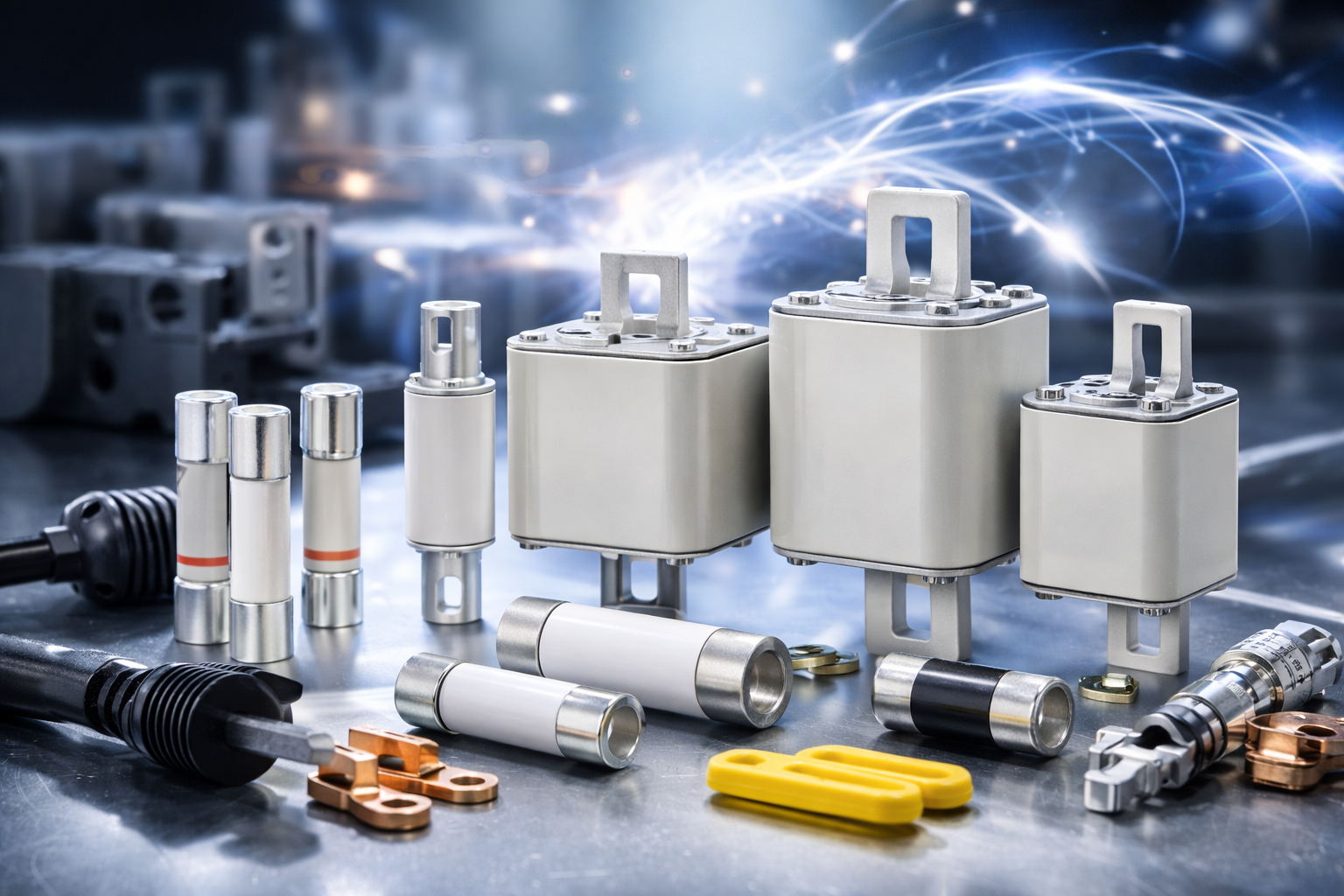
Eaton Bussmann Series Electrical Fuses – Blog & Fachwissen
Im Eaton Bussmann Series Electrical Fuses Blog finden Sie fundiertes Fachwissen rund um elektrische Sicherungen, Überstromschutz und moderne Schutzkonzepte für industrielle und gewerbliche Anwendungen. Diese Kategorie bündelt alle Blogartikel, technischen Beiträge und Praxisguides zu den Sicherungssystemen und Serien von Eaton Bussmann.
Eaton Bussmann zählt weltweit zu den führenden Herstellern von elektrischen Sicherungen, und ihre Serien stehen für Sicherheit, Normkonformität und höchste Zuverlässigkeit in anspruchsvollen elektrischen Systemen.
Was Sie im Eaton Bussmann Sicherungen Blog erwartet
Unsere Blogbeiträge helfen Ingenieuren, Einkäufern, Technikern und Planern dabei, die richtige Sicherungslösung zu finden und technische Zusammenhänge besser zu verstehen.
Themenschwerpunkte dieser Kategorie:
-
🔌 Überblick über Eaton Bussmann Sicherungsserien
-
⚙️ Unterschiede zwischen UL-, IEC- und Spezial-Sicherungen
-
📘 Technische Erklärungen zu Kennlinien, Auslöseverhalten & Bemessungswerten
-
🏭 Anwendungstipps für Industrie, Maschinenbau & Energieverteilung
-
🚗 Beiträge zu EV-, DC- und Hochvolt-Sicherungen
-
🛠 Best Practices für Auswahl, Installation und Wartung
Alle Inhalte sind praxisnah, verständlich aufbereitet und technisch fundiert.
Eaton Bussmann Sicherungsserien im Fokus
Der Blog behandelt regelmäßig verschiedene Eaton Bussmann Series Electrical Fuses, darunter:
-
Industrial Fuses
-
North American (UL) Fuse Series
-
IEC Sicherungsserien
-
High Speed & Semiconductor Fuses
-
EV & DC Sicherungen
-
Supplementary & Specialty Fuses
So erhalten Sie einen umfassenden Überblick über das Eaton Bussmann Portfolio und dessen Einsatzmöglichkeiten.
Fachwissen für sichere elektrische Systeme
Elektrische Sicherungen sind ein zentraler Bestandteil jeder sicheren Stromversorgung. Der Eaton Bussmann Series Electrical Fuses Blog unterstützt Sie dabei, Risiken zu minimieren, Normen einzuhalten und die Lebensdauer Ihrer Anlagen zu verlängern.
Ganz gleich, ob Sie Grundlagenwissen suchen oder tief in spezielle Sicherungsserien eintauchen möchten – hier finden Sie relevante, aktuelle und suchmaschinenoptimierte Inhalte rund um Eaton Bussmann Electrical Fuses.
👉 Jetzt Blogartikel entdecken und Ihr Wissen über Eaton Bussmann Sicherungsserien gezielt erweitern.

- Details
- Category: Electrical Fuses Blog
How Reliable Delivery Times Make a Difference in Industry
Reliable delivery times are a crucial factor in the success of industrial businesses. In an increasingly globalised and fast-paced economy, delivering on time can mean the difference between gaining a competitive advantage and experiencing costly production disruptions.
In this article, we explore how dependable delivery schedules help optimise industrial operations and why they are essential for customer retention, operational efficiency and effective supply chain management.
1. Why Are Reliable Delivery Times Important in Industry?
Reliable delivery times are much more than a service commitment – they are a competitive advantage. In industry, product quality alone is not enough. Products and components must also be available when they are needed.
When materials or components fail to arrive on time, the consequences can include production delays, idle machinery and, in the worst cases, lost customers.
Key benefits of reliable delivery times include:
-
Competitive advantage: Businesses that consistently deliver on time earn customer trust and gain a clear advantage over their competitors.
-
Avoiding operational disruptions: Unreliable deliveries can result in production stoppages and increase costs through emergency procurement or last-minute solutions.
-
Customer satisfaction: On-time deliveries improve customer satisfaction and help build long-term business relationships.
2. How Do Delivery Times Affect Production Processes?
Industrial production processes often depend on the timely arrival of raw materials, components and machinery. Delays within the supply chain can directly affect production planning, manufacturing schedules and delivery commitments.
Some of the main consequences of unreliable delivery times include:
-
Disruptions to production: When essential materials or components do not arrive on time, businesses must find alternative solutions, often resulting in additional costs and increased inventory requirements.
-
Unnecessary stock and warehousing costs: Reliable delivery schedules support efficient inventory management and prevent excessive stock levels that tie up capital and increase storage costs.
-
Higher operating costs: Delayed deliveries may require additional transport arrangements or express shipments, increasing overall production costs.
3. The Role of Supplier Relationships in Ensuring Reliable Delivery Times
Strong supplier relationships play a vital role in maintaining reliable delivery schedules. Long-term partnerships with dependable suppliers help improve supply chain efficiency and minimise potential disruptions.
Successful supplier relationships are built on three key principles:
-
Transparent communication: Open communication about orders, product availability and delivery performance helps identify potential delays early and allows businesses to take appropriate action.
-
Reliability and flexibility: A good supplier does more than deliver on time. They must also be able to respond quickly to unexpected increases in demand or changes in production requirements.
-
Long-term planning: Close cooperation enables businesses and suppliers to plan production capacity and purchasing activities more effectively, improving efficiency throughout the supply chain.
4. How Can Businesses Optimise Their Supply Chains for More Reliable Delivery Times?
Supply chain optimisation is essential for reducing delivery times while keeping costs under control. Businesses can use several strategies to improve delivery reliability:
-
Proactive planning: Forward planning helps businesses identify potential supply shortages and delivery delays before they affect production.
-
Automation and technology: Supply chain management software and other digital tools enable businesses to monitor deliveries in real time and identify bottlenecks at an early stage.
-
Local suppliers: Working with local or regional suppliers can shorten delivery times and reduce the risk of delays associated with international supply chains.
-
Just-in-Time (JIT) production: Applying Just-in-Time principles helps minimise inventory levels while ensuring that required materials are available precisely when production needs them.
5. The Impact of On-Time Deliveries on Customer Retention
On-time deliveries are important not only for internal operational efficiency but also for maintaining strong customer relationships.
In industrial and B2B markets, businesses depend on reliable partners who meet agreed deadlines and fulfil customer expectations.
Reliable delivery times have several positive effects on customer relationships:
-
Building trust: Businesses that deliver consistently on time establish strong relationships with their customers, creating the foundation for long-term partnerships.
-
Improving competitiveness: In highly competitive markets, delivery reliability is a significant advantage. Consistent on-time performance helps businesses stand out from competitors and strengthen their market position.
-
Increasing customer satisfaction: Timely deliveries are an essential part of a positive customer experience. When businesses demonstrate that they can be relied upon, customers are more likely to place repeat orders.
6. Conclusion: Reliable Delivery Times for Efficient Industrial Production
Reliable delivery times are much more than a logistical consideration – they are a fundamental part of successful industrial operations.
Businesses that manage their supply chains efficiently and work with dependable suppliers can minimise production downtime, reduce costs and improve customer satisfaction.
On-time deliveries are key to increasing productivity, controlling costs and building lasting customer relationships.
- Details
- Category: Electrical Fuses Blog
 bus-ele-ds-1023-lp-cc.pdf  | [Class CC Fuses] | 0 kB |
Class CC Fuses: Reliable Protection for Industrial Control Systems
Class CC fuses provide reliable protection for industrial control systems, electronic equipment and electrical circuits. They are specifically designed to detect and interrupt overloads and short circuits quickly and effectively. In this article, we explore why Class CC fuses are an excellent choice for protecting control systems and other sensitive electrical components, as well as the key benefits they offer.
1. What Are Class CC Fuses?
Class CC fuses are high-performance, compact electrical fuses used in industrial control systems and electronic applications. They offer fast response times and provide protection against short circuits and overloads that could otherwise cause operational disruptions, equipment damage or even fire hazards.
-
Applications: Class CC fuses are commonly used in control systems, distribution panels, industrial machinery and electronic equipment.
-
Specifications: These fuses are characterised by their fast-acting response and high interrupting rating, providing reliable protection against dangerous current surges.
2. Benefits of Class CC Fuses
Choosing Class CC fuses for industrial control systems offers several advantages that can improve the safety and efficiency of your installations:
-
High interrupting capacity: Class CC fuses can interrupt extremely high short-circuit currents quickly and reliably. They help prevent damage to equipment and machinery, contributing to a longer service life for industrial installations.
-
Compact design: Despite their high performance, Class CC fuses are compact and require less installation space than many other fuse types. This makes them ideal for applications where space is limited, such as control panels and electronic equipment.
-
Fast-acting protection: When short circuits or overloads occur, Class CC fuses respond rapidly, helping to prevent damage to protected components.
-
Reliability and efficiency: These fuses provide dependable protection, help minimise downtime and can reduce maintenance costs by safeguarding sensitive equipment.
3. Industrial Applications of Class CC Fuses
Class CC fuses are used across many industrial sectors where fast and reliable protection of control systems and electronic equipment is essential. Typical applications include:
-
Industrial control systems: Class CC fuses protect the control circuits of automation systems and robotic controls against short circuits and overloads that could otherwise cause system failures.
-
Power distribution systems: In electrical distribution centres and panels, these fuses provide effective protection against fault currents that could compromise the entire electrical circuit.
-
Electric motors and machinery: In motor control systems and production machinery, Class CC fuses help prevent damage caused by overloads and short circuits.
-
Control panel manufacturing: Class CC fuses are particularly useful in control cabinets, protecting electrical components and control systems against dangerous current surges.
Thanks to their high reliability and efficient interrupting performance, Class CC fuses are an excellent choice for protecting a wide range of industrial systems.
4. Class CC Fuses Compared with Other Fuse Types
Compared with other fuse types, Class CC fuses offer several advantages that make them a preferred choice for many industrial applications:
-
Compact construction: While other fuse types can be larger and require more installation space, Class CC fuses combine high interrupting capacity with a compact design.
-
Fast response: Compared with some other fuse types, Class CC fuses offer faster operation, helping to detect and interrupt current surges and short circuits more quickly.
-
Suitable for modern control systems: The precision and efficiency of Class CC fuses make them well suited to modern industrial control technologies, including industrial robotics and automated production processes.
5. How to Choose the Right Class CC Fuse
Selecting the correct Class CC fuse depends on several factors that should be considered when designing industrial control systems:
-
Current and voltage ratings: Ensure that the Class CC fuse is suitable for the operating conditions of your application. It must be able to accommodate the maximum current and voltage requirements of your equipment and machinery.
-
Operating characteristics: The fuse's operating characteristics should match the requirements of your control systems. Consider whether fast-acting or time-delay protection is required.
-
Physical size and compatibility: The fuse must fit the intended circuit layout and be compatible with the connections and systems used in your industrial control equipment.
Selecting the correct Class CC fuse helps ensure that your control systems and electronic equipment are properly protected, supporting reliable and uninterrupted production.
6. Conclusion: Class CC Fuses for Reliable Industrial Control System Protection
Class CC fuses provide an efficient and reliable solution for protecting industrial control systems, electronic equipment and machinery. Their high interrupting capacity, fast response times and compact design make them particularly suitable for a wide range of industrial applications.
By choosing the right Class CC fuse, you can help protect electronic equipment and control systems against overloads and short circuits, ensuring that your industrial installations operate safely and efficiently.
- Details
- Category: Electrical Fuses Blog
Class J Fuses: Powerful Protection for Industrial Applications
Class J fuses provide reliable, high-performance protection for industrial electrical circuits, machinery and equipment. Designed to protect against short circuits, overloads and other electrical faults, they help prevent costly production downtime and equipment damage.
In this article, we explore why Class J fuses are an excellent choice for industrial circuit protection and the advantages they offer compared with other types of electrical fuses.
1. What Are Class J Fuses?
Class J fuses are compact, high-performance electrical fuses specifically designed for industrial electrical circuits. They offer a high interrupting rating and protect electrical equipment, motor systems and power circuits against electrical faults.
-
Applications: These fuses are ideal for applications requiring a high level of safety and reliability, including automation systems, electric motors, transformers and power distribution circuits.
-
Key characteristics: Class J fuses are designed to respond quickly and accurately to short circuits and overloads, helping to minimise unnecessary interruptions. They are particularly suitable for protecting valuable industrial equipment.
2. Key Benefits of Class J Fuses
Choosing Class J fuses for industrial installations offers several advantages that can improve the protection and efficiency of electrical systems.
-
High interrupting capacity: Class J fuses offer excellent interrupting performance, allowing them to safely interrupt even high short-circuit currents and protect connected equipment.
-
Space-saving design: Despite their high performance, Class J fuses have a compact design and require less installation space than many other fuse types. This makes them particularly suitable for compact control panels and distribution cabinets.
-
Fast response: These fuses respond quickly to excessive currents, interrupting the circuit to help prevent damage to connected equipment.
-
Reliability and efficiency: Class J fuses are designed to support reliable operation and minimise unnecessary production interruptions, helping to improve system availability and reduce maintenance costs.
3. Industrial Applications of Class J Fuses
Class J fuses are widely used across industrial sectors where reliable and high-performance electrical protection is essential. Typical applications include:
-
Motor protection: In motor control systems and electric drives, Class J fuses help protect against damage caused by short circuits and overloads. They support the safe operation of industrial motors, compressors and pump systems.
-
Transformer protection: Class J fuses provide effective transformer protection by interrupting fault currents caused by short circuits or overload conditions, helping to prevent costly equipment damage.
-
Industrial automation: In automated production processes, Class J fuses protect electrical circuits and sensors against overcurrents, supporting reliable system operation.
-
Power distribution systems: They are used in electrical distribution installations to provide rapid protection against short-circuit currents and help minimise operational disruptions.
The versatility of Class J fuses makes them a popular choice for a wide range of industrial applications.
4. Advantages of Class J Fuses Compared with Other Fuse Types
Class J fuses offer several specific advantages over other types of electrical fuses.
-
Higher interrupting capacity: Compared with many conventional fuse types, Class J fuses offer high interrupting performance, making them suitable for protecting valuable industrial equipment.
-
Reduced space requirements: Class J fuses are more compact than many other fuses with comparable performance, making them particularly suitable for space-constrained control cabinets and distribution boards.
-
Reliable protection: When correctly selected for the application, Class J fuses provide dependable circuit protection while helping to minimise unnecessary system shutdowns.
For businesses looking for an efficient and reliable solution to protect industrial electrical installations, Class J fuses are often an excellent option.
5. How to Choose the Right Class J Fuse
Selecting the correct Class J fuse depends on several important factors that should be considered when designing and implementing industrial electrical circuits.
-
Current and voltage ratings: Ensure that the Class J fuse is suitable for the maximum current and operating voltage of the equipment to be protected.
-
Operating characteristics: Check that the fuse's operating characteristics match the requirements of the application, particularly in relation to short-circuit and overload protection.
-
Physical dimensions and compatibility: The fuse dimensions must be compatible with the installation's wiring, fuse holders and electrical connections.
Selecting the correct Class J fuse helps ensure optimal protection for industrial electrical circuits and supports the efficient operation of production equipment.
6. Conclusion: Class J Fuses for Maximum Industrial Protection
Class J fuses provide powerful and efficient protection for a wide range of industrial applications. They are particularly suitable for motors, transformers, automation systems and power distribution installations, thanks to their high interrupting capacity, fast response and compact design.
By using appropriately selected Class J fuses, businesses can improve installation safety, reduce the risk of equipment damage and maximise the operational availability of industrial electrical systems.
If you are looking for a reliable and efficient solution for industrial circuit protection, Class J fuses are an excellent choice.

- Details
- Category: Electrical Fuses Blog
| eaton-bussmann-series-high-speed-fuses-application-guide-br132015en-en-us.pdf | [Eaton Bussmann Fuses Technical Guide] | 0 kB |
Why Slow-Blow and Fast-Acting Fuses Are Used Differently
Choosing the right fuse for your electrical installations is essential for protecting equipment and machinery. There are significant differences between slow-blow and fast-acting fuses, particularly when it comes to selecting the right type for a specific application. These differences can have a considerable impact on the operation of your systems.
In this article, we explain why these two types of fuses are used in different applications and how to choose the right one for your requirements.
1. What Are Slow-Blow and Fast-Acting Fuses?
Slow-blow and fast-acting fuses differ primarily in their operating characteristics. Both fuse types have different response times and application areas, depending on the electrical requirements and load conditions of an installation.
-
Slow-blow fuses (also known as time-delay fuses) are designed not to operate immediately when an overload or short circuit occurs, but rather after a short delay, according to their time-current characteristics. They are ideal for applications where temporary load peaks or high inrush currents occur without indicating a fault requiring immediate interruption.
-
Fast-acting fuses, on the other hand, respond quickly to overcurrents and short circuits, interrupting the circuit much faster. These fuses are required in applications where a rapid response is necessary to protect sensitive equipment and machinery.
2. When Should Slow-Blow Fuses Be Used?
Slow-blow fuses are the preferred choice for applications in which electrical equipment briefly requires high currents without immediate fuse operation being necessary.
Typical applications include:
-
Motor drives: Electric motors draw higher currents during start-up. Slow-blow fuses help prevent unnecessary operation caused by these temporary inrush currents.
-
Transformers: Transformers can also draw high currents when switched on. A slow-blow fuse accommodates these short-term current peaks without unnecessary interruption.
-
Inductive loads: Applications involving inductive loads, such as solenoid valves or relays, often require slow-blow fuses to avoid unwanted operation.
The ability of a slow-blow fuse to withstand temporary current surges makes it particularly suitable for equipment that generates high starting currents, provided that the fuse still provides the required protection against overloads and short circuits.
3. When Should Fast-Acting Fuses Be Used?
Fast-acting fuses provide a rapid response and protect against sudden short circuits or overcurrents that could quickly damage sensitive equipment.
They are the ideal choice for:
-
Sensitive electronic equipment: Fast-acting fuses are essential for circuits, power control systems and computer components where rapid disconnection is required.
-
Lighting systems: In modern lighting installations and lamps, fast-acting fuses help protect against damage caused by short circuits and excessive currents.
-
Smaller devices and equipment with sensitive circuits: Fast-acting fuses are a good choice for equipment that does not require high starting currents but could be damaged quickly by a short circuit.
Their rapid operation helps protect electronic devices and electrical equipment against damage caused by unexpected electrical faults.
4. The Main Differences Between Slow-Blow and Fast-Acting Fuses
The choice between slow-blow and fast-acting fuses depends largely on the specific application.
The main differences are:
-
Operating time: Slow-blow fuses have a longer response time, whereas fast-acting fuses respond much more quickly.
-
Suitability for current surges: Slow-blow fuses are particularly suitable for applications involving temporary current peaks, such as motor drives and transformers that draw high currents during start-up. Fast-acting fuses are ideal for sensitive equipment that could be damaged quickly by a sudden overload or short circuit.
-
Applications: Slow-blow fuses are used where high starting currents or short-term load peaks are expected. Fast-acting fuses, on the other hand, protect sensitive electronic equipment, lighting systems and control installations.
5. How Do You Choose the Right Fuse for Your Application?
Choosing the right fuse depends on several factors that should be considered when designing electrical installations.
-
Type of load: Consider whether your application involves temporary current peaks, such as those generated by motors, or requires rapid protection against short circuits, as is often the case with electronic equipment.
-
Equipment sensitivity: If your equipment is particularly sensitive to overcurrents, a faster-acting fuse may be required to provide the necessary protection.
-
Physical size and rating: Make sure the selected fuse has the correct current and voltage ratings, breaking capacity, physical dimensions and operating characteristics for your application.
-
Energy consumption and efficiency: Selecting the appropriate fuse helps ensure reliable protection and can contribute to the efficient operation of your installation. Fuse selection must, however, be based primarily on electrical safety and the manufacturer's specifications.
Choosing the correct slow-blow or fast-acting fuse helps ensure that your electrical installations operate safely and reliably.
6. Conclusion: Choosing the Right Slow-Blow or Fast-Acting Fuse to Protect Your Equipment
Choosing the correct fuse, whether slow-blow or fast-acting, is essential for the safety of your electrical systems and equipment.
Slow-blow fuses are ideal for applications involving temporary current peaks, such as electric motors and transformers. Fast-acting fuses respond more quickly and help protect sensitive equipment against damage caused by overcurrents and short circuits.
By selecting the appropriate fuse for your application, you can help ensure reliable system operation, minimise operational disruptions and provide effective protection for your equipment.
- Details
- Category: Electrical Fuses Blog
Midget Fuses: Compact Design with Powerful Protection
Midget fuses are compact and efficient protective devices that are essential in many modern electrical applications. Despite their small physical size, they provide excellent protection for electrical equipment, machinery and installations.
In this article, discover why midget fuses are an excellent choice for protecting your electrical systems and explore the key benefits they offer.
1. What Are Midget Fuses?
Midget fuses are small, compact fuse types used in a wide range of applications. They provide reliable protection against overloads and short circuits and are particularly popular in applications where installation space is limited.
Thanks to their compact dimensions, midget fuses are a practical solution when there is limited room for fuses within an electrical system or installation.
-
Design: Midget fuses have a cylindrical design and compact dimensions, making them ideal for applications with restricted installation space.
-
Applications: These fuses are frequently used in electronic equipment, motor protection systems and industrial installations to ensure effective current protection and electrical safety.
2. Benefits of Midget Fuses
Midget fuses offer several advantages that make them a preferred choice for protecting electrical systems:
-
Compact design: Their small dimensions make midget fuses ideal for applications where space is limited, such as control cabinets and compact electronic equipment.
-
High breaking capacity: Despite their small size, midget fuses offer high breaking capacities. This enables them to reliably interrupt excessive currents caused by overloads or short circuits, protecting equipment and machinery.
-
Versatility: Midget fuses are available in a wide range of current and voltage ratings, making them suitable for numerous applications and types of equipment.
The combination of compact dimensions, reliability and versatility makes midget fuses a popular choice in many industrial and commercial applications.
3. Midget Fuses Compared with Other Fuse Types
Compared with other fuse types, such as standard fuses or screw-type fuses, midget fuses offer several specific advantages:
-
Space-saving design: Midget fuses require less installation space, making them suitable for equipment and installations where there is insufficient room for larger fuses.
-
Fast response time: Midget fuses respond quickly to short circuits and overloads, significantly reducing the risk of damage to electronic equipment and machinery.
-
Improved efficiency: Their high breaking capacity and fast operation help protect sensitive components against costly damage and production downtime.
Despite their small dimensions, midget fuses provide protection comparable to that of larger fuse types, with the added benefit of a space-saving design.
4. Applications of Midget Fuses
Midget fuses are used in numerous industry-specific applications. Some of the most common areas of use include:
-
Industrial machinery and equipment: Midget fuses protect industrial machines, compressors and transformers against overloads and short circuits.
-
Electronic equipment: These fuses are frequently used in consumer electronics and other electronic devices to protect sensitive circuits and components against current surges.
-
Automation technology: In automation systems and control cabinet installations, midget fuses are an excellent choice for efficient circuit protection and rapid response in the event of a fault.
The versatility of midget fuses makes them suitable for almost any application requiring a compact yet powerful fuse solution.
5. How to Choose the Right Midget Fuse
Choosing the correct midget fuse depends on several factors that should be considered when designing and implementing electrical systems:
-
Current and voltage ratings: Ensure that the selected midget fuse has the correct current and voltage ratings for your application to provide reliable protection.
-
Operating characteristics: The fuse's operating characteristics should be selected to ensure a fast and efficient response to overloads or short circuits without unnecessary fuse operation.
-
Environmental conditions: Consider the environmental conditions in which the fuse will operate, including temperature, humidity and dust, as these factors can affect its performance and service life.
Selecting the right midget fuse is essential for ensuring the safety and reliability of your electrical systems.
6. Conclusion: Reliable Protection with Midget Fuses in Limited Spaces
Midget fuses provide an excellent solution for protecting electrical equipment and machinery, particularly in applications where installation space is limited.
Despite their compact design, they offer high breaking capacities and fast response times, which are essential for protection against short circuits and overloads.
If you are looking for a space-saving yet powerful fuse solution, midget fuses are an excellent choice for your application.
By selecting the right midget fuse, you can ensure that your electrical systems operate safely and reliably while saving valuable installation space and minimising operational disruptions.



