
Electrical Fuses Blog
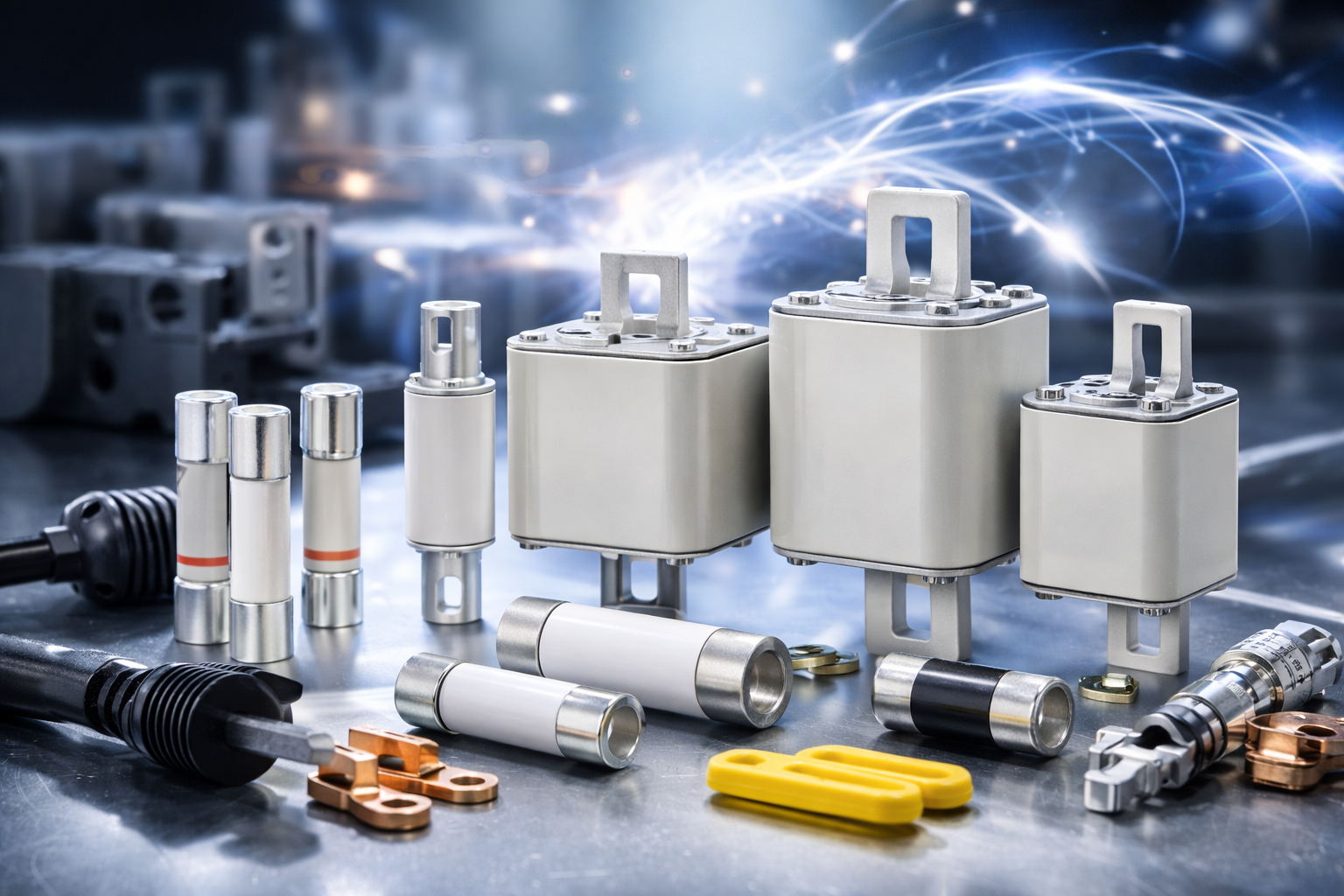
Eaton Bussmann Series Electrical Fuses – Blog & Fachwissen
Im Eaton Bussmann Series Electrical Fuses Blog finden Sie fundiertes Fachwissen rund um elektrische Sicherungen, Überstromschutz und moderne Schutzkonzepte für industrielle und gewerbliche Anwendungen. Diese Kategorie bündelt alle Blogartikel, technischen Beiträge und Praxisguides zu den Sicherungssystemen und Serien von Eaton Bussmann.
Eaton Bussmann zählt weltweit zu den führenden Herstellern von elektrischen Sicherungen, und ihre Serien stehen für Sicherheit, Normkonformität und höchste Zuverlässigkeit in anspruchsvollen elektrischen Systemen.
Was Sie im Eaton Bussmann Sicherungen Blog erwartet
Unsere Blogbeiträge helfen Ingenieuren, Einkäufern, Technikern und Planern dabei, die richtige Sicherungslösung zu finden und technische Zusammenhänge besser zu verstehen.
Themenschwerpunkte dieser Kategorie:
-
🔌 Überblick über Eaton Bussmann Sicherungsserien
-
⚙️ Unterschiede zwischen UL-, IEC- und Spezial-Sicherungen
-
📘 Technische Erklärungen zu Kennlinien, Auslöseverhalten & Bemessungswerten
-
🏭 Anwendungstipps für Industrie, Maschinenbau & Energieverteilung
-
🚗 Beiträge zu EV-, DC- und Hochvolt-Sicherungen
-
🛠 Best Practices für Auswahl, Installation und Wartung
Alle Inhalte sind praxisnah, verständlich aufbereitet und technisch fundiert.
Eaton Bussmann Sicherungsserien im Fokus
Der Blog behandelt regelmäßig verschiedene Eaton Bussmann Series Electrical Fuses, darunter:
-
Industrial Fuses
-
North American (UL) Fuse Series
-
IEC Sicherungsserien
-
High Speed & Semiconductor Fuses
-
EV & DC Sicherungen
-
Supplementary & Specialty Fuses
So erhalten Sie einen umfassenden Überblick über das Eaton Bussmann Portfolio und dessen Einsatzmöglichkeiten.
Fachwissen für sichere elektrische Systeme
Elektrische Sicherungen sind ein zentraler Bestandteil jeder sicheren Stromversorgung. Der Eaton Bussmann Series Electrical Fuses Blog unterstützt Sie dabei, Risiken zu minimieren, Normen einzuhalten und die Lebensdauer Ihrer Anlagen zu verlängern.
Ganz gleich, ob Sie Grundlagenwissen suchen oder tief in spezielle Sicherungsserien eintauchen möchten – hier finden Sie relevante, aktuelle und suchmaschinenoptimierte Inhalte rund um Eaton Bussmann Electrical Fuses.
👉 Jetzt Blogartikel entdecken und Ihr Wissen über Eaton Bussmann Sicherungsserien gezielt erweitern.

- Details
- Category: Electrical Fuses Blog
 eaton-bussmann-series-high-speed-fuses-application-guide-br132015en-en-us.pdf  | [Eaton Bussmann Fuses Technical Guide] | 0 kB |
How Maintenance Plans Extend the Service Life of Fuses – Efficiency and Reliability for Industrial Facilities
Regular fuse maintenance is essential for maintaining the safe operation of industrial facilities and extending the service life of electrical components. Many businesses underestimate the importance of a structured maintenance plan specifically designed for electrical fuses. A well-planned maintenance process not only helps prevent equipment failures but also reduces costs and improves operational safety and reliability.
1. Early Detection of Problems and Prevention of Failures
Fuses are essential protective components in electrical installations. They prevent more extensive equipment damage in the event of overloads or short circuits. Regular maintenance makes it possible to identify potential problems at an early stage, before they develop into costly failures.
A maintenance plan that includes visual inspections and functional checks ensures that defective or worn fuses are replaced in good time rather than only when an emergency occurs.
Early detection of wear helps maintain reliable protection and reduces the risk of unexpected production downtime.
2. Efficient Use of Resources
A well-structured maintenance plan enables targeted maintenance of fuses and other electrical components. By scheduling maintenance according to actual operating conditions and wear rates, businesses can avoid unnecessary downtime and excessive maintenance work.
Fuses that are regularly inspected and maintained as part of an appropriate maintenance programme help ensure efficient operation and contribute to the overall performance of industrial installations.
Planned maintenance is therefore not just a way of preventing faults; it is also an effective means of optimising resources and reducing operating costs.
3. Extended Fuse Service Life
Fuses are subject to natural ageing and wear over time. Regular maintenance and inspections help ensure that they remain in suitable operating condition throughout their intended service life.
A maintenance plan should include more than functional checks. It should also cover contact cleanliness, inspections for corrosion and the documentation of all maintenance activities.
Identifying potential weaknesses at an early stage and carrying out timely corrective maintenance helps ensure that fuses operate under appropriate conditions and continue to provide reliable protection for years to come.
4. Compliance with Safety Standards and Regulations
Regular fuse maintenance and proper documentation help ensure that industrial installations comply with applicable safety standards and regulations.
In many industrial sectors, maintenance records and periodic inspections are required by law or relevant industry standards. A well-organised maintenance plan ensures that protective measures remain up to date and meet applicable requirements.
Maintenance in accordance with relevant standards protects not only industrial equipment but also employees from hazards caused by defective or outdated fuses.
5. Cost Savings Through Preventive Maintenance
Preventive maintenance is one of the most effective ways to reduce costs over the long term.
Rather than facing expensive repairs or the complete replacement of equipment components following a failure, regular maintenance helps minimise the risk of unexpected repair work.
Predictive and preventive maintenance strategies can reduce the need for costly emergency repairs while maximising the operational value and availability of industrial equipment.
6. Optimising Operational Uptime
Another important benefit of a structured maintenance plan is improved operational uptime across industrial facilities.
By regularly checking the condition of fuses and carrying out necessary repairs or replacements, businesses can prevent failures caused by defective protective components.
This leads to higher productivity and helps ensure that production lines experience as little disruption as possible.
Conclusion: Maintenance Plans for Long-Term Efficiency and Safety
Maintenance plans are an essential part of any successful industrial asset management strategy.
Through regular inspections and preventive maintenance measures, businesses can help ensure that their fuses remain reliable, avoid unexpected failures and reduce operating costs.
A well-designed maintenance plan not only improves safety and reliability but also helps industrial facilities operate efficiently and remain profitable over the long term.

- Details
- Category: Electrical Fuses Blog
| eaton-bussmann-series-high-speed-fuses-application-guide-br132015en-en-us.pdf | [Eaton Bussmann Fuses Technical Guide] | 0 kB |
Why High-Quality Electrical Fuses Save Costs in the Long Term – Efficiency and Safety for Industrial Facilities
Industrial facilities operate around the clock and are frequently exposed to demanding operating conditions. Choosing the right electrical fuses plays a crucial role in minimising operating costs and maximising machinery service life. High-quality electrical fuses do more than protect against electrical faults: they also contribute to improved energy efficiency and reduced maintenance costs.
1. Reducing Unplanned Downtime
One of the biggest sources of costs in industrial operations is unplanned downtime. Poor-quality or inferior electrical fuses can lead to extended periods of downtime when a fault occurs, often resulting in production stoppages and significant financial losses.
High-quality industrial fuses offer greater reliability and help prevent unnecessary circuit interruptions under normal operating conditions.
They are designed to respond quickly and effectively to electrical faults, helping to prevent more extensive damage and costly production interruptions.
2. Lower Maintenance and Replacement Costs
Inferior electrical fuses often need to be replaced more frequently, resulting in higher maintenance and replacement costs.
By contrast, high-quality fuses are designed for a longer service life and require less frequent replacement. This reduces maintenance requirements, spare parts expenditure and the labour costs associated with replacing components.
Investing in reliable electrical fuses therefore delivers long-term benefits through lower maintenance costs and improved operational reliability.
3. Improving Energy Efficiency
High-quality electrical fuses can contribute to improved energy efficiency across industrial machinery and equipment.
They protect sensitive electronic components against overloads and help ensure that equipment operates within its optimal performance range. This can reduce energy consumption and, in many cases, significantly lower operating costs.
Efficient energy utilisation is particularly important in large industrial facilities, where even relatively small improvements can generate substantial savings and have a direct impact on profitability.
4. Protecting Sensitive Components and Extending Equipment Service Life
Modern industrial facilities contain highly sensitive electronic components that can be expensive to purchase, repair or replace.
High-quality electrical fuses protect these components against current surges, overloads and short circuits. This helps prevent costly repairs and unnecessary component replacements.
The result is not only reduced downtime but also an extended service life for machinery, electrical equipment and complete industrial installations.
5. Meeting Safety Requirements and Industry Standards
Selecting high-quality electrical fuses helps industrial businesses meet the safety requirements and technical standards applicable across many industries.
Compliance with these regulations not only helps protect your business against legal and regulatory issues but also ensures a safer working environment for employees.
Electrical fuses manufactured in accordance with recognised international standards help minimise risks and maintain the operational safety and reliability of industrial facilities.
Conclusion: High-Quality Electrical Fuses Are an Investment in the Future
Choosing the right electrical fuse has a direct impact on the efficiency and cost structure of an industrial facility.
High-quality electrical fuses provide reliable protection against electrical faults while delivering long-term financial benefits through reduced maintenance requirements, lower spare parts costs and improved energy efficiency.
Investing in high-quality industrial fuses is therefore not simply a matter of electrical safety. It is also a sound business decision that supports long-term operational efficiency, equipment reliability and profitability.

- Details
- Category: Electrical Fuses Blog
| eaton-bussmann-series-high-speed-fuses-application-guide-br132015en-en-us.pdf | [Eaton Bussmann Fuses Technical Guide] | 0 kB |
How to Choose the Right Fuse for Your Industrial Plant – The Complete Guide
Choosing the right fuse is essential for protecting industrial plants and equipment against electrical damage. Incorrect or unsuitable fuses can cause not only malfunctions and downtime but also put the safety of personnel and machinery at risk. A thorough selection process helps ensure safe, reliable and efficient operation.
1. Analyse Your Industrial Plant's Requirements
Before selecting a fuse, it is important to understand the electrical parameters of your installation:
-
Operating voltage: The fuse must be rated for the maximum voltage in the electrical system.
-
Rated current: Determine the normal current flowing through your installation to select a fuse with the appropriate current rating.
-
Environmental conditions: Temperature, humidity, dust and vibration can all affect fuse performance and service life.
This assessment provides the foundation for safe and reliable fuse selection.
2. Choose the Appropriate Fuse Type
Different types of electrical fuses offer specific advantages depending on their intended application:
-
Low-voltage fuses: Ideal for electrical machinery and installations operating below 1,000 V.
-
Fast-acting fuses: Particularly suitable for sensitive electronic components that require protection against even small overcurrents.
-
Time-delay fuses (slow-blow fuses): Especially suitable for equipment with high inrush currents, such as motors and transformers.
-
Special-purpose fuses: Designed for specific applications, including battery systems, solar installations and high-power equipment.
Selecting the correct fuse type ensures reliable operation under both normal operating conditions and fault conditions.
3. Consider the Electrical Specifications
When selecting an industrial fuse, the following technical parameters should be taken into account:
-
Rated voltage: The fuse must be suitable for at least the maximum operating voltage of the system.
-
Rated current: The fuse rating should be selected in accordance with the normal operating current and the applicable electrical design requirements to prevent unwanted operation during minor fluctuations.
-
Operating characteristics: Depending on the application, a fast-acting or time-delay fuse can improve system performance and safety.
Correctly matching these parameters helps prevent unnecessary downtime and supports continuous industrial operation.
4. Check Standards and Certifications
Make sure that the selected fuse:
-
Is certified in accordance with relevant international standards.
-
Meets applicable safety and quality requirements.
Certified fuses undergo testing and must meet defined reliability and safety criteria. This is particularly important in demanding industrial environments.
5. Maintenance and Spare Parts Availability
Regular inspection of electrical fuses is essential to maintain their functionality and ensure long-term operational safety.
Make sure that:
-
Replacement fuses are always available.
-
Fuse replacement can be carried out quickly and without unnecessary complications.
This helps minimise downtime and ensures the continuous availability of your industrial equipment.
Conclusion: Choosing the Right Fuse Is Essential for Efficiency and Safety
Selecting the right fuse for your industrial plant should never be left to chance. It requires a structured approach that includes:
-
Identifying the electrical requirements.
-
Selecting the appropriate fuse type.
-
Checking and matching the electrical specifications.
-
Verifying applicable standards and safety requirements.
-
Ensuring proper maintenance and spare parts availability.
A well-planned fuse selection process improves operational safety, reduces the risk of equipment failure and increases the cost-effectiveness of your industrial installations.

- Details
- Category: Electrical Fuses Blog
| eaton-bussmann-series-high-speed-fuses-application-guide-br132015en-en-us.pdf | [Eaton Bussmann Fuses Technical Guide] | 0 kB |
Why Reliable Electrical Fuses Are Essential for Industrial Plants – Safe Operation and Maximum Efficiency
Industrial plants are the backbone of modern manufacturing. They operate around the clock, handle demanding workloads and rely on complex electronic control systems. In these environments, even a relatively small component such as an electrical fuse can make the difference between uninterrupted operation and costly production downtime.
What Makes Electrical Fuses So Important?
Electrical fuses perform several essential protective functions:
-
Overload protection: They interrupt the electrical circuit when current levels become too high, preventing overheating and damage to electrical cables and equipment.
-
Short-circuit protection: When sudden electrical faults occur, fuses respond rapidly to prevent damage from spreading to other components.
-
Protection of sensitive electronics: Modern industrial production systems use sophisticated controllers and sensors. Electrical fuses help protect these components against costly failures.
By providing these protective functions, electrical fuses extend machinery service life, improve workplace safety and reduce unplanned industrial downtime.
Why High-Quality Industrial Fuses Matter
Not all electrical fuses offer the same level of quality or protection. High-quality industrial fuses are distinguished by several important characteristics:
-
Long service life: Durable materials and precision manufacturing ensure reliable performance under demanding operating conditions.
-
Fast response times: Premium fuses respond more quickly and accurately to overcurrent events, helping to minimise consequential damage.
-
Reliability under extreme conditions: They provide dependable protection even when exposed to significant load fluctuations, vibration or temperature variations.
Typical Applications of Industrial Fuses
Industrial fuses are essential in a wide range of applications, protecting equipment and systems such as:
-
Electric motors and pump drives
-
Control devices and PLC systems
-
Conveyor systems and industrial robotics
-
Electronic control systems and sensors
Across industries, from automotive manufacturing to food production, high-quality fuses help prevent equipment failures and production interruptions that could otherwise result in substantial costs.
Additional Benefits of High-Quality Electrical Fuses
-
Lower maintenance costs: Longer replacement intervals and a reduced risk of equipment failure help minimise maintenance expenditure.
-
Improved energy efficiency: Precise protective performance helps reduce energy losses and improve overall plant performance.
-
Compliance with standards and safety regulations: Certified electrical fuses support compliant and safe industrial operations.
Conclusion: Protection, Efficiency and Operational Continuity
Reliable electrical fuses are fundamental to the safe, efficient and continuous operation of industrial plants. They protect people, machinery and production processes, providing an essential foundation for long-term business success.
Choosing high-quality industrial fuses helps businesses minimise operational risks, protect valuable equipment and maintain production efficiency.

- Details
- Category: Electrical Fuses Blog
Cheap Fuses, Good Fuses or Fast-Delivered Fuses? Understanding the Common Law of Business Balance
Cheap Fuses, Good Fuses or Fast-Delivered Fuses? What Really Matters?
When purchasing fuses, buyers are often faced with three important questions:
-
Where can I buy cheap fuses?
-
Which supplier offers the best-quality fuses?
-
Who can deliver the required fuses as quickly as possible?
At first glance, these seem like three separate purchasing priorities. In reality, they are closely connected.
Every purchasing decision involves a balance between price, quality and availability. This is particularly important when buying electrical fuses, where product reliability and delivery times can have a direct impact on operational safety, production processes and business continuity.
The cheapest fuse is not automatically the best deal. A high-quality fuse that arrives too late may be just as problematic. And the fastest delivery does not necessarily represent good value if the product does not meet the technical requirements.
This brings us to an interesting business principle: the Common Law of Business Balance.
1. The Common Law of Business Balance: Why the Cheapest Is Not Always the Best
A well-known business principle, often attributed to the British writer and social thinker John Ruskin, states:
"It's unwise to pay too much, but it's worse to pay too little."
The principle is commonly known as the Common Law of Business Balance.
Its central message is simple: it is unrealistic to expect outstanding quality, excellent service and exceptional performance at the lowest possible price.
A supplier can usually offer a lower price by making compromises somewhere. These compromises might involve materials, manufacturing standards, product testing, logistics, stock availability or customer service.
The important question is therefore not simply:
How cheap can I buy this product?
It should be:
What am I actually getting for my money?
This principle is particularly relevant to the fuse market.
2. Cheap Fuses: Saving Money or Creating Additional Costs?
Price is naturally an important factor in purchasing decisions. Every company wants to control costs, improve efficiency and protect its margins.
Buying affordable fuses makes perfect sense. However, there is an important difference between a competitive price and choosing a product based on price alone.
Electrical fuses are safety-related components. Their job is to protect electrical circuits and equipment against excessive current. They must operate according to their specified electrical characteristics.
A fuse that is unsuitable for its intended application can cause serious problems.
When evaluating inexpensive fuses, buyers should pay attention to:
-
Compliance with the applicable standards and technical specifications.
-
Correct rated current and voltage.
-
Appropriate breaking capacity.
-
Suitable operating characteristics and time-current behaviour.
-
Reliable manufacturing and consistent product performance.
-
Traceability and manufacturer documentation.
A low purchase price offers little benefit if a fuse does not meet the required specifications.
The same applies to industrial applications. If an unsuitable fuse causes production downtime, equipment damage or additional maintenance work, the initial saving can quickly become insignificant.
The real cost of a fuse is not just its purchase price. It is the cost of obtaining the required protection and reliability throughout its service life.
3. Good Fuses: Quality Is an Investment in Reliability
Good fuses are not necessarily the most expensive products on the market.
Good quality means that a fuse reliably performs the function for which it was designed.
For professional buyers, this includes more than the appearance or brand name of a product. Technical suitability, consistent manufacturing quality and documented performance are essential.
A quality fuse should offer:
Reliable protection
The fuse must operate according to its specified characteristics and be suitable for the electrical application.
Consistent performance
Manufacturing consistency helps ensure that products meet their declared specifications from one production batch to another.
Technical compliance
Applicable standards, ratings and manufacturer documentation provide important information for selecting the right product.
Long-term value
A suitable, reliable fuse can help reduce avoidable maintenance, replacement and operational costs.
For industrial customers, electrical contractors, maintenance departments and OEM manufacturers, these factors can be more important than saving a few cents on an individual component.
The best purchasing decision is not necessarily the cheapest one. It is the one that delivers the right combination of quality, performance and price.
4. Fast Delivery of Fuses: Because Time Is Money
There is another important factor that is sometimes overlooked when purchasing fuses: availability.
Imagine the following situation:
A machine in a production facility stops working because a fuse needs to be replaced. The required fuse is technically straightforward and relatively inexpensive.
However, the supplier cannot deliver it for two weeks.
The fuse itself may cost only a few euros. But the consequences of waiting could be considerably more expensive.
Production delays, maintenance costs, missed delivery deadlines and unplanned downtime can quickly outweigh the value of the component.
This is why fast fuse delivery is not simply a convenient additional service. In many situations, it is an important part of the overall value of a supplier.
A reliable fuse supplier should therefore focus on:
-
Good stock availability.
-
Short processing times.
-
Efficient order handling.
-
Reliable shipping arrangements.
-
Access to alternative products where technically appropriate.
-
Clear communication about delivery dates.
For customers, the value of a supplier is measured not only by what is delivered, but also by when it arrives.
A good fuse delivered too late may be of little practical value when production needs to restart today.
5. The Three Factors: Price, Quality and Delivery
When comparing fuse suppliers, it helps to look at three purchasing criteria together.
| Purchasing factor | Main benefit | Potential disadvantage if considered alone |
|---|---|---|
| Cheap fuses | Lower initial purchase price | Risk of overlooking technical suitability or product quality |
| Good fuses | Reliability and technical confidence | Potentially higher purchase price |
| Fast-delivered fuses | Reduced waiting times and downtime | Speed alone does not guarantee product suitability |
The best solution is to find a supplier that understands all three factors.
A supplier offering competitive prices, technically suitable products and fast delivery creates considerably more value than one competing on price alone.
Of course, not every purchasing situation requires the same priorities.
For a standard replacement fuse that is readily available, price may be decisive.
For a critical industrial application, technical suitability and reliability may be the most important considerations.
For an urgent repair, delivery speed can become the deciding factor.
The right balance depends on the customer's actual requirements.
6. Applying the Common Law of Business Balance to Fuse Purchasing
Let's consider three typical purchasing scenarios.
Scenario A: The cheapest fuse
A buyer chooses the lowest-priced fuse without sufficiently checking the technical specifications or manufacturer documentation.
The initial purchase price is attractive, but the buyer may have taken unnecessary risks.
The lesson: Saving money only makes sense when the product meets all the necessary requirements.
Scenario B: The premium fuse
A buyer selects a well-established, high-quality product from a recognised manufacturer.
The product meets the technical requirements and comes with appropriate documentation. However, the purchase price is significantly higher than that of comparable alternatives.
The lesson: Quality matters, but paying more does not automatically mean receiving better value. The additional benefits should justify the price.
Scenario C: The right fuse, delivered quickly
A buyer finds a supplier offering a technically suitable fuse at a competitive price with immediate or short-term availability.
The product meets the application requirements, the price is reasonable and delivery is fast.
The lesson: This is the balance most professional buyers should aim for.
It is not about purchasing the cheapest product or the most expensive product. It is about finding the right product at the right price and receiving it at the right time.
7. What Should You Look for in a Professional Fuse Supplier?
A good fuse supplier does more than process orders.
Professional customers need a partner who understands the importance of technical specifications, product availability and reliable service.
When choosing a supplier, consider the following questions:
-
Does the supplier offer a broad range of electrical fuses?
-
Can the supplier help identify the correct replacement fuse?
-
Are technical specifications and product documentation available?
-
Are products from established manufacturers available?
-
Does the supplier maintain stock for commonly required products?
-
Can urgent requirements be handled efficiently?
-
Does the supplier offer competitive prices without compromising technical requirements?
A supplier who can answer these questions confidently can help reduce purchasing effort and make procurement more predictable.
For companies purchasing fuses regularly, a dependable supplier relationship can create value far beyond the price of individual products.
8. The Best Fuse Is Not Always the Cheapest – It Is the One That Delivers the Best Value
The Common Law of Business Balance provides a useful reminder for every purchasing department:
You cannot expect everything at the lowest possible price.
When buying fuses, the same principle applies.
Cheap fuses can be a sensible choice when they meet all technical requirements. High-quality fuses can provide confidence and reliability. Fast delivery can prevent unnecessary delays and costly downtime.
The real challenge is bringing these three elements together.
At the end of the day, the best purchasing decision is the one that considers the total value rather than just the purchase price.
Cheap fuses, good fuses or fast-delivered fuses? Ideally, you should not have to choose just one.
Look for a supplier who understands that price, quality and availability belong together.
Because in the fuse business, as in every other business, the best deal is not necessarily the cheapest one. It is the one that works.
9. Casadaa Distribution: Finding the Best Fuse Solution for Every Customer
At Casadaa Distribution, we understand the Common Law of Business Balance.
We know that every customer has different requirements. For some, the purchase price is the most important factor. Others prioritise a particular manufacturer, proven product quality, technical specifications or immediate availability.
Our approach is simple: We try to find the best possible fuse solution for each individual customer.
Rather than focusing exclusively on the cheapest product, we look at the bigger picture:
-
Price: Finding competitive and economically sensible solutions.
-
Quality: Identifying fuses that meet the customer's technical requirements and expectations.
-
Availability: Looking for products that can be delivered as quickly as possible.
-
Alternatives: Exploring suitable alternative manufacturers or products where appropriate.
-
Customer requirements: Understanding what really matters for each individual application.
Sometimes the best solution is a competitively priced standard fuse. In other cases, it may be a particular brand, a specialised industrial fuse or a product that needs to be sourced urgently.
We believe that good distribution is about more than simply selling products. It is about understanding the customer's needs, finding suitable solutions and creating long-term value.
At Casadaa Distribution, our goal is not simply to sell you a fuse. Our goal is to help you find the right fuse at the right price, with the best possible availability.
Because the best solution is the one that works for you.
Frequently Asked Questions (FAQ)
Where can I buy cheap electrical fuses?
Electrical fuses can be purchased from specialist fuse distributors, electrical wholesalers and online suppliers. Compare prices while checking the manufacturer's specifications, ratings, compliance and product suitability.
Are cheap fuses reliable?
Affordable fuses can be reliable if they meet the relevant technical specifications and applicable standards. A low price alone does not indicate poor quality, just as a high price does not automatically guarantee superior performance.
Why is fast delivery important when ordering fuses?
Fuses are often essential components in electrical systems and industrial machinery. When a replacement is urgently required, long delivery times can delay maintenance, repairs or production restarts.
What makes a good fuse supplier?
A professional fuse supplier combines competitive pricing, reliable products, technical knowledge, good stock availability and dependable delivery services.
Is it better to buy cheap fuses or high-quality fuses?
The most important factor is technical suitability. A fuse must meet the electrical and safety requirements of its intended application. Once this is established, buyers can compare price, quality, availability and overall value.
Final thought:
The Common Law of Business Balance is not an argument against affordable products. It is an argument against unrealistic expectations.
The objective should never be to pay as little as possible regardless of the consequences.
It should be to get the best possible value for your money.



