
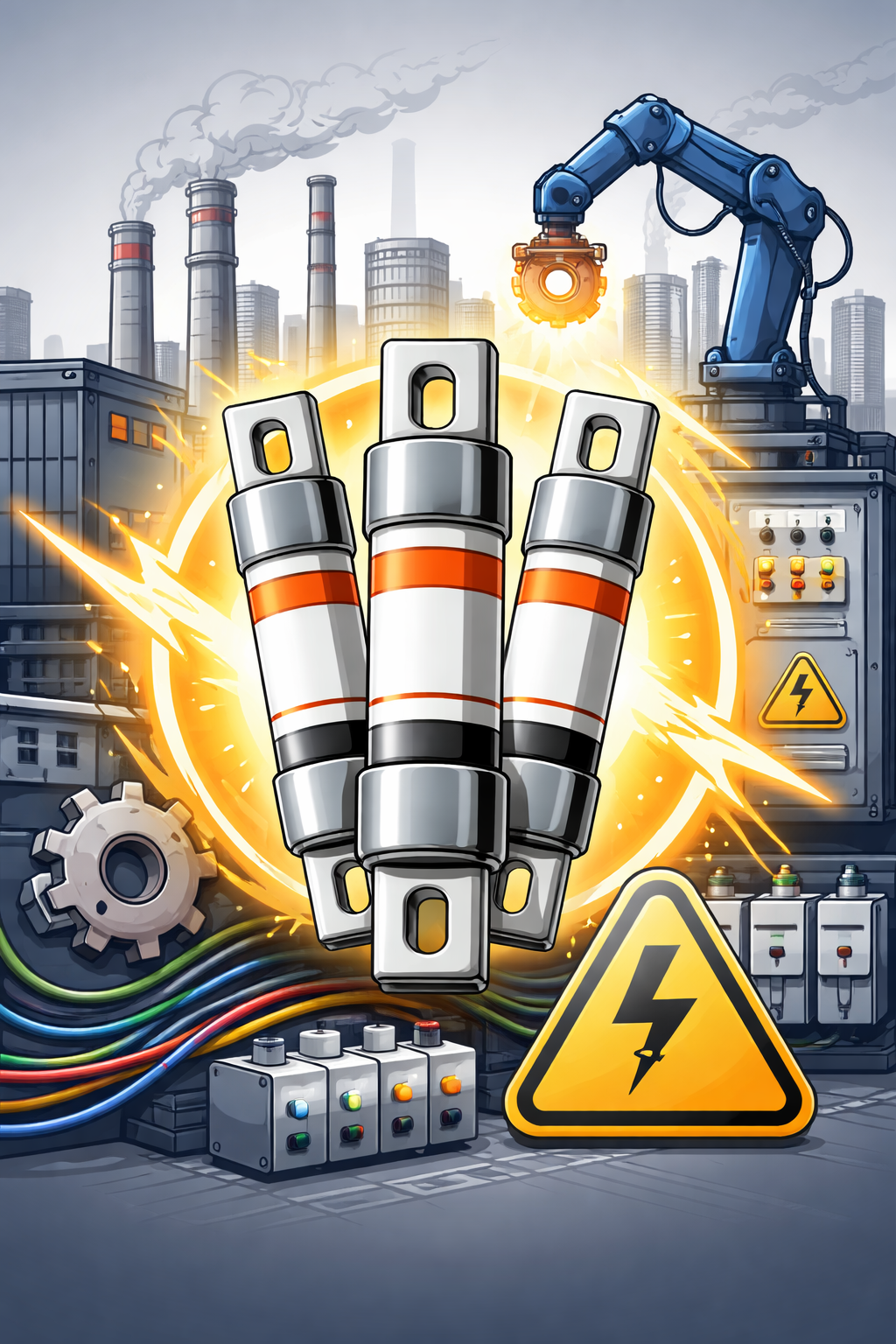
Class J Fuses: Powerful Protection for Industrial Applications
Class J fuses provide reliable, high-performance protection for industrial electrical circuits, machinery and equipment. Designed to protect against short circuits, overloads and other electrical faults, they help prevent costly production downtime and equipment damage.
In this article, we explore why Class J fuses are an excellent choice for industrial circuit protection and the advantages they offer compared with other types of electrical fuses.
1. What Are Class J Fuses?
Class J fuses are compact, high-performance electrical fuses specifically designed for industrial electrical circuits. They offer a high interrupting rating and protect electrical equipment, motor systems and power circuits against electrical faults.
-
Applications: These fuses are ideal for applications requiring a high level of safety and reliability, including automation systems, electric motors, transformers and power distribution circuits.
-
Key characteristics: Class J fuses are designed to respond quickly and accurately to short circuits and overloads, helping to minimise unnecessary interruptions. They are particularly suitable for protecting valuable industrial equipment.
2. Key Benefits of Class J Fuses
Choosing Class J fuses for industrial installations offers several advantages that can improve the protection and efficiency of electrical systems.
-
High interrupting capacity: Class J fuses offer excellent interrupting performance, allowing them to safely interrupt even high short-circuit currents and protect connected equipment.
-
Space-saving design: Despite their high performance, Class J fuses have a compact design and require less installation space than many other fuse types. This makes them particularly suitable for compact control panels and distribution cabinets.
-
Fast response: These fuses respond quickly to excessive currents, interrupting the circuit to help prevent damage to connected equipment.
-
Reliability and efficiency: Class J fuses are designed to support reliable operation and minimise unnecessary production interruptions, helping to improve system availability and reduce maintenance costs.
3. Industrial Applications of Class J Fuses
Class J fuses are widely used across industrial sectors where reliable and high-performance electrical protection is essential. Typical applications include:
-
Motor protection: In motor control systems and electric drives, Class J fuses help protect against damage caused by short circuits and overloads. They support the safe operation of industrial motors, compressors and pump systems.
-
Transformer protection: Class J fuses provide effective transformer protection by interrupting fault currents caused by short circuits or overload conditions, helping to prevent costly equipment damage.
-
Industrial automation: In automated production processes, Class J fuses protect electrical circuits and sensors against overcurrents, supporting reliable system operation.
-
Power distribution systems: They are used in electrical distribution installations to provide rapid protection against short-circuit currents and help minimise operational disruptions.
The versatility of Class J fuses makes them a popular choice for a wide range of industrial applications.
4. Advantages of Class J Fuses Compared with Other Fuse Types
Class J fuses offer several specific advantages over other types of electrical fuses.
-
Higher interrupting capacity: Compared with many conventional fuse types, Class J fuses offer high interrupting performance, making them suitable for protecting valuable industrial equipment.
-
Reduced space requirements: Class J fuses are more compact than many other fuses with comparable performance, making them particularly suitable for space-constrained control cabinets and distribution boards.
-
Reliable protection: When correctly selected for the application, Class J fuses provide dependable circuit protection while helping to minimise unnecessary system shutdowns.
For businesses looking for an efficient and reliable solution to protect industrial electrical installations, Class J fuses are often an excellent option.
5. How to Choose the Right Class J Fuse
Selecting the correct Class J fuse depends on several important factors that should be considered when designing and implementing industrial electrical circuits.
-
Current and voltage ratings: Ensure that the Class J fuse is suitable for the maximum current and operating voltage of the equipment to be protected.
-
Operating characteristics: Check that the fuse's operating characteristics match the requirements of the application, particularly in relation to short-circuit and overload protection.
-
Physical dimensions and compatibility: The fuse dimensions must be compatible with the installation's wiring, fuse holders and electrical connections.
Selecting the correct Class J fuse helps ensure optimal protection for industrial electrical circuits and supports the efficient operation of production equipment.
6. Conclusion: Class J Fuses for Maximum Industrial Protection
Class J fuses provide powerful and efficient protection for a wide range of industrial applications. They are particularly suitable for motors, transformers, automation systems and power distribution installations, thanks to their high interrupting capacity, fast response and compact design.
By using appropriately selected Class J fuses, businesses can improve installation safety, reduce the risk of equipment damage and maximise the operational availability of industrial electrical systems.
If you are looking for a reliable and efficient solution for industrial circuit protection, Class J fuses are an excellent choice.



