
 eaton-bussmann-series-high-speed-fuses-application-guide-br132015en-en-us.pdf  | [Eaton Bussmann Fuses Technical Guide] | 0 kB |
Why the Right Short-Circuit and Overload Protection Is Essential in Industrial Applications
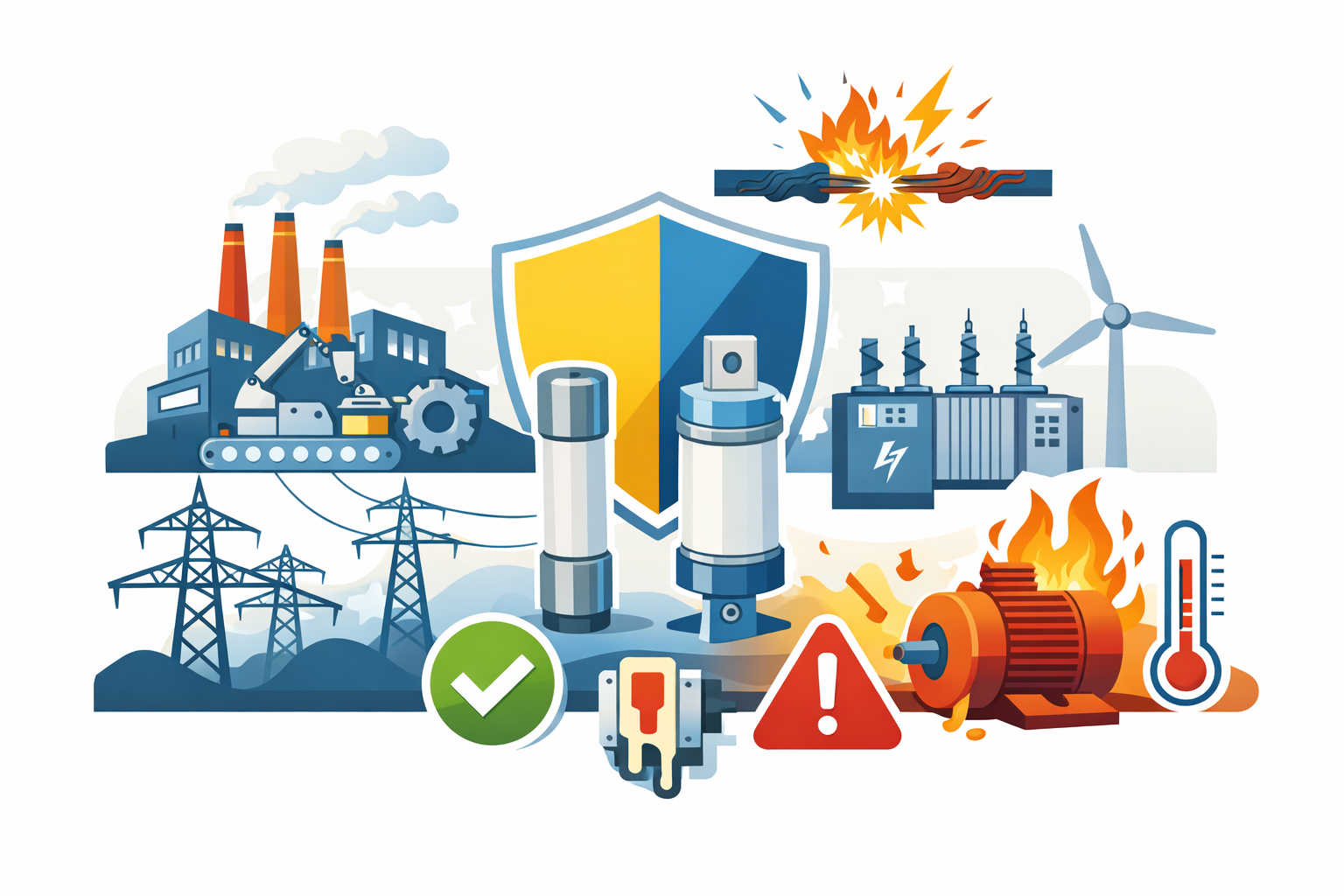
In industrial environments, short-circuit and overload protection are essential for ensuring the safety and reliability of electrical systems. Effective protection against overloads and short circuits can prevent costly machinery damage, operational downtime and even serious safety hazards.
In this article, we explain why choosing the right short-circuit and overload protection is essential for industrial applications and how it contributes to cost control and operational stability.
1. What Is Short-Circuit and Overload Protection?
Short-circuit and overload protection is a safety measure designed to interrupt an electrical circuit quickly when excessive current flows or an electrical fault, such as a short circuit, occurs. This not only protects equipment from damage but also reduces the risk of fire and hazards to personnel.
-
Short-circuit protection: Activates when a sudden fault current occurs due to an electrical fault or short circuit.
-
Overload protection: Activates when the current exceeds the permissible operating level, potentially causing components to overheat and become damaged.
Effective short-circuit and overload protection ensures that these problems are detected and addressed promptly, before they cause serious damage to equipment or disrupt industrial operations.
2. Why Is the Right Protection So Important?
In industrial applications, where machinery and equipment often operate at high power levels and under demanding conditions, choosing the correct protection mechanism is essential. Inadequate protection can lead to several problems:
-
Machinery damage and breakdowns: Insufficient protection can cause machinery and equipment to be damaged by short circuits or overloads, resulting in lengthy operational interruptions.
-
High maintenance costs: Without appropriate protection, equipment becomes more susceptible to faults and failures, leading to more frequent repairs and higher maintenance costs.
-
Safety risks: Inadequate protection increases the risk of fires, electric shocks and other accidents that can endanger employees and the entire production environment.
Effective short-circuit and overload protection minimises these risks and helps ensure that your industrial facility continues to operate safely and with minimal interruption.
3. Types of Short-Circuit and Overload Protection
Various protection mechanisms are used to provide short-circuit and overload protection in industrial electrical systems. The right solution depends on the type of electrical installation and the specific requirements of the application.
-
Fuses: One of the simplest and most cost-effective methods of protecting against short circuits and overloads. They interrupt the electrical circuit when the current exceeds the fuse's rated capacity.
-
Miniature circuit breakers (MCBs): These reusable protective devices provide both overload and short-circuit protection. They are particularly suitable for modern automation systems where maintenance and adjustments may be required regularly.
-
Protection relays: These devices provide more advanced protection by detecting overloads and short circuits, monitoring irregularities in the power supply and initiating immediate protective measures.
Selecting the appropriate protection mechanism is essential for ensuring the safe operation of industrial machinery and electrical installations.
4. The Impact on Operational Stability and Cost Efficiency
Effective short-circuit and overload protection plays a vital role in maintaining operational stability and improving the cost efficiency of industrial facilities.
The key benefits of reliable protection include:
-
Reduced downtime: Rapid intervention in the event of an overload or short circuit minimises operational interruptions and helps equipment return to service more quickly.
-
Lower repair costs: Appropriate protection prevents expensive machinery and equipment from being damaged by short circuits or overloads, reducing repair and replacement costs.
-
Optimised maintenance requirements: A well-functioning protection system reduces the need for frequent maintenance and repairs, significantly lowering maintenance costs and workload.
-
Improved energy efficiency: Properly designed protection helps ensure that electrical power is used efficiently, reducing energy consumption and minimising energy losses.
A well-planned short-circuit and overload protection system therefore does more than improve safety. It also enhances the profitability and operational performance of industrial installations.
5. How Do You Choose the Right Protection Mechanism?
Choosing the right short-circuit and overload protection for an industrial facility requires a thorough assessment of its specific operating requirements.
Important factors to consider include:
-
Type of loads: Consider the types of equipment and machinery operating in your facility, as well as their required current ratings and operating voltages.
-
Environmental conditions: Take into account temperature, humidity and vibration levels in your production environment.
-
Future requirements: Choose a protection mechanism that can be expanded or adapted to accommodate future changes in production requirements.
Carefully selecting and installing the appropriate short-circuit and overload protection helps ensure that your industrial equipment operates both safely and efficiently.
6. Conclusion: The Right Short-Circuit and Overload Protection for Long-Term Safety
Short-circuit and overload protection are indispensable for the safety and efficiency of industrial electrical systems.
By using fuses, circuit breakers or protection relays, you can help protect machinery and electrical systems against faults and excessive currents. Effective protection not only improves operational stability but also contributes to cost control and energy efficiency.
Choosing the right protection mechanism is therefore a crucial step in designing and implementing industrial infrastructure that is safe, reliable and cost-effective in the long term.



