
Electrical Fuses Blog
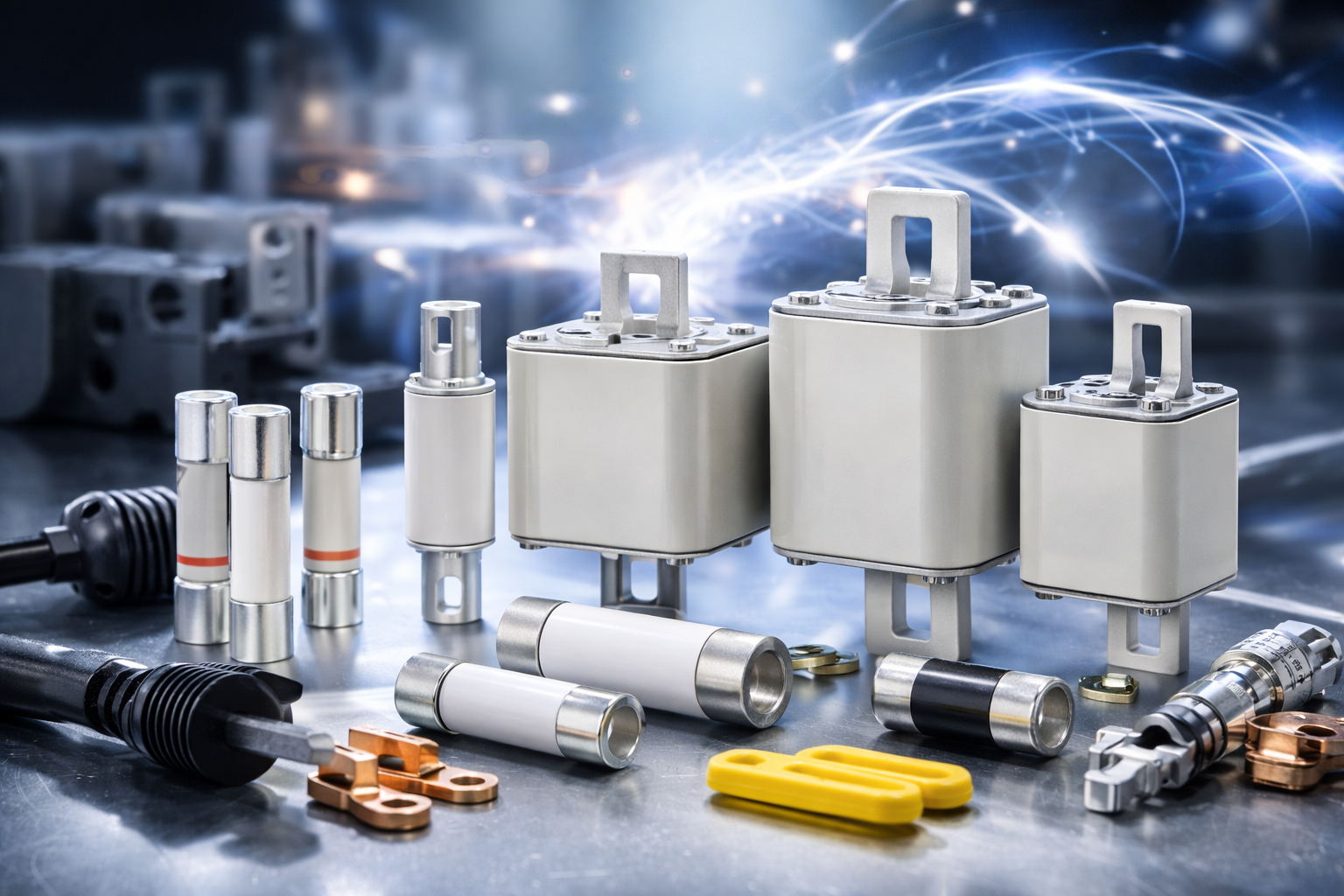
Eaton Bussmann Series Electrical Fuses – Blog & Fachwissen
Im Eaton Bussmann Series Electrical Fuses Blog finden Sie fundiertes Fachwissen rund um elektrische Sicherungen, Überstromschutz und moderne Schutzkonzepte für industrielle und gewerbliche Anwendungen. Diese Kategorie bündelt alle Blogartikel, technischen Beiträge und Praxisguides zu den Sicherungssystemen und Serien von Eaton Bussmann.
Eaton Bussmann zählt weltweit zu den führenden Herstellern von elektrischen Sicherungen, und ihre Serien stehen für Sicherheit, Normkonformität und höchste Zuverlässigkeit in anspruchsvollen elektrischen Systemen.
Was Sie im Eaton Bussmann Sicherungen Blog erwartet
Unsere Blogbeiträge helfen Ingenieuren, Einkäufern, Technikern und Planern dabei, die richtige Sicherungslösung zu finden und technische Zusammenhänge besser zu verstehen.
Themenschwerpunkte dieser Kategorie:
-
🔌 Überblick über Eaton Bussmann Sicherungsserien
-
⚙️ Unterschiede zwischen UL-, IEC- und Spezial-Sicherungen
-
📘 Technische Erklärungen zu Kennlinien, Auslöseverhalten & Bemessungswerten
-
🏭 Anwendungstipps für Industrie, Maschinenbau & Energieverteilung
-
🚗 Beiträge zu EV-, DC- und Hochvolt-Sicherungen
-
🛠 Best Practices für Auswahl, Installation und Wartung
Alle Inhalte sind praxisnah, verständlich aufbereitet und technisch fundiert.
Eaton Bussmann Sicherungsserien im Fokus
Der Blog behandelt regelmäßig verschiedene Eaton Bussmann Series Electrical Fuses, darunter:
-
Industrial Fuses
-
North American (UL) Fuse Series
-
IEC Sicherungsserien
-
High Speed & Semiconductor Fuses
-
EV & DC Sicherungen
-
Supplementary & Specialty Fuses
So erhalten Sie einen umfassenden Überblick über das Eaton Bussmann Portfolio und dessen Einsatzmöglichkeiten.
Fachwissen für sichere elektrische Systeme
Elektrische Sicherungen sind ein zentraler Bestandteil jeder sicheren Stromversorgung. Der Eaton Bussmann Series Electrical Fuses Blog unterstützt Sie dabei, Risiken zu minimieren, Normen einzuhalten und die Lebensdauer Ihrer Anlagen zu verlängern.
Ganz gleich, ob Sie Grundlagenwissen suchen oder tief in spezielle Sicherungsserien eintauchen möchten – hier finden Sie relevante, aktuelle und suchmaschinenoptimierte Inhalte rund um Eaton Bussmann Electrical Fuses.
👉 Jetzt Blogartikel entdecken und Ihr Wissen über Eaton Bussmann Sicherungsserien gezielt erweitern.
- Details
- Category: Electrical Fuses Blog
 bus-ele-ds-1014-fnq-r.pdf  | [Eaton Bussmann FNQ-R Fuses] | 0 kB |
| bus-ele-ds-1023-lp-cc.pdf | [Eaton Bussmann LP-CC Fuses] | 0 kB |
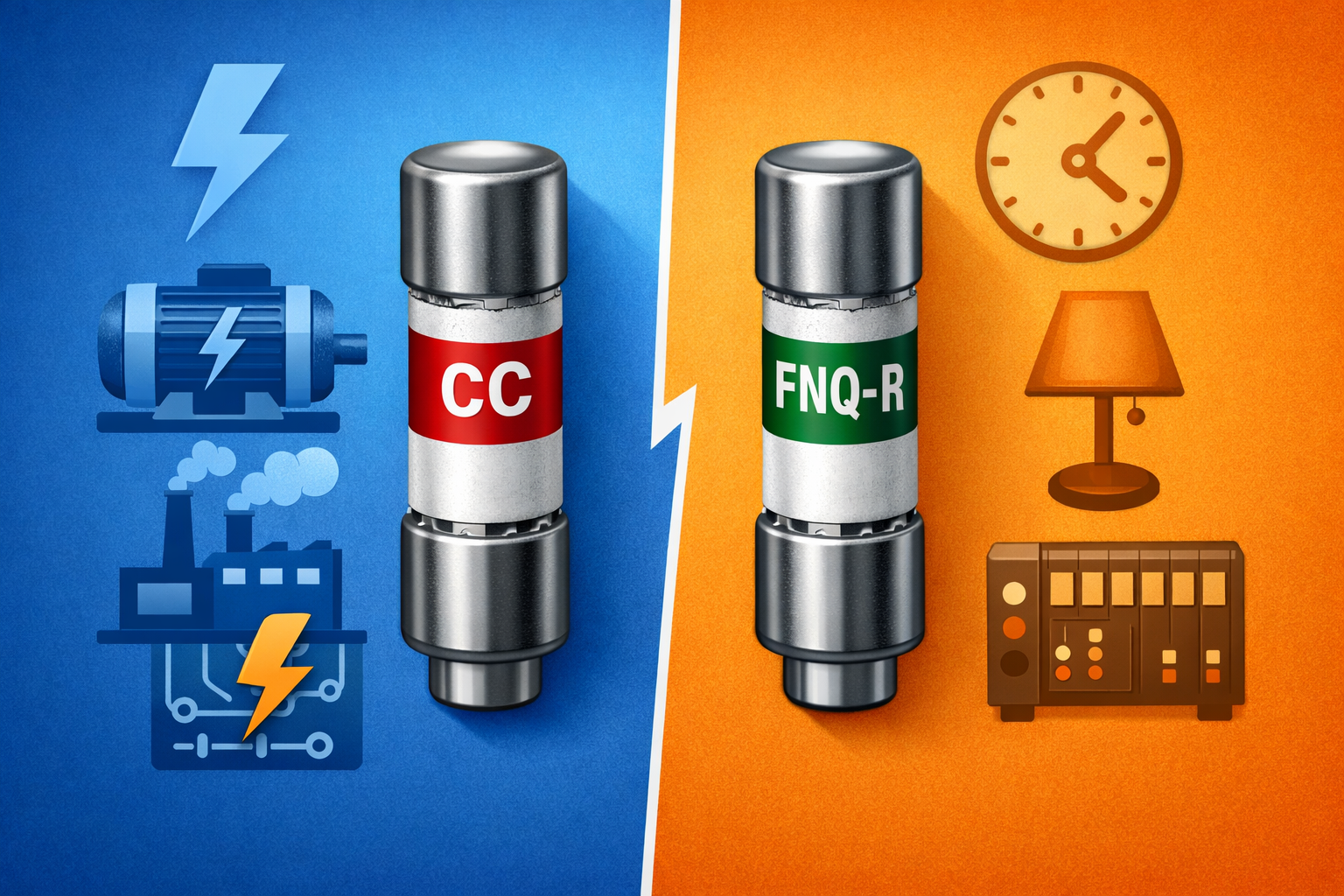
LP-CC vs FNQ-R Fuses: Which Is Right for Your Application?
When selecting fuses for industrial applications, choosing the correct fuse type is essential for ensuring reliable electrical protection. Two commonly used types are LP-CC fuses and FNQ-R fuses.
Both provide specific protection characteristics, but they differ in their design, operating characteristics and intended applications. In this article, we explore the differences between LP-CC and FNQ-R fuses and explain how to choose the right fuse for your requirements.
1. What Are LP-CC Fuses?
LP-CC (Low-Peak Class CC) fuses are designed to protect electrical circuits and electronic equipment. These fuses are known for their high interrupting capacity and ability to respond reliably to overloads and short circuits.
They provide effective protection for motor-driven equipment and electronic applications.
-
Applications: LP-CC fuses are commonly used in electrical drive systems, transformers and control panel applications.
-
Advantages: One of the main advantages of LP-CC fuses is their ability to operate reliably in applications involving high inrush currents, such as motor starting. They help protect sensitive components and prevent unnecessary power interruptions.
2. What Are FNQ-R Fuses?
FNQ-R fuses (Class CC, time-delay fuses) are designed to protect electrical circuits and equipment in industrial installations. They provide protection against overloads and short circuits and are suitable for applications where reliable circuit protection is essential.
-
Applications: FNQ-R fuses are typically used in low-voltage electrical circuits, heat pumps, air conditioning systems and compressors.
-
Advantages: Their operating characteristics help protect electrical components against overloads and short circuits. FNQ-R fuses also provide reliable protection in applications with varying load conditions.
3. Differences Between LP-CC and FNQ-R Fuses
Choosing between LP-CC and FNQ-R fuses depends on the specific requirements of your application. The main factors to consider include:
Operating characteristics
-
LP-CC fuses are designed for applications involving demanding electrical loads, including equipment with high inrush currents, such as motors.
-
FNQ-R fuses are also time-delay fuses and are suitable for applications requiring reliable protection against overloads and short circuits.
Interrupting capacity
-
LP-CC fuses are designed to protect electrical equipment and provide a high level of short-circuit protection.
-
FNQ-R fuses provide reliable circuit protection, helping to prevent damage caused by electrical faults.
Applications
-
LP-CC fuses are commonly selected for motor applications, transformers and electrical systems with high inrush currents.
-
FNQ-R fuses are used in low-voltage installations and industrial applications requiring Class CC circuit protection.
4. How Do You Choose the Right Fuse?
Selecting the correct fuse is essential for maintaining the safety, reliability and efficiency of your electrical installation. Consider the following factors when choosing between LP-CC and FNQ-R fuses:
-
Application requirements: Determine whether your application involves high inrush currents, motor starting or other specific electrical operating conditions.
-
Interrupting capacity: Make sure the fuse has an adequate interrupting rating for your system and can safely interrupt potential overload and short-circuit currents.
-
Size and compatibility: Check that the fuse dimensions, voltage rating, current rating and electrical characteristics are compatible with your installation.
-
Cost and efficiency: A higher-quality fuse may help reduce long-term costs by minimising equipment damage, maintenance requirements and unexpected downtime.
5. Conclusion: Choosing the Right Fuse for Your Application
Choosing the right fuse is essential for ensuring the safe and reliable operation of electrical installations and equipment.
When comparing LP-CC and FNQ-R fuses, consider the specific requirements of your application, including inrush currents, voltage, current rating and required interrupting capacity.
LP-CC and FNQ-R fuses both offer Class CC protection characteristics and should be selected according to the manufacturer's technical specifications and the requirements of the electrical system.
By choosing the appropriate fuse, you can improve electrical system reliability, minimise downtime and reduce potential repair and maintenance costs.
- Details
- Category: Electrical Fuses Blog
| eaton-bussmann-series-high-speed-fuses-application-guide-br132015en-en-us.pdf | [Eaton Bussmann Fuses Technical Guide] | 0 kB |
How High-Quality Fuses Prevent Machinery Downtime
In industrial environments, machinery downtime is one of the biggest challenges to production efficiency. Unexpected breakdowns not only cause production delays but also result in high repair and maintenance costs. One of the most effective ways to prevent machinery downtime is to use high-quality electrical fuses.
In this article, you will discover why choosing the right fuse is essential for protecting your machinery and minimising operational interruptions.
1. The Importance of High-Quality Fuses for Machine Operation
Electrical fuses are essential for protecting machinery against short circuits, overloads and electrical circuit faults. However, not all fuses offer the same level of protection. High-quality fuses provide greater reliability and play a crucial role in preventing unplanned downtime.
A high-quality fuse responds rapidly to electrical faults and interrupts the circuit before they can cause serious damage.
Effective electrical protection not only prevents overheating and component damage but also reduces the risk of long-term faults that could lead to machinery downtime.
2. How High-Quality Fuses Prevent Machinery Downtime
Machinery downtime is often caused by faults in the electrical supply. If a fuse fails to operate quickly or effectively, problems such as overloads and short circuits may not be interrupted in time, potentially resulting in costly damage to machinery and equipment.
Using high-quality fuses helps to ensure that:
-
Current surges and overloads are detected quickly.
-
Machine components are protected against overheating and damage.
-
Electrical faults are interrupted quickly and reliably, preventing more extensive damage.
By using high-quality electrical fuses, you can reduce the risk of unnecessary breakdowns and long-term damage affecting your machinery and industrial equipment.
3. Benefits of High-Quality Fuses for Production Availability
Production availability is another important consideration. Machinery protected by high-quality fuses operates more reliably and efficiently.
The main benefits include:
-
Reduced downtime: High-quality fuses respond quickly to electrical faults, helping to minimise interruptions and get machinery back into operation sooner.
-
Lower repair costs: By preventing serious machinery damage, you can save on repair costs and avoid replacing complex components.
-
Optimised maintenance intervals: When machinery is protected by high-quality fuses, fewer maintenance interventions may be required, helping to extend equipment service life.
Ultimately, this leads to increased production capacity and more cost-effective industrial operations.
4. The Role of the Right Fuse in Minimising Production Losses
Production losses can increase significantly as a result of machinery downtime. An unexpected breakdown does not simply bring production to a halt; it can also generate additional costs for spare parts, labour and repair-related interruptions.
High-quality fuses help minimise these losses by:
-
Responding early to excessive current levels and electrical fault conditions.
-
Helping to prevent costly repairs and production interruptions.
-
Enabling rapid fault isolation so that production can resume without prolonged downtime.
Investing in high-quality electrical fuses reduces the risk of production losses and improves the operational performance of your machinery.
5. Choosing the Right Fuse for Maximum Protection
Selecting the correct fuse is essential to ensure the best possible protection for your machinery. Not every fuse is suitable for every application, so the following factors should be considered when choosing a fuse:
-
Current and voltage compatibility: Make sure the fuse is rated for the maximum current and operating voltage of your machinery to provide reliable protection against overloads and short circuits.
-
Operating characteristics: The fuse's operating characteristics must be appropriate for the application, ensuring that it interrupts overload currents quickly enough without causing unnecessary production interruptions.
-
Environmental conditions: In environments with extreme temperatures or high humidity, use specialised fuses designed to withstand these conditions.
By ensuring that the selected fuse is correctly matched to your machinery and operating conditions, you can maximise protection and minimise the risk of downtime.
6. Conclusion: High-Quality Fuses as the Key to Preventing Machinery Downtime
Choosing high-quality electrical fuses is essential for preventing machinery downtime and increasing the productivity of your industrial facility.
By using high-quality fuses, you protect your machinery against short circuits, overloads and electrical faults that could otherwise lead to expensive repairs and prolonged interruptions.
This not only improves operational stability and productivity but also reduces maintenance costs and increases equipment availability.
With the right fuse selection and installation, you can extend the service life of your machinery and ensure safer, more cost-effective production.

- Details
- Category: Electrical Fuses Blog
| eaton-bussmann-series-high-speed-fuses-application-guide-br132015en-en-us.pdf | [Eaton Bussmann Fuses Technical Guide] | 0 kB |
How the Right Fuse Selection Improves Energy Efficiency in Industry
Energy efficiency is a key factor in controlling costs and improving the sustainability of industrial production processes. One important, yet often overlooked, aspect of improving energy efficiency is selecting the right electrical fuses. Fuses do more than protect against electrical faults: when correctly specified, they also help minimise unnecessary energy losses, protect valuable equipment and reduce costly production interruptions.
In this article, we explain how choosing the right industrial fuses can support energy efficiency and contribute to more cost-effective and sustainable manufacturing operations.
1. The Role of Fuses in Industrial Energy Efficiency
Electrical fuses are essential protective devices designed to safeguard electrical circuits against short circuits and overcurrents. Their correct selection and application are important for maintaining reliable and efficient industrial operations.
-
Preventing electrical overloads: Overloads can cause excessive current flow, resulting in unwanted heat generation and potential damage to electrical equipment. Correctly rated fuses interrupt the circuit when current exceeds safe limits, helping to protect equipment and prevent unnecessary energy losses.
-
Reducing energy losses: Poor electrical connections, unsuitable protective components and damaged equipment can contribute to unnecessary power losses. Correctly specified fuses form part of a properly designed electrical protection system, helping maintain reliable operation.
By selecting suitable fuses for your electrical installations, you can protect your equipment, minimise avoidable losses and support efficient energy use.
2. How the Right Fuse Selection Affects Energy Consumption
Fuse selection has a direct impact on the protection and operating reliability of electrical installations. Choosing the right fuse can support energy efficiency in several ways:
-
Minimising electrical losses: Correctly specified fuses with suitable electrical characteristics help avoid excessive heating and ensure that circuits operate within their intended limits.
-
Protecting equipment efficiency: Appropriate fuse protection helps prevent damage to motors, drives, transformers and other electrical equipment, allowing them to operate reliably under their designed conditions.
-
Preventing unnecessary downtime: The correct fuse helps protect installations against short circuits and overcurrents. This reduces the risk of equipment damage, unexpected shutdowns and production interruptions that can lead to wasted resources and additional operating costs.
Selecting the right fuse therefore contributes to both operational reliability and the overall efficiency of industrial electrical systems.
3. Fuse Selection and Its Impact on Maintenance Costs
Another important benefit of correct fuse selection is the potential reduction in maintenance and repair costs. Properly specified fuses help prevent electrical faults and support the long-term reliability of industrial equipment.
-
Fewer repairs and breakdowns: Incorrectly rated or unsuitable fuses can compromise electrical protection and increase the risk of equipment damage. Appropriate fuse selection helps maintain system reliability and reduce unplanned maintenance.
-
Longer equipment service life: Effective fuse protection helps safeguard electrical equipment and machinery against damaging fault currents, reducing the likelihood of premature component failure and replacement.
By choosing the right industrial fuses, you can protect your equipment, reduce maintenance requirements and improve the long-term cost efficiency of your installations.
4. How to Choose the Right Industrial Fuse
Selecting the right fuse is essential for ensuring both electrical safety and reliable operation in industrial installations. The following factors should be considered:
-
Rated current and voltage: Ensure that the fuse is suitable for the rated voltage and operating conditions of your installation. Its current rating must be selected in accordance with the circuit design, conductor capacity and applicable protection requirements.
-
Operating characteristics: Depending on the application, you may need a fast-acting or time-delay fuse. The correct operating characteristic helps ensure reliable protection while accommodating normal inrush currents and temporary current peaks where appropriate.
-
Environmental conditions: Check that the fuse and its associated equipment are suitable for the operating environment, including high temperatures, humidity, dust and other conditions that may affect performance.
-
Application requirements: Consider the type of equipment being protected, the prospective short-circuit current, breaking capacity and coordination with other protective devices.
Careful fuse selection helps ensure that industrial electrical systems operate safely, reliably and efficiently.
5. The Benefits of an Energy-Efficient Fuse Protection Solution
Choosing the right fuse protection solution offers benefits beyond electrical safety. It can also support wider improvements in industrial operations:
-
Lower operating costs: Reducing equipment damage, unnecessary energy losses and production interruptions can help lower overall operating expenses.
-
Greater sustainability: Reliable electrical protection helps extend equipment service life and reduce waste associated with premature component replacement and unplanned maintenance.
-
Improved operational efficiency: A properly designed and coordinated fuse protection system helps machinery and production lines operate reliably, supporting consistent productivity.
Investing in the right fuse protection solution can therefore contribute to a more cost-effective, sustainable and efficient industrial environment.
Conclusion: Fuses as an Important Element of Industrial Energy Efficiency
Choosing the right fuse has a significant impact on the safety, reliability and operational performance of industrial electrical installations. By selecting correctly rated and application-appropriate fuses, businesses can protect equipment, minimise avoidable losses, reduce maintenance costs and prevent costly production downtime.
Effective fuse selection is therefore an important part of creating safer, more energy-conscious and sustainable industrial production processes.
- Details
- Category: Electrical Fuses Blog
| eaton-bussmann-series-high-speed-fuses-application-guide-br132015en-en-us.pdf | [Eaton Bussmann Fuses Technical Guide] | 0 kB |
Why the Right Short-Circuit and Overload Protection Is Essential in Industrial Applications
In industrial environments, short-circuit and overload protection are essential for ensuring the safety and reliability of electrical systems. Effective protection against overloads and short circuits can prevent costly machinery damage, operational downtime and even serious safety hazards.
In this article, we explain why choosing the right short-circuit and overload protection is essential for industrial applications and how it contributes to cost control and operational stability.
1. What Is Short-Circuit and Overload Protection?
Short-circuit and overload protection is a safety measure designed to interrupt an electrical circuit quickly when excessive current flows or an electrical fault, such as a short circuit, occurs. This not only protects equipment from damage but also reduces the risk of fire and hazards to personnel.
-
Short-circuit protection: Activates when a sudden fault current occurs due to an electrical fault or short circuit.
-
Overload protection: Activates when the current exceeds the permissible operating level, potentially causing components to overheat and become damaged.
Effective short-circuit and overload protection ensures that these problems are detected and addressed promptly, before they cause serious damage to equipment or disrupt industrial operations.
2. Why Is the Right Protection So Important?
In industrial applications, where machinery and equipment often operate at high power levels and under demanding conditions, choosing the correct protection mechanism is essential. Inadequate protection can lead to several problems:
-
Machinery damage and breakdowns: Insufficient protection can cause machinery and equipment to be damaged by short circuits or overloads, resulting in lengthy operational interruptions.
-
High maintenance costs: Without appropriate protection, equipment becomes more susceptible to faults and failures, leading to more frequent repairs and higher maintenance costs.
-
Safety risks: Inadequate protection increases the risk of fires, electric shocks and other accidents that can endanger employees and the entire production environment.
Effective short-circuit and overload protection minimises these risks and helps ensure that your industrial facility continues to operate safely and with minimal interruption.
3. Types of Short-Circuit and Overload Protection
Various protection mechanisms are used to provide short-circuit and overload protection in industrial electrical systems. The right solution depends on the type of electrical installation and the specific requirements of the application.
-
Fuses: One of the simplest and most cost-effective methods of protecting against short circuits and overloads. They interrupt the electrical circuit when the current exceeds the fuse's rated capacity.
-
Miniature circuit breakers (MCBs): These reusable protective devices provide both overload and short-circuit protection. They are particularly suitable for modern automation systems where maintenance and adjustments may be required regularly.
-
Protection relays: These devices provide more advanced protection by detecting overloads and short circuits, monitoring irregularities in the power supply and initiating immediate protective measures.
Selecting the appropriate protection mechanism is essential for ensuring the safe operation of industrial machinery and electrical installations.
4. The Impact on Operational Stability and Cost Efficiency
Effective short-circuit and overload protection plays a vital role in maintaining operational stability and improving the cost efficiency of industrial facilities.
The key benefits of reliable protection include:
-
Reduced downtime: Rapid intervention in the event of an overload or short circuit minimises operational interruptions and helps equipment return to service more quickly.
-
Lower repair costs: Appropriate protection prevents expensive machinery and equipment from being damaged by short circuits or overloads, reducing repair and replacement costs.
-
Optimised maintenance requirements: A well-functioning protection system reduces the need for frequent maintenance and repairs, significantly lowering maintenance costs and workload.
-
Improved energy efficiency: Properly designed protection helps ensure that electrical power is used efficiently, reducing energy consumption and minimising energy losses.
A well-planned short-circuit and overload protection system therefore does more than improve safety. It also enhances the profitability and operational performance of industrial installations.
5. How Do You Choose the Right Protection Mechanism?
Choosing the right short-circuit and overload protection for an industrial facility requires a thorough assessment of its specific operating requirements.
Important factors to consider include:
-
Type of loads: Consider the types of equipment and machinery operating in your facility, as well as their required current ratings and operating voltages.
-
Environmental conditions: Take into account temperature, humidity and vibration levels in your production environment.
-
Future requirements: Choose a protection mechanism that can be expanded or adapted to accommodate future changes in production requirements.
Carefully selecting and installing the appropriate short-circuit and overload protection helps ensure that your industrial equipment operates both safely and efficiently.
6. Conclusion: The Right Short-Circuit and Overload Protection for Long-Term Safety
Short-circuit and overload protection are indispensable for the safety and efficiency of industrial electrical systems.
By using fuses, circuit breakers or protection relays, you can help protect machinery and electrical systems against faults and excessive currents. Effective protection not only improves operational stability but also contributes to cost control and energy efficiency.
Choosing the right protection mechanism is therefore a crucial step in designing and implementing industrial infrastructure that is safe, reliable and cost-effective in the long term.
- Details
- Category: Electrical Fuses Blog
| eaton-bussmann-series-high-speed-fuses-application-guide-br132015en-en-us.pdf | [Eaton Bussmann Fuses Technical Guide] | 0 kB |
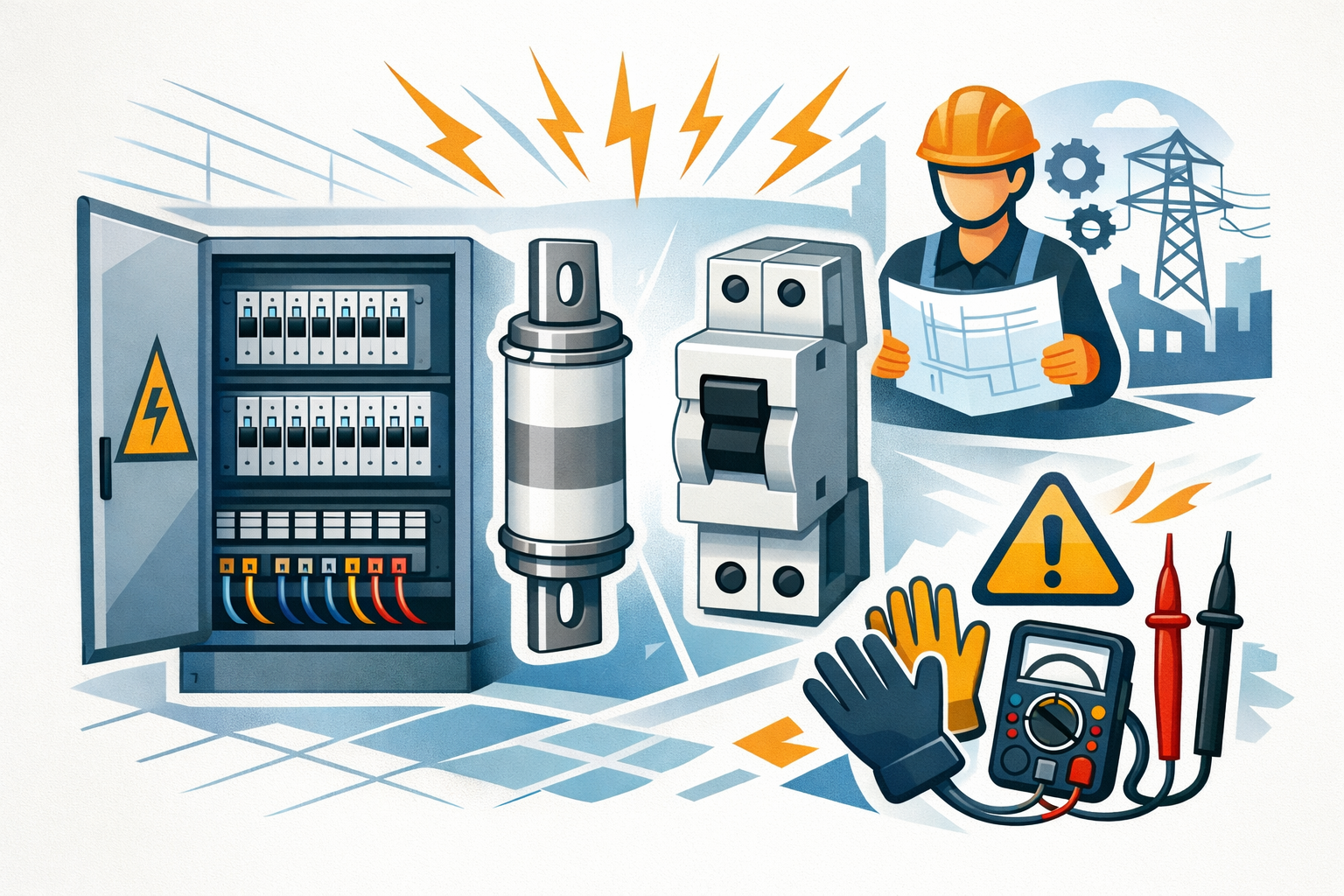
Electrical Fuses in Control Panel Design: What Really Matters
In control panel manufacturing and industrial automation, electrical fuses are among the most important protective components. They prevent overloads and short circuits from damaging sensitive components and help ensure the safe operation of the entire electrical infrastructure.
In this article, we explain why selecting and installing the correct electrical fuses is essential for control panel design and which factors should be considered during planning and implementation.
1. The Importance of Electrical Fuses in Control Panel Design
Electrical fuses are essential components of control panels because they protect electrical devices and components against overcurrents and short circuits. Their purpose is to quickly interrupt the circuit when a fault occurs, preventing damage to expensive equipment, cables and machinery.
Reliable fuse protection is particularly important in control panel manufacturing to ensure the long-term operational reliability of industrial installations.
Choosing the wrong fuse can result in:
-
Costly repairs.
-
Production downtime.
-
Potential safety hazards.
For this reason, it is essential to select the correct fuses for each control panel, taking into account the specific requirements of the electrical installation.
2. How to Select the Right Fuses for Control Panels
Selecting the appropriate fuse for a control panel requires a thorough assessment of the operating conditions and electrical requirements. Several factors must be taken into consideration:
-
Rated current and voltage: The fuse must be rated for the maximum current and operating voltage of the application.
-
Operating characteristics: Depending on the application, fast-acting or time-delay fuses may be required. These characteristics determine how quickly a fuse responds to an overload or short circuit.
-
Fuse type: Different types of protective devices are available, including cartridge fuses and miniature circuit breakers. Each is suitable for specific applications and requirements.
-
Environmental conditions: Factors such as temperature, humidity and dust can affect fuse performance and service life. The environmental conditions inside the control cabinet should therefore be considered during selection.
Carefully selecting the correct fuse helps ensure that the control panel is adequately protected against electrical hazards.
3. Control Panel Design: Integrating Electrical Fuses
A well-designed control panel takes account not only of technical requirements but also of ease of maintenance.
Fuses must be positioned inside the control cabinet so that they remain easily accessible and can be replaced quickly in the event of a fault.
The following aspects are particularly important:
-
Fuse positioning: Install fuses in accessible locations to minimise maintenance time and effort.
-
Wiring optimisation: Arrange the wiring inside the control cabinet to allow protective devices to be integrated easily and replaced quickly when necessary.
-
Clear labelling and identification: Every fuse should be clearly labelled and easily visible to allow rapid identification when a fault occurs.
Well-planned control panel design not only improves operational safety but also supports efficient maintenance and cost reduction.
4. Types of Protective Devices Used in Control Panel Manufacturing
Different types of protective devices are used in control panel manufacturing, each offering specific advantages depending on the application and requirements.
-
Cartridge fuses: These conventional fuses interrupt the circuit during an overload or short circuit when the fuse element melts due to heat. They are straightforward to use but cannot be reused once they have operated.
-
Miniature circuit breakers: These reusable protective devices can be reset after an overload or short circuit. They are widely used in modern electrical installations.
-
Motor protection devices: These specialised protective devices protect electric motors against overloads and short circuits. They are particularly important in applications involving high current requirements.
The protective devices used in a control panel must be selected according to the application to ensure effective protection of the connected components.
5. Important Standards and Regulations for Control Panel Fuses
All protective devices used in control panel manufacturing must comply with the relevant standards and regulations.
These standards help ensure that protective devices operate under the specified conditions and that the safety of the entire electrical installation is maintained.
Important standards include:
-
IEC 60269: Standards for low-voltage fuse-links.
-
DIN VDE 0636: German standards relating to fuses in low-voltage installations.
-
UL 248: US standards for low-voltage fuses.
Compliance with these standards helps ensure that the selected fuses meet the required safety specifications and that the electrical installation operates in accordance with applicable regulations.
6. Conclusion: Choosing the Right Fuse for Reliable Control Panel Operation
Selecting the correct fuse and integrating it properly into the control panel are essential for the safe and efficient operation of electrical installations.
To ensure reliable overload and short-circuit protection, rated current, operating characteristics and environmental conditions must all be taken into account.
Control panel design should also ensure that fuses can be maintained easily and replaced quickly whenever necessary.
By selecting and installing the appropriate protective devices, you can create a safe, efficient and long-lasting solution for your electrical installations.



