
Electrical Fuses Blog
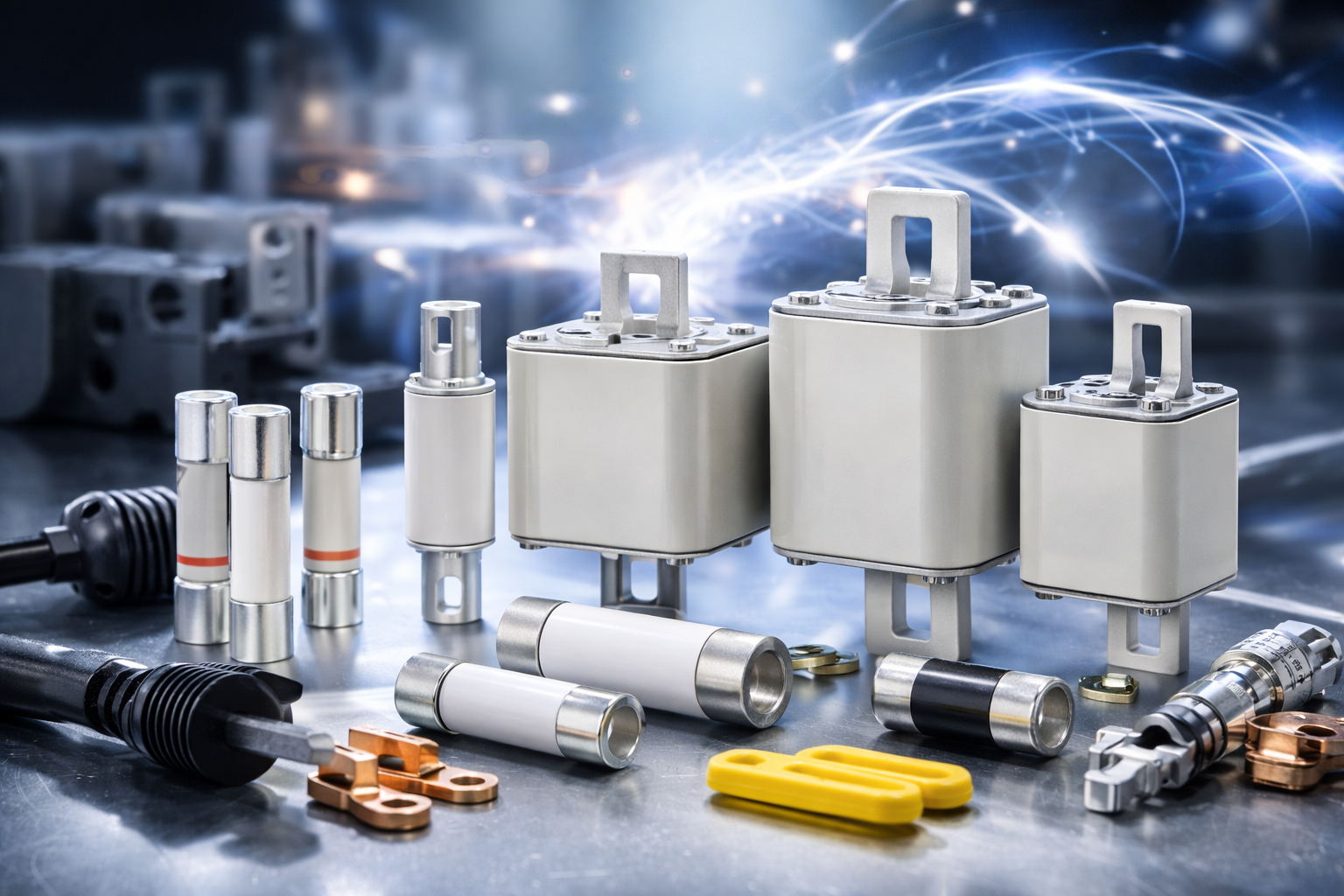
Eaton Bussmann Series Electrical Fuses – Blog & Fachwissen
Im Eaton Bussmann Series Electrical Fuses Blog finden Sie fundiertes Fachwissen rund um elektrische Sicherungen, Überstromschutz und moderne Schutzkonzepte für industrielle und gewerbliche Anwendungen. Diese Kategorie bündelt alle Blogartikel, technischen Beiträge und Praxisguides zu den Sicherungssystemen und Serien von Eaton Bussmann.
Eaton Bussmann zählt weltweit zu den führenden Herstellern von elektrischen Sicherungen, und ihre Serien stehen für Sicherheit, Normkonformität und höchste Zuverlässigkeit in anspruchsvollen elektrischen Systemen.
Was Sie im Eaton Bussmann Sicherungen Blog erwartet
Unsere Blogbeiträge helfen Ingenieuren, Einkäufern, Technikern und Planern dabei, die richtige Sicherungslösung zu finden und technische Zusammenhänge besser zu verstehen.
Themenschwerpunkte dieser Kategorie:
-
🔌 Überblick über Eaton Bussmann Sicherungsserien
-
⚙️ Unterschiede zwischen UL-, IEC- und Spezial-Sicherungen
-
📘 Technische Erklärungen zu Kennlinien, Auslöseverhalten & Bemessungswerten
-
🏭 Anwendungstipps für Industrie, Maschinenbau & Energieverteilung
-
🚗 Beiträge zu EV-, DC- und Hochvolt-Sicherungen
-
🛠 Best Practices für Auswahl, Installation und Wartung
Alle Inhalte sind praxisnah, verständlich aufbereitet und technisch fundiert.
Eaton Bussmann Sicherungsserien im Fokus
Der Blog behandelt regelmäßig verschiedene Eaton Bussmann Series Electrical Fuses, darunter:
-
Industrial Fuses
-
North American (UL) Fuse Series
-
IEC Sicherungsserien
-
High Speed & Semiconductor Fuses
-
EV & DC Sicherungen
-
Supplementary & Specialty Fuses
So erhalten Sie einen umfassenden Überblick über das Eaton Bussmann Portfolio und dessen Einsatzmöglichkeiten.
Fachwissen für sichere elektrische Systeme
Elektrische Sicherungen sind ein zentraler Bestandteil jeder sicheren Stromversorgung. Der Eaton Bussmann Series Electrical Fuses Blog unterstützt Sie dabei, Risiken zu minimieren, Normen einzuhalten und die Lebensdauer Ihrer Anlagen zu verlängern.
Ganz gleich, ob Sie Grundlagenwissen suchen oder tief in spezielle Sicherungsserien eintauchen möchten – hier finden Sie relevante, aktuelle und suchmaschinenoptimierte Inhalte rund um Eaton Bussmann Electrical Fuses.
👉 Jetzt Blogartikel entdecken und Ihr Wissen über Eaton Bussmann Sicherungsserien gezielt erweitern.
- Details
- Category: Electrical Fuses Blog
 bus-ele-pp-10307-bcm-bmm-series-ferrule-fuse-blocks.pdf  | [Eaton Bussmann BMM Fuse Holders] | 0 kB |
| eaton-bussmann-redspot-fuseholders-datasheet-10024-en-uk.pdf | [Eaton Bussmann RedSpot Fuse Holders] | 0 kB |
| eaton-bussmann-safeclip-fuseholders-datasheet-10137-en-uk.pdf | [Eaton Bussmann Safeclip Fuse Holders] | 0 kB |
| eaton-bussmann-series-nh-fuses-catalogue-ca132063-en-gb.pdf | [Eaton Bussmann NH Fuse Holders] | 0 kB |
| eaton-bussmann-series-nh-gear-catalogue-ca132061en-en-gb.pdf | [Eaton Bussmann NH Fuse Gear] | 0 kB |
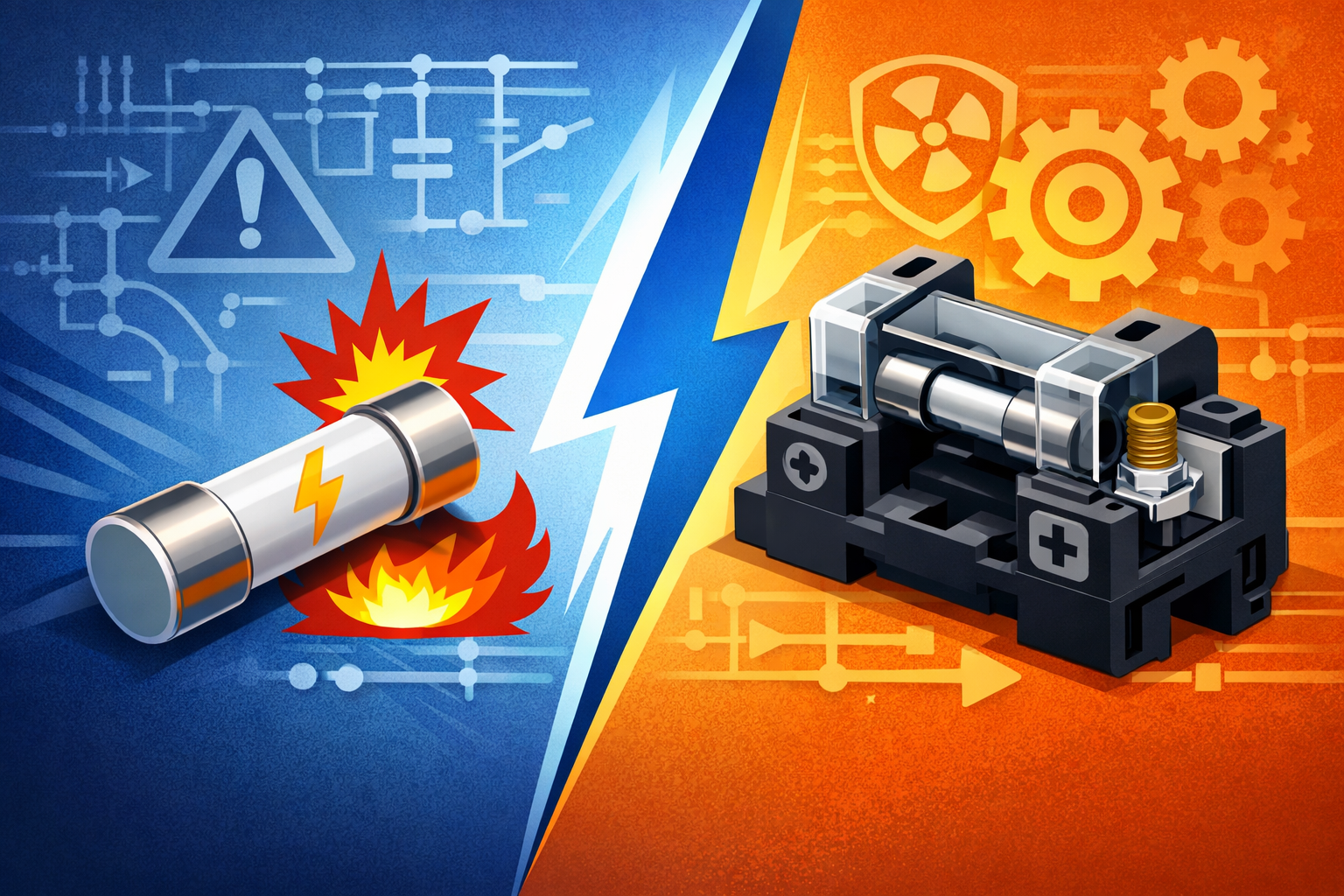
Why the Right Fuse Holder Is Just as Important as the Fuse Itself
In industrial automation and electrical infrastructure, selecting the right fuse is only part of the equation. Choosing the correct fuse holder is equally important. Although often overlooked, the fuse holder plays a crucial role in ensuring the safe and reliable operation of electrical systems.
In this article, we explain why selecting the right fuse holder is just as important as choosing the right fuse and highlight the key factors to consider when making your selection.
1. The Function of a Fuse Holder
A fuse holder provides the connection point between the fuse and the electrical circuit. It ensures that the fuse is correctly installed and securely positioned within the electrical system.
A faulty or low-quality fuse holder can prevent the fuse from performing its protective function correctly, potentially resulting in faults and damage to the entire installation.
A high-quality fuse holder provides:
-
Secure and reliable electrical connections.
-
Mechanical stability and long service life.
-
Easy handling when replacing fuses.
2. How Fuse Holders Affect Overall Electrical Safety
Although frequently underestimated, the fuse holder makes a significant contribution to the safety of an entire electrical installation.
In the event of an overload or short circuit, the fuse holder keeps the fuse securely in position and helps prevent it from becoming dislodged during a fault condition.
A poor-quality or incorrectly installed fuse holder can lead to:
-
Electrical connections being interrupted before the fuse can operate correctly.
-
The fuse failing to perform its protective function fully, potentially damaging electrical equipment.
-
Dangerous arcing or overheating, which could ultimately cause a fire.
A reliable fuse holder is therefore essential for effective fault protection and the safe operation of electrical equipment.
3. How to Choose the Right Fuse Holder
Selecting the correct fuse holder involves more than simply checking compatibility. Quality and suitability for the specific operating environment are equally important.
Consider the following factors when choosing a fuse holder:
-
Fuse type: The fuse holder must be compatible with the specific fuse type and its dimensions.
-
Current and voltage ratings: The holder must be rated for the maximum current and operating voltage of the circuit.
-
Environmental conditions: Temperature, humidity and vibration can all affect fuse holder performance. Demanding operating environments may require specialised holders made from more durable materials.
-
Ease of maintenance: The fuse holder should be easy to access and operate, allowing fuses to be replaced quickly and safely.
Choosing the right fuse holder ensures a safe, reliable electrical connection and helps maintain the performance of the protection system.
4. Improving Maintenance and Fuse Replacement
Another important advantage of a high-quality fuse holder is easier maintenance and faster fuse replacement.
A poorly designed or difficult-to-access fuse holder can make replacing fuses unnecessarily complicated, resulting in longer equipment downtime and delayed repairs.
An easy-to-use fuse holder allows fuses to be replaced quickly and safely, helping to improve operational efficiency and reduce unnecessary downtime.
5. Meeting Standards and Compliance Requirements
Just like fuses, fuse holders must comply with relevant standards and safety requirements.
Many countries and industries have specific regulations governing the selection and use of fuse holders. Important considerations include:
-
Compliance with international standards and applicable requirements, such as IEC, UL and CE.
-
Fire protection requirements.
-
Corrosion resistance and mechanical robustness in demanding operating environments.
Using appropriately certified and compliant fuse holders helps ensure that electrical installations meet applicable regulatory requirements and maintain high safety standards.
6. Conclusion: Why the Right Fuse Holder Is Essential for Operational Safety
Choosing the right fuse holder is just as important as selecting the correct fuse. A reliable, high-quality fuse holder ensures that the fuse can perform its protective function effectively while helping to maintain the safety of the entire electrical installation.
By selecting the appropriate materials, ratings and technical specifications, you can ensure that industrial automation systems and electrical installations operate reliably and safely.
Invest in high-quality fuse holders to maximise equipment uptime, improve operational reliability and minimise costs associated with unexpected failures.

- Details
- Category: Electrical Fuses Blog
| eaton-bussmann-series-high-speed-fuses-application-guide-br132015en-en-us.pdf | [Eaton Bussmann Fuses Technical Guide] | 0 kB |
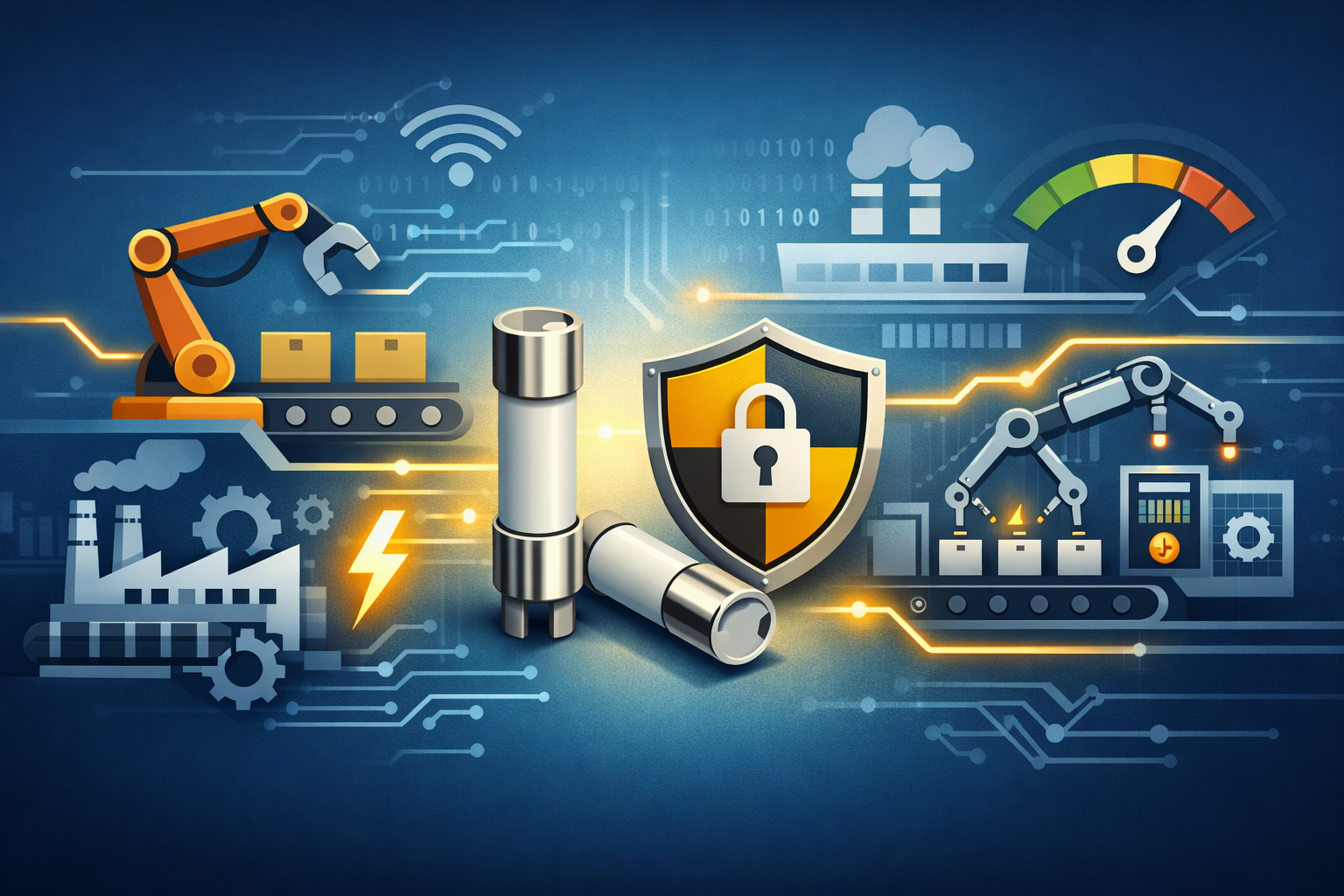
Fuses: The Foundation of Modern Automation Technology
Fuses play a vital role in modern automation technology, helping to ensure the safe and efficient operation of machinery, industrial equipment and electrical systems. Automation solutions based on advanced controllers, sensors and software require reliable protection mechanisms to safeguard against overloads, short circuits and other electrical faults.
In this article, we explore why fuses are fundamental to the safety, efficiency and long-term reliability of modern automation systems.
1. The Role of Fuses in Automation Technology
Fuses are protective devices designed to prevent damage to electrical installations and equipment in the event of a fault. They interrupt the electrical circuit when the current exceeds a specified limit, preventing overloads and short circuits from damaging equipment.
In automation technology, where many systems rely on sophisticated controllers to ensure precise processes, fuses help prevent:
-
Electrical supply faults that could lead to system failures.
-
Damage to sensitive electronic components and systems.
-
Fire hazards caused by overheated cables and components.
Without these protective mechanisms, operating automated installations would not only be more dangerous but also considerably less efficient.
2. Fuses Improve Reliability and System Uptime
Reliability is essential in modern automation systems. Industrial production facilities often need to operate around the clock, and every interruption can result in downtime, additional costs and lost production.
Fuses help protect automated installations during faults and electrical disturbances by:
-
Responding rapidly to short circuits and overloads.
-
Interrupting the power supply when a fault occurs to prevent further damage.
-
Protecting components and systems from irreparable damage, helping to avoid costly repairs.
By providing dependable electrical protection, fuses help automation solutions operate safely and consistently, maximising system availability and uptime.
3. Selecting Fuses for Automation Applications
Every automation application has specific protection requirements. Whether protecting motor controls, PLC systems or sensors, selecting the correct fuse depends on several important factors:
-
Rated current and voltage: The fuse must be appropriately rated for the maximum current and operating voltage of the application.
-
Operating characteristics: Depending on the application, fast-acting or time-delay fuses may be required. Time-delay fuses are particularly suitable for equipment with high inrush currents, such as electric motors.
-
Environmental conditions: High temperatures, humidity and vibration can affect fuse performance. It is therefore essential to select fuses suitable for the intended operating environment.
Choosing the correct fuse is crucial to ensuring that electrical protection remains effective, even in demanding and specialised automation applications.
4. Fuses Contribute to Energy Efficiency
Modern automation technology is not just about operational safety; it is also about improving energy efficiency.
Appropriately selected, high-quality fuses contribute to the safe operation of automated systems by providing protection against overloads and abnormal current conditions. They help prevent electrical faults that can cause equipment damage, unnecessary downtime and additional operating costs.
High-quality fuse solutions contribute to more efficient industrial operations by helping to:
-
Avoid unnecessary energy and resource waste.
-
Identify electrical fault conditions quickly.
-
Improve the overall operational efficiency of automation systems.
This is particularly important in energy-intensive industries, where reducing costs and improving sustainability are increasingly important priorities.
5. Fuses and Compliance in Automation Technology
Many automation applications are subject to technical standards and legal safety requirements.
Using appropriately certified fuses, including products carrying relevant UL, CE and IEC-related approvals or conformity markings, helps ensure that automation installations meet applicable safety and regulatory requirements.
Certified fuse solutions provide:
-
Protection in accordance with recognised safety standards.
-
Support for compliance with applicable regulations.
-
Greater confidence when implementing industrial automation solutions.
Regulatory compliance is particularly important for reducing legal and insurance-related risks.
6. Conclusion: Fuses as a Key to Automation Efficiency and Safety
Fuses are fundamental components of modern automation systems. They protect against overloads, short circuits and other electrical faults, improve operational reliability, support energy efficiency and help ensure compliance with relevant safety standards.
By selecting the right fuse for the specific requirements of an automation application, businesses can protect their equipment, maintain reliable operations and extend the service life of their systems.
Investing in high-quality industrial fuses helps maximise system uptime, minimise unexpected maintenance and achieve long-term cost savings.
- Details
- Category: Electrical Fuses Blog
| eaton-bussmann-series-high-speed-fuses-application-guide-br132015en-en-us.pdf | [Eaton Bussmann Fuses Technical Guide] | 0 kB |
The Role of Fuses in Modern Industrial Automation
In modern industrial automation, electrical fuses are an essential component for ensuring the safe and reliable operation of machinery and industrial equipment. Automation systems are complex and require dependable protection mechanisms to safeguard against overloads, short circuits and other electrical faults.
In this article, we explore how fuses play a crucial role in improving the efficiency, safety and reliability of modern automation systems.
1. Fuses Protect Against Electrical Faults and Failures
The primary function of fuses in industrial automation is to detect electrical faults and immediately interrupt the affected circuit to prevent more serious damage.
Fuses are particularly important in automation applications, where many systems depend on precise control and continuous operation.
Their main protective functions include:
-
Overload protection: Fuses prevent components from being damaged by excessive current caused by unexpected loads or electrical faults.
-
Short-circuit protection: They protect equipment against sudden short circuits that could cause significant damage to machinery and control systems.
Without reliable fuse protection, the risk of operational disruptions, system failures and machinery damage would increase considerably, potentially compromising productivity and workplace safety.
2. Fuses Improve Operational Safety and Efficiency
Fuses used in automated systems also contribute to operational safety and efficiency.
Selecting specialised fuses for individual components, such as motors, control units and sensors, helps ensure that industrial equipment continues to operate safely, even under demanding operating conditions.
Key benefits include:
-
Protection of sensitive electronics: Modern automation systems contain sensitive electronic components that can easily be damaged by overvoltage or excessive current. Fuses protect these components and help extend their service life.
-
Energy efficiency: Choosing the correct fuses can help reduce energy losses by protecting equipment against inefficient operating conditions.
High-quality fuses therefore contribute to efficient operation and increased system availability, ultimately improving overall industrial productivity.
3. Fuses and Smart Control Systems in Industrial Automation
Intelligent control systems, including programmable logic controllers (PLCs) and Internet of Things (IoT)-based solutions, are becoming increasingly important in modern automated manufacturing facilities.
These systems require reliable electrical protection to ensure uninterrupted and fault-free operation.
Fuses offer several advantages in this context:
-
Integration with digital control systems: Intelligent protection devices and sensors can help identify overloads and short circuits at an early stage, enabling automatic protective measures to prevent more extensive damage.
-
Data transmission and monitoring: Modern systems equipped with monitoring functions can provide real-time information about electrical faults and abnormalities. This makes fault diagnosis and maintenance significantly easier.
These advanced solutions not only improve equipment safety but also provide transparent operational data, supporting the continuous optimisation of industrial automation processes.
4. Selecting Fuses for Specific Automation Requirements
Every automation application has specific electrical protection requirements. It is therefore essential to select fuses that are precisely matched to the characteristics and operating conditions of the application.
Important factors to consider when selecting fuses for automation systems include:
-
Rated current and voltage: The fuse must be suitable for the maximum current and voltage levels of the system.
-
Operating characteristics: Depending on the application, fast-acting or time-delay fuses may be required.
-
Environmental conditions: Temperature, humidity and vibration can influence fuse performance. Selection should therefore take the actual operating environment into account.
Choosing the right fuses is essential for ensuring the reliability, performance and long service life of industrial automation equipment.
5. Compliance and Standards in Industrial Automation
Industrial automation systems must comply with strict safety requirements and technical standards.
Using certified fuses that meet recognised international standards, such as IEC and UL, helps ensure that industrial installations comply with applicable regulations while maintaining high levels of operational safety.
This is particularly important in industries where safety requirements are closely monitored, including:
-
Automotive manufacturing
-
Chemical production
-
Food processing
Selecting compliant electrical protection components is an important part of building safe and reliable industrial automation systems.
6. Conclusion: Fuses as an Essential Component of Modern Automation Systems
Choosing the right fuses is essential for the safety, efficiency and operational availability of modern automation systems.
Fuses protect against electrical faults, improve equipment reliability and contribute to greater energy efficiency.
By using specialised fuses tailored to the requirements of individual automation applications, businesses can ensure smooth equipment operation while reducing long-term maintenance costs and unplanned downtime.
Reliable fuse protection is therefore a fundamental part of modern industrial automation.

- Details
- Category: Electrical Fuses Blog
| eaton-bussmann-series-high-speed-fuses-application-guide-br132015en-en-us.pdf | [Eaton Bussmann Fuses Technical Guide] | 0 kB |
How UL-, CSA- and CE-Marked Fuses Protect Your Industrial Equipment
The safety of industrial equipment and its components depends largely on selecting the right protective devices. One of the most reliable ways to protect electrical installations is to use fuses that meet recognised safety standards and regulatory requirements, including UL, CSA and applicable European CE requirements.
These standards and conformity requirements help ensure that fuses meet specific safety and performance criteria, supporting the safe and reliable operation of industrial equipment.
In this article, we explore how UL-, CSA- and CE-compliant fuses can improve the protection, reliability and efficiency of your industrial installations.
1. UL-Listed Fuses – A Key Safety Standard in North America
UL (Underwriters Laboratories) is one of the best-known product safety organisations in North America. UL-listed fuses have been independently evaluated against applicable safety requirements for use in electrical systems.
UL-listed fuses offer several important benefits:
-
High-quality materials: They are manufactured using durable materials designed to withstand demanding operating conditions, including overloads and short circuits.
-
Enhanced safety: UL-listed products undergo extensive testing to assess their ability to handle electrical faults, such as short circuits and overloads, safely.
-
Compliance with safety standards: UL-listed fuses meet the applicable requirements of their relevant UL product category, helping to minimise electrical risks.
Choosing appropriately UL-listed fuses helps support the safe operation of your industrial installation and compliance with applicable North American safety requirements.
2. CSA-Certified Fuses – Reliable Electrical Protection in Canada
In Canada, CSA certification (Canadian Standards Association) is an important indicator that a product has been assessed against relevant Canadian safety standards.
CSA-certified fuses provide benefits comparable to those of UL-listed products, particularly in the following areas:
-
Reliability and durability: CSA-certified fuses are designed and evaluated for demanding industrial environments, helping ensure dependable long-term performance.
-
Electrical safety: They provide protection against electrical faults and help prevent potentially dangerous overloads and short circuits.
-
Compliance with Canadian standards: CSA-certified products are assessed against applicable Canadian safety and quality requirements.
Using appropriately CSA-certified fuses helps businesses meet relevant regulatory requirements and maintain reliable operations in Canadian industrial facilities.
3. CE Marking – An Important Requirement for the European Market
CE marking plays an essential role in placing many products on the European market. It indicates that the manufacturer declares the product to comply with the applicable European Union legislation.
For electrical fuses, the relevant requirements depend on the product type and its intended application.
Products bearing the CE marking offer several important advantages:
-
Access to the European market: Where CE marking is required, it enables products to be placed on the EU market in accordance with applicable legislation.
-
Protection against electrical hazards: Fuses selected and designed in accordance with the relevant product standards help protect electrical installations against overloads, short circuits and other electrical faults.
-
Compliance with applicable requirements: CE marking demonstrates the manufacturer's declaration of conformity with the relevant EU legislation, including applicable safety and environmental requirements.
For businesses operating within the European Union, selecting fuses that meet the applicable product standards and regulatory requirements is essential for maintaining safety and ensuring compliance.
4. Benefits of Using UL-, CSA- and CE-Compliant Fuses
Selecting fuses that meet the relevant UL, CSA and European requirements offers numerous benefits for industrial operations:
-
Improved operational safety: Compliance with recognised safety standards helps protect equipment against electrical faults, reducing the risk of downtime and machinery damage.
-
Regulatory compliance: Choosing appropriately approved, listed or compliant products helps ensure that industrial installations meet the applicable legal requirements in their respective markets.
-
Longer component service life: High-quality protective fuses help protect electrical components, potentially extending their service life and reducing maintenance requirements.
-
Cost savings: Fewer electrical faults, equipment failures and production interruptions can result in significant long-term savings and improved operational profitability.
5. Conclusion: Certified and Compliant Fuses for Safer, More Efficient Industrial Equipment
Selecting the right fuse for your industrial installation is essential for preventing operational disruptions and maintaining electrical safety.
UL-listed, CSA-certified and CE-compliant fuses help protect against electrical faults while supporting compliance with the relevant safety requirements in different markets.
By choosing the right fuse for your application, you can reduce costs, improve equipment protection and maximise operational uptime.
Looking for the right electrical fuses for your industrial application?
Contact Casadaa Distribution to find out more about our range of Eaton Bussmann electrical fuses and protection solutions.
- Details
- Category: Electrical Fuses Blog
| eaton-bussmann-series-high-speed-fuses-application-guide-br132015en-en-us.pdf | [Eaton Bussmann Fuses Technical Guide] | 0 kB |
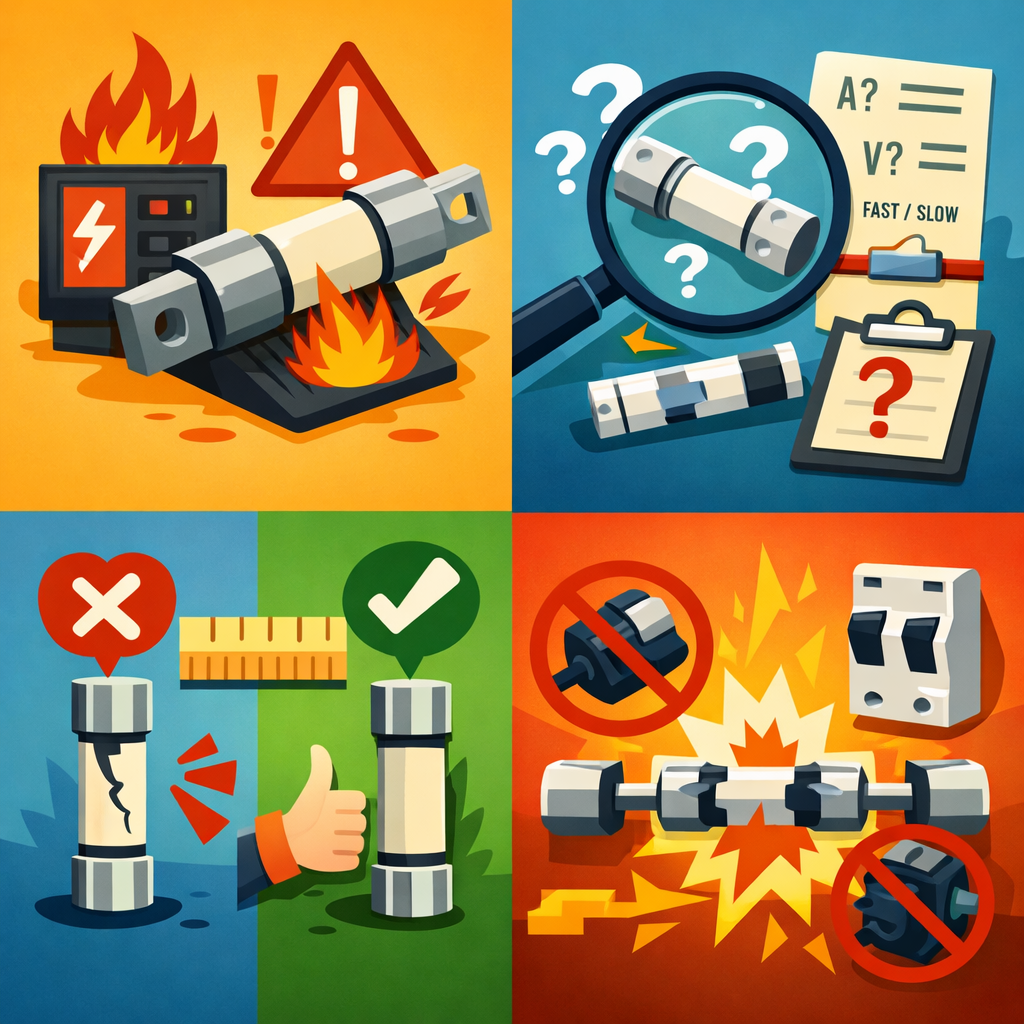
Common Fuse Selection Mistakes and How to Avoid Them
Choosing the right fuse for your industrial installation is essential for maintaining safety, reliability and operational efficiency. Incorrect fuse selection can result in costly downtime, reduced efficiency and serious safety risks.
In this article, we explore the seven most common mistakes when selecting electrical fuses and explain how to avoid them to ensure long-term protection and reliable operation of your industrial equipment.
1. Incorrect Fuse Rating
One of the most common mistakes when selecting electrical fuses is choosing the wrong current rating.
A fuse with an insufficient current rating may blow under normal operating loads, resulting in unnecessary production interruptions. On the other hand, a fuse with an excessively high current rating may fail to respond quickly enough during an overload, potentially causing serious damage to equipment.
To avoid this problem, ensure that the fuse is correctly matched to the rated current and operating conditions of the specific installation.
2. Ignoring Fuse Operating Characteristics
The operating characteristics of a fuse play an important role in its performance and protective function.
Depending on the application, different equipment may require fast-acting or time-delay fuses. If the fuse operating characteristics are not suited to the requirements of the installation, this can lead to frequent nuisance blowing or insufficient protection.
Always select the appropriate fuse characteristic for your specific application to ensure maximum safety and operational efficiency.
3. Overlooking Environmental Conditions
Environmental conditions must also be considered when selecting electrical fuses.
High temperatures, humidity, dust and vibration can all affect fuse performance and service life. It is therefore essential to select a fuse that is suitable for the environmental conditions in which the industrial equipment operates.
An unsuitable fuse may fail when exposed to extreme operating conditions, potentially resulting in costly production downtime.
Make sure that the selected fuse is certified and suitable for the specific environmental conditions of your installation.
4. Failing to Consider Applicable Standards and Regulations
Fuse selection should always take relevant safety standards, regulations and industry requirements into account.
Many industrial sectors require electrical components to comply with specific standards to ensure safety and reliability. Ignoring these requirements can result not only in legal consequences but also in operational problems and equipment downtime.
Always check that your selected fuses meet all applicable standards, regulatory requirements and certification criteria.
5. Inadequate Maintenance Planning
Neglecting fuse maintenance is another common mistake.
Even high-quality electrical fuses require regular inspection and maintenance to ensure reliable operation. A structured maintenance plan should include routine inspections and the replacement of outdated, damaged or worn fuses.
Schedule regular maintenance intervals to identify potential problems early, maintain system reliability and maximise the service life of your fuses.
6. Choosing Low-Quality Fuses
When selecting electrical fuses, cheaper alternatives are often preferred to reduce initial costs. However, this approach can create significant risks.
Low-quality fuses may be less reliable and more susceptible to premature failure. Investing in high-quality electrical fuses offers long-term benefits, including improved safety, increased equipment availability and a longer service life for industrial installations.
Quality should always take priority over price when choosing fuses to prevent unnecessary risks and long-term costs.
7. Insufficient Documentation of Selection Criteria
Another frequently overlooked mistake is failing to properly document the criteria used when selecting electrical fuses.
Comprehensive documentation helps ensure consistent decision-making and makes it easier to identify and verify selected components during future maintenance work.
Make sure that all relevant selection criteria are clearly documented, including:
-
Current rating
-
Fuse operating characteristics
-
Environmental conditions
-
Applicable standards and regulations
-
Relevant certification requirements
Proper documentation makes it easier to respond quickly and effectively whenever maintenance or replacement is required.
Conclusion: Avoid Common Mistakes and Choose the Right Fuse Protection
Selecting the right electrical fuse is essential for the safe and efficient operation of industrial installations.
By avoiding common mistakes such as incorrect fuse ratings, overlooking operating characteristics, inadequate maintenance and ignoring applicable standards, you can help ensure that your equipment operates safely and reliably.
Invest in high-quality electrical fuses that meet the specific requirements of your installation. The right fuse selection can reduce long-term operating costs, improve system reliability and help prevent costly production downtime.



