
 eaton-bussmann-series-high-speed-fuses-application-guide-br132015en-en-us.pdf  | [Eaton Bussmann Fuses Technical Guide] | 0 kB |
Why Slow-Blow and Fast-Acting Fuses Are Used Differently
Choosing the right fuse for your electrical installations is essential for protecting equipment and machinery. There are significant differences between slow-blow and fast-acting fuses, particularly when it comes to selecting the right type for a specific application. These differences can have a considerable impact on the operation of your systems.
In this article, we explain why these two types of fuses are used in different applications and how to choose the right one for your requirements.
1. What Are Slow-Blow and Fast-Acting Fuses?
Slow-blow and fast-acting fuses differ primarily in their operating characteristics. Both fuse types have different response times and application areas, depending on the electrical requirements and load conditions of an installation.
-
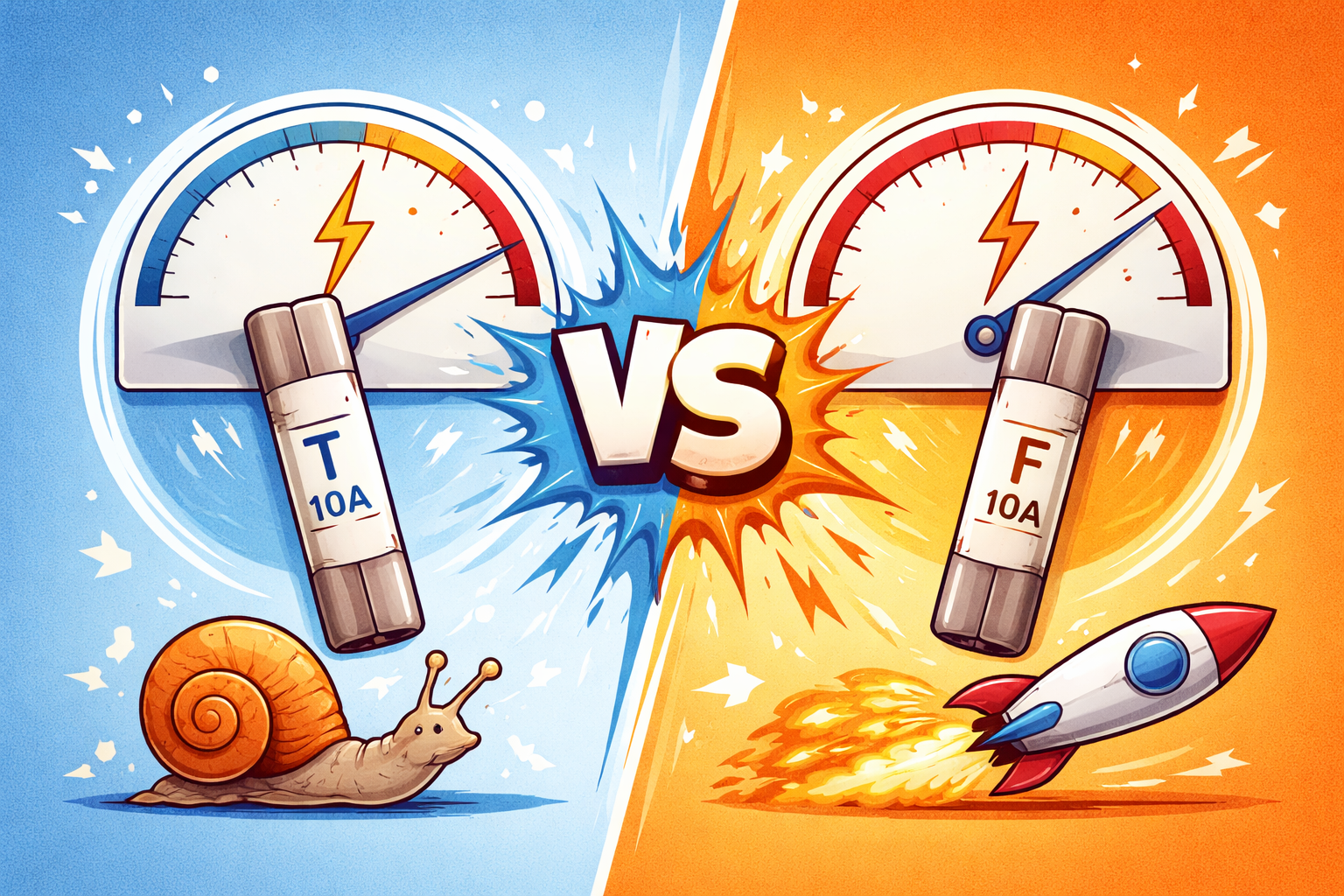
Slow-blow fuses (also known as time-delay fuses) are designed not to operate immediately when an overload or short circuit occurs, but rather after a short delay, according to their time-current characteristics. They are ideal for applications where temporary load peaks or high inrush currents occur without indicating a fault requiring immediate interruption.
-
Fast-acting fuses, on the other hand, respond quickly to overcurrents and short circuits, interrupting the circuit much faster. These fuses are required in applications where a rapid response is necessary to protect sensitive equipment and machinery.
2. When Should Slow-Blow Fuses Be Used?
Slow-blow fuses are the preferred choice for applications in which electrical equipment briefly requires high currents without immediate fuse operation being necessary.
Typical applications include:
-
Motor drives: Electric motors draw higher currents during start-up. Slow-blow fuses help prevent unnecessary operation caused by these temporary inrush currents.
-
Transformers: Transformers can also draw high currents when switched on. A slow-blow fuse accommodates these short-term current peaks without unnecessary interruption.
-
Inductive loads: Applications involving inductive loads, such as solenoid valves or relays, often require slow-blow fuses to avoid unwanted operation.
The ability of a slow-blow fuse to withstand temporary current surges makes it particularly suitable for equipment that generates high starting currents, provided that the fuse still provides the required protection against overloads and short circuits.
3. When Should Fast-Acting Fuses Be Used?
Fast-acting fuses provide a rapid response and protect against sudden short circuits or overcurrents that could quickly damage sensitive equipment.
They are the ideal choice for:
-
Sensitive electronic equipment: Fast-acting fuses are essential for circuits, power control systems and computer components where rapid disconnection is required.
-
Lighting systems: In modern lighting installations and lamps, fast-acting fuses help protect against damage caused by short circuits and excessive currents.
-
Smaller devices and equipment with sensitive circuits: Fast-acting fuses are a good choice for equipment that does not require high starting currents but could be damaged quickly by a short circuit.
Their rapid operation helps protect electronic devices and electrical equipment against damage caused by unexpected electrical faults.
4. The Main Differences Between Slow-Blow and Fast-Acting Fuses
The choice between slow-blow and fast-acting fuses depends largely on the specific application.
The main differences are:
-
Operating time: Slow-blow fuses have a longer response time, whereas fast-acting fuses respond much more quickly.
-
Suitability for current surges: Slow-blow fuses are particularly suitable for applications involving temporary current peaks, such as motor drives and transformers that draw high currents during start-up. Fast-acting fuses are ideal for sensitive equipment that could be damaged quickly by a sudden overload or short circuit.
-
Applications: Slow-blow fuses are used where high starting currents or short-term load peaks are expected. Fast-acting fuses, on the other hand, protect sensitive electronic equipment, lighting systems and control installations.
5. How Do You Choose the Right Fuse for Your Application?
Choosing the right fuse depends on several factors that should be considered when designing electrical installations.
-
Type of load: Consider whether your application involves temporary current peaks, such as those generated by motors, or requires rapid protection against short circuits, as is often the case with electronic equipment.
-
Equipment sensitivity: If your equipment is particularly sensitive to overcurrents, a faster-acting fuse may be required to provide the necessary protection.
-
Physical size and rating: Make sure the selected fuse has the correct current and voltage ratings, breaking capacity, physical dimensions and operating characteristics for your application.
-
Energy consumption and efficiency: Selecting the appropriate fuse helps ensure reliable protection and can contribute to the efficient operation of your installation. Fuse selection must, however, be based primarily on electrical safety and the manufacturer's specifications.
Choosing the correct slow-blow or fast-acting fuse helps ensure that your electrical installations operate safely and reliably.
6. Conclusion: Choosing the Right Slow-Blow or Fast-Acting Fuse to Protect Your Equipment
Choosing the correct fuse, whether slow-blow or fast-acting, is essential for the safety of your electrical systems and equipment.
Slow-blow fuses are ideal for applications involving temporary current peaks, such as electric motors and transformers. Fast-acting fuses respond more quickly and help protect sensitive equipment against damage caused by overcurrents and short circuits.
By selecting the appropriate fuse for your application, you can help ensure reliable system operation, minimise operational disruptions and provide effective protection for your equipment.



