
 bus-ele-ds-1014-fnq-r.pdf  | [Eaton Bussmann FNQ-R Fuses] | 0 kB |
| bus-ele-ds-1023-lp-cc.pdf | [Eaton Bussmann LP-CC Fuses] | 0 kB |
LP-CC vs FNQ-R Fuses: Which Is Right for Your Application?
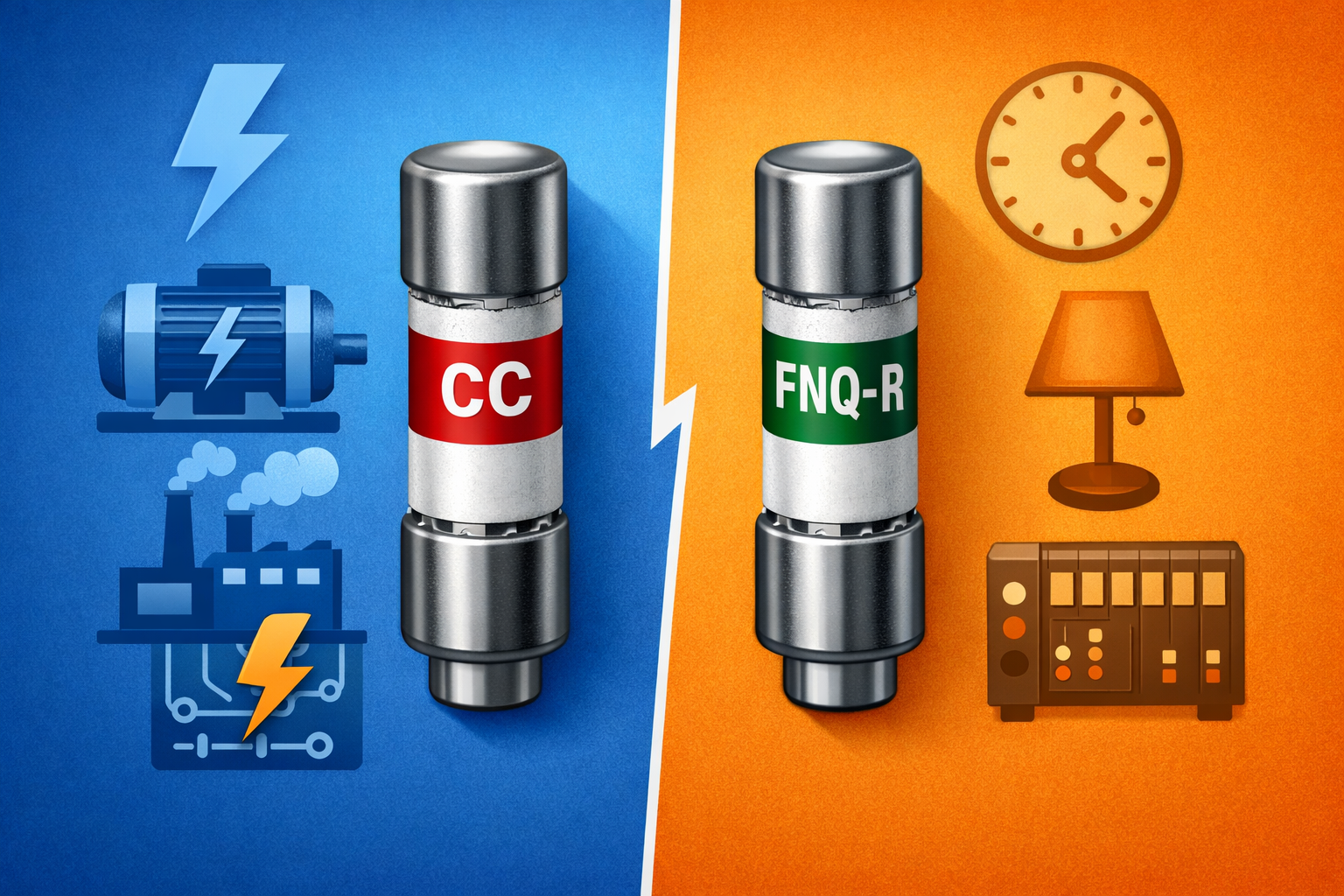
When selecting fuses for industrial applications, choosing the correct fuse type is essential for ensuring reliable electrical protection. Two commonly used types are LP-CC fuses and FNQ-R fuses.
Both provide specific protection characteristics, but they differ in their design, operating characteristics and intended applications. In this article, we explore the differences between LP-CC and FNQ-R fuses and explain how to choose the right fuse for your requirements.
1. What Are LP-CC Fuses?
LP-CC (Low-Peak Class CC) fuses are designed to protect electrical circuits and electronic equipment. These fuses are known for their high interrupting capacity and ability to respond reliably to overloads and short circuits.
They provide effective protection for motor-driven equipment and electronic applications.
-
Applications: LP-CC fuses are commonly used in electrical drive systems, transformers and control panel applications.
-
Advantages: One of the main advantages of LP-CC fuses is their ability to operate reliably in applications involving high inrush currents, such as motor starting. They help protect sensitive components and prevent unnecessary power interruptions.
2. What Are FNQ-R Fuses?
FNQ-R fuses (Class CC, time-delay fuses) are designed to protect electrical circuits and equipment in industrial installations. They provide protection against overloads and short circuits and are suitable for applications where reliable circuit protection is essential.
-
Applications: FNQ-R fuses are typically used in low-voltage electrical circuits, heat pumps, air conditioning systems and compressors.
-
Advantages: Their operating characteristics help protect electrical components against overloads and short circuits. FNQ-R fuses also provide reliable protection in applications with varying load conditions.
3. Differences Between LP-CC and FNQ-R Fuses
Choosing between LP-CC and FNQ-R fuses depends on the specific requirements of your application. The main factors to consider include:
Operating characteristics
-
LP-CC fuses are designed for applications involving demanding electrical loads, including equipment with high inrush currents, such as motors.
-
FNQ-R fuses are also time-delay fuses and are suitable for applications requiring reliable protection against overloads and short circuits.
Interrupting capacity
-
LP-CC fuses are designed to protect electrical equipment and provide a high level of short-circuit protection.
-
FNQ-R fuses provide reliable circuit protection, helping to prevent damage caused by electrical faults.
Applications
-
LP-CC fuses are commonly selected for motor applications, transformers and electrical systems with high inrush currents.
-
FNQ-R fuses are used in low-voltage installations and industrial applications requiring Class CC circuit protection.
4. How Do You Choose the Right Fuse?
Selecting the correct fuse is essential for maintaining the safety, reliability and efficiency of your electrical installation. Consider the following factors when choosing between LP-CC and FNQ-R fuses:
-
Application requirements: Determine whether your application involves high inrush currents, motor starting or other specific electrical operating conditions.
-
Interrupting capacity: Make sure the fuse has an adequate interrupting rating for your system and can safely interrupt potential overload and short-circuit currents.
-
Size and compatibility: Check that the fuse dimensions, voltage rating, current rating and electrical characteristics are compatible with your installation.
-
Cost and efficiency: A higher-quality fuse may help reduce long-term costs by minimising equipment damage, maintenance requirements and unexpected downtime.
5. Conclusion: Choosing the Right Fuse for Your Application
Choosing the right fuse is essential for ensuring the safe and reliable operation of electrical installations and equipment.
When comparing LP-CC and FNQ-R fuses, consider the specific requirements of your application, including inrush currents, voltage, current rating and required interrupting capacity.
LP-CC and FNQ-R fuses both offer Class CC protection characteristics and should be selected according to the manufacturer's technical specifications and the requirements of the electrical system.
By choosing the appropriate fuse, you can improve electrical system reliability, minimise downtime and reduce potential repair and maintenance costs.



