
 eaton-bussmann-series-battery-storage-fuses-application-guide-ca135002en.pdf eaton-bussmann-series-battery-storage-fuses-application-guide-ca135002en.pdf | [Battery Storage Fuses] | 5072 kB |
| eaton-bussmann-series-electric-vehicle-application-guide-br132016en-en-gb.pdf | [EV Fuses Application Guide] | 526 kB |
| eaton-bussmann-series-nh-fuses-catalogue-ca132063-en-gb.pdf | [NH Fuses] | 10748 kB |
| eaton-bussmann-series-photovoltaic-fuses-catalogue-ca135004en.pdf | [PV Fuses] | 6298 kB |
| eaton-bussmann-series-square-body-electric-vehicles-fuses-ca135003en-en-gb.pdf | [EV Fuses] | 701 kB |
| eaton-components-for-solar-applications-brochure-br135004en-us.pdf | [Solar Fuses Application Guide] | 4114 kB |
Electrical Fuses in Leipzig: Reliable Protection for Homes and Businesses
Electrical fuses play an essential role in protecting electrical installations in homes, offices, and commercial buildings. In a growing city like Leipzig, reliable electrical protection is important for maintaining safety, preventing equipment damage, and ensuring the dependable operation of electrical systems. Anyone searching for electrical fuses in Leipzig wants to understand how fuse systems work, when replacements are necessary, and how to maintain effective electrical protection.
Why Electrical Fuses Are Important
Electrical fuses are designed to protect electrical circuits against excessive current. When the current exceeds a specified limit, the fuse interrupts the circuit, helping reduce the risk of overheating, damaged equipment, and electrical fires.
For residential and commercial properties in Leipzig, choosing suitable electrical fuses is an important part of maintaining a safe and functional electrical installation. The correct fuse depends on factors such as circuit design, cable capacity, connected equipment, and the requirements of the installation.
Electrical Fuses for Residential Properties in Leipzig
Homes rely on safe electrical systems to power lighting, household appliances, heating controls, and electronic devices. Properly selected electrical fuses help protect these circuits from overloads and short circuits.
Common considerations for residential electrical fuse systems include:
-
Selecting the correct fuse rating for the circuit
-
Inspecting fuse boxes and distribution boards
-
Replacing damaged or unsuitable fuse components
-
Assessing older electrical installations
-
Ensuring compatibility with modern household appliances
-
Reviewing electrical protection during renovations
Older properties may have electrical installations that require professional assessment before modern appliances or additional circuits are introduced. A qualified electrician can determine whether existing protective devices remain suitable for the installation.
Electrical Fuses for Commercial Buildings
Businesses in Leipzig depend on reliable electrical infrastructure to operate equipment, lighting, computers, and machinery. Appropriate fuse protection helps safeguard these systems and reduce the risk of electrical interruptions.
Commercial buildings may require different fuse types and ratings depending on their electrical loads and operating conditions. Offices, workshops, retail premises, and industrial facilities should have protective devices selected according to their specific requirements.
Regular inspections can help identify damaged components, unsuitable fuse ratings, or other issues that could compromise electrical safety. Professional assessment is particularly important where equipment operates continuously or where an electrical fault could interrupt business operations.
Common Types of Electrical Fuses
Different electrical installations require different forms of circuit protection. Understanding the main types can help property owners recognise the components used in their electrical systems.
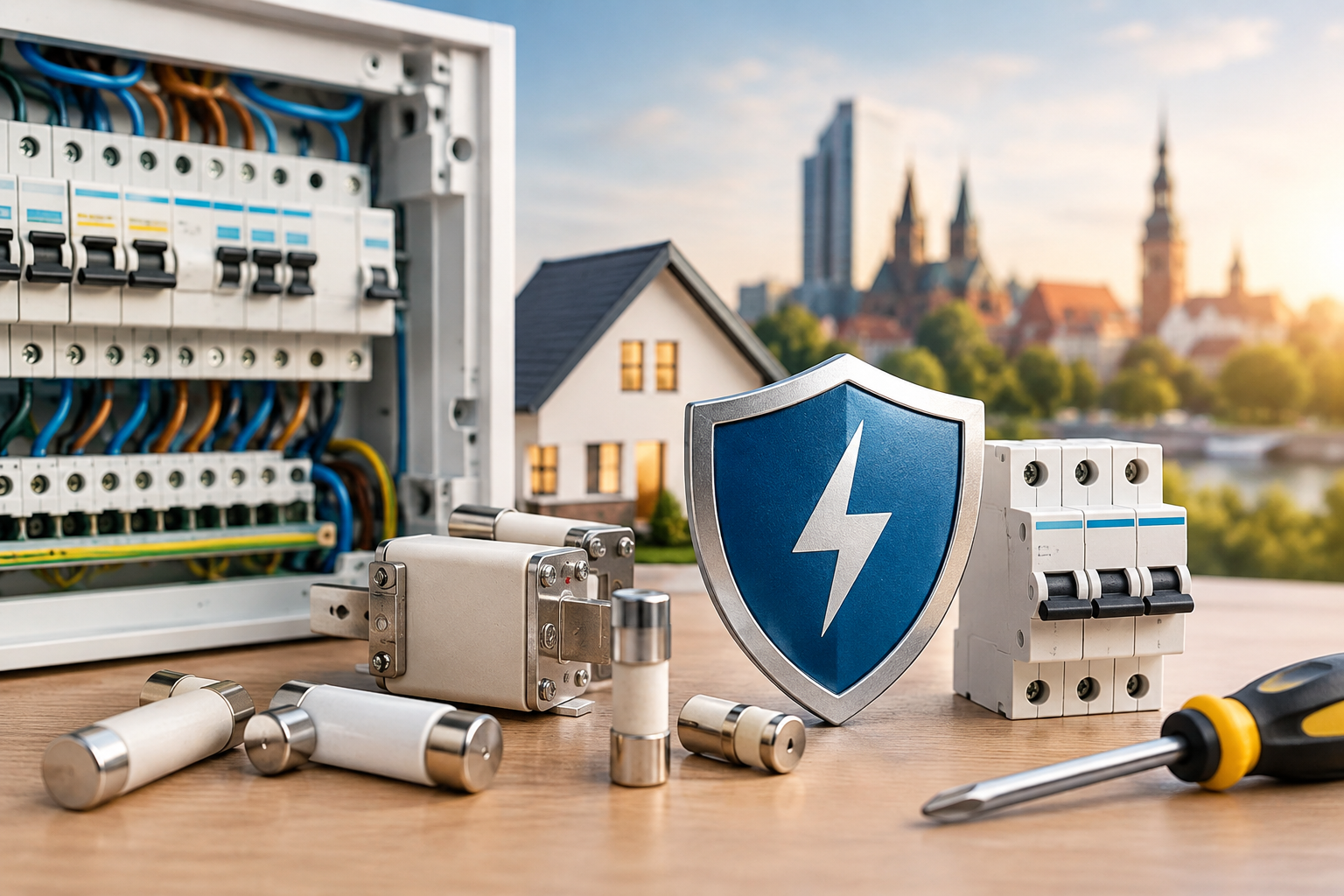
Cartridge fuses: These enclosed fuses are commonly used in various electrical distribution and equipment applications. Their ratings and characteristics must match the intended circuit.
NH fuses: These robust fuse systems are often used in commercial and industrial electrical installations where higher currents need protection.
D-type and bottle fuses: These screw-in fuse systems can be found in older electrical installations. Their suitability should be assessed before replacement or continued use.
Miniature circuit breakers: Although they are not fuses, circuit breakers provide an alternative form of overcurrent protection and can generally be reset after a fault has been resolved.
The appropriate protective device depends on the electrical system, the required breaking capacity, and applicable technical standards.
When Should Electrical Fuses Be Replaced?
A fuse may need replacement after it operates because of an overload or short circuit. However, repeated fuse failures should never be ignored, as they may indicate a deeper electrical problem.
Warning signs include frequently blown fuses, visible damage, unusual heat around electrical equipment, burning smells, or unexplained power interruptions.
Before replacing a fuse, the underlying cause of the fault should be identified. Never install a fuse with a higher rating simply to prevent it from blowing. Doing so can compromise protection and increase the risk of overheating or fire.
For properties in Leipzig, a qualified electrician can inspect the circuit, identify the source of the problem, and determine the appropriate replacement.
Choosing the Right Electrical Fuses in Leipzig
Selecting electrical fuses requires attention to technical specifications and safety requirements. The correct choice depends on the circuit's rated current, voltage, fuse characteristics, and the equipment being protected.
When purchasing or replacing electrical fuses, consider the following:
-
Correct rating: The fuse must be suitable for the circuit and its wiring.
-
Compatibility: The replacement must match the required fuse type and system.
-
Quality and compliance: Choose products that meet the applicable safety and technical requirements.
-
Professional installation: Electrical work should be performed by a suitably qualified professional when required.
-
Inspection of existing systems: Older fuse boxes may need a broader safety assessment before replacement components are installed.
These considerations help ensure that electrical protection remains appropriate for the property and its intended use.
Electrical Fuse Maintenance and Safety
Routine inspection of electrical installations can help identify potential problems before they lead to equipment damage or unexpected interruptions. Fuse holders, distribution boards, and associated components should be checked for signs of wear, overheating, or deterioration by a qualified professional.
Electrical fuse maintenance is particularly important in older buildings, commercial premises, and properties that have undergone significant electrical modifications.
If a fuse repeatedly operates, the safest approach is to investigate the cause rather than repeatedly replacing it. Electrical components should never be bypassed, and live electrical work should be left to qualified professionals.
Conclusion
Electrical fuses are a fundamental part of electrical safety in Leipzig's residential, commercial, and industrial properties. Choosing suitable fuse types, using the correct ratings, and maintaining electrical installations can help protect wiring and equipment from excessive current.
Whether you are reviewing an older fuse box, replacing a damaged component, or planning an electrical upgrade, understanding the role of electrical fuses is an important first step. Professional assessment and appropriate protective devices help ensure that electrical installations remain safe, reliable, and suitable for modern requirements.



