
 eaton-bussmann-series-battery-storage-fuses-application-guide-ca135002en.pdf eaton-bussmann-series-battery-storage-fuses-application-guide-ca135002en.pdf | [Battery Storage Fuses] | 5072 kB |
| eaton-bussmann-series-electric-vehicle-application-guide-br132016en-en-gb.pdf | [EV Fuses Application Guide] | 526 kB |
| eaton-bussmann-series-photovoltaic-fuses-catalogue-ca135004en.pdf | [PV Fuses] | 6298 kB |
| eaton-bussmann-series-square-body-electric-vehicles-fuses-ca135003en-en-gb.pdf | [EV Fuses] | 701 kB |
Eagle and Electric Infrastructure: How Quality Fuses Protect EV, PV and Battery Systems
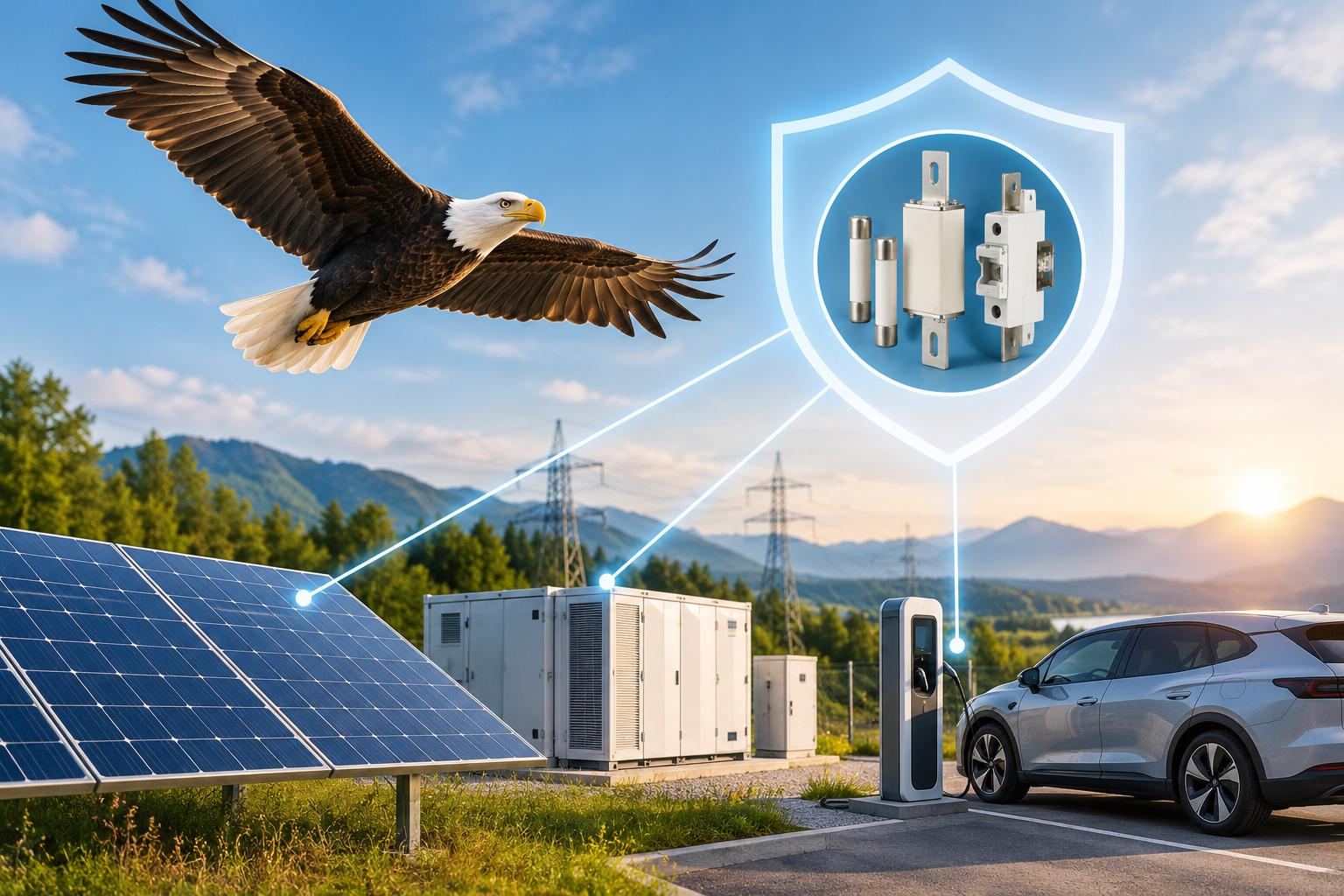
When Eagle Meets Electric: Protecting Modern Electrical Infrastructure
The growing demand for reliable electric infrastructure is transforming the way we generate, store and use energy. Electric vehicles (EVs), photovoltaic (PV) systems and battery energy storage systems are becoming essential components of modern energy networks. However, these installations face a range of environmental risks, including one that is often overlooked: the potential impact of birds of prey, particularly the eagle.
Although the eagle plays an important role in the ecosystem, its size, wingspan and nesting behavior can create challenges for electrical infrastructure. Contact with energized components, damage to electrical equipment and bird-related short circuits can lead to equipment failures, power interruptions and costly repairs.
How can electrical infrastructure be protected against these risks? High-quality electrical fuses are an important part of a comprehensive protection strategy, helping safeguard electrical circuits against overcurrents and reducing the consequences of electrical faults.
Why Eagles Can Pose a Risk to Electric Infrastructure
Eagles are large birds with impressive wingspans. When they land on, perch near or build nests around electrical installations, they may unintentionally create hazardous situations.
The greatest risk occurs when a bird bridges electrical conductors or energized components at different electrical potentials. This can create an unintended current path, potentially resulting in a short circuit, an arc flash or damage to electrical equipment.
Depending on the installation, bird-related incidents can affect:
-
Electrical connections and switchgear: Contact with exposed conductors can cause short circuits and equipment damage.
-
Power distribution systems: Nesting materials, droppings and physical interference can contribute to faults or operational problems.
-
Renewable energy installations: Solar power systems and associated electrical equipment may be exposed to bird activity.
-
Energy storage infrastructure: Electrical faults can affect the converters, distribution equipment and protection systems connected to battery installations.
The actual level of risk depends on the installation design, voltage, conductor spacing, accessibility and environmental conditions. Eagles are not inherently a threat to every electrical installation, but bird-related electrical faults deserve consideration when designing and maintaining infrastructure.
Eagle Risks for Electric Vehicles (EVs)
Electric vehicles rely on sophisticated electrical systems, including high-voltage batteries, power electronics, charging equipment and protective devices. While an eagle is unlikely to interact directly with a properly enclosed EV battery, bird activity can affect the surrounding charging infrastructure.
For example, birds nesting near outdoor charging stations, distribution cabinets or exposed electrical equipment may contribute to contamination, physical interference or faults. In poorly protected installations, animal contact with electrical connections can also cause dangerous short circuits.
A well-designed EV charging installation therefore requires suitable enclosures, correctly selected circuit protection and compliance with applicable electrical safety standards.
Quality fuses can help protect EV charging circuits and associated electrical equipment by interrupting excessive current when a qualifying overcurrent occurs. This helps limit thermal stress, reduce equipment damage and improve the reliability of charging infrastructure.
However, a fuse cannot prevent an eagle from contacting an energized component. Physical barriers, suitable equipment enclosures and appropriate installation design remain essential.
Protecting PV Systems Against Eagle-Related Electrical Faults
Photovoltaic (PV) installations are frequently deployed outdoors, sometimes in open landscapes where large birds are common. Solar panels, mounting structures, DC cabling, inverters and combiner boxes can all be exposed to environmental influences.
Although PV modules are generally designed to withstand outdoor conditions, the electrical connections and associated equipment still require appropriate protection. Bird activity can contribute to damaged cables, contaminated equipment or faults in vulnerable installations.
A particularly important consideration is that solar PV systems can continue generating electricity whenever sufficient light is available. Consequently, electrical hazards may remain present even when the system is disconnected from the AC grid.
How fuses improve PV system protection
Properly selected PV fuses help protect solar strings and other DC circuits against overcurrents. In certain fault conditions, such as reverse currents from parallel strings, a fuse can interrupt current before excessive heating damages cables or other components.
When selecting fuses for a PV installation, engineers should consider:
-
The maximum PV system voltage and the fuse's DC voltage rating.
-
The expected operating current and applicable design margins.
-
The prospective fault current and required interrupting capacity.
-
The specific requirements of PV string protection.
-
Relevant standards, including IEC 60269-6 for gPV fuse-links.
Quality PV fuses provide dependable electrical protection when they are correctly rated and installed in compatible fuse holders. They are particularly valuable in installations where long cable runs, multiple parallel strings and demanding outdoor conditions increase the importance of reliable fault interruption.
Nevertheless, a fuse cannot eliminate every bird-related risk. Physical protection of conductors, robust enclosures and routine inspections are also necessary.
Eagle Risks and Battery Energy Storage Systems
Battery energy storage systems (BESS) are increasingly important for renewable energy integration, grid stability and energy management. These systems contain battery modules, battery management systems, power conversion equipment and electrical distribution components.
An eagle is unlikely to damage a properly enclosed battery module directly. However, bird-related incidents affecting external electrical connections, cabinets, cables or power conversion equipment can create faults that influence the operation of the wider installation.
Battery systems also present specific protection challenges because their electrical characteristics differ from those of conventional AC installations. Batteries can deliver substantial fault currents, while certain DC faults can be difficult to interrupt because DC current does not naturally pass through zero as AC current does.
The role of quality fuses in battery protection
High-quality fuses designed for battery and energy storage applications can help interrupt dangerous overcurrents and protect conductors, power electronics and other equipment.
Depending on the system architecture, appropriate fuses may be installed at battery strings, module connections, DC distribution points or power conversion interfaces. Selection must account for the battery's maximum voltage, potential short-circuit current, circuit time constants and the fuse's DC interrupting capability.
For battery applications, engineers should also evaluate coordination between fuses, contactors, battery management systems and other protective devices.
A fuse is an important safety component, but it is not a complete battery safety solution. It cannot replace thermal management, battery monitoring, appropriate isolation, fire protection or the other safeguards required by the system design.
Why Quality Fuses Matter for Electrical Infrastructure
When a bird-related incident causes an electrical fault, the consequences depend on how quickly and reliably the protection system responds. A properly selected fuse can help interrupt an overcurrent before it causes excessive heating, cable damage or further equipment failure.
Not all fuses are suitable for every application. The performance of a protective device depends on its design, ratings, operating characteristics and compatibility with the electrical system.
When evaluating fuses for EV, PV and battery infrastructure, several factors deserve attention.
1. Reliable overcurrent protection
Quality fuses are designed to operate within specified current and time characteristics. Correct selection helps protect cables and electrical components against the effects of qualifying overloads and short circuits.
2. High interrupting capacity
A fuse must be capable of safely interrupting the maximum prospective fault current at the applicable circuit voltage. This is especially important in battery systems and other high-energy DC applications.
3. Application-specific design
EV charging, photovoltaic generation and battery storage have different electrical requirements. Dedicated fuse solutions may be necessary to address their respective voltage levels, fault currents and operating conditions.
4. Dependable performance in demanding environments
Outdoor electrical infrastructure can experience temperature variations, humidity, dust and other environmental stresses. Suitable fuse holders, enclosures and installation practices help maintain reliable protection under the intended operating conditions.
5. Compliance with relevant standards
Selecting fuses that comply with the applicable standards helps ensure that their performance is assessed for the intended application. Depending on the installation, relevant standards may include IEC 60269, IEC 60269-6 for PV fuse-links and applicable EV charging or energy storage requirements.
Ultimately, fuse quality should be assessed through verified ratings, technical documentation, relevant certifications and suitability for the intended application—not price alone.
Beyond Fuses: A Complete Protection Strategy
Protecting electrical infrastructure against eagle-related incidents requires a layered approach. Fuses address specific electrical faults, but prevention and system design are equally important.
A comprehensive strategy should include:
-
Bird-safe equipment design: Avoid unnecessary exposed conductors and provide suitable spacing, barriers and enclosures.
-
Cable and connection protection: Use appropriately rated cables, secure connections and robust protective routing.
-
Correct fuse selection: Match the fuse to the voltage, current, fault level and characteristics of the circuit.
-
System coordination: Ensure that fuses operate appropriately alongside other protective devices.
-
Regular inspections: Check for damaged cables, nesting materials, contamination and deteriorating enclosures.
-
Responsible wildlife management: Use lawful, wildlife-safe prevention measures where bird activity creates a documented risk.
These measures help reduce the likelihood of bird-related faults while supporting the safety and reliability of modern electrical installations.
Conclusion: Quality Fuses Help Keep Electric Infrastructure Reliable
Eagles are a valuable part of the natural environment, but their interaction with electrical installations can sometimes create risks for power distribution, EV charging infrastructure, photovoltaic systems and battery energy storage.
The solution is not to treat every bird as a threat, but to design electrical systems that account for their operating environment. Appropriate enclosures, bird-safe engineering, regular maintenance and reliable electrical protection all contribute to a safer installation.
Quality fuses play a critical role in this protection strategy. When correctly specified for the application, they help interrupt dangerous overcurrents, protect electrical components and limit the consequences of certain short circuits.
For EV, PV and battery infrastructure, choosing the right fuse is therefore an important step toward improving operational reliability, protecting valuable equipment and supporting a resilient electric energy future.



