
 eaton-bussmann-series-high-speed-fuses-application-guide-br132015en-en-us.pdf  | [Eaton Bussmann Fuses Technical Guide] | 0 kB |
Electrical Fuses in Control Panel Design: What Really Matters
In control panel manufacturing and industrial automation, electrical fuses are among the most important protective components. They prevent overloads and short circuits from damaging sensitive components and help ensure the safe operation of the entire electrical infrastructure.
In this article, we explain why selecting and installing the correct electrical fuses is essential for control panel design and which factors should be considered during planning and implementation.
1. The Importance of Electrical Fuses in Control Panel Design
Electrical fuses are essential components of control panels because they protect electrical devices and components against overcurrents and short circuits. Their purpose is to quickly interrupt the circuit when a fault occurs, preventing damage to expensive equipment, cables and machinery.
Reliable fuse protection is particularly important in control panel manufacturing to ensure the long-term operational reliability of industrial installations.
Choosing the wrong fuse can result in:
-
Costly repairs.
-
Production downtime.
-
Potential safety hazards.
For this reason, it is essential to select the correct fuses for each control panel, taking into account the specific requirements of the electrical installation.
2. How to Select the Right Fuses for Control Panels
Selecting the appropriate fuse for a control panel requires a thorough assessment of the operating conditions and electrical requirements. Several factors must be taken into consideration:
-
Rated current and voltage: The fuse must be rated for the maximum current and operating voltage of the application.
-
Operating characteristics: Depending on the application, fast-acting or time-delay fuses may be required. These characteristics determine how quickly a fuse responds to an overload or short circuit.
-
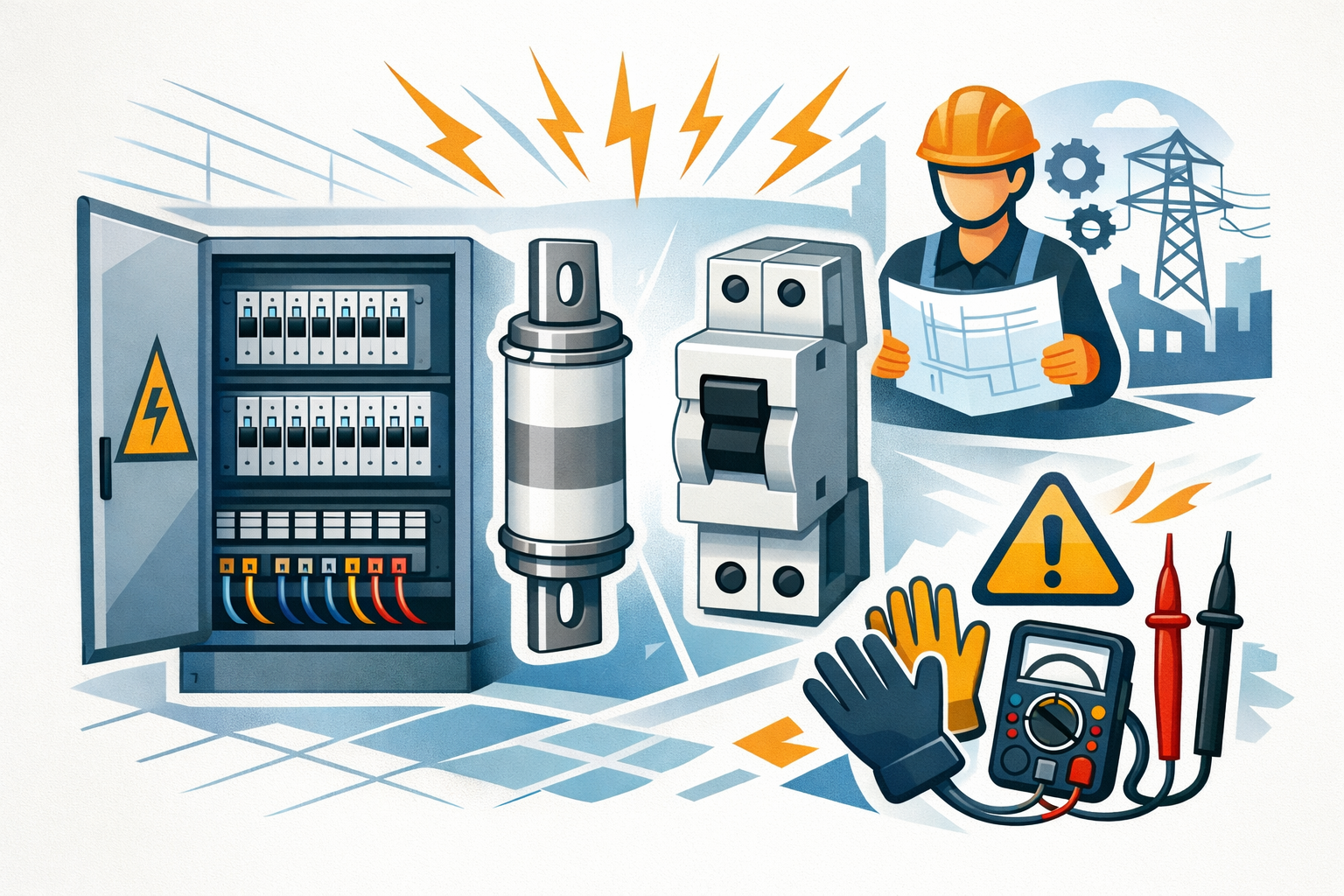
Fuse type: Different types of protective devices are available, including cartridge fuses and miniature circuit breakers. Each is suitable for specific applications and requirements.
-
Environmental conditions: Factors such as temperature, humidity and dust can affect fuse performance and service life. The environmental conditions inside the control cabinet should therefore be considered during selection.
Carefully selecting the correct fuse helps ensure that the control panel is adequately protected against electrical hazards.
3. Control Panel Design: Integrating Electrical Fuses
A well-designed control panel takes account not only of technical requirements but also of ease of maintenance.
Fuses must be positioned inside the control cabinet so that they remain easily accessible and can be replaced quickly in the event of a fault.
The following aspects are particularly important:
-
Fuse positioning: Install fuses in accessible locations to minimise maintenance time and effort.
-
Wiring optimisation: Arrange the wiring inside the control cabinet to allow protective devices to be integrated easily and replaced quickly when necessary.
-
Clear labelling and identification: Every fuse should be clearly labelled and easily visible to allow rapid identification when a fault occurs.
Well-planned control panel design not only improves operational safety but also supports efficient maintenance and cost reduction.
4. Types of Protective Devices Used in Control Panel Manufacturing
Different types of protective devices are used in control panel manufacturing, each offering specific advantages depending on the application and requirements.
-
Cartridge fuses: These conventional fuses interrupt the circuit during an overload or short circuit when the fuse element melts due to heat. They are straightforward to use but cannot be reused once they have operated.
-
Miniature circuit breakers: These reusable protective devices can be reset after an overload or short circuit. They are widely used in modern electrical installations.
-
Motor protection devices: These specialised protective devices protect electric motors against overloads and short circuits. They are particularly important in applications involving high current requirements.
The protective devices used in a control panel must be selected according to the application to ensure effective protection of the connected components.
5. Important Standards and Regulations for Control Panel Fuses
All protective devices used in control panel manufacturing must comply with the relevant standards and regulations.
These standards help ensure that protective devices operate under the specified conditions and that the safety of the entire electrical installation is maintained.
Important standards include:
-
IEC 60269: Standards for low-voltage fuse-links.
-
DIN VDE 0636: German standards relating to fuses in low-voltage installations.
-
UL 248: US standards for low-voltage fuses.
Compliance with these standards helps ensure that the selected fuses meet the required safety specifications and that the electrical installation operates in accordance with applicable regulations.
6. Conclusion: Choosing the Right Fuse for Reliable Control Panel Operation
Selecting the correct fuse and integrating it properly into the control panel are essential for the safe and efficient operation of electrical installations.
To ensure reliable overload and short-circuit protection, rated current, operating characteristics and environmental conditions must all be taken into account.
Control panel design should also ensure that fuses can be maintained easily and replaced quickly whenever necessary.
By selecting and installing the appropriate protective devices, you can create a safe, efficient and long-lasting solution for your electrical installations.



