
 eaton-bussmann-series-high-speed-fuses-application-guide-br132015en-en-us.pdf  | [Eaton Bussmann Fuses Technical Guide] | 0 kB |
How UL-, CSA- and CE-Marked Fuses Protect Your Industrial Equipment
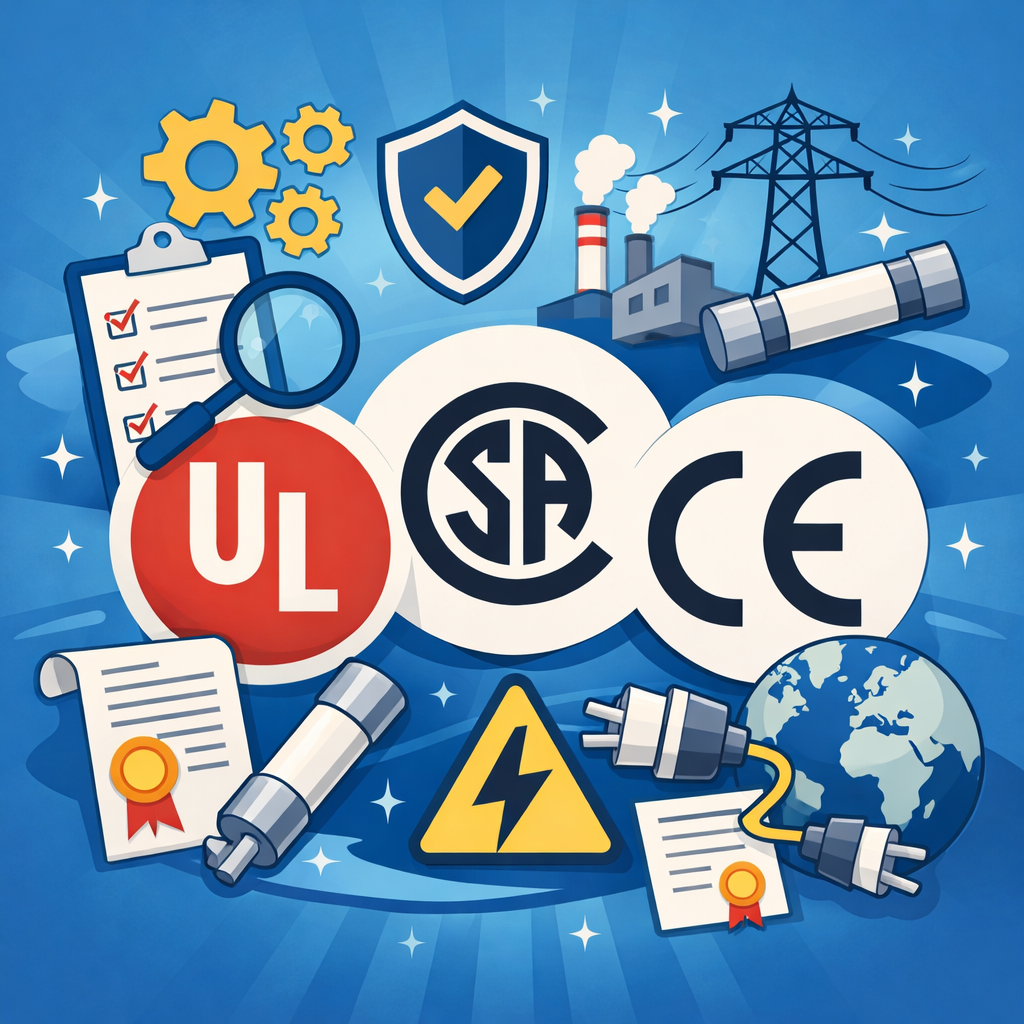
The safety of industrial equipment and its components depends largely on selecting the right protective devices. One of the most reliable ways to protect electrical installations is to use fuses that meet recognised safety standards and regulatory requirements, including UL, CSA and applicable European CE requirements.
These standards and conformity requirements help ensure that fuses meet specific safety and performance criteria, supporting the safe and reliable operation of industrial equipment.
In this article, we explore how UL-, CSA- and CE-compliant fuses can improve the protection, reliability and efficiency of your industrial installations.
1. UL-Listed Fuses – A Key Safety Standard in North America
UL (Underwriters Laboratories) is one of the best-known product safety organisations in North America. UL-listed fuses have been independently evaluated against applicable safety requirements for use in electrical systems.
UL-listed fuses offer several important benefits:
-
High-quality materials: They are manufactured using durable materials designed to withstand demanding operating conditions, including overloads and short circuits.
-
Enhanced safety: UL-listed products undergo extensive testing to assess their ability to handle electrical faults, such as short circuits and overloads, safely.
-
Compliance with safety standards: UL-listed fuses meet the applicable requirements of their relevant UL product category, helping to minimise electrical risks.
Choosing appropriately UL-listed fuses helps support the safe operation of your industrial installation and compliance with applicable North American safety requirements.
2. CSA-Certified Fuses – Reliable Electrical Protection in Canada
In Canada, CSA certification (Canadian Standards Association) is an important indicator that a product has been assessed against relevant Canadian safety standards.
CSA-certified fuses provide benefits comparable to those of UL-listed products, particularly in the following areas:
-
Reliability and durability: CSA-certified fuses are designed and evaluated for demanding industrial environments, helping ensure dependable long-term performance.
-
Electrical safety: They provide protection against electrical faults and help prevent potentially dangerous overloads and short circuits.
-
Compliance with Canadian standards: CSA-certified products are assessed against applicable Canadian safety and quality requirements.
Using appropriately CSA-certified fuses helps businesses meet relevant regulatory requirements and maintain reliable operations in Canadian industrial facilities.
3. CE Marking – An Important Requirement for the European Market
CE marking plays an essential role in placing many products on the European market. It indicates that the manufacturer declares the product to comply with the applicable European Union legislation.
For electrical fuses, the relevant requirements depend on the product type and its intended application.
Products bearing the CE marking offer several important advantages:
-
Access to the European market: Where CE marking is required, it enables products to be placed on the EU market in accordance with applicable legislation.
-
Protection against electrical hazards: Fuses selected and designed in accordance with the relevant product standards help protect electrical installations against overloads, short circuits and other electrical faults.
-
Compliance with applicable requirements: CE marking demonstrates the manufacturer's declaration of conformity with the relevant EU legislation, including applicable safety and environmental requirements.
For businesses operating within the European Union, selecting fuses that meet the applicable product standards and regulatory requirements is essential for maintaining safety and ensuring compliance.
4. Benefits of Using UL-, CSA- and CE-Compliant Fuses
Selecting fuses that meet the relevant UL, CSA and European requirements offers numerous benefits for industrial operations:
-
Improved operational safety: Compliance with recognised safety standards helps protect equipment against electrical faults, reducing the risk of downtime and machinery damage.
-
Regulatory compliance: Choosing appropriately approved, listed or compliant products helps ensure that industrial installations meet the applicable legal requirements in their respective markets.
-
Longer component service life: High-quality protective fuses help protect electrical components, potentially extending their service life and reducing maintenance requirements.
-
Cost savings: Fewer electrical faults, equipment failures and production interruptions can result in significant long-term savings and improved operational profitability.
5. Conclusion: Certified and Compliant Fuses for Safer, More Efficient Industrial Equipment
Selecting the right fuse for your industrial installation is essential for preventing operational disruptions and maintaining electrical safety.
UL-listed, CSA-certified and CE-compliant fuses help protect against electrical faults while supporting compliance with the relevant safety requirements in different markets.
By choosing the right fuse for your application, you can reduce costs, improve equipment protection and maximise operational uptime.
Looking for the right electrical fuses for your industrial application?
Contact Casadaa Distribution to find out more about our range of Eaton Bussmann electrical fuses and protection solutions.



