
Electrical Fuses Blog
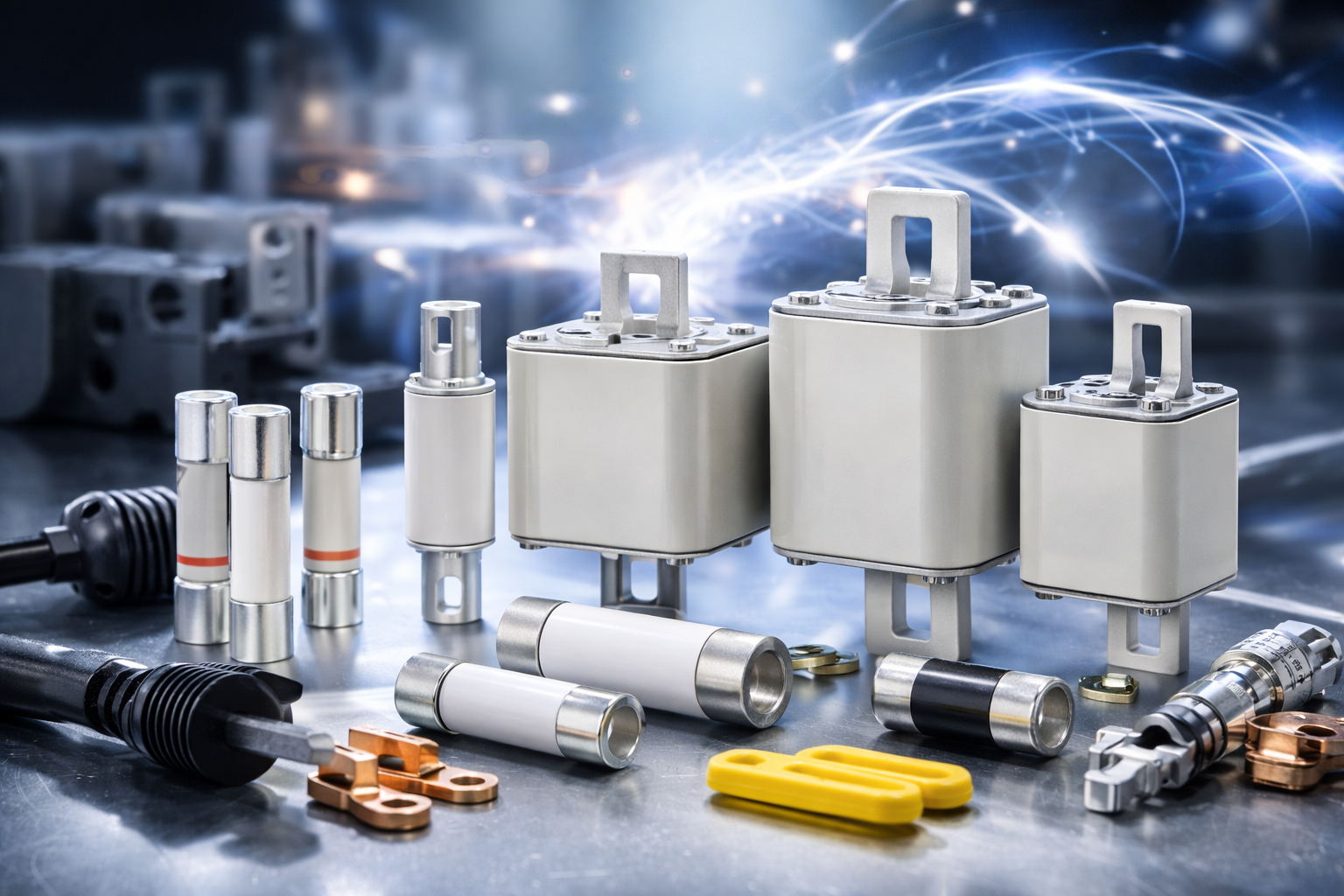
Eaton Bussmann Series Electrical Fuses – Blog & Fachwissen
Im Eaton Bussmann Series Electrical Fuses Blog finden Sie fundiertes Fachwissen rund um elektrische Sicherungen, Überstromschutz und moderne Schutzkonzepte für industrielle und gewerbliche Anwendungen. Diese Kategorie bündelt alle Blogartikel, technischen Beiträge und Praxisguides zu den Sicherungssystemen und Serien von Eaton Bussmann.
Eaton Bussmann zählt weltweit zu den führenden Herstellern von elektrischen Sicherungen, und ihre Serien stehen für Sicherheit, Normkonformität und höchste Zuverlässigkeit in anspruchsvollen elektrischen Systemen.
Was Sie im Eaton Bussmann Sicherungen Blog erwartet
Unsere Blogbeiträge helfen Ingenieuren, Einkäufern, Technikern und Planern dabei, die richtige Sicherungslösung zu finden und technische Zusammenhänge besser zu verstehen.
Themenschwerpunkte dieser Kategorie:
-
🔌 Überblick über Eaton Bussmann Sicherungsserien
-
⚙️ Unterschiede zwischen UL-, IEC- und Spezial-Sicherungen
-
📘 Technische Erklärungen zu Kennlinien, Auslöseverhalten & Bemessungswerten
-
🏭 Anwendungstipps für Industrie, Maschinenbau & Energieverteilung
-
🚗 Beiträge zu EV-, DC- und Hochvolt-Sicherungen
-
🛠 Best Practices für Auswahl, Installation und Wartung
Alle Inhalte sind praxisnah, verständlich aufbereitet und technisch fundiert.
Eaton Bussmann Sicherungsserien im Fokus
Der Blog behandelt regelmäßig verschiedene Eaton Bussmann Series Electrical Fuses, darunter:
-
Industrial Fuses
-
North American (UL) Fuse Series
-
IEC Sicherungsserien
-
High Speed & Semiconductor Fuses
-
EV & DC Sicherungen
-
Supplementary & Specialty Fuses
So erhalten Sie einen umfassenden Überblick über das Eaton Bussmann Portfolio und dessen Einsatzmöglichkeiten.
Fachwissen für sichere elektrische Systeme
Elektrische Sicherungen sind ein zentraler Bestandteil jeder sicheren Stromversorgung. Der Eaton Bussmann Series Electrical Fuses Blog unterstützt Sie dabei, Risiken zu minimieren, Normen einzuhalten und die Lebensdauer Ihrer Anlagen zu verlängern.
Ganz gleich, ob Sie Grundlagenwissen suchen oder tief in spezielle Sicherungsserien eintauchen möchten – hier finden Sie relevante, aktuelle und suchmaschinenoptimierte Inhalte rund um Eaton Bussmann Electrical Fuses.
👉 Jetzt Blogartikel entdecken und Ihr Wissen über Eaton Bussmann Sicherungsserien gezielt erweitern.
- Details
- Category: Electrical Fuses Blog
 eaton-ev-fuse-catalogue-emob0062-en-us.pdf  | [Eaton Bussmann EV Fuses] | 0 kB |
How to Evaluate EV Fuse Quality & Safety: A Complete Guide
Introduction
Electric vehicles (EVs) rely on sophisticated electrical systems to deliver efficient, reliable, and safe performance. From battery packs and power distribution units to inverters, electric motors, and onboard chargers, every electrical component must operate within strict safety limits. Among these essential components, fuses play a critical role in protecting electrical circuits against overcurrent, short circuits, and potentially dangerous electrical faults.
However, not all EV fuses offer the same level of protection. Differences in materials, manufacturing processes, electrical ratings, thermal performance, and quality control can significantly affect a fuse's reliability and service life.
Choosing the right fuse is therefore not simply about matching voltage and current ratings. It requires a comprehensive evaluation of EV fuse quality and safety to ensure dependable protection under real-world operating conditions.
In this guide, we explore the key factors engineers, manufacturers, procurement professionals, and EV system designers should consider when evaluating the quality and safety of electric vehicle fuses.
1. Why EV Fuse Quality and Safety Matter
EV fuses operate under more demanding conditions than conventional automotive fuses. Modern electric vehicles use high-voltage battery systems, often operating at 400V or 800V, with some advanced platforms requiring even higher voltage ratings.
These systems can generate extremely high fault currents when short circuits or electrical failures occur. A properly designed fuse must interrupt the current quickly and safely before it damages sensitive electrical components.
Several factors make EV fuse quality particularly important:
-
High-voltage operation: EV fuses must safely interrupt high-voltage DC circuits.
-
High fault currents: Battery short circuits can generate thousands of amperes within milliseconds.
-
Temperature fluctuations: Fuses must maintain stable performance across wide temperature ranges.
-
Mechanical vibration: Road conditions and vehicle operation expose electrical components to continuous vibration and mechanical stress.
-
Long-term reliability: EV fuses must provide consistent protection throughout the vehicle's operating life.
A low-quality fuse may experience premature failure, excessive heat generation, inconsistent breaking performance, or insufficient arc suppression. These problems can compromise the entire electrical protection system.
Therefore, evaluating fuse quality is essential for improving vehicle safety, protecting battery systems, and reducing the risk of electrical failures.
2. Check Certifications and Compliance with Safety Standards
One of the first steps in evaluating EV fuse quality is checking whether the product complies with recognized international safety standards.
Certifications and compliance documents provide evidence that a fuse has undergone defined testing procedures for electrical performance, mechanical strength, and safety.
Important standards to consider include:
|
Standard |
Main Application |
|---|---|
|
UL 248-20 |
Safety requirements and performance testing for EV fuses |
|
IEC 60269-7 |
Supplementary requirements for fuse-links used in battery and battery system applications |
|
IEC 60269-4 |
Fuse protection for semiconductor devices |
|
ISO 8820-8 |
Automotive fuse-links with bolted connections |
|
GB/T 31465.6 |
Automotive high-voltage fuse requirements in China |
The appropriate standard depends on the fuse design, application, vehicle architecture, and target market.
What Certifications Should You Check?
When evaluating an EV fuse, consider the following:
1. Product certification
Verify whether the fuse has been independently tested and certified to the applicable safety standard. Request certificates and supporting test reports rather than relying solely on statements in a product catalogue.
2. Manufacturing quality certification
A manufacturer's quality management system is another important consideration. ISO 9001 demonstrates an established quality management framework, while IATF 16949 is particularly relevant to automotive manufacturing and supply chains.
3. Market-specific compliance
Check that the fuse meets the regulatory and technical requirements of the market where the vehicle or equipment will be sold.
4. Certification validity and traceability
Confirm that certificates apply to the exact product model, rated voltage, current, and construction being purchased.
A high-quality EV fuse should have clear technical documentation and verifiable compliance information.
3. Evaluate Key Electrical Performance Parameters
Certifications establish an important foundation, but they do not guarantee that a fuse is suitable for every EV application.
Engineers must also evaluate the electrical characteristics of the fuse against the actual operating conditions of the vehicle.
3.1 Rated Voltage
The rated voltage indicates the maximum circuit voltage at which a fuse is designed to operate safely under specified conditions.
For electric vehicles, the DC voltage rating is particularly important because interrupting DC current presents different challenges from interrupting AC current.
When evaluating voltage ratings, consider:
-
Maximum battery pack voltage.
-
Peak charging voltage.
-
Voltage fluctuations and transient conditions.
-
System insulation and protection requirements.
-
The fuse's ability to extinguish an electrical arc.
For example, an 800V EV battery system requires a fuse with an appropriate DC voltage rating that exceeds the maximum possible circuit voltage under the specified operating conditions.
Never select a fuse based only on the vehicle's nominal battery voltage. The maximum operating voltage and applicable safety margins must also be considered.
3.2 Rated Current
Rated current represents the current a fuse can carry continuously under specified conditions without exceeding its allowable temperature limits.
Selecting the correct current rating is essential for balancing circuit protection and normal operating performance.
A fuse with an excessively low current rating may interrupt normal operation unnecessarily. Conversely, an oversized fuse may not provide adequate protection against overload conditions.
When determining the appropriate current rating, consider:
-
Continuous operating current.
-
Peak current during acceleration.
-
Charging and discharging current.
-
Ambient temperature.
-
Installation conditions.
-
Cable and component current-carrying capacity.
-
Manufacturer-recommended derating factors.
The selected fuse should withstand normal operating and temporary inrush currents while providing reliable protection during abnormal electrical conditions.
3.3 Breaking Capacity
Breaking capacity, also known as interrupting capacity, refers to the maximum fault current a fuse can safely interrupt at its specified voltage and under defined test conditions.
This is one of the most critical parameters when evaluating EV fuse safety.
EV battery packs can deliver extremely high short-circuit currents. If the available fault current exceeds the fuse's interrupting capacity, the fuse may fail to interrupt the circuit safely.
A suitable EV fuse should therefore:
-
Have an interrupting rating greater than the prospective short-circuit current.
-
Be tested at the required DC voltage.
-
Demonstrate reliable fault interruption.
-
Provide effective arc suppression.
-
Maintain safe containment during fault clearing.
It is also important to examine performance across the relevant fault-current range rather than considering only the maximum breaking capacity.
3.4 I²t Value
The I²t value represents the thermal energy associated with current flowing through a fuse during its operating and interruption process.
It is an important parameter for evaluating how effectively a fuse protects sensitive downstream components.
There are two primary values to examine:
-
Pre-arcing I²t: The energy let through before the fuse element melts.
-
Total clearing I²t: The total energy let through until the fault current is completely interrupted.
A lower I²t value generally indicates better current-limiting performance under comparable test conditions.
This parameter is particularly important for protecting semiconductor devices, inverters, power modules, and other sensitive EV components.
When comparing products, request I²t data and verify that the values are suitable for the specific circuit protection requirements.
3.5 Power Dissipation
Power dissipation refers to the heat generated by a fuse when carrying electrical current.
Excessive heat can increase the temperature inside battery enclosures and power distribution units, potentially affecting nearby electrical components.
A high-quality EV fuse should offer low power dissipation while maintaining the required current-carrying capacity.
Check the manufacturer's datasheet for:
-
Power loss at rated current.
-
Temperature rise during continuous operation.
-
Derating characteristics.
-
Performance under different ambient temperatures.
Lower power dissipation can contribute to improved thermal management and overall electrical system efficiency.
3.6 Time-Current Characteristics
Time-current characteristics describe how quickly a fuse operates at different current levels.
Different EV applications require different response characteristics.
For example, semiconductor protection may require a fast-acting fuse, while circuits exposed to temporary inrush currents may require a suitable time-delay characteristic.
When evaluating this parameter, check:
-
Minimum and maximum melting times.
-
Total clearing time.
-
Overload response.
-
Inrush current tolerance.
-
Coordination with other protective devices.
A properly selected time-current characteristic helps prevent unnecessary fuse operation while ensuring effective protection during electrical faults.
4. Examine Materials and Manufacturing Quality
Electrical performance is only one part of EV fuse quality. The materials and manufacturing processes used to produce the fuse also have a significant impact on reliability and safety.
Even a fuse with suitable electrical specifications may perform poorly if its internal materials or construction are inconsistent.
4.1 Fuse Element Material
The fuse element is the component responsible for melting when excessive current flows through the circuit.
High-quality fuse elements typically use carefully selected conductive materials, such as silver or copper-based alloys.
Important considerations include:
-
Material purity.
-
Electrical conductivity.
-
Dimensional accuracy.
-
Consistent melting characteristics.
-
Resistance to oxidation and aging.
Poor-quality materials can result in inconsistent resistance, unpredictable melting behavior, and unreliable protection.
4.2 Arc-Quenching Material
When a fuse interrupts a high-voltage DC fault, an electrical arc may form inside the fuse.
Effective arc suppression is essential to ensure that the current is interrupted safely.
Many high-voltage fuse designs use specially processed quartz sand as an arc-quenching medium.
When evaluating the material, consider:
-
Purity and consistency.
-
Particle size distribution.
-
Filling density.
-
Moisture control.
-
Uniformity throughout the fuse body.
Inconsistent arc-quenching material can reduce interruption performance and increase the risk of fuse failure.
4.3 Housing and Insulation Materials
The fuse housing must withstand electrical, thermal, and mechanical stress throughout its service life.
High-quality EV fuses commonly use ceramic housings because of their excellent thermal stability, mechanical strength, and electrical insulation properties.
Check whether the housing can withstand:
-
High operating temperatures.
-
Thermal cycling.
-
Mechanical vibration.
-
Electrical arc stress.
-
Environmental exposure.
The housing should also provide effective insulation and help contain the effects of internal fault interruption.
4.4 Terminal and Connection Quality
Electrical connections are another important factor in evaluating EV fuse reliability.
Poor terminal quality or unstable connections can increase contact resistance, resulting in excessive heat generation and potential connection failure.
When examining terminal construction, consider:
-
Conductive material quality.
-
Corrosion-resistant surface plating.
-
Contact resistance.
-
Mechanical strength.
-
Mounting stability.
-
Compatibility with the electrical connection system.
Bolted connections are commonly used in high-current EV applications because they can provide stable electrical contact when properly designed and installed.
5. Assess Thermal Performance and Environmental Resistance
Electric vehicles operate in environments where temperature, humidity, vibration, and mechanical stress can change significantly.
A fuse must maintain reliable electrical performance under these conditions.
Temperature Resistance
EV fuses may be exposed to extremely low temperatures during winter operation and elevated temperatures inside battery compartments and power electronics enclosures.
Evaluate whether the fuse has been tested under the expected operating temperature range.
Important parameters include:
-
Minimum operating temperature.
-
Maximum operating temperature.
-
Temperature rise at rated current.
-
Thermal cycling performance.
-
Current derating at elevated temperatures.
Humidity and Moisture Resistance
Moisture can contribute to corrosion, insulation degradation, and increased electrical resistance.
A high-quality EV fuse should have appropriate sealing and environmental protection for its intended installation location.
Check for evidence of humidity testing and resistance to moisture ingress.
Vibration and Mechanical Shock Resistance
EVs experience continuous vibration from road surfaces, motors, and other mechanical systems.
These forces can affect fuse connections, terminals, and internal components.
Reliability testing should demonstrate resistance to:
-
Mechanical vibration.
-
Shock loading.
-
Repeated acceleration and deceleration.
-
Mounting stress.
-
Long-term mechanical fatigue.
Corrosion and Chemical Resistance
EV electrical components may be exposed to coolant, oil, cleaning agents, and other automotive fluids.
Materials and protective coatings should be suitable for the vehicle's operating environment.
Environmental resistance helps prevent premature degradation and supports long-term fuse reliability.
6. Review Reliability Testing and Quality Control Procedures
A reliable EV fuse should undergo more than basic electrical testing.
Comprehensive reliability testing helps determine whether the product can maintain consistent performance throughout its expected operating life.
Some important tests include:
|
Test |
Purpose |
|---|---|
|
Temperature rise test |
Evaluates heat generation during normal operation |
|
Overload test |
Checks performance under excessive current |
|
Short-circuit interruption test |
Verifies safe interruption of fault currents |
|
Thermal shock test |
Evaluates resistance to rapid temperature changes |
|
Temperature and humidity cycling |
Assesses resistance to environmental stress |
|
Vibration test |
Checks mechanical stability |
|
Mechanical shock test |
Evaluates resistance to impact |
|
Current cycling test |
Examines performance under repeated electrical loading |
|
Terminal strength test |
Verifies connection durability |
|
Corrosion resistance test |
Evaluates long-term material protection |
Why 100% Inspection Matters
Manufacturing consistency is essential for electrical safety.
A professional quality control system should include appropriate inspections and testing throughout production.
Depending on the manufacturing process, these may include:
-
Dimensional inspections.
-
Electrical resistance measurements.
-
Contact resistance testing.
-
Power dissipation measurements.
-
Temperature rise testing.
-
Fuse element inspections.
-
Final product verification.
Not every test must necessarily be performed on every individual fuse. Some are production inspections, while others are conducted through representative sample testing or qualification testing.
The manufacturer should clearly explain its inspection procedures, acceptance criteria, and testing frequency.
Product Traceability
Traceability is another important indicator of manufacturing quality.
A reliable supplier should be able to provide relevant production batch information, inspection records, and supporting test documentation.
This makes it easier to investigate quality issues, identify affected products, and maintain consistency across production batches.
7. Evaluate the Manufacturer's Technical Capability
Selecting a high-quality EV fuse also means evaluating the manufacturer's engineering and production capabilities.
A supplier with strong technical expertise is more likely to understand the electrical and environmental challenges associated with EV applications.
Consider the following factors:
Engineering experience: Does the manufacturer have experience developing high-voltage DC fuses and automotive protection components?
Product development capability: Can the manufacturer provide customized electrical ratings, dimensions, terminal configurations, and mounting solutions?
Testing facilities: Does the manufacturer have access to appropriate electrical, thermal, mechanical, and environmental testing equipment?
Quality management: Are manufacturing processes supported by documented quality control procedures and relevant automotive quality certifications?
Technical documentation: Can the supplier provide detailed datasheets, test reports, certification documents, and application guidance?
After-sales support: Can the technical team assist with fuse selection, troubleshooting, and application-specific questions?
A supplier's ability to provide reliable technical information is an important part of the purchasing decision.
8. Common Mistakes to Avoid When Selecting EV Fuses
Even experienced buyers and engineers can make mistakes when evaluating EV fuse quality.
Understanding these common problems can help prevent inappropriate component selection.
Choosing a Fuse Based Only on Rated Current
Current rating is important, but it does not determine whether a fuse can safely interrupt a high-voltage DC fault.
Always evaluate voltage rating, breaking capacity, time-current characteristics, and I²t performance together.
Ignoring DC Arc Interruption Capability
DC arcs do not naturally pass through a current zero point as AC arcs do.
A fuse designed for an unsuitable application may not interrupt DC fault current safely.
Always verify the DC voltage and interrupting ratings.
Overlooking Temperature Derating
A fuse that performs correctly at room temperature may behave differently inside a hot battery enclosure.
Consider ambient temperature, enclosure conditions, heat dissipation, and derating requirements before making a selection.
Ignoring Mechanical Compatibility
Incorrect dimensions, unsuitable terminals, or poor mounting arrangements can lead to loose connections and increased contact resistance.
Verify mechanical specifications and installation requirements.
Relying Only on Product Datasheets
Datasheets are essential, but they should be supported by relevant certification documents and test reports.
Request evidence of compliance and reliability testing before approving a product for critical applications.
Selecting Suppliers Based Only on Price
A low purchase price does not necessarily represent good long-term value.
Poor manufacturing consistency, inadequate testing, and premature failure can increase maintenance costs and create significant safety risks.
It is better to evaluate total product quality, technical support, reliability, and lifecycle costs.
9. Practical EV Fuse Quality and Safety Evaluation Checklist
Before purchasing or approving an EV fuse, use the following checklist to assess its suitability.
|
Evaluation Category |
What to Verify |
|---|---|
|
Certifications |
Compliance with applicable EV fuse standards |
|
Voltage rating |
Suitable DC voltage with adequate safety margin |
|
Current rating |
Appropriate for continuous and peak operating current |
|
Breaking capacity |
Higher than the prospective short-circuit current |
|
I²t performance |
Suitable pre-arcing and total clearing values |
|
Power dissipation |
Acceptable heat generation |
|
Time-current curve |
Appropriate response for the application |
|
Fuse element |
High-quality conductive materials |
|
Arc-quenching medium |
Consistent and effective arc suppression |
|
Housing |
Strong insulation and thermal resistance |
|
Terminals |
Low contact resistance and corrosion resistance |
|
Environmental testing |
Temperature, humidity, vibration, and shock resistance |
|
Quality control |
Documented inspection and testing procedures |
|
Traceability |
Batch identification and test records |
|
Manufacturer capability |
Engineering expertise and technical support |
A fuse should only be approved after its electrical, mechanical, environmental, and safety characteristics have been evaluated against the actual application requirements.
10. How to Choose the Right EV Fuse for Your Application
After evaluating fuse quality and safety, the next step is selecting a product that matches the requirements of the electrical system.
Different EV applications have different protection requirements.
For example:
-
Battery protection systems: Require reliable high-voltage DC fault interruption and suitable breaking capacity.
-
Power distribution units: Require appropriate current ratings, thermal performance, and electrical coordination.
-
Inverters: May require fast-acting protection to protect sensitive semiconductor components.
-
DC-DC converters: Require suitable short-circuit protection and coordination with downstream components.
-
Onboard chargers: Require protection matched to the charger's electrical architecture and operating conditions.
-
EV charging systems: Require suitable protection based on system voltage, current, and fault characteristics.
Before selecting a fuse, engineers should establish the following information:
-
What is the maximum DC operating voltage?
-
What is the required continuous current rating?
-
What is the maximum prospective short-circuit current?
-
What is the operating temperature range?
-
What level of current-limiting performance is required?
-
What are the installation dimensions and mounting requirements?
-
Which safety standards and certifications apply?
Comparing these requirements with the manufacturer's technical documentation helps ensure that the selected fuse provides appropriate protection.
Conclusion
Evaluating EV fuse quality and safety requires a comprehensive approach that goes beyond checking basic electrical ratings.
Voltage rating, current-carrying capacity, breaking capacity, I²t characteristics, power dissipation, and time-current performance are essential technical considerations. Equally important are material quality, manufacturing consistency, environmental resistance, reliability testing, and certification compliance.
A high-quality EV fuse should provide dependable protection under normal operating conditions as well as during abnormal electrical events. It should also withstand the demanding thermal, mechanical, and environmental conditions associated with electric vehicle applications.
For EV manufacturers, engineers, and purchasing professionals, choosing the right fuse means prioritizing verified safety performance, consistent manufacturing quality, and long-term reliability.
By following the evaluation criteria outlined in this guide, businesses can make more informed purchasing decisions, improve electrical system protection, and support the continued development of safer and more reliable electric vehicles.
Frequently Asked Questions (FAQs)
1. What are the most important factors when evaluating EV fuse quality?
The most important factors include rated voltage, rated current, breaking capacity, I²t value, power dissipation, time-current characteristics, material quality, and compliance with applicable safety standards. Environmental resistance and manufacturing consistency are also essential.
2. Why is breaking capacity important for EV fuses?
Breaking capacity determines the maximum fault current a fuse can safely interrupt at its specified voltage and test conditions. EV batteries can produce extremely high short-circuit currents, so insufficient breaking capacity can result in unsafe interruption and equipment damage.
3. Which standards should an EV fuse comply with?
Relevant standards may include UL 248-20, IEC 60269-7, IEC 60269-4, and ISO 8820-8. The appropriate requirements depend on the fuse application, construction, and target market.
4. What materials are commonly used in high-quality EV fuses?
Common materials include silver or copper-based alloys for fuse elements, quartz sand for arc suppression, ceramic materials for insulation and housing, and corrosion-resistant metal plating for terminals.
5. How does temperature affect EV fuse performance?
High temperatures can increase resistance, affect current-carrying capacity, and accelerate material degradation. Proper temperature derating and thermal performance testing help ensure reliable operation under different environmental conditions.
6. What is the difference between pre-arcing I²t and total clearing I²t?
Pre-arcing I²t measures the energy let through before the fuse element melts. Total clearing I²t includes the energy let through during the entire interruption process, including the arcing period.
7. How can I identify an unreliable EV fuse manufacturer?
Warning signs include missing certification documents, incomplete datasheets, unclear testing procedures, inconsistent product specifications, limited traceability, and an inability to provide technical support or relevant test reports.
8. How often should EV fuses be inspected or replaced?
EV fuse inspection and replacement intervals depend on the vehicle manufacturer's maintenance requirements, operating conditions, and fuse application. A fuse should be inspected after a fault event and replaced if it has operated or shows signs of damage. Never reuse a blown fuse.
- Details
- Category: Electrical Fuses Blog
| eaton-ev-fuse-catalogue-emob0062-en-us.pdf | [Eaton Bussmann EV Fuses] | 0 kB |
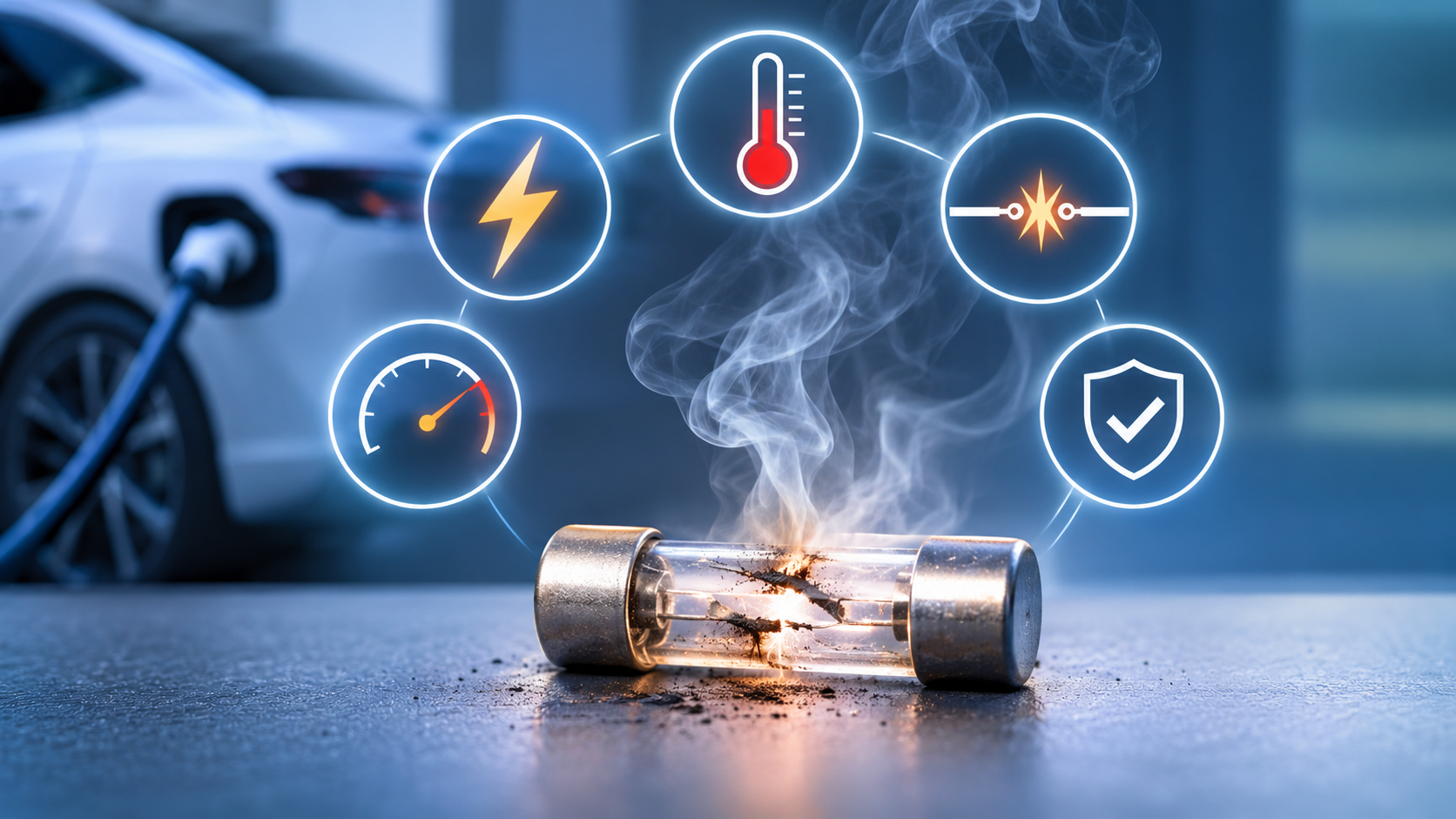
5 Signs Your EV Fuse Needs Replacement
Electric vehicles (EVs) rely on sophisticated electrical systems to deliver reliable performance, efficient charging, and safe operation. At the heart of these systems are electric vehicle fuses, which protect critical components against overcurrent, short circuits, and electrical faults.
Like other electrical protection components, EV fuses can eventually blow or become damaged due to excessive current, electrical overloads, temperature fluctuations, or component failures. Recognising the warning signs early can help prevent unexpected breakdowns, protect expensive electrical components, and maintain vehicle safety.
But how do you know when an EV fuse needs replacement?
Here are five common signs that indicate your electric vehicle fuse may require inspection or replacement.
Why Are EV Fuses Important?
Before identifying the warning signs, it is important to understand the role of an EV fuse.
Unlike conventional vehicles, electric vehicles use high-voltage electrical systems to power their batteries, motors, charging equipment, and other electronic components. These systems require specialised fuses designed to handle high DC voltages and substantial current levels.
An EV fuse acts as a safety device by interrupting the electrical circuit when current exceeds a predetermined limit. This helps prevent overheating, electrical fires, equipment damage, and potentially dangerous electrical faults.
A properly functioning fuse is therefore essential for protecting the vehicle's battery system, power electronics, charging circuits, and other critical components.
1. Electrical Components Stop Working Suddenly
One of the most noticeable signs of a blown EV fuse is the sudden failure of one or more electrical components.
If a fuse becomes damaged or blows, it interrupts the electrical supply to the circuit it protects. As a result, the connected components may stop functioning completely or operate intermittently.
Common symptoms include:
-
The infotainment system suddenly stops working.
-
Air conditioning or heating fails to operate.
-
Power windows or electrically adjustable mirrors become unresponsive.
-
Interior or exterior lights stop functioning.
-
Certain electronic controls fail unexpectedly.
-
The charging port does not respond correctly.
Why does this happen?
Every fuse is designed to protect a specific electrical circuit. When excessive current flows through that circuit, the fuse element melts and interrupts the electrical connection.
A damaged fuse or poor electrical connection can also cause intermittent power interruptions.
What should you do?
If an electrical component suddenly stops working, the corresponding circuit should be inspected by a qualified technician. A blown fuse may need replacement, but the underlying electrical fault should also be identified before the vehicle returns to service.
2. Your Electric Vehicle Will Not Start or Charge
Another important warning sign is when your EV refuses to start or the charging process fails to begin.
Although several issues can cause these problems, a blown fuse in a critical electrical circuit may be responsible.
Electric vehicles depend on multiple protective fuses to support essential systems, including:
-
Main battery electrical circuits.
-
Battery management systems.
-
Electric motor controllers.
-
Onboard charging equipment.
-
High-voltage power distribution systems.
If a fuse protecting one of these systems blows, the vehicle may lose the ability to communicate with essential components or transfer electrical power correctly.
Why does this happen?
A blown fuse can interrupt the power supply to critical vehicle systems. For example, a fault affecting the battery management system or charging circuit may prevent the vehicle from starting or accepting a charge.
What should you do?
Avoid repeatedly attempting to start or charge the vehicle. Have the electrical system inspected to determine whether a fuse has failed or another component is responsible.
Any suspected fault involving high-voltage circuits should be handled by a trained EV technician.
3. Visible Damage, Discolouration, or Burning Marks on the Fuse
Sometimes, the condition of an EV fuse provides a clear indication that replacement is necessary.
Physical damage can occur when a fuse experiences excessive current, prolonged overheating, or poor electrical contact.
Look out for these warning signs:
-
A broken or melted internal fuse element.
-
Blackened or discoloured fuse housing.
-
Burn marks around the fuse terminals.
-
Melted or deformed fuse holders.
-
Signs of corrosion on electrical connections.
-
Unusual heat damage around the fuse assembly.
Why does this happen?
When current exceeds the fuse's rated capacity, its internal element heats up and eventually melts to interrupt the circuit.
However, visible damage does not always mean that the fuse itself is the only problem.
For example, a melted fuse holder may indicate a loose connection, excessive contact resistance, incorrect fuse selection, or prolonged overheating.
What should you do?
A damaged fuse should not be reused. The fuse holder, terminals, and surrounding wiring should also be examined to identify possible heat damage or electrical faults.
Replacing the fuse without addressing the underlying problem could result in another failure.
4. The Fuse Keeps Blowing After Replacement
If your EV fuse blows repeatedly shortly after replacement, it is a strong indication that an underlying electrical problem remains unresolved.
A properly selected replacement fuse should not continue to fail during normal operating conditions.
Repeated fuse failures may indicate excessive current, an electrical short circuit, or an incorrectly selected fuse.
Common causes include:
-
Circuit overload: An electrical component draws more current than the circuit is designed to handle.
-
Short circuit: Damaged insulation or faulty wiring creates an unintended electrical connection.
-
Loose connections: Poor electrical contact generates additional resistance and heat.
-
Incorrect fuse rating: A replacement fuse does not meet the electrical requirements of the circuit.
-
Temperature-related stress: High operating temperatures reduce the available current-carrying capacity of certain fuses.
-
Component malfunction: A defective motor controller, charging component, or other electrical device causes abnormal current flow.
Why does this happen?
An EV fuse is designed to protect the electrical circuit, not simply to prevent itself from failing. When excessive current continues to flow, the fuse performs its protective function by interrupting the circuit.
Repeatedly replacing a blown fuse without identifying the cause does not solve the problem.
What should you do?
Have a qualified technician investigate the circuit, inspect the wiring and connections, and check the electrical components for faults.
Never install a higher-rated fuse to prevent repeated failures. Doing so can compromise circuit protection and increase the risk of overheating or fire.
5. Dashboard Warning Lights or Electrical Fault Codes Appear
Modern electric vehicles use advanced monitoring systems to detect electrical problems and communicate potential faults to the driver.
When an EV fuse blows, the affected circuit may lose power or communication with other vehicle systems. This can trigger dashboard warnings, system alerts, or diagnostic trouble codes.
Common warning signs include:
-
Battery system warning lights.
-
Drivetrain or electrical system error messages.
-
Charging system alerts.
-
Battery management system notifications.
-
Diagnostic trouble codes indicating circuit failures.
-
Unexpected electronic system warnings.
Why does this happen?
The vehicle's electronic control systems continuously monitor different electrical circuits and components.
When a circuit loses power or stops communicating correctly, the vehicle may identify an abnormal condition and generate a warning.
In some EV designs, specialised fuse assemblies also provide fault indication to help technicians identify an operated fuse without directly accessing certain protected enclosures.
What should you do?
Do not ignore electrical warning lights or diagnostic trouble codes.
A qualified technician can use appropriate diagnostic equipment to identify the affected circuit, inspect the relevant fuse, and determine whether additional electrical components require attention.
Remember that a warning code does not automatically confirm a blown fuse. Further diagnosis is necessary to identify the actual cause.
How to Know Whether Your EV Fuse Needs Replacement
The following table summarises the five main warning signs and their possible causes.
| Warning Sign | Possible Cause | Recommended Action |
|---|---|---|
| Electrical components stop working | Blown fuse or circuit fault | Inspect the affected circuit |
| EV will not start or charge | Fault in a critical electrical circuit | Arrange professional diagnosis |
| Visible burning or melting | Overcurrent or overheating | Replace damaged components after inspection |
| Fuse blows repeatedly | Short circuit, overload, or incorrect rating | Investigate the underlying fault |
| Dashboard warnings or fault codes | Electrical circuit malfunction | Perform diagnostic testing |
How to Choose the Right Replacement EV Fuse
Once a faulty fuse has been identified, selecting the correct replacement is essential for maintaining electrical protection and vehicle safety.
Not all fuses are suitable for electric vehicle applications. EV electrical systems have specific voltage, current, and interruption requirements that must be considered.
Here are five important factors to evaluate when selecting a replacement EV fuse.
1. Voltage Rating
The fuse must have an appropriate DC voltage rating for the maximum operating voltage of the protected circuit. Using a fuse with an insufficient voltage rating can compromise its ability to safely interrupt a fault.
2. Current Rating
The rated current must match the electrical requirements of the protected circuit, taking operating conditions and applicable derating factors into account.
3. Breaking Capacity
Breaking capacity refers to the maximum fault current a fuse can safely interrupt at its specified voltage. This is particularly important in EV battery and high-voltage power distribution applications.
4. Fuse Operating Characteristics
Different applications require different operating characteristics. Fast-acting fuses may be appropriate for sensitive semiconductor protection, while time-delay characteristics may be needed for circuits with temporary startup current surges.
5. Temperature and Environmental Conditions
Operating temperature, vibration, humidity, and installation conditions can affect fuse performance. The replacement should be suitable for the actual operating environment.
Always follow the vehicle manufacturer's specifications and applicable electrical safety standards when selecting replacement components.
Important Safety Precautions When Replacing an EV Fuse
Replacing an EV fuse is not always as straightforward as replacing a conventional automotive fuse.
Electric vehicles contain high-voltage DC systems that can present serious electrical hazards, even when the vehicle appears to be switched off.
Before any inspection or replacement work:
-
Follow the vehicle manufacturer's high-voltage isolation procedures.
-
Ensure the electrical system is safely isolated by a qualified technician.
-
Use appropriate protective equipment and approved testing procedures.
-
Never touch exposed high-voltage terminals or battery connections.
-
Replace a faulty fuse only with one that meets the required specifications.
-
Investigate the underlying cause of repeated fuse failures.
High-voltage EV fuse replacement should only be performed by appropriately trained and qualified personnel.
Conclusion
EV fuses play an essential role in protecting electric vehicle electrical systems against excessive current, short circuits, and other electrical faults.
Recognising the five warning signs can help identify potential fuse problems before they lead to more serious vehicle issues.
To recap, the five key signs are:
-
Electrical components stop working unexpectedly.
-
The electric vehicle cannot start or charge.
-
Visible damage or burning marks appear on the fuse.
-
The fuse repeatedly blows after replacement.
-
Dashboard warning lights or electrical fault codes appear.
Most importantly, remember that a blown fuse is often a symptom of an underlying electrical problem. Replacing the fuse alone may not resolve the issue.
Proper diagnosis, correct fuse selection, and professional installation are essential for maintaining EV electrical safety, reliability, and performance.
- Details
- Category: Electrical Fuses Blog
| eaton-bussmann-series-photovoltaic-fuses-catalogue-ca135004en.pdf | [Eaton Bussmann PV Fuses] | 0 kB |
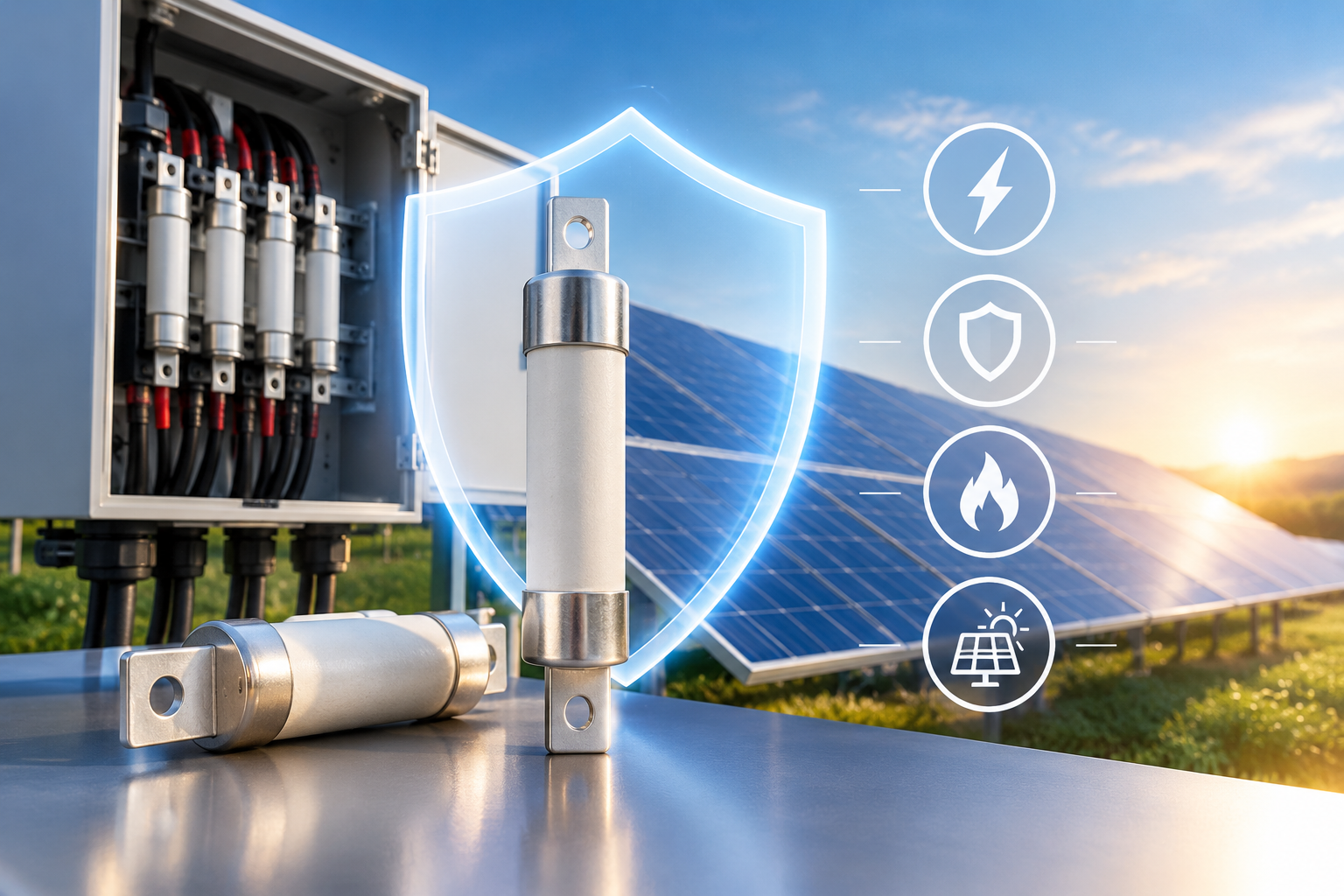
3 Scenarios Demanding Solar Fuse Protection: A Complete Guide to PV System Safety
Introduction
Solar energy systems are becoming increasingly popular for residential, commercial, and utility-scale power generation. As solar installations grow in capacity and complexity, ensuring their electrical safety and reliability becomes more important than ever. One essential component of a well-protected photovoltaic (PV) system is solar fuse protection.
Although solar panels are designed to operate reliably under varying environmental conditions, PV systems are not immune to electrical faults. Short circuits, reverse currents, insulation failures, and equipment malfunctions can cause excessive current flow. Without appropriate protection, these problems may damage expensive electrical components, reduce system efficiency, or even create serious fire hazards.
Unlike conventional AC systems, solar PV installations operate with direct current (DC), which presents unique protection challenges. DC arcs can be difficult to extinguish, making the selection of suitable overcurrent protection devices particularly important.
So, where is solar fuse protection most necessary?
There are three critical scenarios in which photovoltaic fuses play an essential role: PV string circuits, combiner boxes, and inverter DC inputs. Understanding these applications helps system designers and installers build safer, more reliable solar power systems.
1. PV String Protection: Preventing Reverse Current Damage
What Is a PV String?
A photovoltaic string consists of multiple solar panels connected in series to increase the system's operating voltage. In larger solar installations, several strings are connected in parallel through a combiner box to increase the total current output.
While this configuration improves power generation capacity, it also introduces a potential electrical risk.
When one PV string experiences a short circuit, ground fault, or internal module failure, the other parallel-connected strings may supply reverse current into the faulty string.
This reverse current can exceed the maximum series fuse rating of the affected solar modules, potentially causing overheating, damaged junction boxes, melted connectors, and electrical fires.
Why Is Solar String Fuse Protection Necessary?
Solar string fuses are designed to interrupt excessive reverse current and isolate faulty strings from the rest of the photovoltaic array.
Their main benefits include:
-
Preventing module damage: Limiting excessive reverse current helps protect solar panels and their internal electrical connections.
-
Reducing fire risks: Disconnecting a faulty string helps prevent overheating and potential ignition.
-
Protecting electrical wiring: Proper fuse protection reduces the risk of damage to cables and connectors.
-
Improving system reliability: Isolating a fault allows unaffected PV strings to continue operating.
Where Are Solar String Fuses Installed?
String fuses are generally installed inside PV combiner boxes, with individual protection provided for each string input. Smaller or standalone photovoltaic systems may also use suitable in-line fuse arrangements.
How to Select the Right PV String Fuse
Choosing an appropriate solar string fuse requires evaluating several electrical parameters:
1. Rated Voltage
The fuse voltage rating must be equal to or higher than the maximum system DC voltage. Common PV system voltage levels include 1,000V DC and 1,500V DC, while some advanced installations use higher voltage levels.
2. Rated Current
The fuse's rated current must accommodate normal operating conditions while providing effective protection against excessive fault current. Selection should account for module specifications, operating current, environmental conditions, and applicable electrical standards.
3. Fuse Size
Common cylindrical photovoltaic fuse sizes include:
-
10 × 38 mm
-
14 × 51 mm
-
22 × 58 mm
The appropriate size depends on the required current rating and installation arrangement.
4. Breaking Capacity
The fuse must have sufficient DC breaking capacity to safely interrupt the maximum prospective fault current at its installation location.
5. Protection Standard
Photovoltaic applications generally require gPV-class fuses designed according to IEC 60269-6.
Selecting a properly rated PV string fuse helps protect individual solar modules and maintain the overall safety of the photovoltaic array.
2. PV Combiner Box Protection: Safeguarding the Combined DC Circuit
What Is a Solar PV Combiner Box?
A photovoltaic combiner box is an electrical enclosure that brings together the outputs of multiple solar panel strings.
Instead of running separate DC cables from every string directly to the inverter, the combiner box combines their electrical output into a common DC circuit.
This arrangement simplifies wiring, improves system organization, and makes electrical protection and maintenance more manageable.
However, combining multiple PV strings also increases the current flowing through the main output circuit.
Why Does a Combiner Box Need Fuse Protection?
Each string input typically has its own fuse to protect against reverse current. However, individual string protection alone may not provide sufficient protection for the combined output circuit.
Consider a situation in which a short circuit occurs in the DC cable connecting the combiner box to the inverter.
Because multiple PV strings are connected in parallel, their combined current may contribute to the fault. This can place considerable electrical stress on the main DC cables and connected equipment.
A suitably selected main fuse or other appropriately rated overcurrent protection device helps interrupt excessive current and protect the downstream circuit.
Where Is the Main Combiner Box Fuse Installed?
The main fuse is generally installed at the combiner box output, before the DC cable connection leading to the inverter.
In large photovoltaic installations, multiple combiner boxes may feed a secondary combining unit. Additional protection may therefore be required at different levels of the DC distribution network.
Important Factors When Selecting a Combiner Box Fuse
Several factors should be considered when selecting a main PV combiner fuse.
1. System Voltage
The fuse must be rated for the maximum DC voltage of the photovoltaic system.
2. Total Output Current
The rated current should be determined using the maximum expected circuit current, applicable electrical code requirements, and appropriate safety factors.
3. Fuse Type and Size
High-current combiner box applications commonly use NH-type blade fuses because they are suitable for larger current ratings and robust DC protection arrangements.
4. Mounting Configuration
The fuse and holder must be compatible with the combiner box design. Common mounting arrangements include screw-mounted and busbar-mounted configurations.
5. Fault Indication
Some fuse holders offer striker mechanisms and microswitches that can provide remote fault indication. These features are particularly useful in large solar installations where continuous monitoring is important.
Practical Example of Combiner Box Fuse Sizing
Suppose a solar combiner box contains six parallel strings, with each string having a maximum circuit current of 15A.
The combined current is:
6 × 15A = 90A
If the applicable design rules require a 125% current factor, the calculation becomes:
90A × 1.25 = 112.5A
A suitable standard fuse rating must then be selected based on the applicable code, conductor ampacity, equipment ratings, and installation conditions.
This example illustrates why accurate current calculations are essential when designing PV combiner box protection.
3. Solar Inverter DC Input Protection: Protecting the System's Most Critical Equipment
Why Is the Inverter Important?
A solar inverter is one of the most important components in a photovoltaic power generation system.
Its primary function is to convert the DC electricity generated by solar panels into AC electricity that can be used by electrical equipment or supplied to the power grid.
Because the inverter is directly connected to the photovoltaic array, its DC input circuit is exposed to the electrical characteristics and potential fault currents of the connected solar strings.
An internal inverter fault, such as a semiconductor failure or capacitor malfunction, may create an abnormal current condition.
Without suitable protection, excessive current can damage internal components, cause costly equipment failures, and increase fire risks.
Why Is DC Input Fuse Protection Necessary?
Solar inverter DC input fuses provide an important layer of overcurrent protection.
Their main functions include:
-
Protecting inverter components: Interrupting excessive fault current helps limit damage to sensitive internal electrical components.
-
Reducing equipment failure risks: Proper protection can prevent certain electrical faults from developing into more serious failures.
-
Improving operational safety: Suitable DC fuse protection helps reduce the risks associated with electrical faults.
-
Supporting coordinated protection: Properly selected fuses help ensure that faults are isolated at the appropriate protection level.
Where Are Inverter DC Input Fuses Installed?
Inverter input fuses are generally installed in dedicated fuse holders or fuse switch-disconnectors near the inverter's DC input terminals.
Depending on the inverter design, the protection devices may also be integrated into the inverter enclosure.
Key Considerations for Selecting Inverter DC Input Fuses
1. Maximum DC Voltage
The fuse voltage rating must be compatible with the maximum DC voltage of the connected PV array.
2. Total Input Current
The rated current must be selected according to the total expected current supplied by all connected strings or combiner boxes.
3. Operating Characteristics
The fuse's time-current characteristics must be appropriate for the inverter's electrical requirements and the fault conditions it needs to interrupt.
4. Protection Coordination
The inverter input fuse must coordinate with upstream and downstream protective devices.
Ideally, a fault should be isolated by the protective device closest to its location, minimizing unnecessary shutdowns of the entire solar power system.
For example, a fault within an individual string should generally be cleared by its string protection device before it affects the combiner box or inverter protection.
5. Installation and Derating Conditions
Ambient temperature, enclosure conditions, conductor specifications, and the fuse holder's ratings must all be considered during selection.
Correct inverter DC input fuse selection helps protect expensive power conversion equipment and supports long-term system reliability.
Comparing the Three Main Solar Fuse Protection Scenarios
Although all three applications involve overcurrent protection, their installation locations and protection objectives are different.
| Protection Application | Installation Location | Main Protection Purpose |
|---|---|---|
| PV String Protection | Individual string inputs in the combiner box | Prevent reverse current damage to solar modules |
| Combiner Box Protection | Main DC output of the combiner box | Protect combined DC cables and downstream circuits |
| Inverter DC Input Protection | Inverter DC input terminals or enclosure | Protect inverter equipment against excessive fault current |
Despite their different functions, all three applications share several important requirements:
-
DC voltage rating: The fuse must be suitable for the maximum system DC voltage.
-
Photovoltaic suitability: Use appropriate PV-rated protection devices rather than assuming a conventional AC fuse is suitable.
-
Breaking capacity: The fuse must safely interrupt the available prospective DC fault current.
-
Standards compliance: Select suitable gPV-class fuses designed for photovoltaic applications and verify applicable certification requirements.
-
Proper coordination: Ensure that protective devices work together to isolate faults effectively.
5 Important Factors to Consider When Choosing Solar Fuse Protection
Selecting the right photovoltaic fuse involves more than matching its current rating to the operating current of a solar circuit.
For reliable and effective protection, consider the following factors.
1. System Maximum DC Voltage
The maximum system voltage determines the minimum required voltage rating of the fuse.
Common photovoltaic installations operate at 1,000V DC or 1,500V DC, while some newer systems use higher voltage levels.
Always verify the maximum possible circuit voltage under the relevant design conditions.
2. Rated Current and Temperature Derating
The fuse must carry normal operating current without unnecessary interruption while responding appropriately to abnormal current conditions.
Ambient temperature, enclosure temperature, installation method, and continuous operating conditions may affect the effective current-carrying capability of a fuse.
Therefore, current selection should include appropriate derating considerations.
3. DC Breaking Capacity
DC fault interruption is particularly challenging because DC current does not naturally pass through zero as AC current does.
A photovoltaic fuse must have a DC breaking capacity sufficient to interrupt the prospective fault current safely at the rated system voltage.
An inadequate breaking capacity can compromise the protection of the entire electrical installation.
4. Fuse Operating Characteristics
Different parts of a solar PV system have different protection requirements.
The fuse's time-current characteristics should be evaluated to ensure that it can withstand normal operating conditions while clearing relevant fault currents within the required time.
5. Compliance with Photovoltaic Standards
Photovoltaic fuses should be specifically designed for PV applications.
The gPV fuse class under IEC 60269-6 is an important reference for selecting suitable overcurrent protection devices for solar installations.
Installers and system designers should also verify local electrical regulations and applicable certification requirements.
Conclusion
Solar fuse protection is an essential part of designing a safe, reliable, and efficient photovoltaic power generation system.
The three most important protection scenarios are PV string circuits, combiner box outputs, and inverter DC inputs.
At the string level, fuses help prevent reverse current from damaging solar modules and wiring. At the combiner box level, main fuses protect the combined DC circuit against excessive fault current. At the inverter level, DC input fuses provide an additional layer of protection for valuable power conversion equipment.
However, installing a fuse is not enough. Choosing the correct voltage rating, current rating, breaking capacity, operating characteristics, and protection coordination is equally important.
By understanding these three critical applications and following appropriate electrical design standards, solar installers and system designers can significantly improve photovoltaic system safety, protect valuable equipment, and support long-term operational reliability.
Ultimately, effective solar fuse protection is not simply an electrical design requirement. It is a fundamental investment in the safety, performance, and durability of every solar PV installation.
- Details
- Category: Electrical Fuses Blog
| eaton-bussmann-series-dc-fuses-catalog-ca135009en-us.pdf | [Eaton Bussmann DC Fuses] | 0 kB |
| eaton-bussmann-series-high-speed-fuses-application-guide-br132015en-en-us.pdf | [Eaton Bussmann Fuses Technical Guide] | 0 kB |
| eaton-ev-fuse-catalogue-emob0062-en-us.pdf | [Eaton Bussmann EV Fuses] | 0 kB |
Guidelines for Selecting Fuses in New Energy Vehicles
Introduction
The rapid development of new energy vehicles (NEVs) has transformed the automotive industry. Battery electric vehicles (BEVs), plug-in hybrid electric vehicles (PHEVs), and hybrid electric vehicles (HEVs) increasingly rely on advanced electrical systems to deliver efficient performance, reliable operation, and improved energy management.
As vehicle electrical architectures become more sophisticated, electrical safety and circuit protection have become essential considerations. One of the most important components in this protection system is the new energy vehicle fuse.
Unlike conventional automotive fuses, EV fuses must handle higher operating voltages, substantial fault currents, rapid current fluctuations, and demanding environmental conditions. Selecting an unsuitable fuse can result in unnecessary circuit interruptions, component damage, overheating, and serious safety hazards.
Therefore, understanding the key factors involved in EV fuse selection is essential for automotive engineers, electrical designers, and manufacturers.
This guide explains how to select the right fuse for new energy vehicles, covering essential electrical parameters, application requirements, industry standards, and a practical selection process.
1. Why Are New Energy Vehicle Fuses Different from Traditional Automotive Fuses?
New energy vehicles have significantly different electrical requirements compared with conventional fuel-powered vehicles. Traditional automotive electrical systems generally operate at 12V or 24V, while EV battery systems commonly operate at several hundred volts DC.
Some advanced electric vehicle platforms operate at 800V or higher, making electrical protection considerably more challenging.
Several factors distinguish EV fuses from conventional automotive fuses.
1.1 Higher Operating Voltage
Electric vehicle battery systems commonly operate within a voltage range of approximately 300V to 1000V DC, depending on vehicle architecture.
A fuse must safely withstand the maximum system voltage and interrupt the circuit without allowing a sustained electrical arc.
High-voltage DC protection is particularly challenging because DC current does not naturally pass through zero as AC current does. Consequently, specialized arc-extinguishing structures and insulation designs are necessary.
1.2 High Short-Circuit Current
Lithium-ion battery systems can deliver extremely high currents during short-circuit conditions because of their relatively low internal resistance.
A fault can cause current to rise rapidly, potentially damaging cables, battery modules, power electronics, and other electrical components.
EV fuses must therefore provide reliable short-circuit protection while maintaining sufficient tolerance for normal operating current fluctuations.
1.3 Harsh Operating Environments
Automotive electrical components must withstand challenging operating conditions, including:
-
High and low ambient temperatures.
-
Continuous mechanical vibration.
-
Humidity and moisture exposure.
-
Thermal cycling during charging and driving.
-
Limited installation space.
-
Long operating lifetimes.
A suitable EV fuse must maintain stable electrical and mechanical performance throughout the vehicle's expected service life.
1.4 Multiple Protection Applications
New energy vehicles contain several electrical subsystems, each with different protection requirements.
These include:
-
Traction battery systems.
-
Electric motor drive systems.
-
On-board chargers.
-
DC-DC converters.
-
DC fast-charging circuits.
-
Heating and air-conditioning systems.
Selecting the correct fuse requires understanding the electrical characteristics and operating conditions of each application.
2. Six Important Parameters for EV Fuse Selection
Choosing an appropriate electric vehicle fuse requires evaluating several technical parameters. Each parameter affects the fuse's ability to protect the circuit safely and reliably.
2.1 Rated Voltage
Rated voltage is one of the most important considerations when selecting a high-voltage DC fuse.
The fuse's DC voltage rating must be equal to or higher than the maximum voltage expected in the protected circuit, including relevant charging conditions and voltage variations.
For example:
-
A 400V battery platform requires a fuse with an appropriate DC voltage rating above its maximum operating voltage.
-
An 800V battery platform requires a fuse specifically rated for its maximum system voltage.
-
Higher-voltage architectures require correspondingly suitable protection components.
Using a fuse with an insufficient voltage rating can prevent effective arc interruption during a fault.
Selection tip: Always evaluate maximum operating voltage rather than relying exclusively on the battery's nominal voltage. Confirm that the fuse has an appropriate DC interruption rating for the application.
2.2 Rated Current
Rated current determines how much current a fuse can carry under specified operating conditions without opening.
When selecting an EV fuse, engineers must consider both continuous operating current and temporary current surges.
For continuous loads, a preliminary design calculation may use:
Required fuse current rating = Continuous operating current × Safety factor
For example, if a circuit carries a continuous current of 100A, applying a preliminary factor of 1.25 gives:
100A × 1.25 = 125A
This provides an initial reference for selecting a suitable fuse rating.
However, the final selection must also consider the manufacturer's temperature derating data, installation conditions, cable capacity, and applicable electrical standards.
For circuits with significant inrush current, such as electric motor drives and compressors, the fuse must withstand temporary current peaks without unnecessary operation.
Selection tip: Do not select a fuse based only on normal operating current. Evaluate the complete load profile, including startup current, charging fluctuations, and operating duration.
2.3 Breaking Capacity
Breaking capacity, also known as interrupting capacity, refers to the maximum fault current a fuse can safely interrupt under specified conditions.
This parameter is particularly important in electric vehicles because traction batteries can generate substantial short-circuit currents.
If the fuse's breaking capacity is lower than the maximum prospective fault current, it may fail to interrupt the fault safely.
When evaluating breaking capacity, consider:
-
Maximum prospective short-circuit current.
-
Battery internal resistance.
-
Cable resistance and circuit impedance.
-
Operating voltage.
-
DC interruption conditions.
Selection tip: The fuse's rated breaking capacity must be greater than or equal to the maximum prospective fault current at its installation point, with appropriate consideration of design margins and testing conditions.
2.4 Time-Current Characteristics
Time-current characteristics describe how quickly a fuse operates at different current levels.
Different EV applications require different response speeds.
Two common characteristics are:
Fast-Acting Fuses
Fast-acting fuses are designed to interrupt excessive currents quickly. They are particularly useful for protecting sensitive electronic components, including power semiconductors in inverters and converters.
Time-Delay Fuses
Time-delay fuses can tolerate short-duration current surges without opening unnecessarily. They are suitable for applications involving motor startup, compressor operation, and other temporary overload conditions.
Selecting the wrong response characteristic can create problems. An overly sensitive fuse may interrupt normal operation, while a fuse that responds too slowly may allow damaging energy to reach downstream components.
Selection tip: Compare the fuse time-current curve with the load's actual operating profile and the withstand characteristics of protected components.
2.5 Power Dissipation
Power dissipation refers to the heat generated by a fuse when current flows through its internal element and connections.
In electric vehicles, thermal management is particularly important because fuses are often installed inside battery enclosures or compact electrical compartments.
Excessive heat can affect:
-
Fuse operating performance.
-
Surrounding electrical components.
-
Insulation materials.
-
Battery enclosure temperature.
-
Long-term component reliability.
A fuse with lower power dissipation can help reduce thermal stress within the electrical system.
Selection tip: Review the fuse's power dissipation specifications at the expected operating current. Evaluate heat transfer, ventilation, mounting conditions, and ambient temperature.
2.6 I²t Value
The I²t value represents the thermal energy associated with current flowing through a fuse over time. It is expressed in ampere-squared seconds (A²s).
This parameter is especially important when protecting sensitive semiconductor devices.
A fuse with an appropriately low pre-arcing I²t value can help limit the energy released before the fuse element melts.
However, the fuse must also tolerate normal current surges without unnecessary interruption.
Engineers should evaluate both pre-arcing I²t and total clearing I²t to determine whether the fuse provides sufficient protection for downstream components.
Selection tip: Ensure that the fuse's total clearing I²t is compatible with the energy withstand capability of the protected equipment.
3. Fuse Selection Requirements for Different EV Applications
Not every electrical circuit in a new energy vehicle requires the same type of fuse. Selection should be based on the specific electrical characteristics of each subsystem.
3.1 Main Battery Circuit
The traction battery is one of the most important components in an electric vehicle.
The main battery fuse protects the battery pack and associated high-voltage circuits against overloads and short circuits.
Important selection considerations include:
-
DC voltage rating compatible with maximum battery voltage.
-
Rated current suitable for continuous discharge.
-
Sufficient breaking capacity for prospective battery fault current.
-
Appropriate short-circuit interruption performance.
-
Mechanical strength under vehicle vibration.
-
Suitable mounting and connection methods.
Reliable battery fuse protection helps reduce the risk of severe electrical faults and associated thermal damage.
3.2 On-Board Charger (OBC)
The on-board charger converts external electrical power into the DC power required to charge the vehicle battery.
Fuse selection depends on the charger's input and output circuits.
The AC input requires a fuse suitable for the applicable AC supply conditions, while the DC output requires protection compatible with the battery-side voltage and current.
Engineers should also consider repeated charging cycles, temperature fluctuations, and the charger's electrical characteristics.
3.3 DC-DC Converter
A DC-DC converter transfers electrical energy between different voltage levels, commonly supplying low-voltage vehicle systems from the high-voltage battery.
Fuse selection should account for:
-
Input and output voltage.
-
Maximum operating current.
-
Converter power rating.
-
Startup current.
-
Short-circuit conditions.
-
Coordination with other protection devices.
Both the high-voltage and low-voltage sides may require appropriately rated circuit protection.
3.4 Electric Motor Inverter
The inverter converts DC power from the battery into controlled AC power for the electric motor.
This circuit can experience rapid current changes during acceleration, deceleration, and regenerative braking.
Fast-acting fuses may be required to protect sensitive power semiconductor components, including IGBTs and SiC MOSFETs.
The selected fuse must have suitable voltage, current, interruption, and I²t characteristics to coordinate with the inverter's electrical protection system.
3.5 Auxiliary Electrical Systems
Auxiliary systems include electric air-conditioning compressors, heating equipment, pumps, and other vehicle accessories.
These circuits generally have different current requirements and load characteristics.
For example, motor-driven compressors may produce temporary startup current surges. A time-delay fuse may therefore be more appropriate than a fast-acting fuse, depending on the circuit design.
Proper fuse selection helps protect auxiliary components while minimizing unnecessary electrical interruptions.
4. A Practical Five-Step Process for Selecting EV Fuses
A systematic approach makes new energy vehicle fuse selection more accurate and efficient.
The following five steps provide a practical framework for engineers and electrical system designers.
Step 1: Identify the Circuit Operating Requirements
Begin by collecting the electrical specifications of the circuit being protected.
Important information includes:
-
Maximum operating voltage.
-
Continuous operating current.
-
Peak and startup current.
-
Maximum prospective short-circuit current.
-
Ambient and operating temperatures.
-
Expected operating cycles.
Accurate circuit data provides the foundation for all subsequent selection decisions.
Step 2: Determine the Required Voltage Rating
Select a fuse with a DC voltage rating suitable for the maximum voltage of the protected circuit.
Consider battery charging voltage, voltage variations, and relevant transient conditions.
Never assume that a fuse designed for a lower-voltage application can safely operate in a higher-voltage DC system.
Step 3: Calculate the Appropriate Current Rating
Determine the continuous current requirement and evaluate temporary current surges.
Apply appropriate design margins while considering:
-
Temperature derating.
-
Installation conditions.
-
Fuse-holder limitations.
-
Cable ampacity.
-
Load characteristics.
The final fuse rating should provide reliable protection without interrupting normal vehicle operation.
Step 4: Verify Breaking Capacity and Operating Characteristics
Check whether the fuse can safely interrupt the maximum prospective fault current.
Next, evaluate its time-current curve and I²t characteristics.
Confirm that the fuse operates quickly enough to protect sensitive components while maintaining sufficient tolerance for normal current fluctuations.
Step 5: Confirm Environmental and Mechanical Compatibility
Electrical performance alone is not sufficient.
The selected fuse must also be suitable for its physical installation environment.
Evaluate:
-
Dimensions and mounting configuration.
-
Terminal and connection design.
-
Vibration resistance.
-
Temperature range.
-
Humidity resistance.
-
Insulation properties.
-
Applicable certifications.
A fuse that meets electrical specifications but cannot withstand actual vehicle operating conditions may not provide reliable long-term protection.
5. Relevant Standards for New Energy Vehicle Fuses
Industry standards play an important role in ensuring the safety, reliability, and performance of automotive fuses.
When selecting EV fuses, engineers should verify the applicable standards according to the vehicle design, target market, and intended application.
Important standards and frameworks include:
IEC 60269 Series: Covers low-voltage fuse requirements and relevant fuse-link applications.
IEC 60269-7: Addresses supplementary requirements for fuse-links intended for the protection of batteries and battery systems.
ISO 8820 Series: Covers fuse-links used in road vehicles.
GB/T 31465 Series: Covers fuse-links for road vehicles under Chinese national standards.
UL 248 Series: Covers low-voltage fuse requirements and relevant product categories.
The specific standard and edition applicable to an EV fuse should always be verified before final component approval.
Compliance with relevant standards helps demonstrate that a fuse has been evaluated against appropriate electrical and safety requirements.
6. Common Mistakes to Avoid When Selecting EV Fuses
Even when the basic electrical parameters appear correct, certain selection mistakes can compromise circuit protection.
Here are some common issues to avoid.
Choosing a fuse based only on rated current: Current rating is important, but voltage rating, breaking capacity, time-current characteristics, and I²t must also be evaluated.
Ignoring DC interruption requirements: DC circuits require appropriate arc-extinguishing performance. An AC-rated fuse should not automatically be assumed suitable for DC applications.
Overlooking temperature derating: High operating temperatures can reduce a fuse's effective current-carrying capability.
Ignoring inrush current: Failure to evaluate startup and transient current can result in unnecessary fuse operation.
Selecting insufficient breaking capacity: The fuse must safely interrupt the maximum prospective fault current.
Neglecting mechanical conditions: Vibration, mounting pressure, terminal quality, and connection resistance can influence long-term performance.
Avoiding these mistakes improves electrical system reliability and reduces the likelihood of unexpected failures.
7. Future Trends in EV Fuse Technology
As new energy vehicle technology continues to evolve, electrical protection requirements are also becoming more demanding.
Several developments are influencing the future of EV fuse design.
Higher-Voltage Battery Architectures
The adoption of higher-voltage electrical platforms increases the need for reliable high-voltage DC fuses with improved insulation and arc-interruption capabilities.
Greater Power Density
Compact vehicle designs require smaller electrical components with improved current-carrying and thermal performance.
Improved Thermal Management
Advanced materials and optimized fuse structures can help reduce power losses and improve temperature stability.
More Integrated Protection Systems
Modern electric vehicles increasingly combine electrical monitoring, battery management, and circuit protection functions.
This creates a greater need for coordinated protection strategies that respond effectively to different fault conditions.
Higher Reliability Requirements
As electric vehicles become more widely used, manufacturers must prioritize component durability, consistent performance, and long-term operational safety.
These trends will continue to influence the design and selection of automotive high-voltage fuses.
Conclusion
Selecting the right fuse for a new energy vehicle is a critical part of electrical system design. Unlike conventional automotive fuses, EV fuses must handle high DC voltages, substantial fault currents, changing load conditions, and demanding environmental requirements.
To make an appropriate selection, engineers should carefully evaluate rated voltage, rated current, breaking capacity, time-current characteristics, power dissipation, and I²t values.
It is equally important to consider the specific application, whether protecting the main battery circuit, motor inverter, on-board charger, DC-DC converter, or auxiliary electrical system.
By following a systematic selection process and verifying compliance with relevant industry standards, manufacturers can improve circuit protection, enhance vehicle safety, and support the long-term reliability of new energy vehicles.
Ultimately, the right EV fuse is not simply a component with the correct current rating. It is a carefully selected protection device that works in coordination with the entire electrical system.

- Details
- Category: Electrical Fuses Blog
| eaton-bussmann-series-dc-fuses-catalog-ca135009en-us.pdf | [Eaton Bussmann DC Fuses] | 0 kB |
| eaton-bussmann-series-photovoltaic-fuses-catalogue-ca135004en.pdf | [Eaton Bussmann PV Fuses] | 0 kB |
| eaton-ev-fuse-catalogue-emob0062-en-us.pdf | [Eaton Bussmann EV Fuses] | 0 kB |
| HSF_Battery-Storage-Application-Guide_June-2020.pdf | [Eaton Bussmann BESS Fuses Technical Guide] | 0 kB |
Aitefuse: The Big Question in the Fuse Business – Tea or No Tea?
In the world of electrical fuses, there are many important questions. Which voltage rating is required? What breaking capacity do you need? Which fuse is right for your application?
But perhaps we have been overlooking the most important question of all:
Tea or no tea?
Welcome to the wonderful world of Aitefuse, Aite-fuse, Aite fuse and Ai te fuse, where electrical protection meets the British art of making a proper cup of tea.
Aitefuse – Is There Tea in the Fuse Business?
Let's start with the name.
Aitefuse sounds remarkably similar to the Spanish expression "hay té", which means "there is tea".
And suddenly, everything makes sense.
Aitefuse isn't just about electrical circuit protection. It is a declaration that tea exists, tea matters, and tea should be available whenever an electrical engineer needs a break.
Imagine an engineer working on a complex electrical protection system. After hours of calculations, technical specifications and product selection, someone asks:
"Do you need anything?"
The answer is obvious:
"Hay té!"
There is tea!
The alternative spelling Aite-fuse, Aite fuse or Ai te fuse doesn't change the fundamental message. Whatever way you write it, the tea is still there.
Eaton Fuses – The Opposite of Aitefuse?
Now things get interesting.
Consider the name Eaton.
Rearrange the letters:
EATON = NO TEA
Yes, you read that correctly.
While Aitefuse sounds like the Spanish "hay té" (there is tea), Eaton can be rearranged to spell "no tea".
We have therefore discovered two opposing philosophies in the fuse industry:
-
Aitefuse: Hay té! There is tea!
-
Eaton: No tea!
One promises a refreshing cup of tea. The other appears to have cancelled the tea break altogether.
So, which side are you on?
Tea or no tea?
Of course, jokes aside, Eaton Bussmann has a serious answer when it comes to electrical circuit protection.
PV Fuses – Protecting Solar Power, One Cup of Tea at a Time
Photovoltaic (PV) systems are becoming increasingly important in the global energy transition. Solar panels, inverters and DC distribution systems all require reliable electrical protection.
PV fuses are specifically designed to protect photovoltaic installations against overcurrents and short circuits.
Their role is particularly important because PV systems have specific DC protection requirements, including relatively low fault currents and high operating voltages.
Whether you are designing a residential solar installation or a large-scale photovoltaic power plant, selecting the appropriate fuse is essential.
And what does the engineer do after completing the PV fuse selection?
Naturally, takes a tea break.
Eaton Bussmann offers photovoltaic fuse solutions designed for solar applications, helping protect the infrastructure that makes renewable energy possible.
EV Fuses – Electric Vehicles Need More Than Electricity
Electric vehicles are transforming mobility.
But behind every electric vehicle is a sophisticated electrical system requiring reliable circuit protection.
EV fuses protect high-voltage battery systems, power distribution units, inverters and other critical electrical components.
As battery voltages and power demands increase, the requirements for EV fuse technology become increasingly challenging.
Fortunately, engineers don't have to choose between electric mobility and their favourite hot beverage.
Eaton Bussmann offers dedicated EV fuse solutions designed to meet the demanding requirements of electric vehicle applications.
So, whether your vehicle runs on electricity or your engineer runs on tea, reliable protection remains essential.
BSS Fuses – Keeping Battery Storage Safe
Battery storage systems (BSS) are an essential part of the renewable energy landscape.
They help balance electricity supply and demand, store energy generated by renewable sources and provide flexibility to modern electrical networks.
However, large battery installations also require carefully designed electrical protection.
BSS fuses play an important role in protecting battery systems against potentially damaging overcurrents and short circuits.
As energy storage installations become larger and more powerful, choosing the right fuse becomes increasingly important.
Eaton Bussmann offers battery energy storage fuse solutions for demanding applications, including high-voltage DC battery systems.
And while batteries store energy, engineers still need somewhere to store their tea.
Perhaps a dedicated tea-storage system should be the next innovation?
PU Fuses – Another Important Piece of the Puzzle
PU fuses represent another category in the diverse world of electrical protection.
Like other specialised fuse applications, the correct selection depends on the electrical characteristics and protection requirements of the particular system.
Voltage, current, breaking capacity and operating conditions all need to be considered.
The important thing is to select a fuse that provides the appropriate level of protection for the application.
Eaton Bussmann offers a broad portfolio of circuit protection solutions covering a wide range of electrical applications.
And naturally, every successful fuse selection deserves a little celebration.
Preferably with tea.
Eaton Bussmann: Solutions for Every Fuse Application
Whether the discussion involves PV fuses, EV fuses, BSS fuses or PU fuses, one thing is certain: electrical protection is serious business.
Eaton Bussmann offers solutions across these application areas, supporting the development of modern electrical systems, renewable energy installations, electric mobility and energy storage.
Because even if the name Eaton might suggest "no tea", the fuse business certainly doesn't have to be without a good cup of it.
After all, engineers need energy too.
And unlike electrical systems, engineers cannot operate indefinitely without recharging.
Tea or No Tea? The Final International Fuse Debate
We have now reached the most important conclusion of our investigation.
In Europe, the debate continues.
In England, tea is practically a national institution. The answer is obvious: hay té!
In Germany, the question is perhaps slightly more complicated. Coffee has a strong following, but tea certainly has its supporters.
In China, tea has a history stretching back thousands of years. Asking whether there should be tea is almost a philosophical question.
So, across Europe, England, Germany and China, the big question remains:
Tea or no tea?
But then there is the United States.
There, apparently, the decision has already been made.
Coffee.
No lengthy discussion, no debate about brewing temperatures, no arguments about milk before or after pouring.
Just coffee.
And this brings us to the perfect musical conclusion.
Sting's famous song "Englishman in New York" reminds us of the cultural differences between Britain and America. Its tea-loving Englishman finds himself in a city where coffee is the dominant choice.
Perhaps he should have brought his own kettle.
Watch the official music video: Englishman in New York
And so, we leave you with one final thought:
Aitefuse says "hay té".
Eaton says "no tea".
America says coffee.
But in the fuse business, whatever your preference, there is one thing we can all agree on:
Good electrical protection is always a good idea. And a good cup of tea never hurts either!



