
 eaton-overcurrent-catalog-cn.pdf  | [Eaton Bussmann Overcurrent Catalogue Chinese] | 0 kB |
| eaton-overcurrent-catalog.pdf | [Eaton Bussmann Overcurrent Catalogue] | 0 kB |
Better Fuse Replacement: How to Replace a No-Name Fuse with an Original Fuse
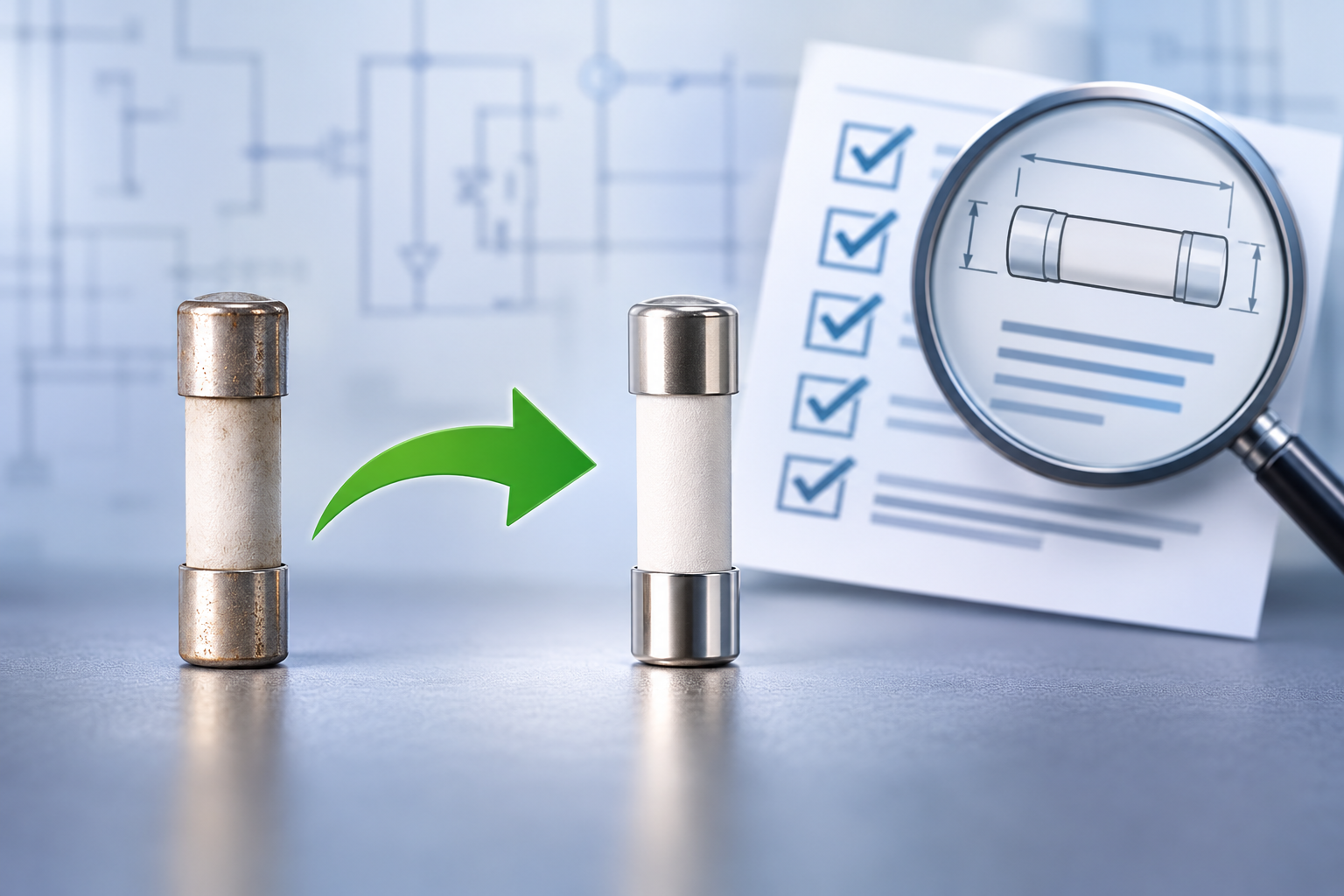
When it comes to electrical and electronic equipment, choosing the correct fuse is essential for safety, reliability, and long-term performance. If your device contains a no-name fuse and you want to replace it with a better-quality, original fuse, it is important to identify the correct replacement before making a purchase.
A better fuse replacement is not simply about choosing a fuse with a higher price or a well-known manufacturer. The replacement must match the original fuse's electrical and technical specifications to ensure proper protection and reliable operation.
In this article, we explain what information is required to find a suitable original fuse and how you can help us identify the right betterfuse for your application.
Why Replace a No-Name Fuse?
No-name fuses can sometimes be difficult to identify because they may have incomplete markings, limited technical documentation, or no clearly identifiable manufacturer.
Replacing such a fuse with an original, properly specified component can offer several advantages:
-
Reliable specifications: Original fuses have defined electrical and technical characteristics.
-
Consistent quality: A properly documented fuse provides greater confidence in its performance.
-
Correct protection: The replacement must provide the intended overcurrent protection.
-
Traceability: Manufacturer documentation makes it easier to verify the component.
-
Long-term reliability: Selecting a suitable original fuse helps avoid problems caused by incorrect replacement parts.
However, an original fuse is only a suitable replacement if its technical characteristics match the requirements of the application.
What Information Is Required for a Better Fuse Replacement?
To replace a no-name fuse with a suitable original fuse, we need some technical information about the fuse that needs to be replaced.
The more information you can provide, the easier it is to identify the correct replacement.
1. Datasheet – The Best Option
In the best case, please provide the datasheet of the fuse that needs to be replaced.
A datasheet is the most reliable starting point because it contains the technical specifications required to identify an equivalent original fuse.
Depending on the fuse type, the datasheet may include:
-
Rated current (amperage)
-
Rated voltage
-
Breaking capacity
-
Time-current characteristics (fast-acting or time-delay)
-
Fuse dimensions
-
Mounting and connection type
-
Operating temperature
-
Applicable safety standards
-
Specific electrical performance characteristics
These specifications help determine which original fuse is suitable for the application.
2. Photos of the Existing Fuse
If you do not have a datasheet, clear photos of the existing fuse are a good alternative.
Ideally, please provide:
-
A photo showing the complete fuse.
-
Close-up photos of all markings and inscriptions.
-
Photos showing the fuse dimensions and connections.
-
A photo showing how the fuse is installed in the equipment.
Please ensure that all markings are readable. Even small numbers, letters, and symbols can provide important information for identifying the correct replacement.
3. Available Technical Data
If neither a datasheet nor complete photos are available, please provide as much technical information as possible.
Useful details include:
-
Rated current and voltage.
-
Fuse type and characteristics.
-
Physical dimensions.
-
Fuse construction.
-
Mounting or connection method.
-
Application or equipment in which the fuse is used.
-
Any available information about the original fuse.
Even partial technical information can help narrow down the available replacement options.
Why Is the Correct Fuse Specification So Important?
A fuse is a safety component designed to interrupt an electrical circuit when current exceeds a defined limit.
Choosing a replacement based only on physical appearance or rated current can be dangerous.
Two fuses may look identical and have the same rated current but still differ significantly in their electrical performance.
For example, important differences may include:
-
Breaking capacity
-
Time-current characteristics
-
Voltage rating
-
Resistance and power dissipation
-
Temperature characteristics
A replacement fuse must meet the requirements of the original application. A fuse with an unsuitable specification may fail to provide the required protection or may cause unnecessary interruptions during normal operation.
Important: Never select a replacement fuse simply because it fits mechanically. Always verify the relevant electrical ratings and safety requirements before installation.
How Does the Betterfuse Replacement Process Work?
Finding the right original fuse replacement starts with the information you provide.
The process is straightforward:
Step 1: Provide the available information
Send us the datasheet of the existing fuse. If a datasheet is unavailable, provide photos and any technical data you have.
Step 2: Identify the required specifications
The available information is used to determine the important electrical, mechanical, and performance characteristics of the existing fuse.
Step 3: Find a suitable original fuse
Based on the specifications, a suitable original fuse can be identified and evaluated as a replacement candidate.
Step 4: Verify compatibility
The proposed replacement must be checked against the requirements of the application. Similar dimensions or ratings alone are not sufficient to confirm compatibility.
Request Your Better Fuse Replacement
Do you have a no-name fuse that you would like to replace with a better-quality original fuse?
We can help you identify a suitable replacement based on the technical information available.
To get started, please provide:
-
The datasheet of the fuse that needs to be replaced (preferred).
-
Alternatively, clear photos of the existing fuse.
-
Any available technical data or information about the application.
The more information you provide, the better the chances of finding the correct original fuse.
Conclusion: The Right Information Leads to the Right Fuse
Replacing a no-name fuse with an original fuse requires more than finding a component that looks similar. The electrical ratings, breaking capacity, time-current characteristics, dimensions, and other relevant specifications must be considered.
A datasheet is the best starting point. If one is not available, photos and technical data are valuable alternatives.
Looking for a betterfuse? Send us the datasheet, photos, or available technical information of your existing fuse so that we can help identify a suitable original replacement.



