
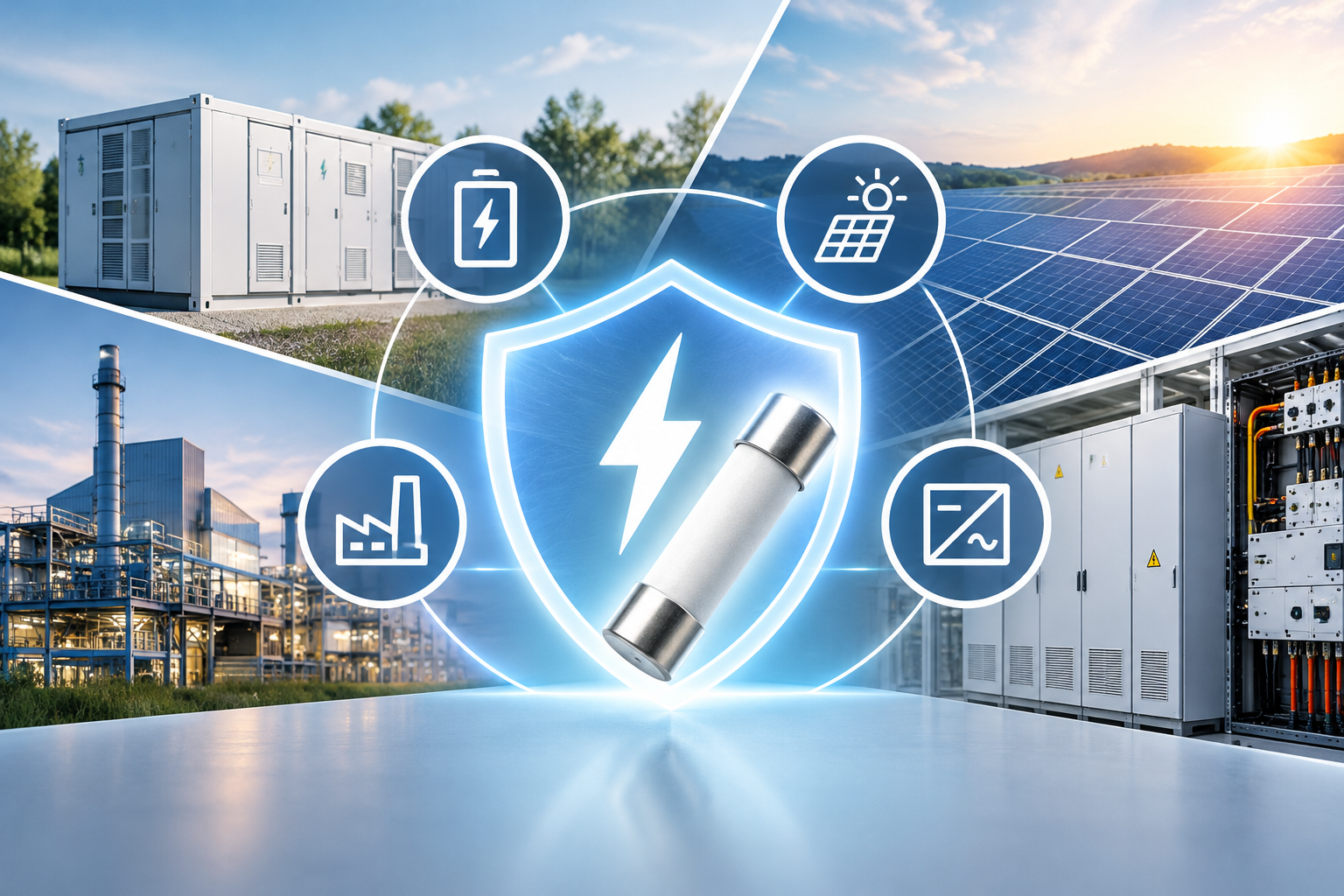
 eaton-bussmann-series-dc-fuses-catalog-ca135009en-us.pdf  | [Eaton Bussmann DC Fuses] | 0 kB |
| eaton-bussmann-series-photovoltaic-fuses-catalogue-ca135004en.pdf | [Eaton Bussmann PV Fuses] | 0 kB |
The Deep Link Between Solar PV and Energy Storage: How Integrated Systems Create a More Reliable Energy Future
Introduction
The global transition towards renewable energy is accelerating, and solar photovoltaic (PV) technology is playing an increasingly important role in modern electricity generation. However, generating clean electricity is only one part of the energy equation. To maximise the benefits of solar power, energy storage systems (ESS) have become an essential component of modern renewable energy infrastructure.
The relationship between solar PV and energy storage goes far beyond simply generating and storing electricity. Together, these technologies create an integrated energy solution that improves efficiency, increases energy independence, reduces electricity costs, and strengthens power system reliability.
Whether used in residential installations, commercial buildings, industrial facilities, or large-scale solar farms, combining solar PV with battery energy storage systems (BESS) provides greater control over how electricity is generated, distributed, stored, and consumed.
In this guide, we explore the connection between solar PV and energy storage, how integrated systems operate, their key advantages, essential electrical protection components, and the factors to consider when designing a safe and efficient solar-plus-storage installation.
1. Understanding the Relationship Between Solar PV and Energy Storage
Solar photovoltaic systems convert sunlight directly into electrical energy through semiconductor solar cells. During daylight hours, solar panels generate direct current (DC) electricity, which is typically converted into alternating current (AC) through an inverter for use by electrical appliances and equipment.
However, solar energy generation is naturally dependent on weather conditions and daylight availability. Electricity production often reaches its highest levels during midday, while household and commercial electricity consumption may peak in the morning and evening.
This creates a mismatch between energy generation and demand.
Energy storage systems help overcome this challenge by storing surplus electricity generated during periods of high solar production and releasing it when solar generation decreases or electricity demand increases.
The integration of solar PV and battery storage creates a more flexible energy system with several important functions:
-
Energy storage: Excess solar electricity is stored in batteries instead of being wasted or exported to the grid.
-
Peak shaving: Stored energy can be used during periods of high electricity demand.
-
Load shifting: Electricity generated during the day can be consumed later.
-
Backup power: Compatible systems can provide electricity during grid interruptions.
-
Grid stabilisation: Battery systems can support frequency regulation, voltage control, and other grid services.
The result is a renewable energy system that offers greater flexibility and more effective energy management.
2. How Solar PV and Battery Energy Storage Systems Work Together
Understanding how solar PV and battery storage interact is essential for designing an efficient integrated system.
A typical solar-plus-storage installation consists of several interconnected components.
Solar PV Modules
Solar panels capture sunlight and generate DC electricity. Multiple panels are connected into strings to achieve the required voltage and current levels.
The electrical output depends on several factors, including sunlight intensity, panel orientation, temperature, shading, and system configuration.
PV Combiner Boxes
PV combiner boxes collect electricity from multiple solar panel strings and combine their outputs into fewer electrical connections.
They also provide important protection and monitoring functions, including:
-
Individual string overcurrent protection.
-
DC fuse installation.
-
Surge protection.
-
DC isolation.
-
String-level monitoring.
Properly designed combiner boxes help simplify system wiring while improving electrical safety and maintenance efficiency.
Solar Inverters
Solar inverters convert DC electricity generated by solar panels into AC electricity suitable for electrical loads and grid connection.
In hybrid installations, compatible inverters also manage the interaction between solar generation, battery charging, battery discharging, and grid electricity.
Battery Energy Storage Systems
Battery energy storage systems store electrical energy for later use.
During periods of strong sunlight, surplus solar electricity can charge the battery. When solar production falls or electricity demand rises, the stored energy can be discharged to supply connected loads.
Battery systems typically include battery modules, a battery management system (BMS), power conversion equipment, monitoring functions, and electrical protection devices.
Energy Management Systems
An energy management system coordinates electricity generation, storage, and consumption.
Depending on system configuration, it can determine when to charge batteries, when to discharge stored electricity, and when to draw power from the grid.
This intelligent coordination helps improve overall system performance and energy utilisation.
3. Why Solar PV and Energy Storage Are Better Together
Combining solar PV with battery storage provides several advantages that individual technologies cannot deliver as effectively on their own.
Improved Solar Energy Self-Consumption
Without battery storage, surplus electricity generated during the day may need to be exported to the grid.
With an integrated storage system, excess electricity can be stored and used later.
This increases the proportion of locally generated solar energy consumed directly by a home or business.
Reduced Electricity Costs
Electricity prices can vary depending on the time of day and overall demand.
Battery storage allows users to store electricity when solar generation is high and use it during more expensive peak periods.
This can reduce electricity purchases from the grid and improve the financial performance of solar installations.
Actual savings depend on electricity tariffs, battery efficiency, system sizing, and local energy regulations.
Greater Energy Independence
Solar panels reduce dependence on conventional electricity generation, while battery storage allows users to retain surplus energy for later consumption.
Together, they provide greater control over electricity supply and reduce exposure to grid electricity price fluctuations.
Improved Power Reliability
Battery energy storage can provide backup electricity during grid outages when the system is specifically designed for backup operation.
This is particularly valuable for critical commercial processes, industrial facilities, communication infrastructure, and essential household equipment.
Better Grid Integration
Large-scale battery systems can help balance fluctuations in renewable energy generation.
They can respond to changing electricity demand, support grid frequency and voltage management, and reduce pressure on electrical infrastructure.
4. The Importance of Electrical Protection in Solar PV and Energy Storage Systems
Although integrating solar PV with battery storage offers significant benefits, it also introduces additional electrical complexity.
Modern renewable energy installations can involve high DC voltages, substantial fault currents, bidirectional power flows, and multiple interconnected electrical circuits.
These conditions make electrical protection a fundamental part of system design.
An appropriately engineered protection strategy helps prevent equipment damage, minimise electrical hazards, and maintain reliable operation.
DC Fuses for Solar PV String Protection
Solar PV strings require suitable overcurrent protection to help prevent damage caused by reverse currents and electrical faults.
DC photovoltaic fuses are designed to interrupt fault currents under the specific operating conditions of solar installations.
When selecting a PV fuse, engineers should consider:
-
Maximum system DC voltage.
-
Maximum operating current.
-
Prospective short-circuit current.
-
Fuse breaking capacity.
-
Operating temperature.
-
Applicable photovoltaic fuse standards.
The selected fuse must be appropriate for the electrical characteristics of the installation.
Battery Energy Storage Fuses
Battery energy storage systems have different electrical characteristics from conventional solar PV strings.
Battery packs can deliver substantial fault currents, and their charging and discharging operation introduces additional protection considerations.
Battery protection fuses must therefore be selected according to battery voltage, maximum operating current, prospective fault current, and the required interruption characteristics.
Correct fuse selection helps protect battery modules, DC distribution circuits, and power conversion equipment.
Importantly, a fuse designed for PV string protection should not automatically be assumed suitable for battery applications.
Surge Protection Devices
Lightning strikes and switching operations can produce electrical surges that damage sensitive equipment.
Surge protection devices (SPDs) help limit transient overvoltages and protect inverters, monitoring equipment, and other connected electrical components.
The selection and installation of SPDs should consider the system voltage, grounding arrangement, lightning protection strategy, and applicable electrical standards.
DC Isolator Switches
DC isolator switches allow electrical circuits to be disconnected for inspection, maintenance, and emergency procedures.
Because DC circuits can sustain electrical arcs when interrupted, isolators must be specifically rated for the intended DC voltage and current.
Correct installation and operation are essential for maintenance safety.
Fuse Holders and Fuse Bases
Fuse holders provide the mechanical and electrical connection between fuse links and the protected circuit.
They must be compatible with the selected fuse dimensions, voltage ratings, current ratings, and installation environment.
High-quality fuse holders also support reliable electrical connections, effective heat management, and safe fuse replacement.
5. Key Differences Between Solar PV Protection and Battery Storage Protection
Although solar PV and battery energy storage systems are frequently integrated, their electrical protection requirements are not identical.
Understanding these differences is essential for selecting appropriate components.
| Technical factor | Solar PV systems | Battery storage systems |
|---|---|---|
| Main energy source | Solar-generated electricity | Stored electrical energy |
| Current characteristics | Dependent on solar irradiance and array configuration | Can deliver high fault currents |
| Power flow | Generally from PV modules towards the inverter | Charging and discharging |
| Main protection focus | String and DC circuit protection | Battery modules, racks, and DC buses |
| Common protection devices | PV DC fuses, SPDs, isolators | Battery DC fuses, circuit breakers, isolators |
| Design considerations | PV voltage, string current, reverse-current protection | Battery fault current, charge/discharge profiles, interruption capacity |
One of the most important considerations is that battery systems can produce high fault currents even when solar generation is unavailable.
Consequently, battery protection must be designed around the characteristics of the battery system rather than simply copying the protection arrangement used for PV strings.
Proper coordination between PV protection, battery protection, inverters, and DC distribution equipment helps ensure that individual faults can be isolated without unnecessarily shutting down the entire installation.
6. How to Select the Right Electrical Protection Components
Selecting suitable electrical protection components requires a detailed understanding of the installation's operating conditions.
The following factors should be evaluated during system design.
1. Determine the Maximum System Voltage
The voltage rating of a fuse or isolator must be appropriate for the maximum possible DC system voltage.
Modern utility-scale solar installations commonly operate at 1500V DC, while other applications use lower voltage configurations.
Battery storage systems have their own voltage requirements, which must be assessed independently.
2. Calculate the Operating Current
Engineers should calculate the maximum expected continuous operating current under the relevant operating conditions.
The selected fuse rating must coordinate with the protected cables and equipment while accounting for applicable design and installation requirements.
3. Evaluate Short-Circuit Current
The breaking capacity of a protective device must be sufficient to interrupt the maximum prospective short-circuit current at its installation point.
This is particularly important in battery energy storage systems, where available fault current can be substantial.
4. Consider DC Arc Interruption Capability
DC electrical circuits present specific interruption challenges because they do not have the natural current zero crossings found in AC systems.
Therefore, protection devices must have suitable DC ratings and interruption capabilities.
Using an unsuitable AC-rated protective device in a DC circuit can create serious safety risks.
5. Ensure Selective Protection Coordination
Protection coordination ensures that the protective device closest to a fault operates appropriately without unnecessarily interrupting other parts of the installation.
For integrated solar and storage systems, coordination between string fuses, battery fuses, inverter protection, and upstream circuit protection is particularly important.
6. Evaluate Environmental Conditions
Protection components installed outdoors may be exposed to:
-
High ambient temperatures.
-
Humidity and condensation.
-
Dust and contamination.
-
Ultraviolet radiation.
-
Mechanical vibration.
-
Corrosive environments.
Selecting suitable enclosures, ingress protection ratings, and component materials helps maintain long-term reliability.
7. Practical Applications of Integrated Solar PV and Energy Storage
Solar PV and battery storage integration is suitable for a wide range of applications.
Utility-Scale Solar Farms
Large solar farms generate substantial quantities of electricity during daylight hours.
Integrating battery storage allows excess generation to be retained and dispatched when electricity demand increases or solar generation decreases.
These projects require coordinated protection across PV strings, combiner boxes, inverters, battery racks, and DC distribution systems.
Commercial and Industrial Facilities
Factories, warehouses, shopping centres, and office buildings often experience significant variations in electricity demand.
Combining rooftop solar panels with battery storage allows businesses to use more of their own renewable electricity and manage peak demand more effectively.
Appropriate electrical protection is essential to ensure that equipment faults do not cause unnecessary production interruptions.
Residential Solar Systems
Residential solar-plus-storage systems allow homeowners to store excess daytime electricity for evening and nighttime consumption.
Depending on the system configuration, battery storage can also provide backup power during grid interruptions.
Electric Vehicle Charging Infrastructure
Electric vehicle charging stations can create substantial short-term electricity demand.
Integrating solar PV and battery storage helps manage charging loads, reduce grid demand peaks, and increase the use of renewable electricity.
Carefully coordinated electrical protection is particularly important in these installations because multiple high-power DC and AC circuits operate together.
8. Installation and Maintenance Best Practices
Even well-designed solar PV and energy storage systems require appropriate installation, inspection, and maintenance.
Following established electrical safety practices helps reduce equipment failures and extend system service life.
Important recommendations include:
Correct polarity and circuit identification: Clearly label positive and negative connections, battery circuits, and PV strings to reduce wiring errors.
Secure electrical connections: Follow the manufacturer's specified torque requirements for terminals, busbars, and cable connections. Poor connections can create excessive resistance and overheating.
Routine visual inspections: Check for signs of overheating, corrosion, damaged insulation, discolouration, and mechanical deterioration.
Electrical testing: Conduct appropriate insulation resistance, continuity, and system performance tests as required by the installation design and applicable regulations.
Protection device inspections: Check fuse holders, isolators, and other protective equipment for signs of damage or abnormal operating temperatures.
Spare parts management: Maintain suitable replacement fuses and other critical components to minimise downtime.
Qualified maintenance personnel: Ensure that installation and maintenance work is performed by appropriately trained professionals using suitable DC-rated equipment and lockout/tagout procedures.
Battery systems also require monitoring of battery temperature, state of charge, cell voltage, and battery management system alerts.
Preventive maintenance helps identify potential problems before they develop into more serious electrical failures.
9. The Future of Solar PV and Energy Storage Integration
The future of renewable energy will increasingly depend on the ability to combine electricity generation with intelligent energy storage and advanced power management.
As solar installations become larger and battery technologies continue to develop, integrated systems are expected to play an increasingly important role in modern electricity networks.
Several developments are shaping this evolution.
Higher DC System Voltages
Higher-voltage architectures can reduce current for a given power level and help improve system efficiency.
However, they also require protection components with appropriate voltage ratings and DC interruption capabilities.
Advanced Battery Technologies
Developments in lithium-ion batteries and other energy storage technologies are creating new opportunities for residential, commercial, and utility-scale applications.
Each battery chemistry and system architecture has specific electrical and thermal protection requirements.
Smart Energy Management
Advanced monitoring and control systems allow operators to optimise battery charging, electricity consumption, and grid interaction.
These systems can also improve fault detection and support predictive maintenance.
Virtual Power Plants
Virtual power plants connect multiple distributed energy resources, including solar installations and battery storage systems.
By coordinating these resources, operators can provide services that help balance electricity supply and demand across the grid.
As these technologies become more widely adopted, reliable electrical protection will remain essential to maintaining safe and stable operation.
10. Frequently Asked Questions About Solar PV and Energy Storage
What is the relationship between solar PV and energy storage?
Solar PV systems generate electricity from sunlight, while energy storage systems retain surplus electricity for later use. Together, they improve renewable energy utilisation, increase self-consumption, and provide greater flexibility in electricity supply.
Why is battery storage important for solar power?
Solar electricity generation fluctuates depending on sunlight availability. Battery storage helps overcome this limitation by storing excess daytime generation and supplying electricity when solar production is low or demand is high.
Can solar panels charge batteries directly?
Yes. Solar panels can charge batteries through compatible charge controllers or hybrid inverter systems. The charging equipment regulates voltage and current to ensure that the battery operates within its specified limits.
Are PV fuses and battery fuses interchangeable?
Not necessarily. PV strings and battery systems have different fault-current characteristics and operating conditions. Protective devices must be selected according to the specific application, voltage, current, and required interruption performance.
What protection devices are required in a solar-plus-storage system?
Depending on the system architecture, common protection components include DC fuses, battery fuses, fuse holders, surge protection devices, DC isolators, circuit breakers, and appropriate monitoring equipment.
Why is DC fuse protection important?
DC fuse protection helps interrupt excessive current caused by electrical faults and protects cables and connected equipment from damage. Correct DC voltage ratings and breaking capacities are essential for safe operation.
What voltage levels are used in modern solar PV systems?
Solar PV systems operate at different DC voltage levels depending on their application. Common configurations include 1000V DC and 1500V DC utility-scale systems. The appropriate protection components must match the maximum system voltage.
How often should solar PV and battery storage systems be inspected?
Inspection frequency depends on the installation, equipment manufacturer's recommendations, operating environment, and applicable regulations. Regular monitoring and scheduled professional inspections help identify faults and maintain reliable performance.
Conclusion: Building a More Reliable Renewable Energy System
The relationship between solar PV and energy storage represents a major step forward in the development of modern renewable energy infrastructure.
Solar panels provide clean electricity, while battery storage makes that electricity available when it is needed most. Together, they improve energy self-consumption, reduce dependence on conventional electricity supplies, support grid stability, and create more flexible energy systems.
However, the effectiveness of an integrated solar-plus-storage installation depends on more than generation capacity and battery performance. Proper electrical protection, accurate component selection, effective system coordination, and regular maintenance are equally important.
From PV string fuses and battery protection devices to surge protection and DC isolation, every component contributes to the overall safety and reliability of the installation.
As renewable energy adoption continues to expand, the integration of solar PV and battery storage will become increasingly important in building a more efficient, resilient, and sustainable energy future.



