
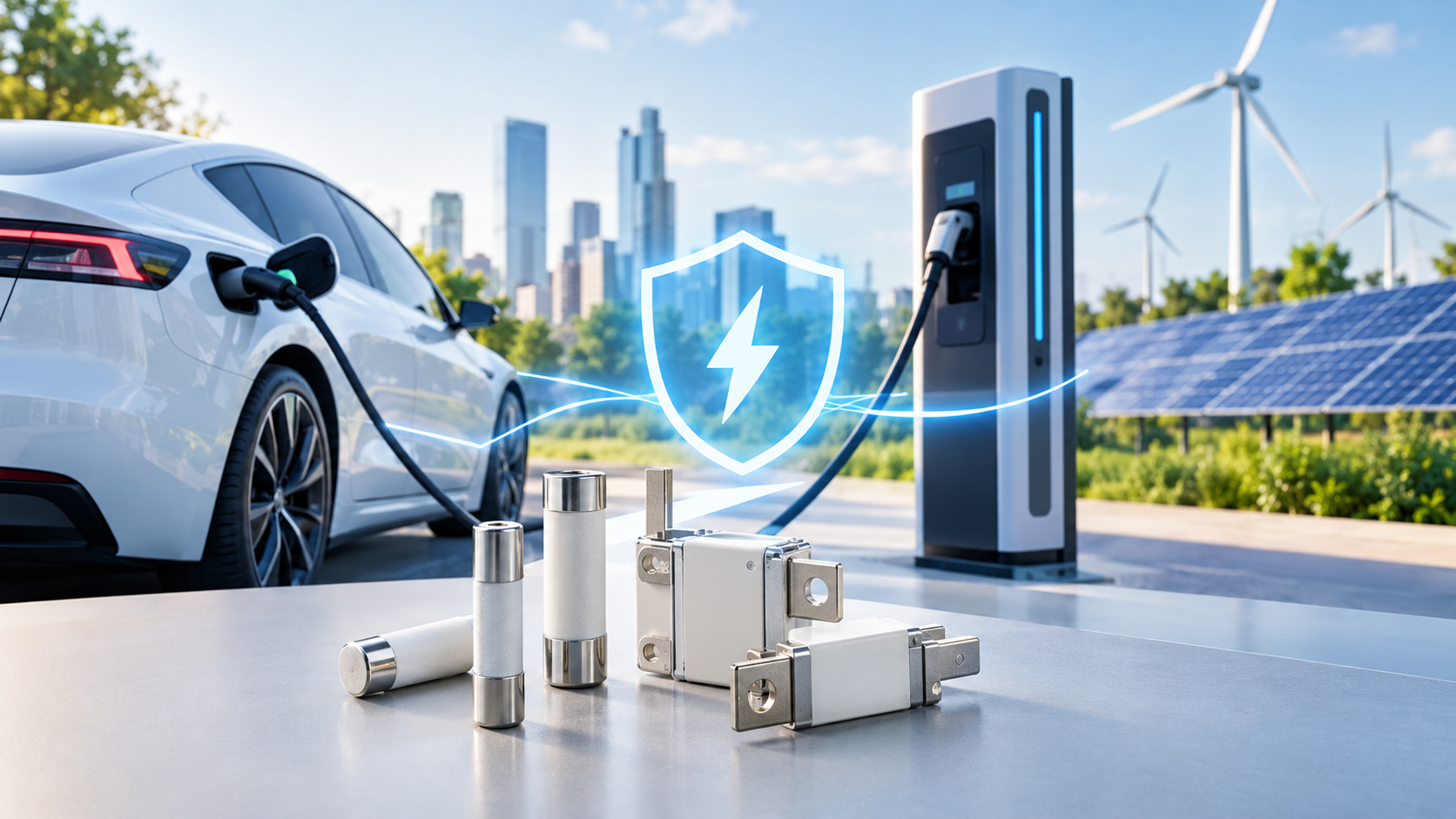
 eaton-ev-fuse-catalogue-emob0062-en-us.pdf  | [Eaton Bussmann EV Fuses] | 0 kB |
Routine EV Fuse Inspection Checklist: A Complete Guide to Electric Vehicle Fuse Maintenance
Introduction
Electric vehicles (EVs) rely on sophisticated electrical systems to deliver reliable performance, efficient energy consumption, and safe operation. One of the most important components in these systems is the high-voltage fuse. Although relatively small, an EV fuse plays a critical role in protecting the battery pack, power distribution system, motor controller, and other electrical components from overcurrent and short-circuit conditions.
Over time, high-voltage fuses are exposed to demanding operating conditions, including temperature fluctuations, electrical loads, mechanical vibration, and environmental factors. These conditions can affect fuse performance and the reliability of electrical connections.
Regular EV fuse inspection helps identify potential problems before they develop into costly electrical failures or safety hazards. This guide provides a practical routine EV fuse inspection checklist, explains common warning signs, and highlights when professional maintenance is necessary.
Why Is Routine EV Fuse Inspection Important?
An electric vehicle fuse is designed to interrupt excessive electrical current and protect sensitive components from damage. However, repeated thermal stress, loose connections, corrosion, and mechanical wear can compromise the surrounding fuse assembly.
Routine inspection offers several important benefits:
-
Improved electrical safety: Identifying damaged components and overheating signs helps reduce electrical hazards.
-
Reliable vehicle performance: Properly functioning fuses support stable power distribution throughout the vehicle.
-
Reduced maintenance costs: Detecting early warning signs can help prevent more extensive electrical damage.
-
Better battery protection: High-voltage fuses help protect expensive battery systems against electrical faults.
-
Longer component service life: Regular maintenance helps identify conditions that may accelerate fuse deterioration.
A structured inspection routine also makes it easier to monitor changes in fuse condition and identify recurring electrical problems.
5 Essential Checks for Routine EV Fuse Inspection
The following five inspection areas provide a practical framework for monitoring EV fuse condition. Any inspection involving high-voltage components must be performed by appropriately trained personnel using the vehicle manufacturer's safety procedures.
1. Inspect the Physical Condition of the EV Fuse
The first step in an EV fuse inspection is checking the visible physical condition of the fuse and its housing.
High-voltage fuses operate under demanding electrical and thermal conditions. Physical damage may indicate excessive heat, mechanical stress, or a previous electrical fault.
Look for the following warning signs:
-
Cracks or chips: Damage to the fuse body may compromise its insulation and structural integrity.
-
Discoloration: Yellowing, browning, or darkening can indicate prolonged exposure to excessive heat.
-
Black marks or soot: These may indicate electrical arcing or an internal fault.
-
Damaged fuse elements: A broken or melted element may indicate that the fuse has operated and interrupted an excessive current.
A fuse showing visible damage should not be considered reliable, even if the vehicle appears to operate normally.
Recommended action: Have damaged or suspicious fuses assessed and replaced by a qualified EV technician. The underlying cause of failure should be identified before a replacement is installed.
2. Check Fuse Terminals and Electrical Connections
Electrical connections are another important part of routine EV fuse maintenance.
Many high-voltage EV fuses use bolted connections to connect with busbars or electrical cables. These connections must maintain proper electrical contact to prevent excessive resistance and heat generation.
During a professional inspection, check for:
-
Loose terminal connections.
-
Discoloration around bolts and contact surfaces.
-
Signs of corrosion or oxidation.
-
Damaged terminal surfaces.
-
Evidence of overheating around connected busbars or cables.
Loose electrical connections can increase contact resistance. This creates additional heat, potentially damaging the fuse holder, insulation, and surrounding electrical components.
Corrosion can also interfere with electrical conductivity and contribute to intermittent electrical problems.
Recommended action: Have connection integrity, terminal condition, and tightening torque verified according to the vehicle manufacturer's specifications. Never attempt to tighten high-voltage connections without the required training, isolation procedures, and equipment.
3. Identify Signs of Thermal Stress and Overheating
Temperature fluctuations and repeated electrical loading can place significant thermal stress on EV fuses.
Overheating is particularly important because it may gradually damage the fuse assembly and nearby components, even before a complete electrical failure occurs.
Pay attention to these indicators:
-
Melted or deformed fuse holders.
-
Damaged cable insulation.
-
Darkened or discolored terminal areas.
-
Heat marks on the fuse body.
-
Unusual burning or overheated electrical odors.
Thermal damage may result from excessive current, poor electrical contact, an incorrectly rated fuse, or inadequate heat dissipation.
A fuse that has experienced repeated overheating may no longer provide reliable protection during a fault condition.
Recommended action: Stop using the affected electrical system if overheating or burning odors are suspected. Arrange a professional inspection to determine the source of excessive heat before returning the vehicle to service.
4. Examine Surrounding Components and Wiring
An EV fuse should never be evaluated as an isolated component. Its performance depends on the condition of the surrounding electrical system.
Damaged wiring, moisture, contamination, or loose mounting hardware can affect the reliability of the entire circuit.
A comprehensive inspection should include the following areas:
Cable insulation
Check for visible cracking, brittleness, abrasion, or melting on accessible cable insulation. Damaged insulation can increase the risk of short circuits and electrical faults.
Mounting brackets and supports
Inspect accessible mounting hardware for physical damage, movement, or signs of vibration-related wear. Secure mounting helps prevent unnecessary mechanical stress on electrical connections.
Moisture and contamination
Look for evidence of water ingress, dirt accumulation, or corrosion around accessible electrical enclosures. Moisture and contamination can contribute to insulation problems and electrical tracking.
Adjacent electrical components
Check for visible signs of damage around nearby electrical components, including contactors, busbars, connectors, and sensors.
Damage elsewhere in the circuit may increase electrical stress on the fuse or indicate an underlying system fault.
Recommended action: Any suspected insulation damage, moisture ingress, or component overheating should be evaluated by a qualified technician before the vehicle returns to normal operation.
5. Review Fuse Replacement and Maintenance History
Visual inspection alone cannot provide a complete picture of EV fuse reliability. Maintenance records are equally important.
Keeping track of previous fuse failures and replacements helps identify recurring problems and determine whether the electrical protection system is operating correctly.
Consider these questions:
-
Has the EV fuse been replaced previously?
-
When was the last replacement performed?
-
How many times has the fuse blown?
-
Were previous failures associated with charging, acceleration, or heavy electrical loads?
-
Was the replacement fuse selected according to the original specifications?
-
Have any related electrical components been repaired or replaced?
Repeated fuse failures should never be ignored.
A fuse that blows multiple times may indicate an underlying problem, such as a short circuit, excessive current demand, damaged wiring, or a failing electrical component.
Simply replacing the fuse without identifying the cause may result in further failures and potentially dangerous operating conditions.
Recommended action: Maintain a detailed service record containing inspection dates, fault descriptions, replacement details, and diagnostic findings.
When Should You Replace an EV Fuse?
EV fuses are designed to interrupt electrical circuits when current exceeds safe operating limits. Once a fuse has operated, it generally requires replacement rather than repair.
However, replacement should only take place after the reason for the failure has been investigated.
Common situations that may require professional fuse replacement include:
-
A visibly broken or melted fuse element.
-
Cracks or structural damage to the fuse body.
-
Evidence of electrical arcing or overheating.
-
Corroded or damaged terminal connections.
-
Repeated fuse operation caused by an electrical fault.
-
A fuse that does not meet the required electrical specifications.
Selecting the correct replacement is essential. Important specifications include:
-
Rated operating voltage.
-
Rated current.
-
DC interrupting capacity.
-
Fuse operating characteristics.
-
Physical dimensions and mounting configuration.
-
Compatibility with the electrical protection system.
A replacement fuse must meet the vehicle manufacturer's requirements and the electrical system's design specifications.
Never install a fuse with a higher current rating simply to prevent repeated fuse operation. Doing so can compromise circuit protection and increase the risk of serious electrical damage.
How Often Should EV Fuses Be Inspected?
The appropriate inspection frequency depends on the vehicle design, operating environment, manufacturer recommendations, and maintenance requirements.
For most EV owners, fuse inspection should be incorporated into the vehicle's scheduled maintenance program rather than treated as an isolated task.
Consider these maintenance practices:
-
Follow the inspection intervals specified in the vehicle service manual.
-
Include fuse condition checks during scheduled electrical system maintenance.
-
Arrange additional inspections after electrical faults or overheating incidents.
-
Inspect the electrical system after suspected water ingress or physical damage.
-
Maintain records of fuse replacements and recurring electrical problems.
Commercial electric vehicles and vehicles operating under demanding conditions may require more frequent professional inspections.
There is no universal inspection interval suitable for every EV. Always prioritize the manufacturer's maintenance schedule.
EV Fuse Inspection Safety Precautions
High-voltage electric vehicle systems require special safety procedures. Depending on the vehicle, electrical system voltages may range from several hundred volts to more than 1,000 volts.
Even when a vehicle is switched off, certain electrical components may retain dangerous levels of stored energy.
Before any inspection, remember these essential precautions:
-
Never touch exposed high-voltage terminals or conductors.
-
Do not open high-voltage battery compartments without the required qualifications.
-
Follow the manufacturer's high-voltage isolation and lockout procedures.
-
Use appropriate personal protective equipment and approved test instruments.
-
Never inspect or service energized high-voltage circuits unless specifically authorized and equipped to do so.
-
Do not attempt to repair, modify, or bypass a damaged fuse.
-
Contact a qualified EV technician whenever electrical damage or uncertainty is identified.
Routine visual observations of accessible vehicle areas should not be confused with professional high-voltage fuse maintenance.
If there is evidence of smoke, burning, melting, or an unusual electrical odor, stop using the vehicle when safe to do so and seek professional assistance.
EV Fuse Maintenance Checklist
The following checklist can help maintenance teams organize routine inspections and document potential problems.
| Inspection Area | What to Check | Warning Signs |
|---|---|---|
| Fuse body | Physical condition and appearance | Cracks, melting, discoloration |
| Fuse element | Visible condition, where safely observable | Broken or damaged element |
| Terminals | Connection condition | Corrosion, overheating |
| Electrical connections | Mounting and contact integrity | Loose or damaged connections |
| Thermal condition | Signs of excessive heat | Melted holders, burning odors |
| Wiring | Cable and insulation condition | Cracks, abrasion, melting |
| Mounting hardware | Physical stability | Loose or damaged supports |
| Surrounding components | Visible condition | Corrosion, moisture, heat damage |
| Maintenance history | Previous failures and replacements | Repeated fuse operation |
| Replacement specifications | Electrical and mechanical compatibility | Incorrect ratings or dimensions |
Important: This checklist is intended as a maintenance reference. Work involving high-voltage components, electrical testing, terminal tightening, or fuse replacement must be performed by qualified personnel following approved safety procedures.
Best Practices for Long-Term EV Fuse Reliability
Routine inspections are most effective when combined with good electrical maintenance practices.
Here are five recommendations for improving long-term EV fuse reliability:
1. Use the Correct Fuse Specifications
Always select replacement fuses according to the vehicle manufacturer's electrical requirements. Voltage rating, current rating, interrupting capacity, and operating characteristics must be appropriate for the application.
2. Investigate Repeated Fuse Failures
A fuse that repeatedly blows may indicate a deeper electrical problem. Identify the root cause before installing another replacement.
3. Monitor Electrical Connections
Loose or corroded connections can generate excessive heat. Include terminal and connection condition in professional maintenance inspections.
4. Protect Electrical Components from Environmental Damage
Moisture, dust, vibration, and temperature fluctuations can affect electrical connections and insulation. Ensure that electrical enclosures and mounting arrangements remain in their specified condition.
5. Maintain Accurate Inspection Records
Document inspection findings, replacements, and electrical faults. Consistent records make it easier to identify developing problems and plan preventive maintenance.
Conclusion
Routine EV fuse inspection is an important part of maintaining electric vehicle safety, electrical reliability, and long-term performance.
By monitoring fuse body condition, electrical connections, thermal stress, surrounding wiring, and replacement history, maintenance teams can identify potential problems before they develop into more serious failures.
However, EV high-voltage systems require specialized knowledge and safety procedures. Vehicle owners should avoid direct contact with high-voltage components and leave electrical testing, fuse replacement, and internal system inspections to qualified professionals.
A consistent maintenance routine, correct fuse selection, and timely professional diagnosis can help maintain dependable electrical protection throughout an electric vehicle's service life.
Frequently Asked Questions (FAQs)
1. Why is EV fuse inspection important?
EV fuse inspection helps identify physical damage, overheating, corrosion, and electrical connection problems. Regular checks support reliable circuit protection and help prevent more serious electrical failures.
2. What are the common signs of a damaged EV fuse?
Common warning signs include a broken fuse element, cracks in the fuse body, discoloration, black marks, melted components, and signs of overheating around electrical connections.
3. How often should electric vehicle fuses be inspected?
Inspection frequency depends on the vehicle manufacturer's maintenance schedule, operating conditions, and system design. Fuse inspections should be included in scheduled professional maintenance.
4. Can I replace an EV fuse myself?
High-voltage EV fuse replacement should only be performed by appropriately trained personnel following the manufacturer's isolation procedures. Working on high-voltage electrical systems without suitable training and equipment can cause serious injury or death.
5. Why does my EV fuse keep blowing?
Repeated fuse failures may result from short circuits, excessive current, damaged wiring, loose electrical connections, or malfunctioning components. The underlying electrical fault must be diagnosed before replacing the fuse again.
6. What specifications should I check when selecting an EV replacement fuse?
Important specifications include rated voltage, rated current, DC interrupting capacity, operating characteristics, physical dimensions, and compatibility with the vehicle's electrical protection system.
7. Can a loose EV fuse connection cause overheating?
Yes. A loose electrical connection can increase contact resistance, resulting in excessive heat generation. Continued overheating may damage terminals, insulation, fuse holders, and nearby components.



