
 eaton-bussmann-series-photovoltaic-fuses-catalogue-ca135004en.pdf  | [Eaton Bussmann PV Fuses] | 0 kB |
gPV vs gG Fuse Classes: Key Differences, Applications and How to Choose the Right Fuse
Introduction
Choosing the correct fuse is essential for ensuring electrical safety, system reliability, and efficient circuit protection. In modern electrical installations, two commonly used fuse categories are gPV and gG fuse classes. Although both provide full-range overcurrent protection, they are designed for different electrical environments and applications.
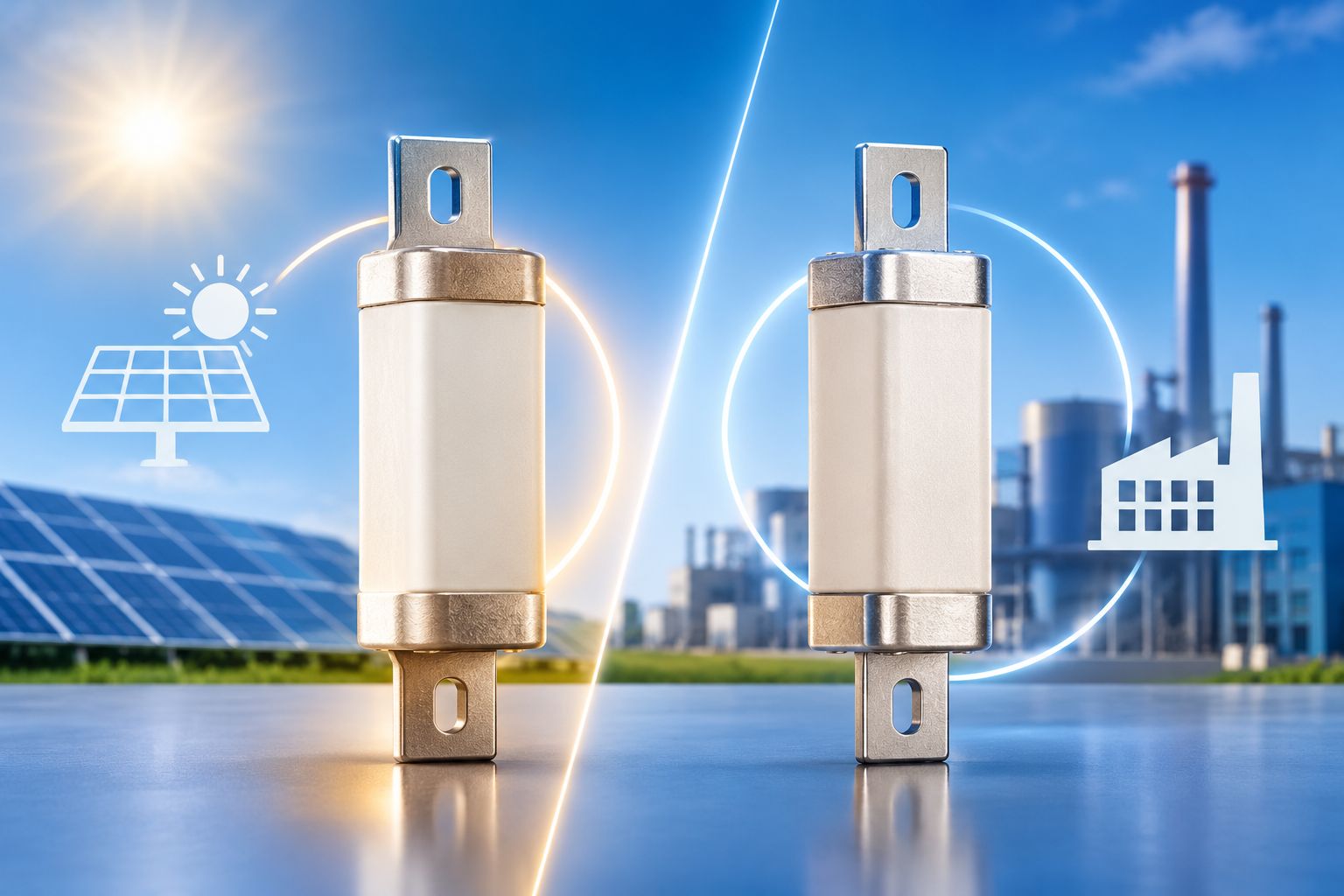
A gPV fuse is specifically engineered for photovoltaic (PV) systems and DC applications, while a gG fuse is primarily designed for general-purpose protection in industrial AC electrical systems.
Understanding the differences between gPV vs gG fuse classes helps electrical engineers, system integrators, installers, and procurement professionals select the appropriate protection device for their installations.
In this guide, we explain how gPV and gG fuses work, their technical characteristics, applications, and the important factors to consider when choosing between them.
1. What Are gPV and gG Fuse Classes?
Both gPV and gG fuses belong to the utilization categories defined under the IEC 60269 family of international fuse standards.
The letter "g" represents full-range protection. This means the fuse is designed to interrupt both overload currents and short-circuit currents within its specified operating conditions.
The second part of the designation identifies the intended application.
What Is a gPV Fuse?
A gPV fuse is a full-range fuse specifically designed for photovoltaic applications.
Solar PV systems operate using direct current (DC), which presents unique challenges for electrical protection. Unlike AC current, DC current does not naturally pass through zero during each cycle. Consequently, interrupting a DC fault current and extinguishing the resulting electrical arc can be more difficult.
gPV fuses are engineered to address these challenges through specially designed fuse elements, suitable breaking capacities, and effective arc-quenching materials.
Main characteristics of gPV fuses:
-
Designed specifically for photovoltaic DC circuits.
-
Suitable for high-voltage solar installations.
-
Provides overload and short-circuit protection.
-
Designed to interrupt DC fault currents safely.
-
Helps protect solar panels, cables, inverters, and other PV components.
-
Available in different current ratings and voltage configurations.
What Is a gG Fuse?
A gG fuse is a full-range general-purpose fuse commonly used in low-voltage electrical distribution and industrial AC installations.
It protects electrical cables, distribution equipment, transformers, and industrial machinery against overloads and short circuits.
gG fuses are designed to provide comprehensive protection across a wide range of operating currents. Their time-current characteristics also allow appropriate coordination with downstream equipment when correctly selected.
Main characteristics of gG fuses:
-
Designed for general-purpose electrical protection.
-
Commonly used in AC distribution systems.
-
Provides overload and short-circuit protection.
-
Protects cables, transformers, and industrial equipment.
-
Available in various current and voltage ratings.
-
Suitable for industrial switchgear and distribution panels.
2. gPV vs gG Fuse Classes: Key Differences
The main difference between gPV and gG fuses is their intended application and electrical operating environment.
Although both provide full-range protection, their design requirements, performance characteristics, and testing standards differ.
Here is a comparison of the two fuse classes:
| Comparison | gPV Fuse | gG Fuse |
|---|---|---|
| Full designation | Photovoltaic full-range fuse | General-purpose full-range fuse |
| Circuit type | DC | Primarily AC |
| Main application | Solar PV systems | Industrial electrical systems |
| Protection function | Overload and short-circuit protection | Overload and short-circuit protection |
| Arc interruption | Designed for DC arc interruption | Designed for AC fault interruption |
| Typical applications | Solar panels, PV combiner boxes, DC inverters | Distribution boards, transformers, cables |
| Operating environment | Photovoltaic installations | Industrial and commercial installations |
| Relevant standard | IEC 60269-6 | IEC 60269-2 |
| Voltage selection | According to PV system DC voltage | According to AC system voltage |
| Main purpose | Protect photovoltaic circuits | Protect general electrical circuits |
The comparison demonstrates that these fuse classes are not interchangeable simply because they share similar physical construction or current ratings.
The correct fuse must always match the electrical characteristics and protection requirements of the circuit.
3. Why Do gPV and gG Fuses Have Different Designs?
One of the most important factors in understanding gPV vs gG fuses is the difference between AC and DC electrical systems.
DC Circuit Protection
Photovoltaic systems generate direct current. During a short circuit, DC current does not have the natural zero-crossing points found in alternating-current systems.
This makes arc interruption particularly challenging.
When a fuse element melts, an electrical arc can develop between the separated sections of the element. If the arc is not extinguished effectively, it can damage equipment and create serious safety risks.
To address this issue, gPV fuses incorporate design features intended to interrupt DC fault currents safely.
These may include:
-
Specially designed fuse elements.
-
High-quality insulating enclosures.
-
Quartz sand or other suitable arc-quenching materials.
-
Appropriate DC voltage and breaking-capacity ratings.
These characteristics make gPV fuses suitable for the demanding operating conditions of photovoltaic installations.
AC Circuit Protection
Alternating current changes direction periodically and naturally passes through zero during each cycle.
This zero-crossing characteristic helps the fuse interrupt an electrical arc.
gG fuses are designed around the operating requirements of general-purpose AC electrical distribution systems.
Their time-current characteristics provide protection against both sustained overloads and high short-circuit currents.
They are commonly used in industrial environments where reliable protection of cables, electrical distribution equipment, and machinery is essential.
4. Applications of gPV Fuses
gPV fuses are widely used in solar power generation systems and other photovoltaic DC applications.
As solar installations increase in capacity and operating voltage, reliable DC circuit protection becomes increasingly important.
Solar PV Combiner Boxes
Combiner boxes collect the output from multiple photovoltaic strings.
A gPV fuse is installed in the appropriate circuit to protect individual PV strings against excessive reverse currents and fault conditions.
This helps prevent damage to solar modules and associated wiring.
Solar Inverter DC Inputs
Solar inverters convert DC electricity generated by photovoltaic modules into AC electricity.
The DC input circuits require suitable protection against overloads and short circuits.
gPV fuses provide protection designed specifically for photovoltaic DC operating conditions.
PV String Protection
Individual solar strings may experience abnormal current conditions due to wiring faults, damaged modules, or other electrical problems.
Correctly selected gPV fuses help isolate faulty circuits and reduce the risk of damage spreading throughout the installation.
Energy Storage Systems
Battery-based energy storage installations also require carefully coordinated DC protection.
Depending on the system design, voltage, and applicable standards, appropriately rated DC fuses can help protect battery connections, power conversion equipment, and associated circuits.
5. Applications of gG Fuses
gG fuses are widely used in industrial and commercial electrical installations.
Their full-range protection characteristics make them suitable for numerous low-voltage AC applications.
Industrial Distribution Boards
Industrial distribution panels supply electrical power to multiple circuits and machines.
gG fuses protect these circuits against overloads and short circuits, helping maintain safe and reliable electrical distribution.
Transformer Protection
Transformers are essential components in industrial power distribution networks.
Appropriately selected gG fuses can protect associated circuits against excessive current and short-circuit conditions.
Cable and Busbar Protection
Electrical cables and busbars can overheat when exposed to excessive current.
gG fuses help protect conductors by interrupting abnormal current conditions before thermal damage becomes excessive, provided the fuse is correctly coordinated with the conductor.
Motor Control Systems
Industrial motors can experience overloads and short circuits during operation.
gG fuses may be used as part of a motor protection arrangement. However, motor starting currents and overload protection requirements must be considered when selecting the complete protection system.
6. How to Choose Between gPV and gG Fuses
Selecting the correct fuse requires more than matching the rated current.
Engineers should evaluate several electrical and environmental parameters before making a decision.
1. Identify the Circuit Type
This is the first and most important selection criterion.
-
Choose a gPV fuse for photovoltaic DC applications.
-
Choose a gG fuse for general-purpose applications where its ratings and characteristics are suitable, particularly AC distribution systems.
Never assume that a fuse designed for one application is suitable for another.
2. Check the Rated Voltage
The fuse voltage rating must be equal to or higher than the maximum voltage that can occur in the protected circuit.
For photovoltaic systems, engineers must calculate the maximum possible PV string voltage, including the effect of low ambient temperatures on open-circuit voltage.
For AC installations, the fuse must be suitable for the system's rated operating voltage.
The DC or AC rating must always be verified separately.
3. Determine the Rated Current
The rated current must be selected according to the circuit's normal operating current, conductor capacity, and applicable installation standards.
For PV applications, engineers should consider:
-
Maximum expected string current.
-
PV module characteristics.
-
Potential reverse-current conditions.
-
Manufacturer recommendations.
-
Applicable photovoltaic protection requirements.
For industrial applications, the selection should consider cable ampacity, equipment operating current, overload characteristics, and coordination requirements.
4. Verify Breaking Capacity
Breaking capacity refers to the maximum prospective fault current that a fuse can safely interrupt at its specified voltage and operating conditions.
A fuse must have sufficient breaking capacity to interrupt the maximum possible short-circuit current at its installation point.
This is particularly important in high-voltage DC photovoltaic systems.
5. Consider Ambient Temperature
High ambient temperatures can affect fuse performance and current-carrying capacity.
When fuses operate in hot environments, their effective current-carrying capability may decrease.
Engineers should consult the manufacturer's derating curves and technical documentation when selecting fuses for installations exposed to elevated temperatures.
6. Check Mechanical Compatibility
The fuse must be mechanically compatible with the corresponding fuse holder or base.
Common NH fuse sizes include:
-
NH00
-
NH0
-
NH1
-
NH2
-
NH3
Selecting the correct physical size, contact arrangement, and mounting configuration helps ensure safe installation and reliable electrical connections.
7. Verify Standards and Certifications
Always check that the selected fuse complies with the standards relevant to its intended application.
Important standards include:
-
IEC 60269-1: General requirements for low-voltage fuses.
-
IEC 60269-2: Supplementary requirements for fuses used by authorized persons, particularly industrial applications.
-
IEC 60269-6: Supplementary requirements for fuse-links used for the protection of solar photovoltaic energy systems.
-
UL 248-19: Requirements for photovoltaic fuses.
Certification, test documentation, and manufacturer datasheets should be reviewed before installation.
7. Can You Use a gG Fuse Instead of a gPV Fuse?
No, a standard gG fuse should not automatically be used as a replacement for a gPV fuse in a photovoltaic DC circuit.
Although both fuse classes provide full-range protection, their electrical characteristics and intended operating conditions are different.
A gPV fuse is specifically designed and tested for photovoltaic applications, including the requirements associated with DC fault interruption.
A gG fuse may not provide the required DC voltage rating, breaking capacity, or protection characteristics for a particular PV installation.
Using an unsuitable fuse can compromise system protection and increase the risk of electrical failure.
The correct approach is to select a fuse that meets the applicable photovoltaic protection standard and the electrical requirements of the installation.
8. Common Mistakes When Selecting gPV and gG Fuses
Incorrect fuse selection can lead to equipment damage, unnecessary downtime, and electrical safety problems.
Some common mistakes include:
Selecting a fuse based only on its current rating
Two fuses with identical current ratings may have completely different voltage ratings, breaking capacities, and time-current characteristics.
Using an AC-rated fuse in a DC application
DC arc interruption requires suitable fuse construction and ratings. An AC voltage rating does not establish suitability for DC operation.
Ignoring temperature derating
High operating temperatures can affect fuse performance. Always consider installation conditions and manufacturer specifications.
Overlooking breaking capacity
The fuse must safely interrupt the maximum prospective fault current at its rated voltage.
Ignoring fuse coordination
Fuse selection should consider the entire electrical protection system, including cables, circuit breakers, inverters, and other connected equipment.
Choosing an incompatible fuse holder
Mechanical compatibility is essential for maintaining proper electrical contact and preventing excessive heating.
Avoiding these mistakes helps improve system reliability and electrical safety.
9. The Importance of Correct Fuse Selection in Modern Electrical Systems
As photovoltaic installations, industrial automation, and energy storage systems continue to develop, electrical protection requirements are becoming more demanding.
Correct fuse selection plays an important role in:
-
Preventing electrical equipment damage.
-
Reducing the risk of overheating and fire.
-
Improving system reliability.
-
Minimizing unexpected maintenance.
-
Supporting compliance with relevant electrical standards.
-
Protecting cables, inverters, and other electrical components.
For solar installations, the importance of selecting the correct gPV fuse increases as system voltages and available fault currents change.
For industrial installations, properly selected gG fuses help maintain dependable protection across electrical distribution networks.
In both cases, engineers should prioritize electrical ratings, application suitability, and verified performance rather than selecting a fuse based solely on price or physical dimensions.
10. Frequently Asked Questions About gPV vs gG Fuse Classes
Q1. What is the main difference between gPV and gG fuses?
The main difference is their intended application. gPV fuses are specifically designed for photovoltaic DC circuits, while gG fuses provide general-purpose full-range protection, commonly in industrial AC distribution systems.
Q2. What does gPV mean in a fuse?
gPV stands for a full-range photovoltaic fuse. It is designed to protect solar photovoltaic circuits against overloads and short circuits under specified DC operating conditions.
Q3. What does gG mean in fuse classification?
gG refers to a full-range general-purpose fuse. It provides protection against both overload currents and short-circuit currents in suitable electrical installations.
Q4. Are gPV fuses suitable for DC applications?
Yes. gPV fuses are specifically designed for photovoltaic DC applications and are tested according to the relevant requirements for PV fuse protection.
Q5. Can gG fuses protect solar panels?
Standard gG fuses should not be assumed suitable for photovoltaic DC circuits. Solar installations generally require appropriately rated gPV fuse-links designed and tested for PV protection.
Q6. Which standard applies to gPV fuses?
IEC 60269-6 specifies supplementary requirements for fuse-links used for the protection of solar photovoltaic energy systems.
Q7. Which standard applies to gG fuses?
IEC 60269-2 specifies supplementary requirements for low-voltage fuse-links used by authorized persons, particularly in industrial applications.
Q8. Do gPV and gG fuses provide overload and short-circuit protection?
Yes. Both are full-range fuse classes designed to provide overload and short-circuit protection within their specified operating conditions.
Q9. Are gPV fuses only used in solar power plants?
No. They can also be used in other photovoltaic DC applications, including PV combiner boxes, inverter input circuits, and suitable DC protection arrangements.
Q10. How do I select the correct fuse rating?
Consider the operating voltage, normal current, maximum prospective fault current, breaking capacity, ambient temperature, installation requirements, and applicable standards. Always follow the equipment manufacturer's recommendations and relevant electrical regulations.
Conclusion: gPV vs gG – Choosing the Right Fuse for Reliable Protection
Understanding the differences between gPV and gG fuse classes is essential for designing safe and reliable electrical systems.
While both fuse categories provide full-range overcurrent protection, they serve different purposes.
gPV fuses are designed for photovoltaic DC applications, offering protection for solar strings, combiner boxes, inverter inputs, and other PV circuits.
gG fuses are designed for general-purpose electrical protection, making them suitable for industrial distribution boards, cables, transformers, and other compatible AC installations.
The most important consideration is selecting a fuse that matches the circuit's electrical characteristics, operating conditions, and protection requirements.
By evaluating voltage ratings, current ratings, breaking capacity, temperature conditions, mechanical compatibility, and applicable standards, engineers can make informed decisions and improve the long-term safety and reliability of electrical installations.



