
 eaton-bussmann-series-traction-fuses-application-guide-br132005en-en-gb.pdf eaton-bussmann-series-traction-fuses-application-guide-br132005en-en-gb.pdf | [Eaton Bussmann traction fuses application guide br132005en] | 772 kB |
| eaton-bussmann-series-traction-fuses-catalogue-ca132022en-en-gb.pdf | [Eaton Bussmann traction fuses catalogue ca132022en] | 1451 kB |
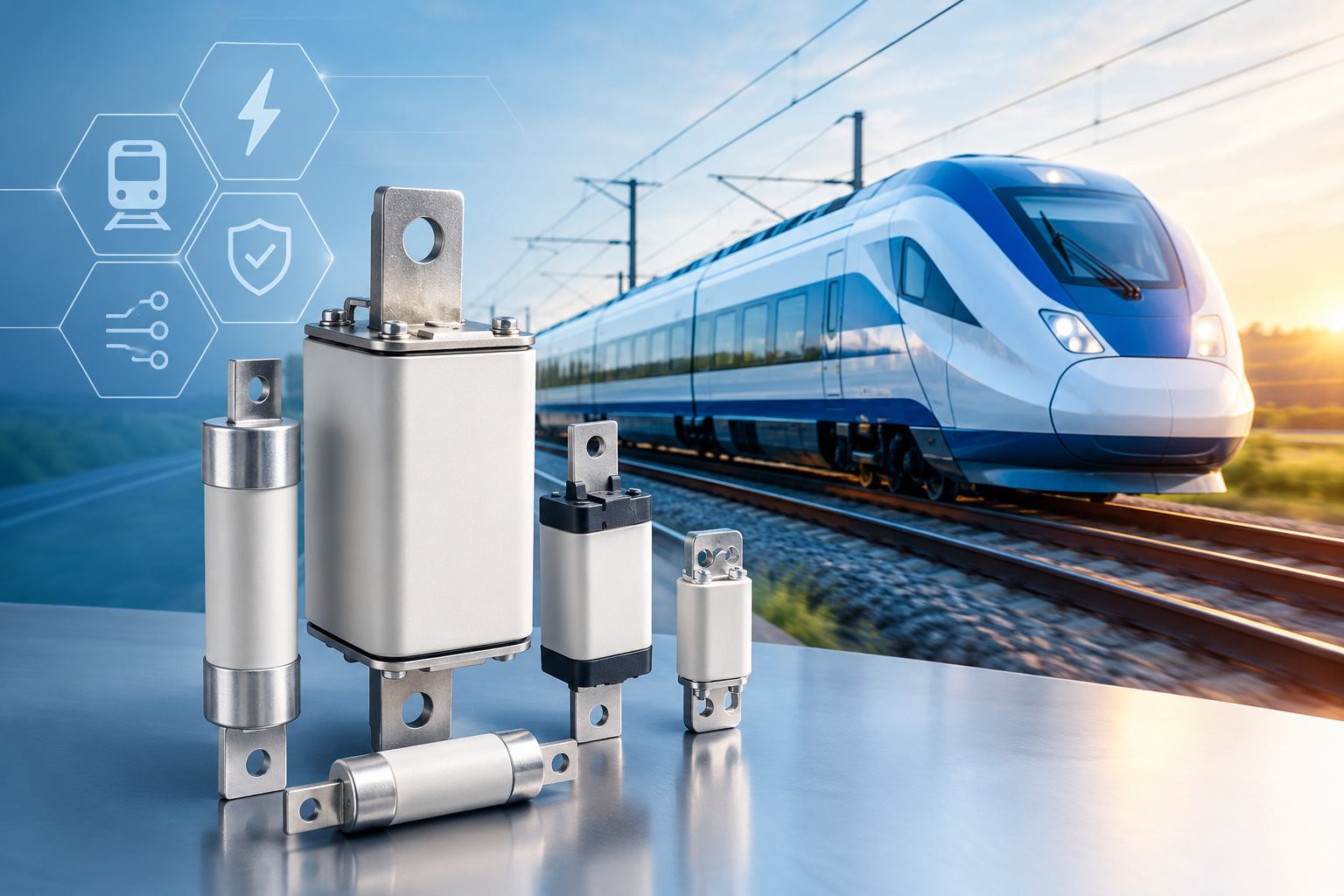
Eaton Bussmann Series High-Speed Traction and Rail Fuses: Reliable Protection for Railway Electrical Systems
Modern railway systems rely on dependable electrical protection to maintain operational safety, equipment reliability and service continuity. From electric rolling stock and traction power systems to auxiliary circuits and rail infrastructure, selecting the right fuse is essential for protecting electrical equipment against fault currents.
Eaton Bussmann series high-speed traction and rail fuses are designed specifically for the demanding requirements of railway DC applications. With a broad range of current ratings, voltage capabilities and operating classes, these fuses support electrical protection across multiple railway applications, including power converters, main electrical feeds, instrumentation, control systems, lighting and air conditioning.
In this article, we explore the key features, applications and selection considerations for Eaton Bussmann series traction fuses, helping engineers and railway equipment specialists identify suitable protection solutions for their systems.
What Are High-Speed Traction and Rail Fuses?
High-speed traction fuses are electrical protection devices designed to interrupt fault currents and help protect equipment in railway traction and power distribution systems. They are particularly important in applications where high DC voltages, substantial current levels and demanding operating conditions require carefully coordinated electrical protection.
Railway electrical systems may incorporate traction converters, auxiliary power supplies, DC distribution networks and third-rail power collection equipment. A fault in one of these circuits can expose components to damaging electrical energy if the protection system is not appropriately designed.
Eaton's Bussmann series traction and railway DC fuses are developed to address these application requirements. They provide options for different railway circuits, helping system designers match fuse characteristics to the electrical equipment being protected.
Key Features of Eaton Bussmann Series Traction Fuses
The Eaton Bussmann series high-speed traction and rail fuse portfolio offers a range of specifications to support different electrical protection requirements.
1. Wide Current and Voltage Ratings
The product range includes rated currents from 2 A to 1,600 A and rated voltages of up to 4,000 V DC, depending on the selected fuse model.
This range gives engineers options for a variety of railway electrical applications, from lower-current auxiliary circuits to high-current traction and distribution equipment.
Actual suitability depends on the individual fuse's ratings, fault-current conditions, installation and coordination requirements.
2. Multiple Operating Classes: aR, gG and gR
Eaton Bussmann series traction fuses are available in three operating classes: aR, gG and gR.
These classifications support different protection requirements:
-
aR: Partial-range semiconductor protection, generally intended to provide short-circuit protection for semiconductor equipment when used as part of an appropriately designed protection system.
-
gG: Full-range general-purpose protection against overload and short-circuit currents within the fuse's specified application limits.
-
gR: Full-range semiconductor protection, combining overload and short-circuit protection characteristics for suitable applications.
Understanding these distinctions is important when selecting a fuse for a traction converter, auxiliary circuit or other railway electrical installation. The correct choice depends on the protected equipment, expected overloads, fault-current levels and the overall protection strategy.
3. Protection for Third-Rail and Heavy-Rail Applications
Third-rail systems supply electrical power to trains through a conductor rail, creating specific requirements for DC fault protection.
Eaton's Bussmann series traction fuses include solutions for third-rail and heavy-rail applications. Depending on the selected model, they can support protection requirements associated with DC rail power systems and related equipment.
Engineers should verify the fuse's rated DC voltage, breaking capacity, time-current characteristics and compatibility with the associated circuit before specifying a product.
4. Application Engineering Support
Selecting a railway fuse involves more than matching the nominal current rating. Fuse performance must be assessed against the complete electrical system and the equipment manufacturer's requirements.
Eaton provides access to specialist fuse application engineering support to help customers identify suitable protection options for their applications.
This can be particularly valuable for complex railway installations involving high DC fault currents, power electronics or demanding coordination requirements.
Where Are Eaton Bussmann Traction Fuses Used?
The product range is designed to support a variety of rolling stock and rail infrastructure applications.
Traction Converters and Power Electronics
Traction converters play an important role in controlling the electrical power used by railway propulsion systems. Their semiconductor components may require carefully coordinated short-circuit protection.
Depending on the converter design and selected fuse characteristics, suitable high-speed fuses can help limit the energy passed through during a fault, supporting the protection of sensitive components.
Fuse selection should account for semiconductor withstand limits, pre-arcing and total-clearing I²t values, operating conditions and the converter manufacturer's recommendations.
Main Electrical Feeds and DC Distribution
Railway main electrical feeds and distribution networks require protection against potentially damaging fault currents.
Appropriately selected traction fuses can help isolate faults and protect connected equipment, subject to the capabilities and ratings of the individual fuse and the wider protection scheme.
The rated voltage, available fault current and required breaking capacity are particularly important considerations in DC installations.
Auxiliary Power and Distribution
Railway vehicles depend on auxiliary electrical systems to support functions beyond propulsion. These can include power distribution for onboard equipment and essential services.
Eaton Bussmann traction fuses are suitable for auxiliary power and distribution applications where the selected product meets the circuit's electrical and environmental requirements.
Instrumentation and Control Systems
Instrumentation and control circuits support the monitoring and operation of railway equipment. Appropriate overcurrent protection helps protect these circuits and their associated components.
The fuse's current rating, operating characteristics and compatibility with the circuit should be assessed to ensure that it provides the required protection without compromising normal operation.
Lighting and Air Conditioning
Lighting and air conditioning contribute to passenger comfort and the operational requirements of railway vehicles.
These auxiliary loads may have different electrical characteristics and protection needs. Selecting an appropriate fuse requires consideration of normal operating current, startup behaviour, conductor protection and the requirements of the installed equipment.
How to Select the Right Railway Traction Fuse
Choosing the correct high-speed traction fuse is an important part of railway electrical system design. The following considerations can help guide the selection process.
1. Confirm the System Voltage
Identify the nominal operating voltage and the maximum voltage the fuse may need to interrupt under fault conditions.
For DC systems, confirm that the selected fuse has an appropriate DC voltage rating and breaking capacity. AC and DC ratings should not be treated as interchangeable.
2. Determine the Required Current Rating
Assess the circuit's continuous operating current, load profile and expected operating conditions.
The fuse must be appropriately rated for the application while providing the intended protection for connected equipment and conductors. Ambient temperature, enclosure conditions and the manufacturer's derating guidance may also influence selection.
3. Choose the Appropriate Operating Class
Determine whether the application requires aR, gG or gR protection.
For example, semiconductor applications often require close coordination between the fuse's clearing characteristics and the semiconductor manufacturer's withstand data. General-purpose circuits may have different overload and short-circuit protection requirements.
The operating class should be selected according to the application rather than current rating alone.
4. Check Breaking Capacity and Fault Conditions
The fuse must be capable of safely interrupting the prospective fault current at the applicable system voltage.
Engineers should evaluate the maximum available fault current, DC circuit characteristics and the manufacturer's specified breaking capacity. This is especially important in high-energy DC railway systems.
5. Evaluate I²t and Protection Coordination
The pre-arcing and total-clearing I²t values help engineers assess the energy let through by a fuse during fault interruption.
For semiconductor protection, these values must be evaluated against the protected device's withstand characteristics. Coordination with circuit breakers, contactors and upstream or downstream protective devices should also be considered.
6. Verify Physical and Installation Requirements
Confirm the fuse dimensions, mounting arrangement, terminal connections and any accessory requirements.
Mechanical fit, electrical contact quality, installation clearances and thermal performance are important for achieving the intended protection characteristics in service.
Always consult the individual product datasheet and applicable railway equipment specifications before finalising a selection.
Why Consider Eaton Bussmann Series High-Speed Traction Fuses?
For railway engineers, OEMs and electrical equipment manufacturers, selecting a suitable fuse means balancing protection performance, system compatibility and application requirements.
The Eaton Bussmann series traction fuse portfolio offers several practical advantages:
-
Application flexibility: A broad range of current ratings and operating classes supports different railway protection requirements.
-
High-voltage DC options: Selected products are rated for applications up to 4,000 V DC.
-
Railway-focused design: The range is intended for rolling stock and rail infrastructure applications.
-
Multiple protection applications: Options are available for converter fuses, main electrical feeds, auxiliary power, distribution, instrumentation, control, lighting and air conditioning.
-
Technical selection support: Specialist application engineering assistance is available to help customers assess suitable fuse solutions.
The correct product will depend on the electrical system design, operating conditions and protection requirements. Reviewing the relevant technical specifications is essential before choosing a fuse.
Frequently Asked Questions
What is the current rating range of Eaton Bussmann traction fuses?
The Eaton Bussmann series high-speed traction and rail fuse range covers rated currents from 2 A to 1,600 A. Ratings vary by individual product.
What voltage ratings are available?
The product range includes fuses rated for voltages up to 4,000 V DC. Always verify the specific model's voltage rating and DC breaking capacity before use.
What is the difference between aR, gG and gR fuses?
The aR operating class provides partial-range semiconductor protection, while gG and gR are full-range classes intended for different general-purpose and semiconductor protection applications. The appropriate class depends on the protected equipment and the system's protection requirements.
Can these fuses be used in third-rail systems?
Yes. Eaton identifies third-rail and heavy-rail protection among the applications supported by its Bussmann series traction fuses. The selected fuse must be suitable for the system voltage, fault-current conditions and specific equipment being protected.
Are high-speed traction fuses suitable for railway converters?
Selected models may be suitable for traction converter and semiconductor protection applications. Engineers should verify the fuse's operating class, I²t characteristics, voltage rating and coordination with the converter manufacturer's requirements.
How do I find the correct Eaton Bussmann traction fuse?
Start by identifying the system voltage, continuous current, prospective fault current, required breaking capacity, operating class and mounting requirements. Then compare these requirements with Eaton's product specifications and seek application engineering advice where necessary.
Conclusion: Find the Right Eaton Bussmann Traction Fuse for Your Application
Reliable electrical protection is essential for railway traction systems, rolling stock and rail infrastructure. Selecting the appropriate fuse helps engineers address fault-current risks while meeting the operating and protection requirements of their electrical equipment.
Eaton Bussmann series high-speed traction and rail fuses offer a broad range of options, with current ratings from 2 A to 1,600 A, voltage ratings up to 4,000 V DC and aR, gG and gR operating classes.
Whether you are specifying protection for traction converters, auxiliary power distribution, main electrical feeds or third-rail systems, careful assessment of the application and the individual fuse specifications is essential.
Explore the Eaton Bussmann series high-speed traction and rail fuses range to review available models, technical resources and product support.



