
 eaton-ev-fuse-catalogue-emob0062-en-us.pdf  | [Eaton Bussmann EV Fuses] | 0 kB |
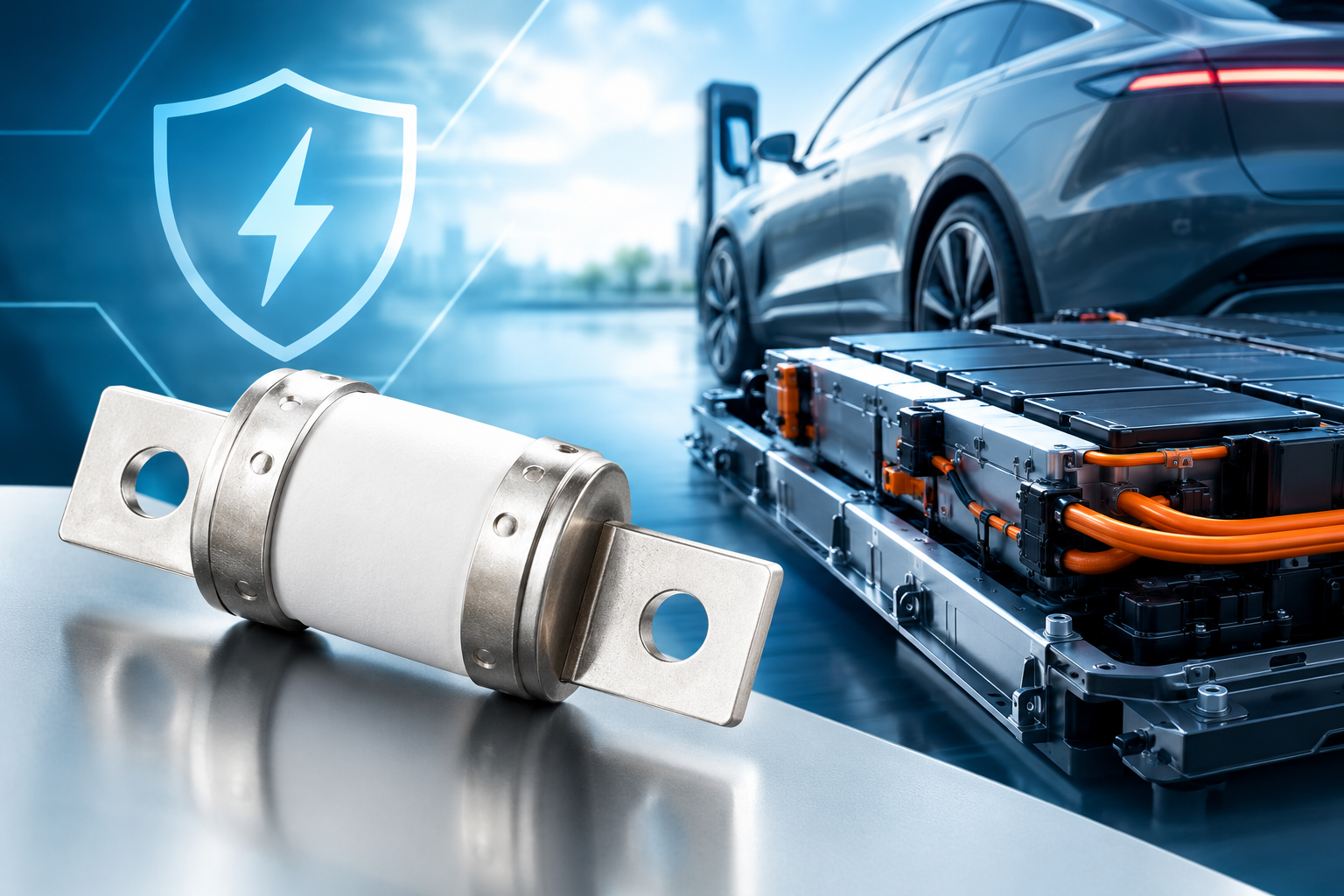
Eaton Bussmann EVKR 60 mm Fuses: High-Voltage Protection for Electric Vehicles
As electric vehicle (EV) technology continues to advance, reliable electrical protection is essential for high-voltage battery systems, efficient power distribution, and overall vehicle safety. The Eaton Bussmann EVKR 60 mm fuse series is designed to meet the demanding protection requirements of high-capacity EV battery packs and other high-voltage automotive applications.
Featuring current ratings from 450 A to 700 A and a maximum breaking capacity of 25 kA, EVKR 60 mm fuses provide robust circuit protection for applications that require high current-carrying capability and reliable fault interruption. Their higher voltage rating and enhanced interrupting performance support the evolving requirements of electric mobility and high-power battery systems.
In this guide, we explore the key features, technical specifications, available part numbers, and potential applications of Eaton Bussmann EVKR 60 mm fuses.
What Are Eaton Bussmann EVKR 60 mm Fuses?
Eaton Bussmann EVKR 60 mm fuses are high-current fuses developed for demanding automotive electrical protection applications, particularly those involving high-voltage electric vehicle battery systems.
As EV battery packs deliver increasing amounts of power to support vehicle acceleration, driving range, and overall performance, electrical protection components must be capable of handling high operating currents while interrupting potentially dangerous fault currents.
The EVKR series addresses these requirements through its higher voltage rating and high interrupting capacity. These characteristics make the series a solution worth considering for engineers and system designers developing high-voltage battery protection and power distribution architectures.
The range includes five current ratings: 450 A, 500 A, 550 A, 600 A, and 700 A. This selection allows designers to evaluate different fuse ratings according to their system requirements and electrical protection strategy.
Key Features and Benefits of EVKR 60 mm Fuses
1. Higher Voltage Rating for Improved System Efficiency
One of the key advantages of Eaton Bussmann EVKR 60 mm fuses is their higher voltage rating. Higher-voltage battery architectures can help reduce the current required to transmit a given amount of power.
For a given power level, increasing the system voltage can reduce current, potentially enabling the use of smaller, more economical conductors while meeting the electrical requirements of the application.
This can contribute to improved system efficiency and help optimise conductor sizing, cabling costs, and overall electrical system design.
Key benefit: Supports the design of efficient high-voltage EV power systems with potentially smaller and more economical conductors.
2. High Interrupting Capacity for High-Capacity Battery Packs
Modern electric vehicles require battery systems capable of delivering substantial power for acceleration, performance, and driving range. These high-capacity battery packs can also present significant fault-current challenges.
The Eaton Bussmann EVKR 60 mm fuse series features a maximum breaking capacity of 25 kA, providing a defined fault-interruption capability under the applicable rated conditions.
A suitable fuse with an adequate breaking capacity helps interrupt fault currents and protect electrical circuits when a fault occurs.
The minimum breaking capacity must be verified using the manufacturer's technical table to ensure the fuse is appropriate for the intended application.
Key benefit: Provides high interrupting capability for demanding battery protection applications, subject to correct system and fuse selection.
3. Five Current Ratings from 450 A to 700 A
The EVKR 60 mm fuse family offers five current ratings to support a range of high-current applications.
Available options include:
-
EVKR60-450 — 450 A
-
EVKR60-500 — 500 A
-
EVKR60-550 — 550 A
-
EVKR60-600 — 600 A
-
EVKR60-700 — 700 A
Having multiple current ratings enables engineers and purchasing teams to identify a suitable product for further evaluation based on system current, overload conditions, conductor characteristics, and fault-protection requirements.
The rated current alone should not be used to determine suitability. Operating temperature, installation conditions, transient currents, and the manufacturer's time-current characteristics should also be considered.
4. Standardised M10 Screw Connection
All listed Eaton Bussmann EVKR 60 mm fuse variants use an M10 screw connection.
The specified tightening torque is 20 ± 1 Nm, providing a defined installation requirement for the connection.
Correct torque is important for achieving a reliable electrical and mechanical connection. Installation should follow the manufacturer's instructions and the requirements of the associated busbar or terminal assembly.
5. Suitable Storage Temperature Range
The EVKR 60 mm fuse series has a specified storage temperature range of –40°C to +85°C.
This range is relevant to inventory management, transport planning, and storage conditions in automotive manufacturing and electrical component distribution environments.
Storage temperature should not be confused with the permitted operating temperature. Application-specific operating limits should be confirmed using the manufacturer's complete technical documentation.
6. Environmental and Automotive Standards Considerations
The Eaton Bussmann EVKR 60 mm fuse series is listed as compliant with:
-
RoHS
-
ELV
-
REACH
The series is also designed with reference to the following standards:
-
JASO D622
-
ISO 8820-8
-
GB/T 31465.6
These references are relevant when evaluating components for automotive electrical protection and regulatory or environmental requirements.
For a specific vehicle platform or battery system, engineers should confirm the applicable standard editions, qualification requirements, and product documentation before approving a fuse for production use.
Eaton Bussmann EVKR 60 mm Fuses: Technical Specifications
The following table summarises the supplied technical information for the EVKR 60 mm fuse range.
| Technical parameter | Specification |
|---|---|
| Product series | Eaton Bussmann EVKR 60 mm |
| Maximum breaking capacity | 25 kA |
| Minimum breaking capacity | Refer to manufacturer's technical table |
| Available current ratings | 450 A, 500 A, 550 A, 600 A, 700 A |
| Screw type | M10 |
| Packaging quantity | 22 pieces per box |
| Weight per listed variant | 0.685 kg |
| Storage temperature | –40°C to +85°C |
| Tightening torque | 20 ± 1 Nm |
| Environmental compliance | RoHS, ELV, REACH |
| Referenced standards | JASO D622, ISO 8820-8, GB/T 31465.6 |
Note: The specifications above are based on the supplied product information. Confirm rated voltage, minimum breaking capacity, operating temperature, and other application-critical parameters against the current manufacturer's datasheet.
Eaton Bussmann EVKR 60 mm Fuse Part Numbers
Selecting the correct part number is essential when sourcing replacement fuses, specifying components for new designs, or managing automotive electrical system inventories.
The EVKR series offers five variants, differentiated by rated current.
| Part number | Rated current | Packaging quantity | Screw type | Weight | Storage temperature | Torque |
|---|---|---|---|---|---|---|
| EVKR60-450 | 450 A | 22/box | M10 | 0.685 kg | –40°C to +85°C | 20 ± 1 Nm |
| EVKR60-500 | 500 A | 22/box | M10 | 0.685 kg | –40°C to +85°C | 20 ± 1 Nm |
| EVKR60-550 | 550 A | 22/box | M10 | 0.685 kg | –40°C to +85°C | 20 ± 1 Nm |
| EVKR60-600 | 600 A | 22/box | M10 | 0.685 kg | –40°C to +85°C | 20 ± 1 Nm |
| EVKR60-700 | 700 A | 22/box | M10 | 0.685 kg | –40°C to +85°C | 20 ± 1 Nm |
Which EVKR 60 mm Fuse Rating Should You Choose?
The appropriate fuse rating depends on the electrical and thermal requirements of the application.
-
450 A: Consider for systems whose calculated protection requirements align with this rating.
-
500 A: An option for applications requiring a nominal fuse rating of 500 A.
-
550 A: Suitable for evaluation in systems designed around a 550 A fuse rating.
-
600 A: An option for higher-current applications requiring a 600 A rating.
-
700 A: The highest-rated variant in the listed EVKR 60 mm range, for applications requiring evaluation of a 700 A fuse.
These descriptions are indicative selection guidance, not confirmation of suitability for a particular vehicle or battery pack.
Before choosing a variant, verify the system voltage, expected continuous current, transient current profile, available fault current, minimum breaking capacity, time-current characteristics, mounting requirements, and applicable derating factors.
Applications of Eaton Bussmann EVKR 60 mm Fuses
The EVKR series is designed to address the protection requirements of high-voltage automotive electrical systems. Depending on the system design and the manufacturer's approved application scope, relevant applications to evaluate may include the following.
Electric Vehicle Battery Packs
High-capacity battery packs require protection against electrical faults that could damage components or compromise system integrity. A correctly selected fuse can help interrupt fault currents within its specified operating limits.
High-Voltage Power Distribution
Electric vehicles use high-voltage distribution networks to transfer electrical power between system components. Fuse selection is an important part of designing protection for these circuits.
High-Power Automotive Electrical Systems
Applications involving high current and substantial electrical power require carefully coordinated protection devices. The EVKR current range provides multiple ratings for engineering evaluation in such environments.
Electric Mobility and Advanced Vehicle Platforms
As electric mobility platforms evolve, component selection must account for increasing power demands, system voltage, packaging constraints, and stringent electrical protection requirements.
The EVKR series' higher voltage rating and 25 kA maximum breaking capacity make these characteristics relevant when assessing fuse options for suitable automotive applications. Final application approval should always follow the manufacturer's documentation and the vehicle manufacturer's requirements.
Installation and Selection Considerations
To achieve reliable performance, Eaton Bussmann EVKR 60 mm fuses should be selected and installed according to the manufacturer's technical requirements.
Consider the following factors during design and installation:
System voltage: Confirm that the fuse's rated voltage is suitable for the maximum voltage of the electrical system, including relevant operating and fault conditions.
Current rating: Select a rating that accommodates the intended load while providing the required level of protection. Account for temperature, duty cycle, and transient loads.
Breaking capacity: Verify that the maximum prospective fault current does not exceed the fuse's breaking capacity under the applicable conditions. Also check the minimum breaking capacity in the manufacturer's technical table.
Connection and torque: Use the specified M10 connection and tighten to 20 ± 1 Nm, subject to the manufacturer's installation instructions and the requirements of the mating assembly.
Thermal management: Consider ambient temperature, enclosure conditions, adjacent components, and heat dissipation when evaluating the installation.
Protection coordination: Check the fuse's time-current characteristics and coordination with other protective devices to support the intended system protection strategy.
Standards and compliance: Confirm the relevant automotive standards, environmental requirements, and qualification documentation for the intended market and application.
Because EV battery systems can involve hazardous voltages and substantial fault energy, installation and maintenance should be performed by appropriately qualified personnel following established safety procedures.
Why Consider Eaton Bussmann EVKR 60 mm Fuses?
For engineers and procurement teams evaluating high-current automotive fuses, the Eaton Bussmann EVKR 60 mm series offers several practical characteristics:
-
High current ratings: Five variants from 450 A to 700 A.
-
Maximum breaking capacity of 25 kA: Supports evaluation for demanding fault-protection requirements.
-
Higher voltage rating: Helps address the needs of higher-voltage battery architectures.
-
Standardised connection: M10 screw terminals with a specified tightening torque of 20 ± 1 Nm.
-
Environmental compliance: Listed as RoHS, ELV, and REACH compliant.
-
Automotive standards references: Designed with reference to JASO D622, ISO 8820-8, and GB/T 31465.6.
-
Consistent packaging information: All listed variants are supplied in quantities of 22 per box.
These features provide a useful starting point when comparing high-current fuse options for electric vehicle and automotive electrical protection designs.
Frequently Asked Questions About Eaton Bussmann EVKR 60 mm Fuses
What is the maximum breaking capacity of an Eaton Bussmann EVKR 60 mm fuse?
The specified maximum breaking capacity is 25 kA. The fuse must be used within its applicable voltage and fault-interruption ratings.
What current ratings are available in the EVKR 60 mm series?
The listed variants are available in 450 A, 500 A, 550 A, 600 A, and 700 A ratings.
What is the difference between the EVKR60-450 and EVKR60-700?
The primary stated difference is the rated current: EVKR60-450 is rated at 450 A, while EVKR60-700 is rated at 700 A. Both share the listed M10 screw connection, packaging quantity, weight, storage temperature range, and tightening torque. Confirm all other specifications in the manufacturer's documentation.
What is the tightening torque for EVKR 60 mm fuses?
The specified tightening torque is 20 ± 1 Nm. Always follow the manufacturer's installation instructions and verify compatibility with the mating terminal or busbar assembly.
What is the storage temperature range?
The specified storage temperature range is –40°C to +85°C. This is a storage specification and should not be interpreted as the fuse's operating temperature range.
Which standards are referenced for the EVKR series?
The supplied product information references JASO D622, ISO 8820-8, and GB/T 31465.6. The series is also listed as RoHS, ELV, and REACH compliant.
How do I choose the correct EVKR 60 mm fuse?
Start by confirming the system voltage, expected load current, fault-current level, minimum breaking capacity, thermal conditions, and protection coordination requirements. Then select the appropriate current rating and verify the exact part number against the manufacturer's technical documentation.
Conclusion: Reliable High-Current Protection for Electric Vehicle Systems
The Eaton Bussmann EVKR 60 mm fuse series is designed to address the electrical protection challenges associated with high-voltage, high-capacity automotive battery systems.
With five current ratings ranging from 450 A to 700 A, a maximum breaking capacity of 25 kA, an M10 screw connection, and references to relevant automotive standards, the series provides options for engineers evaluating high-current fuse protection.
Whether you are specifying a fuse for a new EV platform, reviewing battery protection requirements, or sourcing components for an existing design, careful verification of the electrical ratings and installation requirements is essential.
Looking for Eaton Bussmann EVKR 60 mm fuses? Review the available part numbers — EVKR60-450, EVKR60-500, EVKR60-550, EVKR60-600, and EVKR60-700 — and consult the manufacturer's datasheet to identify the appropriate variant for your application.



