
 eaton-ev-fuse-catalogue-emob0062-en-us.pdf  | [Eaton Bussmann EV Fuses] | 0 kB |
| eaton-pyro-fuse-data-sheet.pdf | [Eaton Bussmann Pyro Fuses] | 2636 kB |
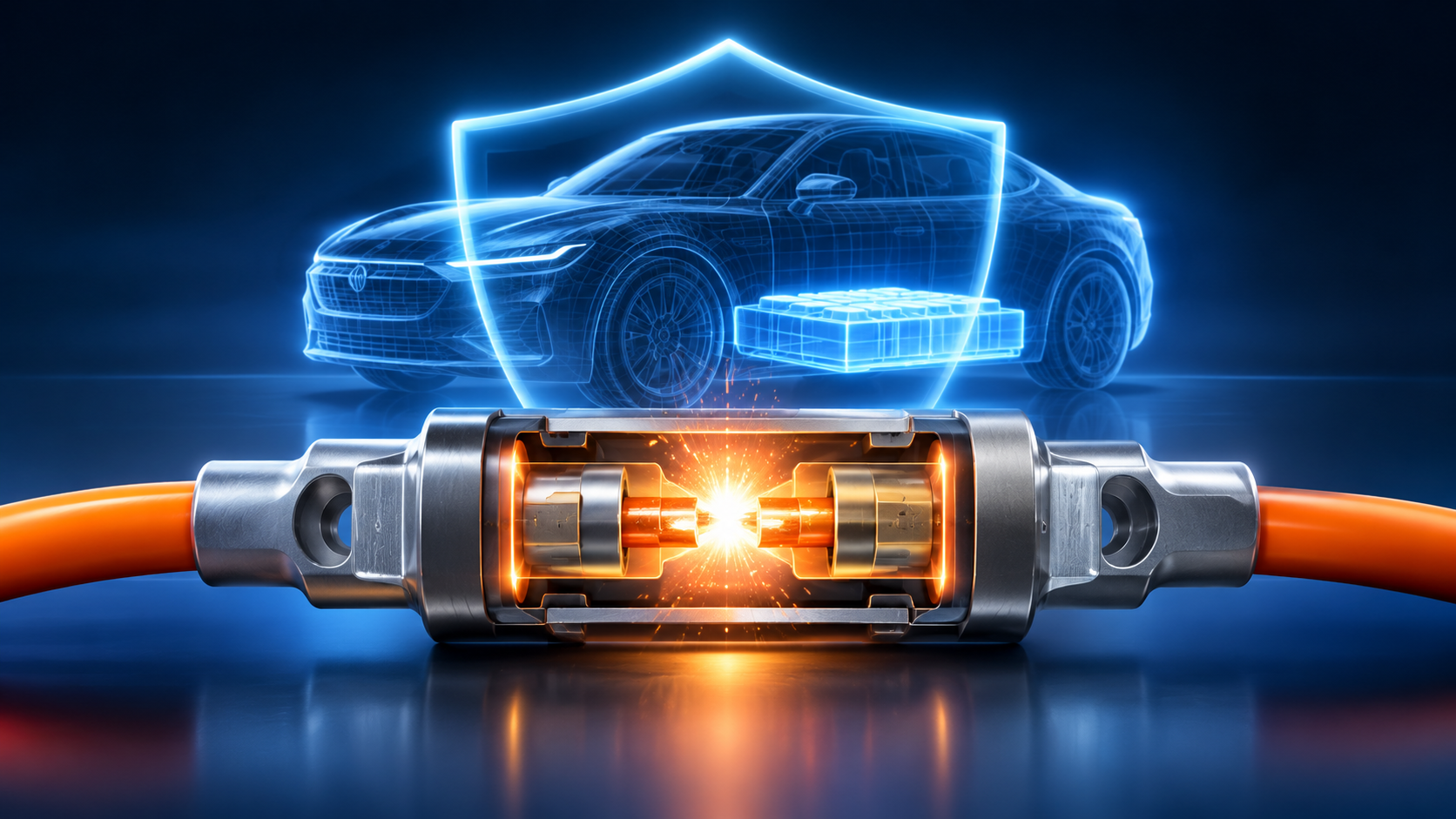
Pyrotechnic Fuses: How Do They Work in EV Safety?
The rapid growth of electric vehicles (EVs) has increased the importance of advanced electrical protection systems. As electric vehicles operate with high-voltage battery systems, ensuring passenger safety, protecting electrical components and preventing dangerous electrical failures have become essential priorities. One technology playing an increasingly important role in this area is the pyrotechnic fuse.
Unlike conventional fuses that interrupt electrical current by melting a metal element, a pyrotechnic fuse uses a controlled pyrotechnic mechanism to physically disconnect a high-voltage circuit. This enables extremely fast electrical isolation during critical situations, including vehicle collisions, short circuits and other emergency conditions.
But how does a pyrotechnic fuse work, and why is it important for electric vehicle safety? Let's explore its operating principle, key components, applications and benefits.
What Is a Pyrotechnic Fuse?
A pyrotechnic fuse, also known as a pyro fuse or pyrotechnic safety switch, is an advanced electrical protection device designed to disconnect high-voltage circuits rapidly when a dangerous condition occurs.
It contains a small, controlled pyrotechnic charge that activates a mechanical cutting mechanism. Once triggered, this mechanism physically severs a conductor or busbar, interrupting the electrical connection between the battery and the vehicle's high-voltage system.
In electric vehicles, pyrotechnic fuses are commonly integrated into the high-voltage battery protection architecture. They help isolate the battery during accidents or electrical emergencies, reducing the risk of electric shock, electrical arcing and further damage.
The main difference between a traditional fuse and a pyrotechnic fuse is how they operate:
-
Traditional fuse: Interrupts current when excessive heat melts its internal fuse element.
-
Pyrotechnic fuse: Uses an electrical activation signal to initiate a controlled mechanical disconnection.
This active interruption capability makes pyrotechnic fuses particularly useful in modern electric vehicles, where certain dangerous situations may require immediate battery isolation even when excessive current is not present.
Why Are Pyrotechnic Fuses Important for EV Safety?
Electric vehicles use high-voltage battery systems, commonly operating at 400V or 800V, with some advanced platforms exceeding these levels.
Although high-voltage systems provide improved power delivery and charging performance, they also introduce additional safety challenges.
During a serious collision, battery damage or electrical malfunction, dangerous voltage may remain present in the vehicle's high-voltage circuits. This can create risks for passengers, emergency responders and vehicle technicians.
Pyrotechnic fuses help address these challenges through rapid electrical isolation.
Their main safety benefits include:
1. Rapid High-Voltage Disconnection
A pyrotechnic fuse can physically interrupt a high-voltage connection within milliseconds after receiving an activation signal. This helps reduce the period during which dangerous electrical energy remains connected to the vehicle's power distribution system.
2. Improved Crash Protection
During a collision, signals from the vehicle's airbag control unit or battery management system can activate the pyrotechnic fuse. Disconnecting the battery helps reduce electrical hazards during vehicle recovery and rescue operations.
3. Protection Against Electrical Faults
Electrical short circuits, insulation failures and other abnormal operating conditions can threaten battery and power electronics. A properly designed protection system can activate the pyrotechnic fuse to isolate the affected high-voltage circuit.
4. Reduced Risk to Emergency Responders
After an accident, emergency personnel may need to access damaged areas of an electric vehicle. Disconnecting the high-voltage battery helps reduce the risk of accidental contact with energised electrical components.
5. Support for High-Voltage EV Architectures
As electric vehicle manufacturers move towards higher battery voltages and greater charging power, fast and reliable circuit interruption becomes increasingly important. Pyrotechnic fuses provide an additional layer of protection within these electrical architectures.
How Does a Pyrotechnic Fuse Work in an Electric Vehicle?
The operating principle of a pyrotechnic fuse involves four main stages: fault detection, signal activation, pyrotechnic initiation and electrical disconnection.
Step 1: Fault Detection
The process begins when the vehicle detects a dangerous operating condition.
Several electronic systems can monitor the vehicle and identify situations requiring immediate high-voltage isolation.
These include:
-
Battery management system (BMS).
-
Airbag control unit.
-
Collision detection sensors.
-
Current and voltage monitoring systems.
-
Battery temperature monitoring systems.
For example, when a vehicle experiences a severe collision, acceleration sensors can detect the impact and send information to the vehicle's safety control system.
Similarly, the battery management system can identify abnormal electrical conditions that require circuit protection.
Step 2: Activation Signal
Once a critical fault is identified, the control system sends an electrical activation signal to the pyrotechnic fuse.
This signal initiates the internal firing mechanism.
The activation process is designed to operate extremely quickly so that the high-voltage circuit can be disconnected without unnecessary delay.
Depending on the vehicle's electrical architecture, the activation command may originate from the battery management system, airbag control unit or a dedicated triggering circuit.
Step 3: Pyrotechnic Initiation
After receiving the activation signal, the internal igniter activates the controlled pyrotechnic charge.
The resulting gas pressure drives a mechanical component, such as a piston or cutting blade, towards the electrical conductor.
This component physically severs the busbar or designated conductive element inside the fuse.
The mechanism is carefully engineered to create a rapid and controlled interruption of the electrical connection.
Step 4: High-Voltage Circuit Disconnection
Once the conductor has been severed, the electrical connection is permanently interrupted.
This isolates the battery from the protected high-voltage circuit and helps prevent further electrical energy from flowing through the disconnected path.
The actual mechanical interruption can take less than a millisecond in some designs, although the overall system response time also depends on fault detection, control processing and triggering electronics.
Because pyrotechnic fuses are generally single-use devices, they must be replaced after activation according to the vehicle manufacturer's repair procedures.
Pyrotechnic Fuse vs Traditional Fuse: What Is the Difference?
Both traditional fuses and pyrotechnic fuses are important components of electrical protection systems. However, they use different operating principles and serve different protection requirements.
| Feature | Traditional Fuse | Pyrotechnic Fuse |
|---|---|---|
| Operating principle | Thermal melting | Mechanical disconnection |
| Activation | Excessive current and heat | Electrical trigger signal |
| Response | Depends on fault current and fuse characteristics | Designed for rapid activation |
| Crash protection | Limited without an overcurrent condition | Can activate through crash signals |
| Fault detection | Passive | Usually controlled electronically |
| Operation | One-time protection | One-time activation |
| Main application | Overcurrent and short-circuit protection | Emergency high-voltage isolation |
A traditional fuse remains essential for protecting electrical circuits against overloads and short circuits. However, it cannot necessarily respond to every crash-related safety condition.
For example, a damaged battery cable may create a dangerous electrical exposure without producing enough current to activate a conventional fuse.
A pyrotechnic fuse can overcome this limitation because it can be activated by an external safety signal.
Therefore, both technologies can work together to provide comprehensive electrical protection in electric vehicles.
Different Types of Pyrotechnic Fuses Used in EV Applications
Pyrotechnic fuse technology has evolved to support different vehicle architectures and safety requirements.
The main configurations include:
1. Active Pyrotechnic Fuse
An active pyrotechnic fuse operates through an external electrical activation signal.
When the vehicle's safety control system detects a critical condition, it sends a command to activate the fuse.
The internal pyrotechnic mechanism then physically disconnects the high-voltage conductor.
This design is particularly useful for crash-related battery isolation and electronically controlled emergency shutdown systems.
2. Dual-Trigger Pyrotechnic Fuse
A dual-trigger pyrotechnic fuse incorporates two activation mechanisms.
One mechanism responds to an external electronic command, while the additional mechanism provides an independent current-related triggering function.
This configuration can provide an additional layer of protection if the primary electronic triggering system cannot operate as intended.
3. Active and Passive Pyrotechnic Fuse
Active and passive designs combine electronically commanded activation with a passive electrical fault response.
The active mechanism responds to signals from the vehicle's safety systems, while the passive mechanism responds to specified electrical fault conditions.
This combination can improve protection flexibility and provide additional redundancy within the vehicle's high-voltage electrical architecture.
The appropriate configuration depends on the vehicle's electrical design, safety requirements and overall protection strategy.
Key Applications of Pyrotechnic Fuses in Electric Vehicles
Pyrotechnic fuses are not limited to one particular safety function. They can support several applications across electric vehicle electrical systems.
High-Voltage Battery Protection
The most important application is disconnecting the high-voltage battery during critical safety events.
By interrupting the electrical connection, the pyrotechnic fuse helps isolate the battery from other vehicle components.
Collision and Crash Protection
During a severe accident, the vehicle's crash detection system can activate the pyrotechnic fuse.
This helps reduce electrical hazards associated with damaged high-voltage wiring and battery connections.
Battery Management System Integration
The battery management system continuously monitors important battery parameters, including voltage, current and temperature.
When abnormal conditions are detected, the system can initiate protective actions, including pyrotechnic fuse activation where the vehicle architecture supports it.
Protection of High-Voltage Distribution Systems
Electric vehicles contain multiple high-voltage components, including electric motors, inverters, compressors and onboard charging systems.
Pyrotechnic fuses can help disconnect designated sections of these electrical systems during emergency situations.
Electric Vehicle Charging Infrastructure
High-power DC charging systems also require reliable electrical protection.
In certain specialised charging architectures, pyrotechnic switching technology can support rapid emergency disconnection when a critical fault occurs.
However, the protection device must be selected according to the electrical characteristics and safety requirements of the specific charging system.
Important Factors to Consider When Selecting a Pyrotechnic Fuse
Selecting the correct pyrotechnic fuse is essential for achieving reliable electrical protection.
Engineers and EV manufacturers should evaluate several important technical parameters.
1. Rated Operating Voltage
The fuse must be suitable for the maximum operating voltage of the vehicle's high-voltage system. Compatibility with 400V, 800V or higher-voltage architectures should be carefully evaluated.
2. Current and Breaking Capacity
The device must be designed to handle the expected operating current and interrupt the specified fault conditions safely.
3. Activation Time
Fast activation is one of the main advantages of pyrotechnic fuses. Engineers should evaluate both the mechanical disconnection time and the total system response time.
4. Triggering Mechanism
Depending on the application, an active, dual-trigger or active-and-passive configuration may be appropriate.
5. Electrical Integration
The pyrotechnic fuse must be compatible with the vehicle's battery management system, airbag control unit and triggering electronics.
6. Environmental Durability
Automotive electrical components operate under demanding conditions. Temperature variations, vibration, humidity and mechanical stress must be considered during component selection and validation.
7. Automotive Safety Testing
The device should undergo appropriate automotive qualification and system-level validation to confirm reliable performance under normal operating conditions and specified emergency scenarios.
Are Pyrotechnic Fuses Reusable?
No. Most pyrotechnic fuses are designed for single-use operation.
Once the internal pyrotechnic charge has been activated and the conductor has been physically severed, the electrical connection cannot simply be restored.
The entire device generally needs to be replaced following activation.
This is an important consideration during vehicle maintenance and accident repair.
Technicians should follow the vehicle manufacturer's safety procedures before inspecting or replacing any component within a high-voltage electrical system.
The Future of Pyrotechnic Fuse Technology in Electric Vehicles
The electric vehicle industry continues to develop more powerful battery systems, higher-voltage electrical architectures and faster charging technologies.
These developments create new requirements for electrical protection.
Pyrotechnic fuses are expected to remain an important part of advanced EV safety systems because they provide a fast method of disconnecting high-voltage circuits when conventional overcurrent protection alone may not be sufficient.
Future developments are likely to focus on:
-
Faster and more reliable activation mechanisms.
-
Improved integration with intelligent battery management systems.
-
Compact designs for space-constrained battery assemblies.
-
Enhanced fault detection and diagnostic capabilities.
-
Greater triggering redundancy.
-
Compatibility with next-generation high-voltage platforms.
As electric vehicle technology advances, reliable high-voltage circuit protection will remain essential for improving vehicle safety, supporting battery system reliability and protecting passengers and emergency personnel.
Conclusion
Pyrotechnic fuses play an important role in modern electric vehicle safety by providing rapid, controlled disconnection of high-voltage electrical circuits.
Unlike traditional fuses that rely on heat and excessive current to interrupt a circuit, pyrotechnic fuses use an electronically activated mechanical mechanism to physically sever the electrical connection.
This makes them particularly valuable in crash protection, emergency battery isolation and other situations where immediate disconnection may be necessary even without a conventional overcurrent condition.
As electric vehicles continue to adopt higher-voltage battery systems and advanced charging technologies, pyrotechnic fuse technology will remain an important component of comprehensive automotive electrical protection strategies.
Frequently Asked Questions (FAQs)
1. What is a pyrotechnic fuse in an electric vehicle?
A pyrotechnic fuse is a high-voltage safety device that uses a controlled pyrotechnic charge to physically disconnect an electrical conductor. It helps isolate the vehicle's battery during collisions and other critical electrical emergencies.
2. How does a pyrotechnic fuse work?
It works through four stages: fault detection, electrical signal activation, pyrotechnic initiation and mechanical disconnection. Once triggered, an internal mechanism physically cuts the electrical conductor to interrupt the high-voltage circuit.
3. Why are pyrotechnic fuses used in electric vehicles?
They provide rapid battery isolation during accidents and electrical emergencies. Unlike conventional fuses, they can activate through an external safety signal even when an excessive current condition is not present.
4. What is the difference between a pyrotechnic fuse and a traditional fuse?
A traditional fuse interrupts current by melting an internal metal element due to excessive heat. A pyrotechnic fuse uses a controlled mechanical mechanism to physically disconnect the conductor following an activation command.
5. How fast does a pyrotechnic fuse operate?
The mechanical disconnection can occur in less than one millisecond in certain designs. However, the overall response time depends on the vehicle's fault detection, electronic processing and triggering architecture.
6. Can a pyrotechnic fuse be reused?
No. Pyrotechnic fuses are generally single-use devices. Once activated, the internal conductor is physically severed, and the complete unit usually requires replacement.
7. Does a pyrotechnic fuse prevent EV battery fires?
A pyrotechnic fuse does not directly prevent or extinguish battery fires. However, by disconnecting designated high-voltage circuits during critical events, it can help reduce certain electrical hazards and limit further electrical energy delivery through the disconnected path.
8. Where is a pyrotechnic fuse installed in an electric vehicle?
It is generally integrated into the vehicle's high-voltage electrical distribution or battery protection system. Its exact position depends on the vehicle's electrical architecture and safety design.



