
 eaton-emobility-guide-brochure-emob0001-en.pdf  | [Eaton eMobility Guide] | 0 kB |
Does an EV Charger Connect to the Meter or Fuse Box?
As electric vehicles (EVs) become increasingly popular, more homeowners are considering installing EV chargers at home. However, before starting an installation, one common question arises: Does an EV charger connect to the electricity meter or the fuse box?
Understanding the correct electrical connection is essential for safe, reliable, and efficient EV charging. An EV charger requires a suitable power supply, appropriate circuit protection, and correctly sized electrical wiring to handle its charging load.
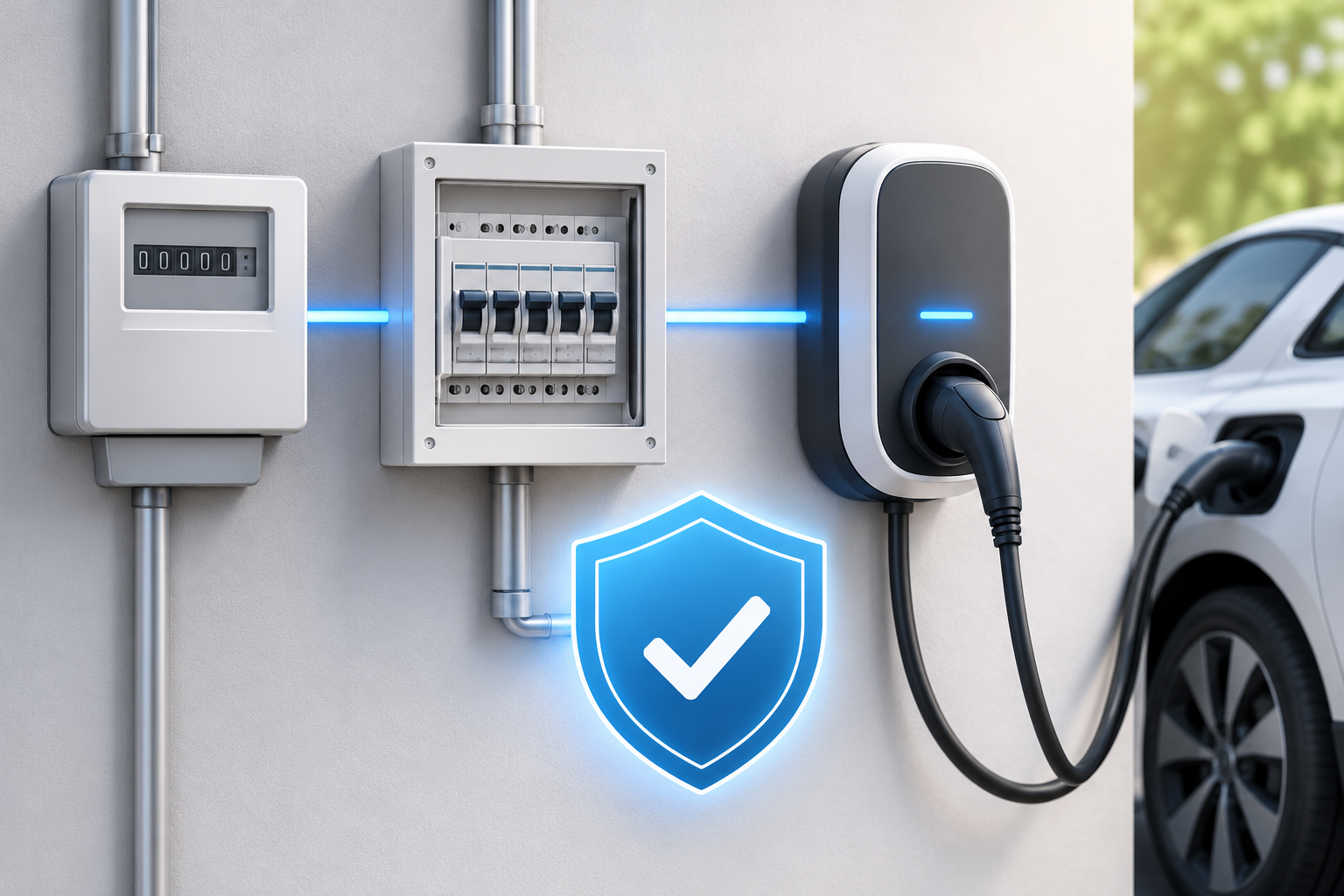
In a typical residential installation, an EV charger connects to the home's electrical distribution board, commonly known as the fuse box or consumer unit, rather than directly to the electricity meter. The meter measures the property's electricity consumption, while the fuse box distributes electrical power and provides protection against electrical faults.
In this guide, we explain how an EV charger connects to a home's electrical system, the differences between the electricity meter and fuse box, and why circuit breakers and EV-specific fuses are important.
1. Does an EV Charger Connect to the Meter or Fuse Box?
The short answer is that an EV charger typically connects to the fuse box, not directly to the electricity meter.
Although both components are part of the home's electrical supply system, they perform different functions.
The electricity meter measures how much electrical energy a property consumes. It records the electricity used by household appliances, lighting, heating systems, and EV charging equipment.
The fuse box, on the other hand, distributes electricity to individual circuits throughout the property. It also contains protective devices, such as circuit breakers and residual-current protection, designed to disconnect the power when an electrical fault occurs.
A typical residential EV charging installation follows this electrical supply path:
Utility Grid → Electricity Meter → Main Distribution Board (Fuse Box) → Dedicated EV Charging Circuit → EV Charger → Electric Vehicle
This arrangement allows the EV charger to receive electricity through a properly protected circuit.
Depending on the installation, an EV charger may be hardwired directly to a dedicated circuit or connected through an appropriate socket outlet.
The exact connection method depends on the charger specifications, local electrical regulations, and the property's existing electrical infrastructure.
2. Understanding the Role of the Electricity Meter
The electricity meter is an essential component of a property's electrical supply system. Its primary function is to measure the amount of electricity consumed by the building.
Meters are generally installed where the electrical supply enters the property and are typically maintained by the electricity network operator or another authorised service provider.
How Does the Electricity Meter Work?
When electricity enters a property, it passes through the metering equipment before being distributed to the home's electrical installation.
The meter continuously measures electricity consumption, usually in kilowatt-hours (kWh).
When an EV charger operates, the electricity it consumes is included in the property's total measured energy usage.
For example, if a household uses electricity for lighting, cooking, heating, and charging an electric vehicle, the meter records the combined consumption of these electrical loads.
Does an EV Charger Need a Separate Electricity Meter?
Not necessarily.
Most residential EV chargers operate using the property's existing electricity meter. Installing a dedicated meter is generally not essential for the charger to function.
However, a separate meter or submeter may be useful when homeowners want to monitor EV charging consumption independently.
Some properties may also benefit from dedicated metering arrangements or electricity tariffs designed for EV charging.
Whether a separate meter is required depends on the electricity supplier, local regulations, and the intended charging arrangement.
When Might the Electricity Meter Need an Upgrade?
Although an EV charger normally connects through the fuse box, the existing electricity supply may not have sufficient capacity to support the additional electrical load.
For example, a property with an older electrical service may struggle to accommodate a high-power EV charger alongside other electricity-consuming appliances.
In such cases, an electrical professional may recommend:
-
Upgrading the electrical service capacity.
-
Replacing or upgrading the metering equipment where necessary.
-
Increasing the capacity of the main distribution equipment.
-
Installing an energy management system.
-
Adjusting the available charging power.
An upgrade is not automatically necessary. The existing electrical installation must first be assessed to determine whether it can safely support the additional load.
3. Why Does an EV Charger Connect to the Fuse Box?
The fuse box, also called an electrical panel, distribution board, or consumer unit, is the central point where electricity is distributed throughout a property.
It contains protective devices that help prevent electrical circuits from becoming overloaded or damaged.
For EV charging, the fuse box plays an especially important role because EV chargers can operate at relatively high power levels for extended periods.
Dedicated Circuit for EV Charging
Most dedicated home EV charging installations require an individual circuit.
Rather than sharing an existing household circuit with lighting or general-purpose sockets, the EV charger receives electricity through its own appropriately designed electrical connection.
A dedicated circuit offers several advantages:
-
Reduces the risk of overloading existing household circuits.
-
Provides appropriate protection for the charging equipment.
-
Supports continuous electrical loads.
-
Makes electrical isolation and maintenance easier.
-
Improves the overall safety and reliability of the installation.
The circuit must be designed according to the charger's rated current, installation conditions, cable length, and applicable electrical regulations.
Circuit Breakers and Overcurrent Protection
A circuit breaker is an important protective device installed in the electrical distribution board.
Its purpose is to interrupt the electrical supply when excessive current flows through a circuit.
For example, if a short circuit or overload occurs in the EV charging circuit, the circuit breaker can disconnect the power to reduce the risk of overheating, equipment damage, and electrical fires.
The circuit breaker rating must be selected according to the electrical design and the characteristics of the charging equipment.
An incorrectly rated protective device or undersized cable can create serious safety risks.
Residual Current Protection
EV charging installations also require suitable protection against residual currents.
Residual-current protection detects an imbalance between the current flowing through the live and neutral conductors. This can indicate that electricity is escaping through an unintended path.
Depending on the EV charger's design and applicable regulations, the installation may require an appropriate residual-current device (RCD), residual-current circuit breaker (RCCB), or combined protective device.
Protection against DC residual currents must also be considered. Some EV charging equipment incorporates 6 mA DC residual-current detection, while other installations may require additional suitable protection.
The correct arrangement depends on the charger's built-in safety features and local electrical standards.
4. What Is the Role of an EV Fuse?
An EV fuse is an electrical protection component designed to interrupt excessive current when a fault occurs.
Fuses are particularly important in electrical systems because they help protect sensitive components, cables, and equipment against dangerous overcurrent conditions.
In an EV charging system, different protective devices may be used at different points in the electrical circuit.
Overcurrent Protection
One of the primary functions of an EV fuse is to protect electrical equipment against excessive current.
If the current exceeds the fuse's specified operating limits for a sufficient period, the fuse element melts and interrupts the electrical circuit.
This helps prevent overheating and reduces the possibility of damage to connected electrical components.
Short-Circuit Protection
Short circuits can generate extremely high electrical currents within a very short period.
Without appropriate protection, these faults can damage electrical equipment, wiring, and other components.
A correctly selected fuse can interrupt the fault current and help protect the electrical system.
Equipment Protection
EV charging equipment contains electrical and electronic components that must operate within specified voltage and current limits.
Depending on the equipment design, fuses may be installed internally or within associated electrical protection assemblies.
These fuses provide an additional layer of protection for the relevant components.
It is important to understand that an EV fuse does not replace the circuit breaker or other protective devices installed in the home's distribution board. Each device has a specific protection function.
5. What Is the Difference Between an EV Fuse and a Circuit Breaker?
Although EV fuses and circuit breakers both provide electrical protection, they work differently.
Understanding their differences helps explain how multiple protective devices work together in an EV charging installation.
| Feature | EV Fuse | Circuit Breaker |
|---|---|---|
| Main function | Interrupts excessive current | Disconnects a circuit during an electrical fault |
| Operating principle | Fuse element melts | Internal mechanism trips |
| Reset capability | Generally requires replacement | Usually can be reset after the fault is addressed |
| Protection | Overcurrent and short-circuit protection, depending on design | Overload and short-circuit protection, depending on type |
| Installation | Internal equipment or electrical protection assembly | Usually installed in the distribution board |
| Maintenance | Replacement after operation | Inspection and resetting when appropriate |
Both devices are important in electrical protection, but their suitability depends on the application.
An appropriately designed EV charging installation may incorporate circuit breakers, fuses, and residual-current protection to address different electrical hazards.
6. What Type of Electrical Connection Does a Home EV Charger Require?
The electrical requirements of a home EV charger depend on its charging power, voltage, current rating, and installation configuration.
Two common residential charging categories are Level 1 and Level 2 charging.
Level 1 EV Charging
Level 1 charging generally uses a standard household electrical outlet in countries where the relevant outlet and charging equipment are designed for this purpose.
It offers relatively low charging power and is commonly used for overnight charging or situations where charging speed is not a major concern.
Although installation requirements may be simpler, the socket outlet and circuit must still be suitable for the intended charging load.
Level 2 EV Charging
Level 2 charging uses a higher-power AC electrical supply and is commonly selected for residential EV charging.
In North America, these installations commonly use 240 V electrical circuits. Depending on the charger rating, a dedicated circuit with an appropriately sized circuit breaker may be required.
In European residential installations, charging equipment commonly operates using 230 V single-phase or 400 V three-phase supplies.
Three-phase charging can provide higher charging power when supported by the vehicle, charger, and available electrical supply.
The electrical installation must be designed to accommodate the charger's maximum rated current and the property's available supply capacity.
7. Important Factors to Consider Before Installing an EV Charger
Before installing a home EV charger, several electrical and practical considerations should be evaluated.
1. Existing Electrical Service Capacity
The first step is determining whether the property's electrical supply can support the additional charging load.
An EV charger may operate for several hours at a time, making its electrical demand an important consideration.
A qualified electrician should assess the existing electrical service, main protective device, distribution board, and other major electrical loads.
2. Correct Cable Sizing
The electrical cable connecting the fuse box to the EV charger must be appropriately sized.
Cable selection depends on several factors, including:
-
Charging current.
-
Cable length.
-
Installation method.
-
Ambient temperature.
-
Voltage drop.
-
Cable grouping and surrounding conditions.
-
Applicable electrical standards.
Using an undersized cable can cause excessive heating and create a potential fire hazard.
3. Appropriate Circuit Protection
The EV charging circuit requires suitable protective devices.
Depending on the installation, these may include:
-
Overcurrent circuit breakers.
-
Residual-current protection.
-
DC residual-current detection.
-
Surge protection where required or recommended.
-
Suitable isolation devices.
The protection arrangement should follow the charger's technical specifications and applicable electrical regulations.
4. Installation Location
The location of the EV charger affects the electrical installation.
A charger installed in a garage, outside a house, or near a driveway may require different cable routing and environmental protection.
Outdoor installations must use equipment and electrical accessories suitable for the environmental conditions.
5. Future Charging Requirements
Homeowners should also consider their future electrical needs.
For example, they may eventually purchase an electric vehicle with a higher charging capacity or install additional energy-consuming equipment.
Planning the electrical infrastructure carefully can reduce the likelihood of expensive modifications later.
8. Can an EV Charger Be Connected Directly to the Electricity Meter?
In a typical residential installation, an EV charger is not connected directly to the electricity meter.
The electricity meter measures energy consumption, while the distribution board provides the appropriate circuit connections and protective devices.
However, some electrical installations may use separate distribution arrangements or dedicated equipment depending on local requirements.
For example, a property may have a separate distribution board for EV charging or a dedicated metering arrangement.
These configurations do not eliminate the need for appropriate electrical protection.
Any connection involving the metering equipment or the incoming electrical supply must be handled by the relevant authorised professionals.
Homeowners should never attempt to bypass the distribution board or connect charging equipment directly to unprotected electrical supply conductors.
9. What Happens If the EV Charger Overloads the Electrical Circuit?
If an EV charger draws more current than the circuit can safely support, the protective devices may disconnect the electrical supply.
A circuit breaker may trip when an overload or short circuit occurs.
Depending on the nature of the fault, a fuse may also operate and interrupt the current.
Common causes of charging-related electrical problems include:
-
An overloaded electrical circuit.
-
Incorrect circuit breaker selection.
-
Undersized electrical cables.
-
Damaged charging cables or connectors.
-
Loose electrical connections.
-
Internal charger faults.
-
Inadequate electrical service capacity.
If a circuit breaker repeatedly trips during EV charging, the problem should be investigated by a qualified electrician.
Repeatedly resetting a breaker without identifying the underlying cause is not a safe solution.
10. Frequently Asked Questions About EV Charger Connections
Q1. Does an EV charger connect to the meter or fuse box?
An EV charger typically connects to the fuse box or electrical distribution board through a dedicated, appropriately protected circuit. The electricity meter measures the total electricity consumed by the property, including EV charging.
Q2. Does a home EV charger need its own circuit breaker?
Most dedicated home EV charging installations require an individual circuit with appropriately rated overcurrent protection. The exact protective device and rating depend on the charger specifications and the electrical installation.
Q3. Does an EV charger need a separate electricity meter?
No. Most home EV chargers use the property's existing electricity meter. A separate meter or submeter may be installed when independent monitoring or a specific metering arrangement is required.
Q4. Can I connect an EV charger to an existing household circuit?
This depends on the charging equipment and the electrical circuit. Dedicated EV charging equipment generally requires a suitably designed circuit. An existing general-purpose circuit should not be assumed to have sufficient capacity or appropriate protection.
Q5. What size circuit breaker does an EV charger need?
There is no universal circuit breaker rating for every EV charger.
The correct rating depends on the charger's maximum current, electrical supply, cable capacity, installation conditions, and local regulations. A qualified electrician must determine the appropriate rating.
Q6. Does an EV charger have an internal fuse?
Some EV chargers incorporate internal fuses or other protective components. Their presence and specifications depend on the equipment design.
These internal components work alongside the building's electrical protection system rather than replacing it.
Q7. What happens if an EV charger fuse blows?
If a fuse operates, it interrupts the electrical circuit to protect against excessive current. The underlying fault should be identified before the equipment is returned to service. Fuse replacement should follow the manufacturer's specifications and be performed by an appropriately qualified person.
Q8. Is a circuit breaker enough to protect an EV charger?
Not necessarily. EV charging installations may require several forms of protection, including overcurrent protection and residual-current protection. The complete arrangement depends on the charger design and applicable electrical standards.
Conclusion
So, does an EV charger connect to the meter or fuse box?
In a typical residential installation, an EV charger connects to the fuse box through a dedicated electrical circuit, not directly to the electricity meter.
The electricity meter measures the property's energy consumption, while the fuse box distributes electrical power and provides essential circuit protection.
A safe EV charging installation requires correctly sized cables, appropriately rated circuit breakers, suitable residual-current protection, and consideration of the property's available electrical capacity.
EV fuses may provide additional protection for specific charging equipment and electrical components. Working together with other protective devices, they help improve the safety and reliability of EV charging systems.
As electric vehicle adoption continues to grow, understanding the electrical infrastructure behind EV charging is becoming increasingly important for homeowners, installers, and electrical professionals.
Choosing the correct electrical connection and protection arrangement is essential for ensuring safe, efficient, and dependable home EV charging.



