
 eaton-bussmann-series-dc-fuses-catalog-ca135009en-us.pdf  | [Eaton Bussmann PV Fuses] | 0 kB |
How Do DC Photovoltaic Fuses Ensure Safety in High-Voltage PV Systems?
Introduction: Why DC Fuses Are Essential for Modern Photovoltaic Systems
High-voltage photovoltaic (PV) systems are playing an increasingly important role in the global transition to renewable energy. Commercial and industrial solar installations are increasingly adopting high-performance PV systems operating at DC voltages of up to 1,500 V. Higher system voltages can improve power transmission efficiency and optimize system design. However, they also introduce additional electrical safety requirements.
DC photovoltaic fuses are essential components for improving the safety, reliability, and availability of modern solar power systems. They protect PV modules, cables, and other electrical components against excessive currents and help limit the consequences of electrical faults.
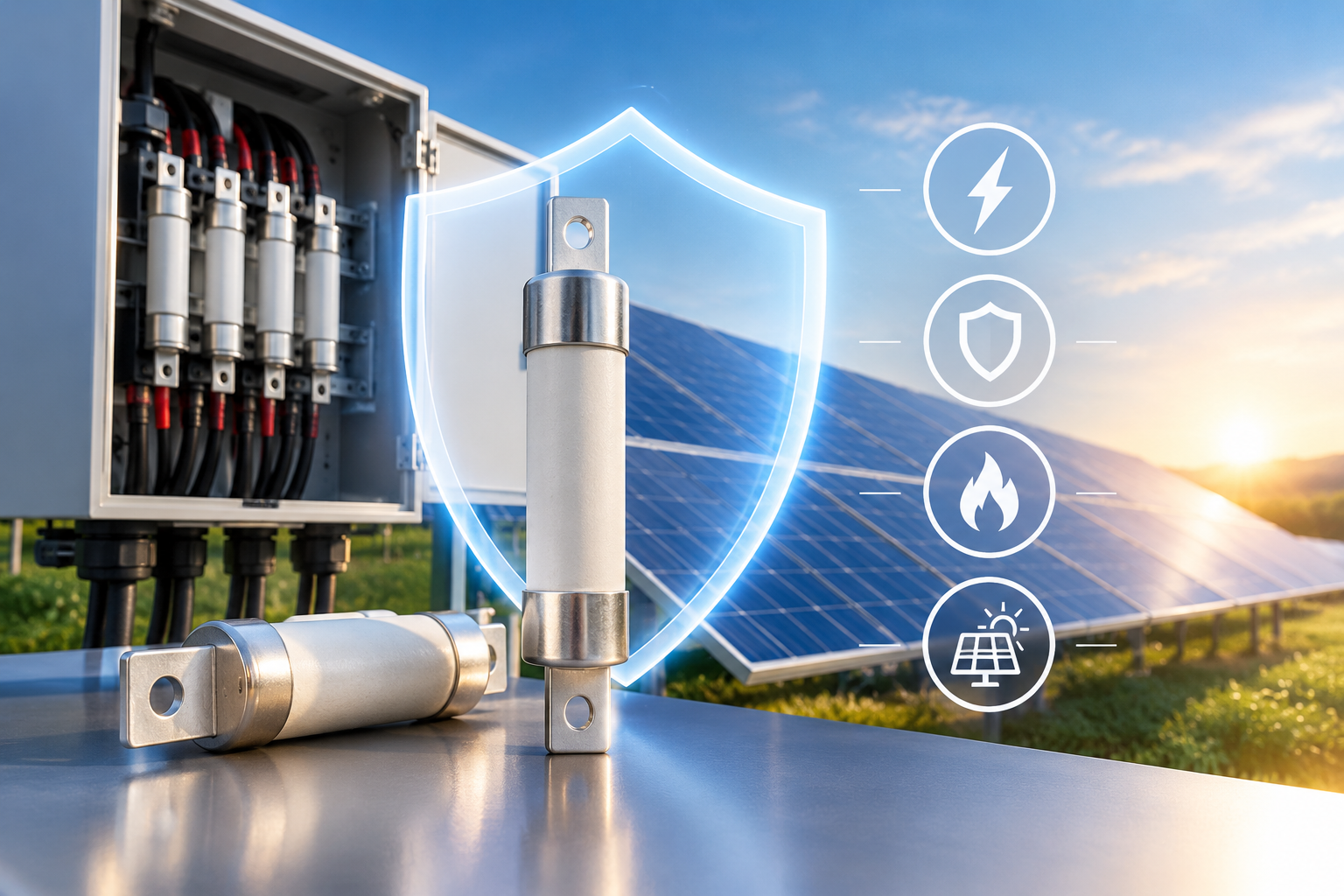
The Eaton Bussmann series offers specialized gPV fuse solutions designed for photovoltaic applications. These fuses address the specific electrical characteristics of solar power systems, including reverse currents in parallel-connected strings and potentially high short-circuit currents under certain fault conditions.
But how exactly do DC photovoltaic fuses work? Which electrical hazards can they help prevent, and what should engineers consider when selecting Eaton Bussmann fuses for high-voltage PV systems?
1. Protecting PV Systems Against Overcurrents and Short Circuits
One of the primary functions of DC photovoltaic fuses is overcurrent protection. Overcurrents can result from damaged cables, defective PV modules, faulty electrical connections, or short circuits.
In a photovoltaic installation, multiple solar modules are connected in series to form a PV string. When several strings are connected in parallel, healthy strings may feed current back into a faulty string under certain fault conditions. This reverse current can exceed the permissible current ratings of the affected modules, cables, and electrical connections.
Without appropriate protection, excessive current can cause overheating, insulation damage, equipment failure, and potentially electrical fires.
How Do DC Photovoltaic Fuses Work?
A fuse contains a specially designed fusible element. When the current exceeds the fuse's operating characteristics under the relevant conditions, the element melts and interrupts the circuit. In a properly selected DC fuse, the internal arc-extinguishing system helps control and extinguish the electrical arc generated during interruption.
This process helps limit thermal stress on cables, connectors, and PV components, reducing the risk of further damage.
Eaton Bussmann gPV Fuses for Photovoltaic Overcurrent Protection
The Eaton Bussmann series includes gPV fuse links specifically designed for photovoltaic applications. The gPV utilization category is intended for PV circuit protection and takes into account the distinctive current characteristics of solar power systems.
One example is the Eaton Bussmann 10 × 85 mm PV fuse family. Certain versions are specified for 1,500 V DC, rated currents ranging from 2.25 A to 30 A, and a breaking capacity of 30 kA at 1,500 V DC.
These characteristics can make the relevant fuse variants suitable for appropriately designed PV strings and combiner boxes. However, the exact fuse selection must always account for the maximum operating current, potential fault current, and electrical characteristics of the complete installation.
2. Reducing DC Arc Hazards in High-Voltage PV Systems
Electrical arcs are among the most serious hazards in high-voltage photovoltaic installations. They can occur when electrical connections become damaged, contacts loosen, or insulation deteriorates.
Unlike alternating current (AC), direct current (DC) does not naturally pass through zero at regular intervals. Consequently, a DC arc can persist under unfavorable conditions, generating substantial heat that may damage insulation and surrounding materials or cause a fire.
How Do PV Fuses Help Control Arc-Related Risks?
Specially designed DC fuses are engineered to interrupt fault currents safely when the electrical conditions remain within their specified operating and breaking limits. The fusible element and internal arc-quenching system help control the interruption process.
Selecting a fuse with the correct DC voltage rating and breaking capacity is essential. A fuse must not only carry the expected operating current but also safely interrupt the prospective fault current at the system's maximum operating voltage.
The Role of Eaton Bussmann Fuses
Eaton Bussmann gPV fuses are designed to interrupt fault currents in photovoltaic applications. When correctly selected and installed, they help protect PV strings, cables, and connected equipment against the consequences of overloads and short circuits.
Important: A PV fuse is not a universal solution for every arc fault. Series arc faults, for example, may not produce enough additional current to trigger an overcurrent fuse. Comprehensive electrical protection may therefore require additional measures, such as high-quality connectors, insulation monitoring, arc-fault detection equipment, and appropriate system design.
3. Isolating Faults and Improving System Availability
Large photovoltaic installations consist of numerous PV strings, cables, combiner boxes, and inverters. When an electrical fault occurs, limiting its impact to the affected circuit can be essential for maintaining system reliability.
Without appropriate protection coordination, a fault can cause extensive equipment damage or affect larger sections of the installation. A correctly rated string fuse can help interrupt the affected current path and limit the consequences of the fault.
Why Are PV String Fuses Important?
In a system with parallel-connected PV strings, healthy strings may supply reverse current to a faulty string under certain conditions. If the resulting current reaches the fuse's operating threshold for the required duration, a properly selected fuse can interrupt that current path.
This helps support:
-
Protection of PV modules and cables against excessive reverse currents.
-
Reduction of potential secondary damage.
-
More targeted troubleshooting during maintenance.
-
Improved system availability by helping limit faults to affected circuit sections.
The actual level of protection depends on the system configuration, the available fault current, and the characteristics of the selected fuse.
Eaton Bussmann Fuses in String and Combiner Boxes
Eaton Bussmann PV fuses are available for applications including PV strings, combiner boxes, and certain inverter-related circuits. Depending on the installation architecture, protection may be required at the string level, at collection points, or in other designated parts of the DC circuit.
Each protection point must be evaluated individually. Engineers should consider the possible fault currents, the components being protected, and the coordination between protective devices.
Using the same fuse rating throughout an installation is not necessarily appropriate. The correct rating depends on the electrical requirements of each circuit.
4. Reliable Protection at High DC Voltages
High-voltage photovoltaic systems place demanding requirements on electrical insulation and fuse-breaking performance. In systems operating at 1,000 V or 1,500 V DC, protective devices must be capable of safely interrupting current under the specified fault conditions.
A fuse designed for a lower voltage cannot automatically be used in a 1,500 V DC installation.
Which Technical Parameters Matter Most?
When selecting DC photovoltaic fuses, engineers should evaluate the following parameters.
Rated voltage: The fuse's DC voltage rating must be suitable for the maximum possible system voltage under the relevant design conditions.
Rated current: The fuse rating must be appropriate for the maximum operating current, the current-carrying capacity of the protected conductor, and the installation environment.
Breaking capacity: The fuse must be able to interrupt the maximum prospective fault current at the applicable DC voltage.
Time-current characteristics and I²t value: These parameters help engineers assess fuse response times and the thermal energy let through during a fault.
Temperature and installation conditions: Ambient temperature, enclosure design, contact resistance, heat dissipation, and mounting conditions can affect the fuse's actual operating performance.
Eaton Bussmann PV Fuses for 1,500 V DC Systems
The Eaton Bussmann range includes PV fuse links rated for 1,500 V DC. One example is the 10 × 85 mm gPV fuse family, with certain versions specified for a breaking capacity of 30 kA at 1,500 V DC.
Other fuse formats and current ratings are available depending on the product family and application requirements. Selection should always be based on the relevant product datasheet.
A high voltage rating alone is not sufficient. The rated current, breaking capacity, fuse-holder compatibility, and specified operating conditions must also match the installation.
5. Why Correct Fuse Sizing Is Critical
Even a high-quality photovoltaic fuse cannot provide reliable protection if it is incorrectly sized or installed.
A fuse with an excessively high rated current may fail to operate quickly enough under certain fault conditions. Conversely, a fuse with an unnecessarily low rating may cause unwanted interruptions during normal operation.
The fuse's breaking capacity must also be sufficient for the potential fault current at the actual DC operating voltage.
Key Steps for Selecting the Right PV Fuse
-
Determine the maximum system voltage. Consider the maximum PV string open-circuit voltage under the relevant temperature conditions.
-
Calculate operating and reverse currents. Assess normal operating currents and the potential currents that may occur during faults.
-
Check module and cable specifications. Follow the module manufacturer's requirements and verify the permissible current-carrying capacity of the conductors.
-
Verify the breaking capacity. Ensure that the fuse can interrupt the maximum prospective fault current at the actual DC voltage.
-
Evaluate installation conditions. Check fuse-holder compatibility, connection requirements, ambient temperature, enclosure design, and manufacturer specifications.
-
Coordinate protection devices. Ensure that the fuse selection complies with applicable standards and is coordinated with the rest of the electrical protection system.
IEC 60269-6 is particularly relevant to fuse links for photovoltaic energy systems. Additional standards, certifications, and local regulatory requirements may apply depending on the installation and target market.
6. What Are the Benefits of Eaton Bussmann DC Photovoltaic Fuses?
The Eaton Bussmann series offers specialized fuse solutions designed to address the electrical protection requirements of modern photovoltaic installations.
Key benefits of appropriately selected gPV fuse links include:
-
PV-specific overcurrent protection: Designed for the distinctive electrical and fault-current characteristics of photovoltaic circuits.
-
Suitability for high-voltage applications: Selected versions are available for systems operating at up to 1,500 V DC.
-
Specified breaking capacity: Certain models are designed to interrupt high fault currents within their rated operating limits.
-
Flexible application options: Depending on the product family and format, fuses can be used for string protection, combiner boxes, and other designated PV applications.
-
Standards-oriented product selection: Applicable IEC and UL requirements are addressed depending on the specific product.
-
Support for system availability: Properly coordinated protection can help limit fault damage and simplify troubleshooting.
The actual benefits depend on the selected product variant, the system architecture, the protection coordination, and the quality of installation.
7. Installation and Maintenance: Keeping PV Protection Reliable
Correct product selection is only one part of an effective electrical protection strategy. Proper installation and periodic inspection are equally important.
Even a suitably rated fuse may not perform as intended if it is installed incorrectly, paired with an incompatible fuse holder, or connected through defective electrical contacts.
To maintain reliable operation, installers and system operators should:
-
Operate fuses only within their specified electrical ratings and conditions.
-
Use compatible fuse holders approved for the intended voltage and application.
-
Inspect connections for damage, corrosion, and signs of overheating as part of the prescribed maintenance procedures.
-
Investigate and eliminate the underlying fault before replacing an operated fuse.
-
Replace fuses only with products meeting the required electrical ratings and characteristics.
-
Ensure that work on DC photovoltaic systems is performed by qualified personnel following applicable electrical safety procedures.
It is also important to remember that a fuse is not a substitute for a load-break switch or an appropriate isolation device. Required isolation, lockout, and verification procedures must be followed before maintenance work begins. PV modules may continue generating hazardous DC voltages whenever sufficient light is available.
Conclusion: Eaton Bussmann Fuses as a Key Component of PV System Safety
DC photovoltaic fuses are essential components of the electrical protection strategy in modern high-voltage solar installations. They can interrupt overcurrents and short circuits, limit dangerous reverse currents, and help reduce damage to PV modules, cables, and other electrical components.
The Eaton Bussmann series offers gPV fuse solutions developed specifically for photovoltaic applications. Selected product families support 1,500 V DC systems and provide defined breaking capacities for demanding operating conditions.
However, reliable protection depends on more than the brand name or voltage rating. Correct current sizing, sufficient breaking capacity, component compatibility, protection coordination, and compliant installation are all essential.
By selecting and integrating Eaton Bussmann DC photovoltaic fuses according to the specific requirements of the installation, engineers and system operators can establish an important foundation for safer, more reliable, and more efficient photovoltaic power generation.



