
 eaton-bussmann-series-electric-vehicle-application-guide-br132016en-en-gb.pdf eaton-bussmann-series-electric-vehicle-application-guide-br132016en-en-gb.pdf | [Eaton Bussmann series electric vehicles fuses application guide] | 526 kB |
| eaton-bussmann-series-square-body-electric-vehicles-fuses-ca135003en-en-gb.pdf | [Eaton Bussmann series pre production and sample electric vehicles square body fuse links] | 701 kB |
Eaton Bussmann Series High-Speed Electric Vehicle Fuses: Advanced Circuit Protection for EVs
The rapid growth of electric mobility is creating new demands for electrical safety, system reliability and performance. From high-voltage battery packs to electric drive systems and charging infrastructure, every electrical component must be designed to operate safely under demanding conditions.
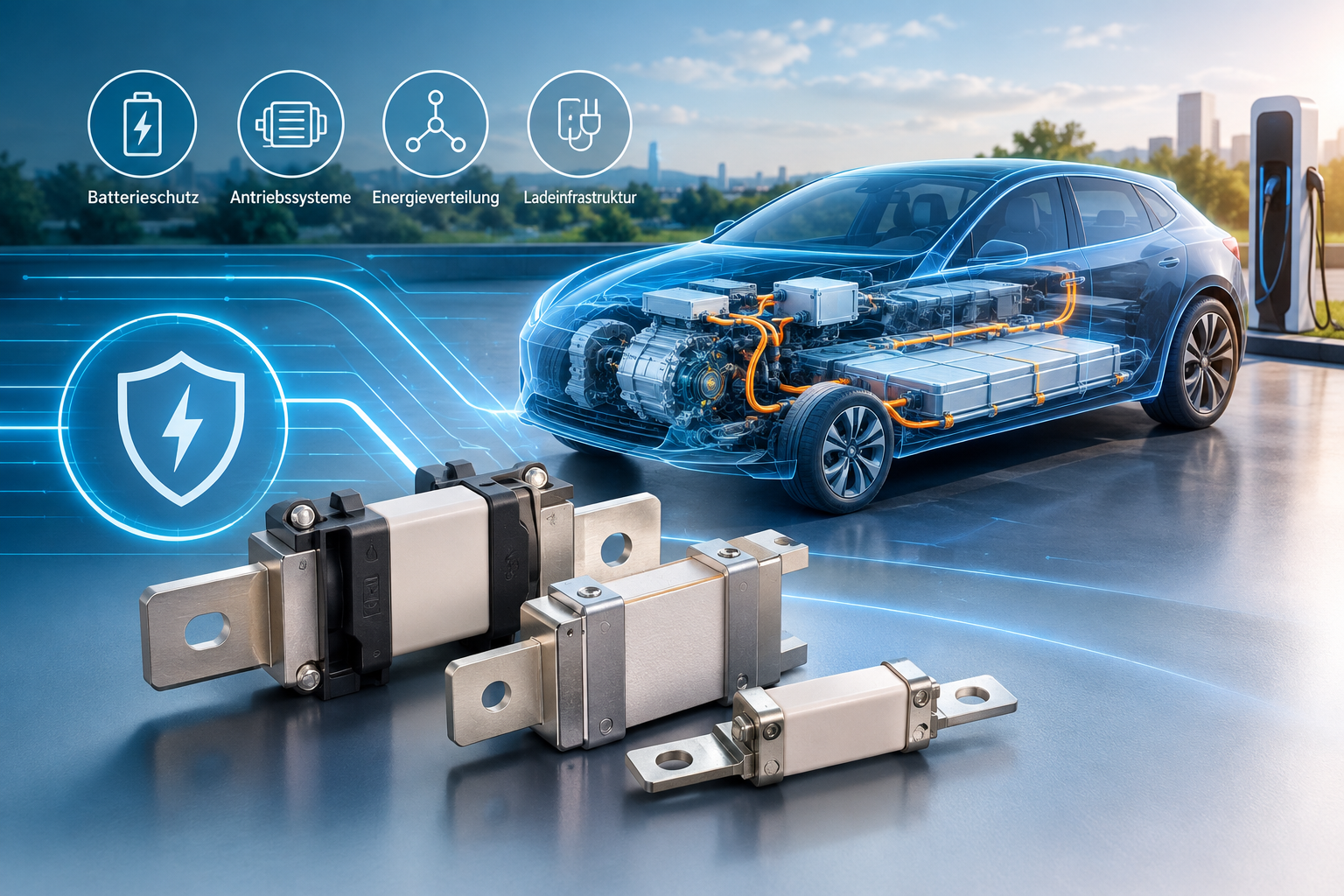
Eaton Bussmann series high-speed electric vehicle (EV) fuses provide application-specific circuit protection for hybrid electric vehicles (HEVs), battery electric vehicles (BEVs), commercial vehicles and high-performance automotive applications. Designed to address the challenges of modern vehicle electrification, these fuses help protect critical electrical circuits against damaging overcurrents and short circuits.
For engineers, EV manufacturers and electrical system designers, selecting the right fuse is an important step towards developing reliable, efficient and robust electric vehicle architectures.
What Are Eaton Bussmann Series High-Speed EV Fuses?
Eaton Bussmann series high-speed EV fuses are specialised protective devices developed for the electrical requirements of hybrid and electric vehicles. Unlike conventional automotive fuses designed primarily for lower-voltage circuits, EV fuses must accommodate demanding electrical conditions, including high DC voltages, substantial fault currents and the operating requirements of modern power electronics.
Eaton's EV fuse portfolio supports a variety of vehicle platforms and electrical applications, including passenger cars, commercial vehicles, high-performance vehicles and charging systems.
The product range is supported by application-specific engineering, in-house simulation facilities and dedicated fuse application engineers. These capabilities help engineers identify suitable circuit protection solutions for individual vehicle designs.
Key characteristics include:
-
Application-specific design: Solutions developed for the electrical requirements of different EV applications.
-
High-speed circuit protection: Rapid interruption of fault currents to help limit electrical and thermal stress.
-
Engineering and simulation: Testing and simulation capabilities to support fuse selection and application validation.
-
Broad application coverage: Protection solutions for passenger vehicles, commercial vehicles, performance vehicles and charging systems.
Why Is High-Speed Fuse Protection Important in Electric Vehicles?
Electric vehicles use high-energy electrical systems that must operate reliably during acceleration, regenerative braking, charging and other changing operating conditions.
A short circuit can cause an extremely rapid increase in current. Without appropriate protection, this can create excessive heat, damage cables and connectors, and place additional stress on sensitive electrical components.
High-speed fuses are designed to interrupt excessive currents within their specified operating characteristics. When correctly selected and coordinated with the wider electrical system, they help reduce the energy released during a fault.
The main benefits include:
1. Protection for High-Voltage Battery Systems
The traction battery is one of the most important electrical components in an electric vehicle. Its high energy capacity means that a fault can expose connected components to substantial electrical stress.
A correctly rated EV fuse helps protect battery circuits, conductors and associated equipment by interrupting fault currents within its specified breaking capacity and operating characteristics.
2. Protection for Power Electronics
Inverters, converters and other power electronics control the flow and conversion of electrical energy throughout the vehicle.
These components can be sensitive to overcurrent conditions. Appropriate fuse protection helps limit the impact of electrical faults and supports the protection of connected equipment.
3. Improved System Coordination
An EV electrical architecture may include fuses, contactors, battery management systems and other protective devices.
Fuse selection must account for how these components interact under normal operating conditions and during faults. Correct coordination helps ensure that the protective system performs as intended.
4. Support for Reliable Vehicle Operation
Electric vehicles experience changing electrical loads, temperature variations and mechanical vibration. Choosing protection designed for the intended application helps engineers address these operating conditions and develop more robust electrical systems.
Key Applications of Eaton Bussmann Electric Vehicle Fuses
Eaton's Bussmann series EV fuses are designed for a range of automotive and electrification applications.
Electric Vehicle Battery Protection
Battery protection is a fundamental consideration in EV design. Fuses can be used in suitable battery circuits to protect conductors and connected equipment against excessive current.
The correct solution depends on battery voltage, prospective short-circuit current, available fault energy, operating temperature and the electrical characteristics of the circuit.
Electric Drive and Inverter Protection
Electric motors and their associated drive systems rely on power electronics to convert and control electrical energy.
High-speed fuses can form part of the protection strategy for suitable drive inverter and motor-related circuits. Engineers must verify that the fuse's time-current characteristics and interrupting capability are appropriate for the specific circuit.
Power Distribution Systems
Electric vehicles distribute electrical energy between the battery, drive system, auxiliary equipment and other electrical loads.
Fuses installed within power distribution architectures help protect individual circuits and connected components. Selecting the appropriate fuse rating and physical configuration is essential for safe integration.
Onboard Charging Systems
Onboard chargers convert incoming electrical power into a form suitable for charging the vehicle's battery.
Suitable fuse protection can help safeguard charger circuits against electrical faults. The required fuse depends on the circuit voltage, current, fault conditions and charger design.
Commercial and High-Performance Vehicles
Electric buses, trucks, performance cars and other demanding vehicle platforms can have substantial power requirements.
These applications may introduce additional challenges involving high currents, thermal cycling, vibration and limited installation space. Application-specific fuse engineering helps address these requirements.
How to Select the Right High-Speed EV Fuse
Choosing a fuse involves more than matching its rated current to the expected operating current. Engineers must evaluate the complete electrical and environmental conditions of the intended application.
The following considerations can help guide the selection process.
Rated Voltage
The fuse's rated DC voltage must be suitable for the maximum voltage that can occur in the protected circuit.
DC circuit interruption requires particular attention because DC systems do not have the natural current zero crossings that help extinguish arcs in AC circuits.
Rated Current
The fuse's current rating must accommodate the intended operating current while providing appropriate protection against overloads and short circuits.
Designers should account for continuous loading, transient currents, ambient temperature, installation conditions and any manufacturer-specified derating requirements.
Breaking Capacity
Breaking capacity describes the maximum prospective fault current a fuse can safely interrupt under specified conditions.
The selected fuse must have sufficient breaking capacity for the potential fault current at its installation point. This is especially important in high-energy battery systems.
Time-Current Characteristics
Fuse operating time varies with the magnitude of the current flowing through it.
Engineers should assess the fuse's time-current characteristics alongside the circuit's normal operating profile, expected transients and required fault-clearing performance.
Physical Size and Installation
Vehicle platforms have strict space and weight constraints. Terminal design, mounting arrangement, clearances, thermal management and accessibility must all be considered when integrating a fuse into an EV electrical system.
Environmental Conditions
Temperature changes, vibration, thermal cycling and other environmental factors can affect performance and service life.
The fuse must be suitable for the conditions specified for the vehicle and its installation location.
Important: Final fuse selection should be validated against the manufacturer's datasheet, application guidance and the relevant vehicle-level electrical safety requirements.
The Role of Simulation and Application Engineering
Every electric vehicle has its own operating profile. Battery capacity, motor power, driving behaviour, charging conditions and electrical architecture can all influence the requirements for circuit protection.
Eaton highlights its in-house simulation capabilities and dedicated fuse application engineering team as important parts of its EV fuse development approach.
Simulation can help engineers evaluate fuse performance against the conditions expected in a particular application. This supports the assessment of fuse sizing, operating behaviour and coordination with other protective devices.
Application engineering is also valuable when a standard product configuration does not fully address a design's requirements. Collaboration between fuse specialists and vehicle development teams can help identify a suitable protection strategy.
The objective is to achieve the right balance between reliable operation during normal use and effective interruption under fault conditions.
Eaton Bussmann EV Fuses and the Future of Electrification
As electric mobility expands, electrical protection requirements are evolving alongside battery technology, charging power and vehicle architectures.
Manufacturers need circuit protection solutions that can be integrated into increasingly demanding electrical systems without compromising safety, packaging or performance objectives.
Eaton's Bussmann series EV fuses address these needs through application-specific designs, engineering support and a portfolio intended for different hybrid and electric vehicle applications.
For vehicle manufacturers and system integrators, the value of a fuse is not determined by its current rating alone. Its suitability depends on how effectively it performs within the complete electrical architecture.
Working with an experienced fuse manufacturer can help design teams assess these requirements early in the development process and select protection solutions appropriate to the intended application.
Frequently Asked Questions About Eaton Bussmann EV Fuses
What are Eaton Bussmann series high-speed electric vehicle fuses used for?
They are designed to provide circuit protection in hybrid and electric vehicles. Depending on the product and its ratings, applications can include battery circuits, electric drive systems, power distribution, auxiliary electrical systems and charging equipment.
Why do electric vehicles need specialised fuses?
Electric vehicles use high-voltage DC systems and high-energy batteries that can deliver substantial fault currents. Specialised EV fuses are designed to address the electrical, thermal and mechanical demands of these applications.
What is the difference between a standard automotive fuse and a high-speed EV fuse?
The main differences relate to the intended application and electrical performance requirements. EV fuses may need to accommodate higher DC voltages, greater prospective fault currents and more demanding interruption characteristics than conventional low-voltage automotive fuses.
The correct comparison depends on the specific products being evaluated.
How do I choose the correct EV fuse rating?
Consider rated voltage, continuous current, overload behaviour, prospective short-circuit current, breaking capacity, time-current characteristics, environmental conditions and installation requirements. Always confirm suitability using the manufacturer's technical documentation.
Are Eaton Bussmann EV fuses suitable for commercial vehicles?
Eaton's portfolio includes circuit protection solutions intended for electric commercial vehicles as well as passenger and high-performance vehicles. Individual fuse selection depends on the vehicle's electrical architecture and application requirements.
Can Eaton support EV fuse application engineering?
Eaton identifies dedicated fuse application engineers and in-house simulation capabilities as part of its EV fuse offering. For assistance with a particular design, contact Eaton through its official product support channels.
Conclusion: Choose the Right Circuit Protection for Your EV Design
Reliable circuit protection is an essential part of electric vehicle engineering. As EV batteries, power electronics and charging systems become more demanding, selecting an appropriate high-speed fuse is increasingly important for protecting electrical components and supporting dependable system operation.
Eaton Bussmann series high-speed electric vehicle fuses offer application-specific circuit protection solutions for hybrid vehicles, battery electric vehicles, commercial vehicles and high-performance automotive applications.
By evaluating voltage, current, breaking capacity, operating characteristics and environmental requirements, engineers can make more informed decisions when specifying EV circuit protection.
Looking for the right fuse for your electric vehicle application?
Explore the Eaton Bussmann series high-speed electric vehicle fuses portfolio to review product information.



