
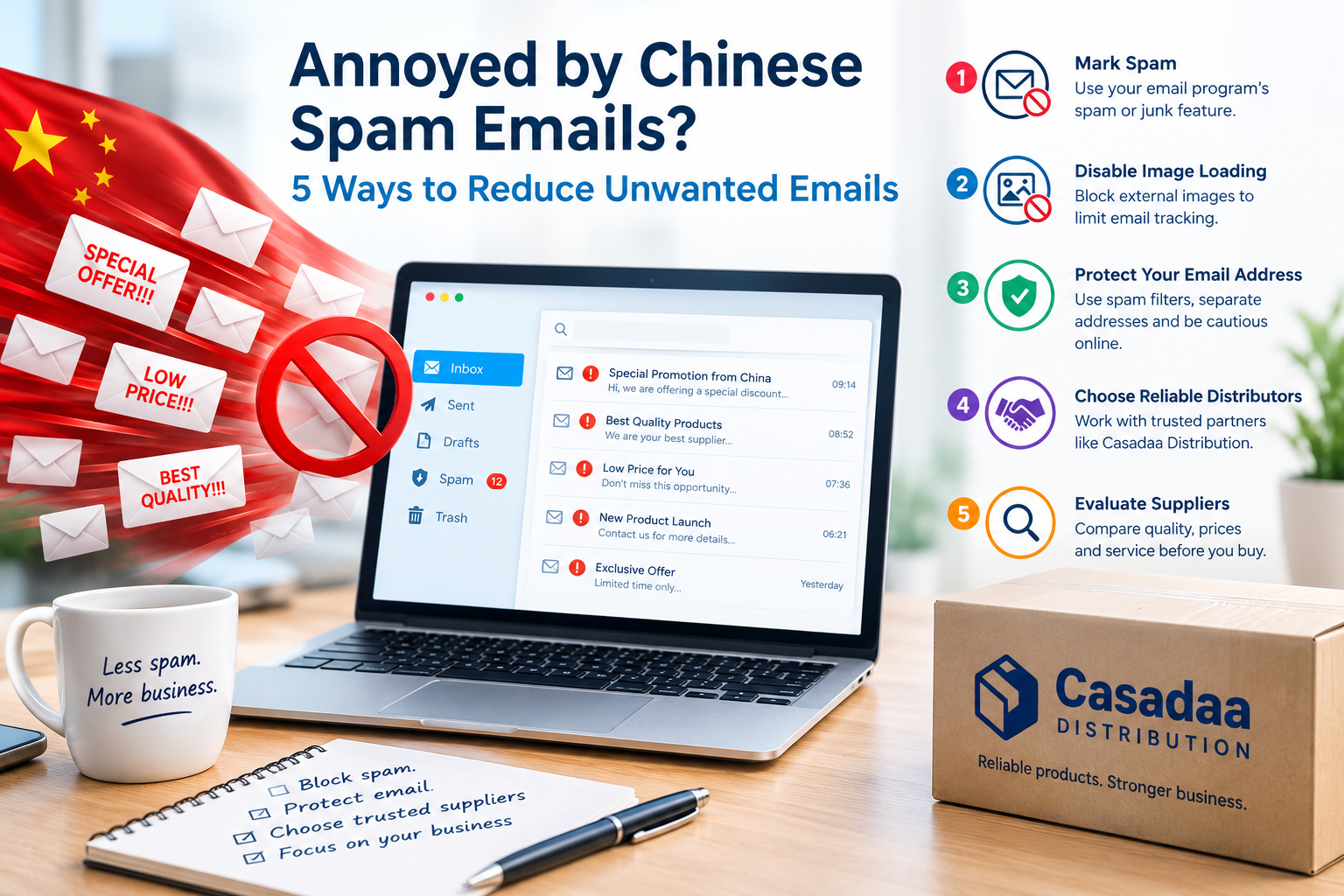
Annoyed by Chinese Spam Emails? How to Stop Unwanted B2B Emails
Are you constantly receiving unwanted spam emails from suppliers in China? Does your inbox fill up with generic sales pitches, unsolicited product offers, and follow-up messages you never asked for?
You are not alone. Many businesses receive unsolicited B2B marketing emails from unknown suppliers offering products, special promotions, and discounts. These messages can be frustrating, time-consuming, and potentially risky.
The good news is that there are several steps you can take to reduce unwanted emails, protect your privacy, and keep your inbox under control.
What Do These Chinese Spam Emails Look Like?
You may recognise a message like this:
Hi,
I hope this email finds you well.
Thank you for reading our introductory email. We're here to assist if you have any further questions or need more information.
I am excited to inform you that we are currently offering a special promotion on our products. If you have any needs, please let me know as soon as possible so I can secure a discounted spot for you.
Thank you for your attention, and I look forward to hearing from you soon.
Best regards,
Does this sound familiar?
These emails often use polite but generic language, vague product descriptions, and repeated offers of special discounts. They may come from unfamiliar senders and contain little information about why you are being contacted.
Although not every email from a Chinese supplier is spam, unsolicited bulk sales emails can quickly become a nuisance when they arrive repeatedly.
1. Mark Unwanted Emails as Spam
One of the easiest ways to reduce unwanted emails is to mark them as spam in your email program.
Whether you use Gmail, Outlook, Apple Mail, or another email service, look for the Report Spam or Junk option.
Reporting unwanted messages helps your email provider identify similar emails in the future and may improve its spam filtering.
If you consistently receive emails from the same address, you can also block the sender. However, some senders use multiple email addresses, so blocking individual accounts may not stop every message.
Tip: Avoid replying to suspicious emails or asking the sender to remove you from their mailing list. A reply can confirm that your email address is active. Only use an unsubscribe link when you trust the sender and believe the message comes from a legitimate mailing list.
2. Disable Automatic Image Loading in Your Email Program
Did you know that some marketing emails contain tracking pixels or other tracking mechanisms?
These can be tiny, invisible images embedded in an email. When your email program loads the image, the sender may receive information indicating that the message was opened. Depending on the tracking technology, this information may include the time of the interaction and technical details about the email client.
This is why disabling automatic external image loading can be a useful privacy measure.
Check your email program's settings for options such as:
-
Block external images.
-
Ask before displaying remote content.
-
Disable automatic image downloads.
The exact wording depends on your email application.
Important: Disabling automatic image loading can reduce certain forms of email tracking, but it cannot prevent all tracking. Some email services automatically proxy images, and other tracking methods may still be used.
3. Protect Your Email Address from Unwanted Marketing
Your business email address is valuable. Once it reaches mailing lists used by aggressive marketers, you may start receiving a steady stream of unsolicited offers.
To reduce the risk of future spam:
-
Avoid publishing personal business email addresses unnecessarily.
-
Use a separate email address for public enquiries or supplier registrations.
-
Be careful when submitting your contact details to unfamiliar websites.
-
Review privacy settings and marketing consent options when registering for online services.
-
Use spam filters and, where appropriate, email aliases to separate different types of communication.
These measures will not eliminate spam completely, but they can help reduce unwanted messages over time.
4. Choose Reliable Distributors Instead of Risky Suppliers
If you regularly source products for your business, choosing a reliable distributor can save you time and reduce the need to deal with unknown suppliers sending unsolicited offers.
Rather than responding to random emails promising exceptional discounts, work with established distributors that offer transparent product information, professional communication, and dependable customer service.
For businesses looking for an alternative supplier, Casadaa Distribution is an option to consider.
Working with a trusted distribution partner can make product sourcing more straightforward and help you focus on running your business instead of sorting through unsolicited sales emails.
Of course, every supplier should be evaluated on its own merits. Compare product availability, pricing, delivery terms, customer support, and business credentials before making a purchasing decision.
5. Stop Rewarding Unsolicited Sales Tactics
Unwanted sales emails often aim to generate enquiries and orders. Responding to them may encourage further contact, especially if the sender interprets your response as interest.
A better approach is to establish clear purchasing criteria and use suppliers that meet your business requirements.
Instead of making purchasing decisions based on unsolicited discount offers:
-
Compare suppliers before placing an order.
-
Verify the company's identity and contact details.
-
Check product quality and warranty arrangements.
-
Review shipping costs, delivery times, and return policies.
-
Consider the total cost of ownership rather than the advertised discount alone.
Choosing suppliers based on reliability and value gives you greater control over your purchasing decisions.
Why Not Simply Stop Buying from China?
It is understandable to feel frustrated when your inbox is flooded with unsolicited offers. However, the origin of an email alone does not determine whether a supplier is trustworthy.
There are legitimate manufacturers and reputable businesses in China, just as there are unreliable suppliers elsewhere.
The more effective strategy is to avoid unsolicited purchasing decisions and work with suppliers you have independently assessed. If you prefer to purchase through a local or regional distributor, that may also offer practical benefits such as easier communication, more convenient logistics, and clearer after-sales support.
The goal is not to reject every supplier from a particular country. It is to stop unwanted marketing from dictating how you source products.
Final Thoughts: Take Control of Your Inbox
Chinese spam emails and unsolicited supplier offers can be annoying, particularly when they repeatedly interrupt your working day.
Fortunately, you can take practical steps to reduce the problem:
-
Report spam and block persistent senders.
-
Disable automatic external image loading to limit some forms of email tracking.
-
Protect your email address and use spam filters.
-
Choose reliable distributors instead of reacting to unsolicited sales pitches.
-
Evaluate suppliers carefully before placing an order.
If you are tired of generic sales emails promising special discounts, take control of your inbox and focus on suppliers that genuinely meet your business needs.
Looking for a distribution partner? Consider Casadaa Distribution as part of your supplier research and compare its offering with your business requirements.
Spend less time dealing with unwanted sales emails and more time focusing on your business.



